
Everyone wants to visit Kiyomizudera; it’s by far one of the most famous temples in Kyoto, with its breathtaking views of the city and lush forests that bring in a sense of peace and comfort, despite the crowded and busy way up to the entrance of the temple.
Many visitors also think that once they’ve been to Kiyomizudera, the lovely sights are over and it’s time to move to the next temple, often going all the way down the path they came up, and missing out on the lovely Ninenzaka and Sannenzaka streets.
If you simply let yourself follow the gentle slope downhill from the temple’s southern gate, you’ll find yourself walking into one of the most atmospheric pockets of the city!
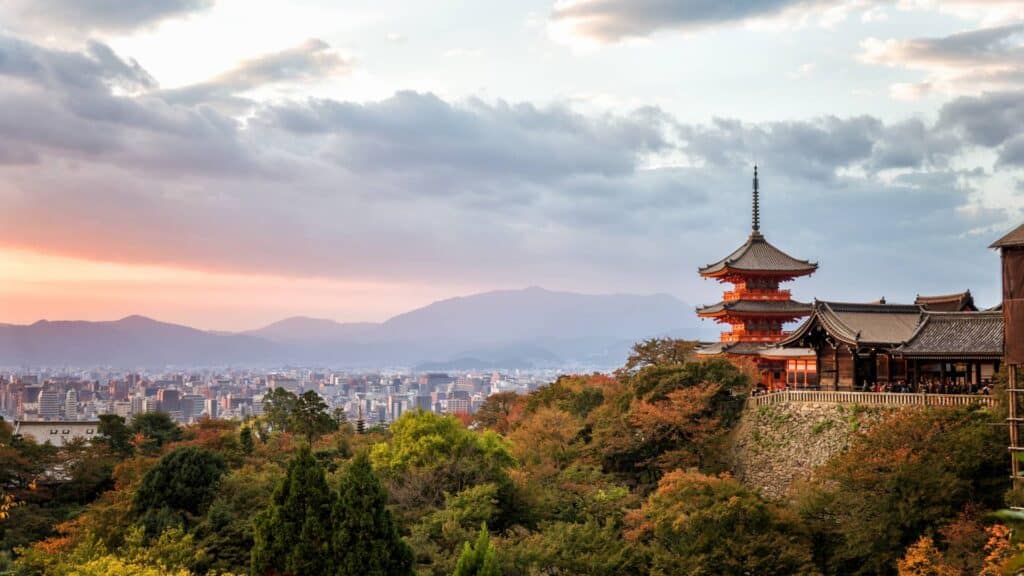
The truth is, the path down from Kiyomizudera can be just as charming (or even more, for some people) as Kiyomizudera itself. So today, we will tell you all about the charms of Ninenzaka and Sannenzaka, the two stone-paved streets that you should totally visit if you’re in the Kiyomizudera area.
Whether you want to take in traditional architecture tucked in with forest views, try a thousand different snacks, or get some unique souvenirs, these streets have a bit of everything that pleases every visitor.
Spoiler alert: These two streets have so much to see that you might want to get one of our local guides to help you navigate them more efficiently. Check our tours here if you want to enjoy the views while we navigate on your behalf!
The Meaning of Ninenzaka and Sannenzaka
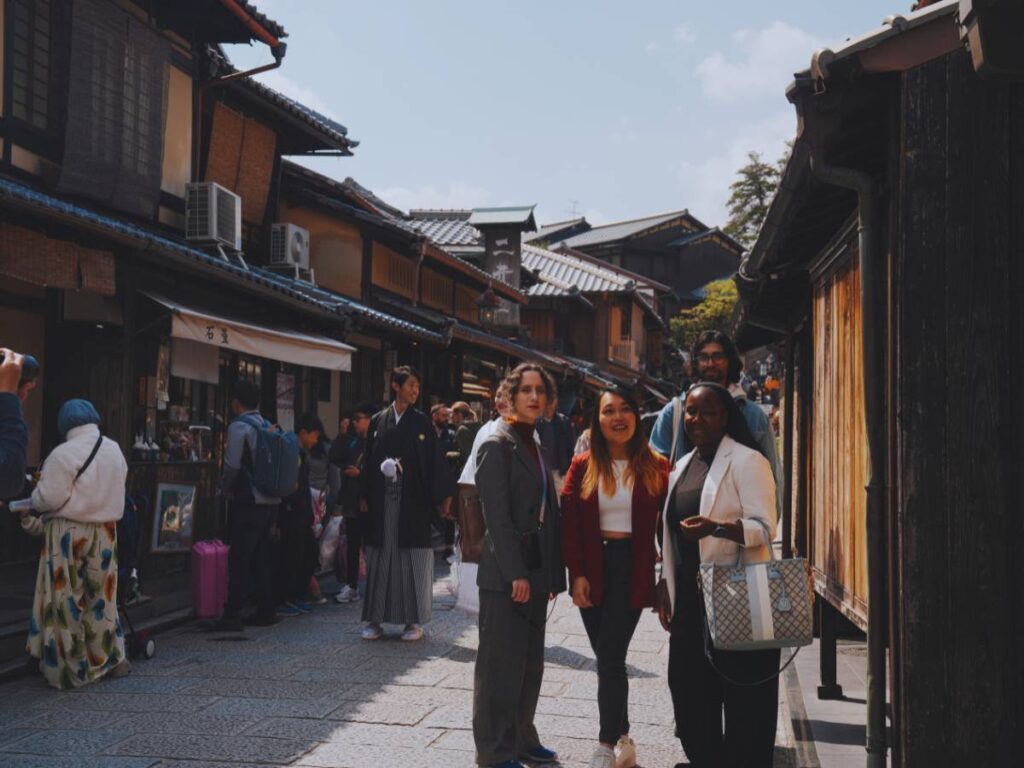
First things first: You should watch your steps when you visit these streets, which have very meaningful names. 二年坂 Ninenzaka and 三年坂 sannenzaka literally mean “two-year slope” and “three-year slope”. By the names alone, you know they will be quite steep and therefore it’s easy to slip, fall and get yourself hurt (especially on rainy days).
But what most people don’t know is that these slopes have a superstition around their names, and it goes something like this: If you fall down on the Ninenzaka slope, you will die in two years, and if you fall down on the Sannenzaka slope, you will die in three years.
Other people instead believe that bad luck will lurk around them for two or three years. It might be a bit bizarre how these two slopes became so famous and popular among tourists, but we promise they’re worth a visit, and that it’s very rare for people to actually fall there.
Now that you know you should check your shoelaces and step carefully, let’s walk you through what you will be seeing first as you go down these time-slipping, narrow streets.
Keep in mind that as a famous tourist destination, these will be quite packed during most of the day, and if you’re looking for a quieter time to visit, most cafes and shops close around 6 PM.
Sannenzaka

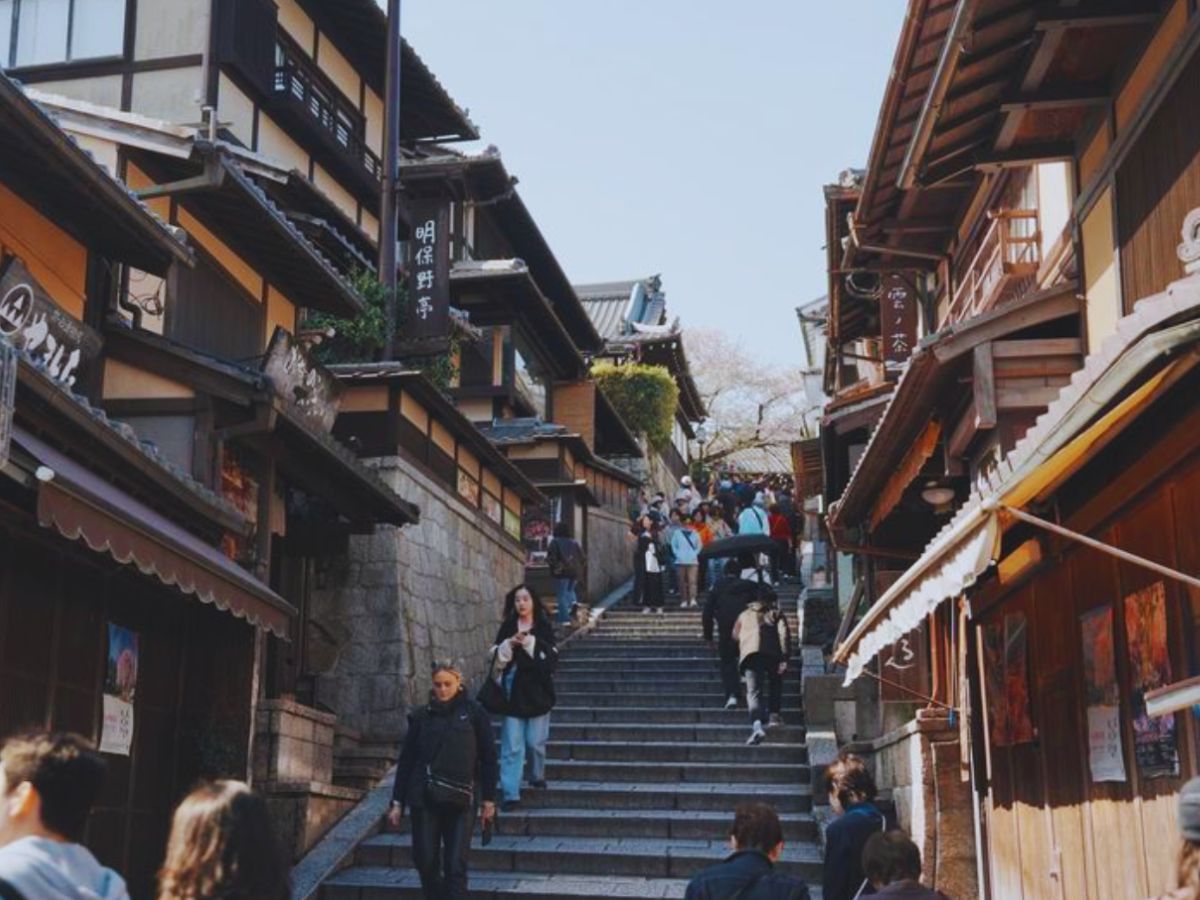
As you descend from the Kiyomizudera temple, Sannenzaka is the first slope you’ll encounter. The narrow street begins to curve and dip, revealing a charmingly photogenic view at nearly every turn.
Much like the way up to Kiyomizudera, you will see many traditional wooden machiya townhouses. But this time, you will have the forest area in the background, framed with some stone lanterns that will make for lovely pictures (but please make sure you watch your step when posing or photographing!).
If you like spices and spicy condiments, we strongly recommend you visit Ochanokosaisai and try their free sampling of furikake (rice condiment). This shop has a variety of condiments, chips, crackers, oil and powders that suit all lovers of spice.
Most visitors end up buying some furikake for themselves or as souvenirs even if they aren’t huge fans of spicy food because everything in this shop tastes amazing. They have other stores spread around Kyoto too!
After you successfully and safely walk down Sannenzaka and avoid 3 years of bad luck, the street flattens into a more relaxed, horizontal path, and you will see some rickshaw pullers.

If you have yet to go on a rickshaw ride, this is a great opportunity to do it. If you approach these friendly Japanese, they will show you a brochure in English with the available routes and prices. If your legs are feeling tired from all the walking you did, they will make sure you see all the nice spots in the area in maximum comfort.
It’s a great opportunity to get some local insights and perfect pictures, and you get priority as you go through the crowded streets since pedestrians must make way for the traditional rickshaw!
If, however, you would rather walk on your own legs and keep discovering what these slopes have to offer, you can do so. Here, you’ll find many shops. Some specialise in antiques; others in hand-dyed textiles, pottery, or finely crafted bamboo items; and others yet on stunning items such as furoshiki, bags, pouches and backpacks made out of kimono fabric, and soaps that make amazing foam.
You’ll also find coffee shops with unique snacks on sale. Plus, there are plenty of places offering souvenirs with a touch more quality than on the way up to Kiyomizudera—think handmade washi paper, artisanal incense, or beautiful woodblock prints.
Since you’re in the heart of Kyoto, we suggest you visit the Yatsuhashi store, home to one of the most traditional sweets in Kyoto. Yatsuhashi is made of a thin layer of mochi (pounded rice) with the simple yet tasty filling of red bean paste.
However, due to its huge popularity, they now make it with many different fillings, from strawberry to caramel and peach. They also have crackers made of the same thin mochi layer that has a gentle taste of cinnamon. These pair perfectly with tea, and the crackers can make for a lovely souvenir! You can find samples of most flavours here, so be sure to try them before you decide on what to buy.
Most people have heard of the famous matcha tiramisu, but don’t always know where to find it. Good news: the path ahead has the best place for you to try it.
The Matcha House, while having more shops around the country, has one of the biggest and most traditionally decorated shops between Sannenzaka and Ninenzaka. If you like tiramisu and matcha, then this is a must.
The store has many seats, with two indoor floors and some tables outdoors in the Japanese-style garden. So, if you’re looking for a comfortable place for a break, this is the place.
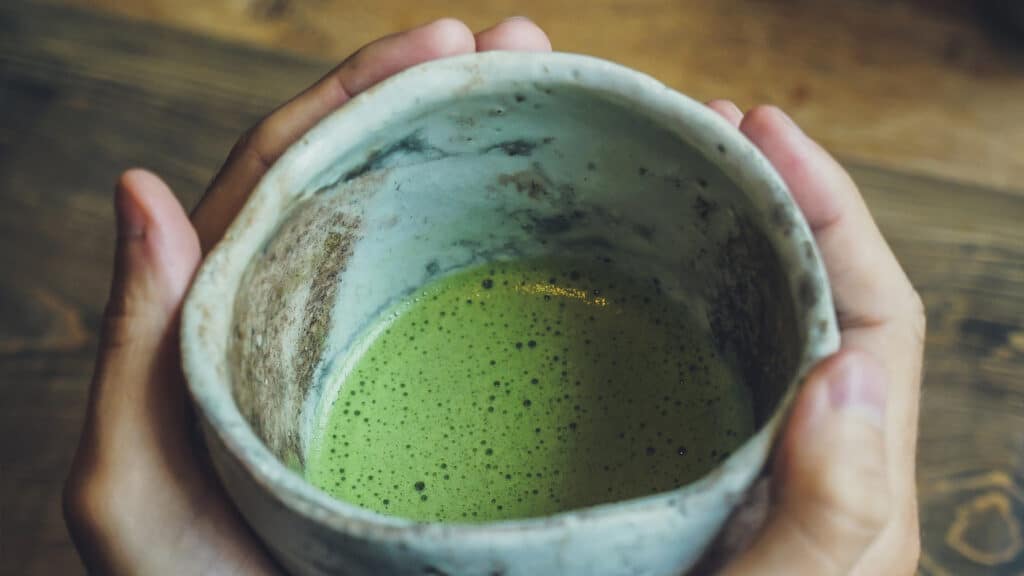
If tiramisu is not your thing, they have other matcha-filled options, as well as the traditional Japanese matcha tasting set that comes with a seasonal wagashi (Japanese traditional sweet) to even out the bitterness of the tea.
Ninenzaka

As you keep walking, you will now see some people take a right into a narrower path: Ninenzaka. Although this one is not as steep, it is just as stunning and filled with things to eat, drink and buy. There’s a slightly more residential feel here, with beautifully kept facades and occasional glimpses of private gardens.
This is where you will find the infamous Traditional Starbucks, a stop that is on many visitors’ checklists. It blends in with its surroundings so well due to its unique looks and sometimes end up not being noticed at all.
The reason for this is the logo being a wooden plate with duller colours, a rule that some areas in Kyoto have to ensure that modern businesses do not disturb the aesthetic of historical landmarks with their bright colours.
This Starbucks is not just different on the outside, but also on the inside, as it is in a traditional Japanese house, with tatami seats and a whole new aesthetic. While there are no exclusive goods or drinks here, it’s still a nice place for a quick break.
Due to its popularity though, it’s very unlikely you can get a seat easily. You can still walk in and take a look at the inside, so if you haven’t had the chance to check out a traditional Japanese-style house, this is your chance!

While Ninenzaka is not as long as Sannenzaka, there are many interesting experiences you can try at the end of your descent, from pottery classes, ninja & samurai time, to custom ring making, or even tea experiences.
If you have extra time or want to sit down and take shelter from the sun or rain, these are good options, but if you still have some steps in you, the journey continues, but with no more hikes!
Nene no Michi

Now you will head to Nene no Michi (The Path of Nene), a gorgeous stone-paved street with two Buddhist temples along its way: Kodaiji Shunkoin and Entoku-in, both peaceful places that are usually less busier than Kiyomizudera.
Kōdaiji is known for its beautifully landscaped gardens and striking teahouses, built in memory of Toyotomi Hideyoshi by his widow Nene (hence the name of the street), and enhances the time travel atmosphere of the area.
Entoku-in, a smaller sub-temple nearby, also has close ties to Nene and features elegantly preserved interiors and rock gardens perfect for quiet reflection. You’ll likely find this path much less crowded than where you just came from, so take your time to enjoy the beauty of the traditional houses, as you head to the last stop we suggest in this post.
Maruyama Park

Maruyama Park is a must-visit spot during Spring and Autumn. But just because there’s no cherry blossom or fall leaves in sight, it doesn’t mean it’s not a great stop before you resume your adventures throughout Kyoto.
It’s a wide park with beautiful ponds and rivers, as well as a lot of food stalls during summer. And outside busy seasons, it’s a very quiet place to take a break, hydrate and take some pictures with the massive mountains Kyoto has to offer in the background.
Visiting Sannenzaka and Ninenzaka with Strollers
Many travellers with strollers wonder if they should take them on a visit to Kiyomizudera, especially when they have the two slopes on their checklist.
At Flip Japan, we’ve done hundreds of tours in this area, so we can assure you that it is safe to bring them with you, as the staired slopes are not long in comparison to the levelled paths where strollers and even pet cars run very smoothly.
Ninenzaka and Sannenzaka FAQs

How long does it take to see Ninenzaka and Sannenzaka?
It depends on whether you want to check the shops and stop for snacks or not. If you just want to take a look at the streets and take some pictures, it shouldn’t take more than 30 minutes.
Are Ninenzaka and Sannenzaka good to visit at night?
Yes, later in the evening and at night are also good times to visit if you’re okay with skipping the stores and cafes. Just be mindful of your surroundings and keep quiet since people do live in that area.
What is the closest Station to Ninenzana and Sannenzaka?
The closest bus stop is Kiyomizumichi, and Kiyomizu Gojo is the closest station.
Is it okay to see Ninenzaka and Sannenzaka on the way up to Kiyomizudera?
Totally! While most people do it on the way down, the charm of these streets does not change if you decide to see them on the way to Kiyomizudera!
The Slopes of Time Travel

Ninenzaka and Sannenzaka might have sounded slightly scary at the start of this post. But by now, we are sure that there’s at least one store you want to visit, and a couple of pictures that you’re dying to take.
The true charm of these streets lies in the traditional atmosphere and in how well preserved they are, with traditional houses, old-style sweets and many high-quality and genuine souvenirs for you to buy or look at. So when you visit Kiyomizudera, do not forget to go down (or even go up) these slopes.
And if you feel like there is so much to see and don’t want to miss out on a single amazing snack or shop, check out our tours with expert local guides that will be sure to show you around the area thoroughly.