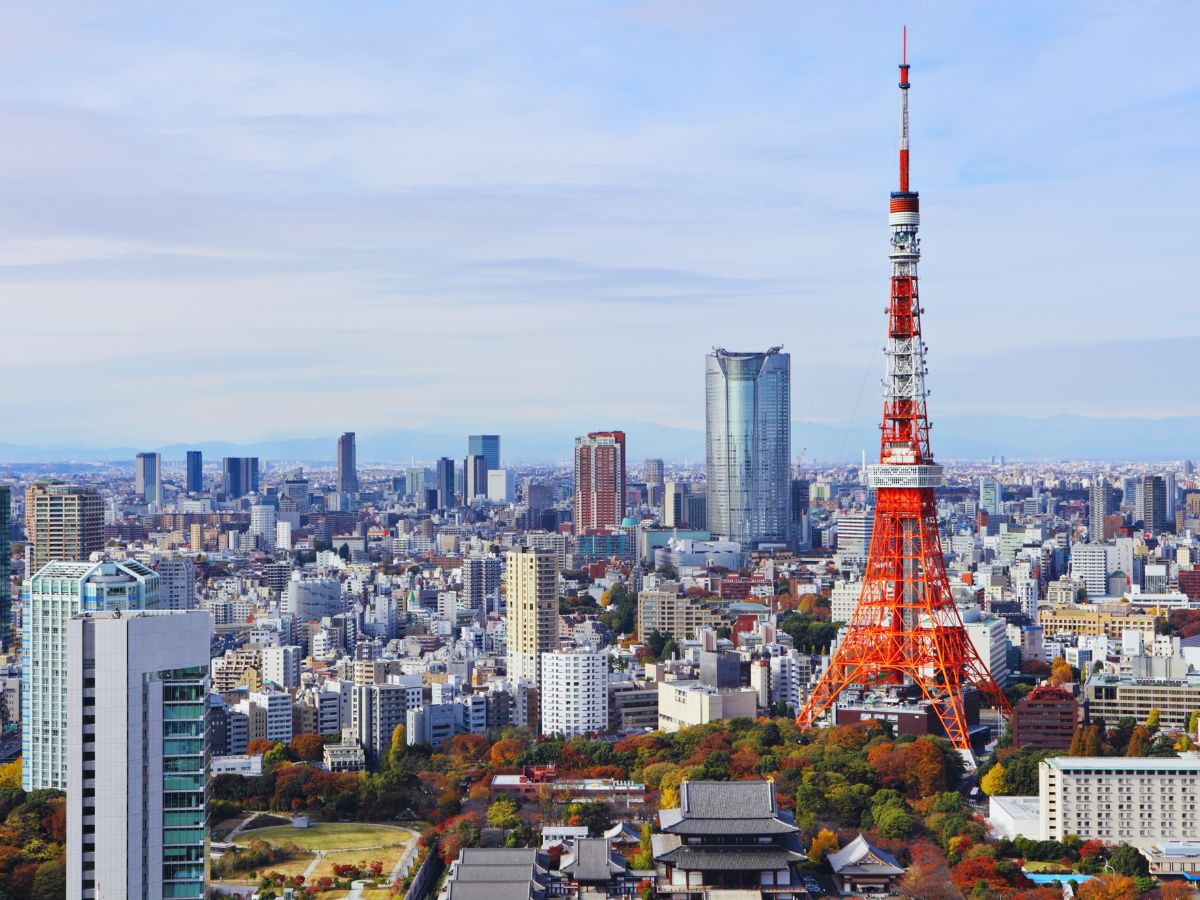
When clients are planning a Tokyo trip, we often get asked if Tokyo Tower is still worth visiting now that there are newer, taller buildings. For us, the answer is always yes. While it might not be the highest point in the city anymore, it remains a true symbol of Tokyo.
It is famous for a reason. Because it sits right in the centre of the city, the view feels completely different here. When you go to the super-tall observation decks, you are often so high up that Tokyo looks like a flat map from the clouds. At Tokyo Tower, you are close enough to actually see the cars moving and the people walking below. It feels real and connected to the streets, rather than separate from them.
But to truly enjoy it, you need to know a few tricks. We put this guide together to show you how to do it like a local. We will cover the best station to use, why we recommend the open-air staircase over the lift, and exactly where to find the best photo spots in the neighbourhood.
Stop Planning, Start Adventuring
Tired of spending hours trying to piece together the perfect Japan trip? Our custom travel planning service is for you. We handle all the research and logistics to create a unique itinerary that lets you travel with confidence and experience Japan your way.
→ Build My Personalised Japan Itinerary
How to Get to Tokyo Tower
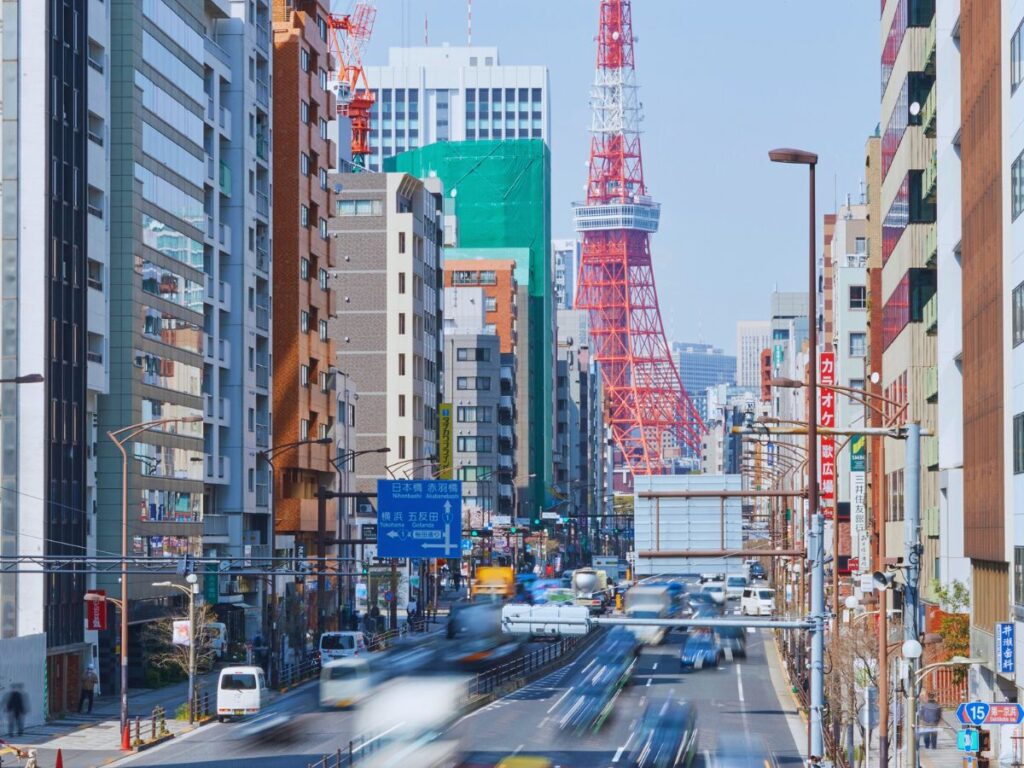
Let’s start with the practical stuff. We always recommend getting off at Akabanebashi Station on the Oedo Line.
For us, this is the best route purely for the view. As soon as you walk out of the Akabanebashi exit, the tower is right there in front of you. It makes for a great first impression that really sets the mood.
You can also use Kamiyacho Station on the Hibiya Line. It is also close (about a 7-minute walk), but the view on the walk just isn’t as good.
Once you are out of the station, you don’t really need a map; just walk towards the giant orange tower.
Main Deck vs. Top Deck
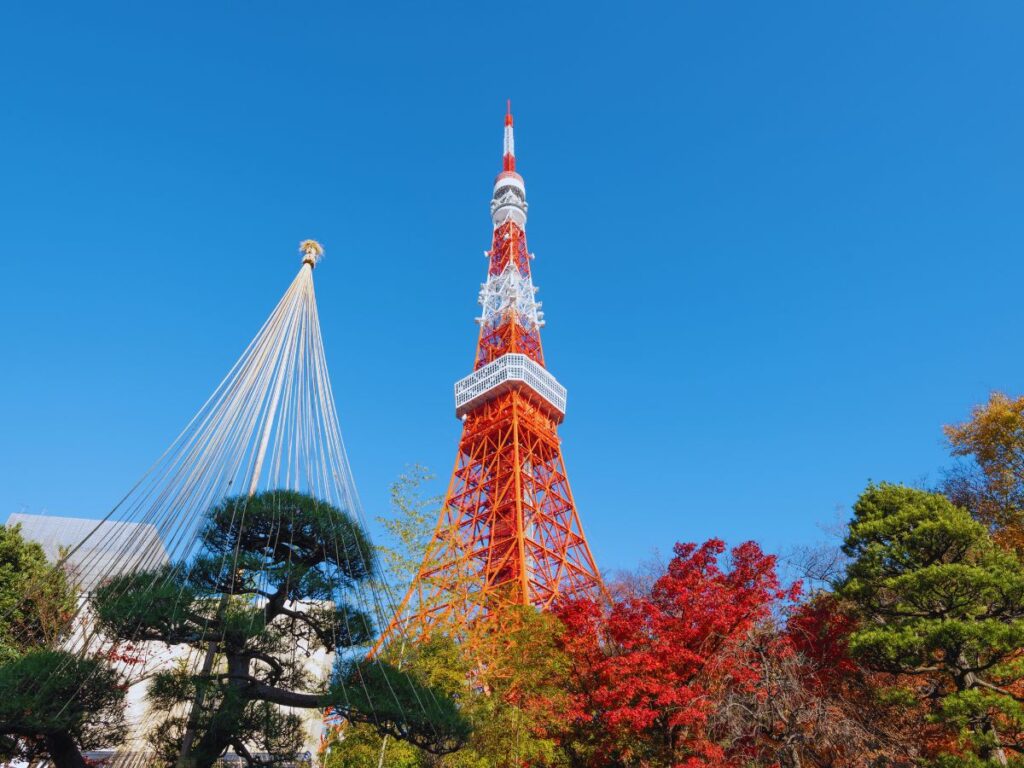
When you arrive at the base of the tower, you will walk into a building called Foot Town. This is where things can get a little confusing. You will see the ticket counter and immediately notice a pretty big price jump between the two options.
Most people stand there hesitating, wondering if paying extra for the higher deck is worth it. To help you decide quickly, here is the reality of the pricing. A standard adult ticket for the Main Deck (150 metres) will cost you around 1,500 yen. However, if you want to go up to the Top Deck (250 metres), the price jumps significantly to roughly 3,300 yen per person.
For us, the choice is simple: stick to the Main Deck.
The Top Deck isn’t just a higher floor; it is actually a structured “Top Deck Tour”. It usually requires an advance booking, you are guided through it, and the whole experience feels a bit rigid. While the view is technically higher, it doesn’t feel drastically different from the view at 150 metres.
Unless you are absolutely desperate to see the geometric mirror design for your Instagram or you really want the small welcome drink that comes with the tour, the Main Deck gives you the authentic Tokyo Tower experience. We think that extra 1,800 yen is much better spent on a great lunch nearby.
Getting to the Main Deck: The Lift vs. The Stairs
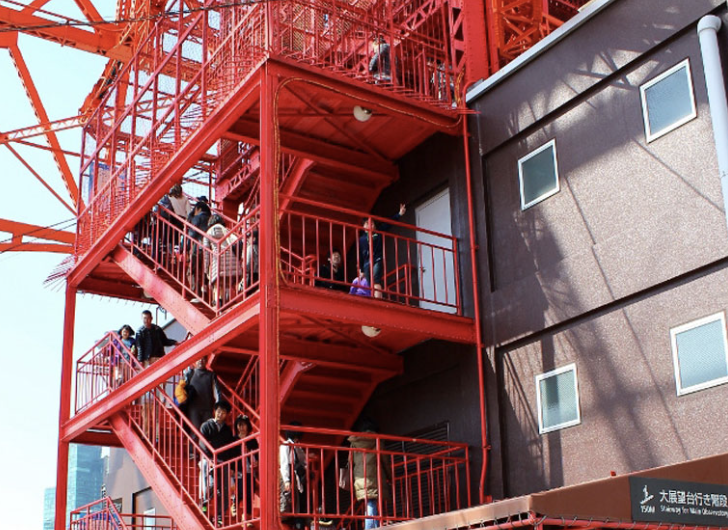
Once you have purchased your ticket, you need to decide how to get up to the 150-metre observatory. You actually have two very different options, and most people don’t realise the second one exists until they see the sign.
The Lift
This is the standard choice. You will head to the lift lobby on the first floor of Foot Town. It is efficient, but be warned: on weekends, the queue here can get long. The lift itself is glass-walled, so you get a rapid, rising view of the city as you shoot up. It takes about 45 seconds to reach the Main Deck. It is definitely the best option if you are travelling with small children, have accessibility needs, or simply want to save your energy for walking around later.
The “Open-Air” Outdoor Stairs
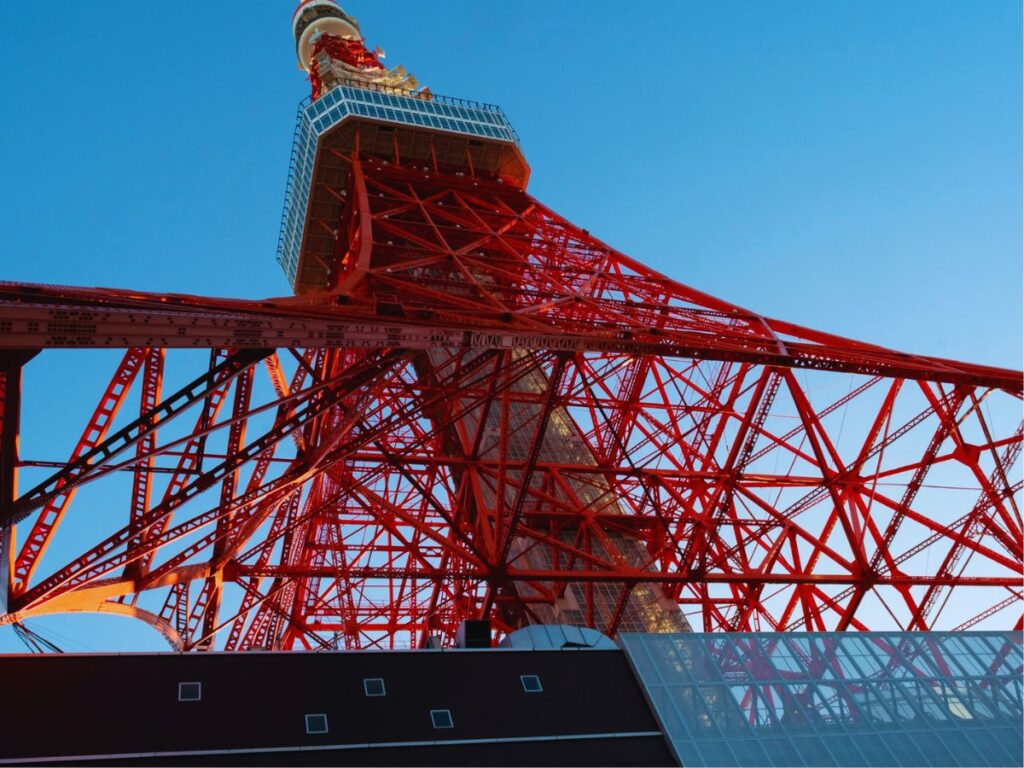
If you are visiting on a weekend or public holiday, we strongly suggest you consider the stairs. You access this course from the roof of the Foot Town building.
There is a common misconception that walking up is free. It is not. You still need to buy the standard Main Deck ticket to enter the stairwell.
The course consists of about 600 steps. We know that number sounds high, but the steps are low and wide, making the climb surprisingly manageable. For an average adult, it takes about 12 to 15 minutes without rushing.
We prefer this method because it is much more engaging than standing in a lift. As you climb, you are walking inside the red steel lattice. You can see the bolts and the layers of paint up close, and because it is open-air, you feel the wind and hear the city sounds fading away as you get higher. To keep you entertained, there are “Noppon Brother” quiz panels (the tower’s mascots) on the landings with trivia questions about the tower.
When you finally reach the top, the staff will hand you a numbered “Ascent Certificate”. It is a small paper card, but it is a fun, tangible piece of proof that you conquered the tower on foot—something you don’t get if you take the lift.
Find Your Way in Japan
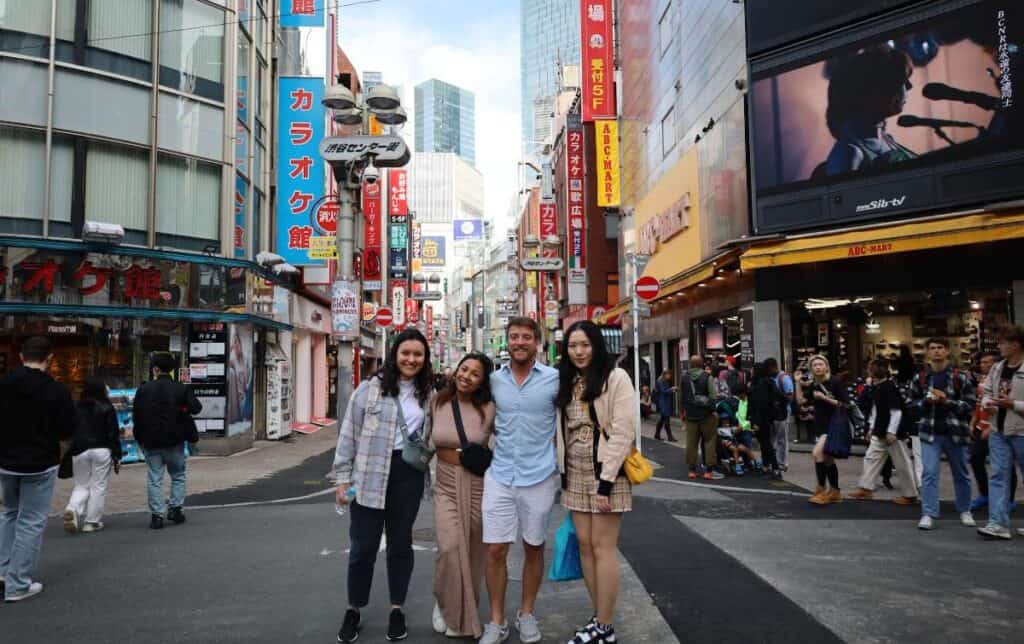
So many sights, so many neighbourhoods… planning where to start in Japan can feel overwhelming. That’s why exploring with a local makes all the difference. On our private walking tours, a local expert guides you through the hidden gems, authentic food, and culture that you’d struggle to find on your own.
→ Explore Our Private Walking Tours
On the Main Deck
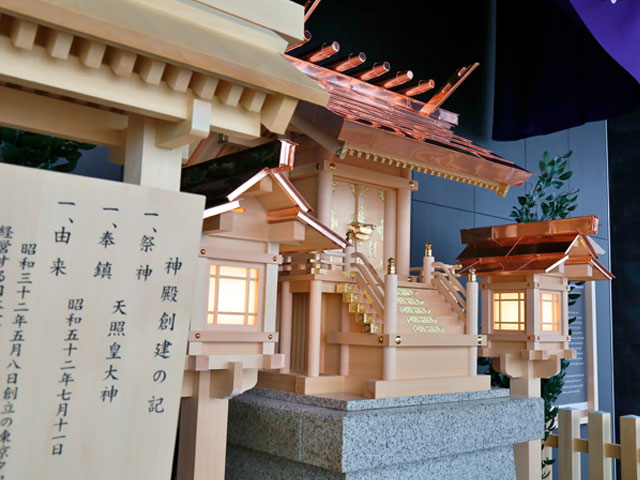
When the lift doors finally slide open, you step out onto the upper floor of the Main Deck at 150 metres. The first thing that hits you is how close the city feels. Because you aren’t at the satellite-like heights of the newer towers, you don’t just see a flat map; you can actually watch the traffic flowing on the highways and spot people walking their dogs in Zojoji Temple below.
We always recommend doing your first lap here on the upper floor, but keep your eyes peeled because the best parts are easy to miss in the crowd. Tucked away in the corner is the Tower Daijingu, which is officially the highest Shinto shrine in Tokyo’s 23 wards. It is a legitimate “power spot,” and we love the tradition here: students pray for high exam scores and couples pray for their love to “rise” to the occasion.
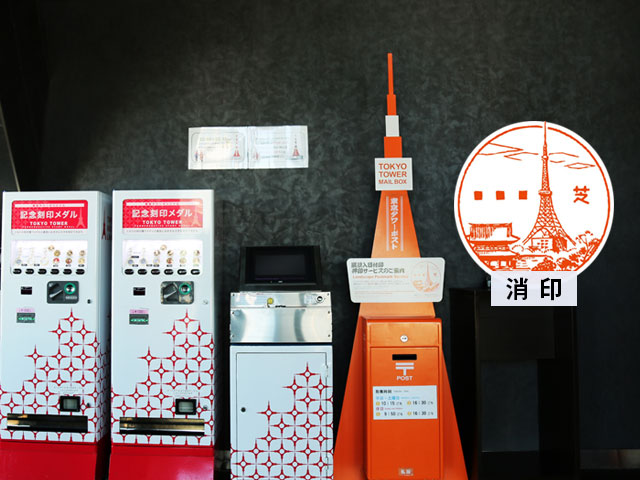
Just a few steps away, near the gift shop, you will find a bright red postbox. If you have a postcard on you, drop it in here. It gets stamped with a unique Tokyo Tower landscape postmark that you cannot get anywhere else in Japan, making it a perfect, cheap souvenir to send to yourself.
Once you have finished the upper loop, head down the stairs to the lower floor. The vibe here is completely different. It feels more relaxed, often with live music playing from the Club333 stage area or people sitting with a coffee at Cafe La Tour to watch the sunset.
The real reason you come down to this floor, however, is to find the Skywalk Window. These are heavy glass panels set right into the floor that let you look 145 metres straight down to the orange steel framework and the ground below.
We won’t lie to you: standing on it is a visceral experience, and your stomach might drop a little. Our advice is to stop and take a photo of your shoes floating over the city streets; it is the classic shot that proves you were there. This lower floor is also where you catch the lift back down to the ground, so make sure you have captured everything you need before you join the queue.
Where to Go After the Tower
Once you are back on solid ground, most people head straight for the subway, but we think that is a mistake. We will be honest with you: as much as we love the view from the observation deck, the best part of Tokyo Tower isn’t actually being in it; it is looking at it. The bright orange steel against the sky is the most iconic sight in the city, and you need to know exactly where to stand to capture it.
Your first stop should be Zojoji Temple, which sits right next door. You can walk there in just a few minutes. The photo you want here is the classic contrast shot. You stand in front of the ancient, wooden main gate with the modern, red steel tower rising dramatically behind it. It perfectly captures the mix of old and new Tokyo in a single frame, and it is the kind of picture that requires zero editing to look professional.
If you want a more relaxed vibe, we recommend walking over to Prince Shiba Park. This is one of the few places in central Tokyo where you can actually sit on the grass. It doesn’t feel like a tourist trap; it feels like the city’s living room. We often grab a coffee or a bento box and just sit here for a while. You get an unobstructed, bottom-to-top view of the tower, and it is a great place to catch your breath away from the crowds.
Finally, for those of you who want the specific shot you have probably seen all over social media, you need to find the underground parking staircase. It is located near the entrance to the Tofuya Ukai restaurant. This spot has become famous because the concrete walls of the staircase frame the tower perfectly, making it look almost like a painting.
We have to warn you that because of its Instagram fame, there is often a queue of people waiting to take the exact same picture, but if you have the patience, the result is admittedly very cool.
Make Your Japan Journey Truly Memorable

Reading about Japan’s culture is one thing — but joining in is something else entirely. Whether it’s folding paper in an origami class, tasting sake with a brewer, or sitting down for a tea ceremony, these hands-on experiences let you see Japan from the inside.
→ Browse Our Cultural Activities in Japan
Tokyo Tower FAQs
Do I need to buy Tokyo Tower tickets in advance?
For the Main Deck (150m), you generally don’t need to. We usually just buy them at the counter on the day, although you might face a short queue on weekends. However, if you decide to go for the Top Deck Tour (250m), we strongly recommend booking in advance online, as these time slots do sell out.
Is walking up the Tokyo Tower stairs difficult?
A lot of people worry about this, but we honestly think it is easier than it sounds. The “Open-Air Outdoor Stairs Course” is about 600 steps, which takes the average person around 15 minutes. It is not a race, and because it is open-air with cool views along the way, it feels much less tiring than a gym stairmaster. Just remember that you can’t take the stairs down; you have to take the lift back.
Is Tokyo Tower better at night or during the day?
This depends on what you want to see. If you want to spot Mount Fuji, you have to go during the day (specifically early morning in winter). However, we also quite like visiting at night. Seeing the city grid light up below you is magical, and the tower itself looks its best when it is illuminated in its signature “Landmark Light.”
Is Tokyo Tower wheelchair accessible?
Yes, it is. The Main Deck is fully accessible via the lifts, and there are barrier-free restrooms available. The “staircase challenge” is obviously not accessible, but the views from the deck are open to everyone.
How much time should I budget for a visit?
We recommend setting aside about 60 to 90 minutes. This gives you plenty of time to buy tickets, browse the souvenir shop, do a full loop of the Main Deck (including the glass floor photo), and visit the shrine. If you plan to walk up the stairs or visit the Top Deck, add another 30 minutes to be safe.
Are there coin lockers available for luggage?
Yes. If you are coming straight from the airport or a hotel checkout, you don’t need to carry your bags up. There are coin lockers located on the first floor of the Foot Town building. They come in various sizes, so you can easily stash a suitcase or a heavy backpack while you explore the decks.