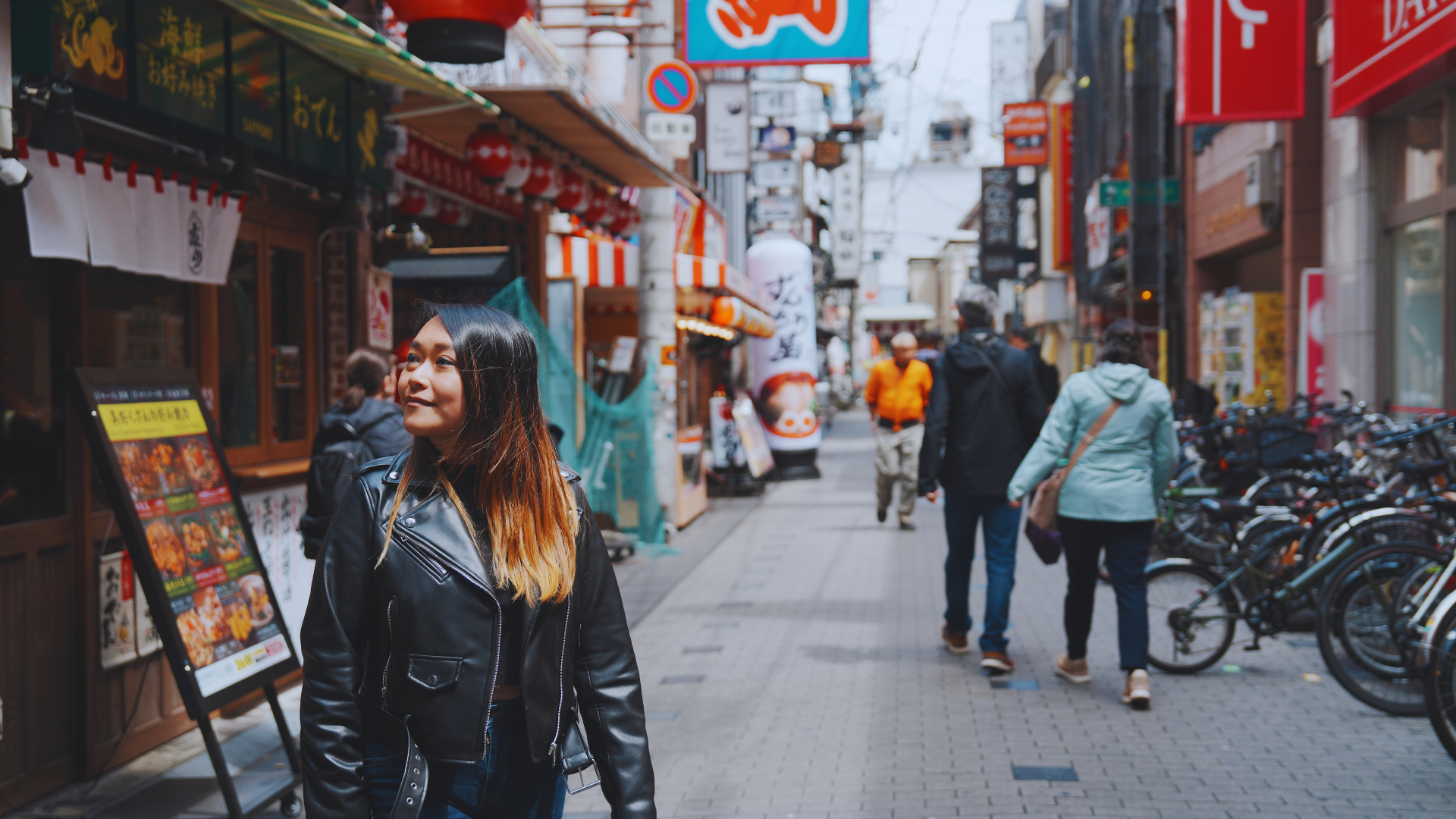
If you only have 24 hours in Osaka, you need to move fast. This city is a loud, energetic destination that is best experienced on foot and with an empty stomach. While you could easily spend a week here, this 1 day Osaka itinerary is designed to hit the “greatest hits” without making you feel like you are just checking boxes.
For a deeper dive into the different districts, make sure to check out our comprehensive Osaka Area Guide.
Before you dive into the plan, there is one major rule you need to know: Universal Studios Japan (USJ) is a full day commitment. If you are visiting Osaka specifically for Super Nintendo World or Harry Potter, you cannot “squeeze” the park into a general sightseeing day. Between the travel time, the massive queues, and the effort it takes to secure a timed entry slot on the official app, USJ will easily take up 10 to 12 hours of your time. If that is your goal, skip the rest of this guide and dedicate your entire day to the park.
Now, if you are ready to see the best of the city in a single day, here is how we recommend you spend your time.
Morning: Osaka Castle Park Area
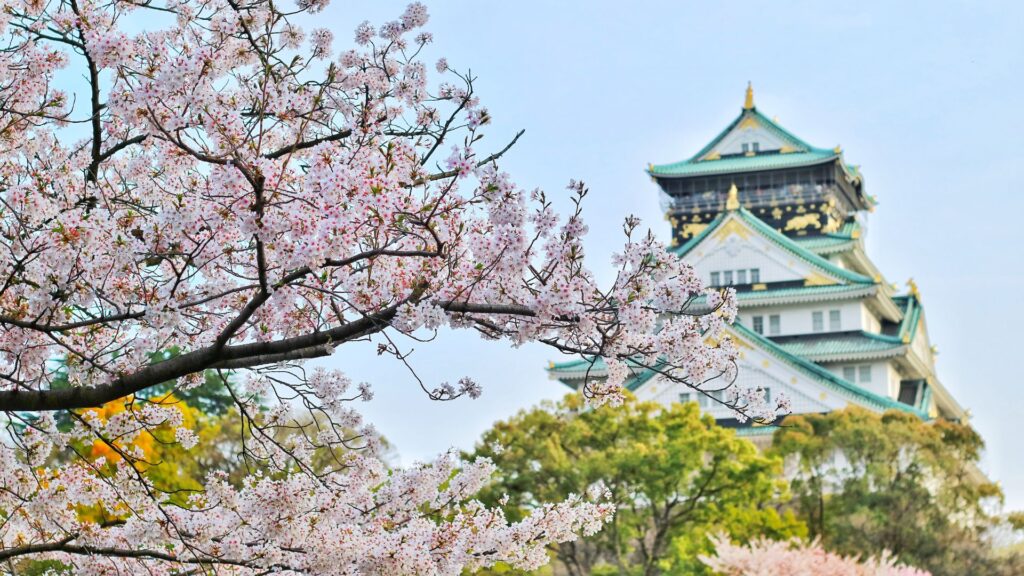
We suggest getting to Osaka Castle by 8:30 AM at the latest. If you show up at 10:00 AM, you will be fighting through a sea of tour flags and selfie sticks. Now, here is our honest take: don’t feel like you have to pay to go inside the main tower. It is a modern concrete reconstruction (that even comes with an elevator), and we think it feels more like a crowded museum or a shopping centre than a historic site. The real soul of the place is in the massive original grounds.
As you walk in through the Otemon Gate, keep your eyes peeled for the Tako-ishi, or “Octopus Stone.” It is the largest stone in the castle walls, and it is absolutely massive. We always find it incredible to stand there and try to imagine how they moved a rock weighing over 100 tonnes without any modern machinery.
Instead of following the heavy flow of people straight toward the long queues at the castle tower, look to your left after you pass through the inner gates. You will see the entrance to Nishinomaru Garden. It costs ¥200 to enter, but that small fee is the best money you will spend all day because it keeps the big tour groups out.
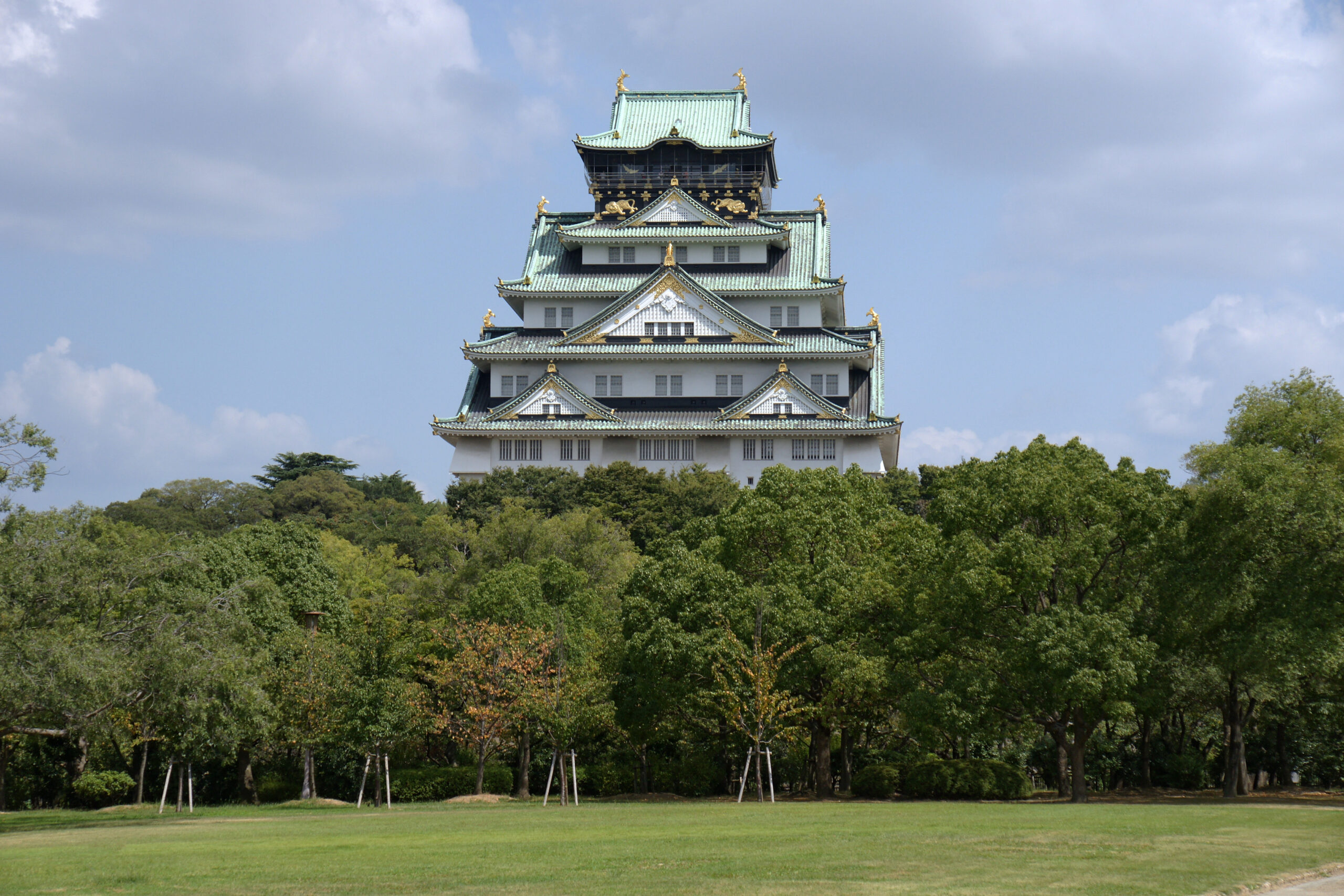
This garden was originally the site of the residence for the wife of Toyotomi Hideyoshi, who was the powerful warlord behind the castle. Today, it is a vast, open lawn that offers what we think is the best view in the entire city. While everyone else is struggling to get a photo of the tower through a crowd, you can stand on the grass and get a perfect, unobstructed shot of the castle.
If you are starting to feel the walk and need a coffee, have a look at Miraiza Osaka-Jo. You will find this handsome stone building right next to the main castle keep. It was built in 1931 as a military headquarters, and the architecture is quite imposing.
We usually skip the souvenir shops on the ground floor, but if you have the time, head straight up to the rooftop terrace. It is a fantastic place to grab a drink and get a really close look at the gold details on the castle roof without having to wait in the tower line. It isn’t a “must-do,” but if you want a comfortable place to sit and enjoy the view for twenty minutes, it is a much better choice than the crowded benches outside.
Lunch: Umeda Area
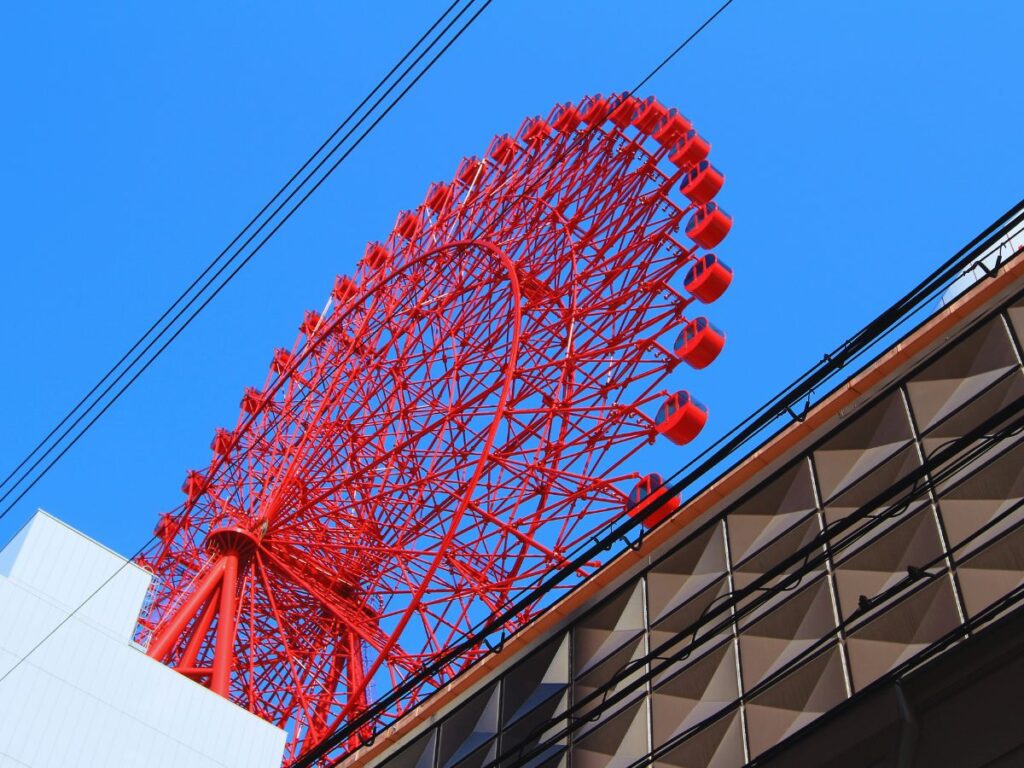
When you are finished at the castle, walk back out toward Tanimachi 4-chome Station. Hop on the Tanimachi Line (the purple one) and head north to Higashi-Umeda Station to see the polished, modern side of Osaka. Umeda is a dizzying maze of glass skyscrapers and massive department stores. It can be a bit overwhelming, but we think the best way to handle it is to head straight underground.
Forget the fancy sit-down restaurants with the long queues. We always lead our friends to the basement of the Hanshin Department Store. Look for a section called the Snack Park. This is a standing-only food hall where locals grab a quick bite.
We highly recommend the Hanshin Ikayaki stand. They serve a legendary Osaka squid pancake that is chewy, salty, and a total local cult favourite. Just find a spot at a standing table, enjoy your pancake, and watch the city’s office workers do the same.
Once you’ve had your fill, walk over to the Umeda Sky Building. It is a bit of a trek from the station, but you will see the two giant towers connected at the top from miles away. Take the lift up to the Floating Garden observatory.
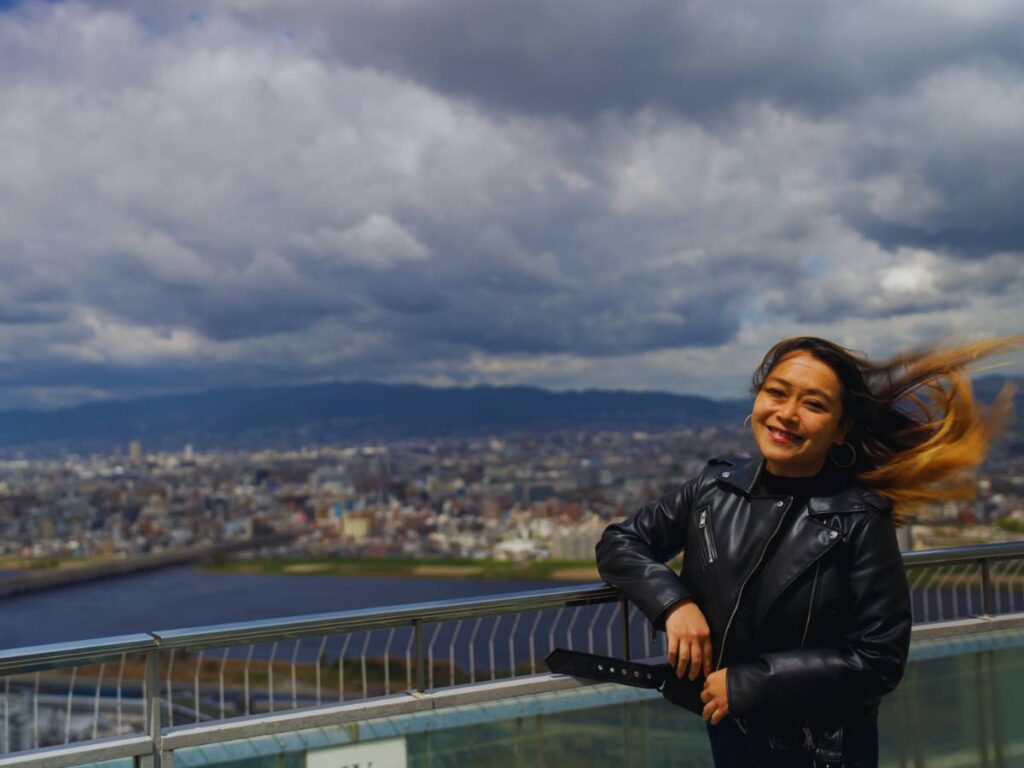
To get to the very top, you have to ride a glass-enclosed escalator that hangs between the two buildings. It is honestly a bit terrifying if you aren’t fond of heights, but the 360-degree open-air deck at 173 metres up is worth the nerves. It is one of our favourite spots to see just how massive this city actually is. If you’re still not convinced that Umeda Sky Building is worth a visit, read our honest review:
Afternoon: Shinsaibashi Area
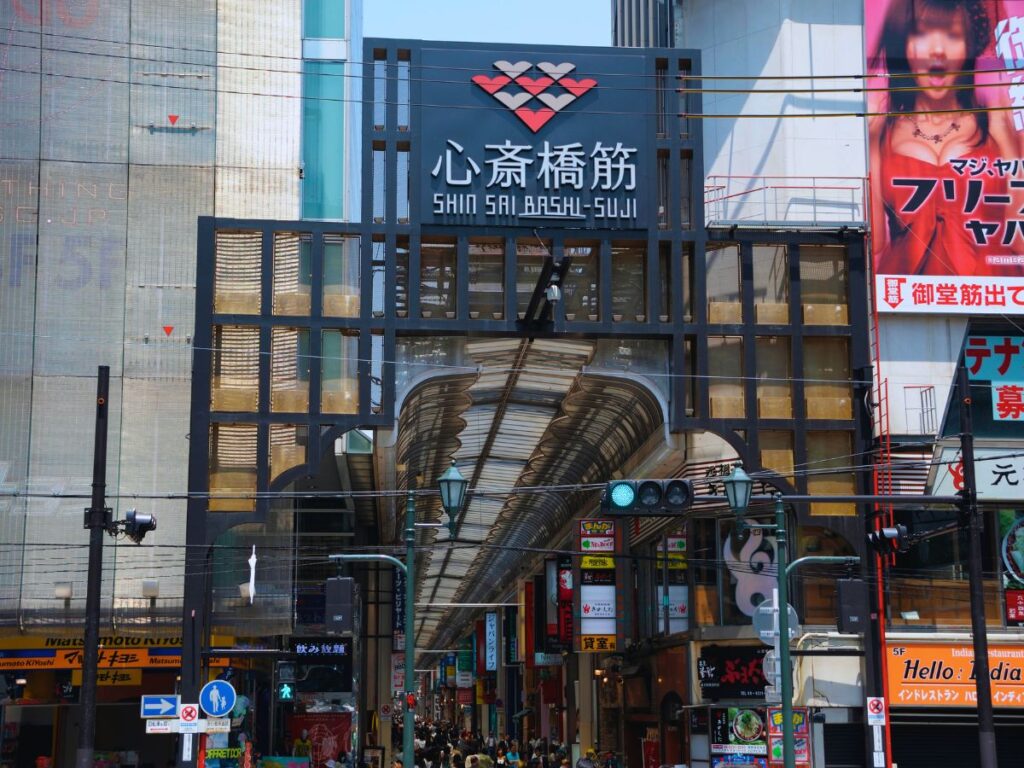
From Umeda, find your way to the Midosuji Line (the red one) and take it south to Shinsaibashi Station. When you step out of the station, the first thing you will notice is the entrance to the Shinsaibashi-suji Shopping Arcade. Honestly, it is a bit of a shock to the system at first. It is this massive, covered street that seems to go on forever, and the sheer volume of people can be pretty intense.
It is incredibly crowded, and you are going to see a lot of the same global brands like Uniqlo or H&M that you have back home. But even if you aren’t there to shop, we think it is worth walking at least a few blocks.
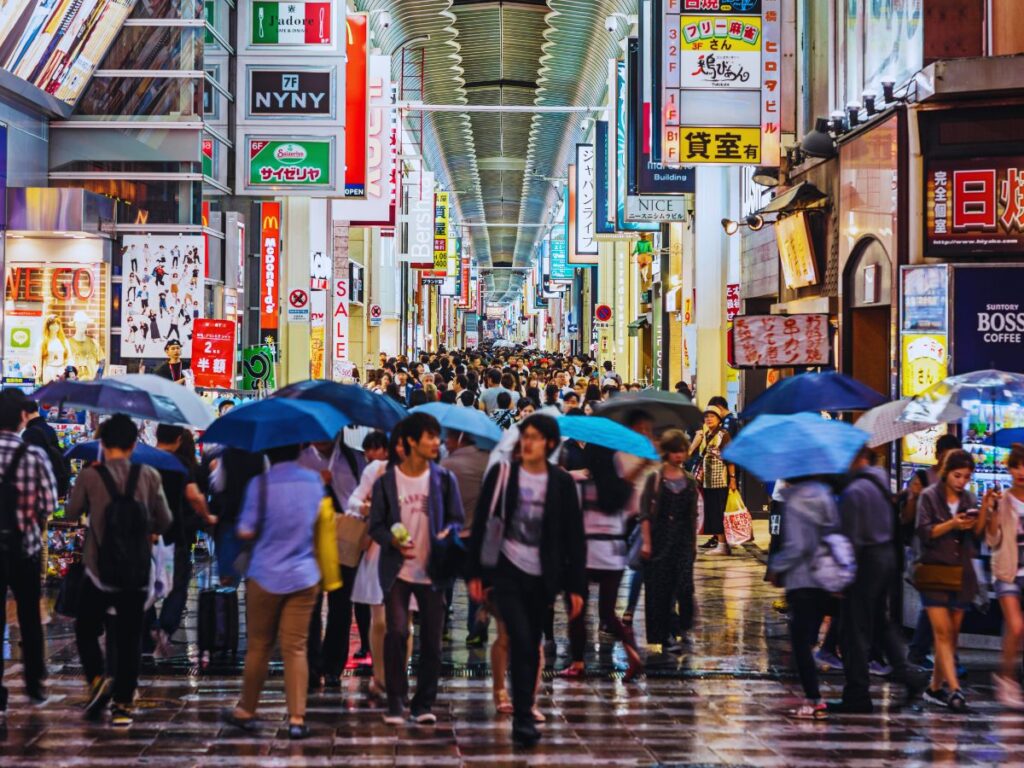
Your first impression will probably be a mix of “wow” and “get me out of here,” but that sensory overload of bright signs and shop staff shouting their deals (which they will say is ‘only for today’ but seem to be happening every single day) is exactly what makes an Osaka “shotengai” so iconic.
Once you have had your fill of the main arcade, we suggest you take a quick detour just a few blocks west into Amerikamura, or “Amemura.” Think of it as the gritty, rebellious sibling to Tokyo’s Harajuku. It has been the centre of Osaka’s youth culture since the 1970s when shops first started selling imported American vintage jeans and records.
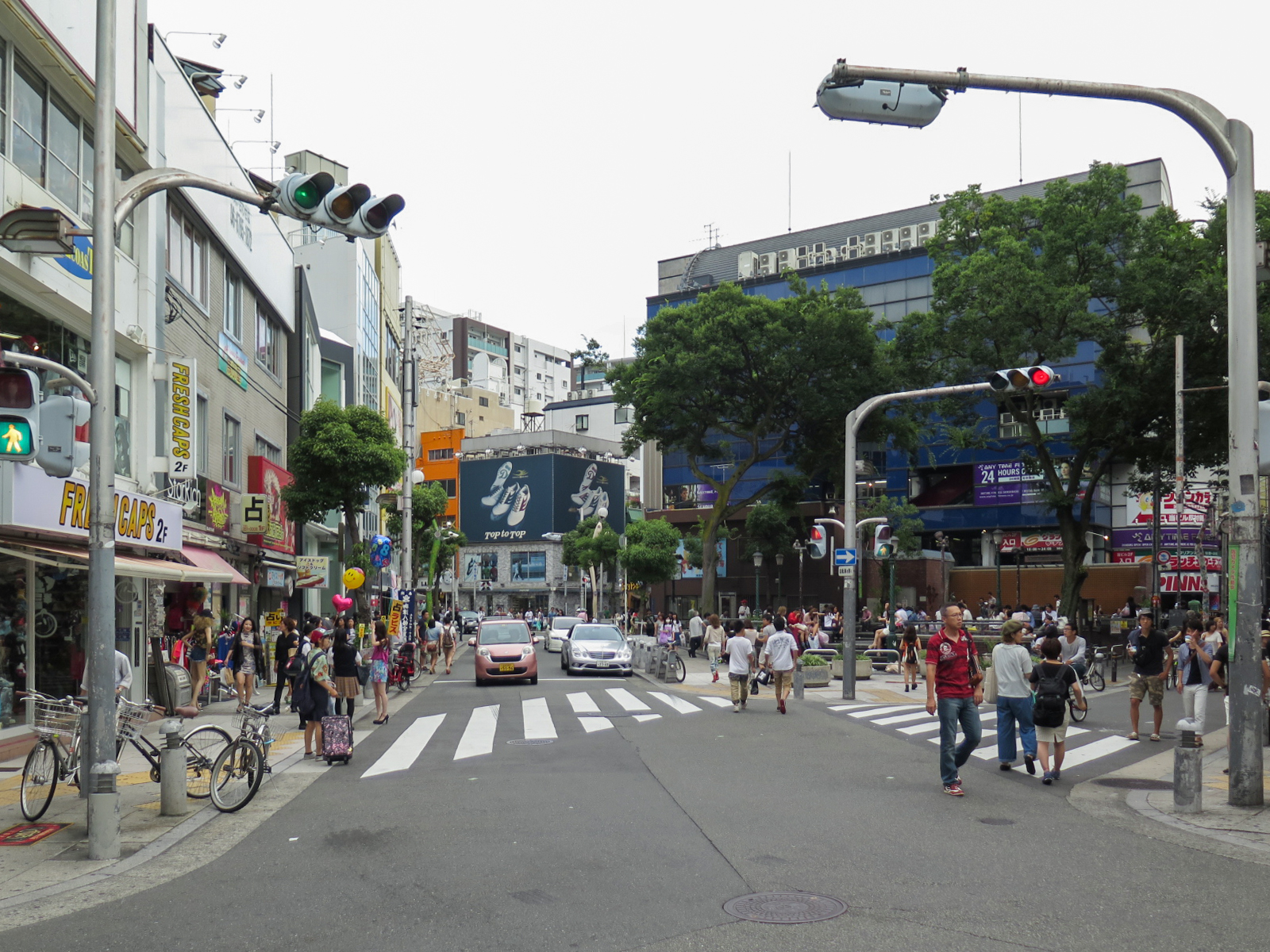
As you walk the streets, you cannot miss the humanoid lamp posts. They look like artist’s mannequins in different poses, and they are unique to this neighbourhood. Keep an eye out for the small Statue of Liberty perched on a rooftop too; it’s a nod to the area’s “American Village” name.
The heart of the action is Triangle Park (Sankaku Koen). Honestly, it isn’t much of a “park”. It’s really just a triangular concrete plaza, but it is the ultimate stage for the city’s fashionistas, skaters, and up-and-coming musicians.
We always recommend heading to Kogaryu, the takoyaki shop right across from the park. They are famous for their “Salt and Green Onion” topping, which is much lighter than the traditional heavy sauce. Grab a box, find a spot on the concrete steps in the park, and just watch the world go by. It’s the best way to see the “real” Osaka youth culture in action.
After people-watching in Amemura, start walking south toward the canal. You will notice the streets getting narrower and the neon signs getting larger. It’s a bit chaotic and loud, but in our opinion, you haven’t truly seen Osaka until you’ve spent some time getting lost in these side streets.
Evening: Dotonbori Area
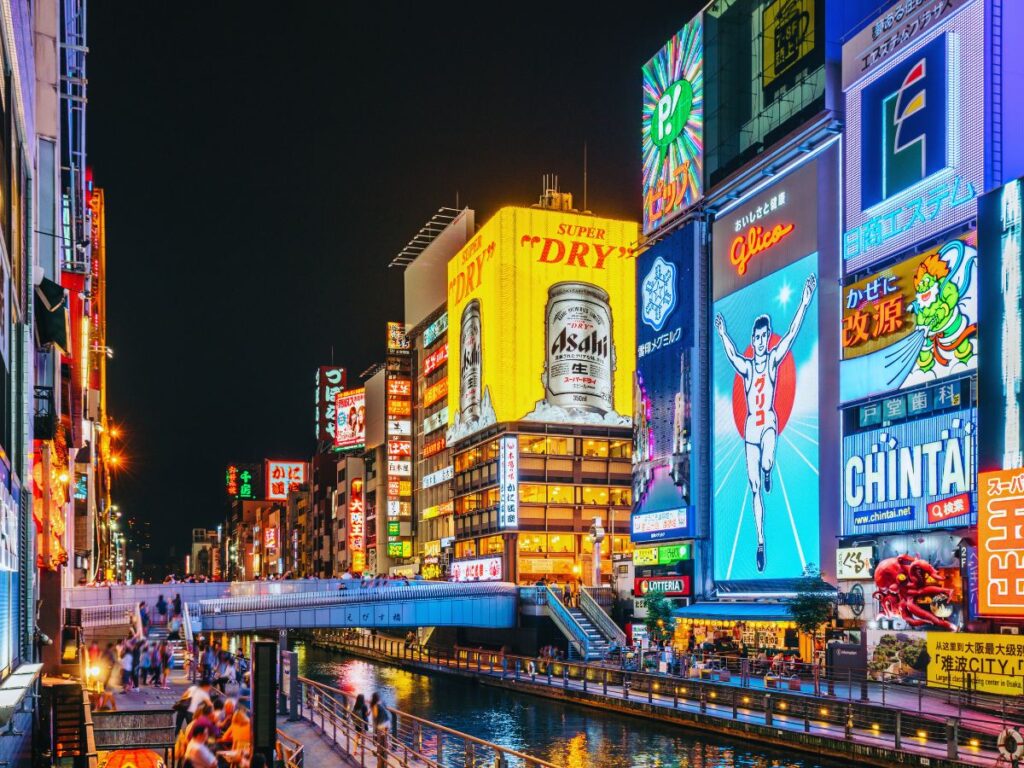
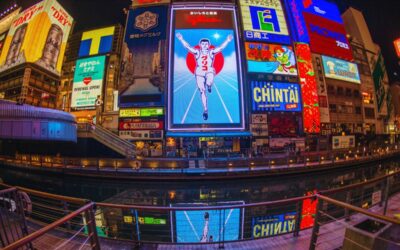
You will know you are close to this Osaka must-go when the narrow streets open up into a canyon of light. This is Dotonbori, and it is exactly what you have seen in the movies. You’ll see giant moving mechanical crabs, flashing LED billboards, and a literal sea of people. Being here makes you feel like you have finally reached the heart of Osaka.
The first thing you should do is head to Ebisu Bridge. This is where everyone gets a photo with the Glico Running Man. He has been a landmark here since 1935, and honestly, it is one of those tourist rituals that you just have to do.
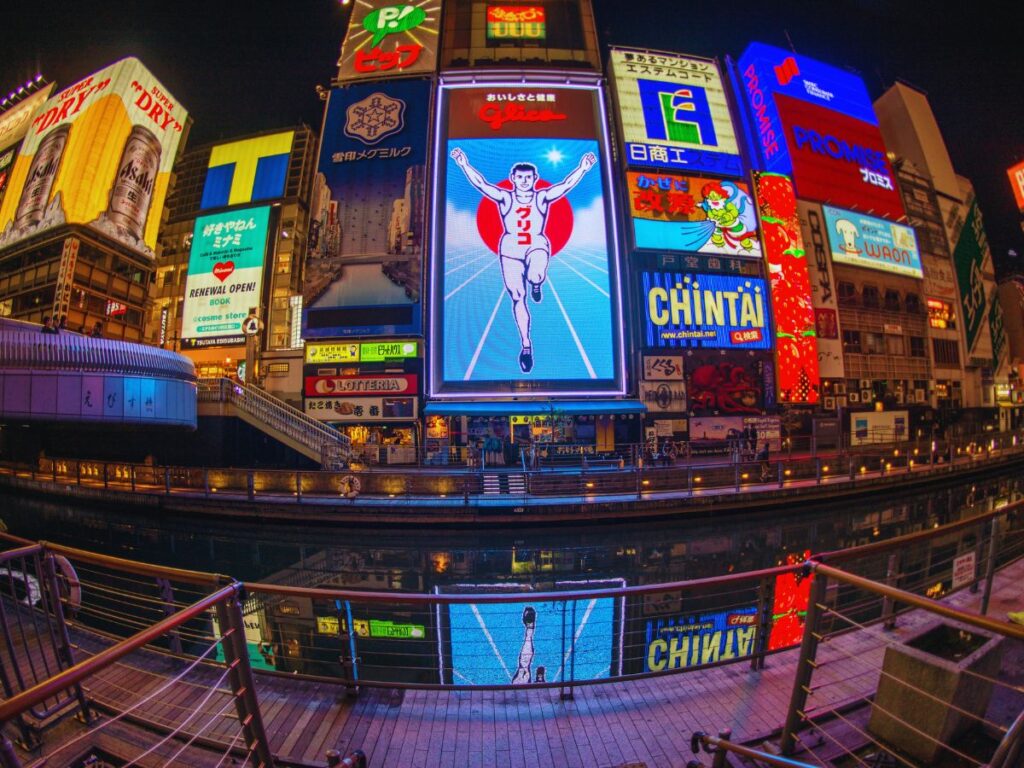
Don’t just stand on the bridge with everyone else. If you walk down the stairs to the river level, you can often get a much better angle with the neon reflections in the water and a bit more breathing room.
For dinner, you are in the holy land of “Konamon” (flour-based soul food). If you want the best okonomiyaki, we suggest heading to Mizuno. They are famous for their Yamaimoyaki, a pancake made with mountain yam instead of flour. It is incredibly fluffy and light.
Another solid choice is Ajinoya, where they have perfected the balance of cabbage and batter. Just be prepared for a queue at both; they are popular for a reason.
If you aren’t in the mood for pancakes, look for the Dotonbori branch of Daruma. You will recognise it by the giant, angry-looking chef statue out front. This is the place for Kushikatsu (deep-fried skewers).
When the neon lights and the noise start to feel like too much, we have a secret for you. Just a block away from the main canal is Hozenji Yokocho. It is a tiny, stone-paved alleyway that feels like you have stepped back 100 years.
At the end of the alley, you will find a small temple with a statue of Fudo Myoo that is entirely covered in thick, vibrant green moss. People splash water over the statue as they make a wish, which is why the moss is so lush.
The temple is open 24 hours a day, so it is just as atmospheric late at night when the lanterns are glowing. It is one of the most peaceful spots in the city and the perfect place to catch your breath and reflect on the day before you finally head back to your hotel.
1 Day Osaka Itinerary FAQs
Is one day enough for an Osaka day tour?
It is enough for a “greatest hits” tour, but you will be walking a lot. If you want a more relaxed pace or want to include Universal Studios Japan, you definitely need at least two or three days.
What is the best way to get around?
Do not buy individual tickets. Use a digital IC card (like Suica) on your phone. If you are following this itinerary, the Osaka Metro Day Pass (¥820 on weekdays / ¥620 on weekends) usually pays for itself after three or four rides. You can buy these at any station ticket machine.
Do I need to book anything in advance?
For this specific itinerary, no. However, if you decide to swap something out for spots like USJ, you should check our Japan Travel Reservations Guide.
Should I stay in Umeda or Namba?
For a one-day trip, stay in Namba. It puts you right in the middle of the best food and nightlife, so you don’t have to worry about train schedules at the end of the night. Plus, the Nankai line from Namba is the easiest way to get back to the airport.