Let’s be really honest, visiting Japan is probably the top bucket list icon for almost every otaku out there. Being able to make the trip to experience everything you’ve watched on screen in real life is such a dream…and if you’re reading this post, then I’m hoping that dream is becoming a reality for you!
To make sure you get to make the absolute most of your otaku trip, I’ve created this list of 15 anime places in real life that you have to at least consider going to. There’s a bunch of real settings from anime, as well as a few museums and even a theme park to complete the adventure.
Want the ultimate Japan otaku experience?
You can 100% take your own self-led anime tour around Japan, however, if you don’t want the stress of planning it all yourself, you can also join our ultimate anime group trip across Japan or an otaku tour in Tokyo. That way, an expert otaku local guide can take you to all the best anime places in real life whilst answering your questions, and letting you focus on the fun.
Tokyo Anime Places in Real Life

Suga Shrine – Kimi no Na wa (Your Name)
Location: Suga Shrine, Shinjuku
I have to start with one of the most iconic real-life anime settings: the staircase where Taki and Mitsuha finally meet again in Your Name. The setting is actually the real-life entrance to the Suga Shrine in Yotsuya, Shinjuku, and looks the same as in the movie. There are usually at least a few other otaku around to take photos, but there’s rarely an actual crowd at the temple.
Tokyo Tower – Meitantei Konan (Detective Conan)
Location: Tokyo Tower, Minato
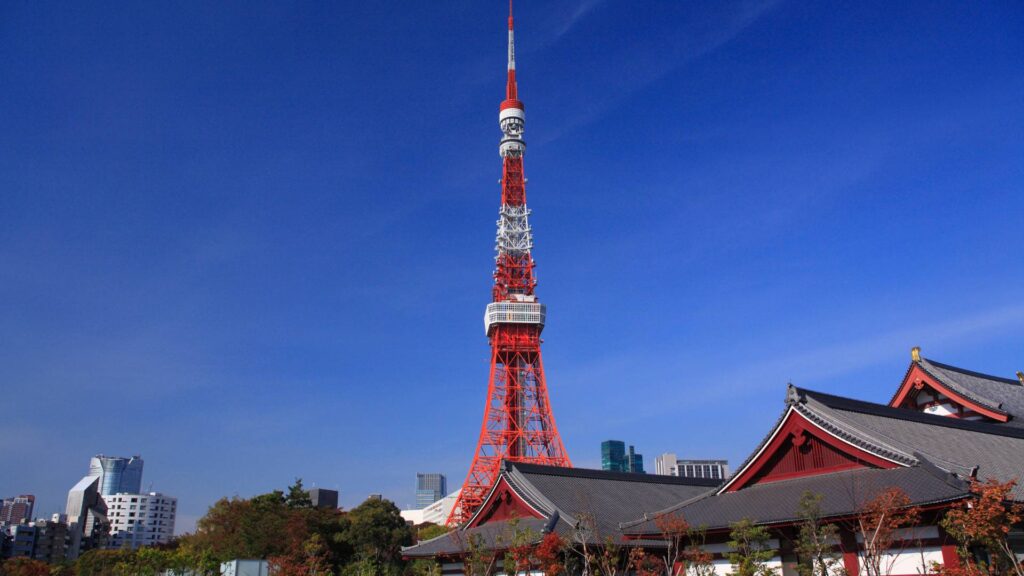
You’ll likely already be planning on at least doing some sightseeing that involves a stop at Tokyo Tower during your trip, but if you’re a Detective Conan fan, it has to become a dedicated stop. So many climactic scenes from the show take place here, and I especially recommend going at night to see the tower beautifully lit up against the backdrop of Tokyo.
Nakamise Street – Kimestu no Yaiba (Demon Slayer)
Location: Nakamise Street, Asakusa
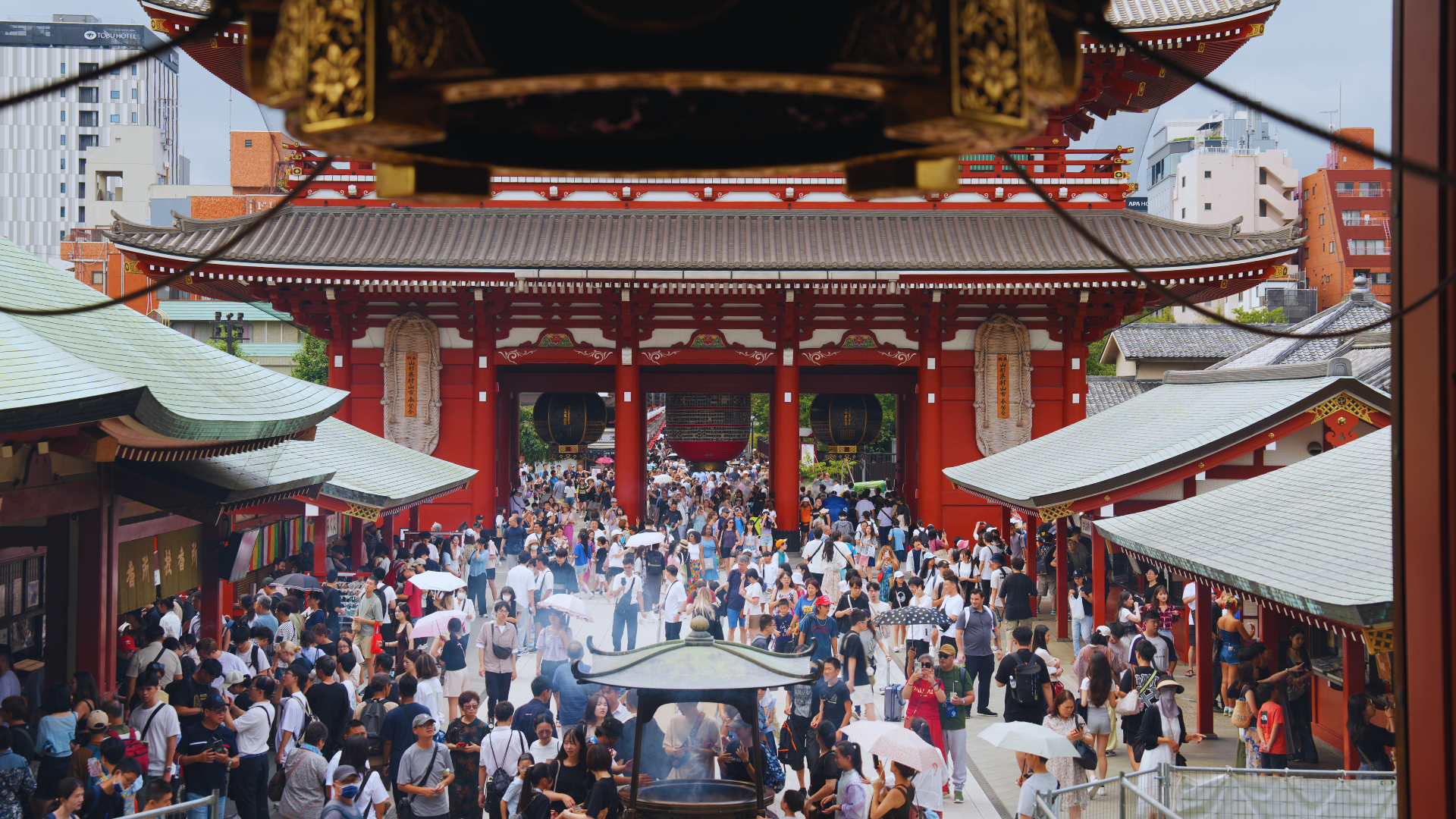
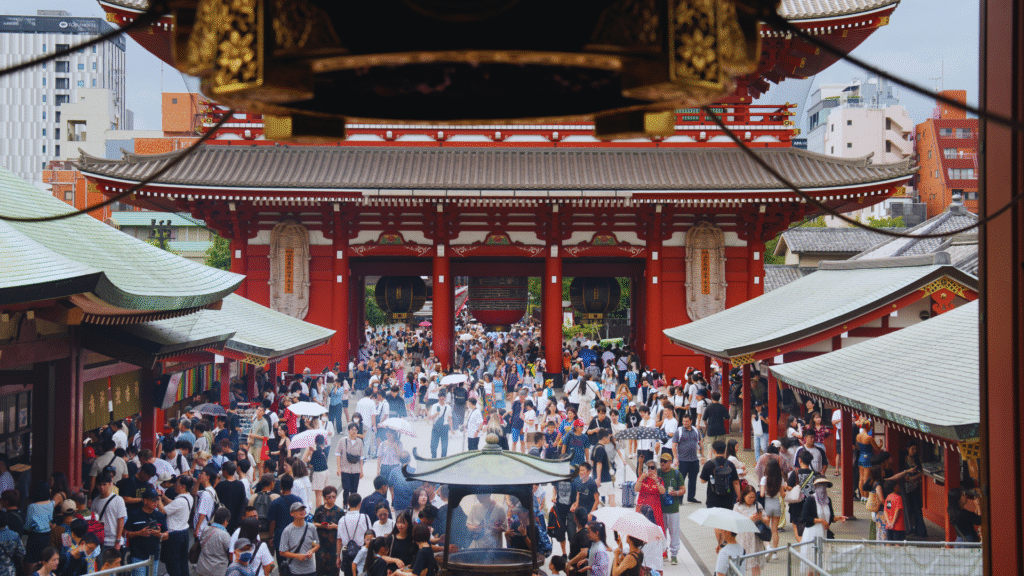
I’m willing to bet that the first time you arrive at Nakamise shopping street by Senso-Ji temple, you’re going to feel exactly how Tanjiro did…in awe and just a little overwhelmed. The streets are packed with people, there are souvenir stalls on every side, and it’s almost impossible to take in everything. The area feels both old and new, and it does seem like Muzan could suddenly appear through the crowds at any time.
Shibuya Crossing – Tokyo Ribenjazu (Tokyo Revengers) and Tokyo Goru (Tokyo Ghoul)
Location: Scramble Crossing, Shibuya
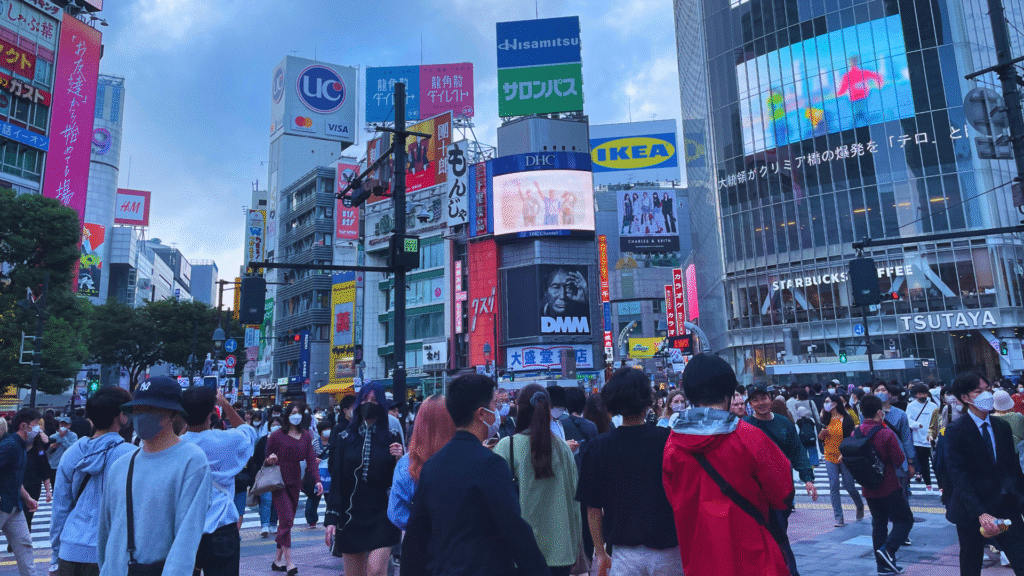
Shibuya Crossing is one of the most recognisable places in all of Tokyo — and it’s no surprise that it plays a major role in several anime, including Tokyo Revengers and Tokyo Ghoul. In Tokyo Revengers, Shibuya is home turf for several key gangs, and many of the show’s pivotal moments unfold around this bustling area. In Tokyo Ghoul, the crossing and surrounding streets serve as the dramatic backdrop for several of Kaneki’s battles.
Azabu Juban – Bishojo Senshi Sera Mun (Sailor Moon)
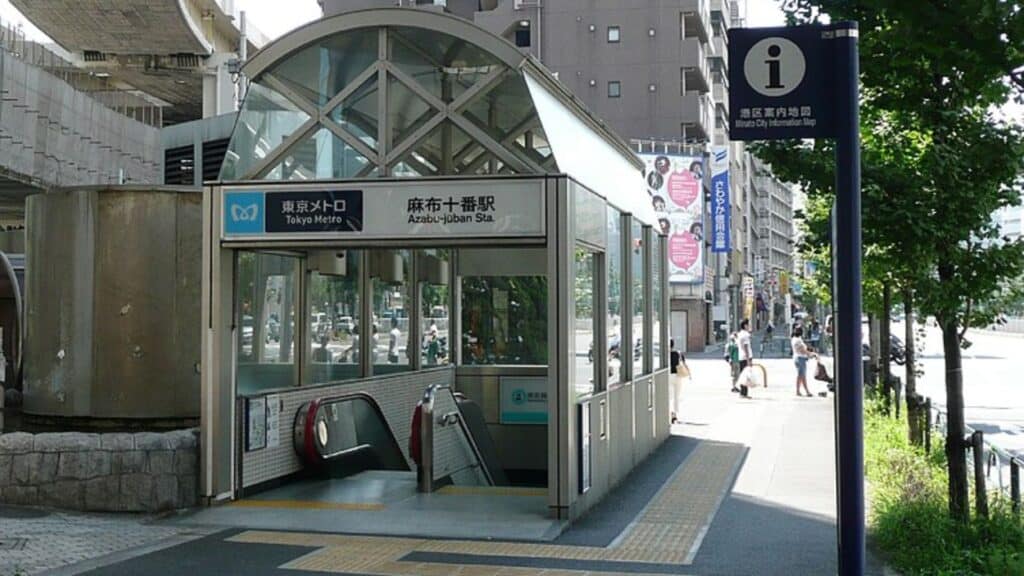
Location: Azabujuban, Minato
For Sailor Moon lovers, Azabu Juban is practically sacred ground. It’s the real-life neighbourhood where Usagi Tsukino (Sailor Moon) and her friends lived and went to school, with so many exact locations that you can walk around to. A few specific spots in the area are:
Kasumigaseki – Death Note (Desu Nōto)

Location: Kasumigaseki, Chiyoda
Like a lot of people, I think of Death Note as one of the “gateway drug” anime that really got me hooked. So being able to visit a neighbourhood featured in the show (specifically episodes 7 and 8) is so cool. Kasumigaseki isn’t too much of a tourist spot, so there are never crowds. Some specific spots from Death Note are:
Anime Places in Real Life Outside of Tokyo
Hakone – Shin Seiki Evangelion (Neon Genesis Evangelion)
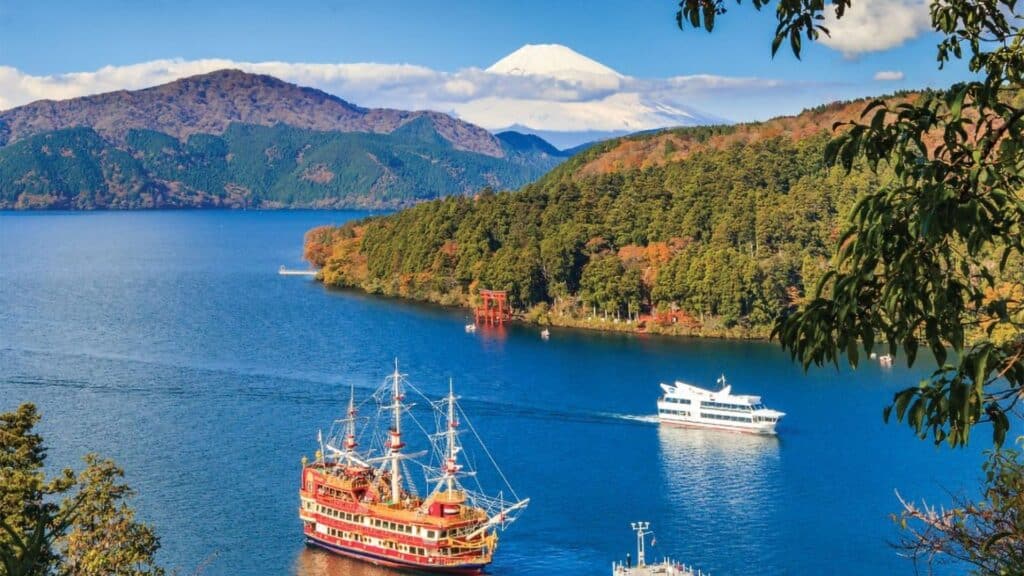
Location: Hakone, Kanagawa
Fans of Neon Genesis Evangelion might be surprised to learn that the city of Hakone was the real-life inspiration for Tokyo-3, the fortified city where much of the anime takes place. Not only can you walk around the streets imagining you’re in the anime in real life, but there’s also plenty of Evangelion-themed things around, like the Evangelion Store.
Yakushima Island – Mononoke Hime (Princess Mononoke)
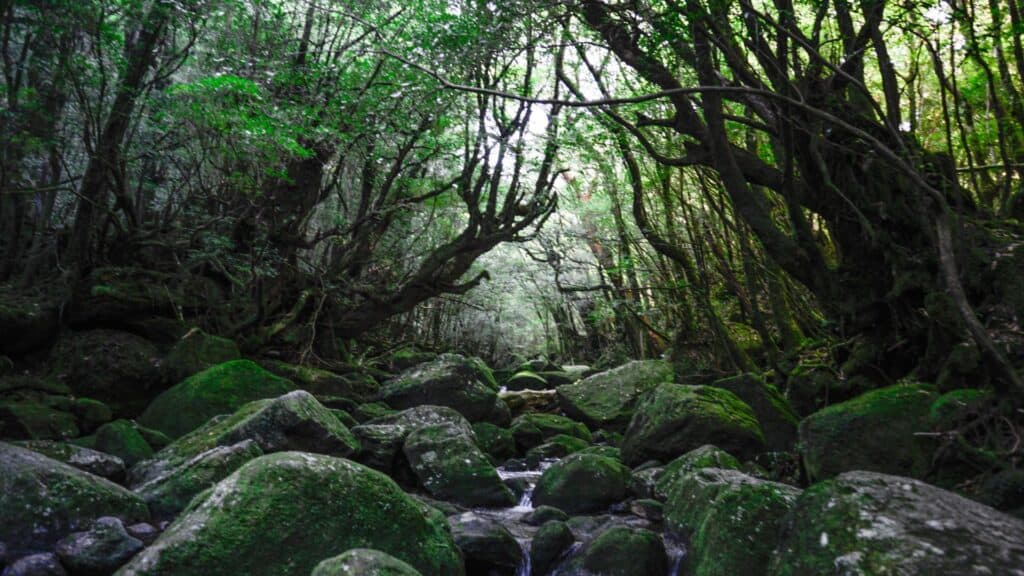
Location: Yakushima, Kagoshima
First things first, Yakushima is definitely the more difficult anime place in real life to actually get to. It’s literally an island off the coast of Kyushu that you have to fly to or take a 2-3 hour ferry from Kagoshima to get to.
That being said, it’s an incredible place. The subtropical and ancient rainforests transport you straight into the world of Princess Mononoke, with lots of hiking and trail huts where you can stay overnight.
Dogo Onsen – Sen to Chihiro no Kamikakushi (Spirited Away)
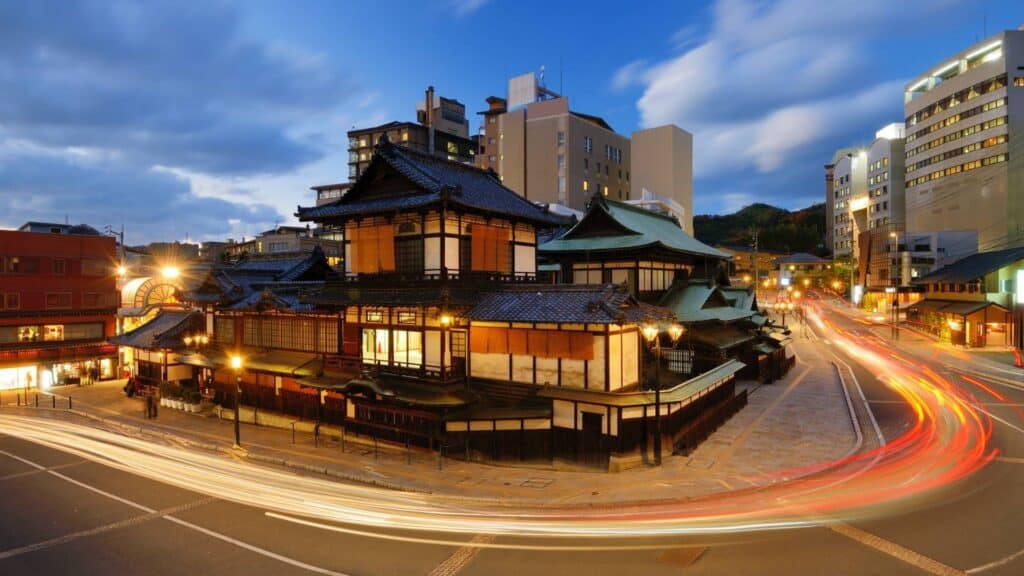
Location: Dogo Onsen, Matsuyama
Let’s continue with the real-life Studio Ghibli settings and talk about Spirited Away. It has never been officially said where the exact inspiration for the bath house in the movie is, however, many people speculate it to be Dogo Onsen in Matsuyama…and if you see it, I have a feeling you’ll agree. With the wooden roofs, lanterns, and beams, the building is simply beyond spectacular.
Yokohama – Bungo Sutorei Doggusu (Bungou Stray Dogs)
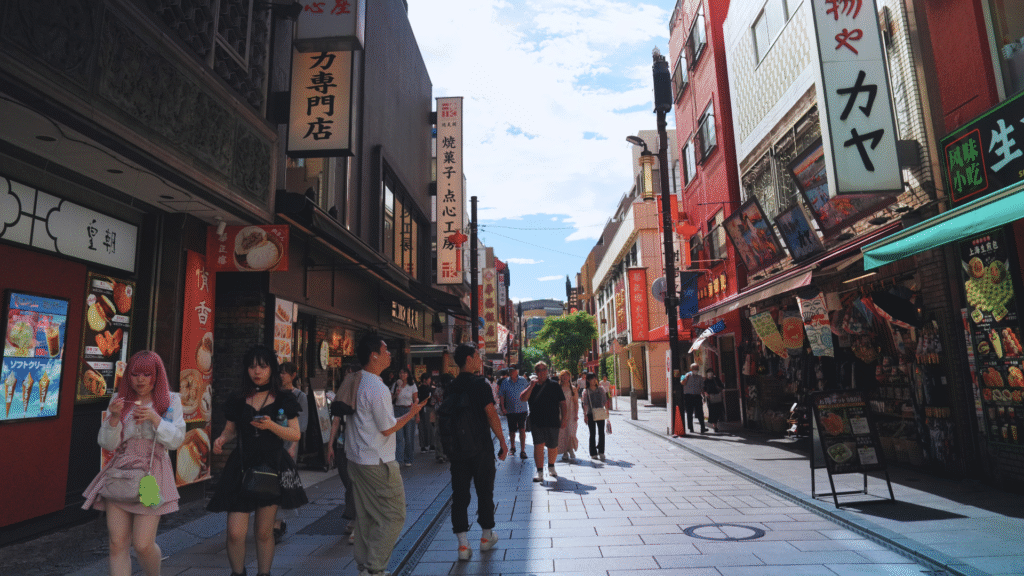
Location: Yokohama, Kanagawa
Yokohama is such a major part of Bungou Stray Dogs. It’s also a really easy day trip from Tokyo with a lot more to do there than just anime sightseeing (like Chinatown, the harbour, and the cup noodle museum)…but I know that’s not why you’re on this list! A few specific locations are:
Shirakawa-go – Higurashi no Naku Koro Ni (Higurashi When They Cry)
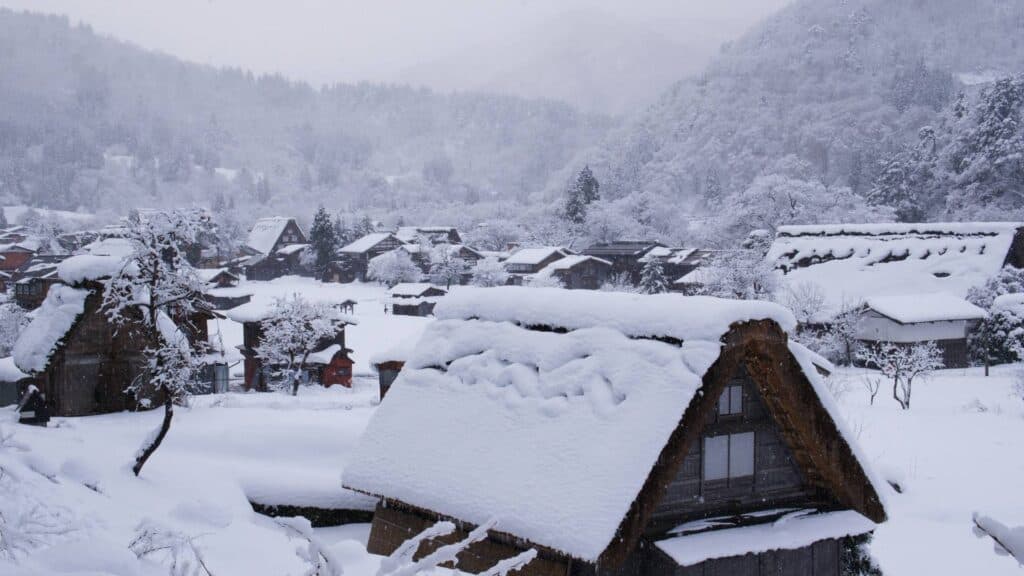
Location: Shirakawa-go, Gifu
Shirakawa-go has become quite the famous tourist spot recently, thanks to the amazing triangular huts that look straight out of a postcard all year round (but especially when covered in snow every winter). It’s also the real inspiration for Hinamizawa…so, if you’ve seen the show, you might want to be careful when visiting!
Museums and Experiences for Anime-Lovers
Kyoto International Manga Museum
Location: Kyoto International Manga Museum, Kyoto
If you’re an otaku in Kyoto, then I really think you’ll love this spot. The museum celebrates the history, artistry, and global impact of manga, with over 300,000 manga items in its collection, making it one of the largest manga libraries in the world. You can browse, read, and even borrow manga on-site, or visit one of the rotating temporary exhibits.
Opening Hours: Thurs to Tues, 10am to 5pm
Admission: ¥1,200 for adults, ¥400 for junior and high school students, ¥200 for elementary school students
Toei Animation Museum
Location: Toei Animation Museum, Nerima
First and foremost, visiting the Toei Animation Museum is completely free! It’s also in Tokyo, so super convenient to get to. It’s located in Nerima, which is considered the potential birthplace of anime, with Toei Animation specifically having produced some of the most iconic series in anime history, like Dragon Ball, One Piece, and Sailor Moon.
Opening Hours: Thurs to Tues, 11am to 3:30pm
Admission: Free!
See more otaku attractions in Tokyo
Nijigen No Mori
Location: Nijigen no Mori, Hyogo
Nijigen no Mori is surprisingly unknown, but in my opinion, it is well worth the visit! It’s described as a theme park, but it’s not like any other theme park you’ve been to. The island is in Hyogo and filled with different themed “experiences” for things like Naruto, Croyon Shinchan, and Demon Slayer. You can also zipline into Godzilla’s mouth and meet Hello Kitty…so yeah, it’s pretty cool.
Opening Hours: Tues to Sat, 9am to 10pm, Sun and Mon, 10am to 10pm
Admission: Free entry with paid experiences
Ghibli Museum
Location: Ghibli Museum, Mitaka
Everyone just loves the Ghibli Museum, and I have to agree with them. It feels like stepping into a real-life Ghibli museum with so many sweet surprises and beautiful exhibitions. The nearby Inokashita Park and Kichijoji neighbourhood are just as lovely, making it a lovely day out all in all.
Getting tickets can be a little tricky, you have to book on the 10th of the month before, but you can check out our full reservations guide to get more info on this.
Opening Hours: Wed to Mon, 10am to 6pm
Admission: ¥1,000 for adults, ¥700 for junior and high school students, ¥400 for elementary school students, ¥100 for toddlers (4+)
One Piece Kumamote Statues
Location: Luffy Statue, Chuo, Kumamoto
Kumamoto is the birthplace of the one and only Oda (and if you don’t know who that is, I can’t help you). To celebrate his creations, the city has created 10 life-sized statues of the Mugiwara crew that are scattered throughout Kumamote. Most of them also have nearby stalls selling One Piece souvenirs and special items, so you can bring home a souvenir from your trip.
Admission: Free!
Anime Places in Real Life FAQs
Is Akihabara foreigner-friendly?
Absolutely! Akihabara is super foreigner-friendly with plenty of English signage, bilingual staff, and most shops and restaurants catering to tourists.
Where to go in Japan if you love One Piece?
For sure, you should visit Kumamoto if you have time. If not, there are plenty of places around Tokyo that are great for One Piece fans, like the Mugiwara Stores in Ikebukuro and Shibuya.
What city is known for anime?
Tokyo, particularly districts like Akihabara and Nerima, is Japan’s anime hub, while Kyoto and Osaka also host studios and themed attractions.
What is the #1 anime in Japan?
This varies by year and source, but One Piece is consistently one of the most popular and long-running anime in Japan.
Where is the anime centre in Japan?
The Tokyo International Anime Centre in Akihabara serves as a key hub, alongside various museums and districts across the country, celebrating anime culture.