When people plan a trip to Japan, they almost always think of Tokyo or Kyoto. But as a travel agency based in Japan, we want to let you in on a secret: you should really think about heading north. Way, way north, to the very top of Japan’s main island.
That place is Aomori.
Aomori is famous for a few very special things. We’re talking about the best, juiciest apples you will ever taste. We’re talking about cities that get more snow than almost anywhere else on Earth. And we’re talking about one of Japan’s most incredible festivals, the Nebuta Matsuri. It’s the perfect place if you want to see a side of Japan that feels wilder and more traditional.
But we know Aomori can seem far away. A lot of travellers ask us, “Is it worth the long train ride?” or “What is there to do besides the big festival?” It can be tricky to plan.
That’s exactly why we made this guide. We want to show you, step-by-step, why we love it and how to plan a perfect trip. We’ll break down the best times to go, the easiest ways to get there, and all the top things you just have to do, eat, and see.
Let’s Plan Your Trip Together

Thinking about an Aomori adventure but not sure where to begin? From the wild nature of Lake Towada to the energy of the Nebuta festival, we’ll put together a bespoke plan shaped around your interests, budget, and pace. You get the joy of travelling without the stress of endless research.
→ Start Building My Personalised Japan Itinerary
When to Go & How to Get Around Aomori
The two questions we get asked the most are “When should we go?” and “How do we get around?” For Aomori, this is extra important, because the seasons change everything, and the best sights are really spread out.
What is the Best Time to Visit Aomori?
Honestly, we love Aomori all year round, but the best time for you depends on what you want to see.
Summer is Aomori’s big festival season. If you can, we think you should plan your trip to be here in early August for the Nebuta Matsuri. It’s an amazing parade with giant, glowing paper floats. It’s also the perfect weather for hiking around the beautiful Lake Towada and Oirase Stream.
Love summer festivals? Here are 6 others we highly recommend:
If you’re a cherry blossom fan, you have to visit Aomori in spring. The Hirosaki Cherry Blossom Festival is, in our opinion, one of the top 3 best places in all of Japan to see sakura. The way the petals fill the castle moat is just magical.
Autumn is when Aomori’s nature really shows off. The autumn colours around Lake Towada and the Oirase Stream are world-class. If you love hiking and crisp, cool weather, we really recommend visiting in October.
Also check out these other stunning autumn spots in Tohoku:
Do you want to see serious snow? Aomori’s winter is famous for it. This is when you can go up the Hakkoda Mountains to see the “snow monsters”—huge trees completely covered in snow and ice. It’s like visiting another planet.
Getting To and Around Aomori
Getting to Aomori is easier than you might think. You can fly from Tokyo (Haneda) right into Aomori Airport (AOR). It’s quick and easy. However, by train is our favourite way. You can take the Tohoku Shinkansen (bullet train) straight from Tokyo. It’s a fast and comfortable ride (just over 3 hours) and you get to see the country change as you go north.
Once you’re here, you have two main choices. We recommend renting a car. If you want to see the best nature spots like Lake Towada, the Shirakami Sanchi forests, or the remote Shimokita Peninsula (“Fear Mountain”), you will need a car. It gives you so much freedom.
If you only plan to see the cities, you can use trains and local buses. It’s pretty easy to get between Aomori City and Hirosaki using the train.
What to Do in Aomori
Aomori is a big prefecture (we know we said that, but it’s worth repeating!), so to make planning easier, we think it’s best to break it down by area. Each region offers something completely different, from city sightseeing to wild, spiritual nature.
The Aomori City Area

Most people will start their trip in Aomori City, the prefecture’s capital, and it makes a great base. The first thing we tell everyone to do here is go to the Furukawa Fish Market for breakfast. It’s famous for nokkedon, where you buy a bowl of plain rice and then walk around the stalls, building your own perfect seafood bowl with fresh tuna, scallops, and fish roe.

For art lovers, the Aomori Museum of Art is a must-see. The building itself is sleek and modern, and it’s home to a famous 8.5-metre-tall white dog statue called the “Aomori-ken.” If you’re a history fan, don’t miss the Sannai-Maruyama Site, an amazing reconstructed village from the Jomon Period (over 5,000 years ago!).
The Hirosaki Area
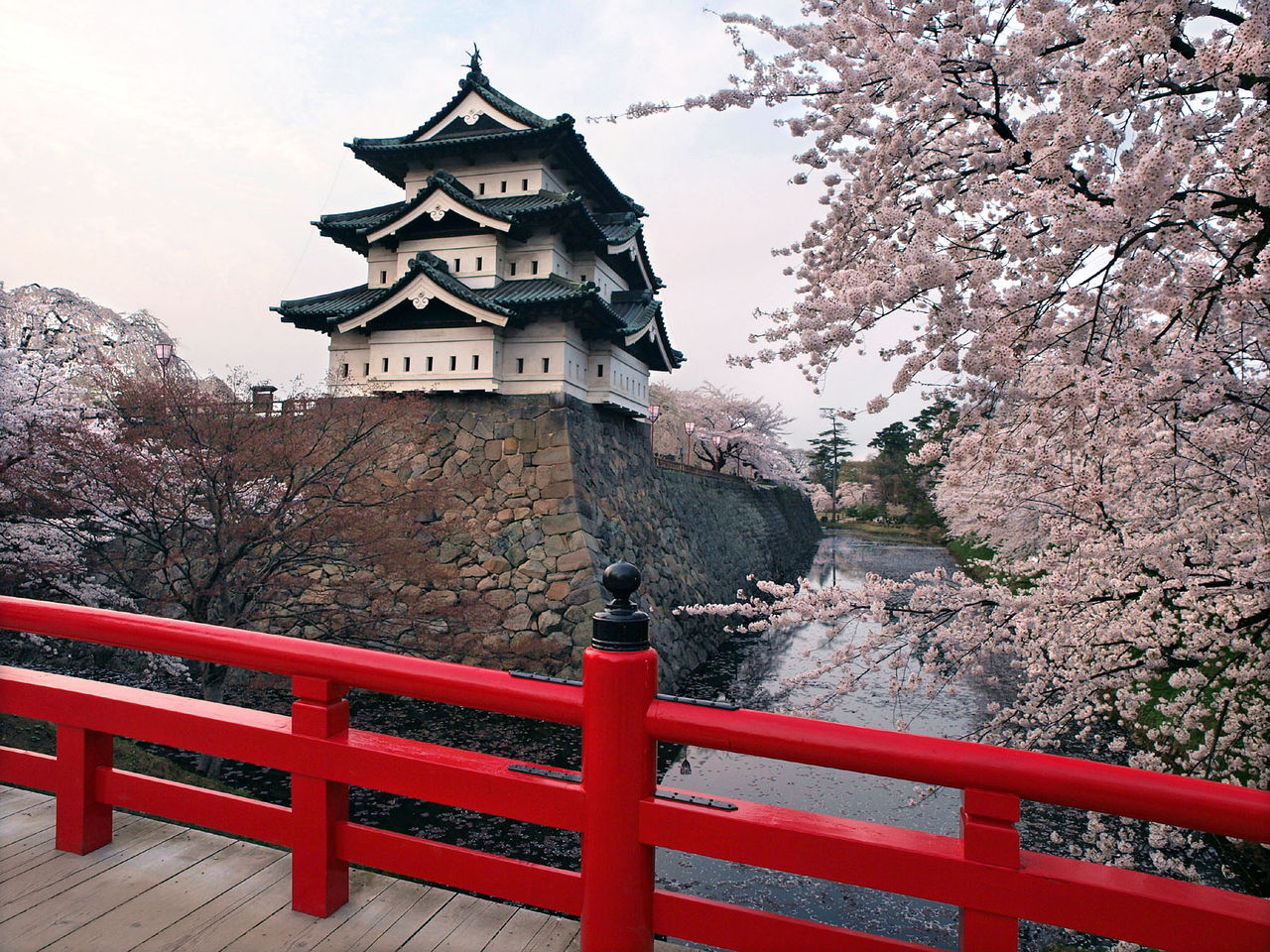
An easy 40-minute train ride away is Hirosaki, Aomori’s beautiful old castle town. The main attraction here is, without a doubt, Hirosaki Castle. It’s one of the few castles in Japan that wasn’t rebuilt in modern times, so it feels incredibly authentic. The park around it is the real star, and we’d argue it’s one of the top 3 best places in all of Japan to see cherry blossoms.
But there’s more to Hirosaki than just the castle. You can walk through the old Samurai District (Buke Yashiki) to see how high-ranking samurai used to live. To really connect with Aomori’s apple culture, we recommend visiting the Hirosaki Apple Park where you can pick your own apples in the autumn. And to learn about the other famous local festival, head to the Tsugaru-han Neputa Village, where you can see the impressive fan-shaped floats from the Neputa Matsuri and even try playing the taiko drums.
Nature & National Parks

This is where Aomori really shines for us. If you see just one nature spot, make it Lake Towada and the Oirase Stream. Lake Towada is a massive, stunningly blue caldera lake. Leading away from it is the Oirase Stream, a magical, easy-to-walk trail that follows a crystal-clear stream through a deep forest, passing dozens of small, moss-covered waterfalls. It’s beautiful all year, but it’s world-famous for its incredible autumn colours.
Further west, you’ll find Shirakami Sanchi, a UNESCO World Heritage site. This is a huge, ancient mountain range covered in one of the last original beech forests in Asia. It’s a fantastic area for hiking, with trails that lead to waterfalls, mountain peaks, and the famously bright Aoike (Blue Pond).
Shimokita Peninsula (The “Axe Head”)

If you look at Aomori on a map, you’ll see a remote, axe-shaped peninsula at the very top. This is a place for true adventurers, as it’s wild and takes some effort to explore.
Its most famous attraction is Mount Osorezan (Mt. Fear). It’s one of Japan’s most sacred places, and its nickname is “the Gateway to Hell.” It’s an active volcano with a landscape that looks otherworldly—grey, rocky, with bubbling sulphur pits and a bright, acidic lake.
But the peninsula has more to see. You can drive all the way up to Cape Omazaki, the literal northernmost tip of Japan’s main island, famous for its views and world-class tuna. Along the rugged coast, you’ll find Hotokegaura (Buddha’s Cove), a series of massive, white rock formations carved by the wind and sea that look like statues. And for a deep nature escape, you can visit the remote Yagen Valley, known for its beautiful forest gorge and hidden hot springs.
What to Eat in Aomori
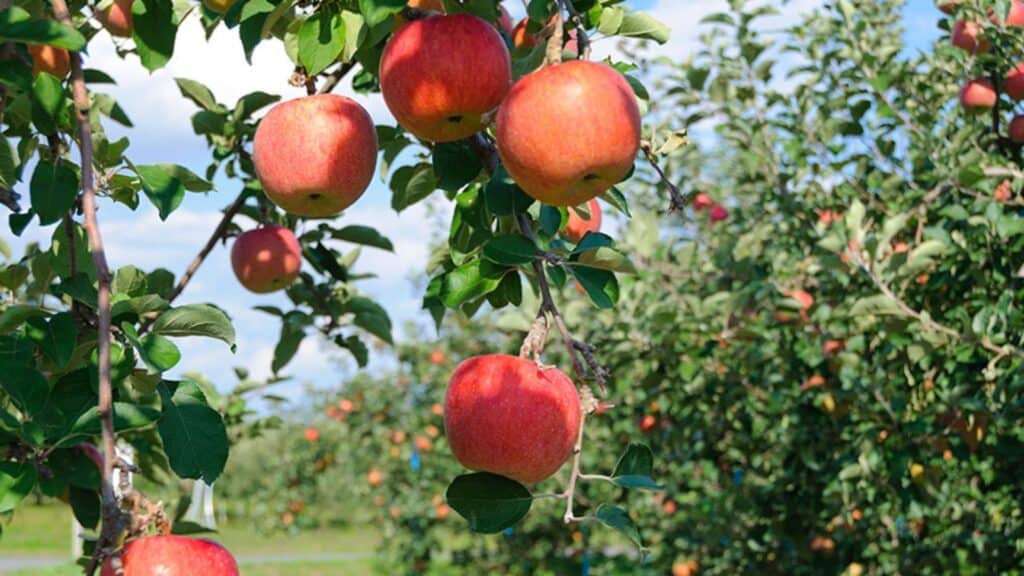
In our opinion, Aomori has some of the most unique and delicious food in all of Japan. Because the prefecture is surrounded on three sides by the cold ocean, the seafood is absolutely top-notch. And, of course, Aomori is famous across the country for producing the best apples in the world. But it’s not just apples and fish; they have some really special local dishes you won’t find anywhere else. Here are the must-try foods we think you should look for.
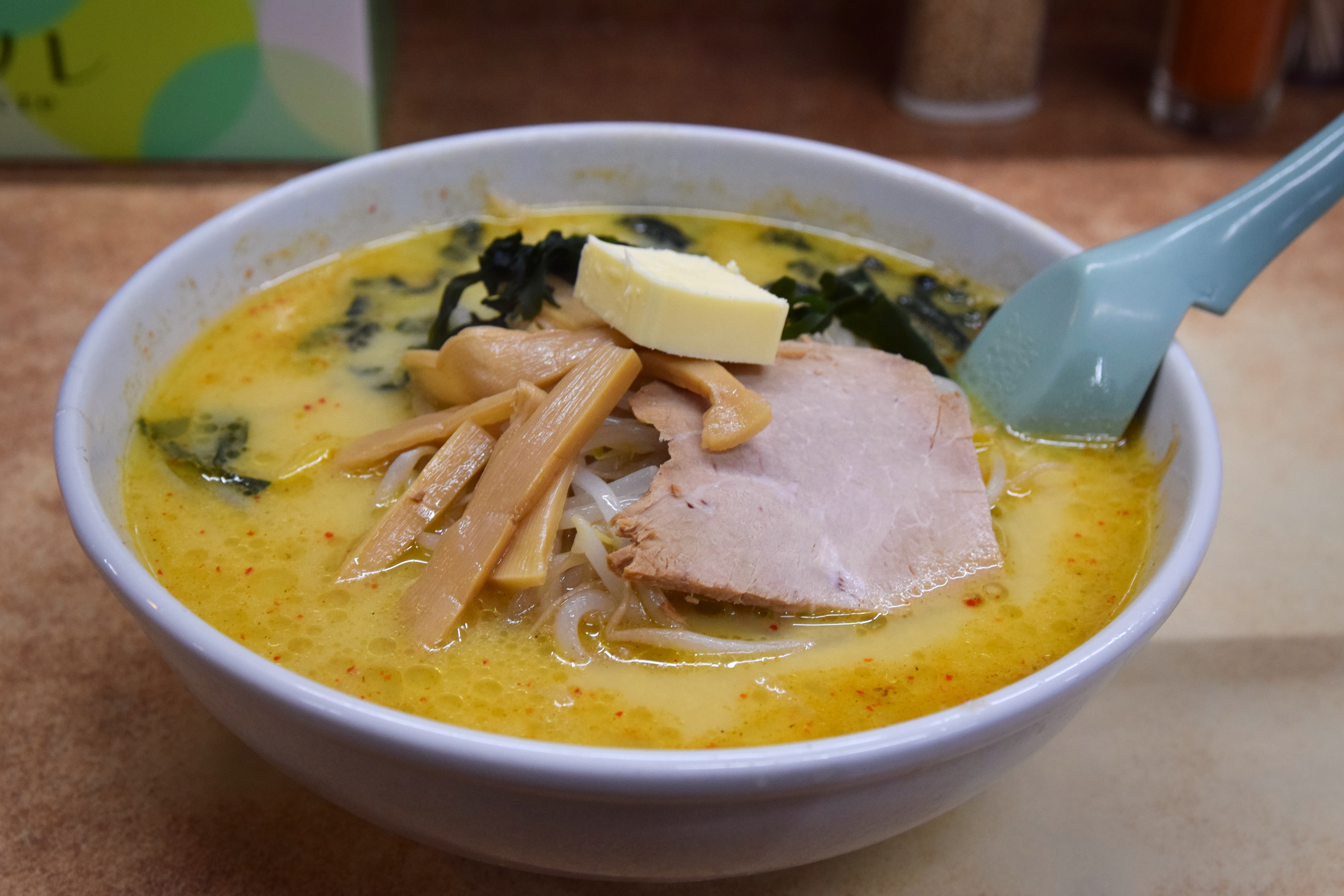
One of the most famous Aomori dishes is its unique ramen, called Miso Curry Milk Ramen. It sounds strange, we know, but it’s delicious! It’s a rich miso soup that’s seasoned with curry powder and milk, which gives it a creamy, sweet, and spicy flavour.
Another famous local dish, especially from the Hachinohe area, is Hachinohe Senbei-Jiru. This is a country-style soup with meat, fish, and vegetables, but the special part is that they break up senbei (wheat-flour crackers) and cook them right in the broth. For something really luxurious, you have to try Ichigo-ni. It’s a clear soup made from sea urchin and abalone. Its name means “strawberry soup” because the sea urchins look like wild strawberries in the broth.
Since Aomori is famous for its scallops, a must-try homestyle dish is Kaiyaki Miso. It’s a simple, comforting dish where they cook miso, stock, and a beaten egg right inside a large scallop shell, which acts as the “pan.” You’ll also see a popular local snack called Igamenchi. This is basically a minced squid patty, where they chop up squid tentacles with vegetables, mix it into a batter, and deep-fry it. It’s a perfect side dish.
If you’re in the Towada area, you can’t miss Towada Barayaki. This is a dish where thin-sliced beef ribs and tons of sweet onions are grilled right at your table on a hot iron plate with a sweet and spicy soy-based sauce. You might also see Baniku (horse meat) on menus, especially in the southern part of the prefecture. It’s a local delicacy, often served as sashimi.
And finally, you just can’t leave Aomori without talking about the apples. They are famous across Japan for being the sweetest and juiciest you can find. You’ll see them everywhere, not just as fresh fruit, but in delicious ciders, fresh-pressed juices, and, of course, in incredible apple pies.
Where to Stay in Aomori
You can find all sorts of places to stay in Aomori, and the best spot for you really depends on what you want to do.
Are you here for the Nebuta Matsuri or want a convenient base for exploring? We’d recommend staying right in Aomori City. Are you looking for a quiet, traditional trip? Then staying at a seaside ryokan (inn) in an onsen town is a much better choice. We’ve picked a few of our favourites to help you get started.
New to staying in a ryokan? Read our guide first:
For Onsen & Relaxation (Asamushi Onsen)
If you’re looking for that classic Japanese hot spring experience, we recommend staying in the Asamushi Onsen district. It’s a charming seaside onsen town just a short train ride from Aomori City, so it’s easy to get to. A lovely traditional choice here is Yadoya Tsubaki. This is a classic ryokan that offers beautiful sea views right from your room, making it a wonderfully peaceful base to relax.
→ Check prices and see the sea views at Yadoya Tsubaki here.
For City Convenience (Aomori City)
If you want to be right in the middle of everything—especially if you’re visiting for the Nebuta Matsuri—then staying in Aomori City is your best bet. A really solid choice is the Aomori Center Hotel. Its location is super convenient, making it a great base for exploring the city on foot, from the Furukawa Fish Market to the museums. The biggest bonus, in our opinion, is that this hotel has its own hot spring bath and a sauna, which is the perfect way to relax after a long day of sightseeing.
→ Find out more and check prices for Aomori Center Hotel here.
Major Aomori Events You Shouldn’t Miss
Aomori has great events all year, but in our opinion, there are three huge ones that are truly special and worth planning your whole trip around.
Nebuta Matsuri (Early August)

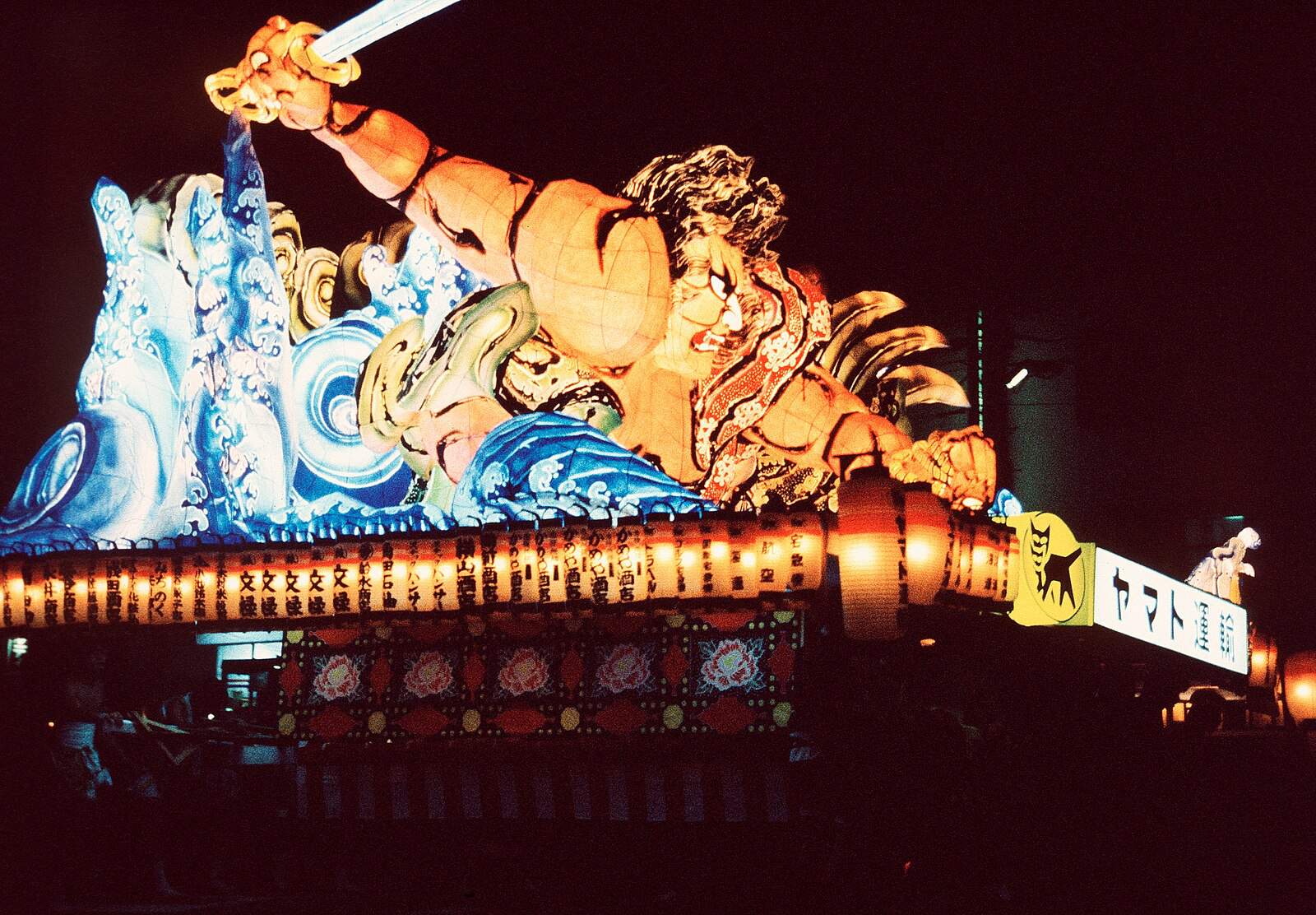
This is the big one. The Aomori Nebuta Matsuri, held every year in early August, is one of the most exciting and famous festivals in all of Japan. The main event is a nightly parade of enormous, brilliantly-lit lantern floats called nebuta. These floats, which often show brave samurai, gods, and mythical figures, are pushed through the streets by teams of people. The entire city comes alive with the sound of huge taiko drums, flutes, and thousands of dancers in bright costumes all chanting, “Rassera, rassera!” It’s an unforgettable, high-energy experience.
Hirosaki Cherry Blossom Festival (Late April – Early May)

We mentioned it before, but it really deserves its own spot. This festival, held in late April to early May, is truly one of the most beautiful places to see sakura in the entire country. The setting is the park around Hirosaki Castle, which has over 2,500 cherry trees. You can walk through magical “sakura tunnels” and see the castle’s moat completely covered in a thick carpet of pink petals. It’s incredibly romantic. A fun local detail: they also bake a kyodai (giant) 2-metre apple pie during the festival to celebrate Aomori’s most famous fruit!
Hirosaki Castle Snow Lantern Festival (Mid-February)

If you’re brave enough to visit Aomori in the deep winter, you’ll be rewarded with this magical event. It’s held at the same Hirosaki Castle Park as the cherry blossoms, but the vibe is completely different. The park is covered in a thick blanket of snow and lit up by hundreds of handmade snow lanterns (yuki-doro) and tiny, glowing kamakura (igloos). It’s much quieter than the other festivals, very peaceful, and unbelievably beautiful, especially when the castle itself is lit up against the snow. It’s like a fairy tale.
Aomori Travel FAQs
How many days are enough for Aomori?
For a quick trip just to see the main sights in Aomori City and Hirosaki, we think 2 or 3 days is enough. But if you want to properly explore nature spots like Lake Towada, the Oirase Stream, or the Shimokita Peninsula, we’d recommend setting aside at least 4 or 5 days.
Is renting a car necessary in Aomori?
We highly recommend it. If you are only visiting Aomori City and Hirosaki, you can easily get by just using trains and buses. However, to see any of the best nature spots—like Lake Towada, Shirakami Sanchi, or Mount Osorezan—a car is pretty much essential.
When is the Nebuta Matsuri held?
The Aomori Nebuta Matsuri is held every year during the first week of August, from August 2nd to August 7th.
Can I do a day trip to Aomori from Tokyo?
No, we really don’t recommend this. Even on the fastest Shinkansen (bullet train), the journey is over 3 hours each way. You would spend more than 6 hours just travelling! To really see and enjoy Aomori, you absolutely need to stay at least one or two nights.