Iwate is the second-largest prefecture in Japan, but in our experience, it is still one of the quietest. It covers a massive area, stretching from the Sanriku Coast in the east to the mountains in the west.
When we send clients to Tohoku, they often watch Iwate blur past the window of the Hayabusa Shinkansen on their way to Aomori or Hokkaido. But we think skipping it is a mistake. This part of Japan feels completely different to the “Golden Route” of Tokyo and Kyoto. It is wide open. It has its own legends about water spirits (kappa), and the locals are some of the friendliest we have met in Japan.
The main thing we tell people is to respect the scale. Unlike Kyoto, where you can hop between temples in minutes, getting around Iwate takes time. But the trade-off is worth it. You get to see temples covered in gold without fighting through crowds, and you get a noodle culture that you won’t find anywhere else.
From the World Heritage sites in Hiraizumi to the retro streets of Morioka City and the wild coast, Iwate gives you space to breathe. This isn’t a place for a rushed checklist; it is a place to just enjoy the ride. Let us show you our favourite spots and exactly how to plan your trip to Iwate.
Planning Your Own Dream Trip to Japan?
Feeling overwhelmed by the endless options? Let us take the stress out of planning. We design 100% custom itineraries based on your interests, budget, and travel style, helping you discover the Japan you’ve always dreamed of.
Find out more about our Personalised Japan Travel Planner
How to Get to Iwate from Tokyo
By Train
For us, there is really only one way to get to Iwate for tourists. We always use the Tohoku Shinkansen, specifically the Hayabusa service. It is fast, comfortable, and reliable. The journey takes about 2 hours to reach Ichinoseki Station (your stop for Hiraizumi and Geibikei Gorge) and just 2 hours and 15 minutes to reach Morioka Station.
The one-way fare is around ¥15,000. If you have a Japan Rail Pass or the JR East Tohoku Area Pass, this route is fully covered. However, you must be careful because all seats on the Hayabusa are reserved. You cannot just hop on with your pass. We have seen many travellers get caught out by this, so make sure you go to a ticket machine or counter to book a seat assignment before you board.
By Plane
Flying is generally not a practical option from the capital. JAL operates flights to Iwate Hanamaki Airport from Osaka (Itami) and Sapporo, but there are no flights from Tokyo. The train is simply too fast and convenient for a flight route to make sense.
By Highway Bus
If you are on a strict budget, you can take a night bus from Tokyo or Shinjuku stations. It costs between ¥5,000 and ¥8,000. However, we have to warn you that the journey takes about 7 to 8 hours. Unless you are very good at sleeping in moving vehicles, we usually advise against it. You might save money, but you lose your energy for the next day of sightseeing. We think the Shinkansen is worth the extra cost.
Top Attractions in Iwate
Hiraizumi (Chuson-ji Temple)
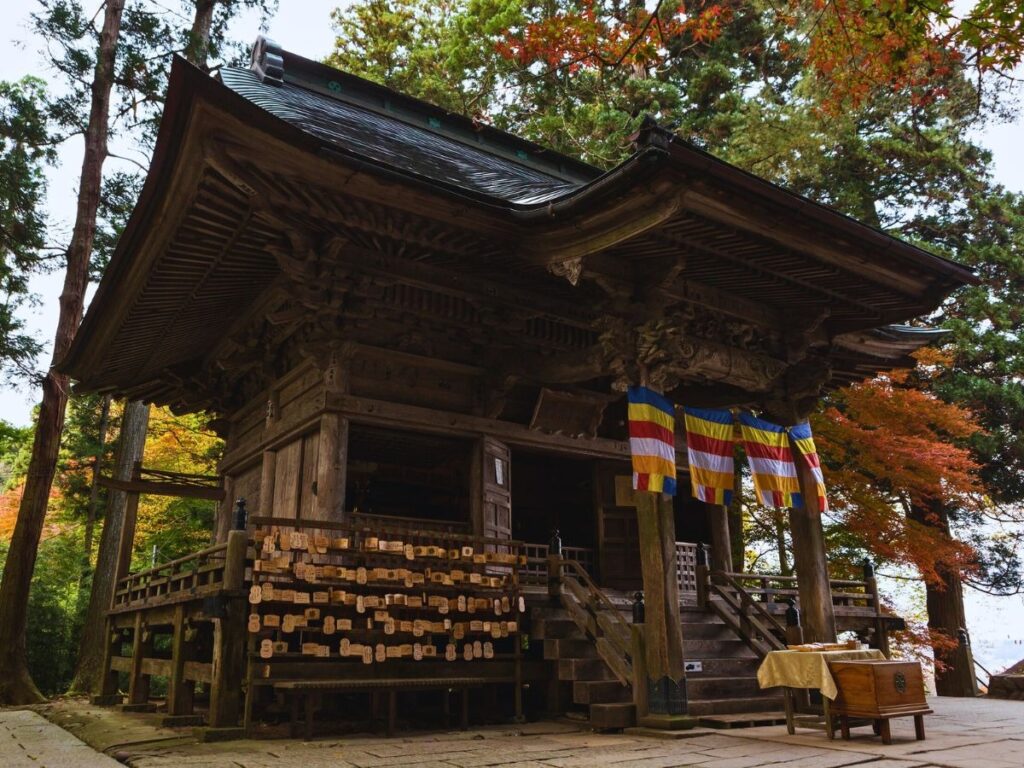
In the 12th century, Hiraizumi was the only city in Japan that could rival Kyoto for splendour, built entirely on the wealth of local gold mines. While the city itself is long gone, the legacy remains at Chuson-ji Temple.
The headline act here is the Konjikido (Golden Hall). It is a mausoleum completely covered in gold leaf and mother-of-pearl, housing the mummified remains of the Northern Fujiwara leaders. Unlike Kyoto’s Kinkaku-ji, which sits out in the open, the Konjikido is protected inside a concrete hall. It sounds less romantic, but seeing the original 12th-century gold shimmering in the dim light is actually far more impressive.
Be ready for the approach. To reach the main halls, you have to walk up Tsukimizaka (Moon Viewing Slope), a steep path lined with 300-year-old cedar trees. It is a bit of a hike, but the atmosphere is incredible. We recommend visiting early in the morning when the mist is still catching in the trees.
Geibikei Gorge
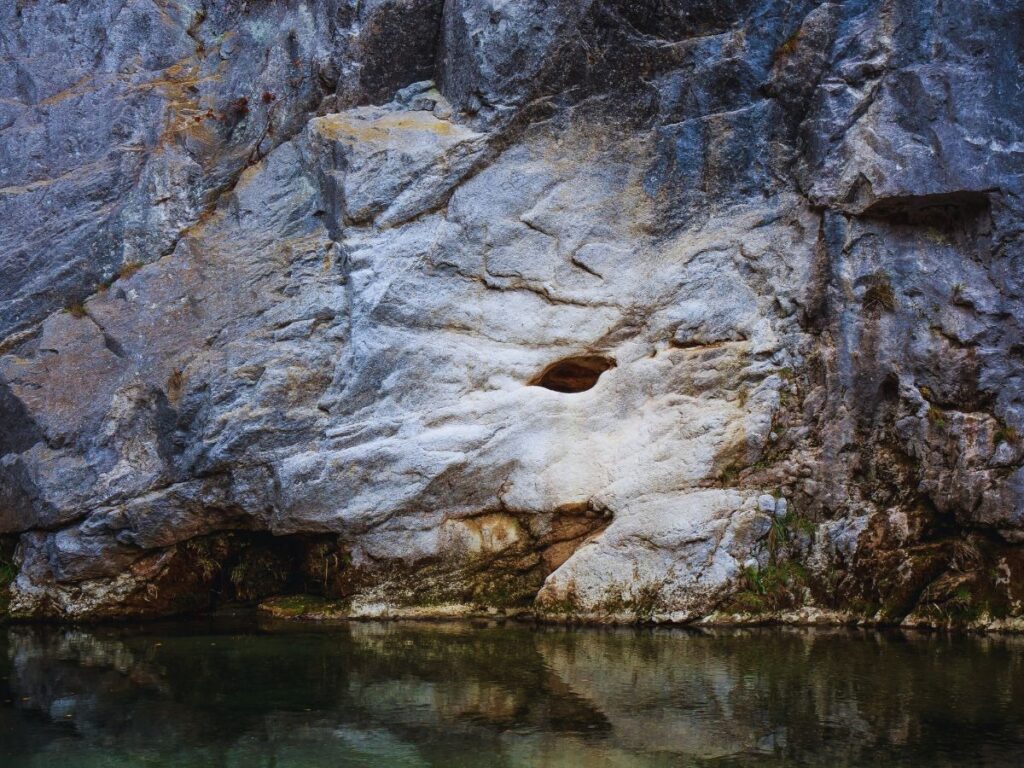
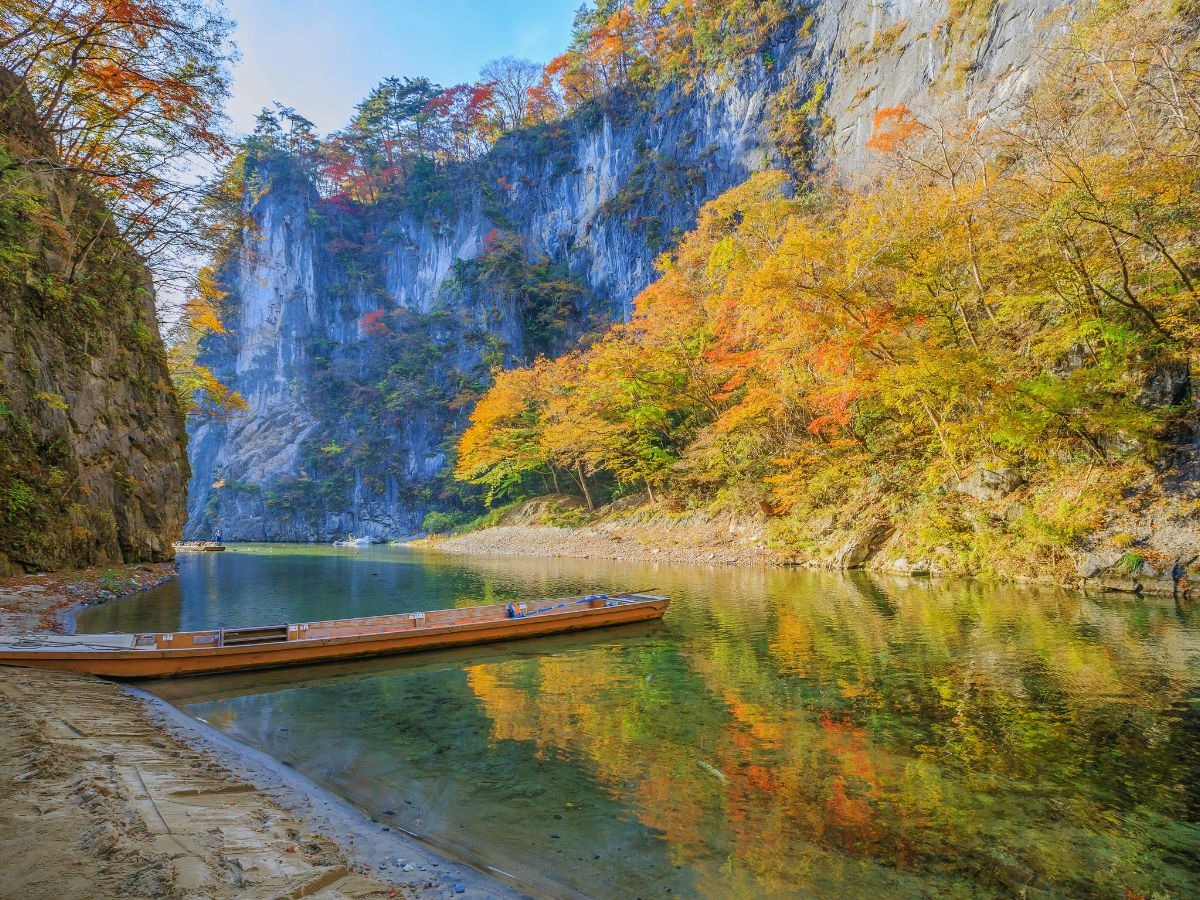
Located in southern Iwate, this 2-kilometre limestone gorge is one of the most atmospheric spots in Tohoku. The cliffs here tower over 100 metres high, and the only way to see them is by boat.
We love this experience because it is wonderfully low-tech. The flat-bottomed boats are hand-punted by a boatman. There are no motors, no noise, just the sound of the pole hitting the water. On the return leg, the boatman will sing Geibi Oiwake, a traditional folk song that echoes off the canyon walls. It is hauntingly beautiful.
At the turning point of the boat ride, you get off for a few minutes to try your luck throwing “undama” (lucky stones) into a hole in the cliff face. It’s harder than it looks (and we’ve missed plenty of times) but it’s a fun break in the journey. Also, bring ¥100 coins to buy fish food; the carp in the river follow the boats and are very enthusiastic.
Genbikei Gorge
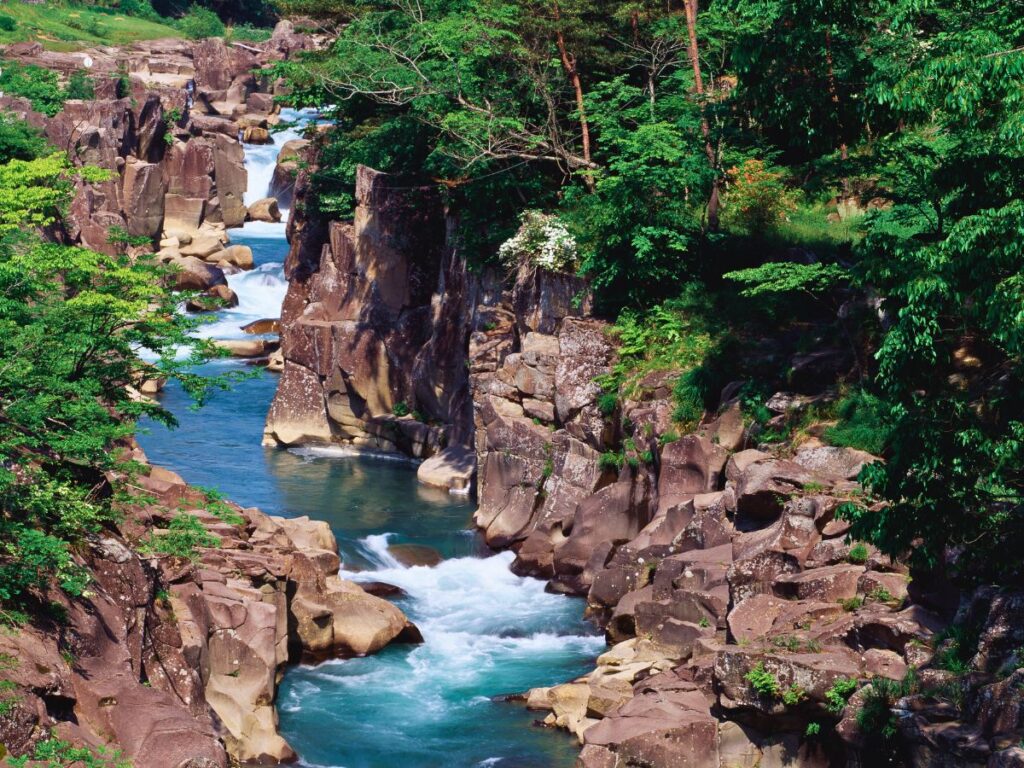
Often confused with Geibikei, this nearby gorge offers a totally different experience. You explore this one on foot, but the main reason we send people here is for the “Flying Dango” (Kakko Dango). It works like this: you put your money in a basket hanging on a cable, bang a wooden mallet to alert the staff, and the shop across the river pulls the basket up. Moments later, the basket slides back down to you filled with a box of sweet dumplings and a cup of green tea. It sounds like a total tourist trap, but we promise it is hilarious and the dango are actually very good.
Ryusendo Cave
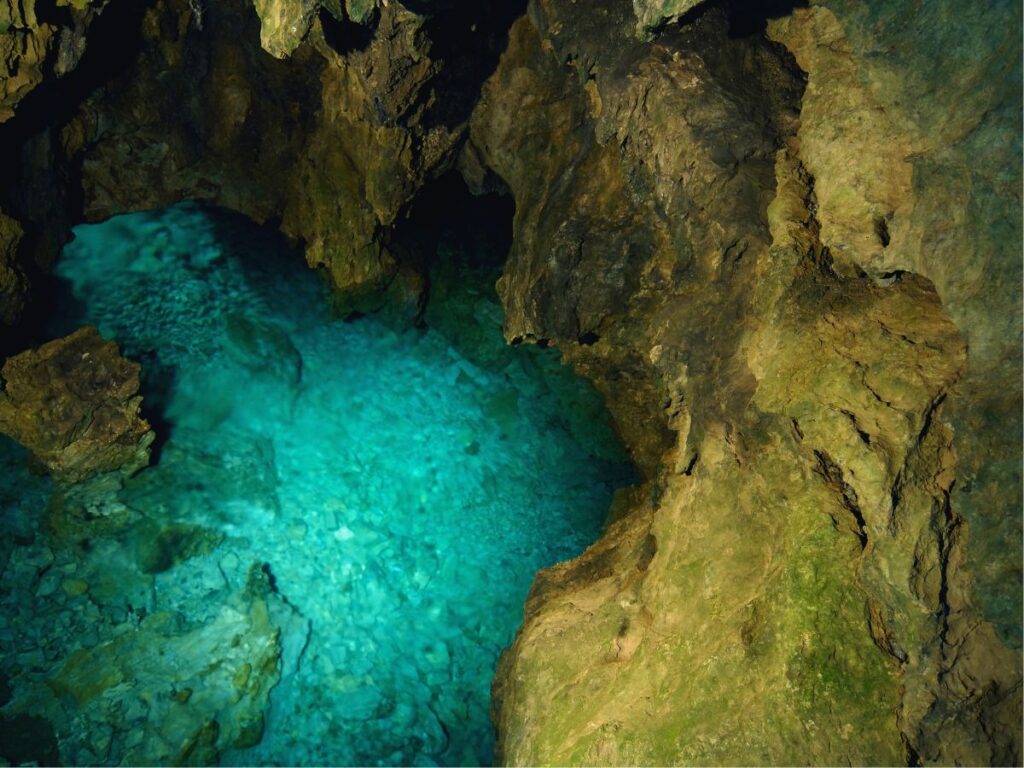
Ryusendo is one of Japan’s three great limestone caves, and in our opinion, it is the most visually striking. The main draw is the “Dragon Blue” underground lakes. The water is so exceptionally clear that you can see straight to the bottom of the Third Lake, which is 98 metres deep. With the underwater lights turned on, it looks like a portal to another world.
Be warned: this is an active adventure, not a casual stroll. The cave temperature stays at a chilly 10°C year-round (you will need a jacket, even in August), and there are many wet, steep staircases. If you have bad knees or don’t like tight spaces, you might want to sit this one out. But if you are up for the climb, the view is unbeatable.
Jodogahama Beach
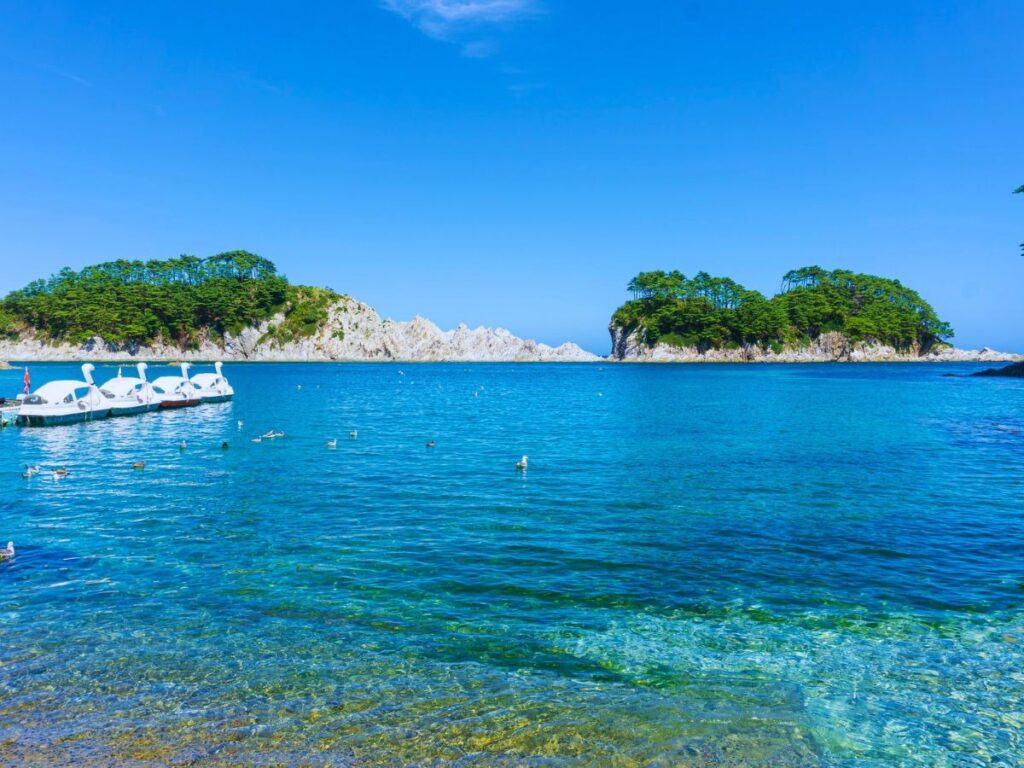
The name translates to “Pure Land Beach,” and honestly, it lives up to the hype. Sharp, white rhyolite rocks jut out of calm, cobalt-blue water, creating a landscape that looks more like a meticulously designed Japanese garden than a wild coastline. It is the jewel of the Sanriku Recovery National Park.
Most tourists just take the large sightseeing ferry, but we think that’s a mistake. Instead, head to the marine house and take a small “Sappa boat” (fisherman’s boat). These small boats can navigate right between the rocks and, if the tide is right, take you inside the “Blue Cave,” where the water glows an electric turquoise. It is a much more intimate experience.
Koiwai Farm (Makibaen)
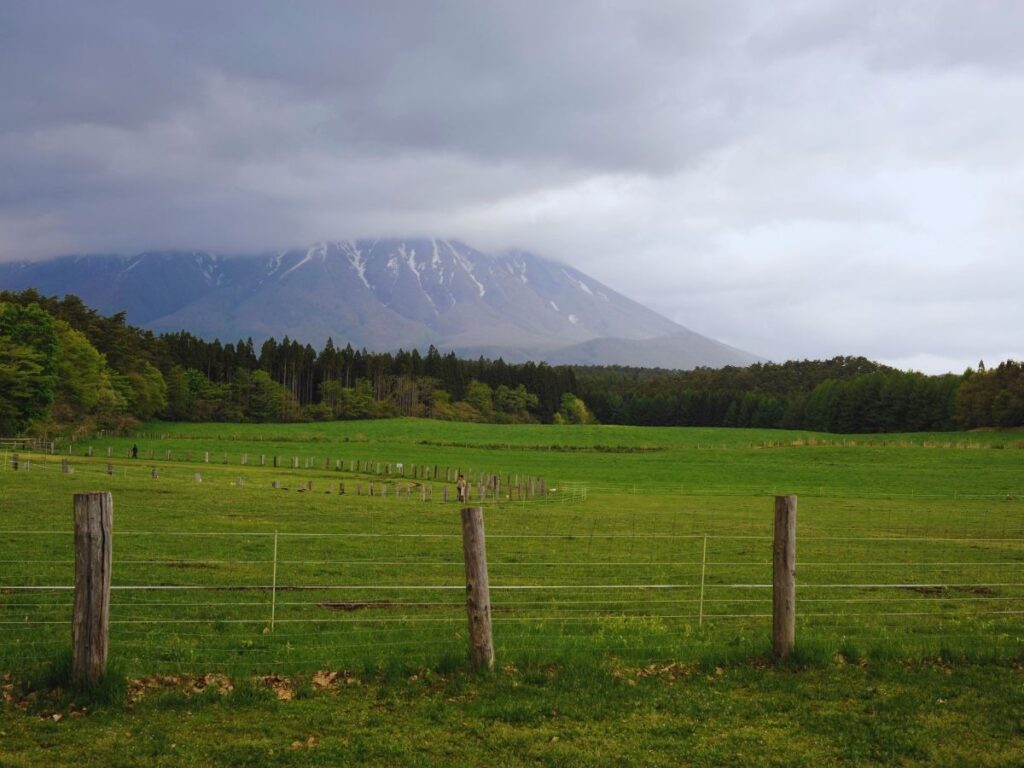
Koiwai Farm is massive. It sits at the foot of Mt. Iwate and feels more like a European estate than a Japanese farm. We will be honest. It is very touristy, but we think it is worth a stop for two specific reasons.
First is the view. The famous “One Cherry Tree” standing alone in the green field with the snow-capped mountain behind it is one of the most iconic photos in Tohoku. Second is the food. The dairy here is the real deal. The soft-serve ice cream is incredibly rich, but we actually recommend sitting down for a Genghis Khan (grilled lamb) lunch. It is a local soul food that tastes best right here on the farm. If you visit in winter, the “Ginga Farm Night” illumination is easily the best light display in the region.
Morioka City Centre
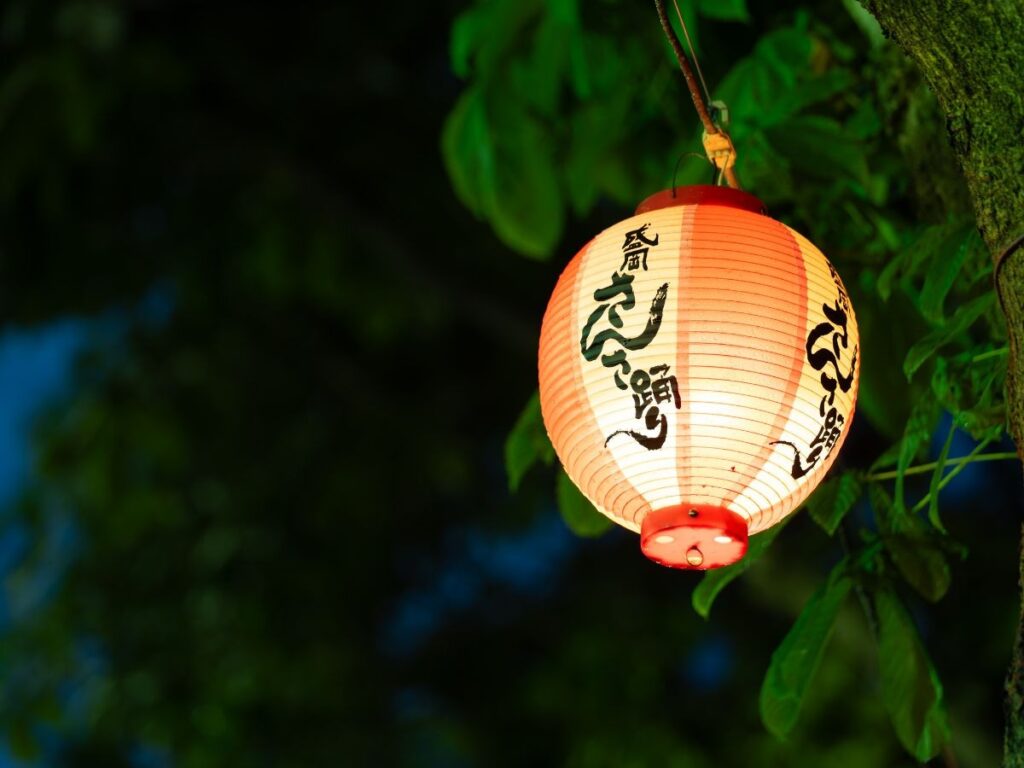
Morioka was listed by the New York Times as a “place to go” in 2023, and we were thrilled to see it get the recognition. It is one of our favourite cities in Japan simply because it is so walkable and liveable.
It does not rely on one big “sight” to impress you. Instead, it charms you with its vibe. The city is a mix of Taisho-era red brick buildings like the majestic Bank of Iwate, a flowing river, and a castle park that is beautiful in cherry blossom season.
Top Eats to Try in Iwate: The Three Great Noodles
Wanko Soba (The Challenge)
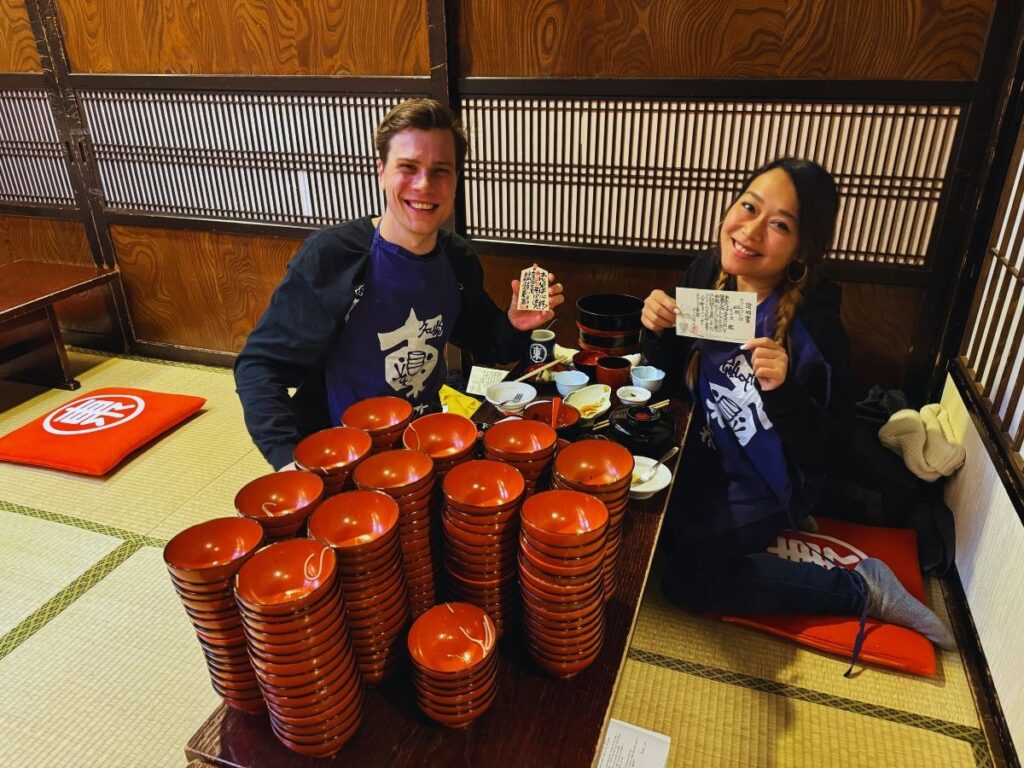
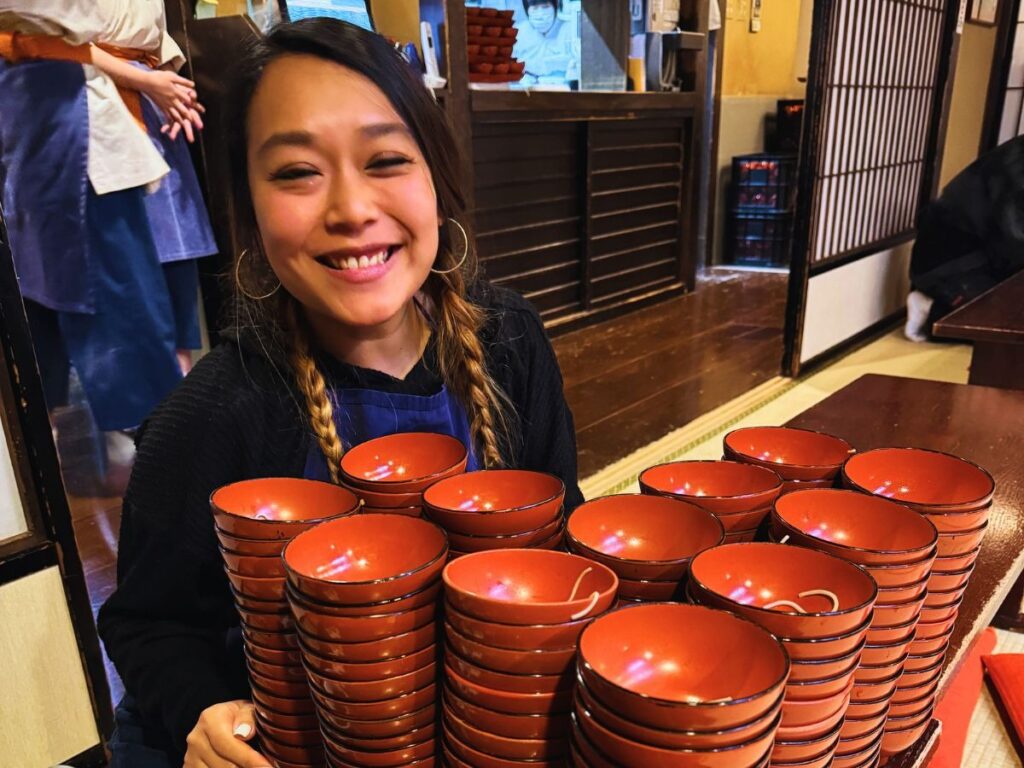
This is less of a meal and more of a sport. It is the most famous dining experience in Iwate. A server stands by your table and tosses a mouthful of noodles into your bowl the second you empty it. They shout “Hai, jan-jan!” or “Hai, don-don!” to keep the rhythm going. You cannot stop eating until you physically put the lid on your bowl to signal defeat.
We will be honest with you. The noodles themselves are fairly standard buckwheat noodles, which isn’t to say that they’re not delicious, because they are. However, you do not come here for gourmet flavour. You come here for the chaos and the story.
15 bowls is roughly one normal serving, and everyone takes home a paper certificate with their score (as in how many bowls of noodles they were able to devour). However, many people aim for 100 bowls because that earns you the coveted wooden commemorative plaque. It is frantic, messy, and great fun.
Morioka Reimen
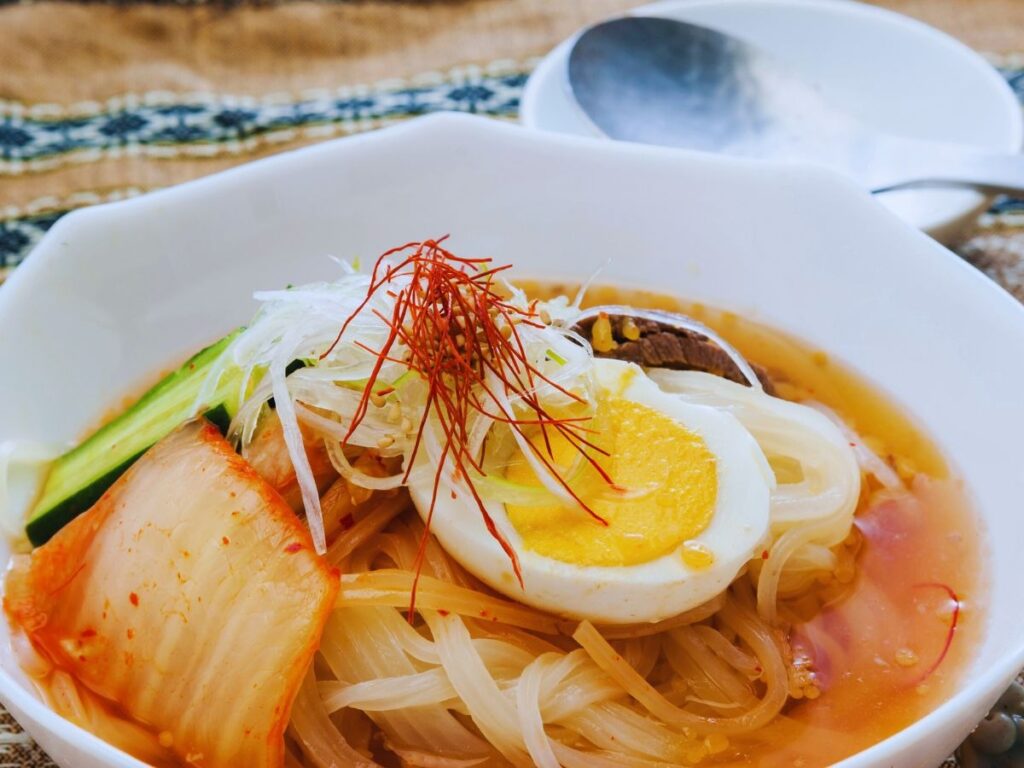
These are cold noodles served in a cold beef broth with kimchi, cucumber, a boiled egg, and a piece of fruit. You will usually find a slice of watermelon, pear, or apple sitting in your soup.
We know fruit in beef soup sounds strange. We were skeptical the first time too. But trust us because it works. The sweetness of the fruit cuts through the spicy kimchi perfectly. The real highlight is the texture. The noodles are translucent and incredibly rubbery. You have to really chew them. It is unlike any other noodle dish in Japan, and we think it is the best of Morioka’s “Three Great Noodles.”
Morioka Jajamen
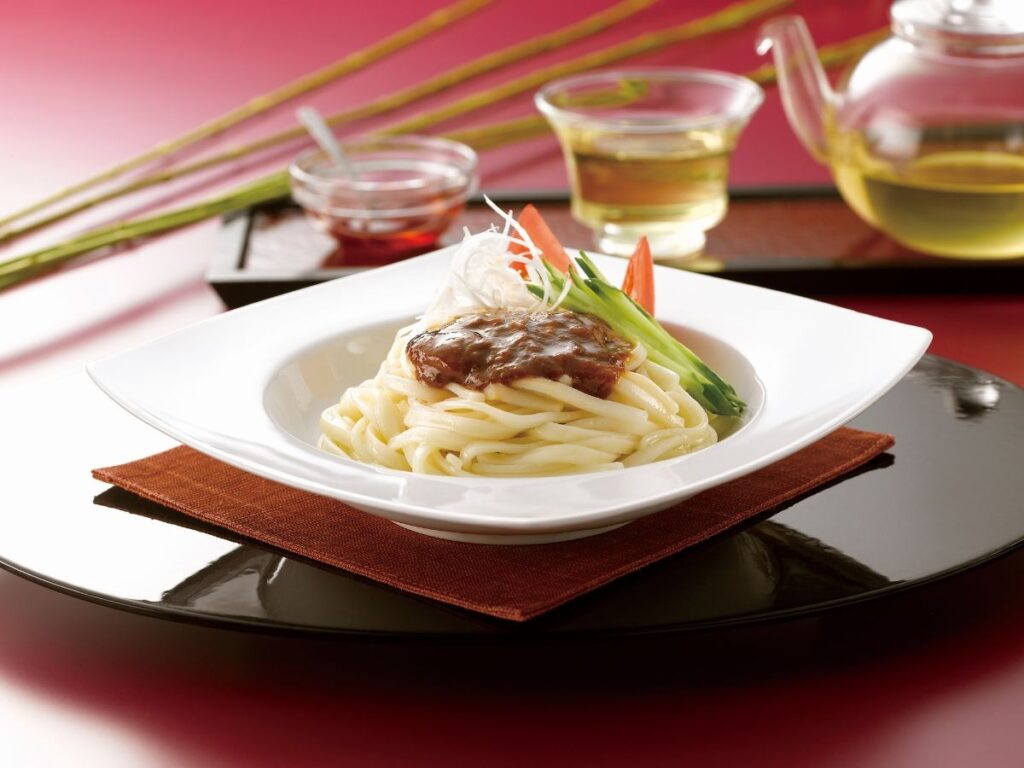
This is a warm noodle dish that looks a bit like udon. It comes topped with a scoop of dark, salty meat miso, cucumber, and ginger. You are supposed to mix it all together into a brown, messy paste before you eat it.
Here’s a tip: do not finish your meal and just leave. That is a rookie mistake. When you have just a little bit of sauce left in your bowl, crack a raw egg into it (there will be an egg on your table). Then ask the staff for “Chi-tan-tan.” They will add hot noodle water to your bowl to turn the leftover sauce and egg into a warm soup to finish the meal. For some people, it is the best part of the experience.
Go Beyond the Guidebook
Want to truly connect with Japanese culture? Reading about it is one thing, but experiencing it first-hand is unforgettable. From tea ceremonies to craft workshops, we can help you find and book an authentic cultural experience for your trip.
Browse and Book Cultural Experiences in Japan
Top Events and Festivals
Morioka Sansa Odori (August)
Held in early August, this is the largest drum festival in the world. It is not just a parade. It is a wall of sound. Over 10,000 drummers and dancers fill the main street of Morioka chanting “Sakkora choiwa yasse!” while beating taiko drums in unison.
We have been to many festivals in Japan, and what we love about Sansa Odori is that it is inclusive. After the main parade finishes, they hold a “Wa-odori” (circle dance) where spectators are invited to jump in and learn the steps. It is the best way to feel like a part of the city rather than just a tourist watching from the pavement.
Chagu Chagu Umakko (June)
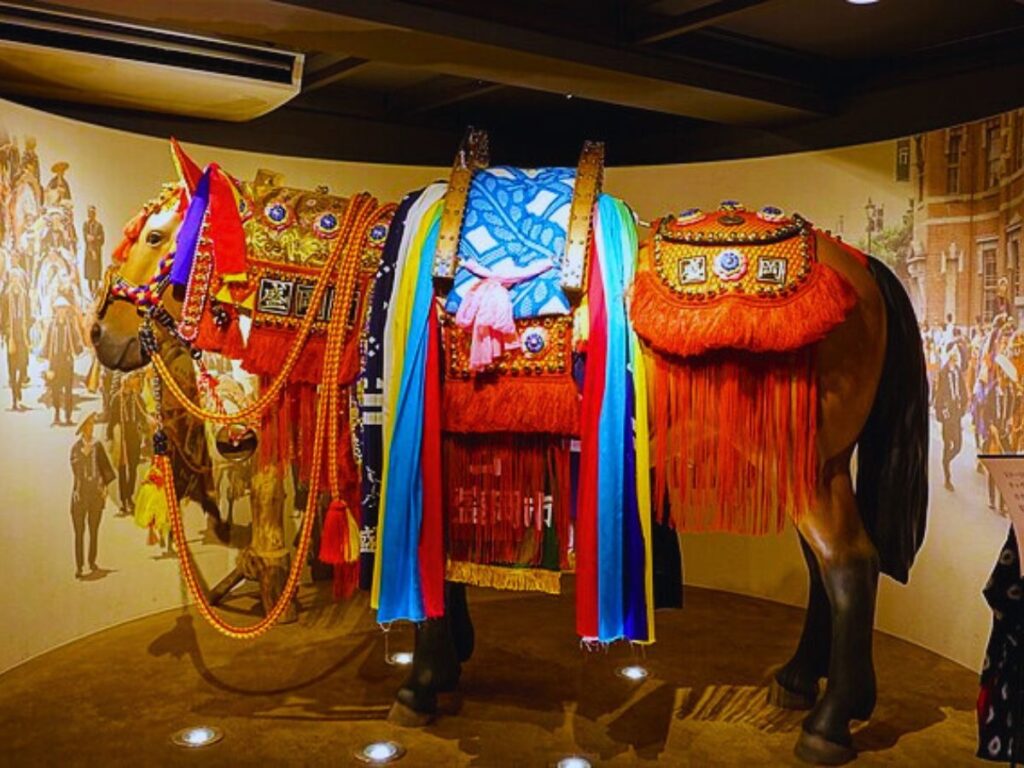
This is a much quieter, gentler event held in early June. About 100 horses are decked out in colourful harnesses and bells. They march 14 kilometres from Takizawa to Morioka Shrine to pray for the health of the animals. The name comes from the chagu-chagu sound the bells make as the horses walk.
This is easily one of the most photogenic festivals in Tohoku. It has a lovely, slow pace that fits perfectly with the Iwate countryside. We recommend waiting near the rice fields on the outskirts of Morioka to get photos of the horses against the green landscape and Mt. Iwate. It is much better than fighting for a spot on the busy city streets.
Sample 2-Day Iwate Itinerary
In our opinion, the best way to see Iwate in two days is to stick to the “Golden Route” and Morioka City. This plan minimises travel time and maximises sightseeing.
Day 1: The Golden Route & The Gorge
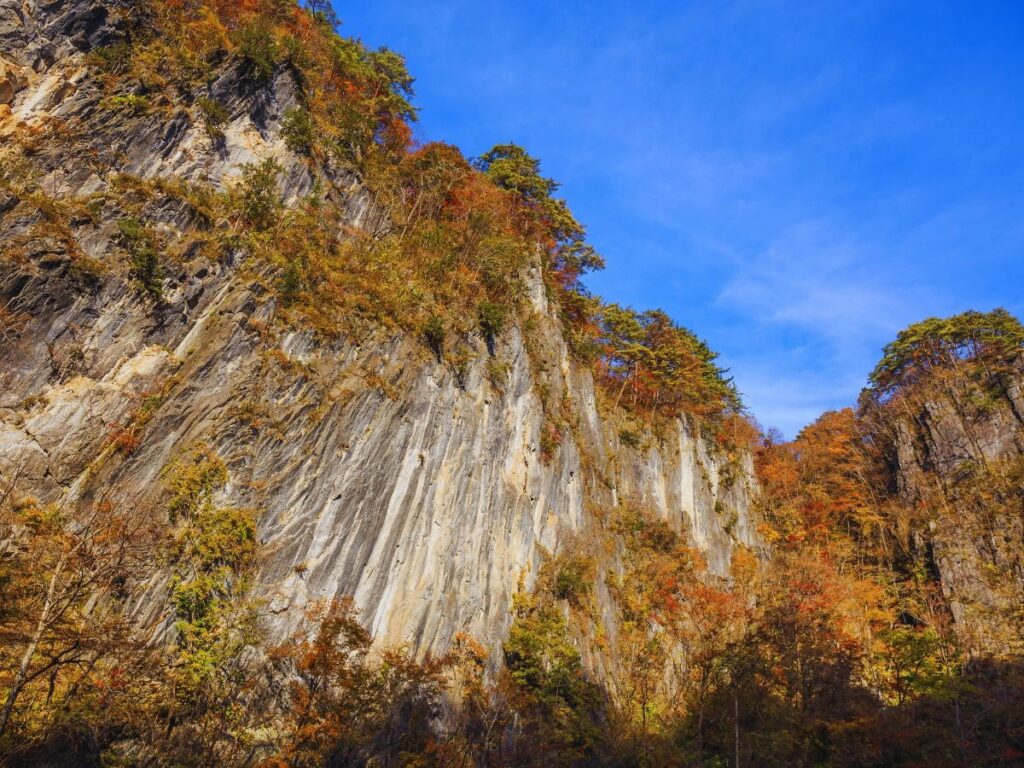
We recommend taking an early Hayabusa Shinkansen from Tokyo to start your day. Your first stop is Ichinoseki Station. Switch immediately to the local train for Geibikei Station. It is a short walk from there to the gorge. We suggest aiming for the 90-minute morning boat ride to beat the tour groups. It is the perfect way to ease into the slower pace of the countryside.
After a quick soba lunch near the gorge, take the train back towards Hiraizumi Station. From here, you can take the “Run Run” loop bus straight up to Chuson-ji Temple. Spend your afternoon walking through the cedar forest and viewing the Golden Hall. When you are done, hop on the train north to Morioka Station to check into your hotel. For dinner, we highly recommend heading to a yakiniku restaurant near the station and to try Morioka Reimen.
Day 2: Retro City Strolls & Farm Views
Start your morning with a walk from the station to the city centre. Cross the Kaiun-bashi bridge for a view of Mt. Iwate and then head to the Red Brick Bank and the Castle Ruins Park. These are the heart of the “Morioka City Centre” area we recommended earlier, and it is a lovely place to just wander and grab a coffee.
For lunch, head to a specialist restaurant like Azumaya or Hatsukoma for the Wanko Soba Challenge. Put on the apron and see if you can hit the 100-bowl mark. We strongly recommend making a reservation before you go. These restaurants fill up fast, especially on weekends, and you do not want to waste your limited time standing in a queue.
After lunch, take a bus out to Koiwai Farm. Even if you just stay for an hour, the view of the mountain and the fresh ice cream are worth the trip. Finally, head back to the station to catch the Hayabusa Shinkansen for the ride back to Tokyo.
Iwate Prefecture FAQs
Is Iwate worth visiting if I only have a few days?
Yes, but you have to be smart about it. We suggest sticking to the Shinkansen line like Ichinoseki and Morioka. If you try to go to the coast or deep into the mountains on a short trip, you will spend your whole time on a bus.
Can I travel Iwate without a car?
For the main spots in our itinerary, yes. The train and bus systems work fine for Hiraizumi and Morioka. However, if you want to explore the Sanriku Coast properly or find hidden onsen in the mountains, we highly recommend renting a car because rural buses are infrequent.
Learn more about renting a car in Japan here:
What is the best time to visit Iwate?
We love autumn (late October) for the foliage at Geibikei Gorge. Summer is also great if you want to catch the Sansa Odori festival in August. Winter is beautiful but very cold, so only go then if you want to see snow.
What is the difference between Iwate and Miyagi?
We think Miyagi feels more urban and polished while Iwate feels wilder and bigger. If you want shopping and nightlife, go to Miyagi. If you want open space, folklore, and a slower pace, go to Iwate.