Working in the Japan travel industry, we often get asked what the one perfect place is to see ‘old’ Tokyo. For us, that place is always Asakusa. Yes, it is home to the famous Sensoji Temple, which you see on every guide. But we can tell you this: Asakusa is so much more than just a single landmark. It is about immersing yourself in the traditional side of the city. You get history, spirit, and real local life all in one spot.
To truly enjoy Asakusa, you need to know where to go. Most people stick to the main street, but the charm is actually found in the quiet corners and the back alleys that everyone else rushes past. We put together this guide to make sure you see the best parts. We will show you how to find the hidden shrines, the best photo spots, and the most authentic food stalls in the district.
How to Get to Asakusa
Let’s start with the practical stuff, as getting here is very straightforward. Asakusa is perfect for a half- or full-day visit.
You will want to get off at Asakusa Station. You have a few great lines serving it: the Ginza Line, the Tobu Skytree Line, and the Asakusa Line. The Asakusa Line is especially handy if you are coming from the airport, as it connects directly to both Haneda and Narita.
Once you are out of the station, just follow the signs for the Kaminarimon Gate; that massive red gate is where we start our walk.
The Grand Entrance: Kaminarimon to Nakamise-dori

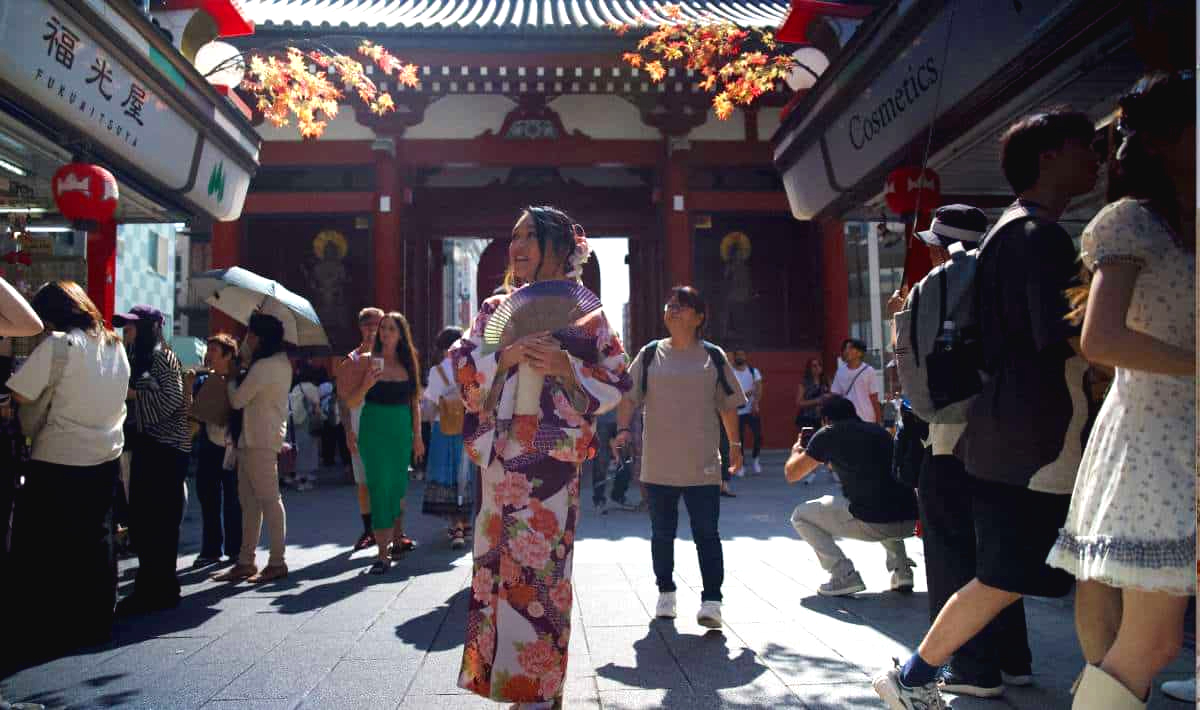
When you arrive, the first thing you see is the Kaminarimon or Thunder Gate. It is a huge sight, and we think it does a great job of starting your day in Asakusa. It holds that massive red paper lantern and has two big guardian statues watching over the entrance. We always recommend taking a moment here to appreciate the scale; it really sets the mood for the history you are about to explore.
Seeing the Kaminarimon
Once you have taken your photos at the Thunder Gate, we have a crucial tip for this exact spot. Immediately turn around and look back across the street. That modern building directly opposite is the Asakusa Cultural Tourist Information Center. We always recommend heading straight up to the free observation deck on the 8th floor. It offers an incredible, free panoramic view of the entire Nakamise-dori leading up to the temple, with the Tokyo Skytree clearly visible in the distance. We suggest doing this either at the start of your visit or saving it for the evening, but it is definitely a must-do.
Walking Down Nakamise Street (& Our Recommended Food Stops)
Once you pass under Kaminarimon, you enter Nakamise-dori, a path about 250 metres long lined with around 90 stalls. This bustling street leads straight to the main temple hall and is actually one of Japan’s oldest shopping districts. It is lively, often crowded, and full of energy.
Do not just rush straight through to the temple! This is the perfect place to pick up traditional snacks and unique Japanese crafts, and we absolutely recommend you take the time to eat your way along the street. But first, you need a plan.
Most people target specific, famous shops. For example, if you want the quintessential ningyo-yaki, those delightful, bite-sized sponge cakes often shaped like temple landmarks, you should look for Kimuraya Honten. They are usually filled with sweet red bean paste or custard. Be warned: shops like this can have long queues, especially on weekends, but they are worth the wait for that perfect Japanese snack.
Another essential stop is the famous jumbo melon pan at a place like Kagetsudo. This is a lightly sweetened, fluffy bread with a crispy crust. We suggest buying it fresh and eating it immediately while it is warm.
For souvenirs, you can find beautiful, quality items like handmade folding fans, colourful chopsticks, and traditional woodblock prints. Read more about Tokyo souvenir shopping:
Elevating Your Sensoji and Asakusa Experience
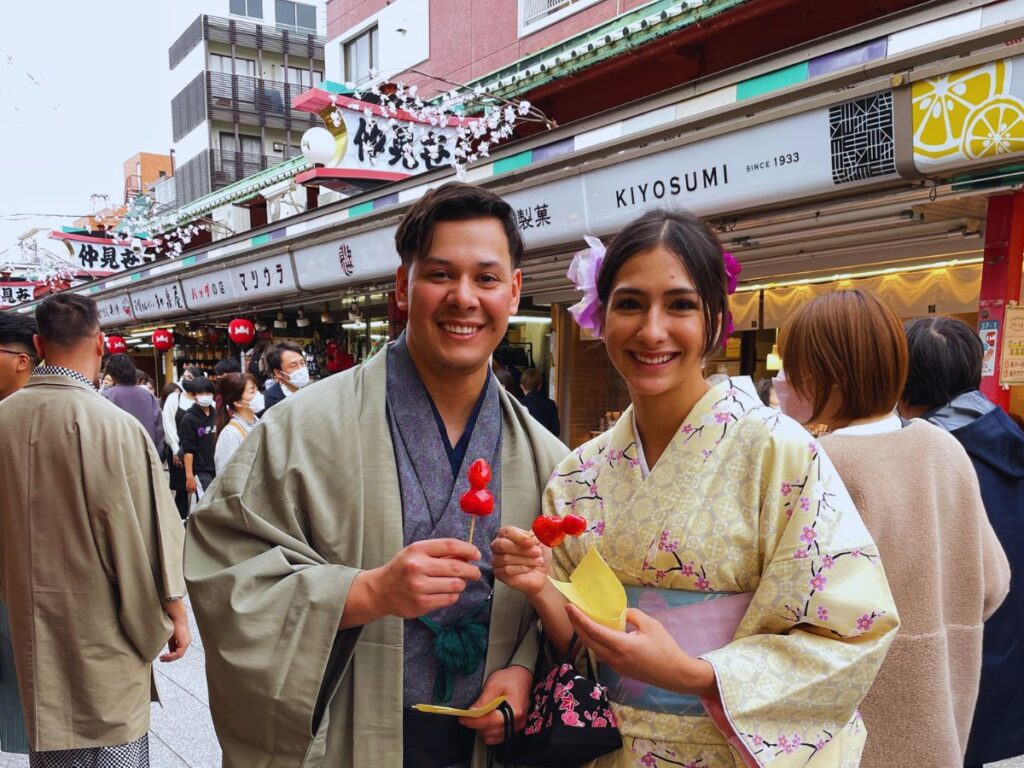
The atmosphere in Asakusa makes you feel like you have stepped right into old Tokyo. We think one of the absolute best ways to fully embrace this traditional world is by renting a kimono for the day.
Walking down Nakamise Street or exploring the quiet temple grounds while dressed in beautiful, traditional attire makes the whole trip feel like true immersion, not just sightseeing. It also makes for incredible photographs that you will definitely cherish, especially with the temple’s magnificent gates and buildings as your backdrop.
Book your kimono and styling experience through us.
Inside Sensoji
After we navigate the lively market, we pass through the second huge gate called the Hozomon. This is where the energy changes. We leave the commercial noise behind and enter the sacred main grounds. This area is packed with history, and we want to help you understand exactly what you are looking at so you do not just walk past the important bits.
Main Hall Manners and Fortune
Before you go up the stairs to the Main Hall, you have two important stops to make. First, you will see a large pavilion with a giant incense burner in the middle. This is called the jokoro. You will see people crowding around it and waving smoke onto their bodies. The belief here is that the smoke has healing power.
If you have a sore shoulder, you wave smoke onto your shoulder. If you want to be smarter, you wave it onto your head. We always stop here to wave some smoke towards us; it is a nice moment of tradition to join in on.
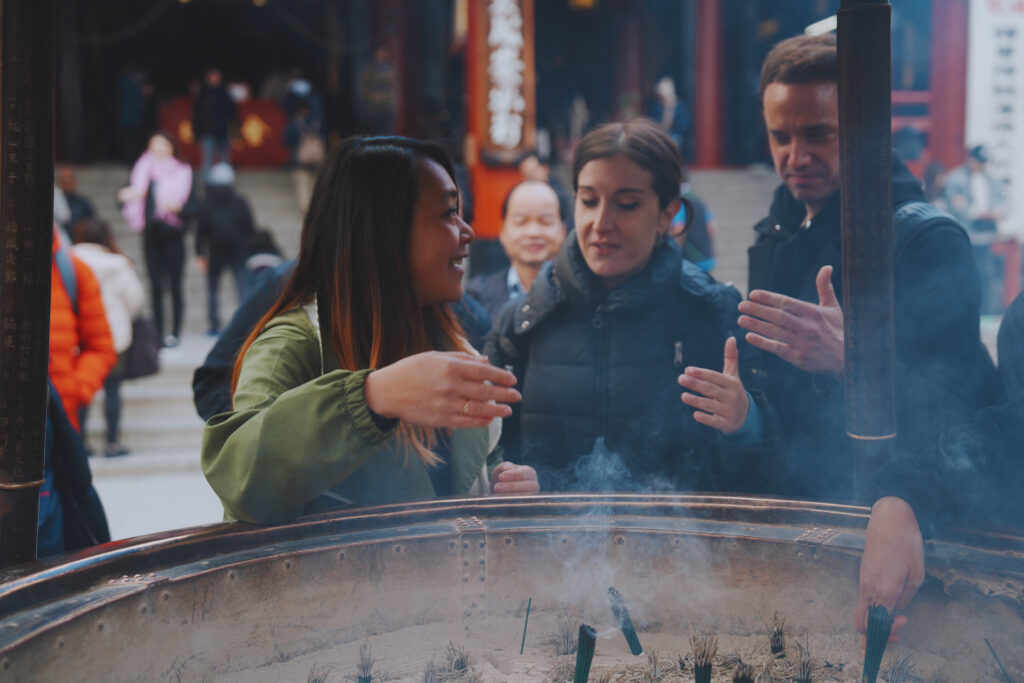
If you want to, you can also buy your own incense to make your offering personal. There is a small booth to the right where you can buy a bundle of incense sticks for just 100 yen. You light the bundle at the small burners provided, let the flame settle, and then place it upright in the ash of the great burner. It is a very affordable way to participate in the ritual properly rather than just watching from the sidelines.
Next, you need to purify yourself at the water fountain, which is called the temizuya. First, take the ladle with your right hand and pour water over your left hand. Then switch hands and wash your right hand. Then, pour a little water into your cupped left hand and rinse your mouth. Do not touch the ladle to your lips! Finally, tip the ladle up so the remaining water washes down the handle to clean it for the next person. Now you are ready to approach the main hall.
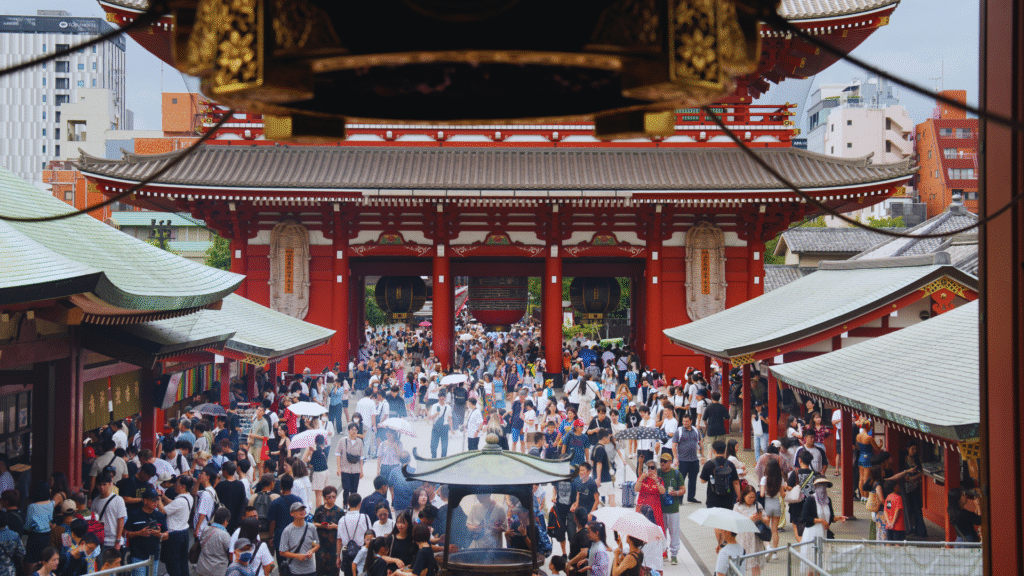
When you get to the top of the stairs, you are at the Hondo, or Main Hall. It is massive. You can toss a coin into the wooden box (the saisen-bako) and bow. The actual statue of the Kannon goddess that the temple is famous for is never shown to the public. It is known as a “hidden Buddha” and stays locked deep inside the inner sanctum. So when you pray, you are directing your thoughts to something you cannot actually see, which we think adds to the mystery of the place.
We also always recommend trying the Omikuji or fortune telling while you are here. It is only 100 yen, and it is a classic Sensoji experience. You shake a silver hexagonal box until a single bamboo stick falls out of a small hole. The stick has a number on it written in kanji. You find the wooden drawer with the matching number and pull out your paper fortune.
Interestingly enough, there is a local lore that Sensoji has more “Bad Luck” results than other temples! But if you get a bad one, do not panic. You should just tie the bad fortune paper onto the metal wires nearby; this signifies that you are leaving the bad luck behind at the temple. If you get a “Great Blessing” or good luck, fold it up and put it in your wallet to take home.
Sensoji and Asakusa Shrine: Two Faiths in One Sanctuary
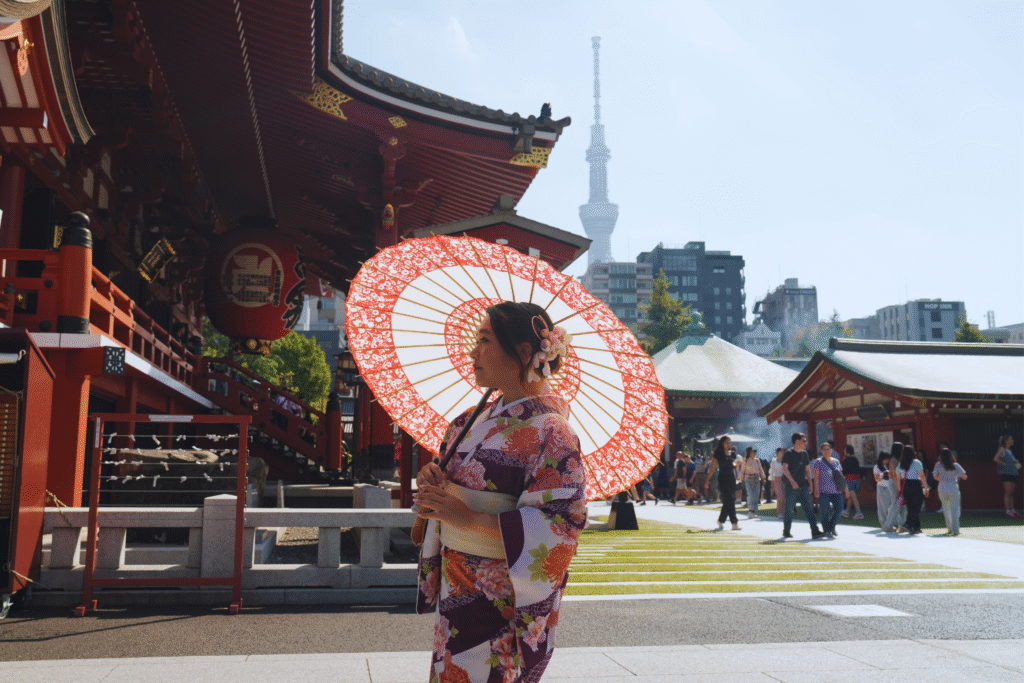
One of the most fascinating things about this area is something most tourists completely miss. If you look to the right of the main temple building, you will see a different, slightly smaller structure. This is the Asakusa Shrine. It is crucial to understand the difference. Sensoji is a Buddhist temple, dedicated to the goddess Kannon. Asakusa Shrine is Shinto, which is Japan’s indigenous religion.
While you often see shrines and temples near each other in Japan, the connection here is special and goes back centuries. Historically, the two religions were mixed together, but in the late 1800s, the government tried to forcibly separate them. In many places, this meant destroying one or the other. Sensoji and Asakusa Shrine are unique because they survived this separation side-by-side.
They belong together because the shrine is actually dedicated to the three men who founded Sensoji. The story goes that two brothers who were fishermen found the Kannon statue in the Sumida River back in the year 628. A third man, the village chief, recognised what it was and built the temple. The shrine honours those three ordinary men as deities.
We love this spot because it perfectly shows how Buddhism and Shinto live together in Japan. You have a Buddhist temple and a Shinto shrine sharing the same ground, honouringhonoring the same history, but in different ways. We encourage you to walk over to the shrine after the temple. It is usually much quieter, and you clap your hands twice when you pray there, which is different from the silent prayer at the Buddhist temple.
Learn more about Japanese shrines here:
Sensoji’s Quieter Hidden Spots
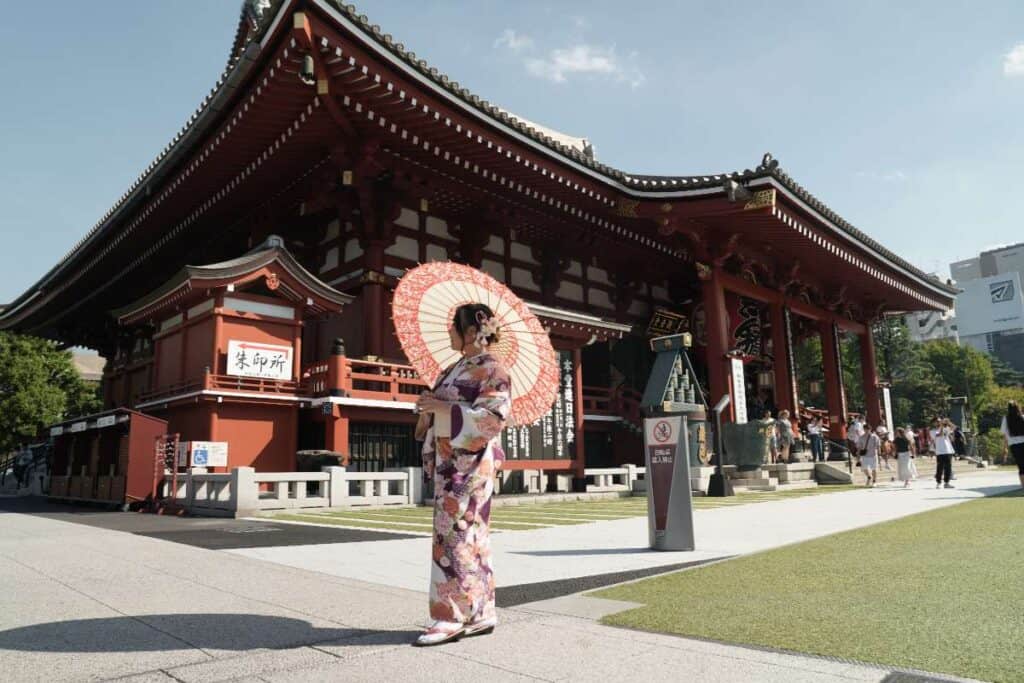
Once you have seen the main hall, most people assume the visit is over and head back to the station. But for us, the best part of Sensoji is actually found in the quieter spots just a few minutes away from the crowd. This is where you get to experience the real atmosphere of the temple without getting bumped into by hundreds of other tourists.
The Zodiac Hall
We always tell our clients to walk to the left of the main hall to find the Yogodo Hall. It is surprisingly quiet, but it is one of the most personal spots in the entire complex. Inside this hall, you will find statues of eight Buddhas who are believed to protect the twelve animals of the Chinese zodiac. This is a great activity because you can look up which Buddhist deity protects your specific birth year and offer a prayer directly to them. It feels much more personal than the main hall, and it is usually empty enough that you can take your time.
Secret Photo Spot and Meeting Point
If you try to meet friends at the Kaminarimon gate, you will likely never find them because of the crowds. We have a much better suggestion. Head to the area directly behind the Main Hall. There is a famous statue there of Ichikawa Danjuro IX, a legendary Kabuki actor, striking a dramatic pose. It is distinct, easy to spot, and usually has plenty of space standing around it, making it the perfect stress-free meeting point.
This area is also our secret weapon for photography. The front of the temple is always blocked by people, but the architecture looks just as impressive from the back. You can get a stunning shot of the red temple buildings here with almost no people in the frame. If you are visiting in spring, this is absolutely the best place to be. The garden here has beautiful cherry blossom trees that frame the back of the temple perfectly. You get the classic “pink flowers and red temple” photo that everyone wants, but you get it without fighting for space.
Boshi Jizo
Finally, there is a little hidden gem that many people travel all the way to Nikko to see, not realising they can find a similar touching version right here in Asakusa. In Nikko, people flock to the Kanmangafuchi Abyss to see the famous “Narabi Jizo”—the stone statues standing in a row wearing red hats and bibs. Sensoji has its own version called the Boshi Jizo.
If you wander near the small stream and koi pond in the temple gardens, keep an eye out for them. They are stone statues of a mother and child that are usually wearing similar little knitted hats and bibs to the ones in Nikko. While the Nikko statues are famous guardians of travellers, these ones at Sensoji have a specific, touching history: they were built to comfort the spirits of mothers and children affected by World War II. It is a sweet, quiet detail that is easy to miss if you are not looking for it, but spotting them makes the visit feel much more complete.
Beyond the Temple: Asakusa’s Must-Visit Gems
Now that we have completed the spiritual tour, it is time to explore the vibrant district surrounding the temple. Asakusa has so much more to offer than just Sensoji, and we think the surrounding streets are where the real “shitamachi” or old downtown atmosphere lives.
Get the Free Million-Dollar View
We mentioned this at the very beginning, but it is worth repeating because it is just that good. If you skipped it earlier, you absolutely must go to the Asakusa Cultural Tourist Information Center. It is the striking glass and wood building across from the Kaminarimon gate, designed by the famous architect Kengo Kuma. While most people pay thousands of yen to go up the Tokyo Skytree, you can get a stunning view right here for free.
Head up to the 8th-floor observation deck. The view looking down over the Nakamise shopping street and the temple grounds gives you a completely different perspective on the scale of the complex. It is open until 10:00 PM, so if you are staying in the area, we highly recommend coming back at night to see the temple illuminated.
Lunchtime in the Back Alleys
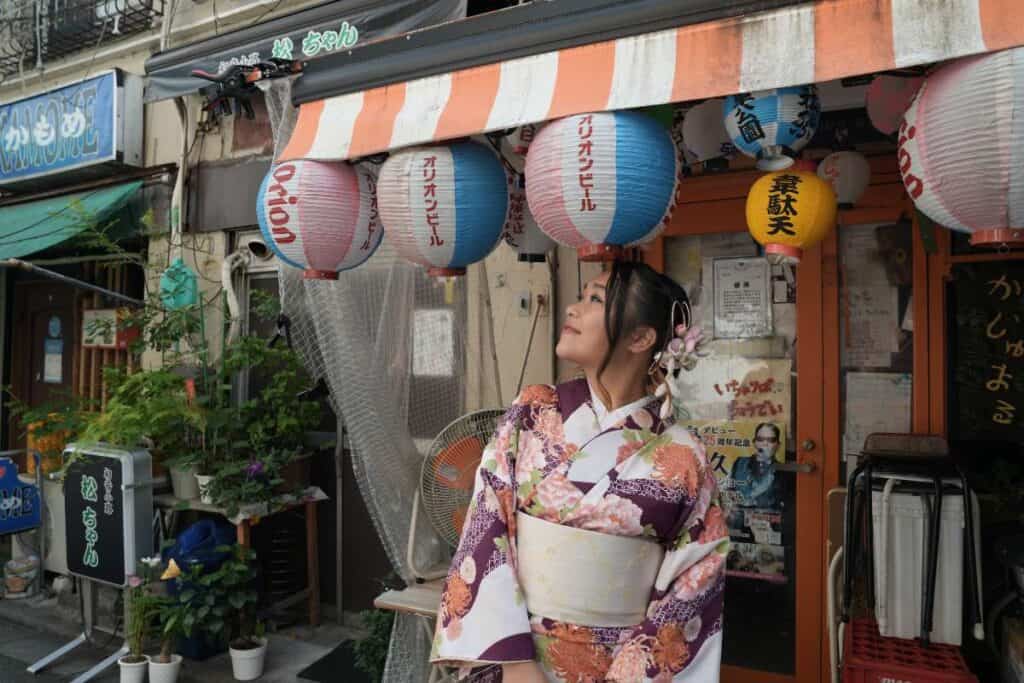
For lunch, we strongly advise you to skip the tourist-heavy restaurants on the main street and head to the back alleys just west of the temple. This area is known as Hoppy Street. It is famous for its retro, open-air atmosphere where people sit on milk crates or small stools outside.
The speciality here is Nikomi, a rich, savoury stew made from beef tendons and vegetables that has been simmered for hours. You order it with a bottle of Hoppy, a beer-flavoured drink that you mix with shochu alcohol. It is a true local experience that feels a world away from the polite quiet of the temple.
If stew is not your thing, Asakusa is also the historic home of Edo-style Tempura. Unlike the light, crispy tempura you might be used to, the traditional version here is fried in sesame oil, giving it a golden colour and a rich, nutty aroma. It is often served as a Tendon rice bowl, drizzled with a thick, dark, sweet-savoury sauce. There are several long-established shops in the area, such as the famous Daikokuya, where the queue is a testament to the quality.
Can’t decide which to eat? Our foodie guide can help you out:
Walking to Kappabashi Kitchen Town & Sumida River

Depending on your energy levels, there are two great spots within walking distance to finish your day.
If you love cooking or just weird souvenirs, walk about ten minutes west to Kappabashi Kitchen Town. This is the restaurant supply district famous for those hyper-realistic plastic food samples you see in Japanese restaurant windows. You can actually buy them as souvenirs!
Alternatively, walk east to the Sumida River. It is a lovely spot for a stroll with a view of the Tokyo Skytree and the golden “Asahi Beer Flame” building. You can even catch the Tokyo Water Bus from here, which is a fantastic way to cruise down the river to the Hamarikyu Gardens or Odaiba. This area is especially beautiful in spring, when the cherry blossoms are blooming.
Planning Your Own Dream Trip to Japan?
Feeling overwhelmed by the endless options? Let us take the stress out of planning. We design 100% custom itineraries based on your interests, budget, and travel style, helping you discover the Japan you’ve always dreamed of.
→ Find out more about our Personalised Japan Travel Planner
When to Visit Sensoji and Asakusa
When it comes to timing your visit to Asakusa, we have two distinct recommendations depending on what kind of atmosphere you want. We always suggest visiting early morning, ideally just after the temple gates open at 6:00 AM. This is the only time you can experience the quiet, meditative side of the temple before the massive crowds arrive. Alternatively, visiting after sunset offers a magical view when the temple is illuminated, and the grounds are much more peaceful.
For opening hours and fees, you should know that the Sensoji Temple grounds themselves are always open, so you can walk through the gates at any time of night. However, the Main Hall is generally open from 6:00 AM to 5:00 PM (opening at 6:30 AM from October to March).
The shops along Nakamise-dori usually operate from around 10:00 AM to 5:00 PM, though this varies by shop. The best news is that admission to the temple grounds and the shrine is completely free, so you only need to budget for your food and fortune-telling!
Asakusa and Sensoji Temple FAQs

What are the hidden spots of Sensoji Temple?
We love the quiet, small sub-temples located off the main path to the left of the main hall, specifically the Yogodo Hall. We also recommend the Boshi Jizo statue near the koi pond, and using the area behind the Main Hall for photos is a game-changer.
Is a rickshaw ride in Asakusa worth it?
Yes, we absolutely think it is worth it. The rickshaw drivers are incredibly knowledgeable and offer a personalised tour through the quieter backstreets that you might never find on your own. They point out historical details and great photo spots.
Is Sensoji Temple better at night?
The atmosphere completely changes at night, so it depends on what you are looking for. While the main hall and shops will be closed, the temple buildings and the Five-Storied Pagoda are beautifully illuminated until 11:00 PM.
Where to eat authentic tempura in Asakusa?
Asakusa is famous for its distinct Edo-style tempura, which is fried in sesame oil for a darker colour and richer flavour. We recommend seeking out historic shops like Daikokuya, which has been operating since 1887. Be prepared for a queue, but the hearty tendon rice bowls there are a true taste of old Tokyo.
What are the main festivals in Asakusa?
Asakusa is famous for its vibrant festivals. The biggest one is the Sanja Matsuri in May, which is one of Tokyo’s top three festivals and features wild processions of hundreds of portable shrines.
Is Asakusa a good place to stay?
Absolutely. We think Asakusa is an excellent choice for where to stay in Tokyo, especially for travellers who prefer calm, culture, and traditional character over the hectic nightlife of areas like Shinjuku or Shibuya. It often offers more affordable accommodation options and is very well-connected by the Ginza and Asakusa subway lines, making it a convenient base for exploring the rest of Tokyo.