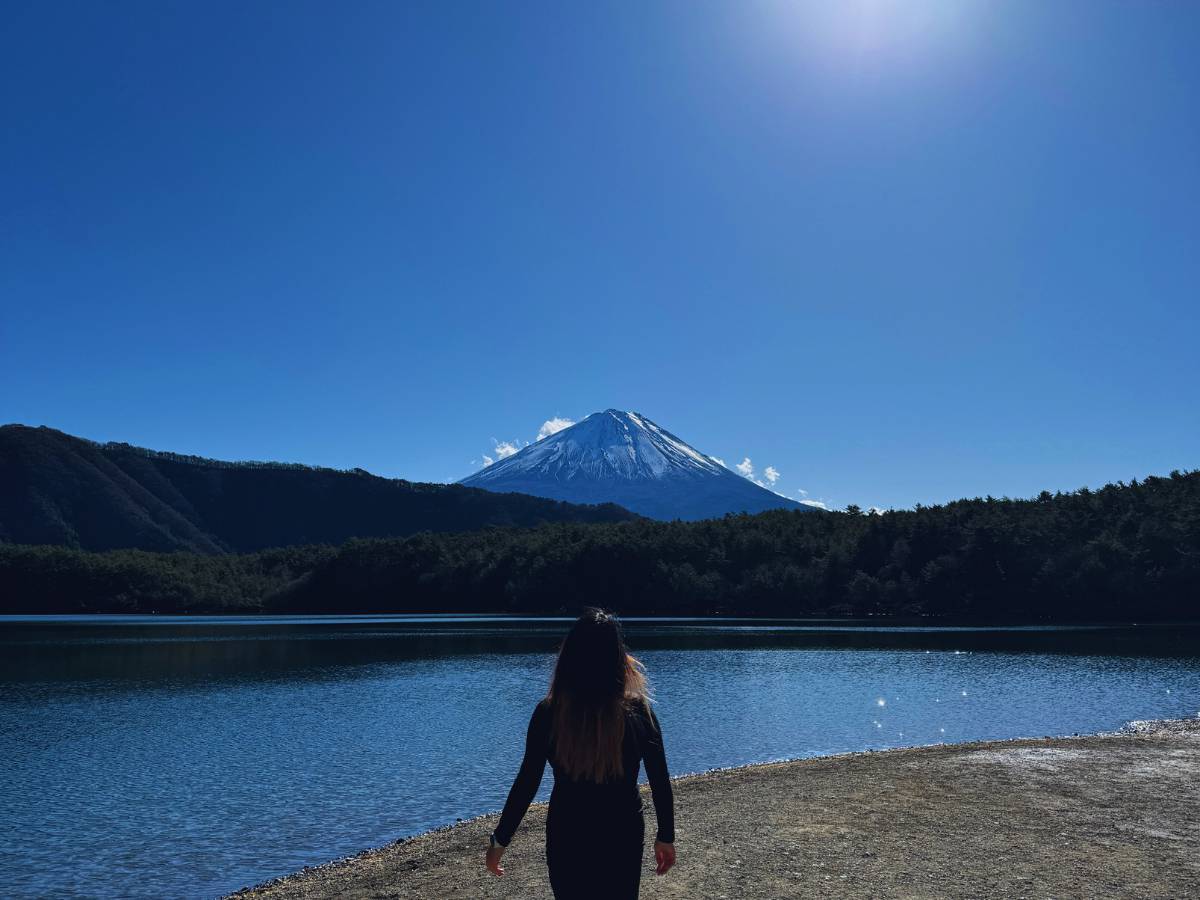
Seeing Mount Fuji with your own eyes is one of the most quintessential “Japan” experiences you can have. It’s no wonder that almost everyone visiting Japan wants to fit it into their itinerary.
But here’s the first question we always ask travellers: how do you want to experience it?
The plan for grabbing that perfect postcard photo from a distance is completely different from the plan for actually climbing to the 3,776-metre summit. Your choice will change everything, from the train you book to the time of year you visit.
We’ve explored the region from just about every angle, and we’ve narrowed it down to the 5 best ways to visit Mt Fuji. This guide will help you pick the one that’s perfect for your travel style, budget, and schedule.
Stop Planning, Start Adventuring
Tired of spending hours trying to piece together the perfect Japan trip? Our custom travel planning service is for you. We handle all the research and logistics to create a unique itinerary that lets you travel with confidence and experience Japan your way.
→ Build My Personalised Japan Itinerary
Getting to Mt Fuji
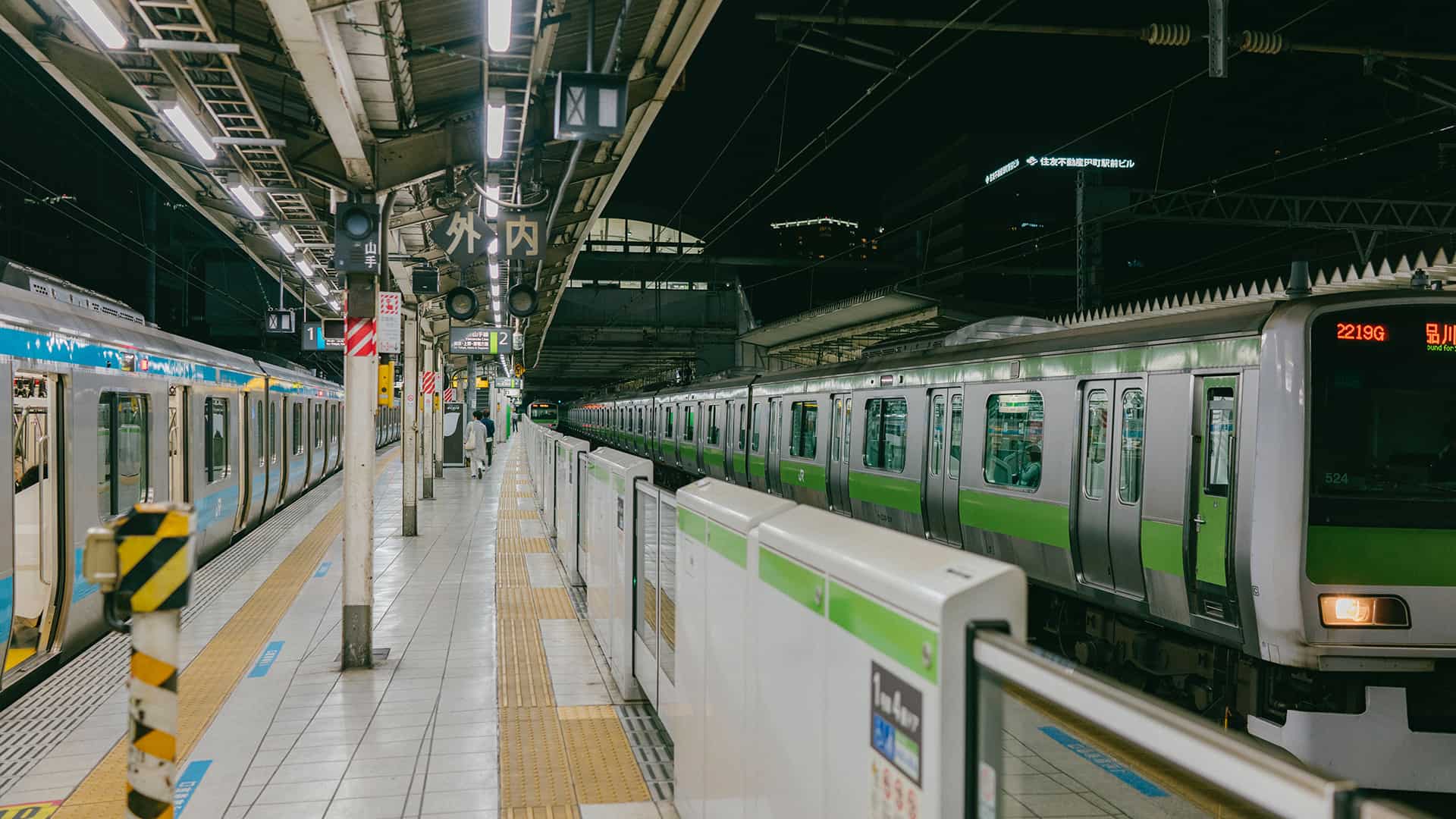
To get to Mt Fuji from Tokyo, your journey will most likely start at the massive Shinjuku Station. It’s the central hub for the two best routes to Kawaguchiko Station, the main base for the Fuji Five Lakes region.
While you could try to piece together local train routes, we’ve found there are really only two main ways to get there that we recommend. Here’s our breakdown of the best options, depending on what you value most: your time or your budget.
For Comfort & Speed: Fuji Excursion Train
If you want the most seamless, stress-free route, this is our top pick. The Fuji Excursion is a direct train from Shinjuku right to Kawaguchiko, which means no confusing changes. You get a comfortable, dedicated seat, and it’s the fastest, most reliable way to get there.
- Time: Just under two hours.
- Cost: Around ¥4,130 one-way.
The only catch? It’s a limited service, and it’s popular. You absolutely must book your tickets in advance.
Here’s our expert tip: Don’t wait. Book your reserved seats as soon as you know your travel dates, especially if you’re travelling on a weekend. These tickets sell out fast for a reason.
For Budget Travel: Highway Bus
If your main priority is saving money, the highway bus is your answer. It’s undeniably the cheapest way to get to Mount Fuji from Tokyo.
- Time: Around 1 hour and 45 minutes (without traffic).
- Cost: Around ¥2,200 one-way.
It’s a simple, direct route that leaves from the Shinjuku Bus Terminal (right next to the station) and costs roughly half the price of the train. It’s straightforward and gets the job done.
But here’s the warning, and this comes from experience: that 1h 45m travel time is the best-case scenario. You are at the mercy of Tokyo’s infamous traffic. Be prepared for potential delays, especially if you’re travelling during a peak season or public holiday. It’s cheap, but it’s rarely the quickest option.
The 5 Best Ways to Visit Mt Fuji
Now that you know how to get there, here’s how to plan your day. We’ve found that matching your itinerary to your travel style is the best way to have a perfect trip. Here are our five favourite ways to tackle the mountain.
Way 1: The Quick Day Trip Centred on Mt Fuji Views
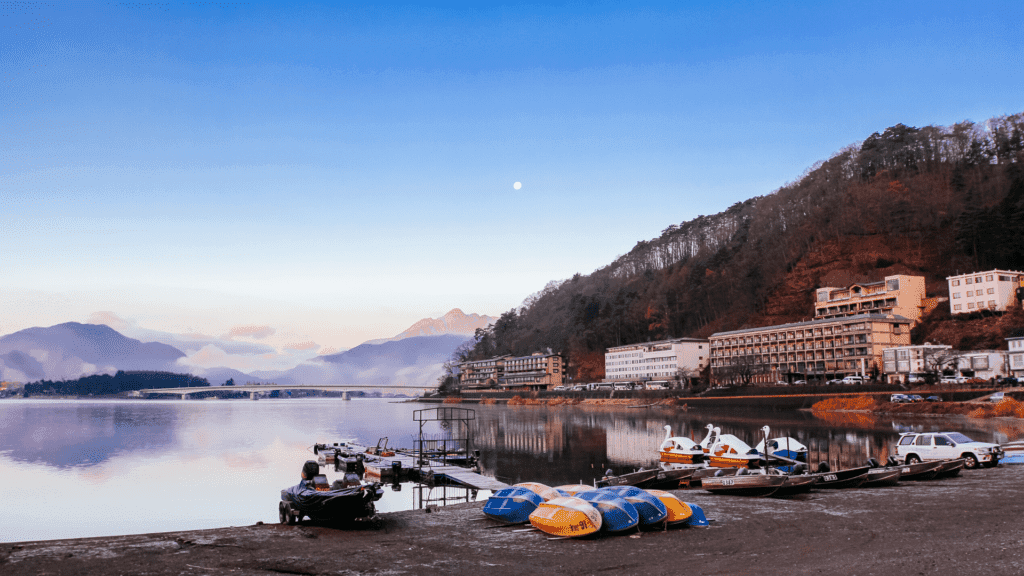
This is for the first-time visitor, anyone on a tight schedule, or if someone laser-focused on getting that classic postcard shot.
This plan is all about efficiency and maximum visual reward. Your entire day will be focused on the Kawaguchiko area, which is the most accessible and photogenic of the Fuji Five Lakes.
For recommended stops, there are two you simply can’t miss. The first is the Chureito Pagoda, which offers that famous shot of Mt Fuji rising behind the striking red pagoda (be prepared for a lot of steps, but it’s worth it). The second is the northern shore of Lake Kawaguchiko, which is where you have the best chance of seeing the “Inverted Fuji”—its perfect reflection in the water.
Your must-do for the day is the Mount Fuji Panoramic Ropeway. It takes you up from the lake’s shore for a truly breathtaking, sweeping view of the entire landscape. To get between these spots, the local retro buses are easy to navigate and circle the lake.
Be sure to read our tips for visiting Kawaguchiko before your visit:
Way 2: The Two-Day Climber
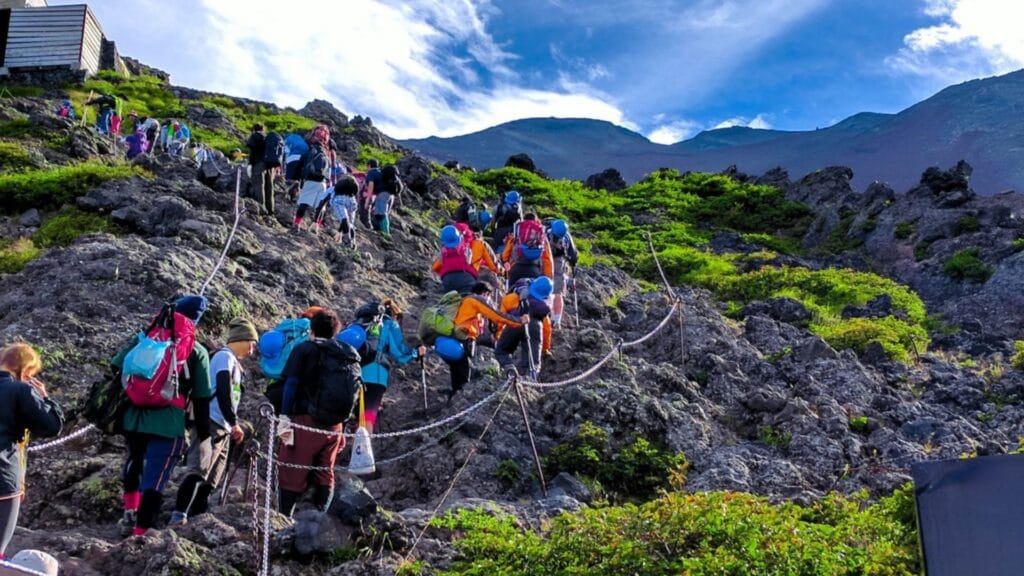
This option is for the adventurer or the physically fit traveller who is focused on the serious goal of reaching the summit.
As a travel agency, we’ll be honest: our expertise is in getting you to the mountain. Climbing Mt Fuji is a serious athletic challenge that requires proper training, gear, and safety awareness, and we are not mountaineering experts. We strongly urge you to do thorough research before you go.
The official climbing season is very short, typically running from early July to mid-September. The most common plan is an overnight trip using the Yoshida Trail, which is the most popular and has the most facilities. All official climbing guides strongly warn against “Bullet Climbing”, which means trying to go up and back in one go, as it is dangerous and leads to a high rate of altitude sickness.
The recommended method is a two-day ascent, which allows you to rest at a mountain hut before climbing the final section to see the sunrise. For this plan, booking a mountain hut in advance is essential, and that is something our agency can help you with.
For all critical information on trail conditions, safety rules, necessary gear (like warm layers and rainwear), and hut reservations, your primary source must be the official Mt. Fuji Climbing website.
Way 3: The Zero-Stress Private Tour
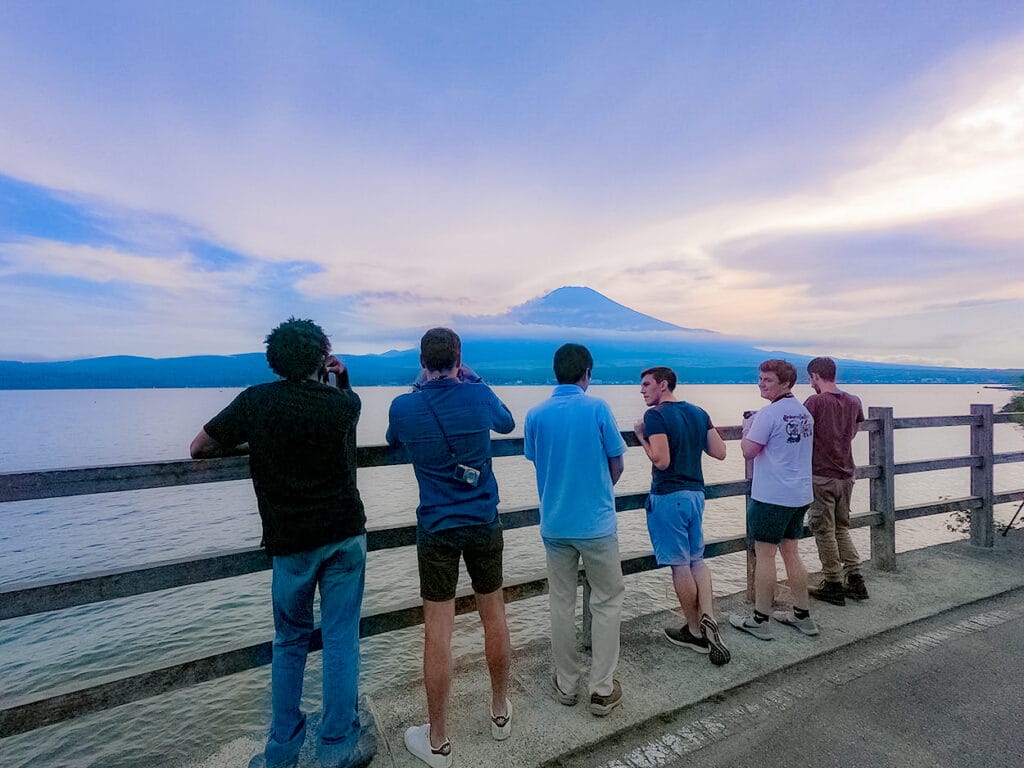
This option is for families, large groups, or anyone who simply wants to see the sights without the stress of navigating train schedules and bus timetables. If you value convenience above all, this is for you.
Instead of piecing together a public transport itinerary, this plan is simple: you book a private guided day tour or car charter directly from Tokyo.
This is naturally our favourite way to explore the area, which is why we offer our own Kawaguchiko (Mt Fuji) Tour with a Private Car. We’ve found it’s the perfect solution for a stress-free day. You get a comfortable private vehicle and a friendly, English-speaking local driver who truly knows the area.
The best part is that the itinerary is flexible and tailored to you. There are no crowded buses and no rigid schedules. A private tour makes it easy to visit multiple spots, like the springs of Oshino Hakkai or other cultural gems, all at your own pace.
Way 4: The Multi-Region Trek
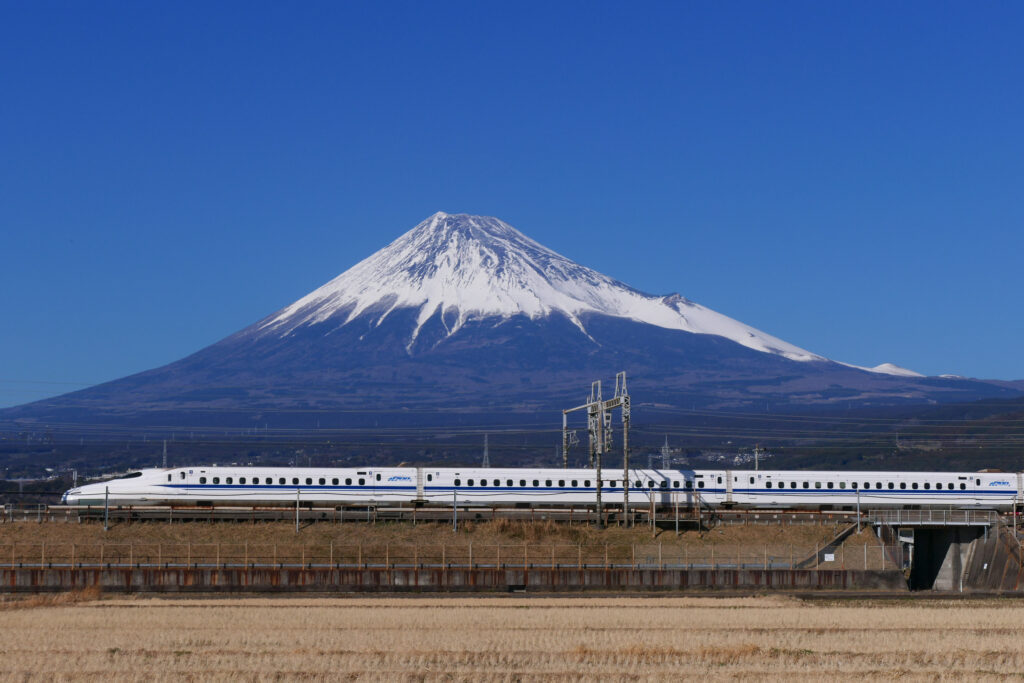
This plan is perfect for travellers who are already heading south from Tokyo towards cities like Kyoto or Osaka and want to see Mt Fuji as part of that journey.
You have two great options. The simplest is to just view Mt Fuji from the Shinkansen. It’s a classic Japan travel moment. Just be sure to book a seat on the right-hand side of the train (Seat E) for the best, albeit brief, view about 45 minutes after leaving Tokyo.
A more immersive option is to plan a stopover in Hakone, a famous hot spring resort town that offers its own stunning views of the mountain from spots like Lake Ashi. To do this, you can take the Shinkansen from Tokyo to a station like Mishima or Shin-Fuji, and then easily connect to the Hakone or Fuji areas by a local bus.
Lucky for you, we’ve also got the perfect itinerary for Hakone:
Way 5: Getting the Perfect Mt Fuji Shots
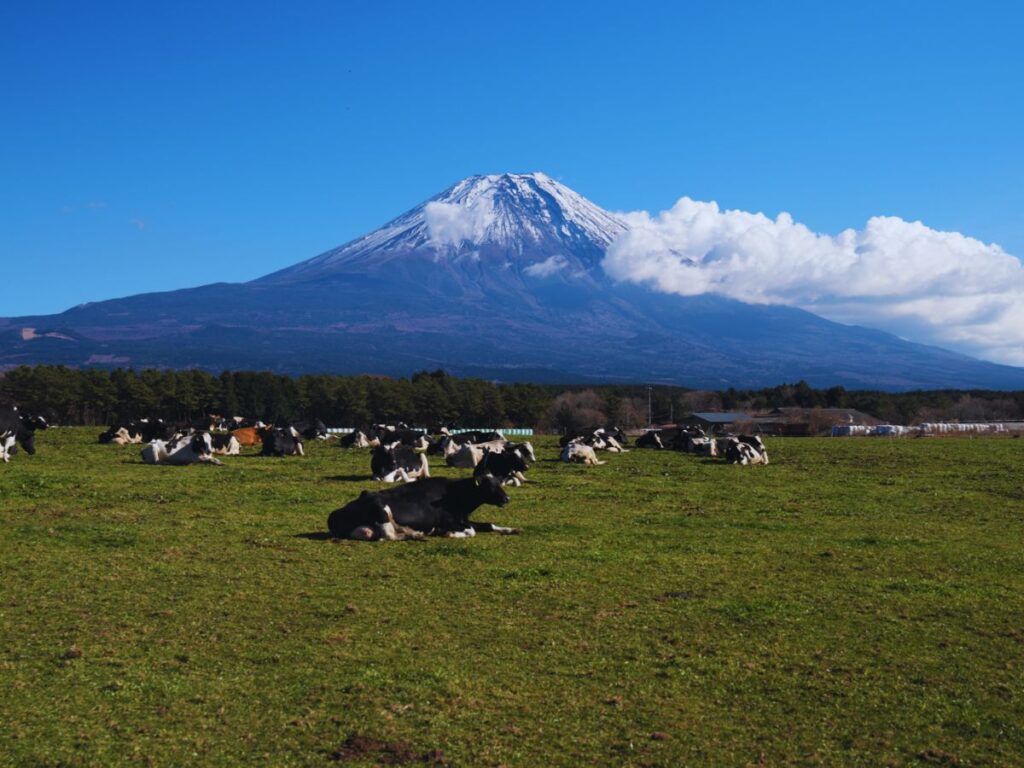
This is for the patient traveller who wants THE shot. We’re not talking about the quick, crowded photo from the Chureito Pagoda; we’re talking about a unique, stunning image that takes real planning.
Your itinerary isn’t about rushing from one spot to the next. It’s about being in the perfect place at the perfect time. This might mean planning your trip to capture rare events like “Diamond Fuji,” when the sun aligns perfectly with the mountain’s peak at sunrise or sunset. Or it could mean finding the calmest water for the “Inverted Fuji” reflection.
For this, you need to go further than the average day-tripper. For example, we recommend heading to Lake Motosuko to find the exact, serene view that’s famously printed on the ¥1,000 note. For another classic shot, you can head to the vast tea fields in Shizuoka Prefecture, which let you frame the mountain behind endless rows of green tea.
If this sounds like your ideal Mt Fuji trip but you’re overwhelmed with how to put it together, our experienced team of travel planners can help you out.
Also, here’s one real-world expert tip for photographers: Mt. Fuji is famously “shy” and often hides behind clouds. To save yourself a wasted journey, it’s a great idea to check one of the many live webcams of the mountain before you head out. This is especially true if you’re planning an early start. The webcams will give you a real-time look at the conditions.
Visiting Mt Fuji FAQs
What is the cheapest way to get to Mt Fuji from Tokyo?
Hands down, the Highway Bus from Shinjuku is the cheapest option. A one-way ticket costs around ¥2,200, which is about half the price of the direct train.
Do I need to book my transport in advance?
Yes, we strongly advise it. The Fuji Excursion train requires a reservation and sells out quickly. The bus also gets very busy, so booking ahead is essential to secure your seat.
When is the best time to see Mt Fuji?
For the clearest, crispest views, the winter and spring mornings (November to May) are your best bet. For climbing, you must go during the short official season, which is typically from early July to mid-September.
Can you see Mt Fuji from the Shinkansen?
Yes! It’s a classic travel moment. When travelling from Tokyo towards Kyoto or Osaka, book a window seat on the right-hand side (Seat E) for the best view.
Can a beginner climb Mt Fuji?
This is a common question. It’s not a technical climb, but it is a very challenging, high-altitude hike. It should not be underestimated. Many beginners complete it, but you must be in good physical health, well-prepared with the right gear, and never, ever “bullet climb” (go up and back in one day). Always check the official climbing website for safety advice.