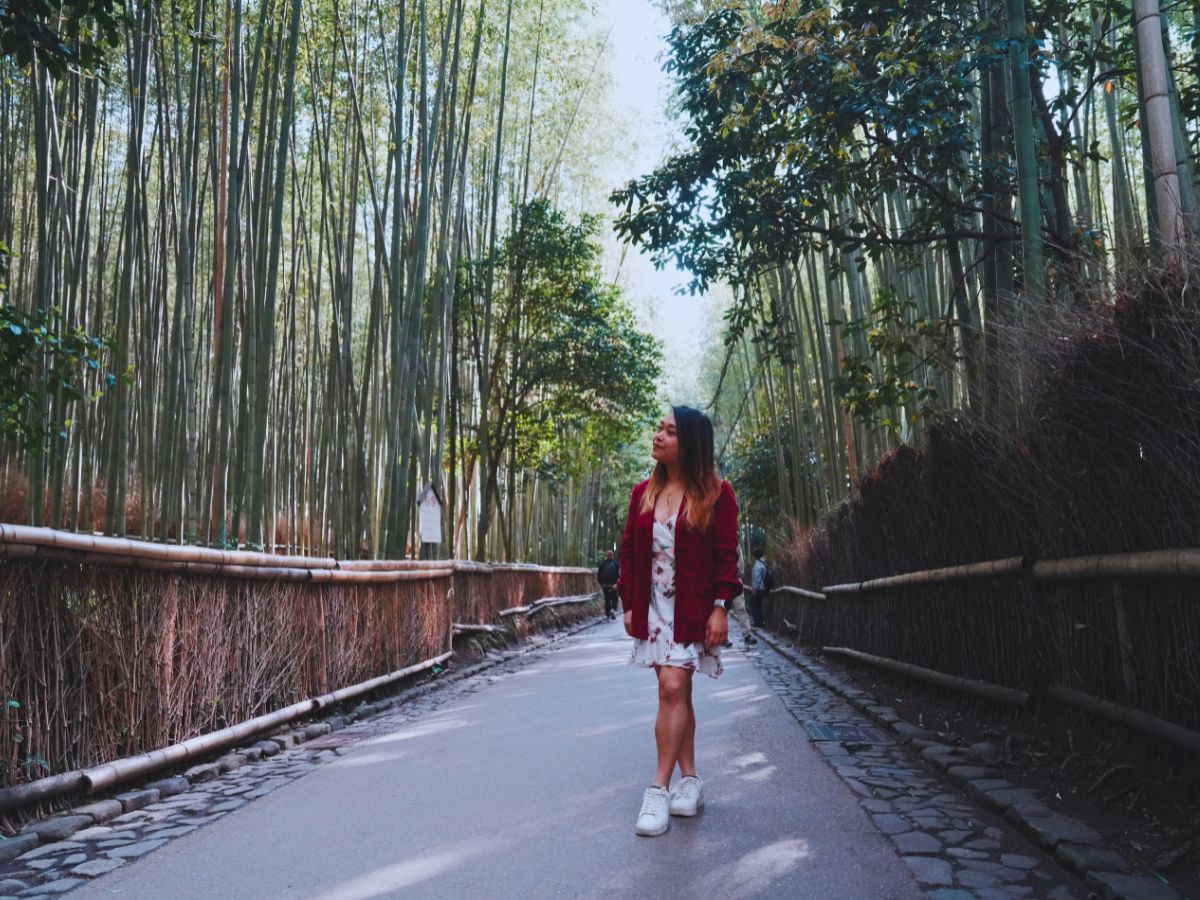
If you search for a Kyoto itinerary, you are going to get blasted with photos of golden temples and those orange gates at Fushimi Inari. Those places are iconic for a reason, but after years of sending people here, let us tell you the truth: trying to see it all in 48 hours can be stress-city.
Most travellers spend their precious time fighting a stampede of people just to catch a glimpse of a temple roof. It is a headache. But the good news is that two days is plenty of time to really experience the city if you stop trying to do everything and start being strategic with your route.
The reality of Kyoto right now is that the tourism landscape has shifted. It is busier than ever, and the city is working hard to balance these massive crowds with staying liveable for the people who actually live here. You cannot just wing it anymore.
For that reason, in this 2-day Kyoto itinerary, we split your 48 hours between the east and the west so you do not waste half your trip sitting in traffic. Our goal is to help you actually get to see the Kyoto you came for instead of just the back of someone else’s selfie stick.
Getting To and Around Kyoto
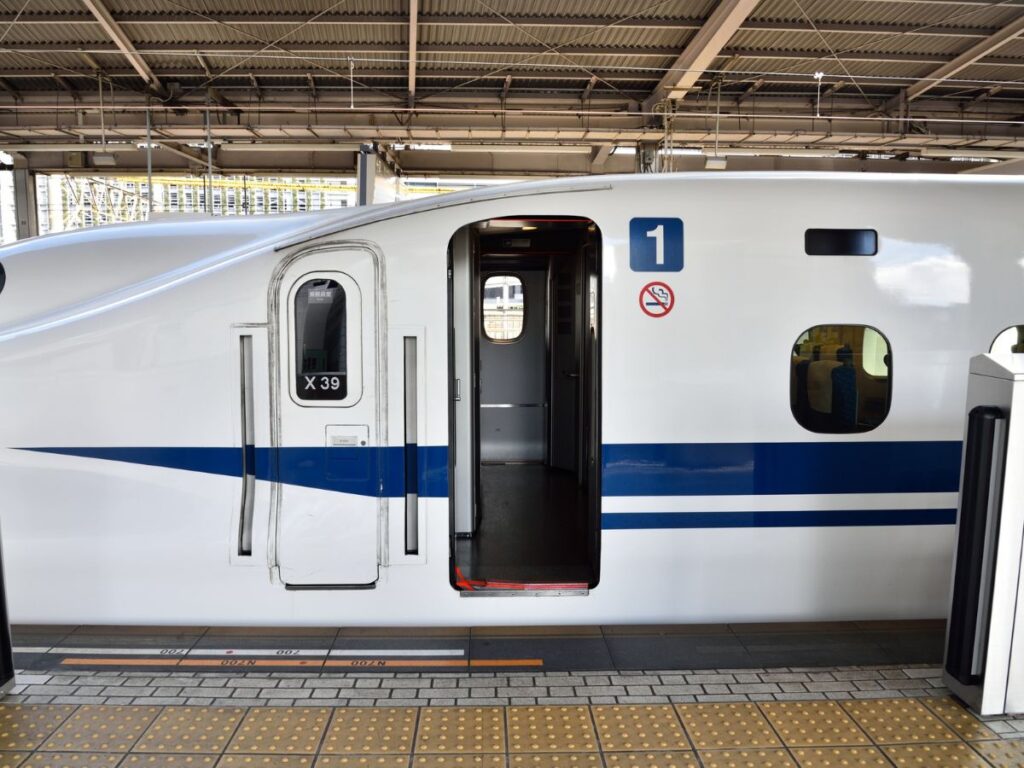
To see that version of the city, you need to get the logistics right first. Getting to Kyoto is usually pretty straightforward. If you are coming from Tokyo, the Shinkansen is the best way to go. It is fast, reliable, and honestly just the easiest way to travel. From Kansai Airport, we always jump on the Haruka Express. It is a seamless ride that drops you right at Kyoto Station. If you are using a JR Pass, these major legs are covered, so it makes the most sense to use it for these big trips.
For your home base, we have already done the heavy lifting and compared the different neighbourhoods in our Kyoto Area Guide. Usually, we tell people to stay near Kyoto Station or Kawaramachi just to keep the logistics simple.
Once you are in the city, you will find a massive bus network. Recently, Kyoto even launched the Sightseeing Limited Express buses to help manage the crowds. They are an improvement because they go straight to major sites for a 500 yen fare, but they are still buses. They still get stuck in the same traffic as the cars. That is why our itinerary relies on trains and subways. We always use the Hankyu, Keihan, or subway lines because they are faster and more reliable.

However, you will notice that we also recommend using taxis for specific short hops. Many travellers avoid them because they think taxis here are notoriously expensive, but in Kyoto, they are a secret weapon for saving time. A short ride usually costs between 1,200 and 1,500 yen. If you are sharing the fare with others, it is often a very reasonable way to skip a long, sweaty uphill climb and save your energy for the actual sightseeing.
Also, do yourself a massive favour and leave your heavy bags at the station (if they’re not in your hotel room already). Kyoto is packed with coin lockers and luggage delivery services that can drop your suitcase at your hotel while you explore. We have seen too many people struggling, and let us tell you, dragging a bulky bag over uneven cobblestones is a total nightmare.
And please, wear your most comfortable shoes. Your feet are going to work hard for those views, and the last thing you want is for a bad pair of shoes to turn your trip into a total headache.
Day 1: Eastern Kyoto
Early Morning: Fushimi Inari Taisha

If you search for a Kyoto itinerary, you will likely be told to start at Fushimi Inari Taisha. This shrine is technically in the south, but it is the easiest starting point for a day on the east side because it is a quick hop on the Keihan train line. It is also super easy to get to from Kyoto Station. Most guides forget to tell you that if you arrive after 9:00 AM, you are going to be fighting massive groups of travellers.
The shrine is actually open 24 hours a day, so we tell our guests to try to be there by 7:00 AM. It is an early start, but walking through those orange gates when the air is still cool and the paths are empty is a completely different experience.
Most people only walk the first few loops before turning around. If you keep climbing toward the Yotsutsuji intersection, the groups thin out and you get a view of the city that actually looks like the postcards. It is a workout for your legs, but the peace you find at the higher shrines is the version of Kyoto you actually want to see. Read our complete Fushimi Inari guide before your visit:
Mid-Morning: Kiyomizu-dera and Higashiyama

By mid-morning, you should head toward Kiyomizu-dera. This is the Kyoto you have seen in movies, with old wooden buildings and sloping stone paths. This is the perfect time to use that taxi strategy we mentioned. A ride from Gion up to the temple gates will cost around 1,200 yen and saves you from the steep walk up the hill. If you prefer the train, take the Keihan line to Kiyomizu-Gojo station, but be prepared for a twenty-minute uphill walk to reach the entrance.
Kiyomizu-dera is a massive wooden temple built without a single nail, and it is impressive even if you have seen plenty of shrines already. In fact, it has a well-earned spot in our Kyoto Bucket List.
Once you finish there, follow the paths down into Sannenzaka and Ninenzaka. These streets are beautiful, but by 11:00 AM, they become incredibly busy. Our advice is to keep moving through the main thoroughfares and duck into the smaller side alleys when the crowds get too much. You will find the same architecture without having to dodge a hundred other people.
Lunch: Traditional Soba or Set Meals in Gion

By the time you have walked down through the historic slopes of Higashiyama, you will be right on the edge of Gion. This area makes the most sense for lunch because you are already there and the choices are endless.
Honestly, most restaurants on the main Shijo Street are overpriced and aimed at tourists. We always walk a few blocks north into the quieter backstreets of Gion or toward the Yasaka Shrine area. You have some great options here: you can find traditional soba noodle shops that have been there for decades, or small spots serving teishoku (Japanese set meals) with grilled fish and miso soup.
If you want something quick, there are plenty of casual cafes tucked away in the side alleys. These places do not need flashy signs to get customers because the food speaks for itself. It is just good, simple cooking in a space that feels like real Kyoto history.
Afternoon: The Silver Pavilion and Philosopher’s Path

After lunch, jump in another taxi for the ten-minute ride up to Ginkaku-ji, also known as the Silver Pavilion. This should cost roughly 1,500 yen, which is worth every penny to avoid the crowded buses that crawl through the narrow streets. While Kinkaku-ji gets all the fame, we think this one deserves just as much attention. The moss garden and sand sculptures are very calming to look at.
From the temple exit, start your walk down the Philosopher’s Path. This is a stone trail along a canal that is a great way to decompress. While everyone else is busy taking photos of the water, we like to make a quick detour to Honen-in. It is a tiny temple with a thatched gate that most people walk right past, which means you can usually have the garden almost to yourself. The walk eventually leads you toward Nanzen-ji, where you can see a large brick aqueduct that still carries water through the temple grounds.
Evening: Pontocho Alley and the Kamogawa River
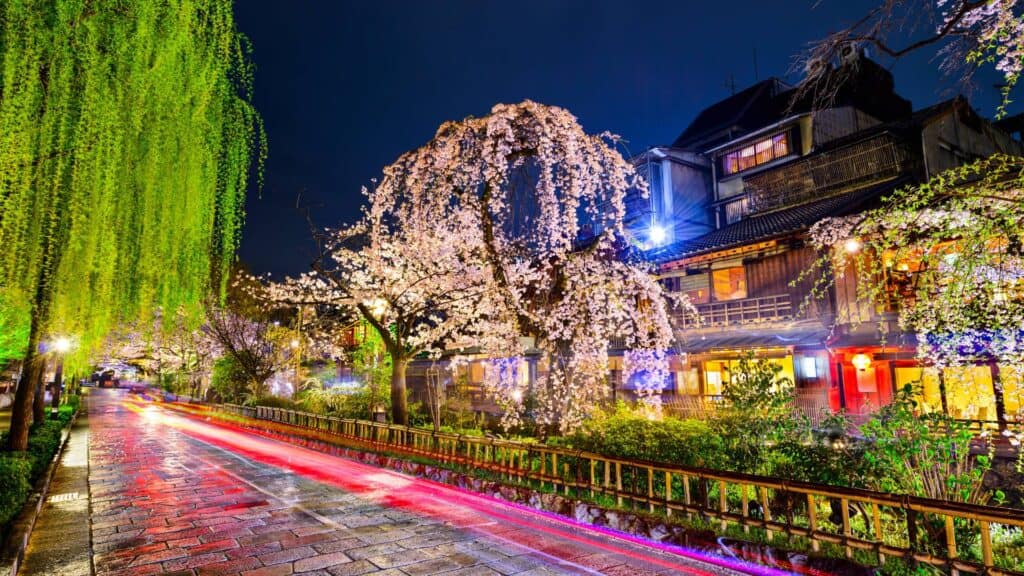
We think the best way to end your first day is with a walk along the Kamogawa River as the sun goes down. It is where the locals hang out to enjoy the breeze. Just across the water is Pontocho Alley, one of the most atmospheric streets in the country. It is a narrow lane filled with tiny bars and restaurants that come alive when the lanterns are lit.
If you are visiting in the summer, you can eat on the wooden platforms over the water to beat the heat. Just be aware that you usually need a reservation for these spots, which we can help you with. If you keep your eyes peeled, you might even spot a geiko or maiko heading to an appointment. Just remember to be respectful and give them space.
Day 2: Western Kyoto
Morning: Otagi Nenbutsu-ji and the Walk Down
For your second day, we are flipping the script. Most people head straight for the bamboo forest and end up in a crowd before they have even finished their morning coffee. We think it is much better to take a taxi from the city centre or Saga-Arashiyama Station directly to Otagi Nenbutsu-ji. It will cost you about 1,500 yen, but it puts you at the highest point of the district so you can spend the rest of your morning walking downhill.
Otagi is one of our absolute favourite spots because it is filled with 1,200 small stone statues, each with a unique, whimsical facial expression. It opens at 9:00 AM and closes at 4:15 PM (note that it is usually closed on Wednesdays), so you do not even have to wake up at the crack of dawn to enjoy it. Starting here gives you a quiet, relaxing introduction to the area while everyone else is still fighting for space at the bottom of the hill. Here’s our insider guide to Otagi Nenbutsu-ji:
Late Morning: Adashino Nenbutsu-ji and Arashiyama Bamboo Grove
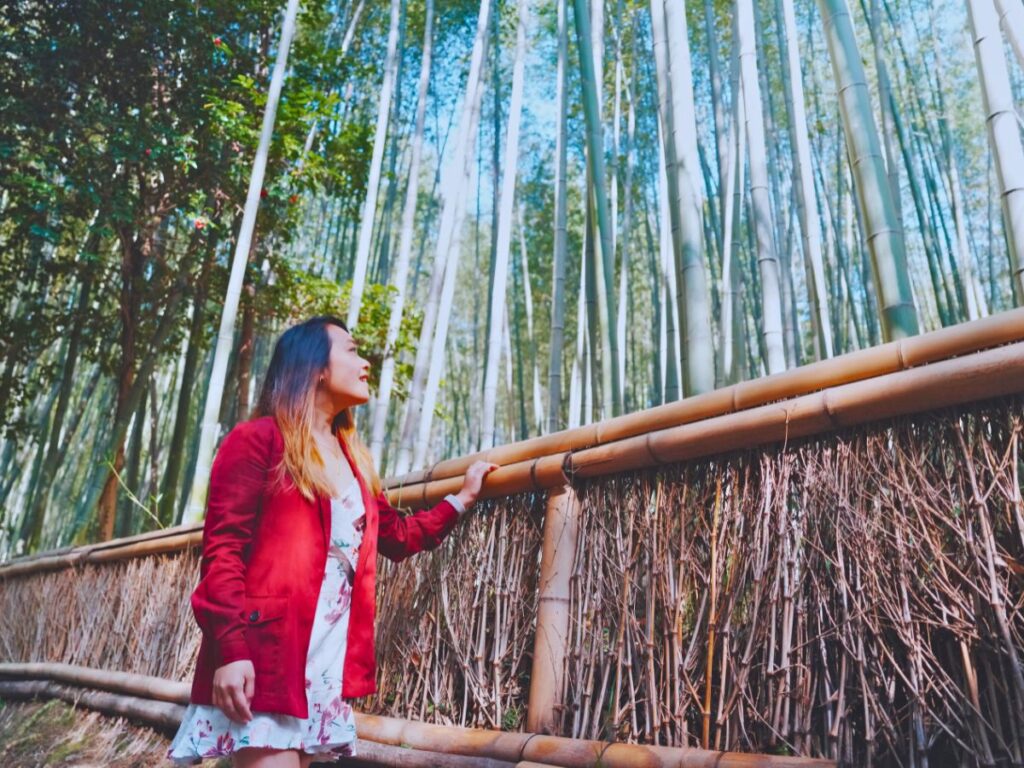
From Otagi, it is an easy and very pleasant stroll down through the Saga Toriimoto Preserved Street. This is an old neighbourhood with thatched-roof houses that feels like stepping back a few centuries. On your way down, make a stop at Adashino Nenbutsu-ji. This temple is famous for its thousands of stone pagodas, but the real secret is the bamboo grove at the back of the grounds. It is much smaller than the famous one further down, but it is also much quieter.
As you continue walking toward the main Arashiyama area, you will eventually reach the famous Arashiyama Bamboo Grove. By now, it will likely be busy, but because you have already had your fill of quiet bamboo and temple gardens further up the hill, you can enjoy the “big” sights without feeling the pressure to beat the crowds. You finish your walk at the Togetsukyo Bridge, right where all the action is.
Lunch: Arashiyama Riverside Dining
Since your morning walk ends right at the Togetsukyo Bridge, this area makes the most sense for lunch. You are already in the heart of the district and the riverside views are lovely. Most of the restaurants on the main road are aimed at passing tourists, so we usually skip those and look for the smaller spots tucked away in the backstreets where you can find decent set meals or simple noodle bowls. If you are not in the mood for a big sit-down meal, there are plenty of stalls selling snacks like croquettes or local street food. We like to grab something easy and sit by the riverbank to watch the wooden boats go by.
Afternoon: Kinkaku-ji
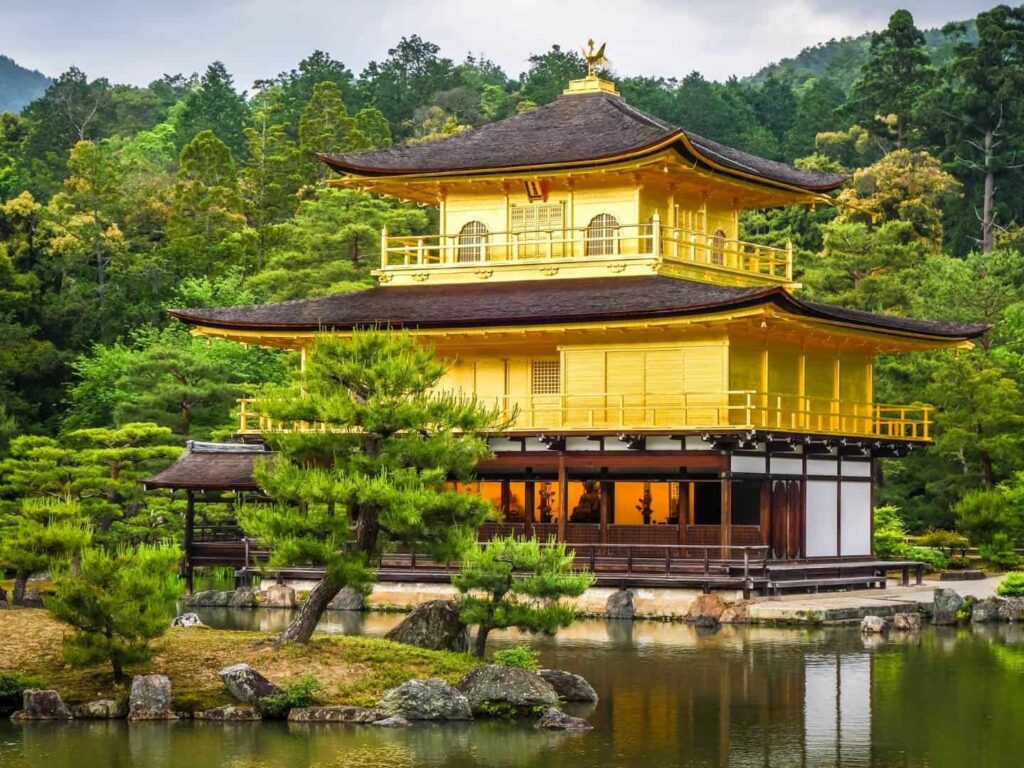
We’re going to be honest: getting from Arashiyama to Kinkaku-ji can be difficult because there is no direct train line. A taxi between these two spots takes about 15 or 20 minutes and usually costs between 2,500 and 3,000 yen. If you try to do this by bus, you will likely be stuck in traffic for nearly an hour.
Kinkaku-ji is the famous Golden Pavilion, and yes, it really is covered in real gold leaf. You cannot go inside, but the view of the pavilion reflecting in the pond is something you have to see at least once. It is almost always busy, but if you go later in the afternoon, the light hits the gold perfectly and makes for a much better photo.
Late Afternoon: Ryoan-ji or Daitoku-ji
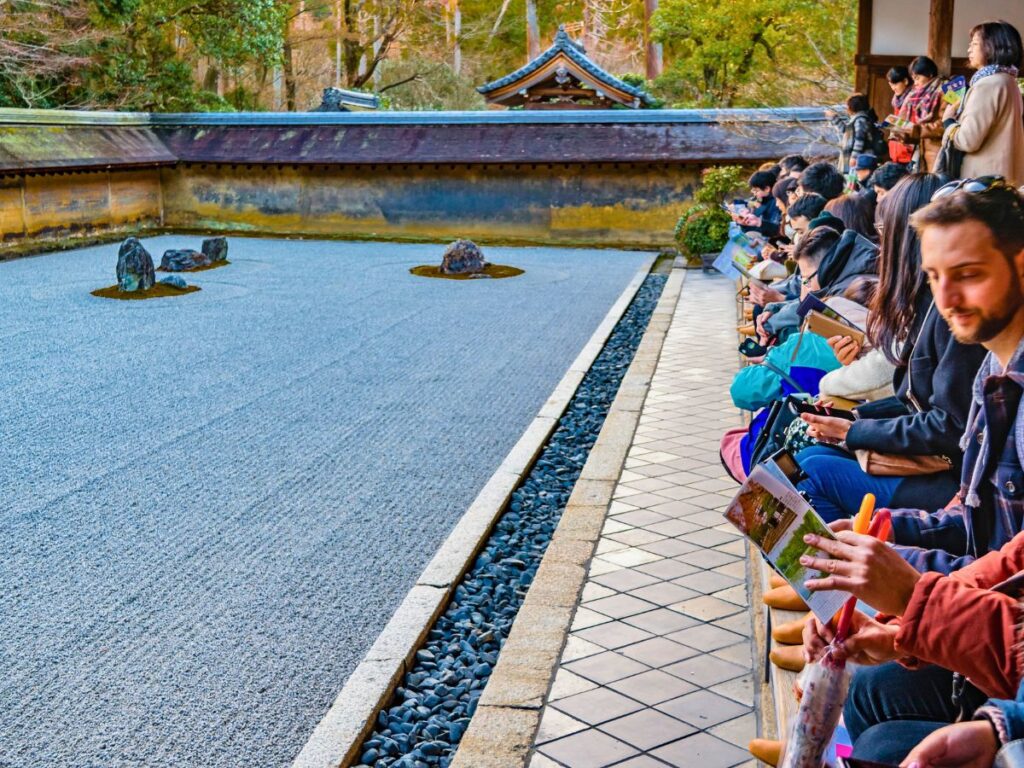
To finish your trip, you can choose between two very different experiences. Ryoan-ji is just a short walk from the Golden Pavilion and is home to the most famous rock garden in the world. It is a simple space with fifteen rocks set in white gravel, and it is meant to help you find a moment of calm.
If you want something even quieter, we recommend taking a quick taxi to Daitoku-ji instead. This is a massive complex of smaller Zen temples, and it feels like a completely different world. Most tourists ignore it, which means you can walk through the grounds and explore the tiny gardens without any noise.
Kyoto Itinerary Beyond 48 Hours
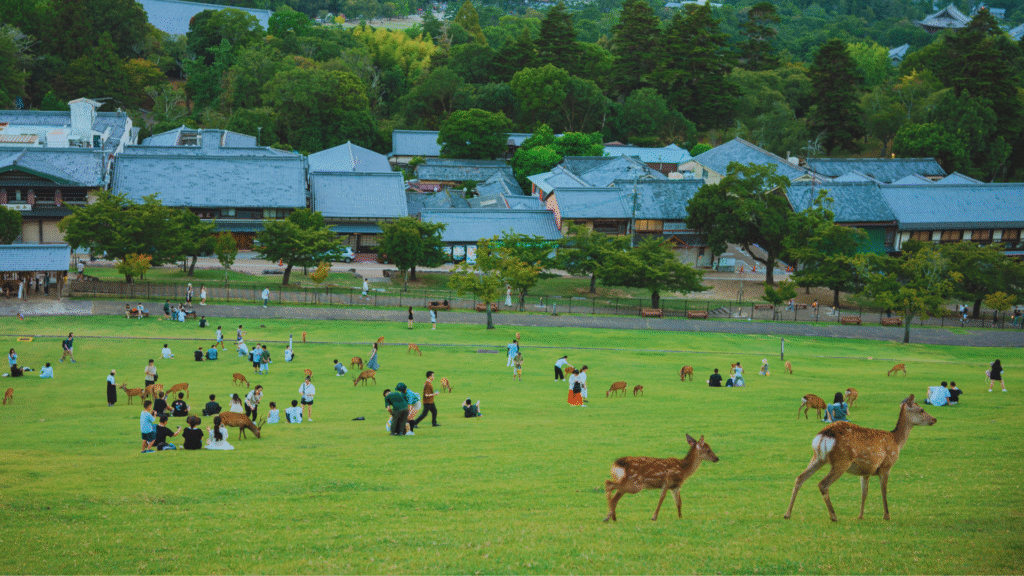
If you have a few extra days, you should think about adding some variety to your schedule. We have put together a list of our favourite Kyoto and Osaka day trips that take you to places like the deer park in Nara or the historic canals in Kurashiki. These spots are perfect if you want to see more of the region without having to pack up and move your home base.
For those of you who want a break from the main tourist trail, take a look at our guide on local Kyoto neighbourhoods. It covers quieter areas like the university district of Yoshida or the river delta at Demachiyanagi. These are the places where you can actually see everyday life and get away from the headache of the crowded temples.
2-Day Kyoto Itinerary FAQs
Is two days really enough time for Kyoto?
Two days is enough to see the major landmarks if you are smart about your route. It is definitely just a taster trip. If you want a more relaxed pace or want to explore the mountains, we suggest staying for three or four days.
Should I buy a bus pass or a train pass?
In most cases, using a prepaid IC card like Suica or Pasmo is the most efficient way to pay. The city has actually phased out some bus passes to help with the crowds. Sticking to the trains and the occasional taxi is usually much faster.
What time do the temples usually open?
Most temples open between 8:30 AM and 9:00 AM and close around 5:00 PM. The big exception is Fushimi Inari Taisha because it is open 24 hours a day. This is why we always tell people to start there as early as possible.
Can I see both Kinkaku-ji and Arashiyama in one day?
Yes, it is the best way to do it because they are both on the western side of the city. As long as you use a taxi to get between the two districts, you will have plenty of time to enjoy both without feeling rushed.
Is it necessary to book restaurants in advance?
For casual lunch spots or ramen shops, you can usually just walk in. However, if you want to eat at a nice place in Pontocho or Gion for dinner, we strongly recommend booking a day or two ahead. The best spots fill up fast and waiting in line is a waste of your evening.