
When travellers ask us for a truly Japanese cultural experience, watching sumo is always high on our list. It’s an incredible mix of power, history, and tradition. Seeing it live is a real highlight for many visitors.
But let’s be honest: planning it can be very confusing. As a travel agency based in Japan, we get emails every week asking the same questions: “My trip is in August, can I see a tournament?” or “What’s the difference between a tournament and just visiting a stable?”.
It’s a very common problem, and the truth is, your trip dates might not line up with the big tournaments. But don’t worry, there are other ways to enjoy sumo even out of season.
So, we wanted to make it simple for you. This guide will clearly explain the three main ways to experience sumo. We’ll look at the big tournaments, the ‘Morning Practice’, and the ‘Lunch Experience’ to help you choose the perfect one for your travel style.
Let’s Plan Your Japan Trip Together
Thinking about visiting Japan? Trying to fit a sumo tournament in with your train tickets, hotel bookings, and other must-see sights can be a lot to organise. We can help! We’ll put together a bespoke plan shaped around your interests, budget, and pace, so you get the joy of travelling without the stress of endless research. Start by checking out our expert travel planning services.
What Actually is Sumo Wrestling?
Before diving into the ways we recommend experiencing sumo in Japan, first we have to make sure you understand exactly what sumo wrestling really is…and isn’t. When you think of sumo, we’re guessing what comes to mind are large men with cloth wraps around their waist (these are called mawashi), trying to push each other out of a circle. Whilst this isn’t necessarily wrong, it is just the tip of the iceberg when it comes to the world of sumo.
This is one of Japan’s oldest traditions, having started out as a Shinto practice to honour the gods and pray for good harvests. Over time, it developed into the professional sport we see today, especially during the Edo period when rules, rankings, and training stables were introduced.
Now, sumo is still a huge part of Japanese culture, with six major tournaments held each year in cities like Tokyo and Osaka. Matches are quick but intense, with rikishi (the professional wrestlers) battling it out inside the dohyo while also performing traditional rituals like salt purification and the ceremonial ring entrance. The rikishi live and train in dedicated sumo stables, with highly structured lives built around discipline, routine, and hierarchy.
What this means is that experiencing sumo for yourself isn’t quite like going to a football game. An audience must bring a strong sense of respect and etiquette to the tournaments, and that kind of atmosphere might not be for everyone. Luckily, you have a few options when it comes to experiencing sumo wrestling in Japan, with something for everyone.
The 3 Best Sumo Experiences in Japan
Your best choice really depends on three things: your budget, your travel dates, and the kind of experience you’re hoping for. Are you looking for the excitement of a live sporting event, a quiet peek behind the scenes, or a fun, hands-on day out?
We’ve put together a simple table to help you compare them side-by-side.
| Experience | Best For | Tourist Interaction | Price (Estimate per Person) | Scheduling / Availability |
| Grand Sumo Tournament | Sports fans who want to see the real, live competition. | None. You are a spectator in a large stadium. | 2,500 – 11,000 JPY ($17 – $74 USD) for chair seats. | Dates are fixed. Only happens 6 times a year on specific 15-day schedules. |
| Morning Practice | Cultural travellers who want an authentic, quiet look. | Low. Silent observation during practice. A photo opportunity after is common but not guaranteed. | 11,000 – 18,000 JPY ($75 – $120 USD) for a guided tour. | Must be booked in advance. Always takes place early in the morning (e.g., 8:00 AM). |
| Lunch Experience | Families, foodies, and anyone wanting a fun, interactive show. | High. The whole event is a show built around meeting, talking with, and learning from retired wrestlers. | Starts at 16,500 JPY ($110 USD). | Flexible. Runs regularly all year round. Must be booked in advance. |
As you can see, these are three completely different days out. The price for a tournament ticket can change a lot depending on where you sit (the cheapest 2,500 JPY seats sell out almost instantly!). The Morning Practice and Lunch Experience prices are for guided, all-in-one packages, which makes them much easier to plan.
If you want to know more about the rules, history, and wrestler ranks before you decide, you can read our Complete Guide to Sumo Wrestling first:
Now, let’s look at each one in a bit more detail so you can be sure you’re booking the right one for you.
1. The Grand Sumo Tournament
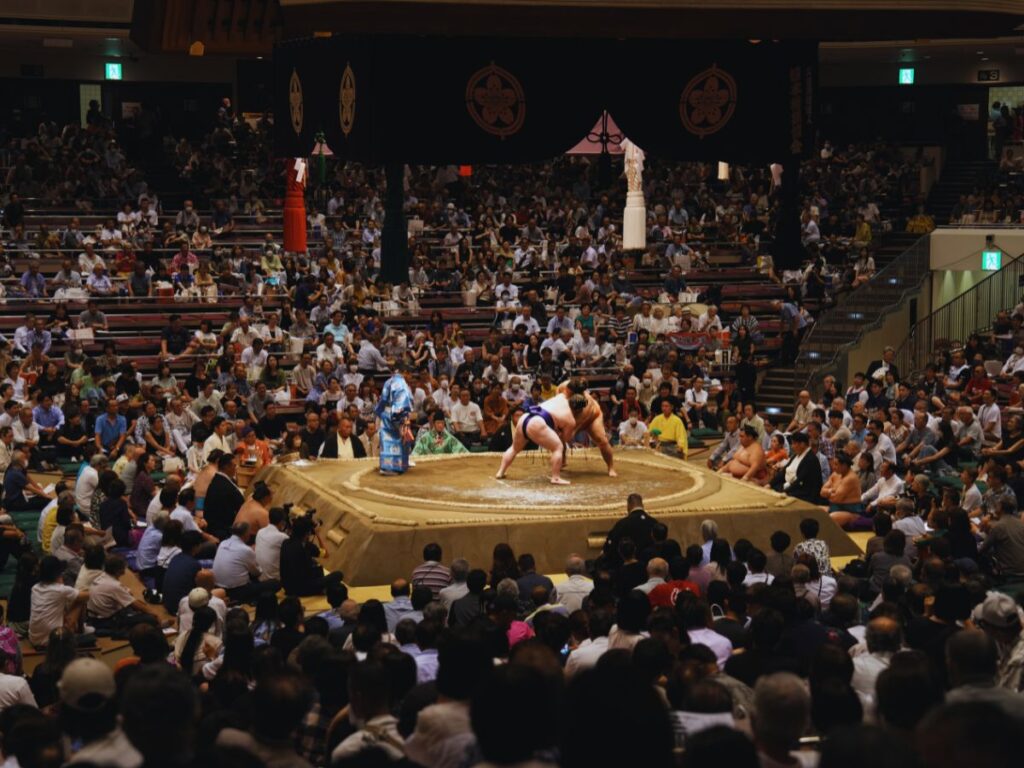
This is the “real thing.” It’s the official professional tournament, called a basho. This is where the top-ranked wrestlers compete in exciting matches that decide their official rank and salary. When you see sumo on TV, this is almost always what you are watching.
The Experience
The atmosphere inside the stadium is electric. You’re in a huge arena (like the famous Ryogoku Kokugikan in Tokyo) with thousands of fans. You get to see all the incredible pre-match rituals—the stomping, the parading, and the famous throwing of salt to purify the ring.
The matches themselves last all day, starting with the lower-ranked wrestlers in the morning. Here’s a suggestion we often give our clients: If you want the full-day experience, by all means, go early.
But if you’re just visiting for the main highlights, we find that arriving around 2:00 PM (14:00) is a great way to do it. This gives you time to find your seat, buy some yakitori (grilled chicken) and a drink, and settle in before the top-division wrestlers make their grand entrance (around 3:45 PM). The most exciting matches, the ones everyone is waiting for, happen between 4:00 PM and 6:00 PM (16:00 – 18:00).
When & Where?
This is the most important part for planning. The tournaments only happen six times a year, for 15 days each, and they move around the country. Your trip must line up with these dates.
The sumo “year” has a regular rhythm. It always starts in Tokyo (January), moves to Osaka (March), comes back to Tokyo (May), and then goes to Nagoya (July). It returns to Tokyo for the final time in September, and the year finishes in Fukuoka (November).
Here is the official schedule for 2026:
- January 11 – 25, 2026: Tokyo (at Ryogoku Kokugikan)
- March 8 – 22, 2026: Osaka (at EDION Arena Osaka)
- May 10 – 24, 2026: Tokyo (at Ryogoku Kokugikan)
- July 12 – 26, 2026: Nagoya (at Dolphins Arena)
- September 13 – 27, 2026: Tokyo (at Ryogoku Kokugikan)
- November 8 – 22, 2026: Fukuoka (at Fukuoka Kokusai Center)
There is an official English website for tickets. So, the main challenge for tourists wanting to see the tournament isn’t the website itself, but the demand. Tickets for weekends and the cheapest seats often sell out minutes after they go on sale, which can be stressful if you’re trying to book from overseas.
This is where a service like ours can help. If you don’t want to deal with the stress of planning your entire holiday around a single ticket release date—or coordinating your sumo day with your train tickets, hotel bookings, and all your other ‘want-to-go’ sites—we can plan the whole trip for you.
Pros and Cons of The Grand Sumo Tournament
Pros:
- Incredible atmosphere with high-stakes live competition
- Chance to see sumo wrestlers perform in person
- Strong sense of tradition, pageantry, and crowd energy
- Includes access to a small free sumo museum in the Tokyo stadium, which is worth a visit
Cons:
- Not always ideal for children due to the long duration and quieter, more respectful atmosphere
- Very limited schedule meaning your travel dates need to align with tournament times
- Long, full-day event which can feel quite time-consuming
- Standard second-level seats are quite far from the action, and box seats come at a significantly higher price
2. The Sumo Morning Practice
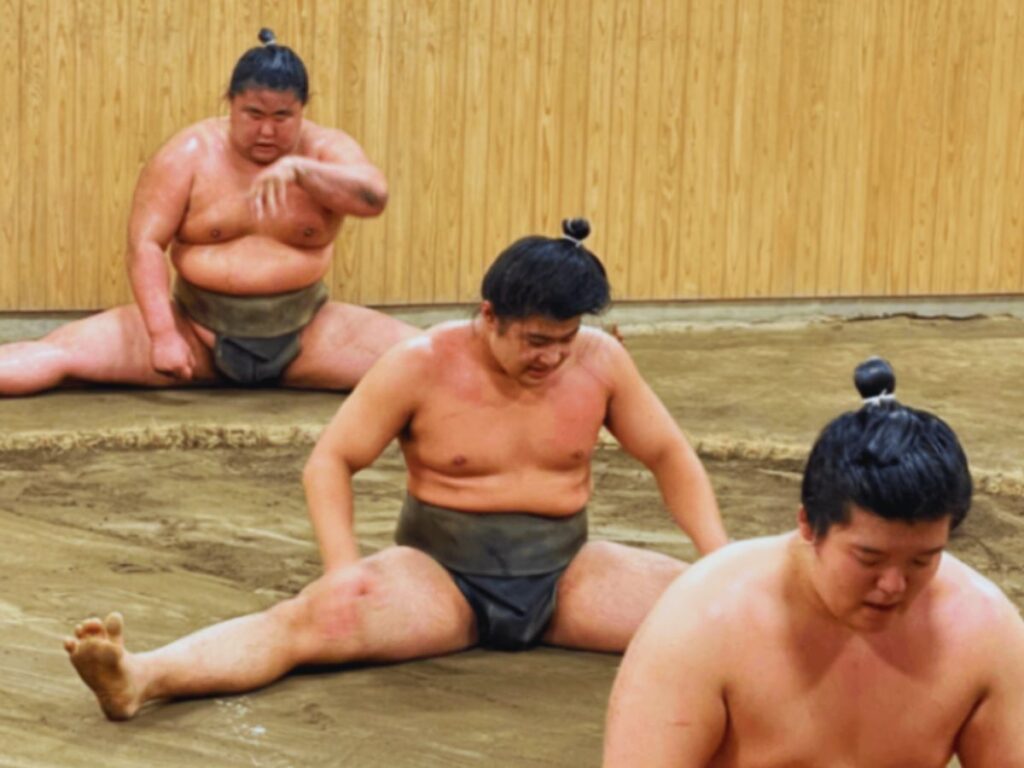
If the Grand Tournament is the big, exciting final game, the Morning Practice is the private, intense training session. This is not a show. It is a rare chance to go “behind the scenes” and see the real, hard work that the wrestlers do every single day to prepare.
The Experience
The experience is completely different from a tournament. It’s not loud or full of cheering. It’s very quiet, serious, and respectful.
When we arrange this tour, we take you to be a guest in a real sumo stable (the places they live and train, which for us are often around the Taito City area in Tokyo). We’ve found that the best spot is sitting on the floor, where you are sometimes just metres away from the ring.
From there, you can watch these massive, yet incredibly agile wrestlers run their drills. What always impresses us is hearing the powerful thud of them clashing and seeing the incredible, quiet discipline that goes into their daily lives.
We always remind our guests that the most important rule is to be absolutely respectful. No talking, no whispering. We find that this silence is part of what makes the experience so powerful. The whole visit usually lasts between 60 and 120 minutes.
When & Where?
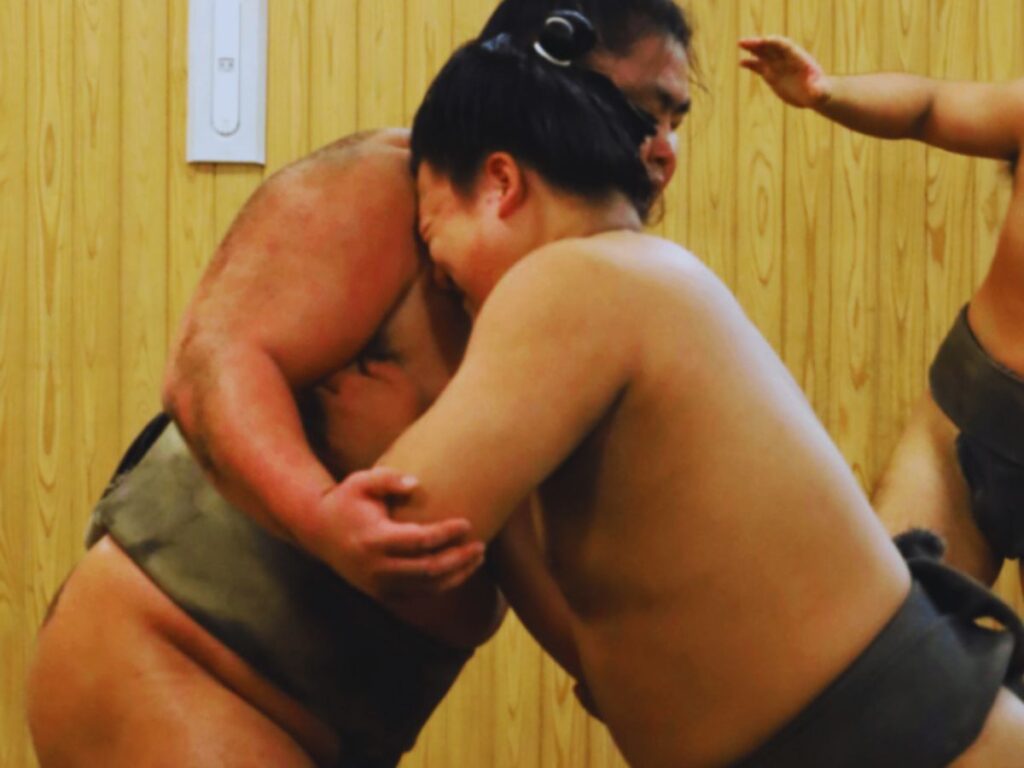
This is the best part for most travellers. Morning practices happen almost all year round. This makes it the perfect option if your trip doesn’t line up with the tournament dates.
You cannot just walk up to a sumo stable and ask to come in. These are private training halls, not public tourist sites. Access is only given through a proper introduction, which is why trying to arrange it on your own is almost impossible. We have spent time building good relationships with several stables that are willing to accept respectful guests.
You can book our Sumo Morning Practice Tour here, and we will handle all the arrangements.
Pros and Cons of the Morning Practice
Pros:
- One of the most authentic ways to experience the world of sumo
- Small-group setting offers a much more intimate experience than a tournament
- Easier to fit into most travel itineraries compared to tournament dates
- Some tours include a chanko nabe lunch with the wrestlers, allowing for a rare chance to eat and chat with them after practice
Cons:
- Requires sitting quietly, often on the floor, for up to two hours
- Strict rules around behaviour, e.g., you must remain silent and respectful throughout the practice
- Not designed as an entertainment experience, so it may feel slow-paced for some visitors
- Generally not recommended for families with young children, who may struggle with the long periods of silently sitting still
3. The Interactive Sumo & Lunch Experience
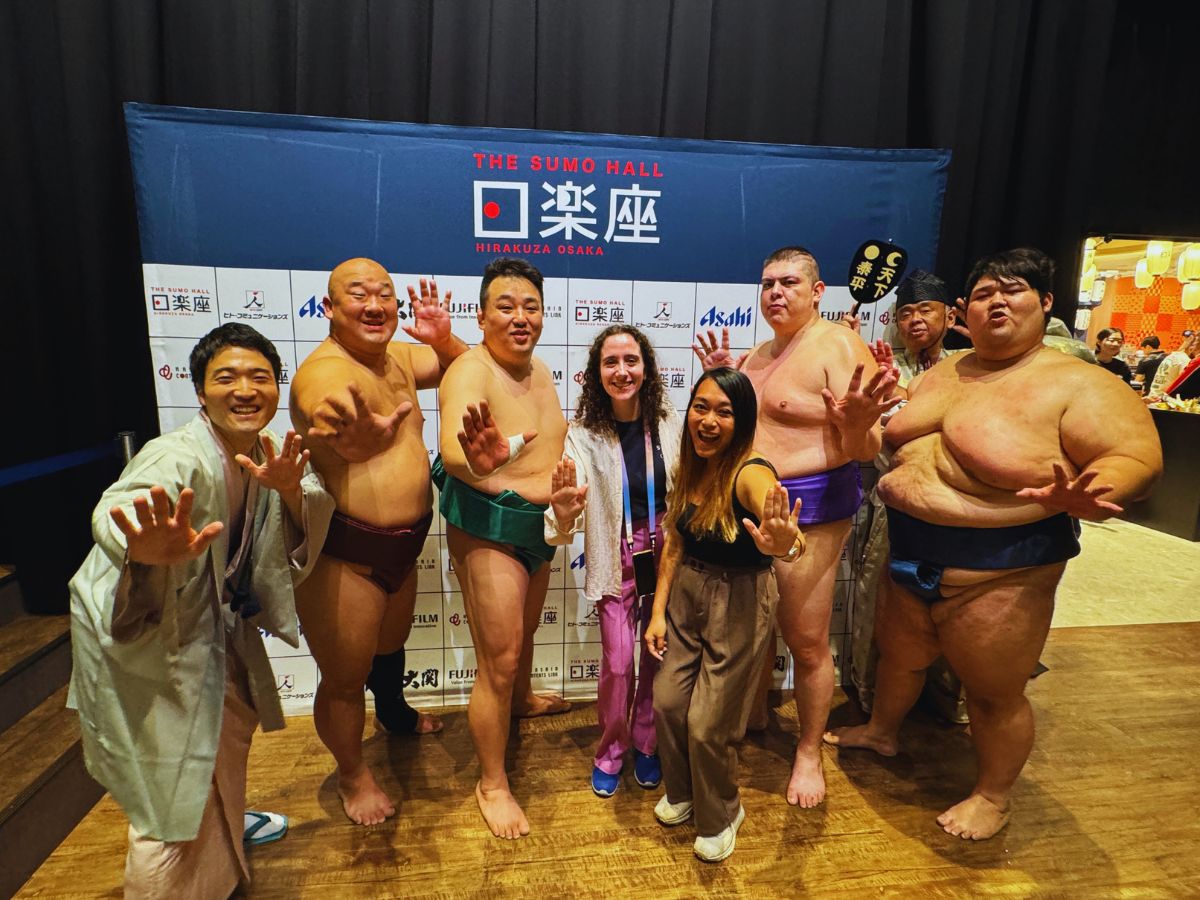
This third option is not a quiet practice or a formal tournament. This is a fun, hands-on, and educational show designed for visitors. It’s the perfect choice for families, foodies, or anyone who wants to laugh, ask questions, and maybe even get in the ring.
The Experience
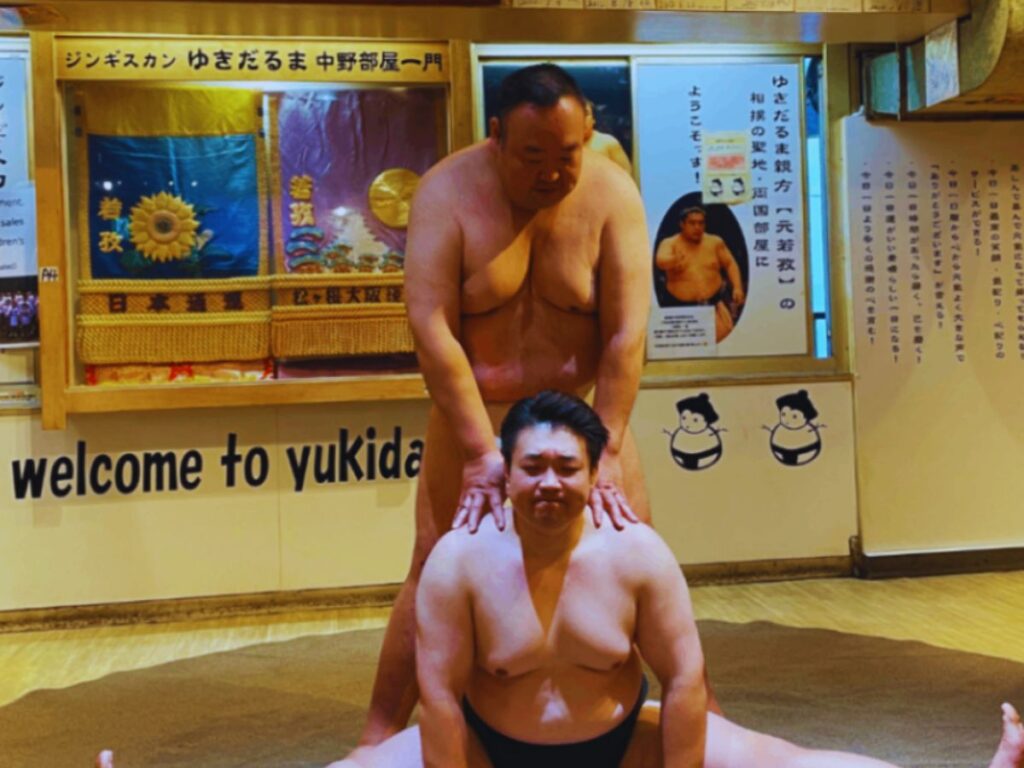
This is an interactive show led by experienced, former professional sumo wrestlers. What we love about this experience is that they have designed it to be both educational and very entertaining.
They start by explaining the history of sumo, the manners, and the different training techniques. They’ll demonstrate the fundamental actions and even show you some of the prohibited moves, all with a comedic twist and clear English explanations.
After you’ve learned the basics, you’ll get to see real demonstration matches between the former pros, which is a great way to understand the sport.
The highlight for many of our guests is the chance to step into the ring for a friendly (and very funny) sumo session with one of the wrestlers. It makes for an amazing photo. The whole experience ends with a souvenir photo and, of course, the food. You’ll sit down to enjoy a full chanko nabe—the hot pot stew that the wrestlers eat every day.
When & Where?
This is the easiest option to plan. Unlike the tournament, which has a fixed schedule, these lunch experiences run regularly throughout the week, all year round. They are designed specifically for travellers and are very easy to fit into a Tokyo itinerary, for example.
Because it’s a full package (a show, an activity, and a meal all in one), we find it’s a perfect solution for a “day out.” We often suggest this to families, as it’s one of the few sumo experiences that truly keeps children engaged and entertained from start to finish. You can book our Sumo & Lunch Experience here.
Pros and Cons of the Sumo & Lunch Experience
Pros:
- Fun, interactive experience that appeals to all ages
- No language barrier, making it easy for international visitors to enjoy
- Opportunities to ask questions, interact with the wrestlers, and take photos
- Includes a traditional chanko nabe meal
Cons:
- May feel a little tourist-focused for travellers seeking a more immersive cultural experience
- This is a demonstration rather than a real sumo tournament
- Wrestlers are retired professionals, not active competitors
- Doesn’t provide the same atmosphere, intensity, or ceremonial feel as attending a live tournament or morning practice session
So, Which Sumo Experience is Right for You?

We suggest you go for the Grand Tournament if your travel dates line up perfectly with the official schedule. This is the one for you if you want to feel that “live sporting event” energy, with the huge crowds, the cheering, and the excitement of a real competition.
We recommend the Morning Practice if you are a traveller who really values authenticity over entertainment. If you want a quiet, “fly-on-the-wall” experience that feels 100% real (because it is), this is the one for you. It’s less about being entertained and more about showing deep cultural respect.
And finally, we strongly suggest the Interactive Sumo & Lunch Experience if you are looking for guaranteed fun. This is our top recommendation for families with children or anyone who wants an educational activity. If you want to talk with the wrestlers, take lots of photos, and go home with a memorable story (and a full stomach), this is the perfect choice.
We hope this guide has made the options much clearer. No matter which one you choose, experiencing the world of sumo up close is truly an unforgettable part of any trip to Japan.
Japan Sumo Experience FAQs
What are the rules for visiting a sumo stable?
This is the most important part of a ‘Morning Practice’. The key rule is respect, which means you must be quiet (no talking or whispering). You also must sit still, not eat, drink, or leave during the practice. The whole visit usually lasts 60-120 minutes, and you must stay for the entire time.
Can you take photos at sumo morning practice?
During the practice itself, photos and videos are almost always forbidden. It breaks the wrestlers’ concentration. However, most tours will include a moment after the practice is finished where you can take a group photo with one of the wrestlers.
What is the best day to go to a sumo tournament?
Any day is fun, but the excitement builds through the 15-day tournament. We find the last few days (days 13, 14, and the final Sunday) are the most exciting, as the championship is decided. These tickets are also the hardest to get.
What should I wear to a sumo match?
There is no dress code. Just wear comfortable, casual clothes. The one thing to know is that if you book a traditional “box seat” on the floor, you will be taking your shoes off and sitting on a cushion.
Is it hard to get sumo tournament tickets?
Yes, they can be. The official website is in English, but the demand is the problem. The cheapest seats and all weekend tickets can sell out just minutes after they are released.
What is chanko nabe?
It’s the traditional “sumo stew” that wrestlers eat to build their strength. It’s a giant, healthy hot pot with chicken, fish, tofu, and vegetables. It’s also the delicious meal included in our Sumo & Lunch Experience.