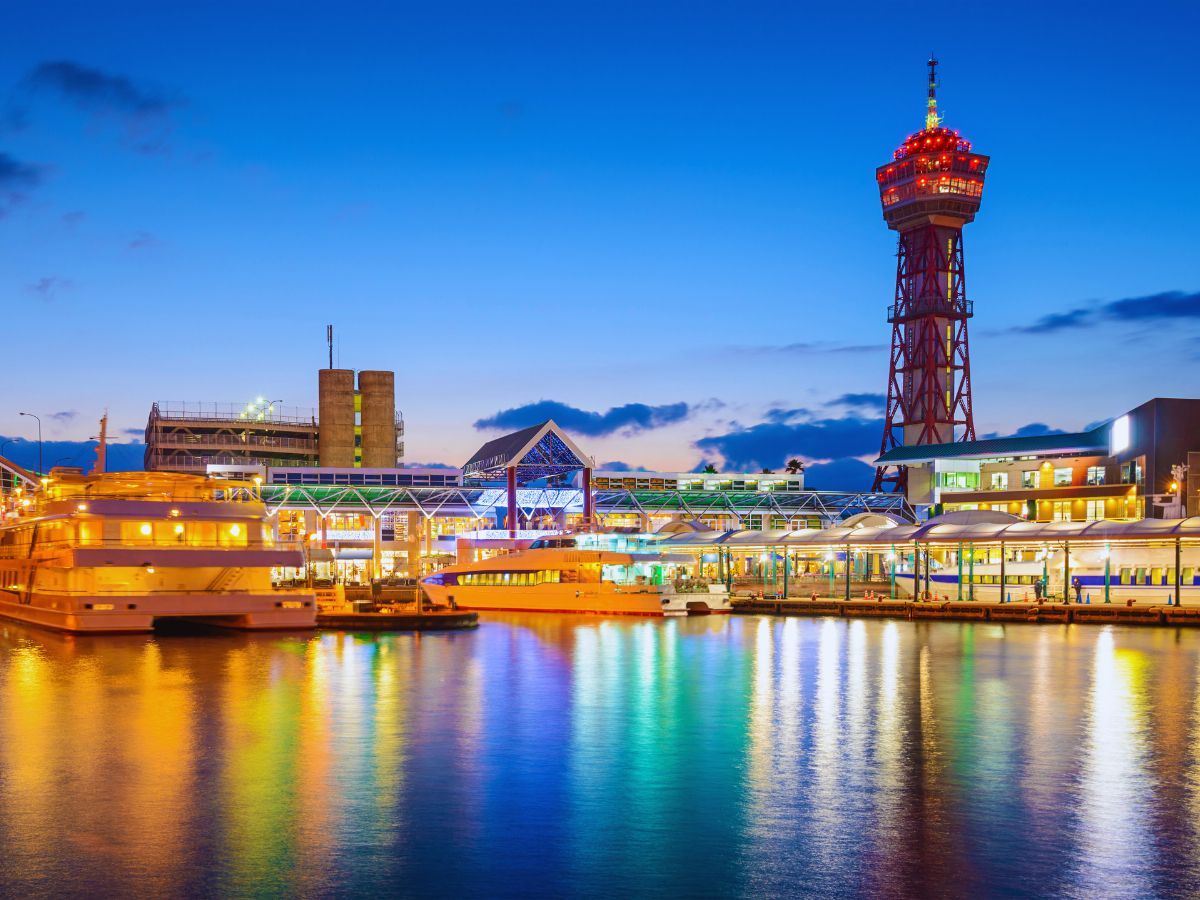
A trip to Western Japan is an incredible experience. You could be enjoying the amazing food scene in Osaka, reflecting at the historic sites of Hiroshima, exploring the classic Himeji Castle, and then finding yourself in the lively city of Fukuoka. The region is packed with culture, history, and fantastic food, but there’s a catch: it’s a huge area to cover.
Figuring out how to get between all these places can feel like a real headache. As you start adding up the cost of individual Shinkansen (bullet train) tickets, you’ll notice your travel budget can start to look a little scary. A single long-distance journey can be expensive, and buying multiple tickets is both costly and complicated.
But what if there was a way to make it simple and much more affordable? Let us introduce you to your new best friend for exploring this part of the country: the JR West All Area Pass. Think of it as a master key for Western Japan. It’s a single pass designed specifically for foreign travellers, giving you seven days of unlimited travel across this entire, diverse region, making your trip smoother and much easier on your wallet.
A Japan Itinerary Built Just For You
Feeling excited by the possibilities of the JR West All Area Pass but not sure how to connect all the dots? We can help. We’ll design a personalised travel plan that matches your pace and interests, ensuring you get the absolute most value out of your pass without the stress of planning.
→ Start Building My Custom Japan Itinerary
What is the JR West All Area Pass?

The JR West All Area Pass is a special ticket that gives you unlimited travel on specific trains, buses, and even a ferry throughout the entire JR West network for seven days in a row. It’s designed to make exploring the region easy and affordable for tourists.
How Much Does it Cost?
This is the most important question, right? Here are the current prices:
• Adult (12 years and older): 26,000 YEN
• Child (6 to 11 years old): 13,000 YEN
Who is Eligible for the Pass?
To get your hands on this pass, you need to meet the standard conditions for most passes aimed at visitors. You must be a foreign traveller visiting Japan with a “Temporary Visitor” status. This is the typical entry status you receive at immigration for tourism purposes, and you will need to show the stamp in your non-Japanese passport when you exchange or pick up your pass.
JR West All Area Pass Map and Coverage: Where Can You Go?
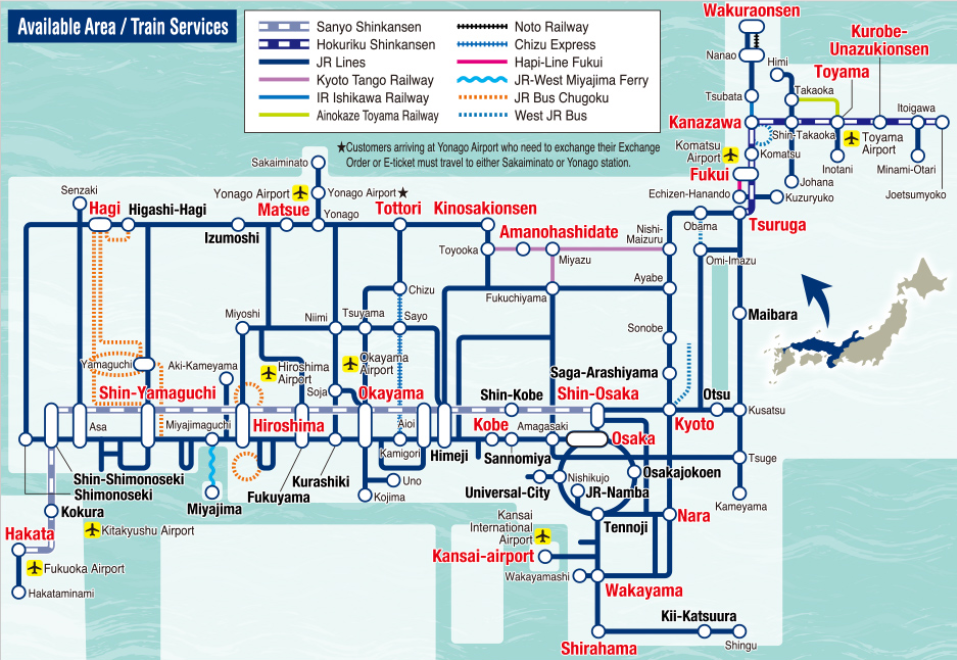
Let’s get into the details of where this pass can actually take you. The name “All Area Pass” isn’t an exaggeration—it gives you access to an enormous part of Western Japan, covering five major regions.
A Vast Area of Exploration
The pass opens up a huge portion of Western Japan, covering the Kansai, Hokuriku, Sanyo, and San’in areas, and even extending down to Hakata in Fukuoka. This means you can journey from tourist-favourite Kansai, exploring cities like Osaka, Kyoto, and Nara and travelling to and from Kansai Airport.
Kyoto itself is a destination that has so much to offer. Read our full guide here to not miss anything:
From there, you can head west into the Sanyo region to see Himeji’s famous castle, Okayama’s beautiful garden, the historic city of Hiroshima, and continue all the way to Hakata station in Fukuoka.
Read this before visiting Okayama:
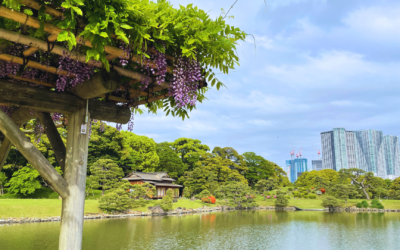
For those looking to get off the beaten path, the San’in region on the northern coast is accessible, including destinations like Tottori, Matsue, and Izumo. To the north, the Hokuriku region is also covered, allowing visits to the well-preserved city of Kanazawa, Toyama, and the transport hub of Tsuruga.
Did you know Kanazawa is also known as Little Kyoto? We have the perfect itinerary for the area:
Major Train Lines Included
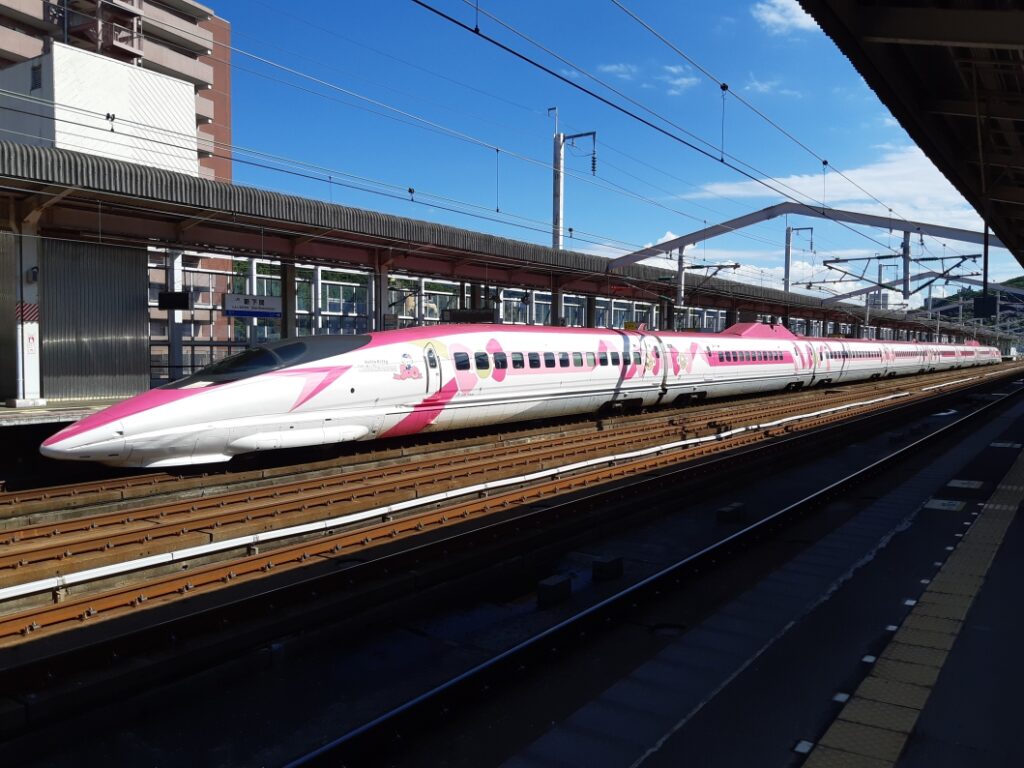
To get you between these places, the pass includes unlimited rides on some of Japan’s best trains. For high-speed travel, you get full access to the Sanyo Shinkansen line between Shin-Osaka and Hakata, which crucially includes the fastest Nozomi and Mizuho services and the Hello Kitty Shinkansen.
The pass is also valid on the Hokuriku Shinkansen between Tsuruga and Joetsu-Myoko. For other key routes, it covers important Limited Express trains such as the Haruka for airport access, the Thunderbird connecting to the Hokuriku area, and other services like the Kuroshio and Yakumo. Finally, your travel is rounded out with complete access to all Special Rapid, Rapid, and Local trains on JR West conventional lines, which are perfect for shorter journeys.
More Than Just Trains: Ferries and Buses
Your travel isn’t just limited to the rails. The pass also includes a free ride on the JR West Miyajima Ferry, which is the best way to get to the famous Itsukushima Shrine. You can also use the local route buses operated by West Japan JR Bus, though please note that long-distance expressway buses are not included.
Important! What’s NOT Covered by the JR West All Area Pass?
Understanding what isn’t included is just as important as knowing what is. It helps you plan properly and avoid any unexpected costs at the ticket counter.
To start, the pass is not valid on the Tokaido Shinkansen line, which runs between Shin-Osaka and Tokyo. This is a common point of confusion, so remember that even the very short journey between Kyoto and Shin-Osaka on this line is not covered.
Additionally, while the pass covers the entire JR West network, it is generally not valid on train lines operated by other private railway companies; there are a few specific, conditional exceptions where you can use the pass on certain non-JR tracks simply to connect to other JR lines. Finally, the pass is for standard travel in ordinary cars, so you must buy a separate supplementary ticket if you wish to travel in a first-class Green Car.
Go Beyond the Guidebook in Kansai
The streets of Kyoto and Osaka are full of life, but it’s easy to miss the details. With a private local guide, you’ll discover the hidden backstreets, find the best local food spots, and understand the deep culture of Japan’s most dynamic cities. It’s the difference between seeing a place and truly experiencing it.
→ Discover Kyoto & Osaka with a Local Guide
Is the JR West All Area Pass Actually Worth It? A Price Breakdown
This is the big question: will this pass actually save you money? Let’s get into the numbers.
A quick note before we dive into the numbers: The individual ticket prices used in these scenarios are estimates based on standard reserved or non-reserved seats. Real-time fares can vary depending on the season (for example, during Golden Week or cherry blossom season), the specific train you choose, and how far in advance you book. Please think of these examples as a clear guide to the potential savings rather than a fixed price quote for your trip.
The Simple Answer
For most travellers, the answer is a definite yes, especially if your plans include at least one long-distance return trip, like from the Kansai area to Hiroshima or Fukuoka. A single round trip on the Sanyo Shinkansen can easily cost more than the pass itself. Add in your airport travel and a few side trips, and you’re already saving money.
Scenario 1: The Classic “Golden Route” Trip
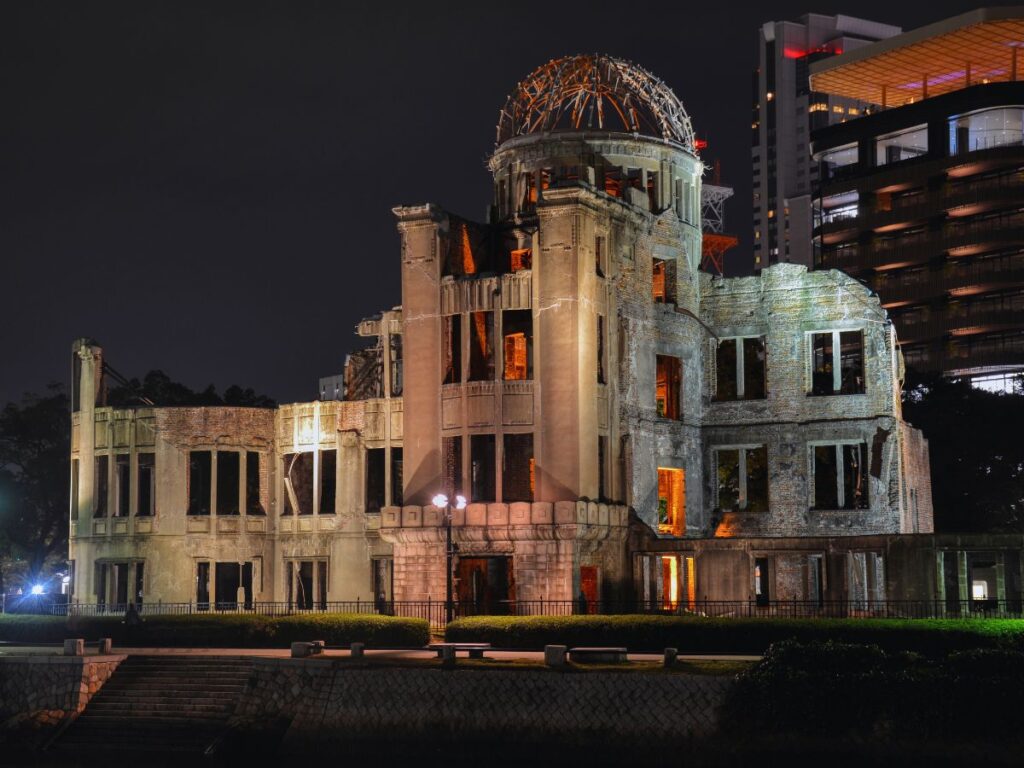
Let’s look at a very common travel plan: you fly into Kansai Airport, explore Osaka, then head to Hiroshima and Miyajima Island before flying home.
Itinerary: Kansai Airport → Osaka → Hiroshima (with day trip to Miyajima) → Return to Kansai Airport.
Breakdown:
• Kansai Airport to Shin-Osaka (Haruka Express): ~¥2,470
• Shin-Osaka to Hiroshima (Nozomi Shinkansen): ~¥10,760
• Hiroshima to Miyajimaguchi & Ferry (Local train & JR Ferry): ~¥600
• Miyajimaguchi to Hiroshima & Ferry: ~¥600
• Hiroshima to Kansai Airport (Nozomi & Haruka): ~¥13,230
Total without pass: Around ¥27,660
Cost of the pass: ¥26,000
Even in this very straightforward itinerary, you’re already saving money before you even account for smaller local JR train journeys you’ll take within the cities.
Scenario 2: The “Ultimate Value” Itinerary
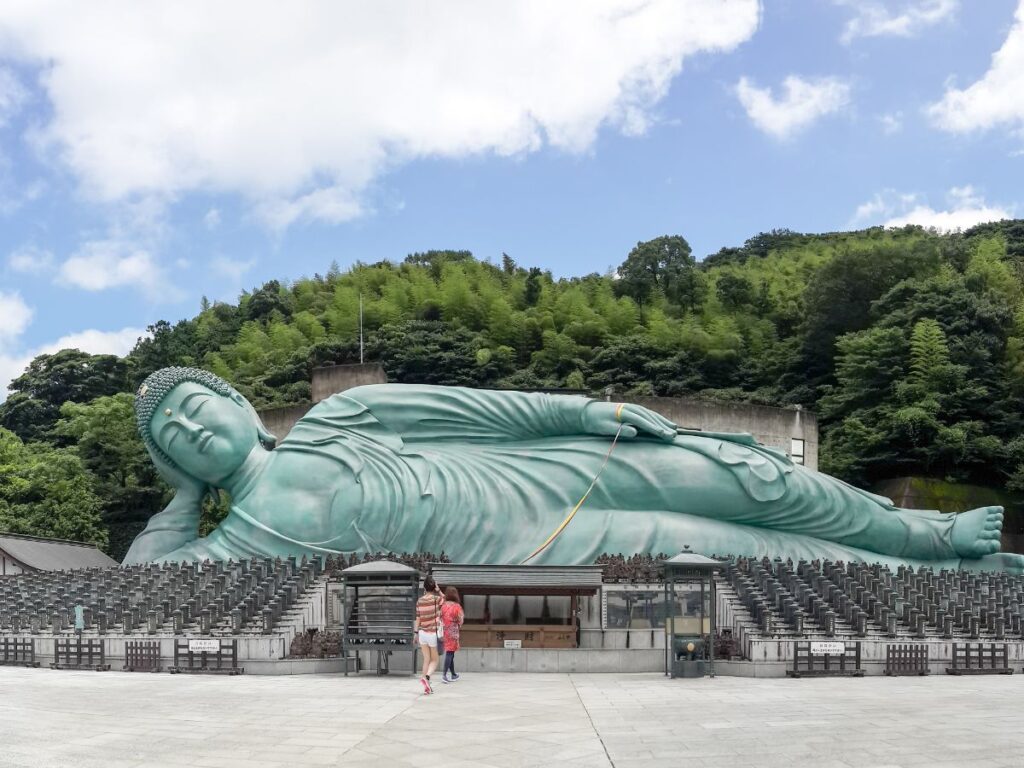
Now, let’s see what happens when you use the pass to its full potential and really move around Western Japan.
Itinerary: Kansai Airport → Kyoto → Kanazawa → Kyoto → Himeji → Hiroshima → Hakata (Fukuoka) → Return to Osaka.
Breakdown:
• Day 1: Kansai Airport to Kyoto (Haruka): ~¥3,000
• Day 2: Kyoto to Kanazawa (Thunderbird): ~¥6,930
• Day 3: Kanazawa to Kyoto (Thunderbird): ~¥6,930
• Day 4: Kyoto to Hakata via Himeji stop (Shinkansen): ~¥16,500
• Day 6: Hakata to Shin-Osaka (Shinkansen): ~¥15,600
Total without pass: A huge ¥48,960
Cost of the pass: ¥26,000
In this case, the savings are massive—nearly ¥23,000. This shows how incredibly valuable the pass can be for anyone planning an ambitious, multi-city tour of the region.
When is it NOT Worth It?
The pass isn’t the right choice for every trip. If your travel is focused almost entirely within the Kansai region (for example, just visiting Osaka, Kyoto, and Nara), a different, cheaper regional pass would be a much better choice. Similarly, if you are only planning a one-way trip from Kansai to Hakata and not returning, buying a single ticket might work out to be cheaper. The real value of the pass comes from making at least one long-distance return journey.
How Does it Compare to Other Passes?
Choosing the right rail pass can be confusing, as there are many options available. The best choice always depends on your specific itinerary. Here’s a quick comparison between the JR West All Area Pass and other common choices.
vs. The Kansai-Hokuriku Area Pass
At ¥19,000, it is cheaper, but its coverage area is significantly smaller. It does not extend west to places like Himeji, Okayama, Hiroshima, or Hakata. It covers the Thunderbird train to Kanazawa but does not include the Sanyo Shinkansen past Shin-Osaka.
If your trip is solely focused on a loop from Osaka/Kyoto up to Kanazawa and back, the Kansai-Hokuriku Area Pass is the more economical choice. However, if you have any plans to visit Hiroshima, Miyajima Island, or Fukuoka, you will need the JR West All Area Pass.
vs. The Nationwide Japan Rail Pass
This is the most famous pass, but it isn’t always the best choice for a trip focused on Western Japan. The Japan Rail Pass is for travellers exploring multiple regions all across Japan, often including routes like Tokyo to Kyoto and beyond. The JR West All Area Pass, in contrast, can only be used within the JR West network. For instance, you cannot use it to travel from Tokyo to Osaka, as that route is on the Tokaido Shinkansen line.
The single biggest advantage of the JR West All Area Pass is its inclusion of the fastest bullet trains. The pass is valid on the Nozomi and Mizuho Shinkansen services between Shin-Osaka and Hakata. The standard nationwide Japan Rail Pass does not include these trains, meaning you have to take slower services.
If your trip is entirely within Western Japan, the JR West All Area Pass is often the superior choice because it gives you access to the fastest and most frequent trains in the region. If your itinerary spans multiple regions of Japan (e.g., Tokyo, the Alps, and Hiroshima), then the nationwide Japan Rail Pass is the product you should be looking at.
vs. The Kansai WIDE Area Pass
This is an excellent and much cheaper pass if your travel is mostly centred around the Kansai region but you want to take a few longer day trips. The Kansai WIDE Area Pass is for travellers based in cities like Osaka or Kyoto who want to explore destinations like Okayama, Kinosaki Onsen, or the southern parts of the Kii Peninsula.
It is significantly cheaper, costing ¥12,000 for an adult, but it is also a 5-day pass, not a 7-day one. Its coverage area is smaller, with its main western limit being the Sanyo Shinkansen line between Shin-Osaka and Okayama. It does not go to Hiroshima or Fukuoka.
A crucial difference is that this pass primarily offers travel in non-reserved seats on both the Shinkansen and Limited Express trains like the Haruka or Thunderbird. While the All Area Pass allows you to reserve seats for free, with the Kansai WIDE pass you would need to pay extra for a reserved seat ticket.
If your trip doesn’t go further west than Okayama and you are comfortable using non-reserved seats, the Kansai WIDE Area Pass offers fantastic value for a 5-day trip. If your itinerary includes Hiroshima, Fukuoka, or the Hokuriku region, or if you want the peace of mind of having reserved seats, the All Area Pass is the one you need.
How to Buy and Use the JR West All Area Pass
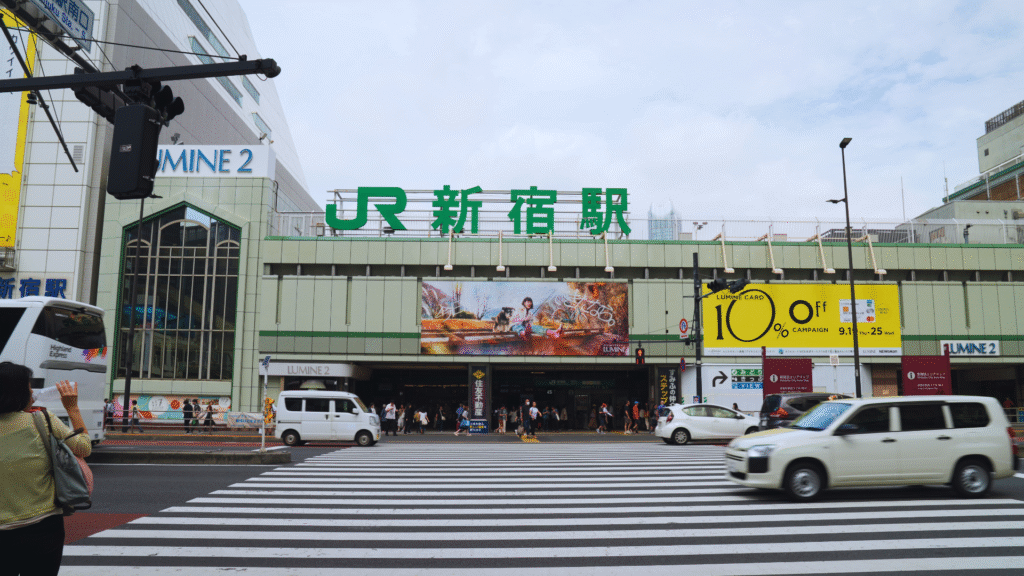
Getting and using the pass is a straightforward process. Here’s how it works.
Step 1: Purchasing the Pass
You have a few options for buying the pass, so you can choose whichever is most convenient for you.
You can buy it directly online through the official JR-WEST ONLINE TRAIN RESERVATION website. This is often the easiest option, as you can sort it out before your trip begins. You can also buy it from a designated travel agency outside of Japan before you leave home. If you do this, you will receive an “Exchange Order,” which is a voucher you will swap for the actual pass once you are in Japan. Finally, you can also purchase the pass after you arrive in Japan from a major travel agency.
Step 2: Activating and Using the Pass
Whether you bought your pass online or have an Exchange Order, your next step is to visit a designated JR ticket office in Japan. You will need to show the staff your passport so they can confirm you have a “Temporary Visitor” stamp and are eligible. Once they have checked your details, they will issue you with the physical pass, dated for its 7-day validity period.
Using the pass is simple. At most stations, you just insert the ticket into the automatic gates when you enter and take it back as you walk through. At smaller stations without automatic gates, you can simply show your pass to the staff member at the ticket window.
How to Reserve Seats
One of the best benefits of this pass is that you can make seat reservations on eligible trains for free. This is highly recommended for long-distance travel on Shinkansen and Limited Express trains, especially during busy seasons, as it guarantees you a place to sit.
You must book your seats before you board the train. You can do this in two main ways. You can go to any JR station ticket office, show your pass, and tell the staff which train you’d like to reserve a seat on. Alternatively, you can use the ticket vending machines found at major stations to reserve your own seats. The machines have an English language option and are very user-friendly.
Overwhelmed With Planning?
Take the stress out of your trip with our ready-to-use, 1-day PDF itineraries. Instantly download a plan and start exploring!
→ Browse Our 1-Day Itineraries
Sample 7-Day “Grand Tour” Itinerary: Making the Most of the Pass

This itinerary is fast-paced and designed for a traveller who wants to see as much as possible. It connects the cultural centres of Kansai with the coastal beauty of Hokuriku and the historic Sanyo region, showcasing the true power of the “All Area” pass.
Day 1: Arrival in Kyoto
Arrive at Kansai Airport (KIX), find the JR ticket office, and exchange your order for the rail pass. Your 7-day adventure starts now. Hop on the Haruka Limited Express directly to Kyoto. After checking into your hotel, spend the late afternoon and evening exploring the historic Gion district, wandering its traditional streets and perhaps spotting a geiko on her way to an appointment.
Day 2: Day Trip to Kanazawa
Prepare for an early start. Take the Thunderbird Limited Express from Kyoto to Kanazawa—a journey that brings you to the Hokuriku region. Spend the day exploring what is often called “little Kyoto.”
Visit the stunning Kenrokuen Garden, one of Japan’s most celebrated gardens, and walk through the beautifully preserved Higashi Chaya geisha district. Don’t forget to try the local gold leaf ice cream before taking the Thunderbird back to Kyoto in the evening.
Day 3: West to Hiroshima
Check out of your Kyoto hotel and board the Sanyo Shinkansen heading west to Hiroshima. You can store your luggage in a station locker. Dedicate the afternoon to visiting the Peace Memorial Park and Museum for a moving and essential historical perspective. Afterwards, check into your new hotel and try Hiroshima’s famous layered-style okonomiyaki for dinner.
Day 4: Serene Miyajima Island
From your base in Hiroshima, take a very short trip on a local JR line to Miyajimaguchi Station. From there, your pass gives you a free ride on the JR West Miyajima Ferry over to the island. Spend the day with the friendly local deer, admire the iconic “floating” torii gate of Itsukushima Shrine, and explore the beautiful Daisho-in Temple at the base of Mount Misen.
Day 5: South to Hakata (Fukuoka)
Continue your journey west on the Sanyo Shinkansen, travelling from Hiroshima down to its final stop: Hakata Station in Fukuoka. This city is a food lover’s paradise. Check into your hotel and dive straight into the culinary scene. Your main mission is to find a bowl of authentic Hakata tonkotsu ramen, famous for its rich pork broth.
Day 6: Long Ride Back to Osaka
Enjoy a final morning in Fukuoka; perhaps a relaxing walk in Ohori Park. In the afternoon, settle in for the longest leg of your journey: the Sanyo Shinkansen ride all the way from Hakata back to Shin-Osaka. This single trip alone costs over half the price of the entire 7-day pass! After arriving, check in for your final night and experience the dazzling energy and street food of Osaka’s Dotonbori district.
Day 7: Last Morning and Departure
For your last morning, enjoy a final piece of Japan. You could visit Osaka Castle or browse the Kuromon Ichiba Market. When it’s time to leave, hop on the Haruka Limited Express from Shin-Osaka or Tennoji Station for a direct, hassle-free ride back to Kansai Airport (KIX).
Step Into Japanese Traditions

There’s more to Japan than sightseeing. Imagine whisking matcha at a tea ceremony, learning the secrets of Japanese cooking, or trying your hand at a traditional craft. These are the moments that bring your journey to life — and we can help you book them with ease.
→ Find Cultural Experiences for Your Japan Trip
JR West All Area Pass FAQs

What is the difference between the JR West All Area Pass and the nationwide Japan Rail Pass?
The main differences are the coverage area and the trains you can use. The Japan Rail Pass covers the entire country across all six JR railway companies, while the JR West All Area Pass is focused only on the network operated by JR West.
A major advantage of the JR West All Area Pass is that it does cover the super-fast Nozomi and Mizuho Shinkansen trains on the Sanyo Shinkansen line, which the standard nationwide pass does not.
What happens if my train journey goes outside the valid area?
The pass will only cover the portion of your journey that is within the designated area. If you travel on a train that goes beyond the pass’s boundaries (for example, staying on the Sanyo Shinkansen past Hakata), you will be required to pay the full base fare and any additional fees for the entire section travelled outside the valid area.
Can I pay extra to upgrade to a Green Car (first class)?
Yes, you can. If you choose to travel in a premium Green Car, the pass will cover only the base fare portion of your ticket. You will need to purchase a separate limited express ticket and the Green Car ticket before boarding to cover the remaining charges.
Are the 7 days of the pass flexible, or do they have to be consecutive?
The pass is valid for seven consecutive calendar days. The validity period starts on the first day you use it and runs until midnight on the seventh day. You cannot skip days; the period is fixed once it begins.