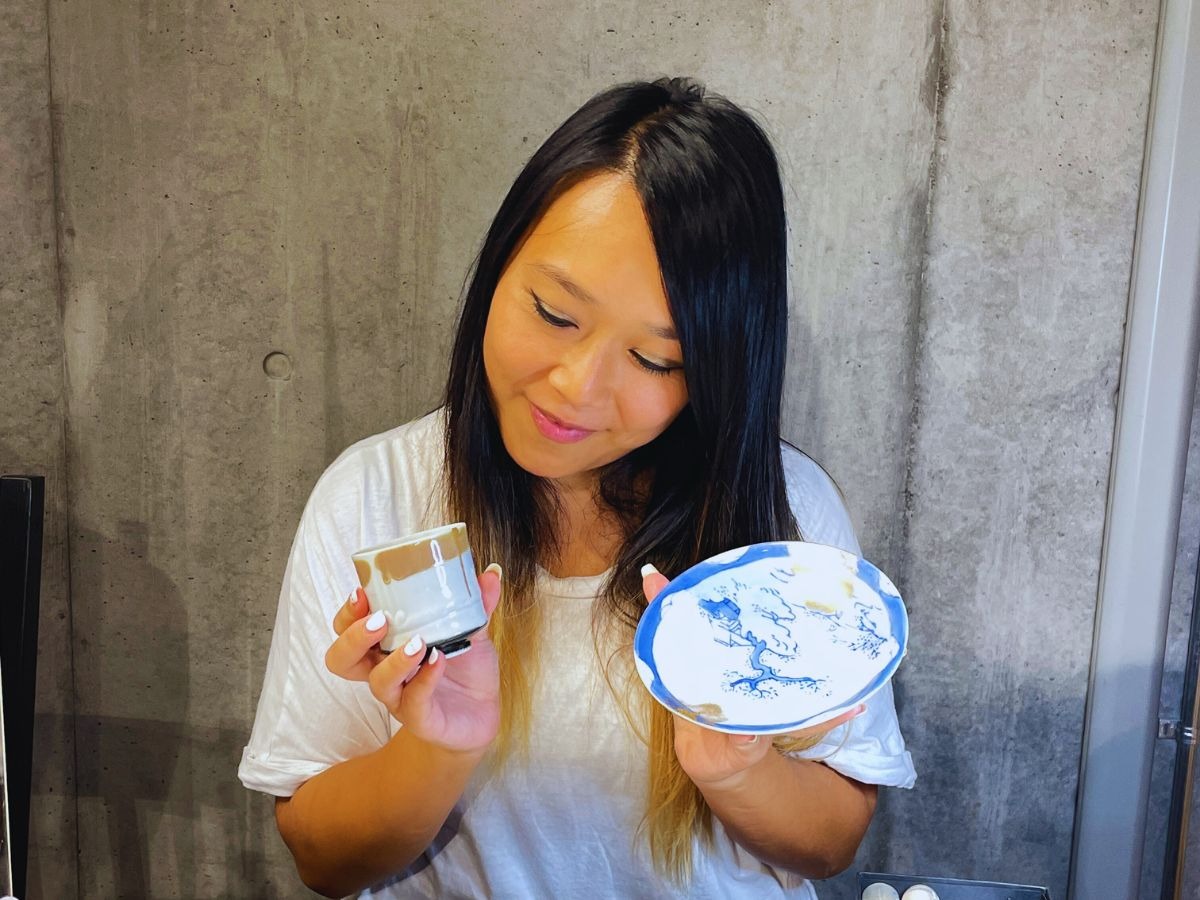
You have probably seen photos of it before: a cracked ceramic bowl that hasn’t been thrown away, but instead repaired with a striking line of gold. It looks beautiful, but we think the philosophy behind it is even more impressive.
In most places, when you break a plate, it goes in the bin. In Japan, the tradition of Kintsugi (golden joinery) teaches us to do the opposite. It treats the breakage as part of the object’s history, not something to hide. By repairing the crack with gold, you are actually highlighting the “flaw” and making the piece more valuable than it was when it was perfect.
We love this concept. It is one of those rare Japanese traditions that feels just as relevant today as it did centuries ago. And the good news is, you don’t just have to read about it; you can try it yourself.
Stop Planning, Start Adventuring
Tired of spending hours trying to piece together the perfect Japan trip? Our custom travel planning service is for you. We handle all the research and logistics to create a unique itinerary that lets you travel with confidence and experience Japan your way.
Build My Personalised Japan Itinerary
What is Kintsugi?
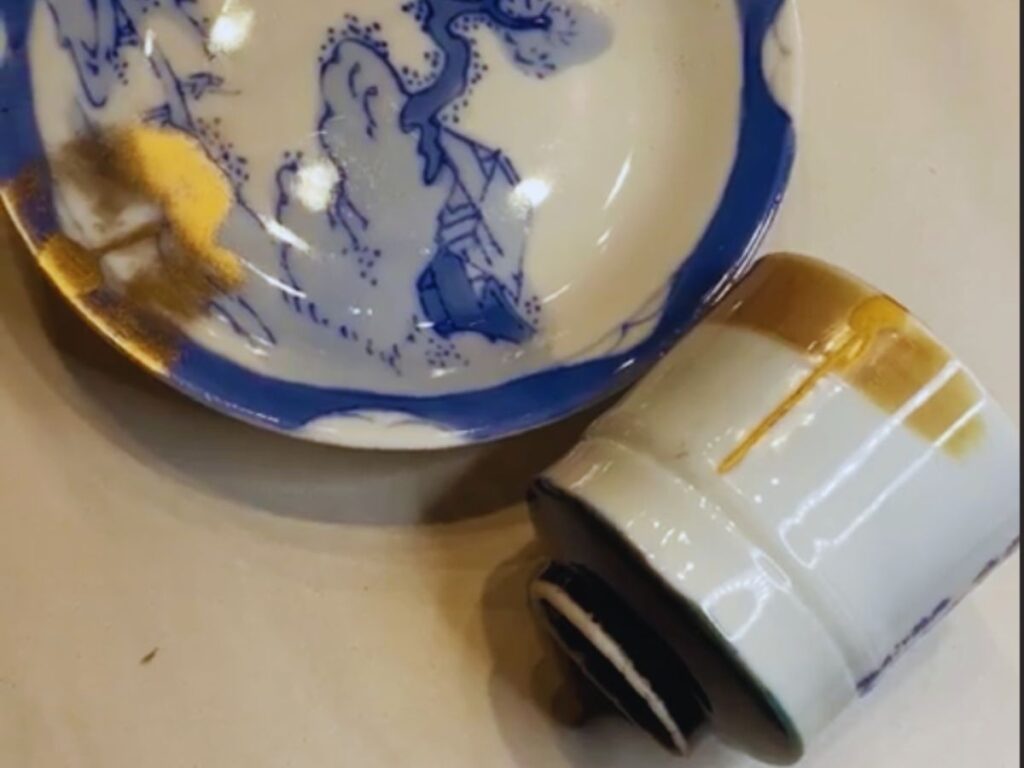
In simple terms, Kintsugi is the Japanese art of repairing broken pottery using lacquer dusted with powdered gold, silver, or platinum.
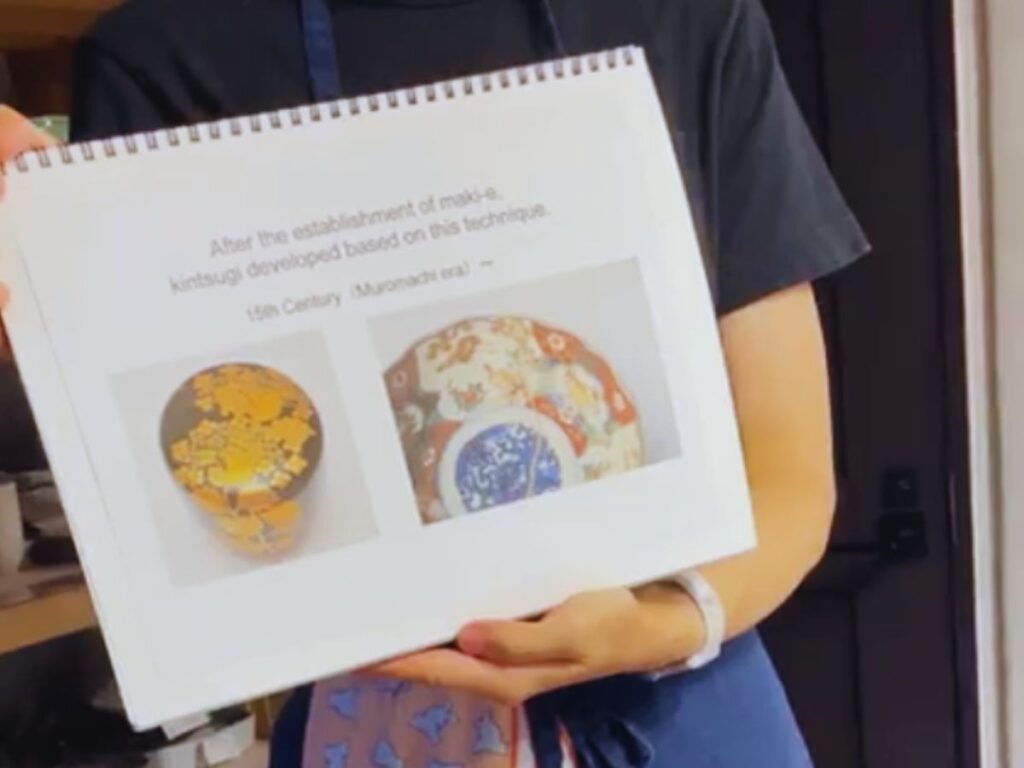
The word comes from two Japanese terms: kin (gold) and tsugi (joinery). The technique dates back to the 15th century. Legend has it that a Japanese shogun broke his favourite tea bowl and sent it to China for repairs. It came back held together with ugly metal staples. He wasn’t happy, so he asked Japanese craftsmen to find a better way. They used gold lacquer, and a new art form was born.
While the story starts in Kyoto, we always tell clients that the spiritual home of Kintsugi today is Kanazawa. This historic city produces 99% of Japan’s gold leaf. If you are visiting Kanazawa to see the samurai districts or the famous gardens, doing a Kintsugi workshop there feels especially authentic because you are right at the source of the materials.
Aside from Kintsugi, Kanazawa is also known for its chaya districts. Read more here:
Today, Kintsugi is closely connected to the philosophy of wabi-sabi, which is all about finding beauty in imperfection and simplicity. It is a slow, quiet process, which we think is the perfect antidote to a busy Japan travel itinerary.
Many people assume that Japanese culture is only about “Shokunin” perfection: mastering a skill until it is absolutely flawless. But Kintsugi teaches the opposite. It is about “perfection within imperfection.” It represents a struggle towards something that, even though it remains incomplete, is beautiful precisely because of its flaws.
Traditional vs. Modern Kintsugi: What You Need to Know

There is a big difference between the traditional craft and what you can actually do in a two-hour workshop. We believe it is important to be honest about this so you know exactly what you are booking.
Traditional Kintsugi uses a natural lacquer called urushi, which we were surprised to learn is an extremely delicate resource. It takes years for the tree to produce the sap, and high-quality Japanese urushi is much rarer than we realised. We assumed it could be found easily across Asia, but it is truly a local treasure.
While urushi is beautiful, it has two major problems for travellers. First, it is toxic. Urushi comes from the same family as poison ivy, so if you touch it while it is wet, it can cause a nasty skin rash. Second, it is slow. The lacquer takes weeks or even months to dry properly in a special humid box. You cannot just pack it in your suitcase and go home.
Modern Kintsugi is what most workshops for visitors use. Instead of urushi, you use food-safe synthetic glue and epoxy putty mixed with brass or gold powder.
In our opinion, unless you are moving to Japan for a few months to study as an apprentice, the modern version is the best option for your trip. It is safe, it finishes in one day, and you can take your creation home with you immediately. You still learn the technique and the philosophy, but without the risk of a rash or the long wait time.
Experiencing a Kintsugi Workshop
We have all been there. You drop a favourite mug or a plate, it shatters on the floor, and your heart sinks. Your first instinct is to throw it in the bin because it is ruined. Walking into a Kintsugi studio feels a bit like that at first. You see a table covered in ceramics that are cracked or chipped. It looks a little heartbreaking, but the whole point of this workshop is to change how you look at those broken pieces.
The experience starts with choosing your pottery. At most studios, the hosts provide a selection of plates, cups, or even chopstick rests that have been broken or chipped on purpose. You pick the one you want to save. Then, you head to your workbench which is set up with spatulas, brushes, fine sandpaper, and tubes of paste.
Before we get to the steps, we have to be honest: this is technically much more difficult than we expected. We once bought even just a home Kintsugi kit as a gift, thinking it would be a simple weekend project, and we were shocked by how many steps were actually involved.
The first step feels a bit wrong. You have to take the broken shards and sand down the sharp edges with a diamond file or sandpaper. It feels like you are damaging the pottery even more, but you need to create a rough surface so the glue holds tight. You then fit the pieces together dry, like a 3D puzzle, to make sure you know exactly how they lock into place.
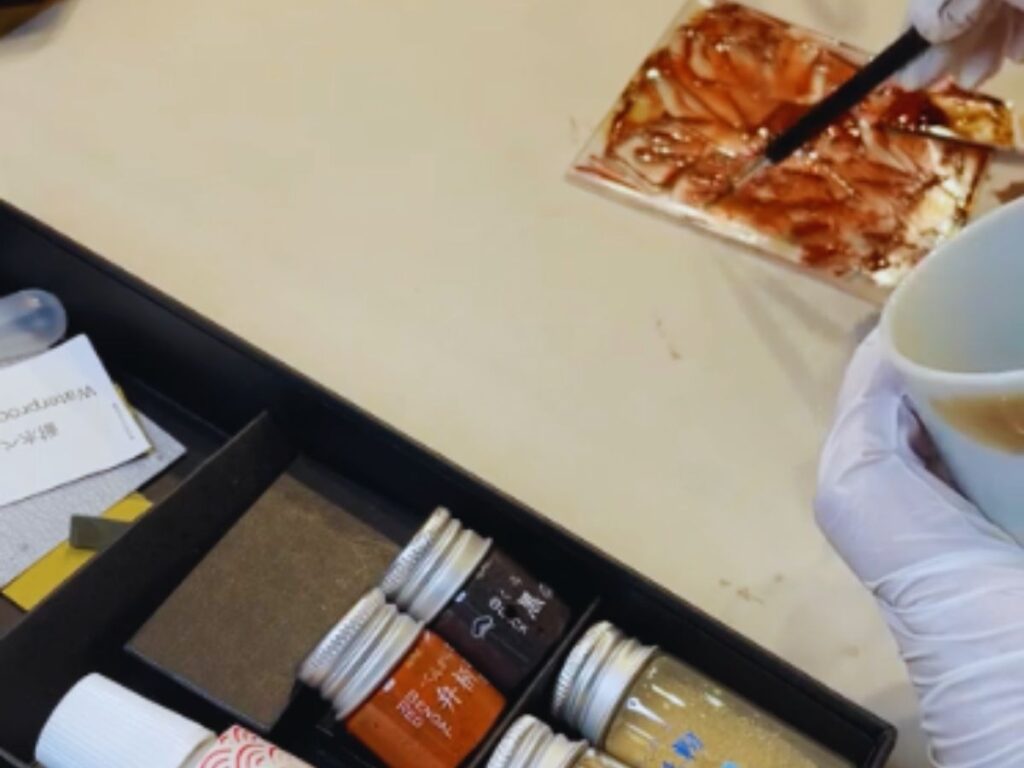
Next comes the mending. This is where the “modern” technique shines for travellers. Instead of mixing toxic lacquer that takes weeks to dry, you mix a fast-drying synthetic adhesive and putty. You apply this to the broken edges and press the pieces together. You have to hold them steady with your hands for a few minutes while the bond sets. This is the meditative part. You cannot check your phone or look around; you just have to focus on holding it together until it stands on its own.
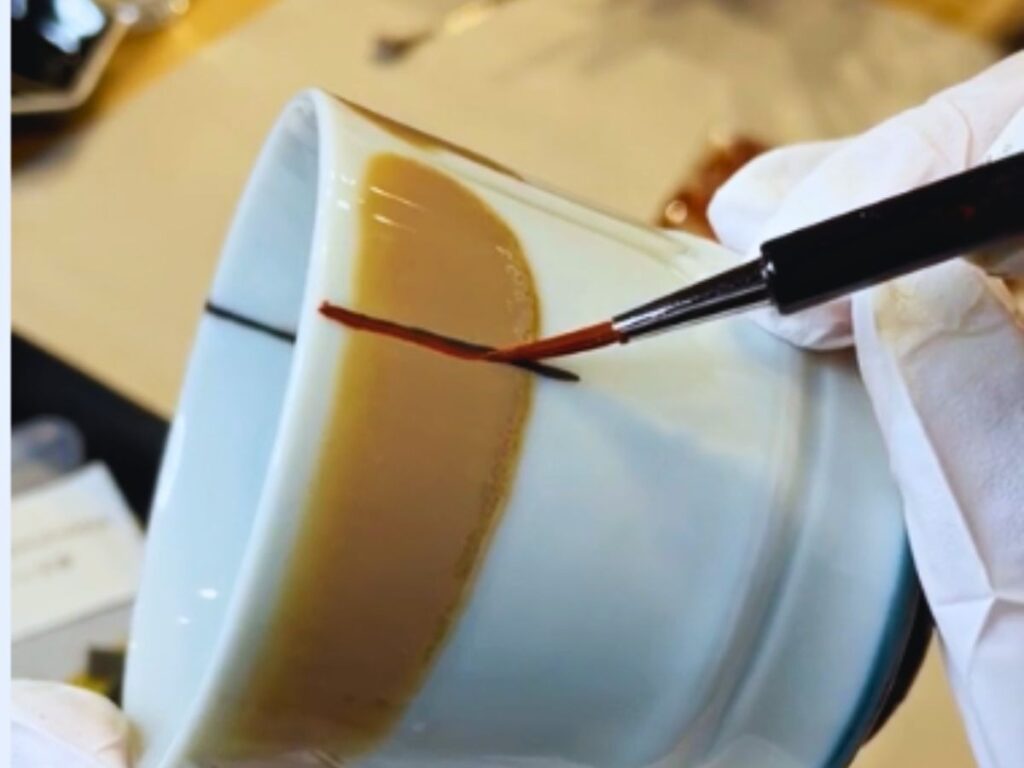
Once the shape is restored and any gaps are filled, the artistic work begins. You use a fine brush to paint a thin line of safe, synthetic lacquer over the cracks. This looks easy when the master does it, but the liquid is surprisingly thick. If you don’t spread it perfectly evenly, it creates a bumpy, unpleasant texture that ruins the feeling of the cup. It takes real focus to get that line smooth before you apply the gold.

Lastly comes the magic moment. You gently dust the powder onto the wet lines. While that line is still sticky, you pick up a soft brush loaded with gold powder (often a high-quality brass or mica blend for these introductory classes). As you brush away the excess, that ugly grey crack suddenly reveals itself as a glittering gold vein. You realise that you haven’t just fixed it; you have actually made it look better than it did when it was new.
Because this modern method dries quickly, your item is usually ready to be wrapped in bubble wrap and packed in your bag by the time you leave the studio.
Ready to Try Kintsugi?
We think a Kintsugi workshop is one of the best cultural experiences you can add to a Japan trip. It is great for everyone, but we think it is especially powerful for art lovers who appreciate the texture of ceramics, history buffs interested in samurai culture, or simply anyone who needs a mental break. If you are feeling overwhelmed by the crowds in Shibuya or Dotonbori, sitting down in a quiet studio to focus on a single piece of pottery is the perfect way to reset.
While you can find workshops all over Japan (including in Tokyo, Kyoto, Osaka, and the craft capital of Kanazawa), finding the right one can be tricky. Many genuine artisans work out of small, private studios that don’t have English websites. Some offer the months-long traditional course that doesn’t fit a traveller’s schedule, while others are “tourist traps” that just use cheap glue and glitter.
This is where we come in. Flip works with a network of trusted partners who offer the perfect balance of authenticity and accessibility. We even have partners that offer excellent English support, so we know exactly where to send you.
We handle the booking to ensure you get a workshop that fits your itinerary, so all you have to do is show up ready to create.
Book your Kintsugi experience now.
Kintsugi Experience FAQs
Can I bring my own broken pottery?
Usually, no. Most workshops run on a tight schedule, and your specific item might need more time or preparation than the class allows. The studios almost always provide the broken pottery for you.
Is it food safe?
It depends on the method. The “modern” version uses epoxy glues. Many are food-safe, but some are for decorative display only. If you want to eat off your plate when you get home, let us know beforehand so we can book the right studio for you.
Is the gold real?
In a standard one-day workshop, the powder is usually a brass, mica, or gold-effect blend. Real gold powder is incredibly expensive and is generally reserved for the professional, months-long traditional courses.
I am not artistic. Is it hard?
You don’t need to be able to draw or sculpt. The process is more about patience and following the steps than artistic talent. The instructors are there to guide your hand if you get stuck.
Is it safe for children?
We generally recommend this for teenagers (12+) and adults. It requires a steady hand and working with strong glues or powders, which isn’t usually fun for young children.
How do I get it home?
If you choose the modern method, it dries quickly. By the time the workshop is finished, your item is usually solid enough to wrap in bubble wrap and pack in your carry-on luggage.
Can I do this as a solo traveller?
Absolutely. These workshops are small and intimate, making them perfect for solo travellers. You will be sitting at a communal table, so it is a nice way to meet other people in a quiet setting.