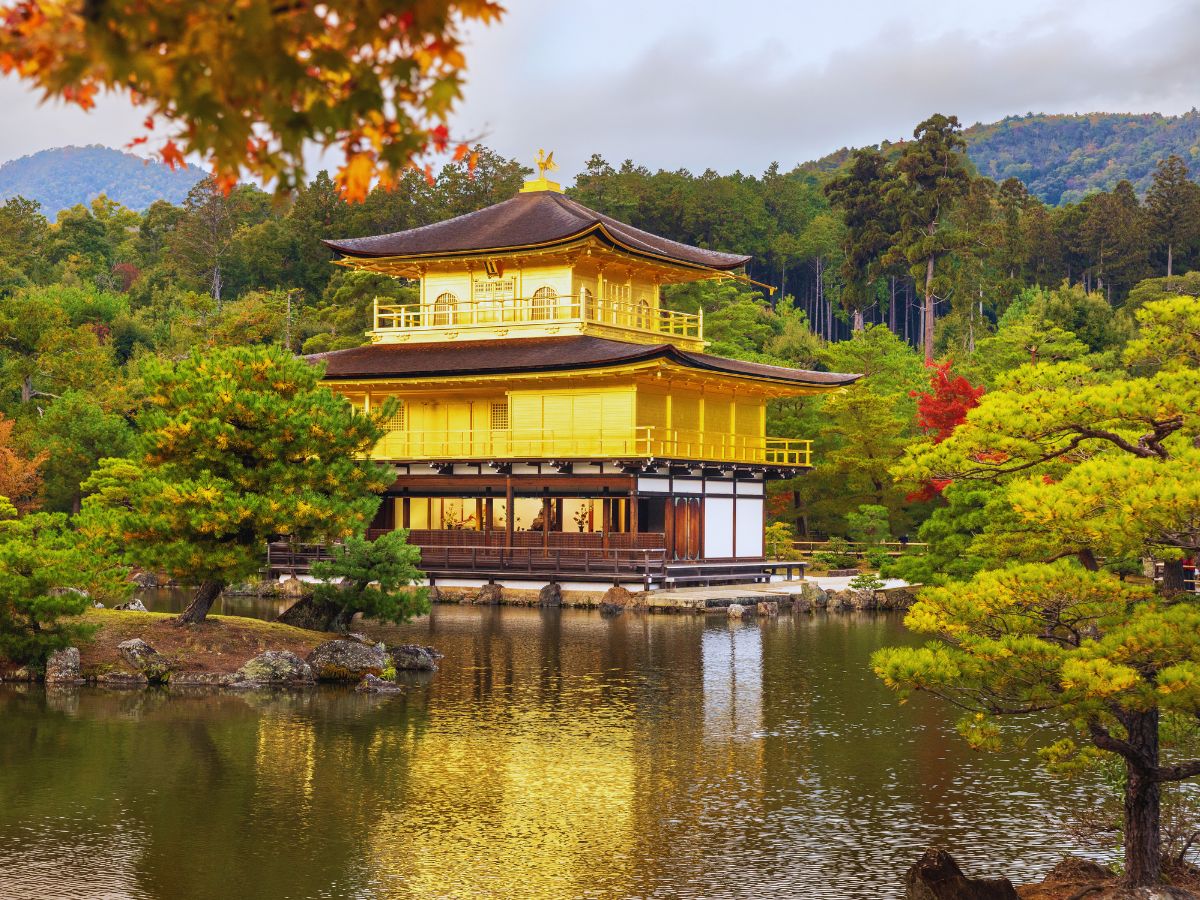
Kyoto has many beautiful temples, but Kinkaku-ji (or the Golden Pavilion) has a way of stealing the spotlight the moment you set eyes on it. It’s one of the most visited and recommended spots in Kyoto, not just because of its striking golden looks, but also because of how much one can learn when visiting it.
As a boutique travel agency, we at Flip Japan understand that these places can mark your trip and easily become your favourites, so if you’re looking to enjoy your days in Kyoto without wasting time and energy planning everything, check out our guided tours with local experts.
The Meaning Behind the Name Kinkakuji
Kinkaku-ji (金閣寺) translates directly to “Temple of the Golden Pavilion.” The name comes from the brilliant gold leaf that covers the building’s upper two storeys, creating a shimmering reflection on the mirror-like pond below. In Japanese, kin (金) means “gold,” kaku (閣) refers to a pavilion or tower, and ji (寺) means “temple.”
When to Visit Kinkakuji
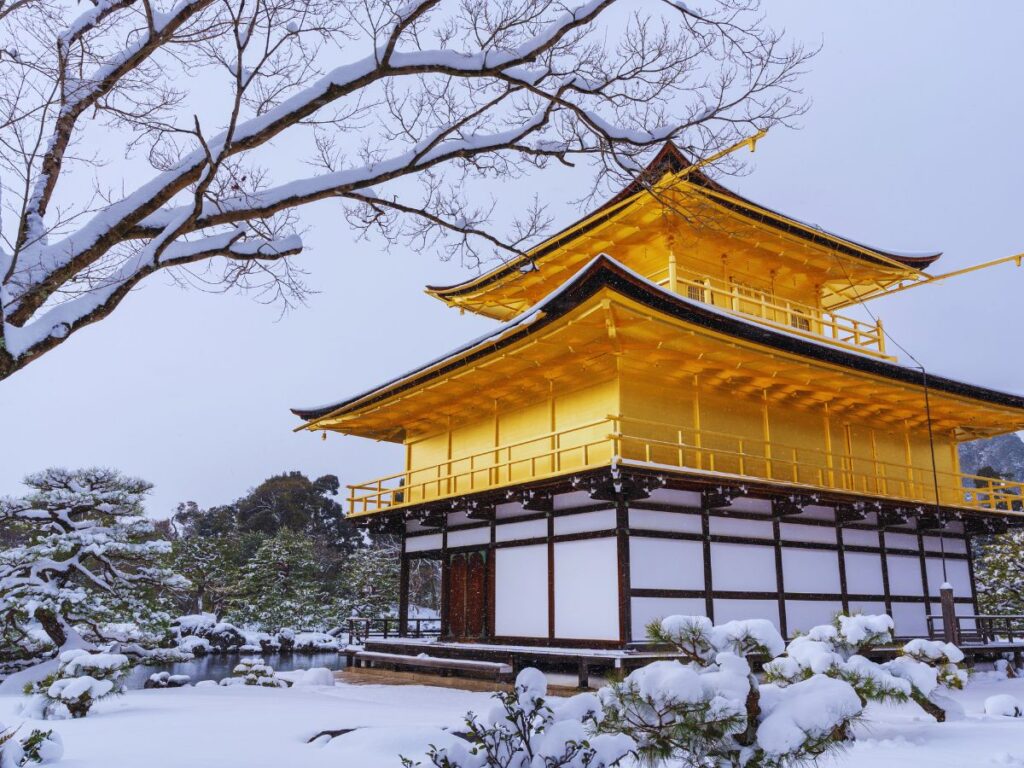
First things first, the time and date of your visit to the Golden Pavilion will dictate your experience here. Sure, the pavilion will still be gold and shiny no matter the season, but it’s always good to keep in mind that, as a famous place, it can get really crowded. This can affect the tranquillity you’ll experience, as well as the quality of the pictures you might want to take.
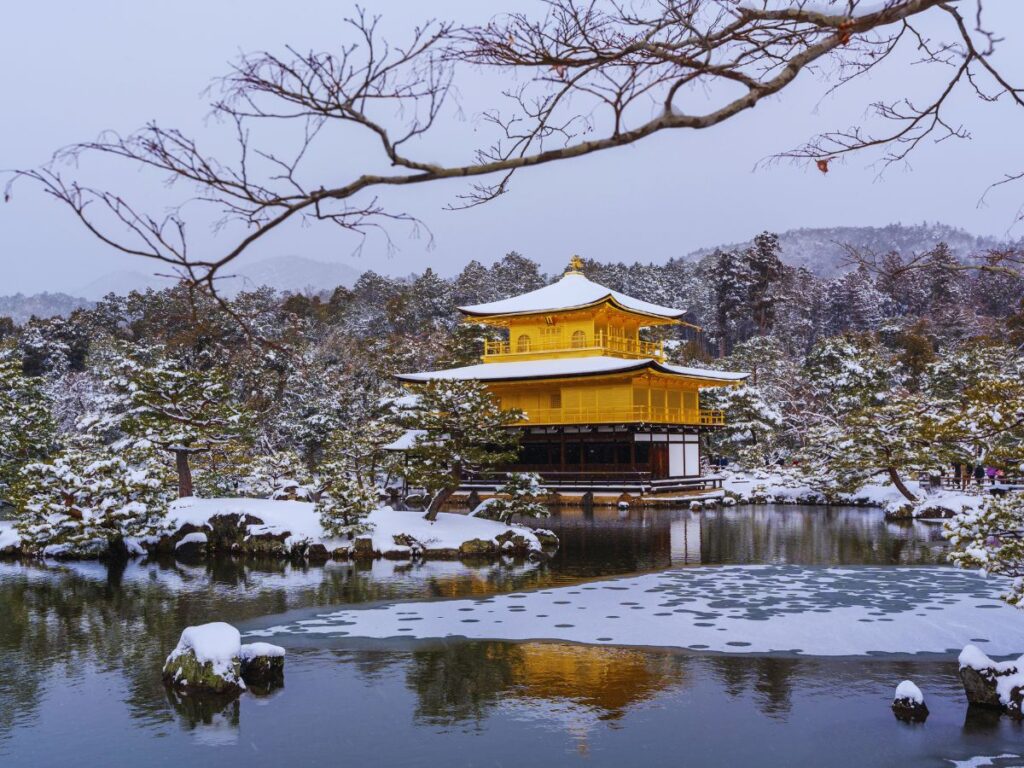
The Golden Pavilion is gorgeous all year round, yes, but autumn and snowy days are the most photogenic times to visit. They’re also very busy, and you might have to wait for hours in line just to get a picture of it covered in snow. We’ve done that before, and trust us, the cold of Kyoto packs a punch!
Springtime is also very busy, as the cherry blossoms beautifully decorate the temple grounds and gardens. Summertime is the most relaxed time, where you get to take your time with pictures, especially if you visit early in the morning.
As for the hours, the pavilion is open to the public from 9 AM to 5 PM, but if you want to catch a glimpse (and picture) of the gorgeous reflection of the sun on the gold-leaf covered walls of the building, going around 4 PM is best.
So, plan your visit accordingly, because the time of your visit might end up costing you an extra 30 minutes trying to get a decent angle for a picture or might end up being uncomfortable if you dislike moving through crowds.
The Stunning First View of Kyoto’s Golden Pavilion
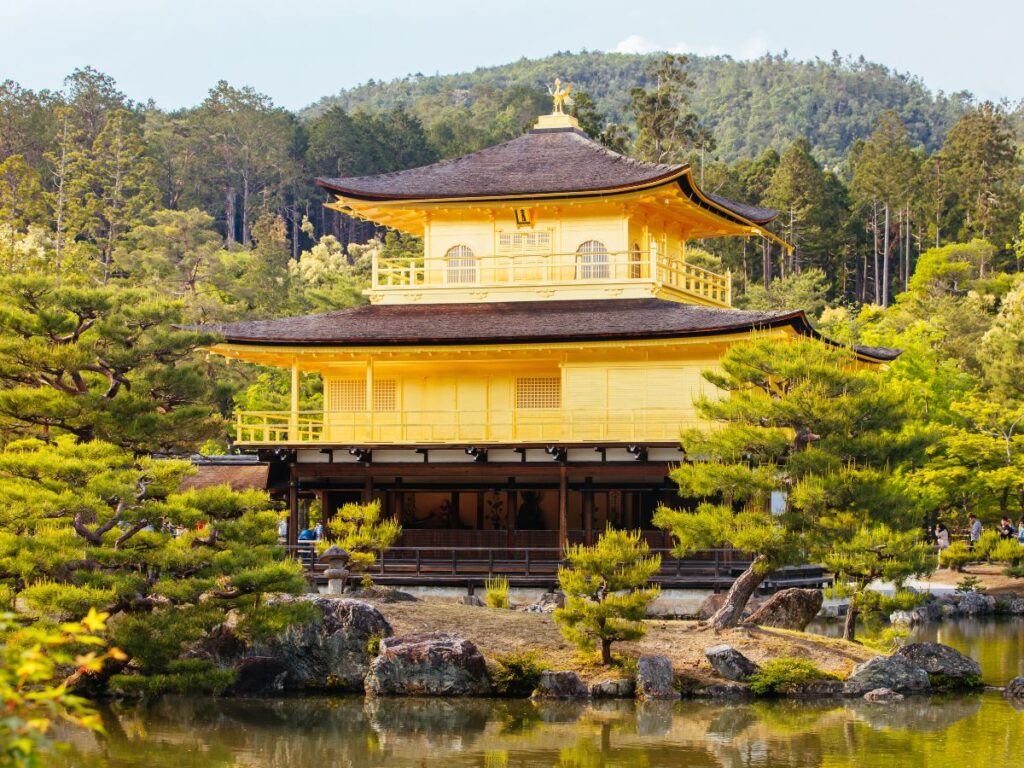
As you step through the gates and follow the path towards the pond, a golden structure suddenly emerges from behind the pines. So while you’re paying the entrance fee to see the whole temple grounds, the first thing you’ll witness is the pavilion itself. And even outside of the golden hour, it doesn’t just stand there; it glows.
This will be one of those rare travel moments when everything feels in perfect harmony. And that happens because the pond that surrounds it, with all the rocks and trees around it, was carefully studied before it was created. It’s meant to bring forth peace and transport the viewers to the Pure Land (a realm of peace where one can reach enlightenment), a concept of Buddhism.
Spend all the time you want here, because as you move forward, you’re not allowed to go back to the previous areas.
The History of Kinkakuji: From Shogun’s Dream to Zen Temple
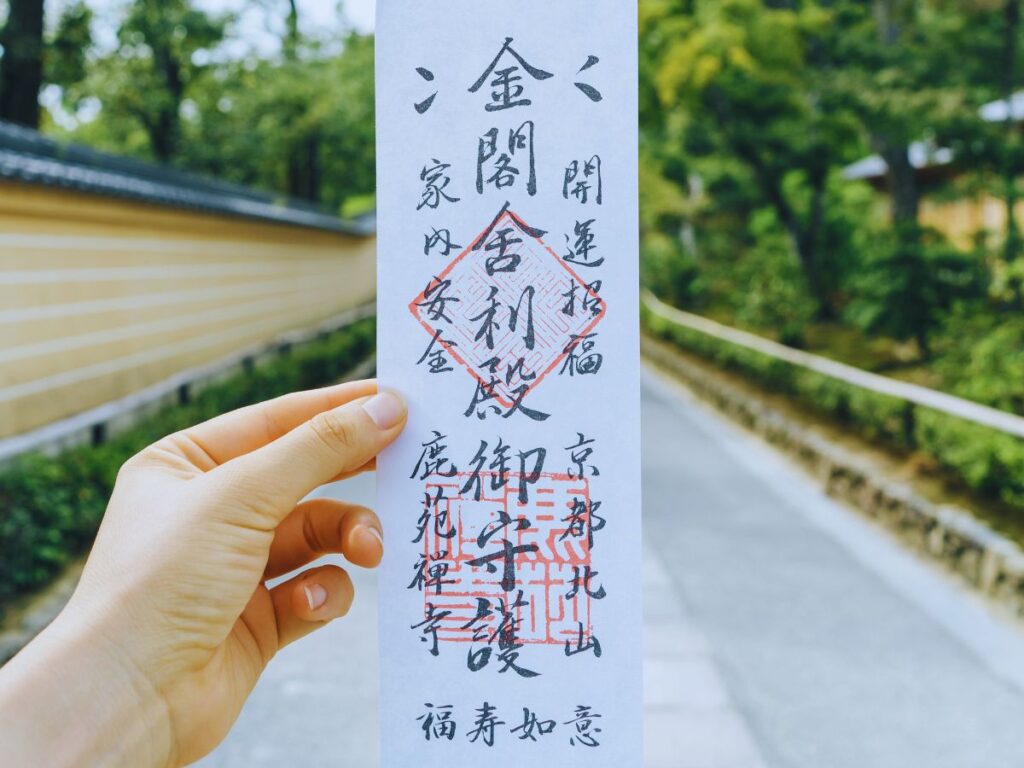
You might be wondering why the pavilion is full of golden leaf, which brings us to understanding how this place came to be. Kinkaku-ji’s history reaches back to the Kamakura period (1185–1333), when the site was home to a nobleman’s villa.
Its transformation into the magnificent landmark we see today began in the late 14th century, when Ashikaga Yoshimitsu, Japan’s third shogun, purchased the estate. After retiring from political life, Yoshimitsu envisioned a lavish villa where he could enjoy the arts, host distinguished guests, and create a haven of beauty and culture.
The villa then became the centre of the refined Kitayama culture (an artistic movement that focused on ostentation and that fostered Noh theatre), where architecture, garden design, and art all blended seamlessly. After his death, it was his will to open the place to the public by having it transformed into a Zen temple: Rokuon-ji.Surprise! That is the real name of the temple, but the Golden Pavilion is so famous that everyone just calls it Kinkaku-ji!
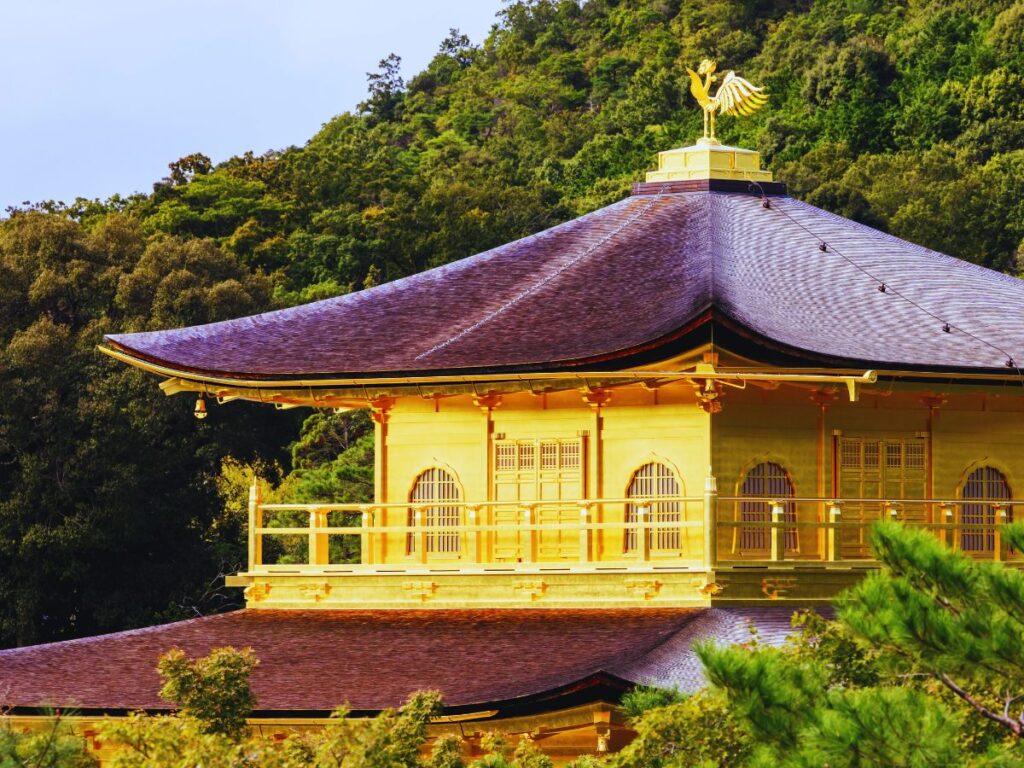
So the pavilion is coated in gold leaf on the outside (and inside of one of the floors, but we cannot go inside to see that) as a way of displaying wealth and sophistication. It is also connected to Buddhism, often seen as a symbol of purity and enlightenment, and can be found covering many altars and decorations in other temples.
The pavilion is called Shariden in Japanese, meaning Relic Hall, and while we cannot go inside, there are pictures that allow us to grasp the splendour of the relics that are stored there. From the base floor, which has a typical Buddhist altar, to the third floor, which is also covered in gold leaf and holds Buddha’s ashes.
The Kinkakuji Temple Grounds
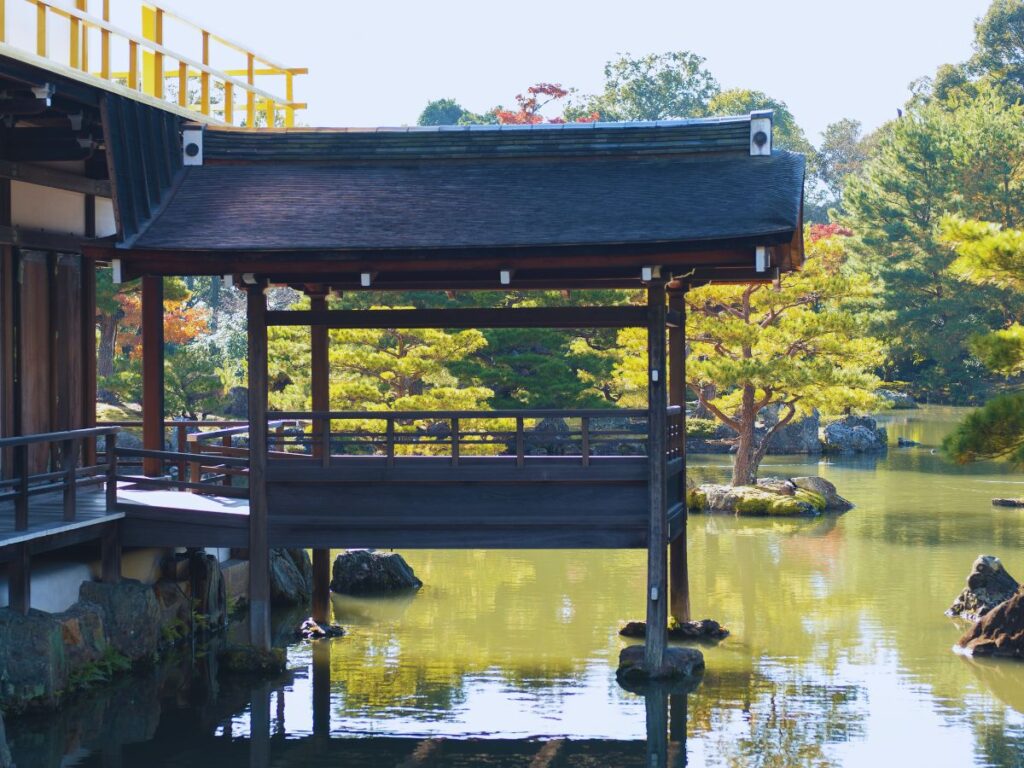
The truth is, you will probably spend more time not seeing the Golden Pavilion than actually seeing it, because as you now know, this is a temple, and the pavilion happens to be part of it. So, once you get closer to it and can actually see the size of the gold leaf that is glued to the outer walls, you will begin moving away from it and start entering the garden path that will lead you to the actual temple.
This walk is very pleasant and relaxing…after all, the whole temple ground is meant to bring forth peace, with some small waterfalls, ponds, and water springs. Nature plays the main role here, and as you move forward and upwards the stone stairs, you will get one last glimpse of the Golden Pavilion’s upper floors.
And before you reach the temple, where you can take a break, enjoy some snacks and green tea, or leave a prayer in the form of incense or a candle, you will stop by the Sekkatei Tea House.
A Glimpse into the Tea Ceremony
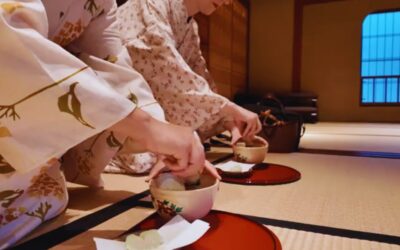
Sekkatei is a serene tea house that offers visitors a glimpse into the refined elegance of the Japanese tea ceremony. Inside, the simple yet refined architecture reflects the famous wabi-sabi aesthetic, celebrating natural beauty and imperfection, and it also allows a glimpse into what traditional Japanese houses looked like. It’s a quick stop and we cannot go in, but its wide entrance makes it easy to see the details of Japanese architecture.
Kinankuji’s Twin, Ginkakuji
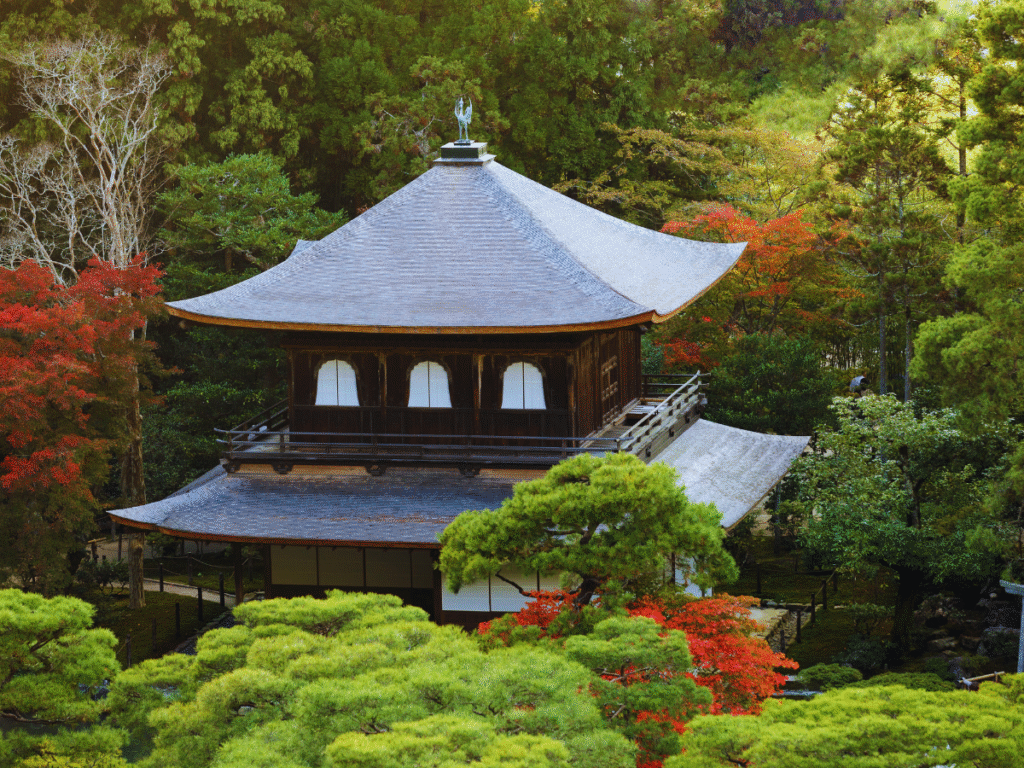
Many people confuse the names of the Golden Pavilion with the Silver Pavilion when visiting Kyoto, so let’s make things clear: Kin means gold, and gin means silver, so if you’re afraid of switching it up, writing Golden Pavilion or Silver Pavilion on Google Maps will get the misunderstanding solved.
What travellers often wonder is if it’s worth visiting both, and if the Silver Pavilion also has silver on the walls. It is not covered with silver leaf, but it’s still worth a visit! While Kinkaku-ji dazzles with its gold-leaf exterior reflecting brilliantly over the mirror-like pond, Ginkaku-ji offers a subtler, more contemplative charm on the opposite side of the city.
You can visit both or just Kinkaku-ji, since it’s the most visually stunning of the two. Ginkaku-ji also has smaller grounds than Kinkakuji, despite the entrance fee being the same.
Access Information and Important Notes
- How to get there: The best way to reach Kinkakuji is by bus. Take city bus number 12, 59, 205 or M1 and get off at Kinkakuji-michi Stop. Flat fare of ¥230(~2$) for adults and ¥120(~1$) for children from 6 to 11 years old.
- The temple grounds do not have many washrooms available, so be sure to go right after you show your ticket to the staff, or you’ll have to wait until you reach the end of the gardens.
- Tickets cost ¥500(~4$) for adults and ¥300(~2$) for primary and middle school students.
- Only cash is accepted!
Kinkakuji FAQ’s
Is it really gold?
Yes, the gold leaf that covers the second and third floors of the Shariden comes from Kanazawa, the number one producer of gold leaf in Japan.
How long do you need to see the temple grounds and the pavilion?
Depends on whether you want to take your time with pictures and how crowded it is, but usually for an hour to two.
Can you enter the pavilion?
No. You can walk through the gardens and pass very close to the pavilion, but you cannot get close enough to see the interior.
How often does the Golden Pavilion need renovation or maintenance?
It undergoes maintenance every couple of years and major renovations every 20 years. Since it’s made of wood and the gold leaf is affected by the weather, it requires regular care.
A UNESCO Heritage Site Evoking Peace
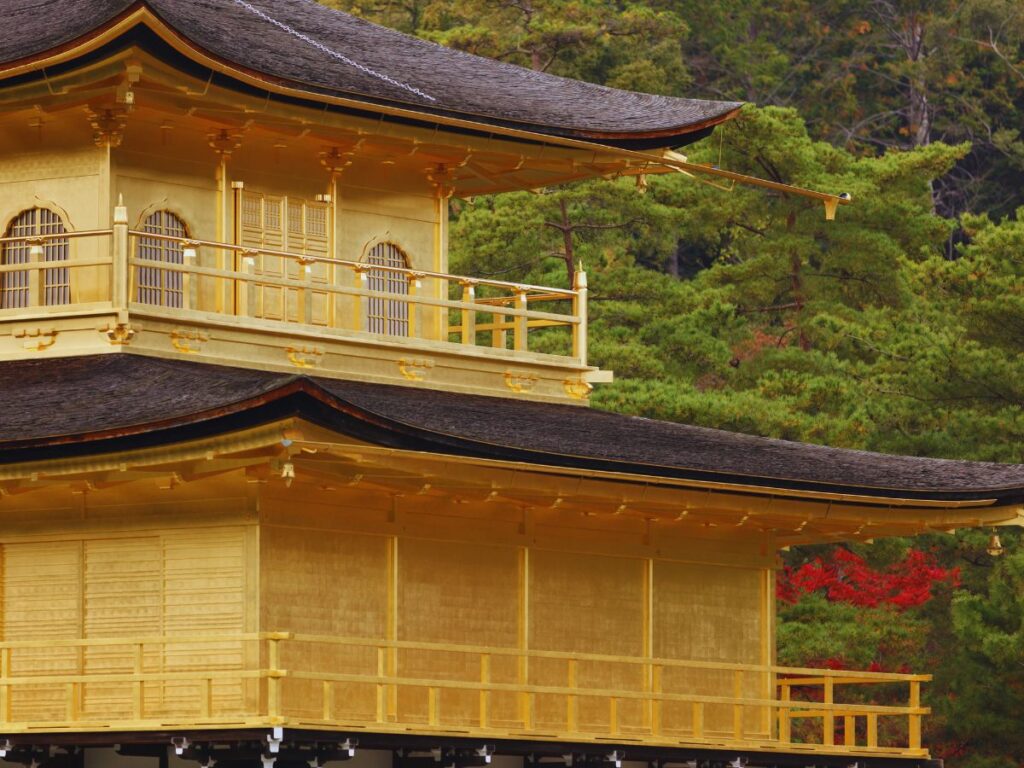
Kinkaku-ji is proudly recognised as part of the UNESCO World Heritage Site “Historic Monuments of Ancient Kyoto”, a testament to its cultural, historical, and artistic significance.
Its golden façade, tranquil gardens, and deep connection to Japan’s heritage make it one of Kyoto’s most treasured landmarks and an unmissable highlight for any visitor. A visit here can easily be added to a day spent in Arashiyama, or to any other Kyoto adventure.
Want our recommended Arashiyama itinerary? Check it out here:
And if you don’t know the best way to fit it into your trip, don’t hesitate to talk to us about your itinerary!