Of course, a Nara area guide has to be all about the famous, majestic, and slightly cheeky Nara deer…but did you know how much more there is to Nara? From the thousand-year-old national treasure temples to tranquil gardens and incredible food experiences, Nara is one of our favourite destinations.
As a boutique travel agency in Japan, we’ve had plenty of experience when it comes to planning the perfect Nara trip, which is why we’re sharing this ultimate Nara area guide and 1-day Nara itinerary.
For help planning your Japan trip, check out our travel planner or get in touch to schedule a free trip planning consultation with one of our travel experts.
Getting To and Around Nara
Central Nara is compact and relatively easy to explore on foot, especially around the main sights like Nara Park, Todaiji, and Kasuga Taisha. Once you arrive at either Kintetsu Nara Station or JR Nara Station, most attractions are within a 15–20 minute walk, or a short local bus ride away.
Considering a rail pass?
How to Get to Nara From Osaka
Getting to Nara from Osaka is easy and takes less than an hour. The most convenient route is via the Kintetsu Nara Line from Osaka-Namba Station, which will take you directly to Kintetsu Nara Station. Taking a Limited Express or Rapid Express train will get you there in about 40 minutes, and then Nara Park is another 15 minutes on foot.
Alternatively, you can take the JR Yamatoji Line from JR Osaka Station to JR Nara Station, which takes around 50 minutes on a Rapid Service train. JR Nara Station is slightly farther from the main attractions, so you may need a short bus ride or a 20-minute walk to reach the park area.
How to Get to Nara From Kyoto
Like Osaka, the fastest and most convenient way to reach Nara from Kyoto is by taking the Kintetsu Kyoto Line. Get on at Kintetsu Kyoto Station and ride for 35 to 45 minutes to Kintetsu Nara Station. There’s also the JR Nara Line, which runs from JR Kyoto Station to JR Nara Station, but this option takes a bit longer and arrives slightly farther from the main attraction.
Discover more of our top Kansai day trips:
How to Get to Nara From Tokyo
Although there’s no direct Shinkansen route to Nara from Tokyo, the trip is still straightforward with one easy transfer. First, take the Tokaido Shinkansen from Tokyo Station to either Kyoto Station or Shin-Osaka Station. The ride takes about 2 to 3 hours, depending on the train.
From there, transfer to a local train following our instructions above!
Places to Visit in Nara
Nara Park
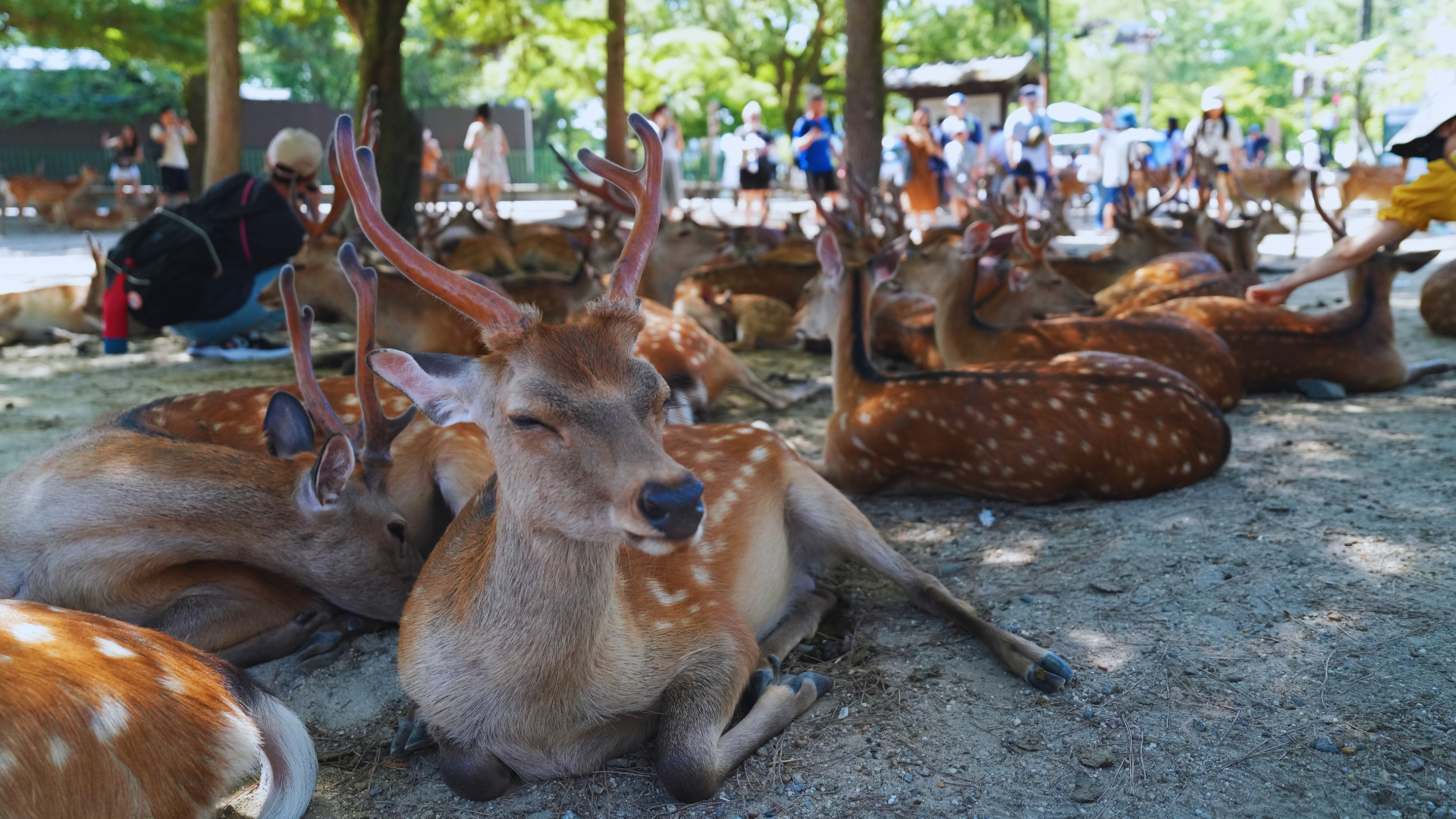
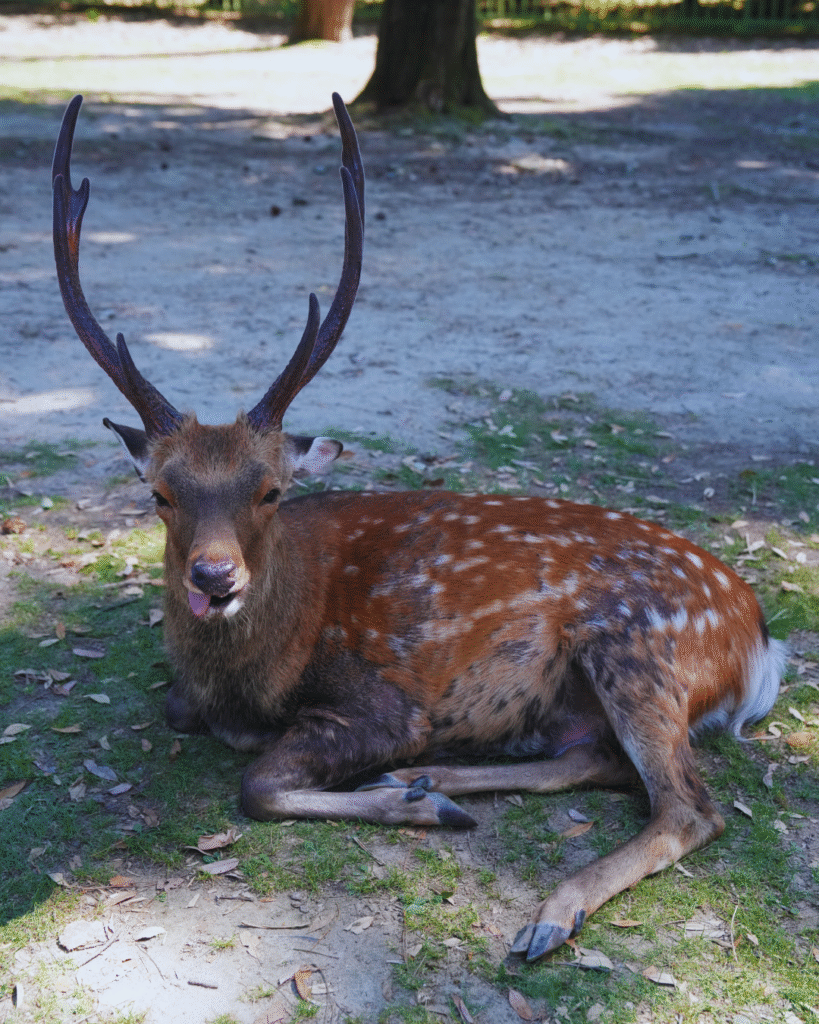
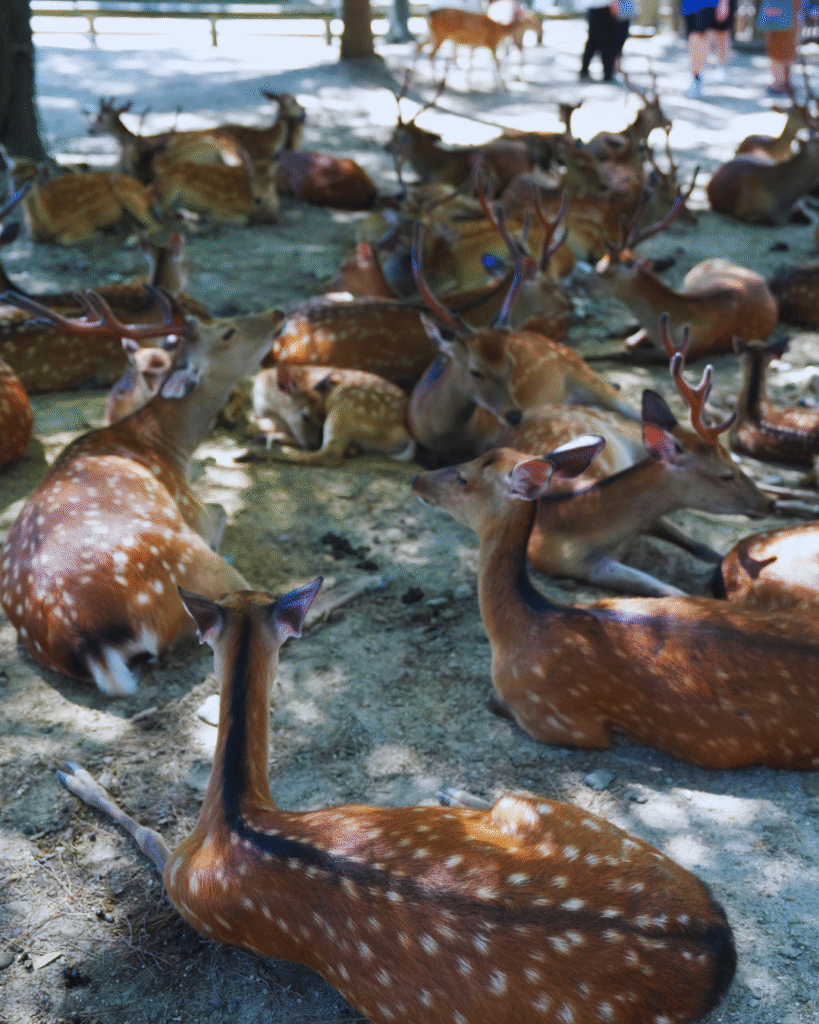
Easily the most famous spot in all of Nara is Nara Park, where thousands of friendly deer roam free. Within the park’s 660-hectare radius are many landmarks such as Todaiji Temple, Kasuga Taisha Shrine, and the Nara National Museum.
Visitors can buy shika senbei (special crackers) to feed the deer, many of which have learned to bow in exchange for a treat. While the deer are generally friendly, they can become pushy around food, so it’s best to stay alert and respectful.
Here’s a quick guide on how to avoid any deer trouble in Nara:
- Do not give the deer anything aside from the special crackers
- Do not let yourself get surrounded by groups of deer
- Never have the whole package of crackers in sight because the deer will stalk you
- Try and only take pictures with solo deer so that the others don’t attack you
Mount Wakakusa
Mount Wakakusa, also known as Wakakusayama or “Young Grass Mountain,” is a 342 m tall peak in Nara Park. The hike from the mountain’s base to a scenic midway observatory takes about 15–20 minutes, and it takes an additional 20–30 minutes to reach the summit. From the top, you’ll find beautiful panoramic views over Nara Park and the surrounding mountains.
During late January, the entire mountain becomes the dramatic centrepiece of Wakakusa Yamayaki, an annual festival where dead grass on the hillside is set ablaze in a spectacular fire, often accompanied by fireworks.
Address: Zoshicho, Nara, 630-8211
Yurara-No-Yu Public Bath
After a long day of sightseeing, it’s time to stop by Yurara‑no‑yu Onsen, a large public spa complex with a mix of natural hot spring baths and multiple saunas. The outdoor baths alternate weekly between traditional Japanese and Balinese-inspired styles, while inside, the facility features amenities such as a hot stone spa, body care rooms, and a casual restaurant.
Yurara‑no‑yu Nara is open until midnight, allowing a relaxing soak into the late hours of the evening after a full day of Nara sightseeing. Be aware that there is a no-tattoo policy at Yurara-no-yu, and that it can get busy on weekends.
Address: 5 Chome-351-1 Hachijo, Nara, 630-8145
Opening Hours: 7 am to midnight
Entrance Fee: ¥900 for adults
Best Temples in Nara
Todaiji Temple
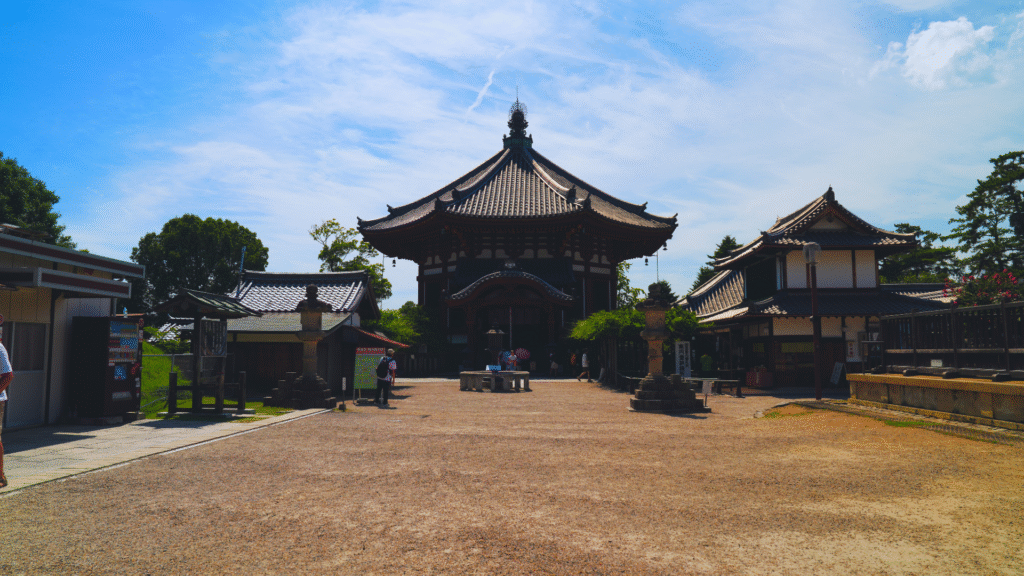
Todaiji Temple is a striking Buddhist temple originally built in the 8th century as the head temple of all provincial Buddhist temples. Its main hall, the Daibutsuden, is one of the largest wooden buildings in the world and houses the massive 15-meter-tall Bronze Daibutsu (Great Buddha), which represents Vairocana Buddha.
The original hall was completed in 752 AD, was destroyed twice (once in the 12th century and again in the 16th century), and the present version was rebuilt in 1709. While still massive, it’s actually only about two-thirds the size of the original structure.
Address: 406-1 Zoshicho, Nara, 630-8211
Kasuga Taisha Shrine
Originally established in 768 AD, Kasuga Taisha is a Shinto shrine also found within the borders of Nara Park. It’s famous for its beautiful, bright red buildings, and the thousands of lanterns that hang throughout the shrine complex. These lanterns are only lit twice a year, during Setsubun Mantoro in early February and the Chugen Mantoro in mid-August.
Address: 160 Kasuganocho, Nara, 630-8212
Opening Hours: 7 am to 5 pm
Entrance Fee: ¥1,500 for adults, ¥1,200 for college and high school students, ¥500 for children
Kofuku-ji Temple
Kofuku-ji Temple is an iconic site in Nara, with the five-story pagoda, which towers over the city skyline and is one of the tallest in all of Japan. The temple was established in 669 AD and served as the family temple of the powerful Fujiwara clan, making it a key religious and political site in ancient Nara.
As a major temple of the Hosso sect of Buddhism, Kofuku-ji continues to function as an active place of worship. Visitors can observe monks in prayer and participate in special ceremonies held throughout the year. The temple is also home to many important Buddhist statues and artefacts, including some which are designated as national treasures.
Address: 48 Noboriojicho, Nara, 630-8213
Opening Hours: 9 am to 5 pm
Entrance Fee: ¥1,600 for adults, ¥1,100 for college and high school students, ¥600 for children
Horyu-Ji
One of the oldest wooden structures in the world and another UNESCO World Heritage Site in Nara, Horyu-ji was originally built in the early 7th century by Prince Shōtokun. The Buddhist temple’s main hall, pagoda, and central gate date back over 1,300 years, showcasing remarkable Asuka-period architecture.
Inside, you’ll find priceless Buddhist statues and artefacts, including the famous Shaka Triad and Tamamushi Shrine, an intricate miniature building adorned with beetle wing decorations.
Address: 1-1 Horyuji Sannai, Ikaruga, Ikoma District, Nara 636-0115
Opening Hours: 8 am to 4:30 pm
Entrance Fee: ¥2,000 for adults, ¥1,700 for Junior school students, ¥1,000 for children
Best Food and Drink Experiences in Nara
Nakatanidou
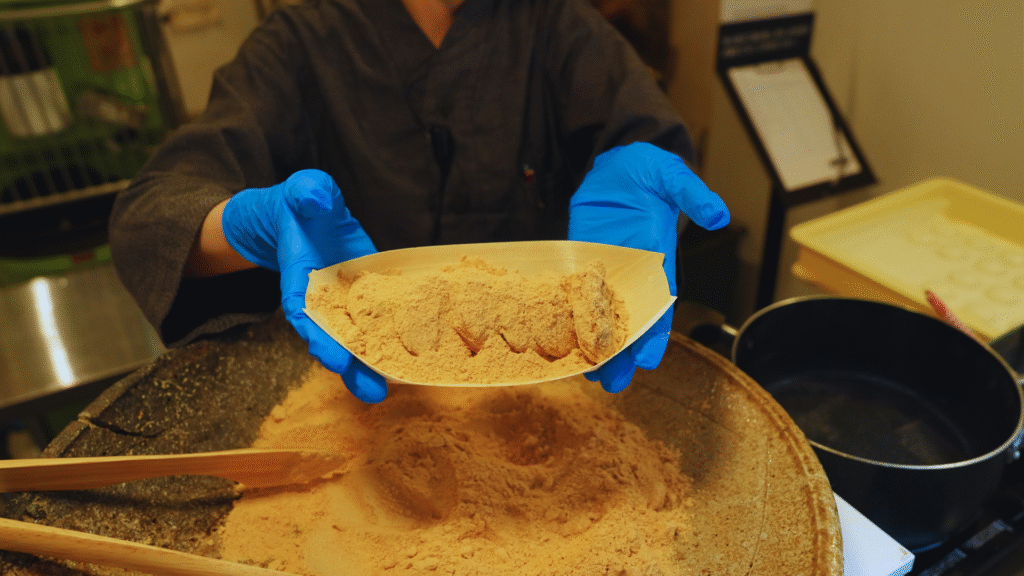
Nakatanidou is a renowned mochi shop located just a few minutes’ walk from Kintetsu Nara Station and near Nara Park. The shop is famous for its high-speed mochitsuki (mochi-pounding) demonstrations, performed roughly every 30 minutes.
Skilled staff pound glutinous rice in perfect sync at nearly three strikes per second, resulting in fresh yomogi mochi. The treat is served still warm, chewy, and dusted with kinako (roasted soybean flour), with a smooth red bean filling inside.
Address: 29 Hashimotocho, Nara, 630-8217
Opening Hours: Wed-Mon from 10 am to 7 pm
Harushika Sake Brewery
A historic sake brewery founded in 1884, where visitors can enjoy a tasting experience of five different Harushika sakes ranging from crisp and dry to aromatic and rich. Harushika means “spring deer”, paying tribute to Nara’s sacred deer and the Kasuga Taisha Shrine.
The tasting takes place inside a beautifully preserved historic building, which was once a senior monk’s residence, and on weekends in February, the brewery offers tours for a behind‑the‑scenes look at traditional sake production methods.
Address: 24-1 Fukuchiincho, Nara, 630-8381
Opening Hours: 10 am to 5 pm
Kakinoha Sushi Honpo Tanaka
Kakinoha Sushi Honpo Tanaka is a long-established shop with over 200 years of history tracing back to Gojo in southern Nara. Located just outside Kintetsu Nara Station, it specialises in the region’s signature kakinoha-zushi (pressed sushi wrapped in persimmon leaves), and is an ideal spot to pick up sushi before exploring Nara Park.
There’s also a small tea lounge called Kakinoha Chaya at the back of the main shop that serves sushi sets, local sweets, and persimmon-leaf.
Address: 5-2 Higashimuki Nakamachi, Nara, 630-8215
Opening Hours: 9 am to 7 pm
Best Museums in Nara
Isuien Garden and Neiraku Museum
Isuien Garden in Nara is a beautiful Japanese strolling garden created around a central pond shaped like 水, the kanji for “water”. The garden features two distinct sections: the front garden, designed during the Edo period, and the rear garden, added in the Meiji period.
The garden uses the shakkei technique, or “borrowed scenery,” to incorporate natural and architectural elements into its landscape. Within the garden, the Neiraku Museum displays an impressive collection of East Asian art, including ancient Chinese bronzes, Korean ceramics, and Japanese tea utensils.
Address: 74 Suimoncho, Nara, 630-8208
Opening Hours: Wed to Mon, 9:30 am to 4:30 pm
Entrance Fee: ¥1,200 for adults, ¥500 for college and high school students, ¥300 for children
Nara National Museum
First opened in 1889, the Nara National Museum is one of Japan’s foremost institutions dedicated to preserving and showcasing Buddhist art and cultural heritage. It houses an extensive collection of over 100 Buddhist statues, many of which are designated National Treasures and Important Cultural Properties.
In addition to its permanent collection, the museum hosts special exhibitions, including the annual Shosoin Exhibition, which features treasures from Todaiji Temple. The museum is accessible to non-Japanese speakers, with English-language signage and volunteer guides, and don’t forget to stop by the gift shop before leaving.
Address: 50 Noboriojicho, Nara, 630-8213
Opening Hours: Tues-Sun from 9:30 am to 5 pm
Entrance Fee: ¥700 for adults, ¥350 for college students
Naramachi Mechanical Toy Museum
The Naramachi Mechanical Toy Museum is located in a beautifully preserved Edo-period machiya (traditional townhouse) in the heart of Naramachi. It offers a hands‑on experience with traditional karakuri (mechanical) toys that date back to the Edo era.
Entrance is free, and visitors are encouraged to touch, play with, and learn how the toys work, using simple mechanisms like gravity, levers, and pulleys. Exhibition themes rotate every couple of months, and once a month, the museum hosts a toy-making workshop where both children and adults can try crafting their own toys.
Address: 7 Inyocho, Nara, 630-8338
Opening Hours: 9 am to 5 pm
Entrance Fee: Free!
1-Day Nara Itinerary
Morning
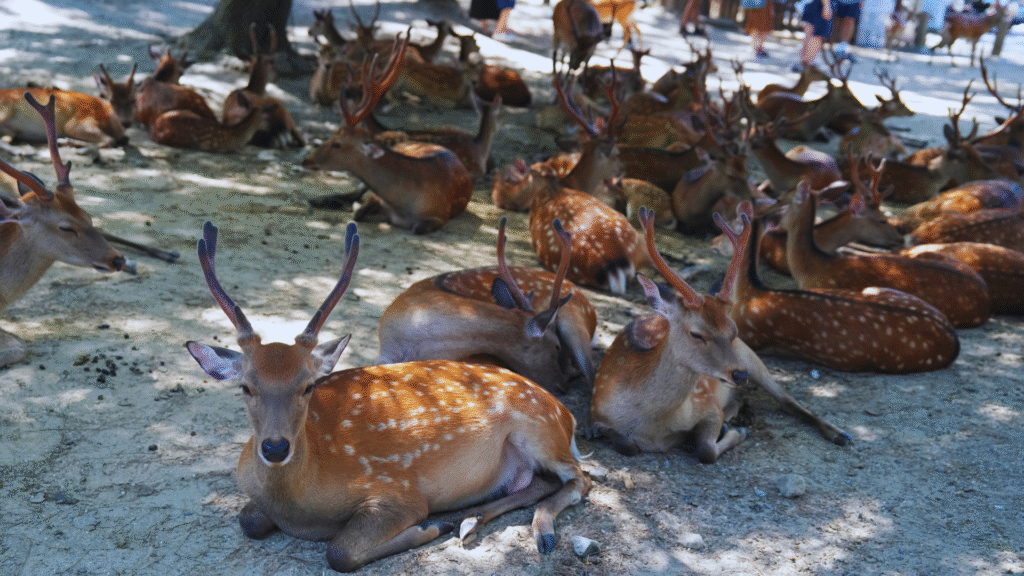
Begin your day with a relaxed stroll through Nara Park, where you’ll likely spot deer the moment you arrive. Take your time feeding the deer, taking photos, and simply enjoying the calm energy of the area…just be careful if visiting with young children, as the deer can get a little demanding when they think you have crackers.
Next, while you’re still inside Nara Park, make your way to the park’s most famous landmark: Tōdaiji Temple. This massive wooden structure houses the Great Buddha (Daibutsu), which is one of the largest bronze Buddha statues in the world.
Behind the statue, there’s a wooden pillar with a small hole at its base, said to be the same size as the Buddha’s nostril. If you can squeeze through it, you’re believed to achieve enlightenment in your next life! It’s a fun (and surprisingly tight) challenge that’s especially fun for kids.
Travelling with kids? Check out our 1-week itinerary:
Afternoon
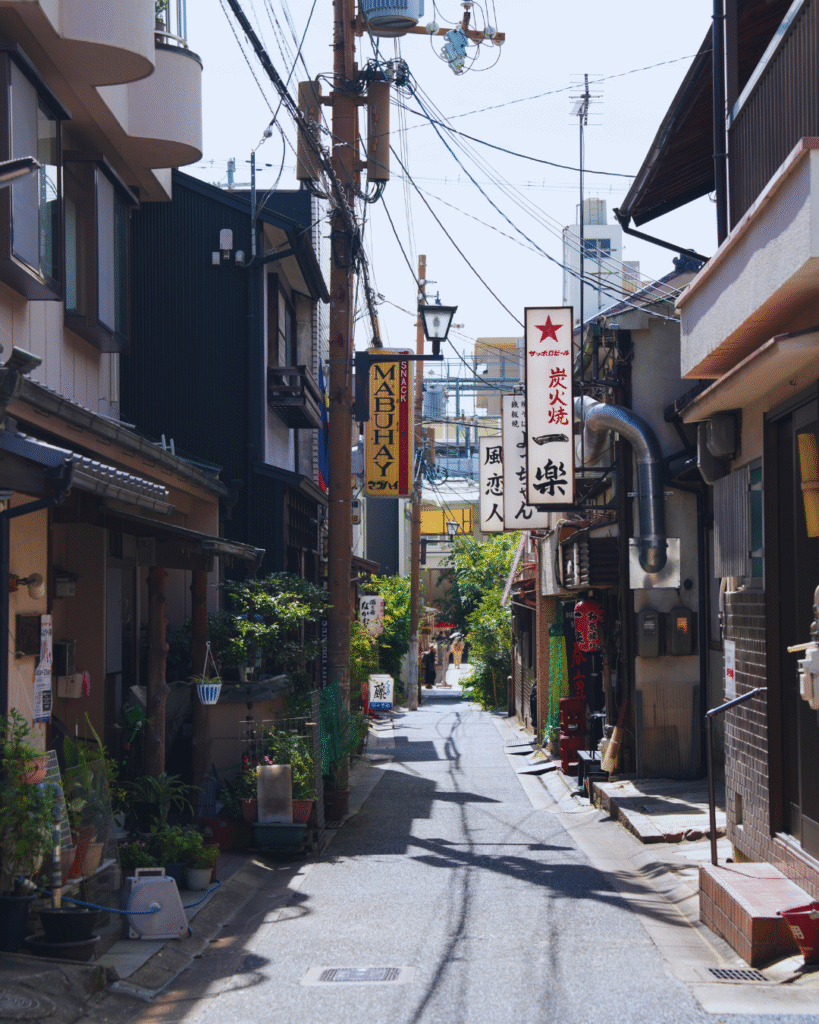
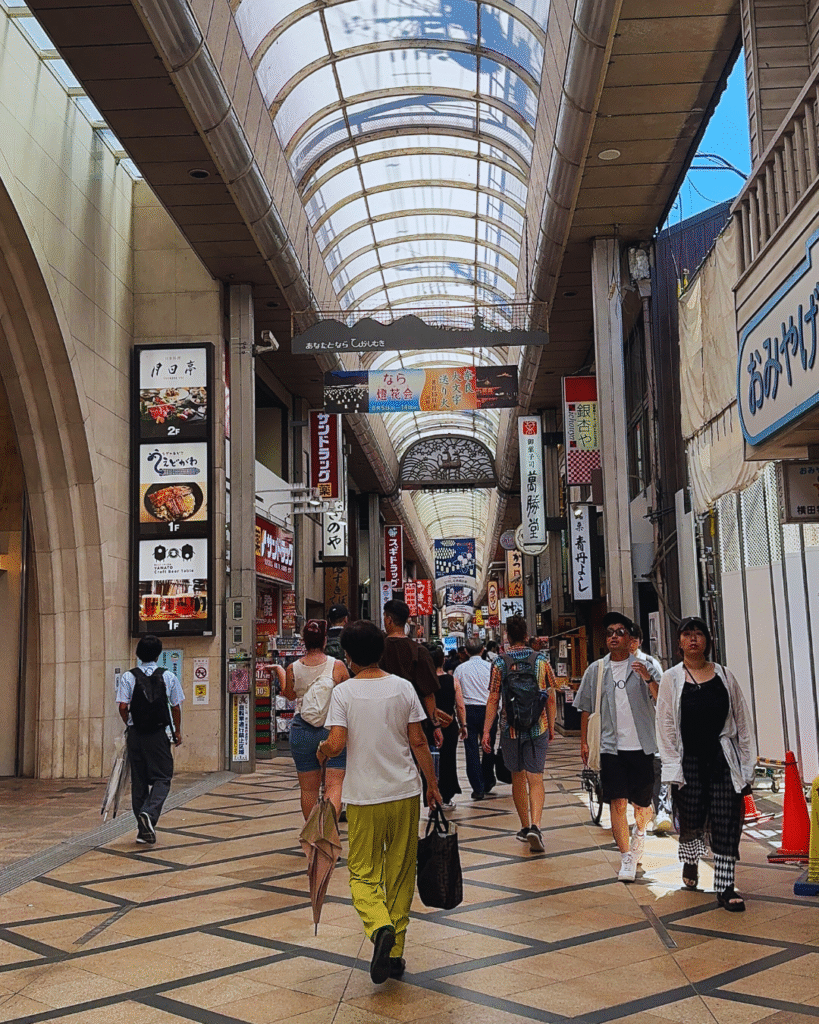
At lunchtime, head into Naramachi, Nara’s preserved merchant district, which is a 9-minute walk or a 2-minute taxi ride away. The area is filled with plenty of food options, but we recommend trying a traditional Japanese teishoku (set meal) or kakinoha sushi (sushi wrapped in persimmon leaves).
After lunch, spend a little time exploring the charming streets. You’ll find traditional townhouses, craft shops, and small museums. You can also stop by the Naramachi Mechanical Toy Museum to play with traditional Japanese toys. It’s small, free, and a delightful stop for all ages.
No trip to Nara is complete without catching a live mochi pounding at Nakatanidou! Watch as skilled staff pound sticky rice with lightning speed and synchronised movements, then enjoy some freshly made yomogi mochi (mugwort rice cakes).
Evening
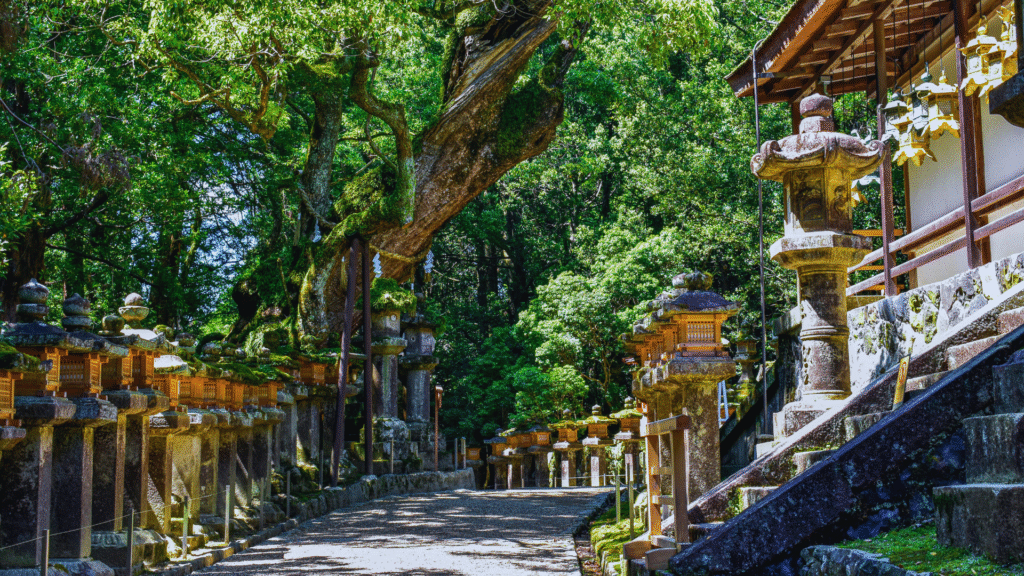
End your one-day Nara itinerary with a walk to Kasuga Taisha, located at the edge of Nara Park. This shrine is set within a peaceful forest and lined with hundreds of mossy stone lanterns. It’s a short, calming hike, and perfect after a busy day. You might even see a few deer here as well.
If you have time and energy, take a short hike or taxi up to Mount Wakakusa for panoramic views of Nara. The sunset view over the city is breathtaking and well worth the climb.
Wrap up your day with dinner near Kintetsu Nara Station. You’ll find a wide variety of food options here, from casual soba and curry shops to cosy izakayas serving grilled dishes and local sake. Then, hop on the train to your next destination.
FAQs
What to do in Nara in 1 day?
There’s so much to do in 1 day in Nara, from visiting the deer in Nara Park, to visiting the historic temples, and trying freshly pounded mochi in Naramachi.
Why is Nara so popular?
Nara is best known for the free-roaming, bowing deer, but is also famously home to some of Japan’s most famous Buddhist and Shinto temples.
Can we touch the deer in Nara?
Yes, you can gently touch the deer, but be careful, as they are wild animals. Make sure to feed them only with special deer crackers sold in the park, and treat each animal with respect.
Is it better to visit Nara from Osaka or Kyoto?
This depends on your itinerary! Both cities offer convenient train access, but Osaka is slightly closer while Kyoto provides a more scenic route. Nara itself is also filled with many amazing accommodation options like ryokan, hotels, and guest houses for longer stays.
What to do in Nara besides Nara Park?
Visit the Nara National Museum, stroll through Naramachi, hike Mount Wakakusa, enjoy mochi pounding at Nakatanidou, or tour Harushika Sake Brewery.