Takayama is famous for many things: its scenic beauty, the amazing preserved historic buildings, and the nationally renowned Takayama Festival. Well, did you know these three things have something in common? You can experience them all at the Sakurayama Hachimangu Shrine!
The hillside shrine is the setting for the Autumn Takayama Festival, with over 1,600 years of history, myth, and legend. It’s also just next door to the Takayama Festival Float Exhibition Hall and Nikkokan, where you can see the incredible festival floats.
Still unsure about whether a visit to the Sakurayama Hachimangu Shrine is worth the time? I’m sharing my personal experience and recommendations below, so you know exactly why you need to add it to your Takayama itinerary!
Planning a Takayama Trip?
Let us help you! We’re a bespoke travel agency in Tokyo that has helped thousands of travellers from across the world live out their dream Japan trip. Check out our expert travel planning services to get started.
The History of Sakurayama Hachimangu Shrine
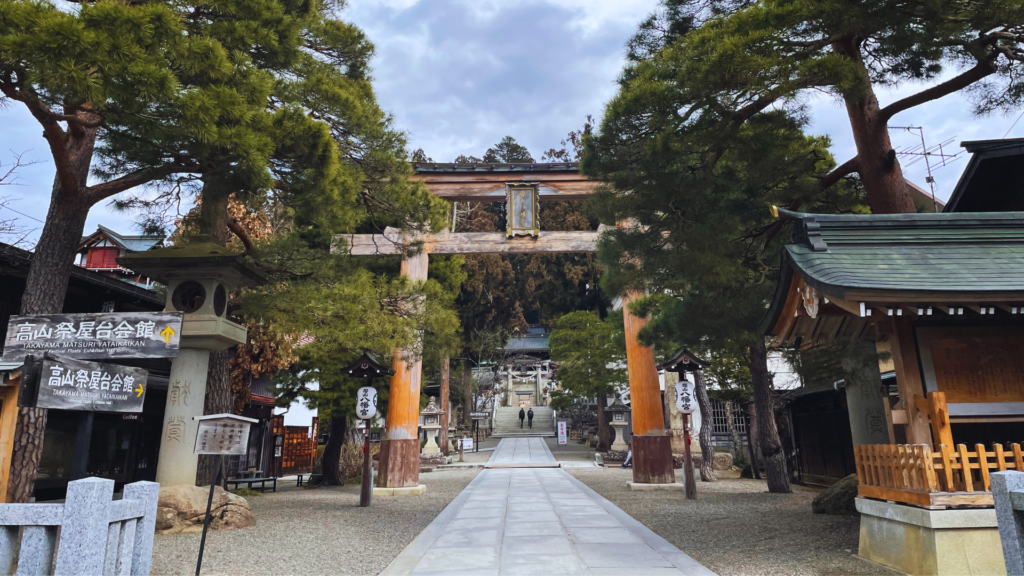
I have to say, the legend behind Sakurayama Hachimangu Shrine is one of the most interesting of all the shrines in Japan that I’ve visited so far. The shrine as it stands today was officially established in 1683, but its history reaches much, much further back.
The story goes that in the 401st century, Emperor Nintoku sent a prince to Takayama on the monumental quest of conquering a two-headed, four-armed beast known as Ryoumen Sukuna. Before leaving for the fight, the Prince knew he needed the Gods’ protection, and so he built a shrine in his Father’s honour, which would protect the area from the monster. His bravery in the fight connected the Prince and the shrine to Hachiman, the Shinto God of War.
This original shrine stood for over a thousand years in Takayama, until donations from Lord Kanamori allowed it to be enlarged and formally established. It had to be designed to stand through the region’s difficult winters with heavy snowfall, as well as the hot and humid summers. As a result of the incredible craftsmanship, most of the original buildings from the 1600s remain, with some relics from the millennium before.
Learn more about Japanese Shrines
Takayama Festival
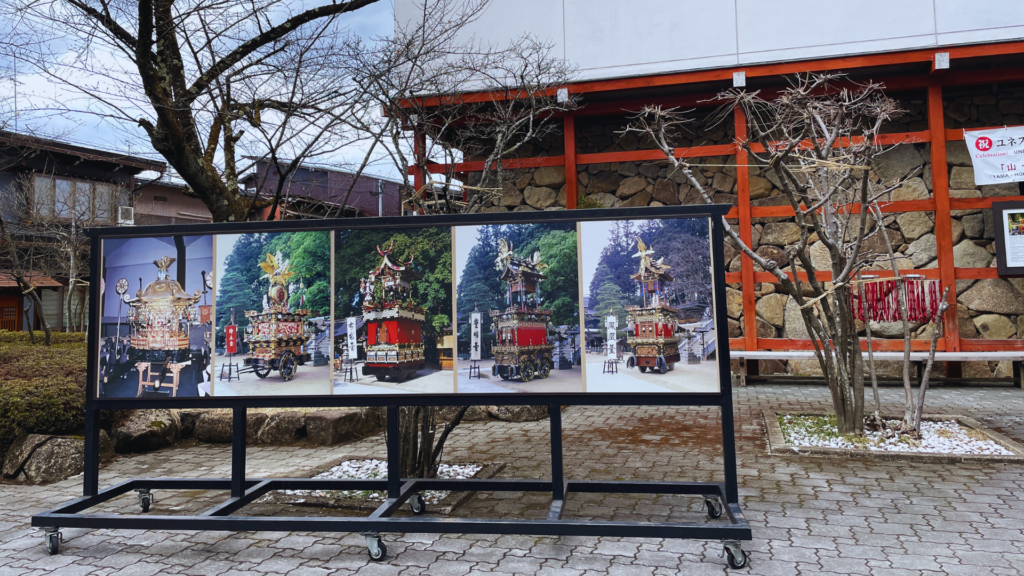
It is impossible to talk about Sakurayama Hachimangu Shrine without diving into the Takayama Festival. As you may know, Japan is filled with hundreds (if not thousands) of regional festivals every single year, but the Takayama Festival is particularly special.
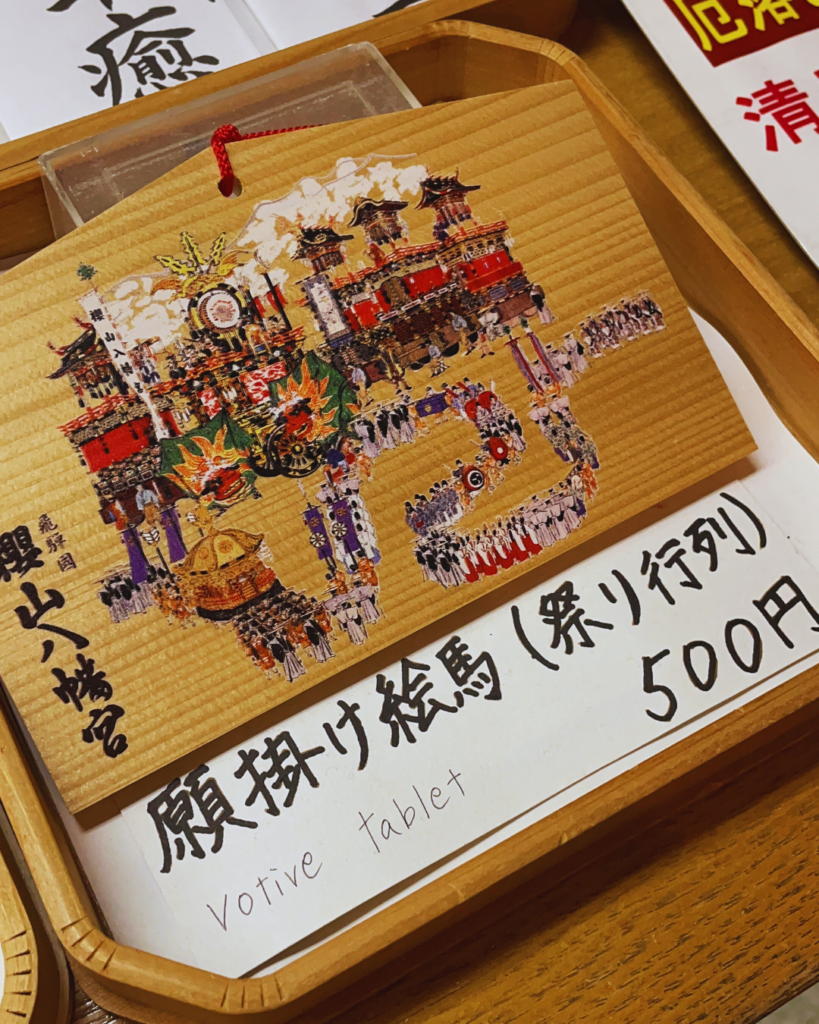
This is because it is considered one of the top three most beautiful Japanese festivals (along with Chichibu Matsuri in Saitama and Gion Matsuri in Kyoto). It is actually two different festivals, with one being in the spring at Hie Shrine, and the second in autumn, being the Hatsuman Festival. This autumnal two-day event takes place in early October at the Sakurayama Hachimangu Shrine.
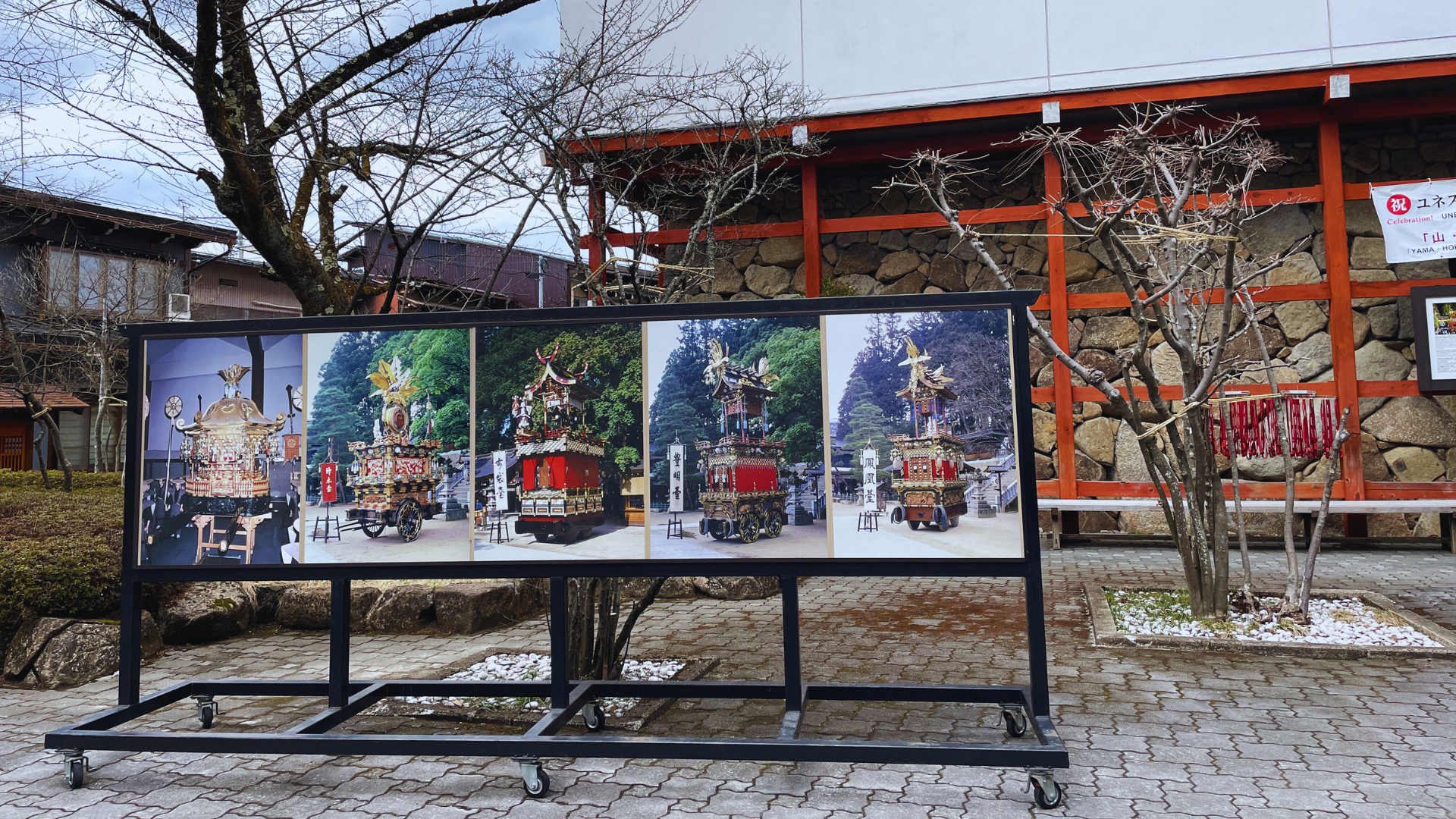
The stars of the show are the famous 11 yatai (festival floats) that are paraded through the streets and into the shrine. These intricate and stunning floats are hundreds of years old, and some of the most exquisite examples of carpentry, lacquerwork, and metal craftsmanship you can find in all of Japan. If that is not enough, they are then laden with incredible mechanical puppets which actually move and perform twice a day thanks to the skills of nine puppeteers.
Add to this the beautiful scenic views from the Sakurayama Hachimangu Shrine’s mountainside location, and I’m sure you can understand why the festival is such a sought-after experience.
Takayama Festival Floats Exhibition Hall
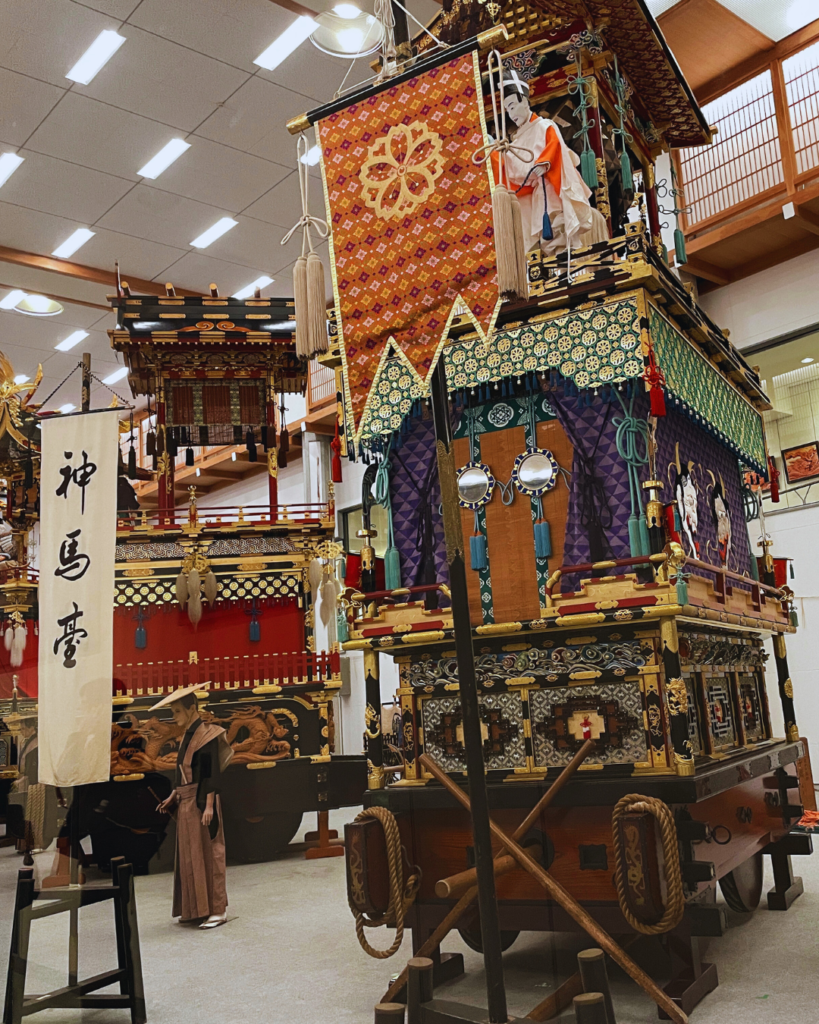
Now, if you’re not lucky enough to be in Takayama at the exact time of the Autumn Hachiman Festival, don’t worry! You can still see four of the yatai floats up close at the Takayama Festival Floats Exhibition Hall. The space is right next to the Sakurayama Hachimangu Shrine, and is open to the public year-round.
Entry is only ¥1,000 and gives you access to the actual Exhibition Hall to see the four floats, as well as to the Nikkokan Hall, where you’ll find detailed models of the Toshogu Shrine in Nikko. Supposedly, this is because the carpenter who created the elaborate Toshogu Shrine’s wooden carvings had roots in Takayama.
If you’re already planning to visit Sakurayama Hachimangu Shrine, then adding a stop at the Exhibition Hall is an absolute must. Seeing the entire exhibit only takes between 30 and 45 minutes, and I promise, you will not regret it. I haven’t seen anything like those festival floats since!
Address: 178 Sakuramachi, Takayama, Gifu 506-0858
Opening Hours: Daily from 9am to 5pm (4:30pm from Dec to Feb)
Entry Cost: ¥1,000 for adults, ¥600 for high school students, ¥500 for elementary and junior high school students
Getting to Sakurayama Hachimangu Shrine

Sakurayama Hachimangu Shrine is in the northeast of Takayama within Gifu prefecture. The easiest way to get there from Takayama Station is simply to walk, which takes around 25 minutes. Alternatively, you can take a local bus, with the quickest being the MR Machinami Bus Clockwise. Ride for about 15 minutes and get off at Ojinmachi 2-Chome. You could also take a 10-minute taxi directly to the shrine’s entrance.
How to Get to Takayama
If you’re heading to Takayama specifically for the Sakurayama Hachimangu Shrine, then this is how to get around Japan:
- From Toyama Station: Take the JR Hida Limited Express to Takayama Station (approx. 1.5–2 hours)
- From Nagoya Station: Take the JR Hida Limited Express directly to Takayama Station (approx. 2.5 hours)
- From Tokyo Station: Take the Hokuriku Shinkansen to Toyama Station, then transfer to the JR Hida Limited Express to Takayama Station (approx. 4–4.5 hours total)
Thinking of buying a JR Pass?
Exploring the Sakurayama Hachimangu Shrine
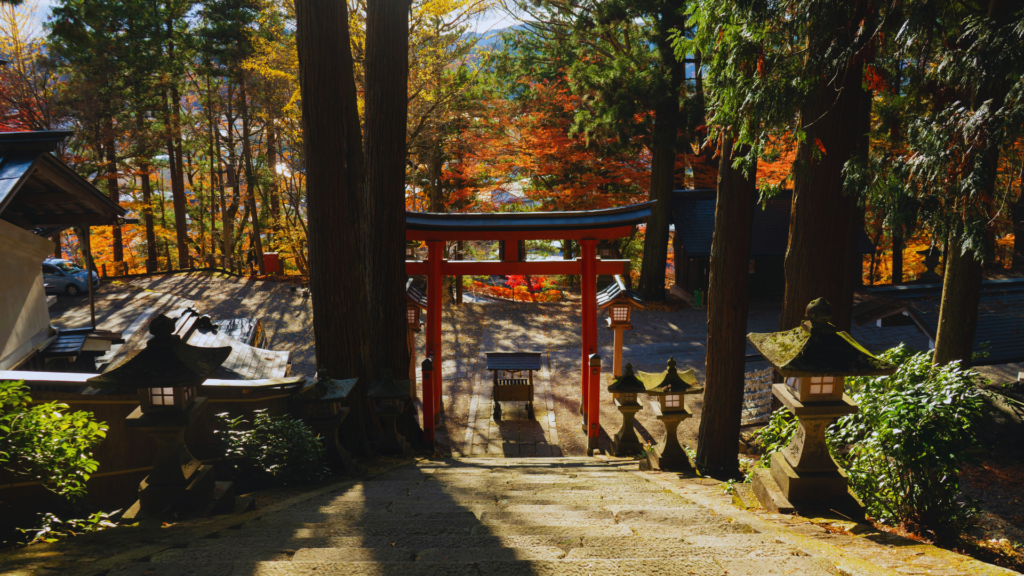
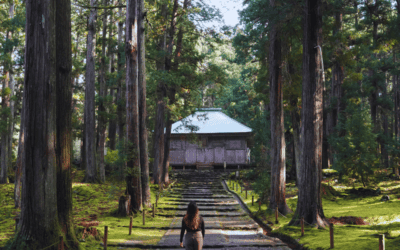
Visiting Sakurayama Hachimangu Shrine is, first and foremost, completely free. It is set against a forested hillside just north of the old town, with the beautiful mountains in the distance. You’ll follow a stone path up some stairs and through a torii gate to reach the main worship hall. Immediately, you’ll notice the amazing wooden and stone craftsmanship that has gone into this ancient shrine, and when I visited, I really did feel an amazing sense of calm there.
At the main worship hall, you are able to pray. As this is a Shinto shrine, there is a particular way to do this:
Step 1: First, cleanse yourself at the water basin to one side
Step 2: Approach the prayer area and throw some coins into the donation box
Step 3: Bow twice
Step 4: Clap twice
Step 5: Silently say your prayer
Step 6: Bow a final time
Next, I recommend spending a little time exploring the grounds and taking in the amazingly preserved buildings. When you’re ready, you can move back down the stairs to the Takayama Festival Floats Exhibition Hall.
Address: 178 Sakuramachi, Takayama, Gifu 506-0858
Opening Hours: 24/7
Entry Cost: None
When to Visit the Sakurayama Hachimangu Shrine?
The Sakurayama Hachimangu Shrine is open year-round, and thanks to Takayama’s wonderful seasonal beauty, every season is pretty spectacular. Seeing the shrine covered in snow in the winter is really special, and in summer, there are colourful flowers all over.
That being said, if you can visit during the autumn festival, then I highly, highly recommend doing so. The festival is a national highlight, and seeing the shrine with a backdrop of red and gold koyo (autumn leaves) is absolutely breathtaking.
I also have to give spring a special shoutout. The first part of the shrine’s name, “Sakurayama”, literally means cherry blossom mountain…so it’s incredible during the cherry blossom season. The shrine itself has lots of sakura trees around it, not to mention those covering the surrounding landscape. This is also a great time to see the Takayama Spring Festival for another chance to watch the festival floats in action.
Exploring Beyond Sakurayama Hachimangu Shrine
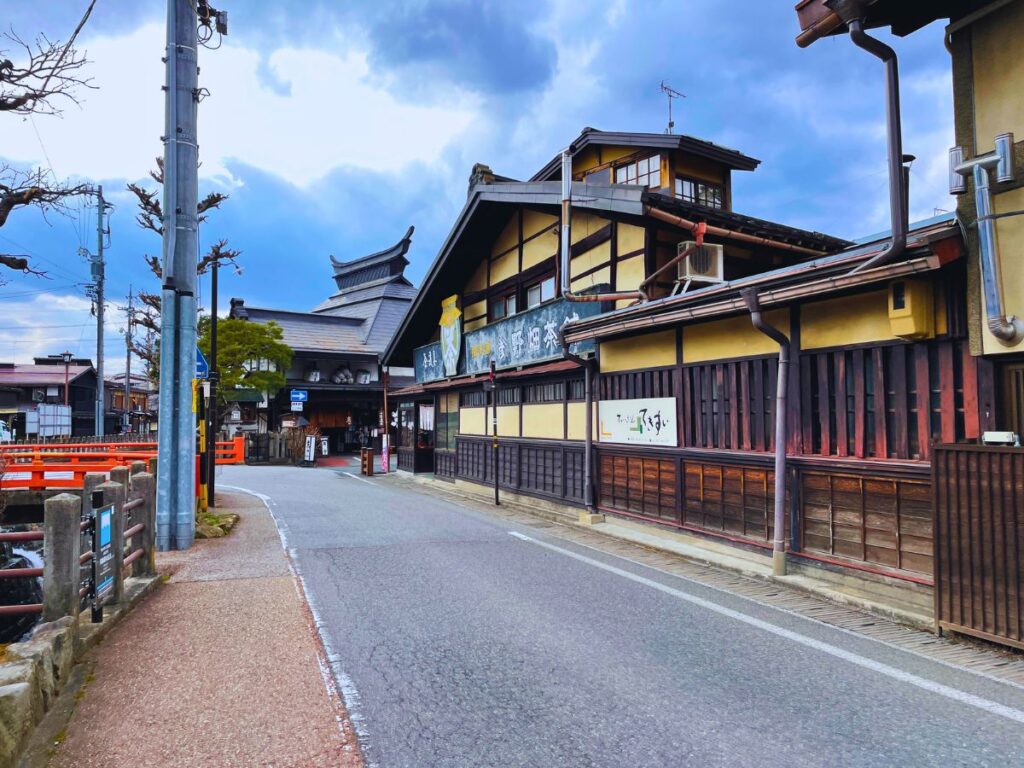
Trust me, there’s a lot more to Takayama than just Sakurayama Hachimangu Shrine and the city’s famous festival. It’s a stunning, smaller city in Japan filled with history and natural beauty. I really suggest making time to visit some of the area’s other amazing highlights during your time there, such as:
- Sanmachi Suji (Old Town): Probably what Takayama is most famous for, this is a beautifully preserved area that’s only a 10-minute walk from Sakurayama Hachimangu Shrine. You’ll find traditional merchant houses, sake breweries, and wooden buildings that go back to the Edo period.
- Miyagawa Morning Market: A wonderful market which opens at 7am sharp, where you can peruse fresh produce, pickles, flowers, and street food like Hida beef skewers and mitarashi dango.
- Takayama Jinya: A prior Edo-era government house that served as the local government office turned museum, and the only building of its kind remaining in Japan. You can explore the various rooms, including the courtroom, offices, and living quarters.
- Hida Kokubunji Temple: A Buddhist temple dating back to the 8th century, where you’ll find a three-story pagoda, ancient Buddhist artefacts, and a huge ginkgo tree that is said to be over 1,200 years old.
- Takayama Showa-kan Museum: A fun museum dedicated to Japan’s Showa era (1926-1989). It has a great collection of preserved buildings, exhibits, and everyday items, which gives visitors a nostalgic look into Japan’s recent past.
Sakurayama Hachimangu Shrine FAQs
Is Sakurayama Hachimangu Shrine worth visiting?
Yes, Sakurayama Hachimangu Shrine is worth visiting, especially if you’re interested in visiting preserved ancient shrines or want to see the amazing Takayama Festival floats.
What is Sakurayama Hachimangu Shrine famous for?
Sakurayama Hachimangu Shrine is best known as the main site of the Takayama Autumn Festival, one of Japan’s most celebrated traditional festivals.
How much does it cost to go to the Sakurayama Hachimangu shrine?
Entry to Sakurayama Hachimangu Shrine itself is free, and you can explore the grounds without a ticket. You will need a separate ticket if you want to visit the Takayama Festival Floats Exhibition Hall, which costs ¥1,000 for adults.
Where is the Takayama Autumn Festival held?
The Takayama Autumn Festival is held at and around Sakurayama Hachimangu Shrine, with festival floats parading through the surrounding streets in the northern part of the old town.
When is the Takayama Festival?
The Takayama Festival takes place twice a year, with the Autumn Festival held on October 9th and 10th, and the Spring Festival held on April 14th and 15th.