
We know the feeling well. You duck under the noren curtains, slide open the wooden door, and step into a hushed room. The chef looks up from the counter, and suddenly, you feel a bit out of your depth. Omakase can feel incredibly intimidating for a first-timer, but we’re here to tell you it shouldn’t be.
So, what is omakase sushi? While you’ll often see it translated on menus simply as “chef’s choice”, the literal Japanese meaning is much deeper and more poetic: “I leave it up to you.”
That distinction matters. It’s not just about picking items off a menu; it’s an act of trust. You are voluntarily handing complete control of your meal over to the expert standing in front of you. And in return for that trust, the chef promises to serve you their very best work, using the finest seasonal ingredients available that day.
Stop Planning, Start Adventuring

Tired of spending hours trying to piece together the perfect Japan trip? Our custom travel planning service is for you. We handle all the research and logistics to create a unique itinerary that lets you travel with confidence and experience Japan your way.
→ Build My Personalised Japan Itinerary
What to Expect During an Omakase Sushi Meal
The main reason omakase feels scary is simply that you don’t know what’s coming next. But the truth is, almost every high-end sushi meal follows the same predictable pattern. Here is exactly what happens from the moment you sit down.
The Warm-Up: Drinks and Small Plates
When you first take your seat at the counter, you’ll be given a hot towel (oshibori) to clean your hands. Use it, then fold it and put it back. The staff will ask what you want to drink, and despite what you might fear, you don’t need to be a sake expert to survive this. It is totally fine (and very common) to just order a beer, some tea, or water.
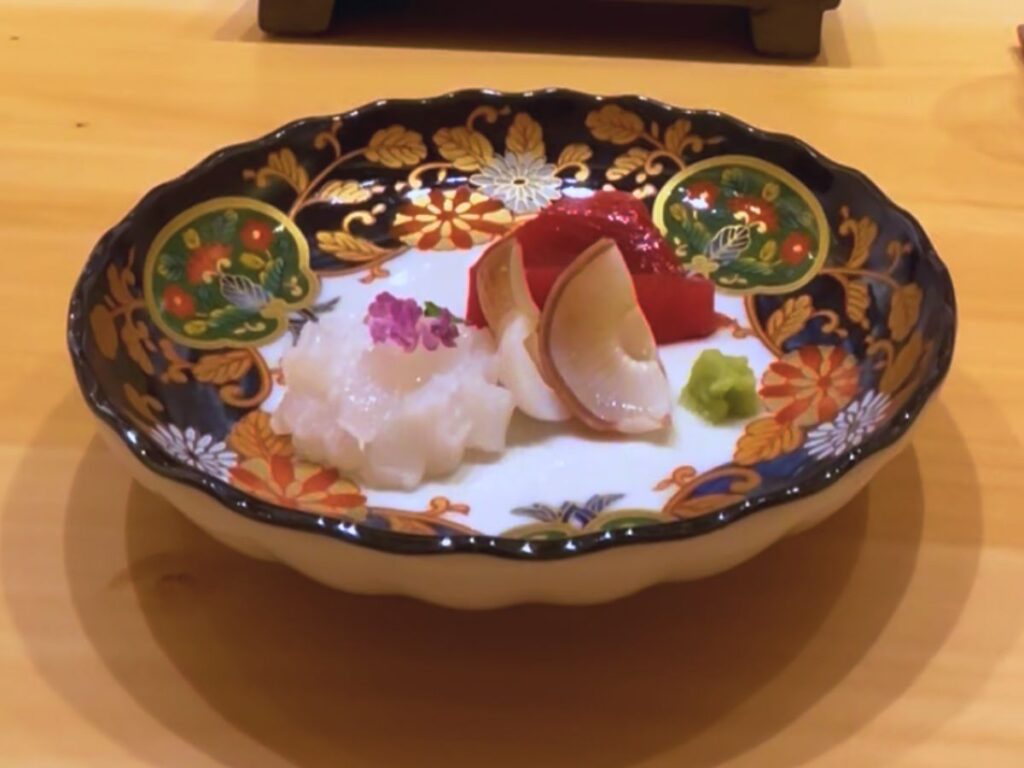
At many high-end places, you won’t get sushi immediately. The meal often starts with a few small courses called tsumami. These are little seasonal dishes—maybe some sliced sashimi, a bit of grilled fish, or a small vegetable dish. Treat these like normal food; you can just eat them with your chopsticks and relax.
The Main Event: Nigiri
Once the chef clears the small plates, the sushi course starts. This is the main event. The chef will make a piece of sushi (nigiri) right in front of you, place it on the beautiful plate on the counter..
This is where beginners often get nervous, but there is one golden rule that makes it easy: you usually do not need to dip. You’ll notice the chef brushes a specialised soy sauce on the fish before giving it to you. The piece is already seasoned to perfection, so you can just pick it up and eat it.
Also, don’t worry about the speed. The chef isn’t rushing you, but they are watching your pace. They usually won’t start making the next piece until you finish the one in front of you.
The Sequence of Flavours
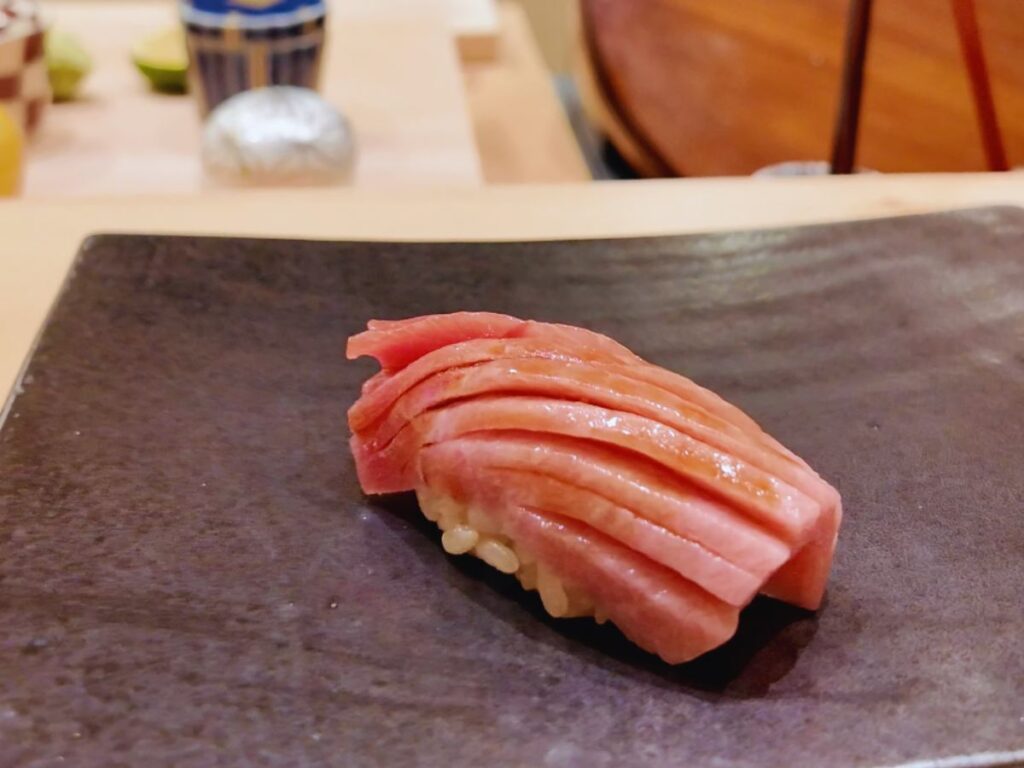
The order of the fish isn’t random. It is designed so the flavours don’t clash. It usually begins with light, delicate white seafood (like snapper or squid) or shellfish. As the meal goes on, the flavours get stronger and richer, moving into the fatty tuna (maguro) and silver-skinned fish. It typically climaxes with the richest, creamiest ingredients, like sea urchin (uni) and eel (anago).
You will also notice a pile of pickled ginger (gari) on your plate. A major pro-tip: don’t eat this with the sushi. It’s meant to be a palate cleanser. Eat a slice between pieces to clean your mouth so you can fully taste the next fish.
The Finish
You’ll know the meal is winding down when the soup arrives. It isn’t always miso soup; it might be a rich fish broth made from the day’s leftovers or a delicate clear soup (suimono), but in an omakase course, it almost always signals that the main sushi performance is over.
Traditionally, the meal would end with tamago (sweet egg), but we’ve noticed a big shift recently. Many chefs now serve proper, full desserts to finish. You might get seasonal fruits, house-made sorbets, or unique cakes and puddings that they’ve created specifically for their menu. It’s become a chance for the chef to show off one last bit of creativity, so definitely save a little room.
Omakase vs. Kaiseki
Just so you don’t get confused if you see these words on other websites: Kaiseki is a very formal, traditional multi-course meal that focuses on elaborate presentation and cooked dishes. Omakase (at a sushi restaurant) is strictly what we described above: a focus on raw fish and rice.
Go Beyond the Guidebook
Want to truly connect with Japanese culture? Reading about it is one thing, but experiencing it first-hand is unforgettable. From tea ceremonies to craft workshops, we can help you find and book an authentic cultural experience for your trip.
→ Browse and Book Cultural Experiences in Japan
Omakase Sushi Rules of Etiquette
This is the part that stresses people out the most. The room is quiet, the chef is watching, and you don’t want to make a mistake. But don’t worry—the rules aren’t there to be snobby; they are there to make the food taste better. Here are the main ones you need to know to look like a pro.
The Perfume Ban
If there is one rule you absolutely must follow, it’s this: please do not wear strong perfume or cologne. The counter is an intimate space, and you are sitting shoulder-to-shoulder with other guests. More importantly, the flavours of raw fish are incredibly delicate. If you smell like Chanel No. 5, you aren’t just masking the taste of the fish for yourself; you are ruining the experience for everyone else at the counter.
The 30-Second Rule
When the chef places a piece of nigiri in front of you, eat it immediately. We’re talking within seconds. The chef has carefully crafted the temperature of the rice (shari) to be warm while the fish is cool. That perfect temperature balance disappears very quickly. It is considered a bit rude to let the sushi “die” on the plate while you take 20 photos from different angles. Snap one quick pic if you must, then eat.
Soy Sauce and Wasabi
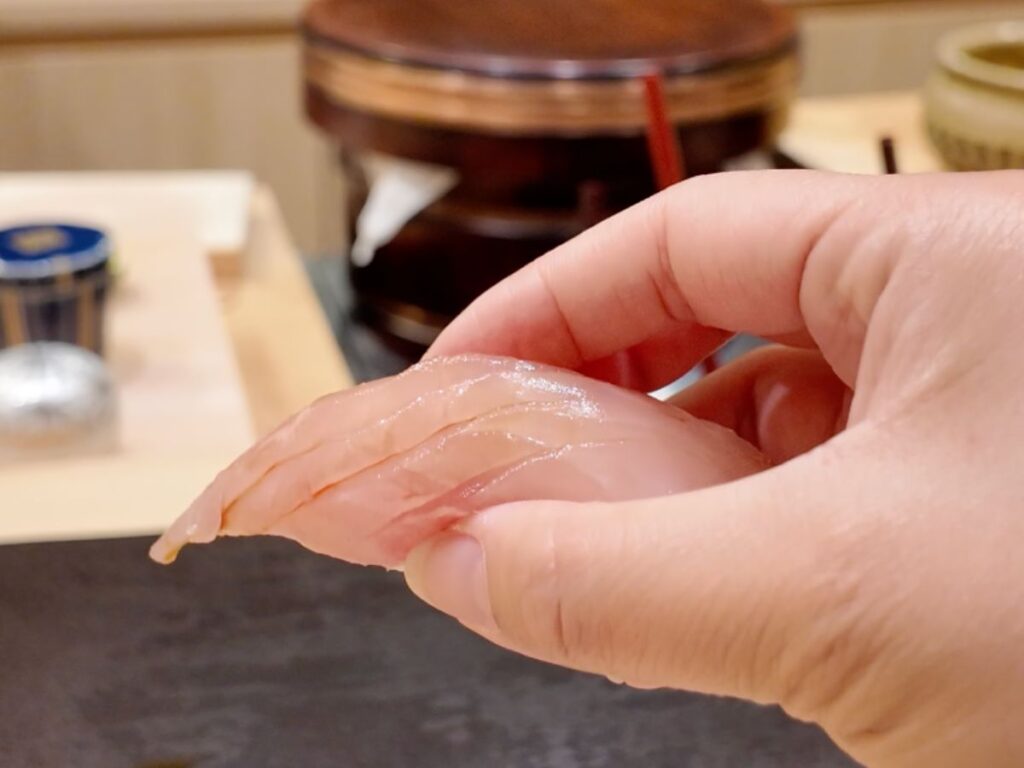
In the West, we are used to mixing a big blob of wasabi into our soy sauce to make a murky green soup. Please don’t do this at an omakase counter.
In fact, you usually don’t need to dip at all. Most omakase chefs will brush the piece with a perfectly balanced amount of their own soy sauce blend (called nikiri) and place a tiny amount of fresh wasabi under the fish before serving it. It arrives fully seasoned. If the chef does want you to dip it, they will tell you, or provide a specific salt or sauce on the side.
Hands or Chopsticks?
We get asked this all the time: should you use your hands or chopsticks? The verdict is that both are totally fine!
Actually, it is perfectly acceptable—and often preferred by traditionalists—to pick up nigiri with your clean fingers. It gives you better control so the rice doesn’t fall apart. If you use your hands, just use the provided wet towel (oshibori) to clean your fingers between bites.
The Price Tag: Budgeting for Omakase
Let’s be real for a second: high-end omakase is an investment. It is not a cheap night out, but it is one of those bucket-list experiences that we honestly believe is worth every yen.
To give you a realistic idea of the budget, a proper dinner course at a reputable Tokyo sushi counter will typically range from ¥15,000 to over ¥50,000 per person. The price depends on the prestige of the chef and the rarity of the ingredients used that day.
If you want the experience without the massive price tag, look for lunch omakase. It is often half the price of dinner, and here is the honest reason why: usually, they cut out the long, expensive run of appetizers (tsumami) and serve a set menu of just the sushi pieces. Also, at some top-tier places, the lunch shift might be run by the sous-chef rather than the master. But make no mistake: the quality of the fish is usually identical to what is served at dinner.
Make Your Budget Count
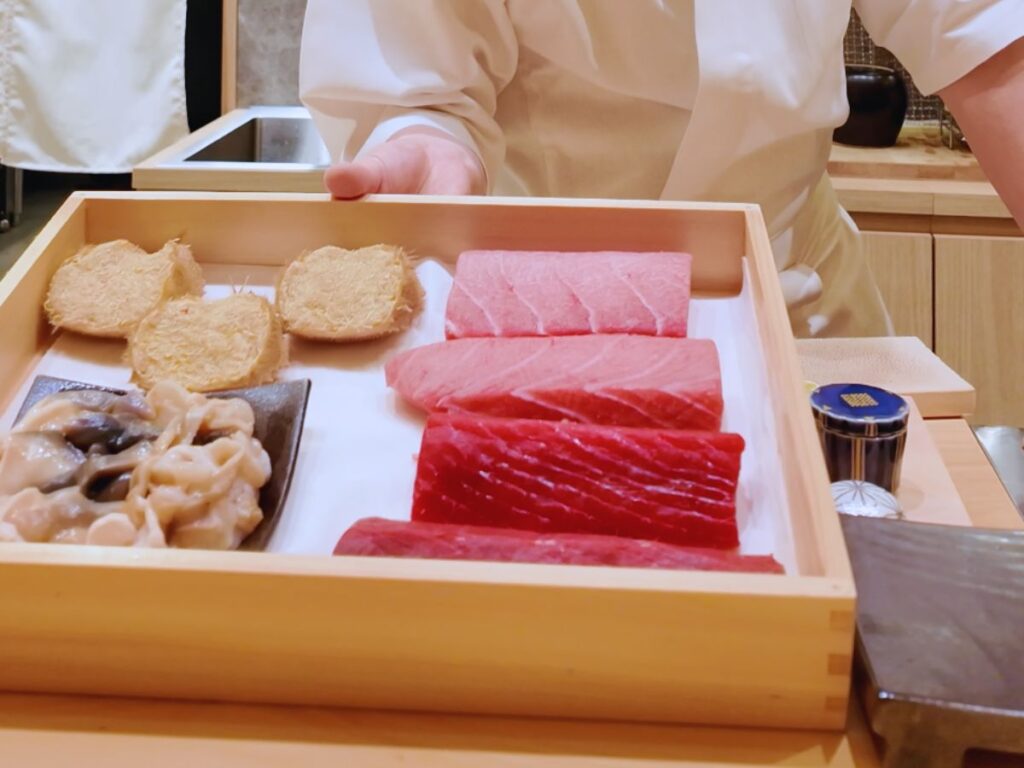
When you’re spending this kind of money, the last thing you want to do is walk into a tourist trap or a place that doesn’t match your style. With thousands of sushi restaurants in Tokyo alone, finding the one that fits your specific budget—whether that’s a value-packed lunch or a no-limit dinner—can be overwhelming.
That is where we come in. We know the hidden gems where a ¥15,000 lunch tastes like a million yen, and we know the legends worth splashing out for. Our team can match you with the perfect chef for your budget and handle the tricky reservation process for you.
Don’t risk your dining budget on a guess. Let us secure the perfect seat for you.
Book your omakase sushi experience now.
Omakase Sushi FAQs for First-Timers
Do I need to tip?
No. In Japan, exceptional service is standard and included in the price. Leaving a tip is not just unnecessary; it can actually cause confusion or be seen as rude. The best compliment you can give is a sincere “Go-chi-so-sama-deshita” (thank you for the feast) as you leave.
What if I have allergies or don’t eat raw fish?
You absolutely must mention this when you book, not when you sit down. The chef prepares the fish hours in advance. Telling them you can’t eat shellfish after they have already prepped the prawn is a nightmare for them. If you can’t eat raw fish at all, omakase might not be the right experience for you.
What should I wear?
Unless the restaurant specifies a jacket, “smart casual” is the safe bet. For guys, a collared shirt and trousers are perfect. For women, a nice top and trousers or a skirt work well. Just avoid the obvious beachwear: no shorts, no flip-flops, and no baseball caps at the counter.
How long does the meal take?
It is surprisingly quick compared to Western fine dining. Because you eat each piece as soon as it is made, a full omakase course usually takes about 1.5 to 2 hours.
Can I talk to the chef?
Yes, but read the room. If the chef is deep in concentration slicing fish, it’s best to let them work. But many chefs speak a little English and enjoy explaining the fish. A simple “oishii” (delicious) goes a long way to breaking the ice.
Can I take photos?
In most places, yes, but ask permission first. Turn off your flash and the shutter sound. And remember to be quick so the sushi doesn’t spoil while you find the perfect angle.
What should I drink with omakase?
You don’t need to be a sake sommelier. It is very common to start with a beer for a “Kanpai” (cheers) and then switch to sake or green tea. White wine and champagne are also becoming popular pairings in high-end Tokyo shops.
Can I order specific pieces (a la carte)?
Generally, no, as you are there for the set course. However, at the very end of the meal, the chef might ask if you are still hungry or if there is anything you’d like to repeat. That is your chance to ask for one more piece of your favourite fish or an extra roll.