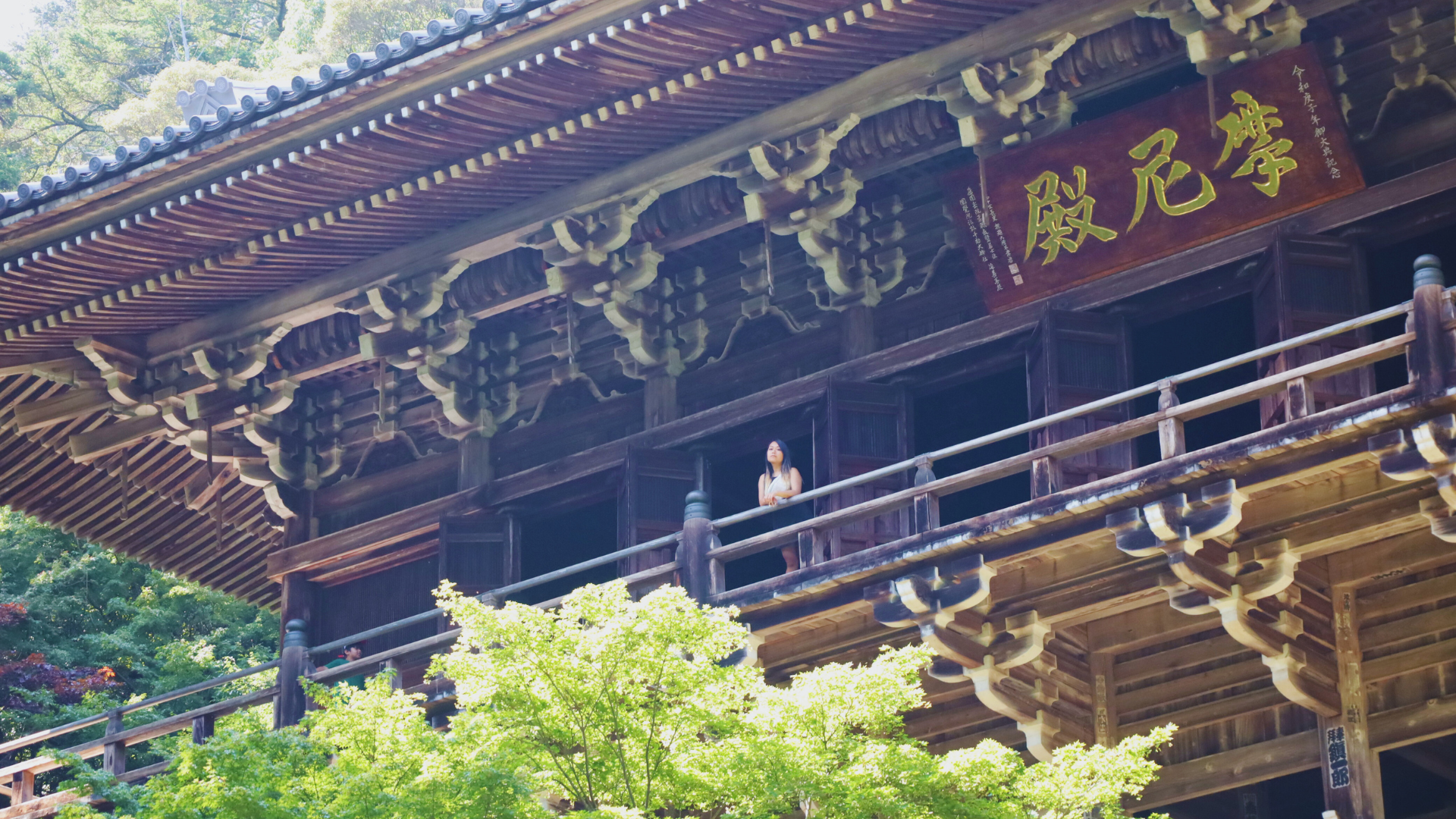

As part of a Japanese travel agency, I’ve had the pleasure of exploring Japan from top to bottom, and that includes visiting hundreds (maybe thousands) of temples. So, when it comes to Engyo Ji, the famous temple from The Last Samurai that’s located at the top of Mount Shosa and requires you to ride a gondola to reach, I wasn’t sure if the trip out would be worth it.
Well, I’ll tell you right now that I loved this experience. If you’re considering a day trip to ride the Mount Shosa Ropeway and visit Engyo Ji Temple, then I’m breaking down everything you need to know and answering any questions you might have below.
Planning a Japan Trip Away From the Crowds?
Let us help you! We’re a bespoke travel agency that creates personalised Japan travel itineraries designed around you. We take care of all the logistics, so you can focus on the fun! Check out our travel services to get started.
Getting to Mount Shosa Ropeway
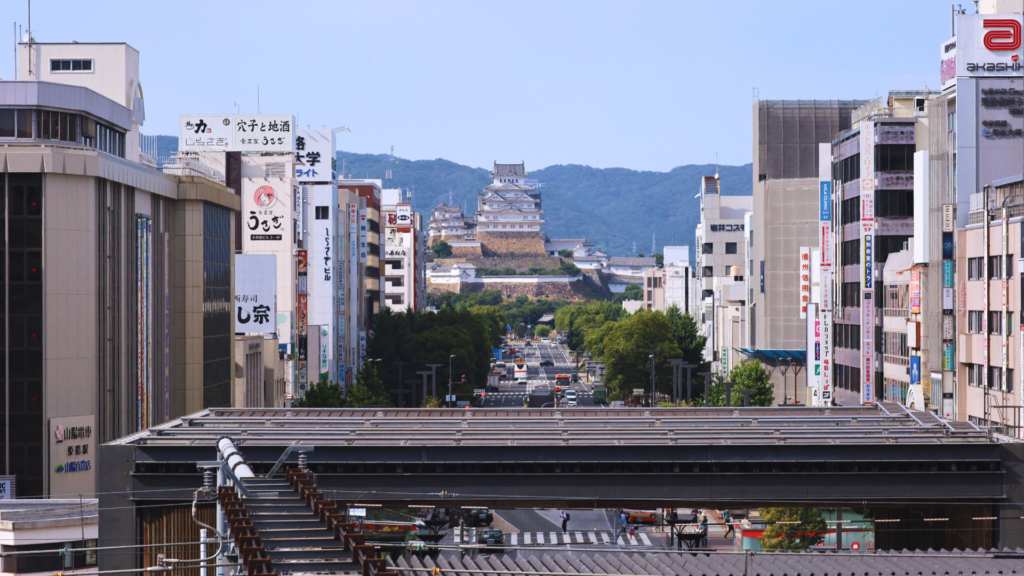
Mount Shosa is located in Hyogo prefecture, on the border of Himeji. What’s nice is that once you’re there, it’s nothing but tranquillity and peaceful vibes, but getting to the ropeway only actually takes half an hour on the bus from central Himeji. Just catch the Shinki Bus directly from Himeji Station, Himeji Castle, and Koko-en Garden.
Mount Shosa makes for a great day trip from Osaka or Kyoto, especially if you add Himeji Castle in the afternoon. It’s got history, architecture, nature…and way fewer crowds than places like Nara.
From Osaka, I suggest taking the Tokaido-Sanyo Line’s Special Rapid train from Osaka Station to Himeji Station, which takes just over an hour. From Kyoto Station, ride the Super Hakuto Limited Express for around 90 minutes to Himeji Station.
From there, you can catch the bus to the ropeway.
As a bonus tip, if you catch the bus from the Himeji Station Shinki bus terminal, you can also purchase a round-trip bus and ropeway ticket for ¥1,700 to save time (and money) when you get to the ropeway station.
Taking the Ropeway up Mount Shosa

You’ll get off the bus at the Mount Shosa Ropeway stop (書写山ロープウェイ), which is right next to the ropeway entrance. At first, the lower station won’t look like anything special. It’s a small, uninteresting-looking building underneath a highway pass. Wait for a few minutes, though, and the ropeway car will appear, climbing the lush green forest up into the mountains.
You can find the exact timetable on the Mount Shosa website, but the ropeway’s first departure is at 8:30 am, then runs every 15 minutes. The last ride depends on the time of year, but can be anywhere between 4:45 pm and 6:45 pm. Make sure to also check the last ride down as well, so you don’t get stuck in the mountain!
The ropeway costs ¥700 for an adult or ¥350 for a child one way. Or ¥1,200 adult return, and ¥600 child return. You can also get special 2-Day bus, ropeway, and Engyo Ji combo tickets for a discounted price of ¥2,400 for adults, ¥2,200 for children aged 6-12 years, and ¥1,900 for children aged 1-5 years.
Don’t worry if you haven’t booked a combo ticket in advance, you can always buy your ticket same-day at the station.
Riding the Mount Shosa Ropeway

I loved taking the ropeway up, and although I was there for Engyo Ji temple, it actually became one of the highlights of my day. The ride itself is only about four minutes, carrying you up to Mount Shosa’s 371-meter-high summit. The scenic views of Japan are sweeping and incredible. You can see the mountains on one side and Himeji’s cityscape on the other.
If you’re afraid of heights, this might be a little spooky, but luckily, the ropeway feels very smooth and safe. It was originally built in the 1950s with two gondolas that could hold 30 people. In 1992, these were made bigger, then, most recently in 2018, there was a total renovation to mark the ropeway’s 60th anniversary. Now, the ropeway has a transport capacity of 720 people per hour.
The gondola comes to a complete stop at the top of the mountain, making it easy and super safe to get off.
Getting to Engyo Ji Temple
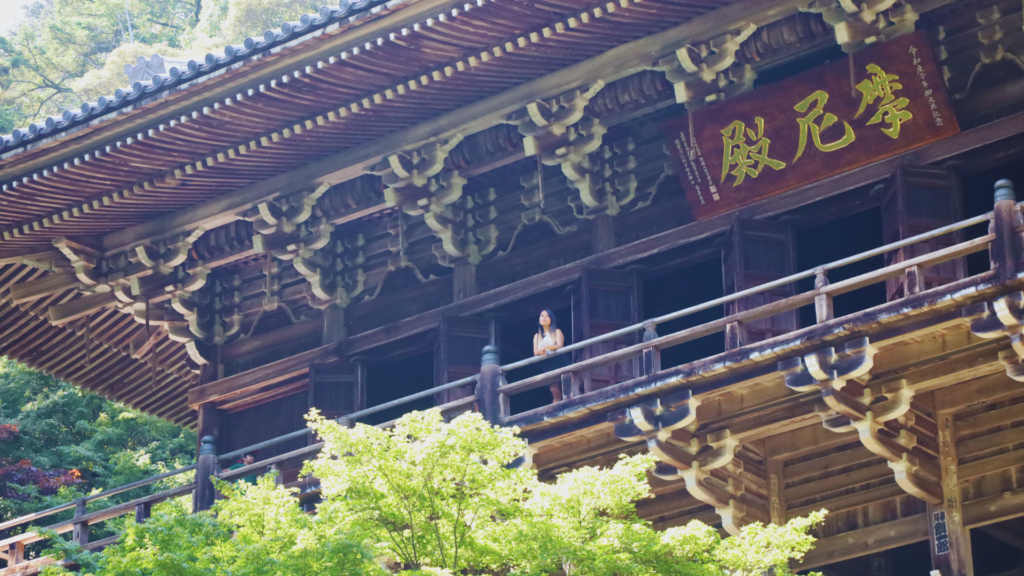
Immediately on exiting the ropeway station, you’ll see the Mount Shosa Observation Deck, where you can fully take in the panoramic mountaintop views. From there, you’ll exit Yamagata Station (the top of the Mount Shosa Ropeway) and walk one minute to the Engyo Ji temple grounds entrance. It costs ¥500 to enter, or you can present your combo ticket if already purchased.
Now you’ll have two options. You can either take the 5-minute shuttle bus to Engyo Ji Maniden (more on this below) for ¥500, or walk 15-20 minutes to the main area. If you can walk, I would recommend doing this as the views are just stunning every step of the way. You’ll also pass lots of interesting statues and buildings, with the path lined by ancient trees. It’s a very peaceful way to start the experience that sets the tone for exploring the rest of the temple grounds.
Interested in other ancient Japanese cities?
Exploring Engyo Ji Temple Grounds
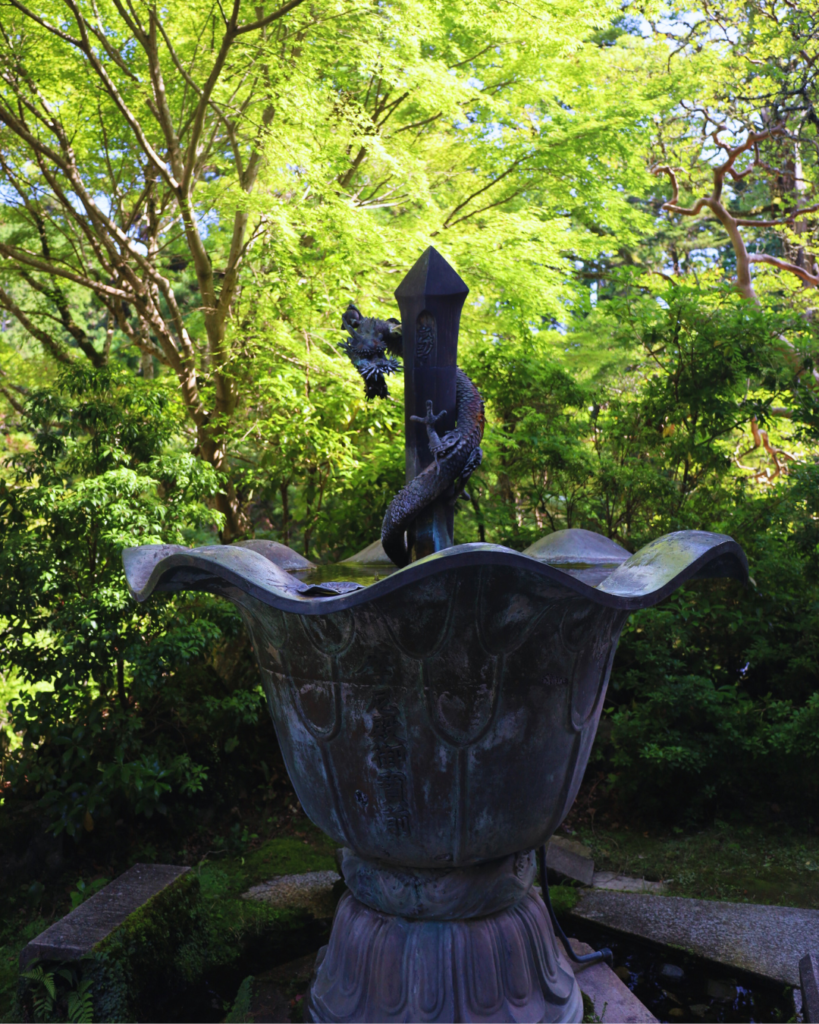
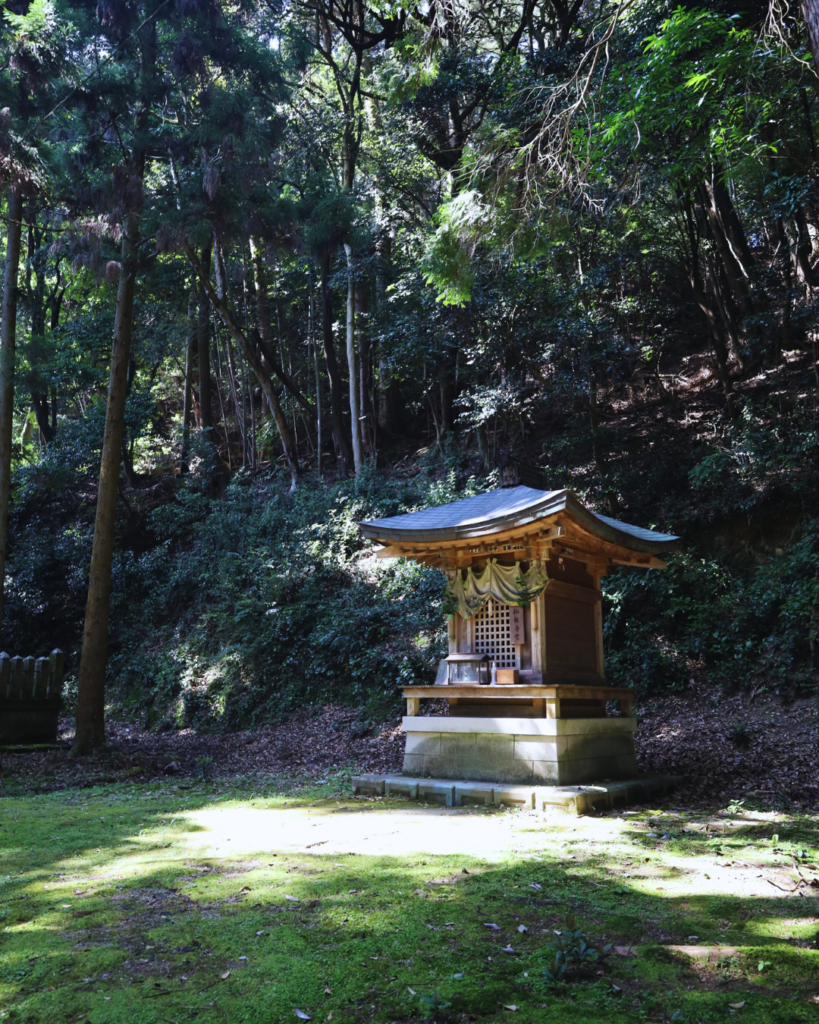
First, I want to share a little history about Engyo Ji and why it’s so special. The temple complex is over 1,000 years old, having been first established by the monk Shoukuu in the 10th century AD. Its history is rich and varied since then, being patronised by the imperial family, samurai, warriors, and even commoners, each playing a role in establishing the dozens of buildings found there today.
I recommend allowing for 1.5 to 2 hours to explore the grounds so that you have enough time to visit the main areas, with a little forest trail wandering factored in. There are also a few places to eat, a coffee shop, and a wonderful little tea house that I really suggest stopping at.
Engyo Ji Maniden Main Hall
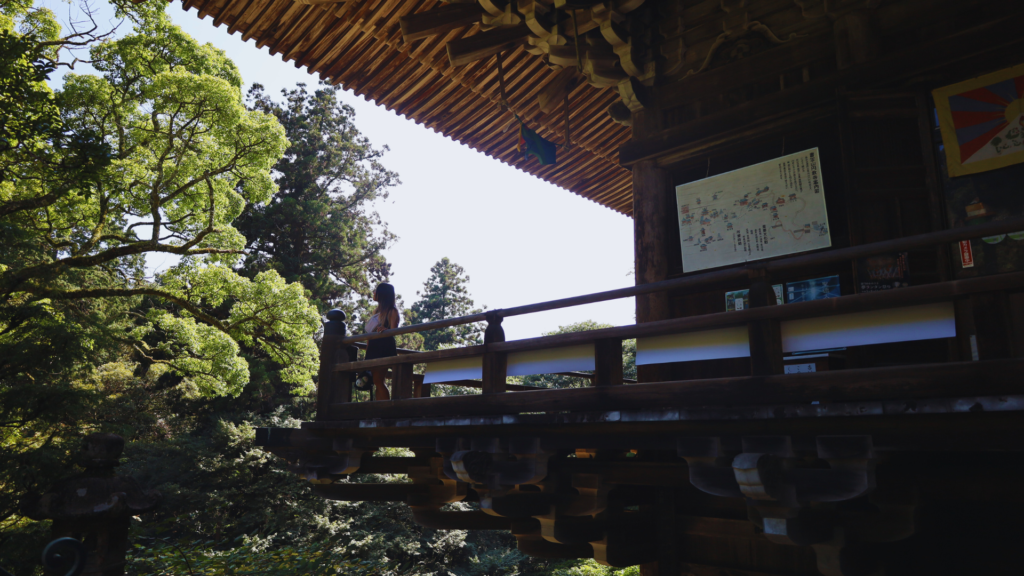
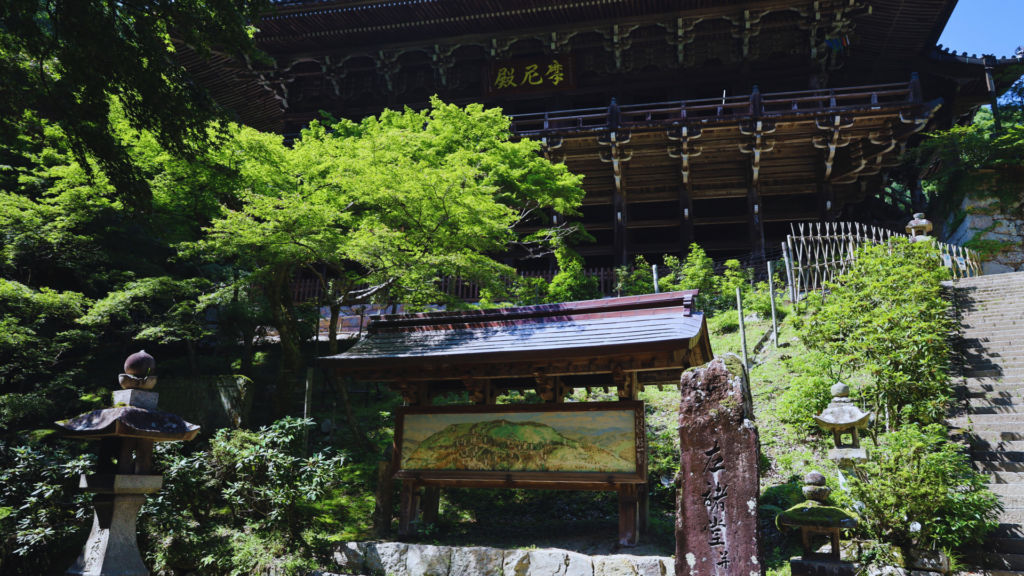
Maniden is at the very centre of Engyo Ji and is an awe-inspiring wooden temple at the top of a stone staircase. The view from the top is (unsurprisingly) incredible, and once there, you’ll also find toilets and little souvenir stalls selling fortunes and amulets.
The Maniden also has quite an interesting story that goes with it. It was built in 970, and legend has it that, was established on the spot where the monk Shoukuu had a vision of a heavenly maiden chanting and dancing around a sakura tree. She was speaking the verses of a poem about the Bodhisattva of Compassion taking the form of a tree, so Shoukuu carved her image into the cherry blossom tree and built the hall around it.
Sadly, the original building (and the supposed tree) burnt down in 1921. It was rebuilt in 1933, and though the tree no longer stands, the Maniden remains in the exact location of the monk’s vision over 1,000 years ago.
The “Three Halls” (Locations from The Last Samurai)

The “Three Halls” refer to the Daikoudou (Great Lecture Hall), Jougyoudou (Training Hall), and Jikidou (Refectory), which are all listed as “Important Cultural Properties” of Japan. These are three spectacular wooden halls built around a courtyard, each having been established between the 10th and 15th centuries.
Any movie buffs out there will probably also recognise this area from The Last Samurai…and it’s easy to see why. The area is simply beautiful. It has an air of sacredness, exemplary architectural and sculptural work, and the mountain’s sweeping natural beauty in the background.
Other Sacred Buildings
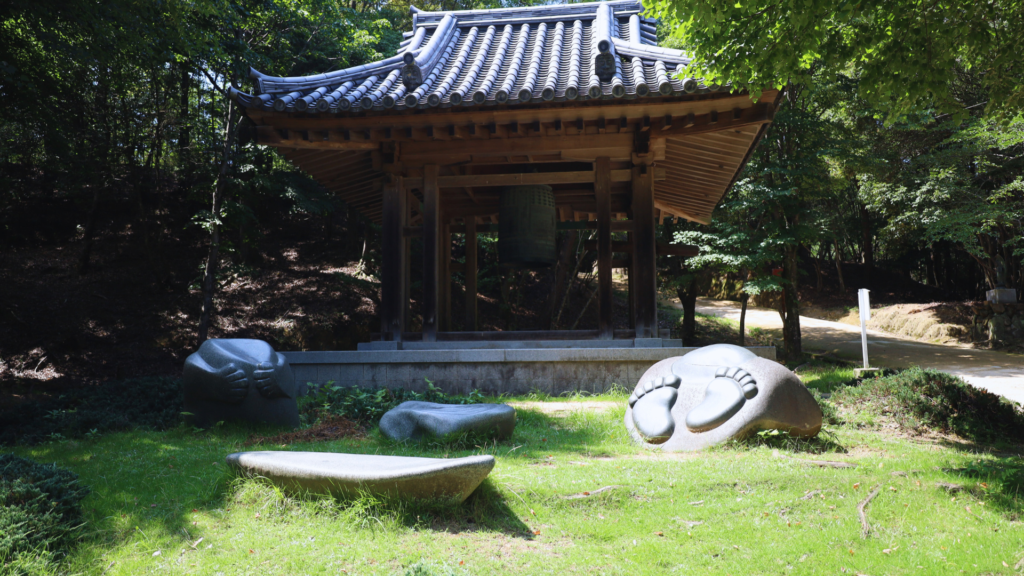
One thing I really recommend is to keep some time open to just explore. As I mentioned, Engyo Ji is made up of dozens of ancient buildings, beyond just the most famous few. Some of my favourite moments from my trip there were when I moved away from the busier areas and wandered alone through the smaller buildings.
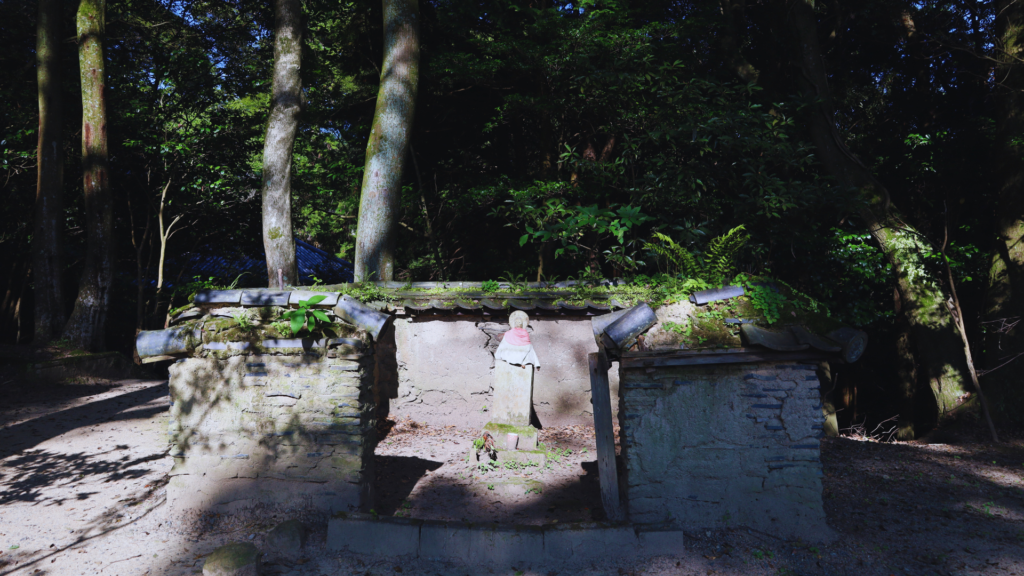
There’s the bell tower, several mausoleums for different families, and Yuya Bridge. Something I really loved was the way everything is surrounded by myth and legend. For instance, I came across two moss-covered boulders called the Dharmapala Boulders, which came with a story of child avatars of two deities descending from heaven and landing on the rocks.
Joining a Spiritual Experience

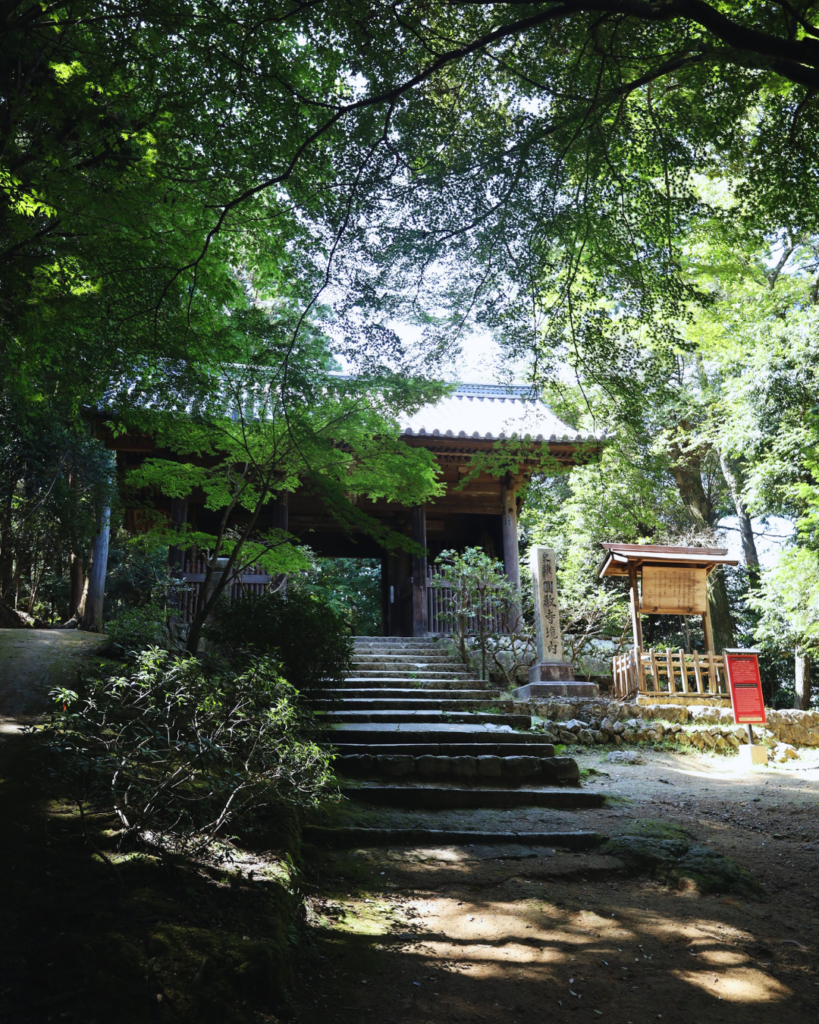
Lots of people don’t realise that you can also partake in several different cultural activities at Engyo Ji. The simplest is to make an offering and to pray at Maniden. To do this, there are a few simple steps:
- Bow once
- Place some coins into the donation box
- Take the rope and ring the metal gong
- Clasp your hands at your chest and say a prayer
- Bow one more time
But there are more ways to join a spiritual practice at the temple. You can join a zazen meditation at Jougyoudou Hall for ¥500. During this, you sit cross-legged and in silence for about an hour as a monk leads you through the meditation, with more information on the official website.
You can also try sutra copying (shakyo in Japanese) in the Jikidou Hall starting from ¥300. This is a Buddhist practice of copying out sutra sentences in order to find focus and clear your mind.
Trying Shojin Ryori
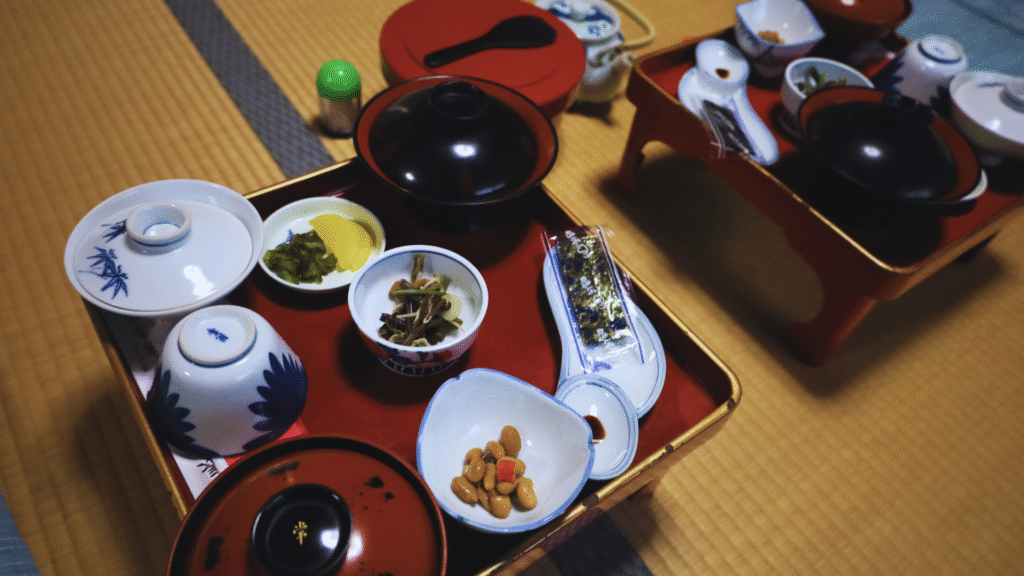
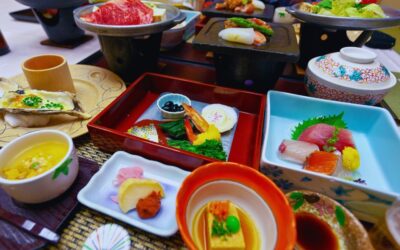
You have to try the Shojin Ryori restaurant at Juryoin Temple. Shojin Ryori is the traditional diet of the monks at Engyo Ji Temple, which follows the practices of not harming any living creatures and nourishing the body in a particular way. Because of these beliefs, the food is traditionally vegan. It also follows the concept of Gomi, Goshiki, Goho (five colours, flavours, and methods), meaning the food is varied and delicious.
Mount Shosa and Engyo Ji: What You Need to Know
To make sure you have the best possible time at Mount Shosa and Engyo Ji, I wanted to share a few final pieces of information/tips to ensure the day goes as smoothly as possible. Here’s what you need to know:
Opening Times
Mount Shosa Ropeway:
The timetable is a little confusing. The first gondola year-round is 8:30 am, but make sure to check the last for the day you’re visiting very carefully.
| Last Gondola Up | Last Gondola Down | |
| March 1st to October 10th (Mon – Sat) | 5:45 PM | 6:00 PM |
| October 11th to the end of February (Mon – Sat) | 4:45 PM | 5:00 PM |
| March 1st to March 31st (Sundays and Holidays) | 5:45 PM | 6:00 PM |
| April 1st to October 10th (Sundays and Holidays) | 6:45 PM | 7:00 PM |
| October 11th to November 30th (Sundays and Holidays) | 5:45 PM | 6:00 PM |
| December 1st to the end of February (Sundays and Holidays | 4:45 PM | 5:00 PM |
Engyo Ji Temple:
Daily: 8:30 am to 5 pm
Ticket Costs
Mount Shosa Ropeway:
| One-Way | Return | |
| Adult | ¥700 | ¥1,200 |
| Child | ¥350 | ¥600 |
Engyo Ji Temple
¥500 for adults (above 19 years old)
Shinki Bus Terminal Special Bus + Ropeway Ticket
¥1,700 for adults (return ticket)
¥350 for children (return ticket)
Discover Himeji 2-Day Combo Ticket (bus, return ropeway ticket, and Engyo Ji entry)
¥2,400 for adults (aged 13+)
¥2,200 for children (aged 6-12 years old)
¥1,900 for children (aged 4-5 years old)
So, are Mount Shosa Ropeway and Engyo Ji Worth Visiting?
If you’re at all interested in Japanese history, ancient culture, religion, nature, or beautiful views…then absolutely! This is one of the most special places you can visit in Japan, especially for one that you can get to without a car and within an hour of the city.
Honestly? If you’re already in the region, then I think Mount Shosa and Engyo Ji Temple are must-visits!
Mount Shosa and Engyo Ji Temple FAQs
How long to spend at Engyo Ji Temple?
It depends on how you want to spend your day, but I think around 2 hours should be good for most people. This will give you enough time to not only see the main areas, but also do some exploring and eat a delicious meal.
Where is Engyo Ji Temple?
Engyo Ji Temple is located on Mount Shosa in Hyogo prefecture, to the north of Himeji city.
Where did they film The Last Samurai?
Part of The Last Samurai was filmed outside of the Three Halls in Engyo Ji Temple. Other locations are Mount Taranaki, Uruti Valley, and some locations in New Zealand.
How do I go to Mount Shosa?
The easiest way to get to Mount Shosa is to take the bus from Himeji city to the Mount Shosa Ropeway station, then ride a gondola to the mountaintop. You can also hike Mount Shosa. The walk takes 40-50 minutes, but is somewhat challenging as all uphill.
What is the meaning of Shosa?
The kanji for Shosa (書写) is 書, which means writing, and 写, which means copying. So together, it is the mountain of writing and copying, referring to the Buddhist practice of copying sutras.