
We always tell our clients: getting mochi from a shop is great, but making it yourself is a completely different experience.
To get that perfect texture (warm, soft, and incredibly stretchy!), you have to make it the traditional way. It involves pounding hot steamed rice with a massive wooden mallet until the grains disappear. This traditional mochi pounding process is called Mochitsuki.
We know it sounds like a lot of physical work, but trust us, the taste is worth the effort.
To find the best spot for this, we skipped the busy workshops in the big cities and headed to the countryside. We tested the experience in Miyama. It takes a little longer to get there, but in our opinion, the authentic atmosphere makes it the only place to go for the real deal.
Planning Your Own Dream Trip to Japan?

Feeling overwhelmed by the endless options? Let us take the stress out of planning. We design 100% custom itineraries based on your interests, budget, and travel style, helping you discover the Japan you’ve always dreamed of.
→ Find out more about our Personalised Japan Travel Planner
What is Mochitsuki?
In simple terms, Mochitsuki is the traditional Japanese ceremony of pounding rice. But we think it is much more than just a method of preparing food; it is a performance.
Historically, this is a “lucky” food. While you can find mochi year-round, it is the main event during the Japanese New Year. Families and neighbourhoods gather to pound the rice together to wish for good health and fortune. We love this tradition because it is one of the few times you see a whole community working together toward a delicious result.
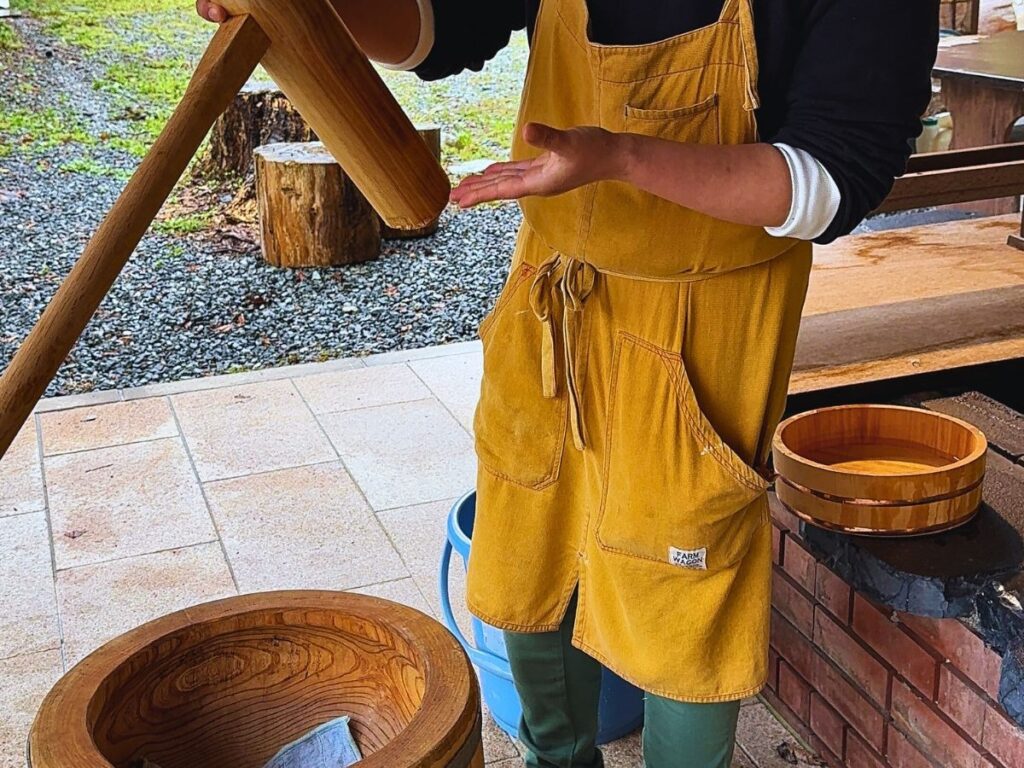
You cannot replicate this experience with a kitchen mixer. In our opinion, the specific tools are what make Mochitsuki so exciting to watch (and do). There are two things you need to know: the Usu (a massive mortar, usually made of wood or stone) and the Kine (a heavy wooden mallet).
It is strictly a two-person job. One person swings the mallet, and the other person wets their hand and turns the rice in between hits. The rhythm is fast, and the “turner” has to be incredibly brave to put their hand in the bowl while that heavy hammer is swinging!
You Have Seen the Viral Videos
You might already know about mochi pounding from Instagram or TikTok. There is a famous shop in Nara called Nakatanidou where the masters pound the rice at lightning speed. It is incredible to watch and the crowds there are huge.
But here is the catch: at Nakatanidou, you can only watch. You stand in a crowd, film a video, and maybe buy a piece to eat. You cannot hold the mallet.We think the best way to experience Japan is to participate, not just spectate. Watching the pros is fun, but feeling the weight of the kine (mallet) in your own hands is a memory that sticks with you. That is why we recommend leaving the crowds behind and going to a place where you are the one doing the work.
Our Mochi Pounding Experience in the Kyoto Countryside
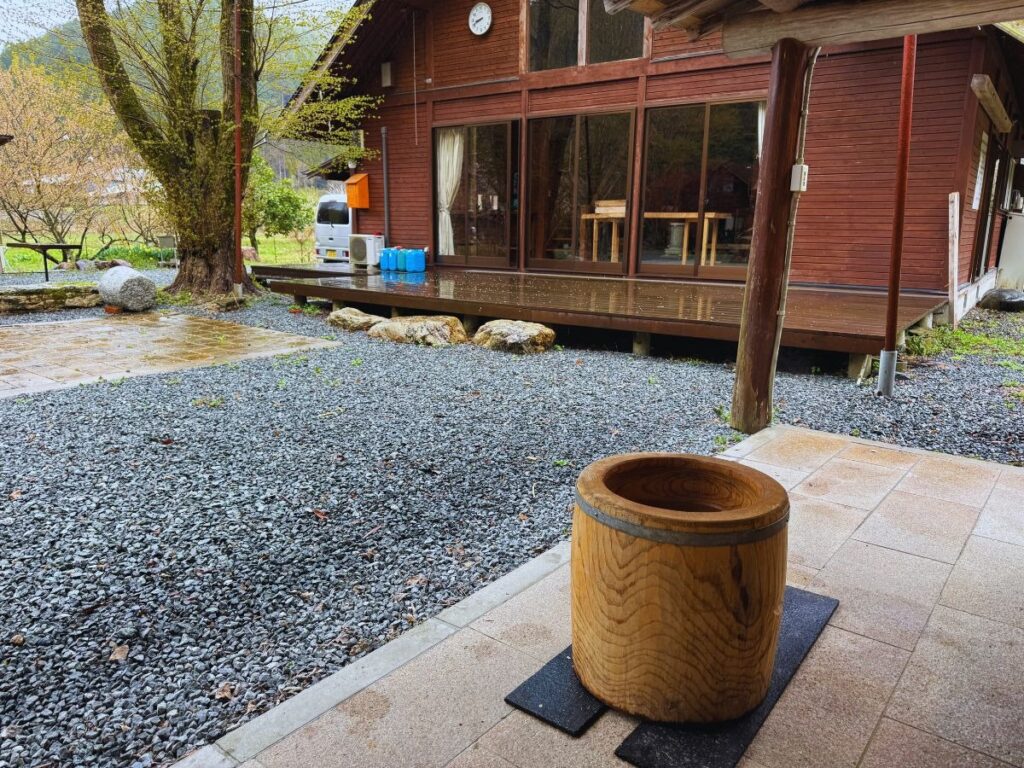
We love the energy of central Kyoto, but we think that to see the real Japan, you have to leave the city once in a while. For this experience, we headed north to Miyama. If you have not heard of it, Miyama is famous for its traditional thatched-roof farmhouses and what the locals call “Satoyama.” It is quiet, rural, and the perfect setting for something as traditional as mochi pounding. It feels genuine here rather than like a polished show put on just for tourists.
Miyama is just one of the many beautiful day trips you can take from Kyoto. Here are others:
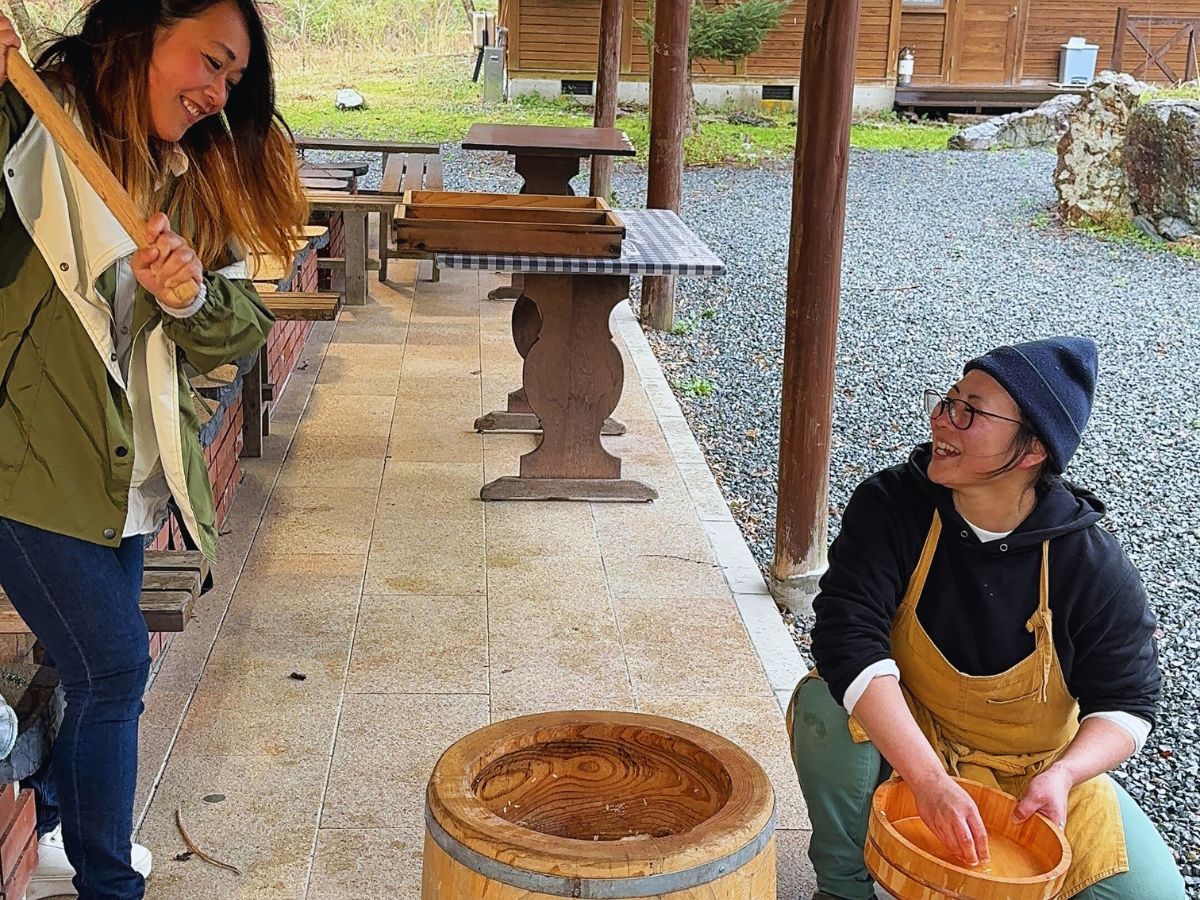
The mochi pounding experience started with the smell of the rice. The staff brought out a wooden steamer box filled with special glutinous rice. This is different from the rice you eat with sushi because it is incredibly hot and sticky. They tipped it into the usu which is the large mortar. We thought we were ready to start pounding immediately, but we were wrong.

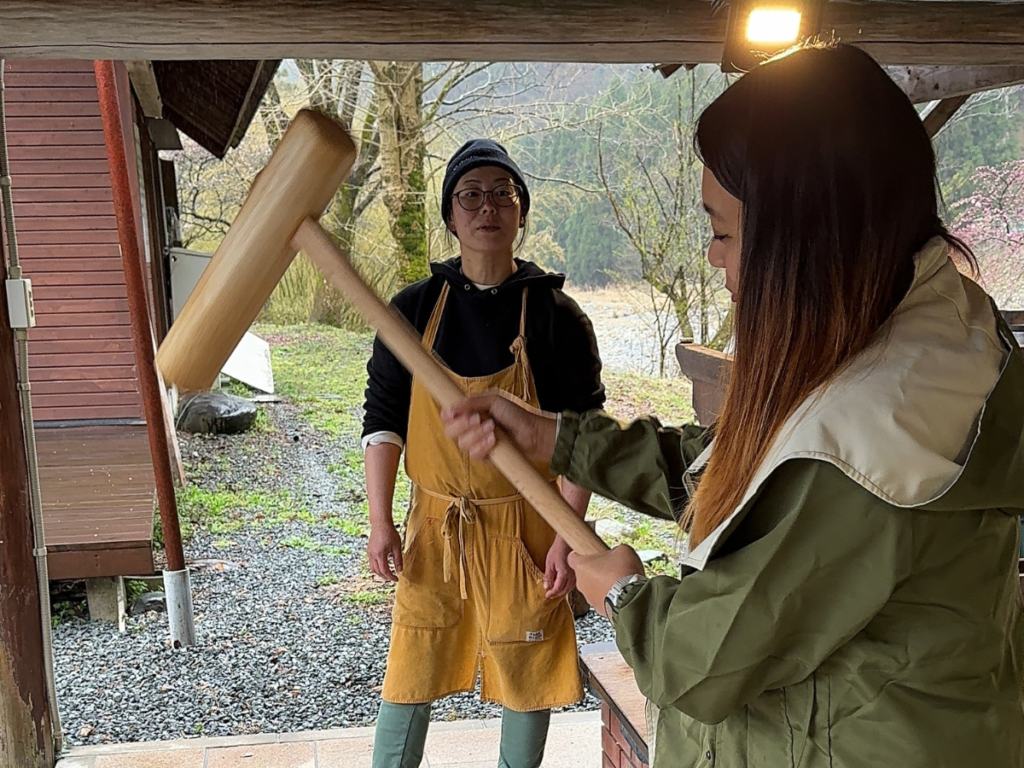
There is a crucial first step that most people do not know about. Before you can swing the mallet you have to mash the rice. We had to use the heavy weight of the mallet to grind the grains against the wood. It is surprisingly hard work. You have to walk in a circle around the mortar while twisting and pressing until the individual grains of rice start to disappear and merge into a single sticky lump. If you skip this the rice just flies everywhere when you hit it.
Then came the main event. We started swinging the kine mallet and we can tell you it is much heavier than it looks. You have to use your whole body to lift it and let gravity do the work on the way down.
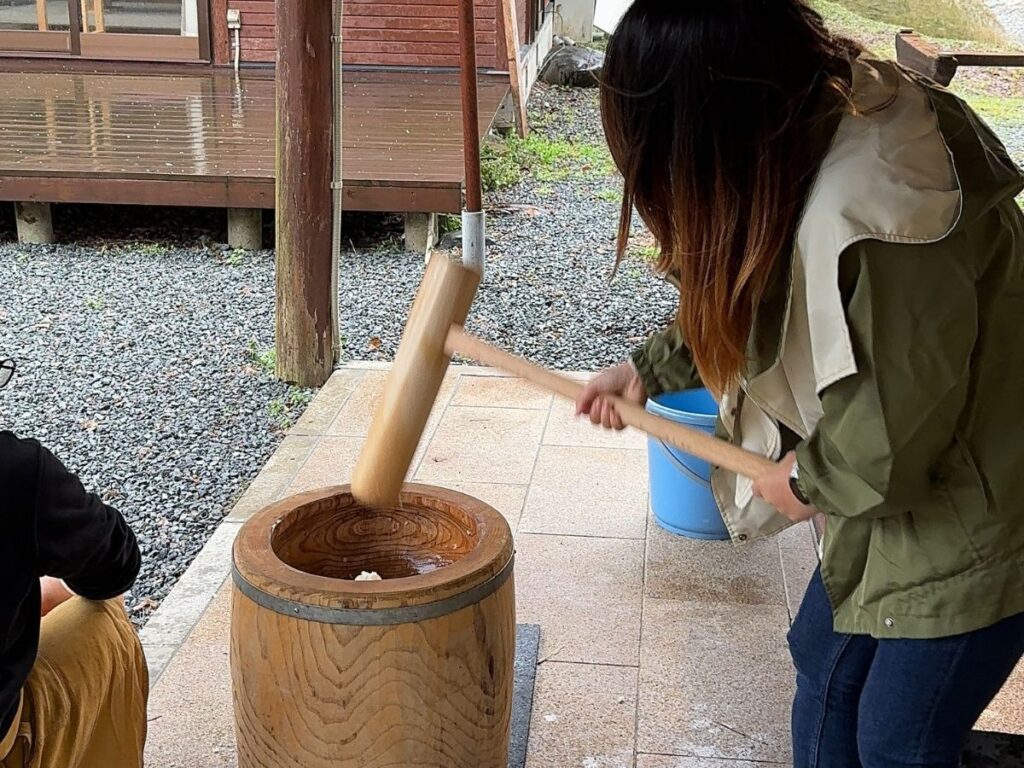
This is where the trust comes in. While we were swinging, a staff member was reaching into the bowl to turn the mochi between every single hit. It is a bit scary at first because you do not want to hit their hand but they taught us to find a rhythm. We shouted “Yoisho!” with every swing to keep the timing perfect. It felt like a proper workout and our arms were definitely tired by the end.
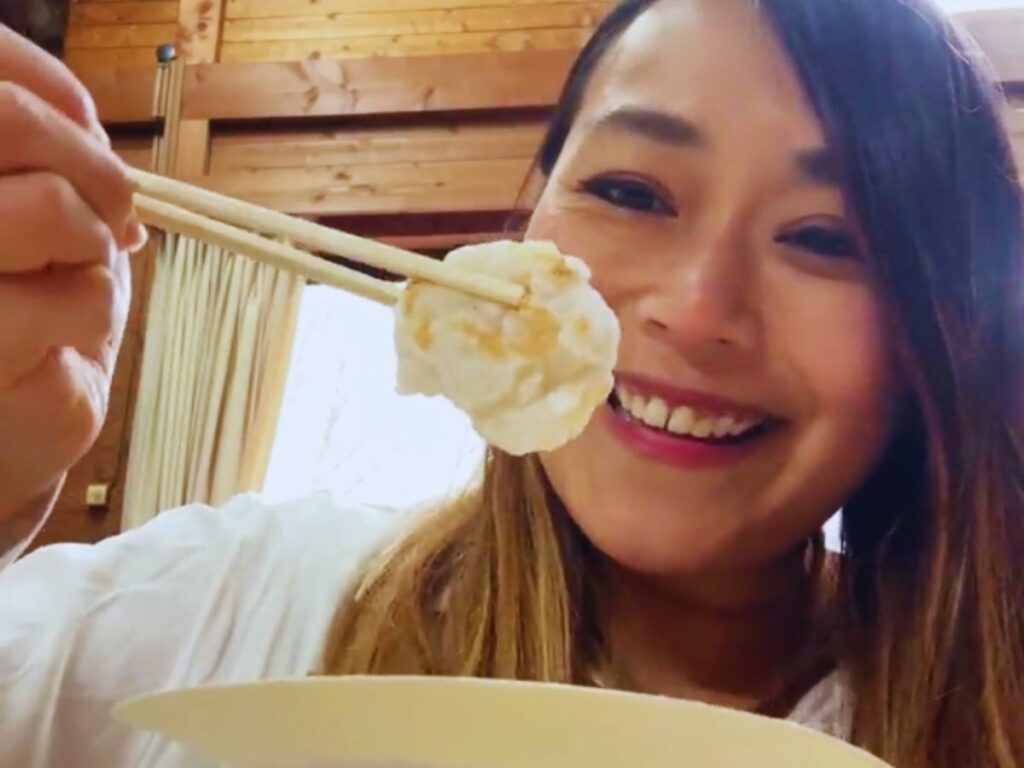
The reward was worth every bit of effort. Because we ate it seconds after pounding, the texture was unlike anything we had ever tried. Store-bought mochi is usually firm and cuts cleanly but this was soft, gooey, and incredibly stretchy.
It was so fresh that steam was still coming off it as we pulled pieces off to eat. We dipped it in savoury soy sauce and sweet red bean paste. It was not a fancy meal. But honestly, eating something you have just worked hard to make in the middle of the quiet countryside is one of the best food experiences we have had in Japan.
Why You Should Add This to Your Itinerary
We think this is one of the best activities you can add to a Kyoto trip. Most visitors spend their days walking quietly through temples and looking at gardens. That is beautiful but it can get a little repetitive. Mochi pounding is the complete opposite. It is loud, energetic, and messy in the best possible way. It wakes you up and gives you a chance to use your body.
It is also a rare chance to interact with local people without needing to speak fluent Japanese. The rhythm of the pounding and the shared goal of making good food breaks down the language barrier. You laugh with the staff when you miss a beat and you celebrate together when the mochi is finally ready.
How to Book This Experience
Finding a genuine mochi pounding workshop can be difficult. Many places are strictly for the local community or they are located in remote areas that are hard to contact if you do not speak Japanese. There are even some tourist traps that offer a watered-down version but we avoid those. We believe you need the real atmosphere to appreciate it properly.
We can arrange this full experience for you as part of your time in Kyoto. We have done the legwork to find the best hosts who welcome visitors and offer that authentic countryside feeling. We handle the reservation so all you have to do is show up ready to lift that heavy mallet.
You can view the details and request to book the experience with us here: Mochi Pounding: Japanese Rice Cake Pounding
Mochi Pounding Experience FAQs
Is mochi safe for children to eat?
This is a very important question. Fresh mochi is much stickier than bread or other foods. In Japan it is actually a known choking hazard especially for toddlers and the elderly. We recommend you cut the mochi into very tiny pieces for young children and watch them closely to ensure they chew it thoroughly. The pounding experience itself is safe and fun but eating requires care.
When is the best time to do this?
This is a seasonal activity. The best time is autumn and winter especially around New Year. Many places stop offering it in summer because the heat makes the food spoil too fast and it is too hot to do the physical work.
What should I wear?
You will be moving your whole body so dress comfortably. We suggest avoiding clothes with long loose sleeves that could dip into the rice or flour. It can also be quite cold in traditional farmhouses during winter so bring an extra warm layer that is easy to move in.
Is mochi vegan friendly?
Yes it is. The rice cake itself is made from 100% glutinous rice and water. The traditional toppings like soy sauce and red bean paste are plant based as well. It is one of the few Japanese food experiences that is naturally vegan without needing any special changes.
Can I take the mochi home?
We usually advise against this. Fresh mochi starts to harden as soon as it cools down. It really is meant to be eaten immediately while it is soft. If you take it home it will likely turn into a hard block by the time you get back to your hotel.
How long does the experience take?
You should set aside about 90 minutes to two hours. This gives you enough time to learn the technique and pound the rice properly. It also leaves time to sit down and enjoy eating your creation afterwards without rushing.
Do I need to book in advance?
Yes you do. The farm needs to soak and steam the rice hours before you arrive. You cannot just walk in and expect to start pounding. We can handle this reservation for you to make sure it is ready when you get there.