
Kyoto has a reputation for being the kind of city that slowly drains your wallet. Every time you turn a corner, there is another beautiful temple charging an entry fee, another famous garden with a ticket booth at the gate, or (and this gets me personally every single time) another local shop offering an enticing matcha parfait. It can start to feel like you need a serious budget just to see Kyoto’s highlights.
It is true that some of the most famous sights in the city come with a ticket price, but some of the most interesting and beautiful parts of Kyoto are completely open and cost nothing at all.
If you want to save your money for a proper matcha and wagashi set, finding the best free things to do in Kyoto is the smartest way to plan your trip. These are the top spots that are well worth your time for zero yen.
Planning Your Own Dream Trip to Japan?
Feeling overwhelmed by the endless options? We design 100% custom itineraries based on your interests, budget, and travel style. Find out more about our Personalised Japan Travel Planner.
Hike the Tunnels at Fushimi Inari-taisha
There is nothing else in Japan quite like walking through the thousands of bright orange torii gates that climb the forested mountain behind Fushimi Inari. The gates are donated by local businesses and stretch for several kilometres up to the summit, creating long, tunnel-like corridors. Many first-time visitors don’t know this, but the entire mountain trail is open twenty-four hours a day and costs absolutely nothing to enter.
The lower sections near the main shrine are always packed with tourists, but most people turn back after the first thirty minutes. If you push past the intersection halfway up, the crowds thin out dramatically.
Wander the Arashiyama Bamboo Grove
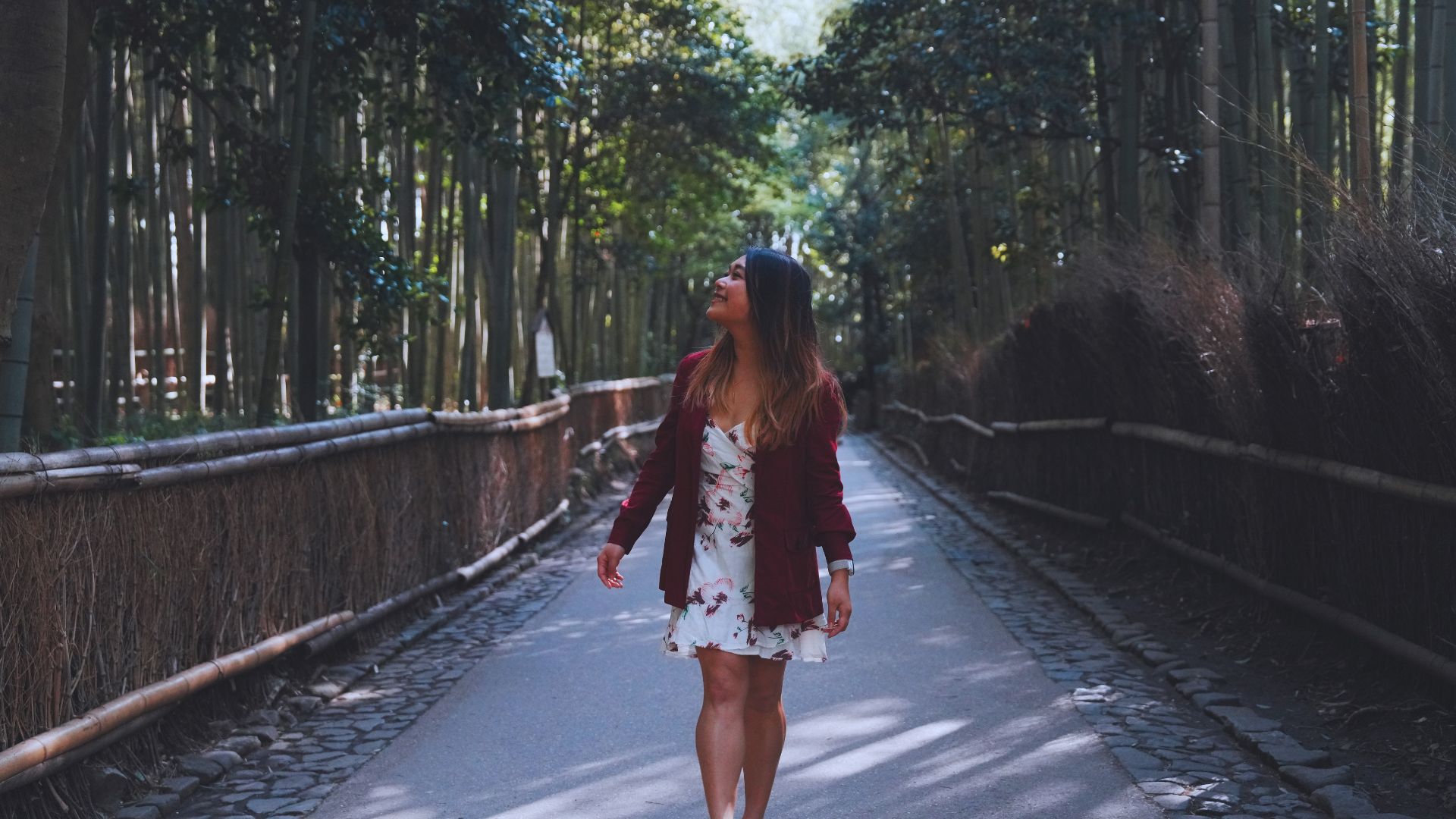
The bamboo stalks in Arashiyama shoot up so high on either side that they block out most of the sky, and the sound of them rustling in the wind is surprisingly calming in the middle of such a busy tourist area. The main path is a public walkway and is completely free to walk through, which makes it one of the best free things to do in Kyoto.
The catch is that it is extremely popular, and by mid-morning the narrow path is so crowded that getting a good photo is nearly impossible. The solution is simple: get there early or, trust us on this, later in the day. Not convinced? Check our tried and tested itinerary:
Walk the Philosopher’s Path
The Philosopher’s Path is a two-kilometre stone walkway that follows a narrow canal through the Higashiyama neighbourhood. It gets its name from the philosopher Nishida Kitaro, who is said to have used this route for his daily walk and meditation. The entire path is lined with hundreds of trees, which makes it one of the most beautiful free spots in the city during spring and again in autumn when the leaves turn.
You do not need to visit during a specific season to enjoy it, though. The canal is lined with small cafes, pottery shops, and quiet temples along the way, and the pace of the whole area is far more relaxed than the busier parts of the city. It takes about thirty to forty minutes to walk from end to end without stopping, though most people understandably end up taking much longer because of the sights and the shops.
Stroll the Historic Streets of Gion
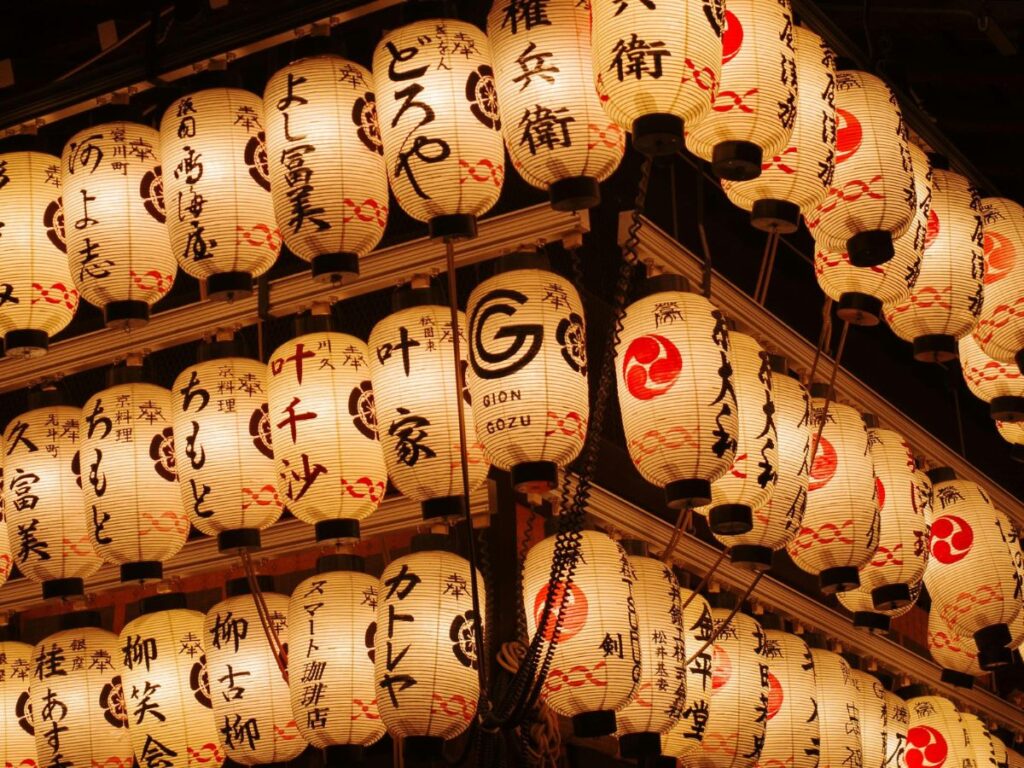
Gion is Kyoto’s most famous geisha district, and simply walking through its streets costs nothing at all. The main lanes are lined with old wooden machiya townhouses that have been converted into teahouses, restaurants, and shops, and the whole area has a preserved, historical feel. Hanamikoji Street in particular is one of the most photographed streets in the entire country.
For us, the best time to visit is around sunset, just as the stone lanterns begin to glow and the streets take on a golden light. This is also when you have the best chance of spotting a geiko or maiko on her way to an evening appointment. Just don’t be one of those embarrassing tourists that get in the way of the geiko or maiko just trying to walk peacefully along the alleys.
Find the Hidden Roman Aqueduct at Nanzen-ji Temple
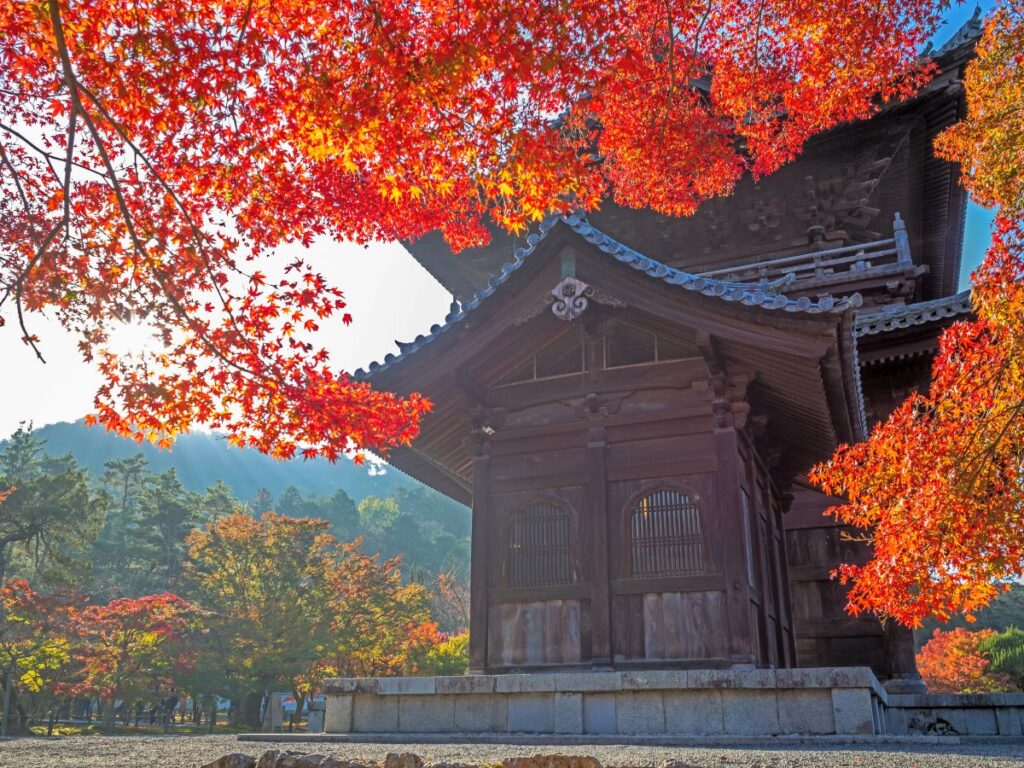
Most people come to Nanzen-ji to see the temple buildings, which do charge an entry fee. What a lot of visitors miss is that one of the most extraordinary sights in the entire complex is completely free. Tucked between the trees inside the grounds is the Suirokaku, a massive red-brick aqueduct that looks like it belongs in ancient Rome rather than a Japanese temple district. It was built during the Meiji era to carry water from Lake Biwa into the city, and it is one of the most striking things you can see in Kyoto without spending a yen.
You can walk right up to it and even stand underneath it for free. Some people also walk along the top of the aqueduct through the trees, which is a popular local stroll.
Relax Under the Cherry Trees at Maruyama Park
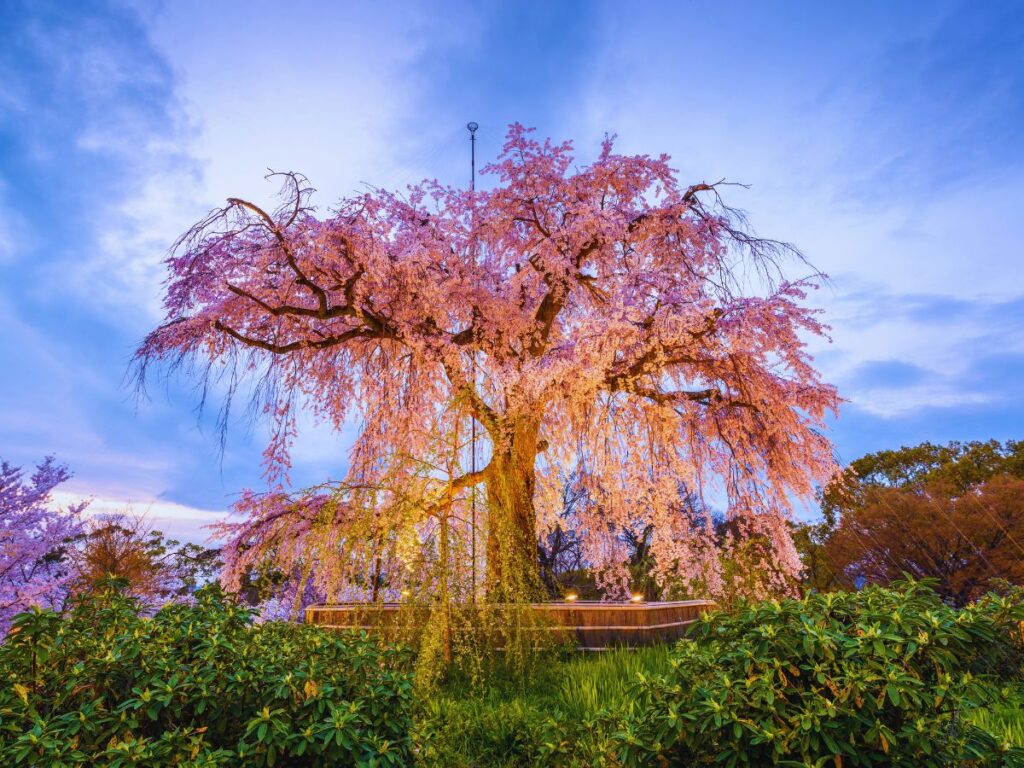
Maruyama is Kyoto’s most beloved park, and it is completely free to enter at any time of year. It sits right next to Yasaka Shrine in Gion, which makes it an easy addition to any walk through the neighbourhood. The park is full of ponds, walking paths, and open grassy areas where local families come to picnic and relax. The centrepiece of the park is a massive weeping cherry tree that becomes one of the most famous spots in all of Kyoto during blossom season. During the day it is beautiful, but it is even more spectacular at night when it is lit up against the dark sky.
Crawl Through the Power Stone at Yasui Konpiragu
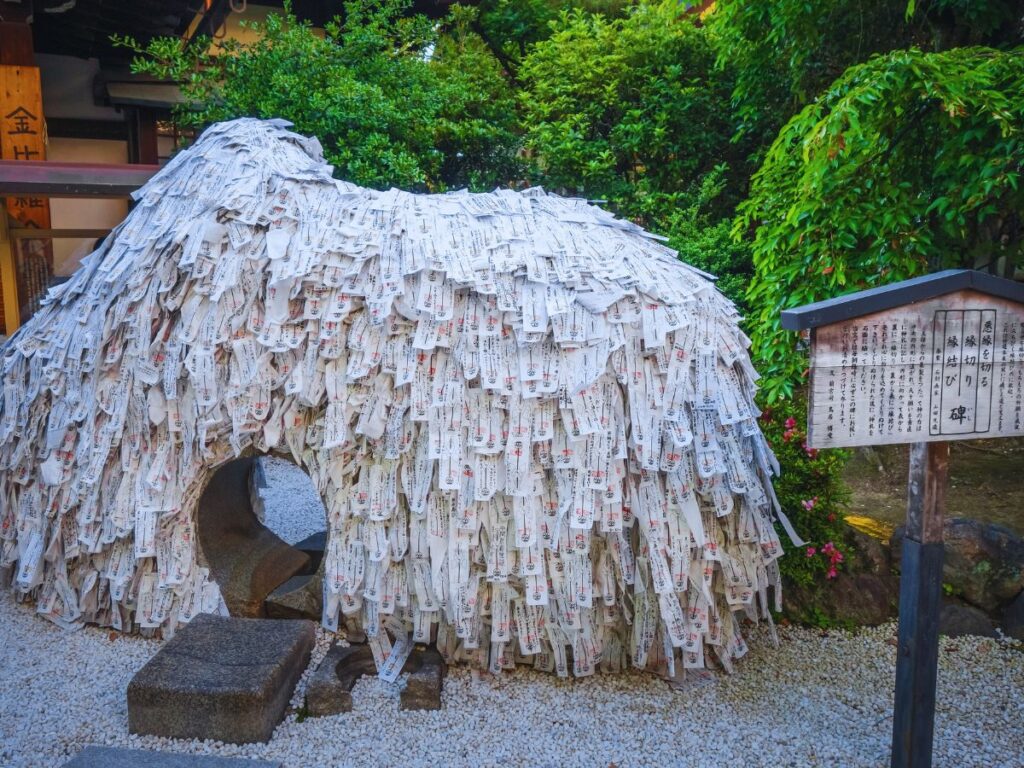
This is one of the strangest and most memorable free things to do in Kyoto, and it is hidden right in the middle of Gion. At the centre of this small shrine is the Enkiri-Enmusubi stone, a giant rock monument covered in thousands of small white paper strips, with a narrow tunnel running through the middle. The local tradition is to crawl through the hole to cut ties with bad luck, unhealthy habits, or negative relationships, and then crawl back through in the opposite direction to invite good fortune.
It sounds unusual, and it is, but it is also a fun and memorable experience. Note that crawling through the stone itself is free, and plenty of people do just that. But if you want to do it the traditional way, you can pick up a katashiro paper talisman from the shrine first for a small fee. You write your wish on it, carry it through the hole, and stick it to the stone at the end.
Walk the Abandoned Tracks at Keage Incline
The Keage Incline is one of those places that feels like a secret even though it is right in the middle of the city. It is an old, decommissioned railway track that was originally used to transport boats between different canal levels during the Meiji era. Today, the long stretch of rusty tracks running up a gentle slope through the trees has become a beloved free photo spot with a nostalgic atmosphere. It is worth visiting at any time of year, but it becomes very beautiful in spring when the cherry blossom trees lining the tracks bloom.
See the Giant Wooden Halls of Higashi Honganji
Most visitors to Kyoto head straight from the train station towards the more famous paid sights, completely missing what is arguably the most impressive piece of architecture within walking distance of Kyoto Station. Higashi Honganji is one of the largest wooden structures in the world, and entry to the temple complex is completely free. The main hall is so vast that it is genuinely difficult to take in the full scale of it when you are standing in front of it.
Because it is so close to the station and so easy to reach, it is a perfect first or last stop on any day in Kyoto. It is also far less crowded than the paid temples on the tourist trail, so you can actually take your time and appreciate the architecture without being jostled by crowds.
Relax on the Riverbanks of the Kamo River
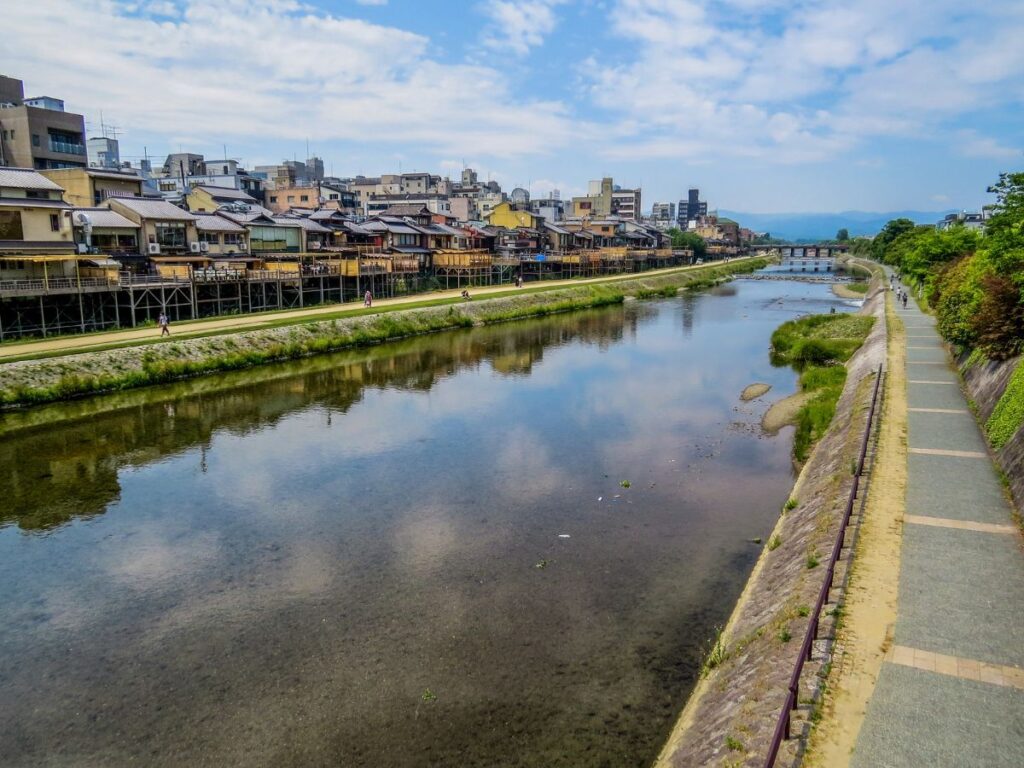
If you want to see where Kyoto’s locals actually spend their free time, head to the Kamo River. On any warm evening, the riverbanks are lined with couples, groups of students, and families. It is practically a Kyoto tradition by now, and joining them costs absolutely nothing. Picking up a convenience store drink and sitting by the water at dusk is one of the most genuinely local experiences you can have in Kyoto for zero yen.
Catch Free Skyline Views at the Kyoto Station Observation Deck
Most cities charge a significant fee to get a view from above, but Kyoto Station gives you one for free. The station itself is an extraordinary piece of modern architecture, and the observation deck on the rooftop of the building is open to everyone at no cost. Even more impressive is the Skyway that runs along the very top of the station building and is suspended high above the central atrium below. The views down into the station and out across the city are spectacular.
It is also the best place to get your bearings; if the view from the top leaves you wondering which neighborhood is which, our Kyoto Area Guide breaks down the city’s layout to help you decide where to head next.
Stroll the Kyoto Imperial Palace Park
The former residence of the imperial family sits inside a massive walled park right in the centre of the city, and the grounds are open to everyone for free. The park itself is enormous, with wide gravel paths and open grassy areas. It comes as no surprise that it is a popular spot for locals jogging, picnicking, and letting children run around.
While going inside the palace buildings requires a free reservation through the Imperial Household Agency, simply walking the park grounds needs nothing at all. The walls, gates, and the scale of the complex give you a strong sense of the history of the place even from the outside.
Hike Up Kifune Shrine
Kifune Shrine is one of Kyoto’s best-kept secrets, located in the Kurama mountains about forty minutes north of the city centre by train. The shrine is dedicated to the god of water, and the approach up the stone steps is lined with red stone lanterns that lead you deeper into the forest. The path follows a rushing mountain stream through dense cedar forest, and the air is noticeably cooler and fresher than in the city. It is a bit of a journey from central Kyoto, so it is best saved for a day when you want to escape the city entirely rather than squeeze it in between other sights.
See the Lanterns Glow at Yasaka Shrine
Yasaka Shrine sits at the very end of Shijo Street in Gion, and it is free to enter at any hour of the day or night. During the day it is of course a beautiful shrine with a distinctive main gate and open courtyard, but the real reason to visit is after dark. The shrine’s lanterns, each one bearing the name of a local business, cast a warm glow across the entire complex that makes it one of the most atmospheric free evening experiences in the city.
Nibble on Free Samples at Nishiki Market
Nishiki Market is a narrow, five-block covered shopping street in the heart of the city that has been feeding Kyoto for centuries. It is known as Kyoto’s Kitchen, and over a hundred stalls sell everything from fresh tofu and pickled vegetables to grilled skewers and sweet street snacks. Walking the full length of the market is completely free, and if you time it right you will collect quite a few free samples along the way.
Vendors regularly offer small tastes of their pickles, crackers, tea, and seasonal snacks to people passing by. It is not a free meal by any means, but a leisurely walk through the market nibbling on samples is a genuinely enjoyable experience that costs nothing. The market gets very crowded in the afternoon, so mid-morning is the best time to visit if you want to move at a comfortable pace.
Hike to the Daimonji Viewpoint
If you want a free panoramic view of Kyoto, the hike up to the Daimonji Viewpoint is one of the best options. The trail starts just behind Ginkakuji and winds up for about thirty to forty-five minutes before opening up onto a wide platform with sweeping views across the entire city. You can see Kyoto Tower and even the mountains on the opposite side of the basin.
The mountain is best known as the site of the Daimonji Gozan Okuribi Fire Festival in August, when the giant kanji character for fire is lit on the hillside. But the viewpoint is worth the hike at any time of year, and because it involves a bit of effort to reach, it is far less crowded than the paid observation towers in the city centre.
Wander the Outer Grounds of Toji Temple
Toji Temple is home to Japan’s tallest wooden five-storey pagoda, which at nearly fifty-five metres high is visible from across the city and has become one of Kyoto’s most recognisable landmarks. While entering some of the inner buildings and the garden requires a ticket, the outer grounds offer excellent free vantage points of the pagoda. It is a short walk from Kyoto Station and makes for an easy stop on the way in or out of the city.
On the 21st of every month, the temple grounds also host a huge flea market, with over a thousand stalls selling antiques, old kimonos, ceramics, street food, and second-hand goods.
Photograph the Sagano Romantic Train
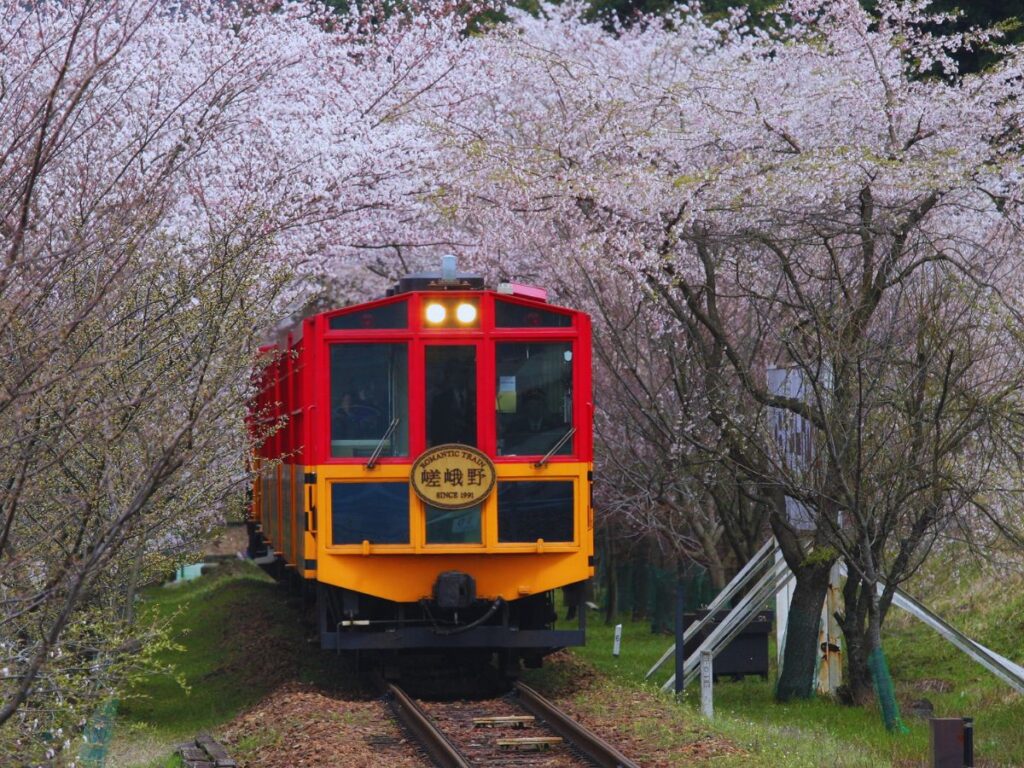
The Sagano Romantic Train is a retro, open-air sightseeing train that runs through the Hozu River Gorge between Torokko Saga and Torokko Kameoka stations. Riding it costs money and the tickets sell out weeks in advance. However, the free viewing paths near Torokko Arashiyama Station put you right alongside the tracks where the train comes out from a tunnel of trees over the gorge, which is arguably the best photo spot on the entire route.
Standing at the free viewing area and watching the old-fashioned train wind through the valley with the river below it makes for one of the most cinematic free experiences in Arashiyama. Since you are likely already in the area for the bamboo grove, it is an easy addition to the morning without spending anything extra.
Explore the Fushimi Sake District
Fushimi is one of Japan’s most historic sake-brewing districts, and walking its streets is completely free. The neighbourhood has a beautifully preserved atmosphere, with traditional wooden brewery buildings and white-walled storehouses. While the paid tastings at the famous Gekkeikan Okura Sake Museum are worth considering if you enjoy sake, simply wandering the streets and taking in the architecture costs nothing. Some of the breweries also have free entrance areas and small display spaces where you can learn about the brewing process.
Free Things to Do in Kyoto FAQs
Do I need a ticket to enter Fushimi Inari?
No. The main shrine grounds and the entire mountain hiking trail are completely free to the public, twenty-four hours a day, every day of the year. You only pay if you want food or souvenirs from the stalls along the way.
Are Kyoto’s famous bamboo forests free?
Yes, the main Arashiyama Bamboo Grove path is a public walkway and does not require a ticket or entrance fee. Some surrounding attractions in the area such as Tenryuji garden do charge entry, but the bamboo grove itself is always free.
Where can I find the best free views of the city?
The observation deck and the Skyway path at the top of Kyoto Station offer great views of the skyline for free. If you are happy to do a bit of hiking, the Daimonji viewpoint behind Ginkakuji gives you an even wider panorama and is also completely free.
Are there free things to do in Kyoto with kids?
Definitely. The wide open spaces of the Kyoto Imperial Palace Park and Maruyama Park are perfect for letting kids run around. Watching the Sagano Romantic Train pass through the gorge at Torokko Arashiyama Station is also a big hit with younger children and costs nothing at all.