
The way I see it, Gion gets overhyped and underexplained at the same time, which is a frustrating combination when you’re trying to actually plan a trip. Yes, it’s beautiful. Yes, you might spot a geiko on her way to work in the early evening. But if you show up expecting some kind of living museum where tradition is on display for your benefit, you’re going to have a bad time. This is a real neighbourhood where people live and work, and the locals have had enough of tourists treating it like a film set.
Go with realistic expectations and a respect for locals, and Gion will genuinely be one of the best places you visit in Japan. But before we get into the best things to do in Gion, let’s actually get to know the area properly, because understanding the place makes the visit much better.
Where is Gion and How Do You Get Around It?
Gion sits on the eastern bank of the Kamo River in Central Kyoto. Gion-Shijo Station on the Keihan Line is your entry point, and Shijo-dori is your main reference road running east to west. Everything worth seeing is within comfortable walking distance from there, and the district is flat, which helps. If you want to get a better picture of where Gion is located in the greater Kyoto area, or just want to understand how the various districts differ and which would be the best fit for your stay, be sure to check out our Kyoto Area Guide.
Gion Kobu and Hanami-koji
This is the part people picture when they hear “Gion geisha district.” Hanami-koji is the main street, lined with dark-timbered machiya townhouses, tea houses and some of Kyoto’s most expensive restaurants. It’s where geiko and maiko walk to evening appointments, and it’s also where the tourist congestion is at its worst, particularly on weekends and during peak seasons.
The narrow side lanes off Hanami-koji are where you’ll find quieter pockets, but pay attention to the signage because some of those alleys are residential and not meant for wandering tourists.
Gion Higashi
North of Shijo-dori, Gion Higashi gets a fraction of the foot traffic and feels noticeably different because of it. The streets are more residential, and there are fewer restaurants with English menus or signs. It gives you a much more realistic sense of what it looks like to actually live in this neighbourhood rather than visit it.
The Kamo River and Gion-Shijo
The western edge of Gion, where the district meets the Kamo River, is where old Kyoto and modern Kyoto collide in the most obvious way. Step out of Gion-Shijo Station and you’ve got convenience stores and pachinko parlours on one side and the Minamiza Theatre on the other.
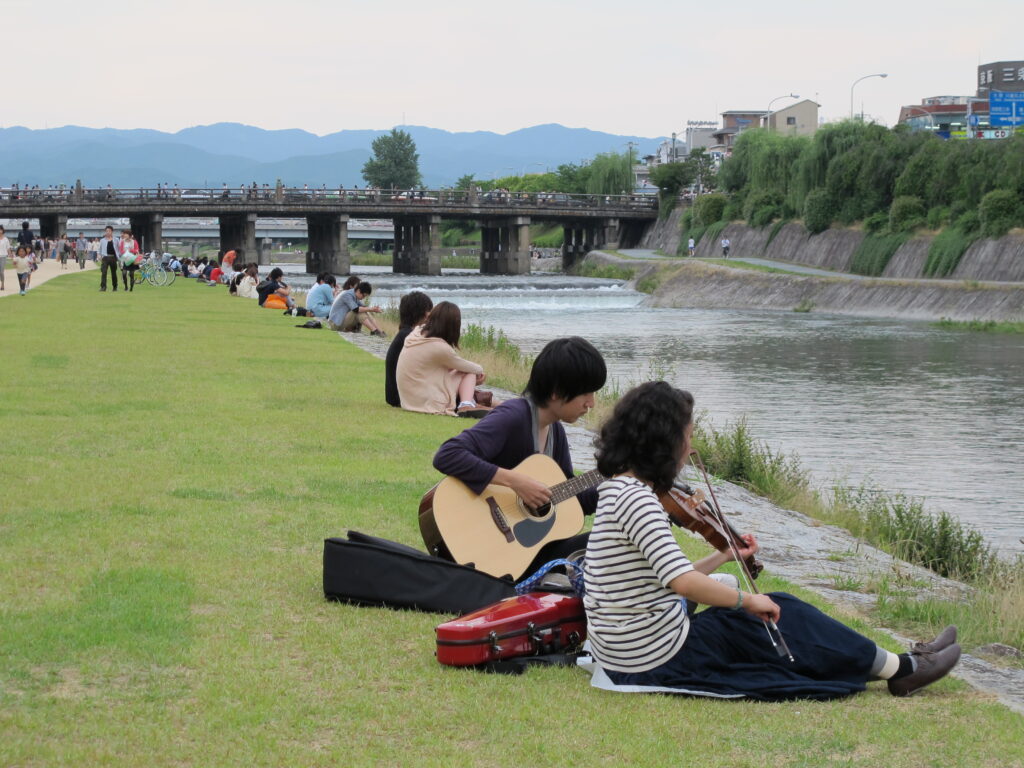
Cross the river heading east and within about five minutes the streets shift completely. The Kamo River itself is worth a mention: the banks are a popular local hangout, particularly in the evenings, and sitting along the water looking back at the city is a good way to decompress between sightseeing.
Getting Around the District
Gion is entirely walkable. You do not need a taxi or bus to get between any of the main sights. The walk from Gion-Shijo Station to Yasaka Shrine at the far eastern end of Shijo-dori takes about fifteen minutes at a comfortable pace. From Hanami-koji to Kennin-ji is five minutes. From the Shirakawa Canal to Shinmonzen-dori is less than that. Wear comfortable shoes, give yourself more time than you think you need, and resist the urge to plan every minute.
Things to Do in Gion, Kyoto
Visit Kyoto’s Oldest Zen Temple
Most visitors to Gion stay on the main streets and miss Kennin-ji entirely, which is baffling because it’s a short walk south of Hanami-koji and one of the more impressive temples in the whole city. Founded in 1202, it’s Kyoto’s oldest Zen temple, and it deserves more attention than it gets.
The main hall has a ceiling painting of twin dragons covering 108 square metres. It was commissioned for the temple’s 800th anniversary in 2002, so it’s modern, but that doesn’t make it any less worth staring at for a few minutes. The moss gardens are quiet in a way that the famous Zen gardens elsewhere in Kyoto often aren’t, simply because the crowds haven’t found this place in the same numbers. If you’re staying near Gion and have time for one temple, make it this one.
Visit Yasaka Shrine
Yasaka Shrine sits at the eastern end of Shijo-dori and has been the spiritual anchor of Gion for over a thousand years. It’s where the Gion Matsuri originates, and the shrine grounds are active year-round with locals coming to pray, not just tourists coming to photograph. During the day it’s worth a walk-through for the architecture and the scale of the main gate, which you’ll have seen in photos without necessarily knowing what it is.
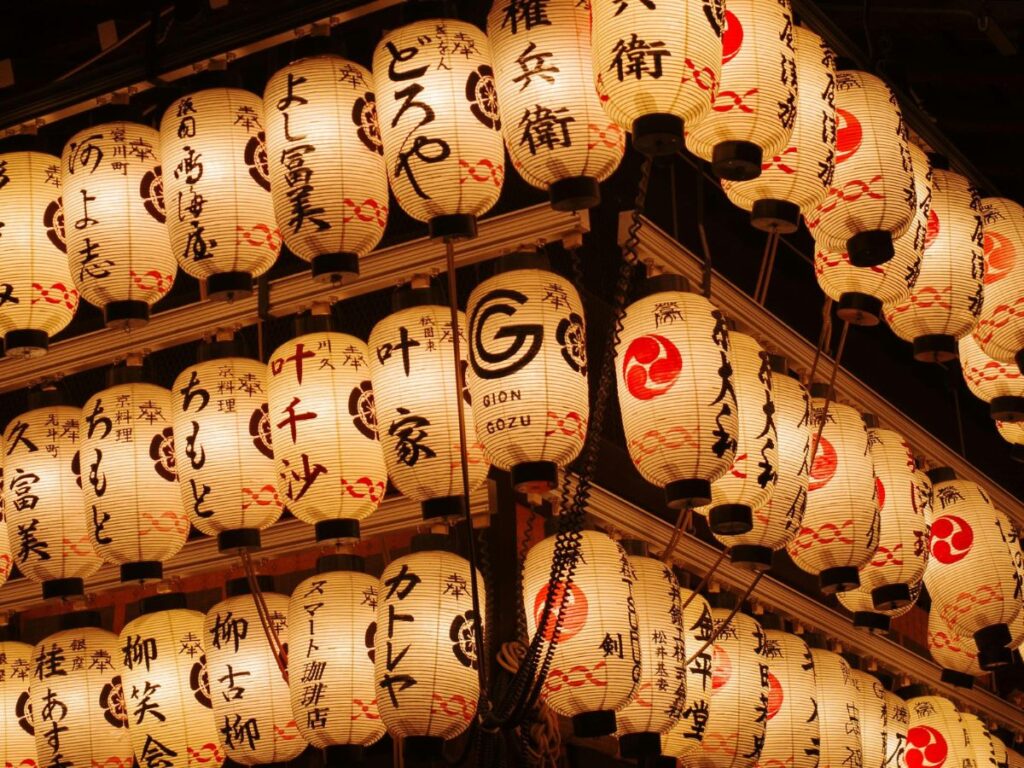
Come back at dusk though. As the light drops, hundreds of stone and paper lanterns throughout the complex are lit, and the atmosphere shifts completely. Turn around and look back down Shijo-dori as the city lights come on and you’ll get one of the better views Kyoto has to offer. Entry is free which, given the experience, feels almost unreasonably generous.
Stroll Hanamikoji Street
If you only walk one street in the Gion geisha district, make it this one. Hanamikoji runs straight through the heart of Gion Kobu and is lined on both sides with dark-timbered tea houses and some of Kyoto’s most exclusive restaurants.
A few things worth knowing before you go. The tea houses are private establishments and most are closed to anyone without an existing relationship with the proprietress. Don’t try the doors. The side alleys off Hanamikoji are where residents actually live, and the signage prohibiting photography in those areas is there for a reason. Stay on the main street, walk slowly, and keep your camera on the architecture rather than the people.
Crawl Through the “Relationship Stone” at a Local Shrine
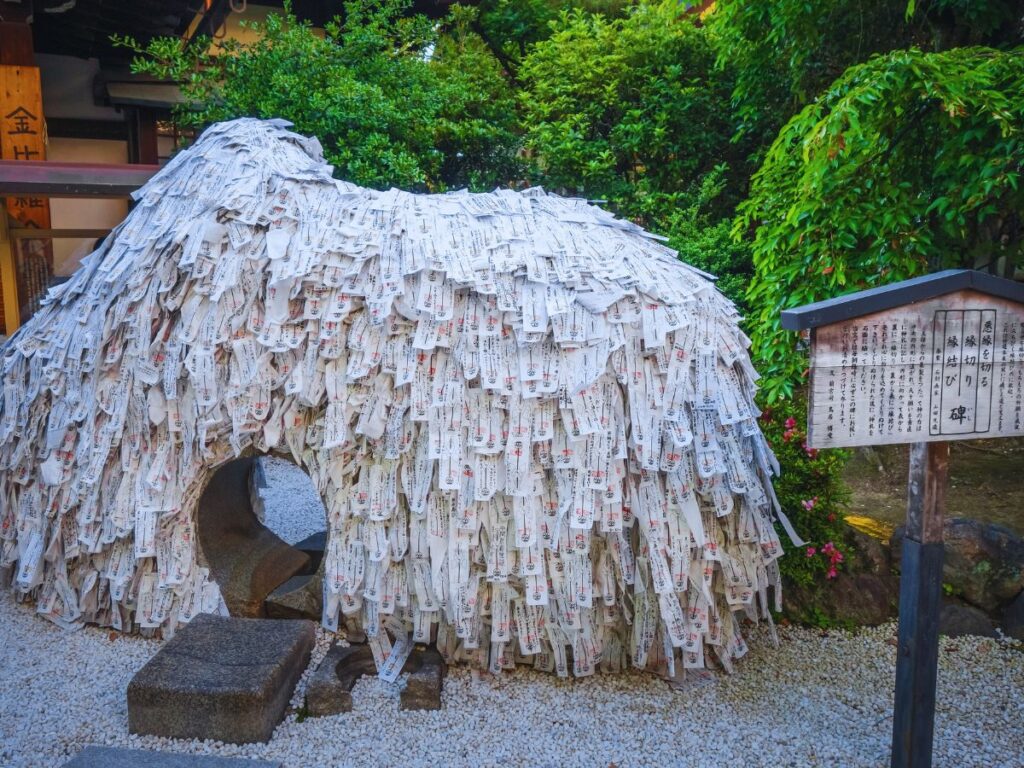
This is a bit unexpected and honestly quite fun. Yasui Konpira-gu is a shrine known for severing bad relationships and inviting in good ones. The main feature is a large stone covered in paper fortunes with a hole through the middle. You write your wish on a slip of paper, crawl through one way to cut the bad, then back through to invite the good.
It sounds odd until you see people doing it with complete sincerity, at which point it becomes genuinely touching rather than just quirky. The shrine is small and easy to walk past if you’re not looking for it, tucked just off Matsuhara-dori.
Rent a Kimono and Walk the Streets
This is something a lot of visitors feel a bit self-conscious about before they do it and then immediately wish they’d done sooner. Walking the machiya streets of Gion in a kimono is a completely different experience to doing it in your regular clothes. The neighbourhood was built for it, and the Shirakawa Canal and Hanami-koji in particular look considerably better when you’re dressed for them.
The process is also more straightforward than you might think: you pick your kimono, get dressed by a professional, and you’re out the door within the hour. Most rental shops will sort your hair too if you want the full look.
Through Flip, you can book your kimono experience in Gion in advance and have everything sorted before you arrive.
Explore Maruyama Park

Maruyama Park is directly behind Yasaka Shrine and is the kind of place most visitors walk through without realising it deserves more than five minutes. It’s Kyoto’s oldest public park and is famous for its massive weeping cherry tree, which becomes one of the most photographed trees in Japan during spring .
Outside of that window, it’s considerably quieter. Food stalls set up around the park in the evenings, locals come to sit on the grass, and the whole park has a neighbourhood feeling that’s harder to find in the more tourist-heavy parts of Gion. The park also connects easily to the Higashiyama walking path if you want to extend your day eastward toward Kiyomizudera.
Walk Along the Shirakawa Canal
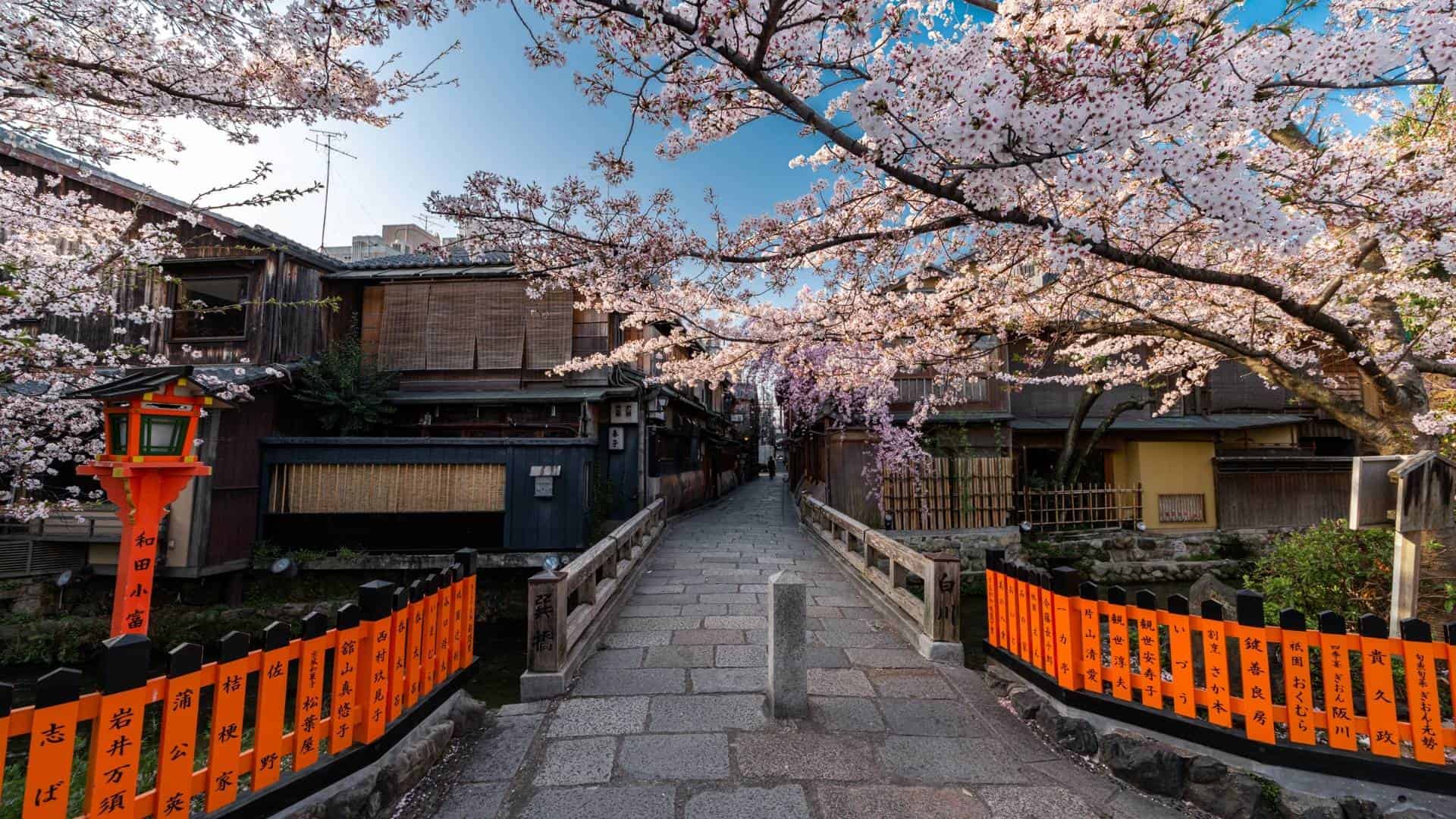
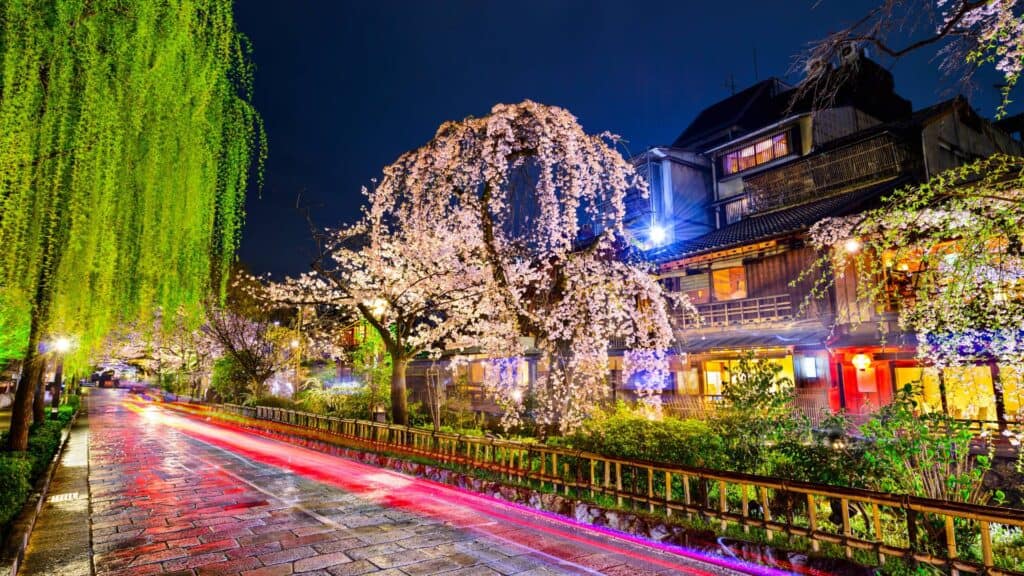
The Shirakawa Canal is the stretch of Gion that matches what most people picture before they arrive: narrow waterway, weeping willows, traditional machiya lining the banks, and small stone bridges. The walk along it, particularly over Tatsumi Bridge, is lovely in every season, particularly in late March and early April when the cherry blossoms bloom, which also makes it very crowded.
Walk it in the morning before the crowds arrive, then again after dark when the lanterns reflect in the water and the whole street quietens down. The walk itself takes only about ten minutes end to end, but I’d recommend slowing down, ducking into a coffee shop on the canal side, and resuming your walk some time later.
Take Part in a Traditional Tea Ceremony
This is one of those activities that sound like a tourist box-tick, until you’re actually sitting in a 200-year-old machiya with a bowl of matcha in front of you and someone walking you through a ritual that hasn’t changed in centuries.
Instead of the crowded “performance” halls, we recommend a more hands-on session in a historic townhouse where you actually learn to make and serve the tea yourself. It is one of the best things to do in Gion if you want to understand the discipline and patience that define Kyoto’s culture. Most sessions run between 45 minutes and two hours, but they are popular and the more authentic venues fill up weeks in advance.
You can book a traditional tea ceremony experience directly through Flip.
Try the One-Item Menu at a Historic Gion Restaurant
Not every meal in the Gion geisha district needs to be a three-hour event. If you want something unpretentious, and deeply local, head to Issen Yoshoku. They have been serving exactly one dish since 1870: a specific type of Kyoto-style okonomiyaki.
Unlike the thick, heavy pancakes you might find in Osaka, this version is lighter and folded over, packed with green onion, ginger, and a sweet miso sauce. The restaurant is decorated with retro toys and slightly eccentric mannequins, but the food is the real deal. It is one of the best things to do in Gion when it is late and most other kitchens have already closed for the night.
Book a Private Dinner with a Maiko
Most people only see a flash of a kimono as a maiko rushes to an appointment, but we can arrange for you to spend a full evening with one!
Traditionally, these tea house dinners were closed to the public and required a personal introduction. You get to eat a multi-course meal while a maiko performs a traditional dance and leads you through local games. While these evenings are an investment, they offer a level of access to the Gion geisha district that most travellers never get to see.
Savour a Proper Matcha Dessert
Kyoto takes its green tea very seriously, and for good reason. Most of what you will drink here comes from Uji, just south of the city, which has been producing the highest grade of matcha in Japan for centuries. While you can grab a green tea latte on almost any corner, we suggest heading to Saryo Tsujiri for the real thing.
They are famous for their massive (and I mean massive!) matcha parfaits. You get layers of rich matcha soft serve, chewy mochi, sweet red bean paste, and crunchy biscuit. Just a fair warning: there is nearly always a queue stretching down the street. It is mostly full of locals and students, which tells you everything you need to know about the quality.
Try a Hands-On Craft Workshop
Several workshops running out of traditional townhouses around Gion offer hands-on sessions in crafts that have been part of Kyoto life for centuries, and they’re consistently one of the things people say they’re glad they made time for.
Chopstick carving is popular: you sand and finish your own pair of hashi from scratch. Kintsugi workshops, where you repair broken ceramics using lacquer and gold powder, are increasingly available and produce something you’ll actually bring home and use. Both tend to book up, so sort this before you arrive.
Not sure which workshop to try? Browse options here.
Browse the Antique Galleries
Shinmonzen-dori runs parallel to the Shirakawa Canal and is where you’ll find dealers selling woodblock prints, lacquerware, ceramics, and Edo-period furniture. To be upfront about it: this is not bargain territory. Prices reflect the fact that much of what’s on display is genuinely museum-quality, and several pieces would not look out of place in one.
What makes it worth your time even if you aren’t buying is the chance to see these pieces up close. It is basically a free, open-air museum. The quality of the craft on display is incredible, and the street itself is one of the quietest and most elegant in the district.
Catch a Kabuki Performance at Minamiza
Minamiza Theatre isn’t just another building. It is considered the birthplace of Kabuki. People have been coming to this exact spot for performances since the early 1600s. The current building dates back to 1929 and is a registered cultural property, which is obvious the moment you see its grand, slightly imposing facade at the corner of Shijo-dori.
If you have never seen Kabuki, it is a masterclass in drama, elaborate costumes, and stylised movement. You don’t actually need to speak Japanese to follow the plot, as the acting is intentionally over-the-top so the emotions are clear. That said, full programmes can run for several hours, which is a big commitment if you are on a tight schedule.
If a multi-hour sit isn’t for you, we still recommend walking past it at night. When the theatre is lit up against the Kamo River, it is one of the most unforgettable views in the Gion geisha district. Check their seasonal schedule before you arrive. Sometimes they offer “single-act” tickets which are perfect for travellers who want a taste of the art without spending the whole afternoon inside.
Experience a High-End Kaiseki Dinner
The Gion geisha district is the best place in Japan to try kaiseki because this high-end style of cooking was built specifically to serve the tea houses here. It started as a way to provide the most sophisticated meals possible for the elite guests of the geiko.
Restaurants like Isshi Souden Nakamura have been in Gion since 1716. That gives you an idea of how deep the roots go in this neighbourhood. To be honest about it, this is a massive investment, and you need to book these places months before you even get on a plane. Some of the most famous spots still technically require a personal introduction from a regular guest to get a table.
Want to make sure you get to experience an authentic kaiseki meal? Flip Japan Travel Planner can take care of everything for you.
Taste Traditional Kyoto Tofu
Kyoto has a long tradition of refined tofu cooking which locals call yudofu. This tradition grew out of the Buddhist temples in the area. Because the monks did not eat meat, they spent hundreds of years making tofu into a high quality protein. Yudofu is the most famous version. It is basically fresh tofu simmered in a simple broth made from sea kelp.
It might sound plain, but when it is made with the soft water in Kyoto, the texture is totally different from the blocks you buy at a grocery store. There are several historic restaurants in Gion where you can eat a full tofu meal in a private room facing a garden. It is much more affordable than a full kaiseki dinner but still feels very special.
A 1-Day Gion Itinerary
Morning
Start at Gion-Shijo Station before 9:00 AM if you can manage it. The difference in crowd levels before and after that hour is significant. Head northeast along the Shirakawa Canal first, when the light is soft and the streets are quiet enough that you can actually hear the water. Walk over Tatsumi Bridge and follow the canal east toward Shinmonzen-dori. The antique galleries won’t be open yet but the street itself is worth seeing without the daytime foot traffic. Loop back and spend an hour at Yasui Konpira-gu.
Afternoon
Have lunch near Hanami-koji, then head south to Kennin-ji and give it proper time rather than a quick walk-through, appreciating details like the massive ceiling painting. After Kennin-ji, walk back through Hanami-koji in the mid-afternoon when the light hits the facades well for photography and the worst of the lunch crowds have cleared. If you booked a craft workshop, this is when it fits best in the day.
Evening
Time your exit from wherever you are to be at Yasaka Shrine as the lanterns come on at dusk. Exactly when that happens shifts with the season but roughly 5:30 to 6:30 PM is your window. This is also the best time to be on Hanami-koji if seeing geiko or maiko is something you’re hoping for. After that, grab dinner (perhaps kaiseki if you’re ready to make the investment and have reserved well beforehand). If you have energy left after the meal, the Shirakawa Canal at night with the lanterns reflected in the water is worth a final walk.
Gion Geisha District FAQs
Can I see maiko or geisha in Gion?
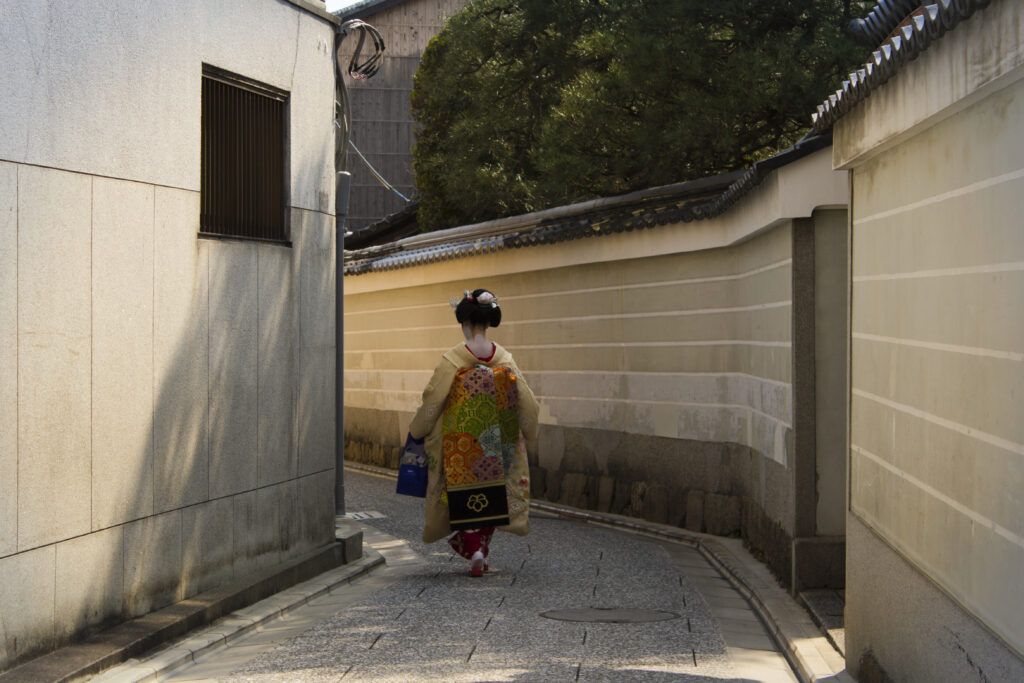
Your best chance is to be on Hanami-koji between 5:30 PM and 6:00 PM when they are walking to appointments. They move quickly and should not be stopped for photos or blocked. For a guaranteed encounter where you can actually interact, we recommend booking a private dinner or a cultural show instead.
What is the best time to visit Gion?
For the best photos, go before 9:00 AM. For the atmosphere, go around 5:00 PM when the lanterns are being lit and the evening rush begins.
Is it disrespectful to wear a kimono?
Not at all. Japanese people generally love seeing visitors appreciate their culture. Just make sure you are dressed properly, preferably by a professional shop, and that you walk with a bit of decorum.
Are there many things to do in Gion for kids?
Yes. The “Relationship Stone” at the shrine is usually a hit with older kids, and the matcha desserts are basically a requirement. In Maruyama Park, they have space to run around. Overall, the area is also flat, so it is easy for families to walk around.
How do I tell the difference between a geiko and a maiko?
A maiko is an apprentice. They usually have more colourful kimonos, elaborate hair ornaments, and higher sandals. A geiko is a master. Their look is more understated and elegant.
Can I take photos anywhere?
No. Look for the “No Photography” signs in the small alleys. Fines can be up to ¥10,000, so be very mindful and stick to the main roads like Hanami-koji.