Figuring out how to get around Japan can be confusing, overwhelming, and simply way too complicated…but it doesn’t have to be! The good news is that Japan has so many public transport options both inside and outside of cities, meaning you don’t need to rent a car to travel the country. You just have to get your head around the different transportation options.
That’s why we’ve put together this complete Japan transportation crash course, so that you can successfully get around Japan. We’re a boutique travel agency that has seen it all, from bullet trains to boats, and are ready to break down Japan travel passes, long-distance routes, and inner-city options.
Planning a Trip to Japan?
Spending more time planning your Japan trip than you’d like? Why not leave it to the experts? We’ve helped thousands of visitors to plan and live out their dream Japan trip, taking on even the tiniest details so that you can focus on the fun. Check out our travel planning services or get in touch!
Travel Passes
Before we jump into the many, many forms of transport you can take to get around Japan, let’s quickly touch on the transportation passes you might need. These are passes that you can use to pay for or ride various trains to make life easier or potentially save you money.
JR Rail Pass
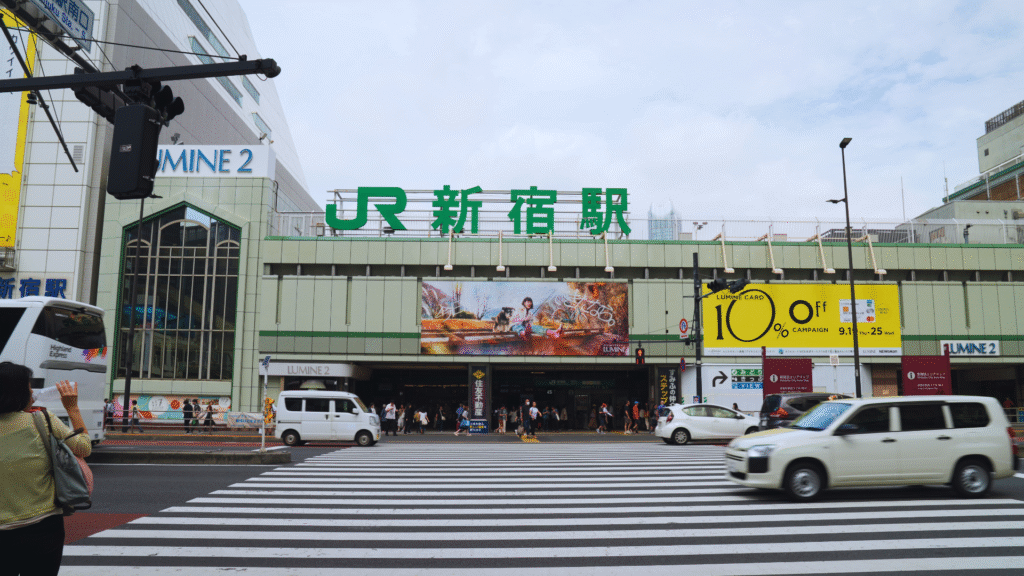
Probably the most famous Japan travel pass, the JR Rail Pass gives you unlimited JR train rides within a designated 7, 14, or 21-day period. The pass isn’t cheap, starting at ¥50,000 (~$335) for a one-week ordinary pass, so you’ll need to use a lot of trains to make it worth your money.
You can use the pass for inner-city JR trains (although, as you’ll learn below, this doesn’t mean all metro trains), but as these rarely cost more than ¥300 (~$2) per trip, you’d have to take A LOT of metro rides to pay off the pass.
Where you’ll really have a chance to get your money’s worth is in Shinkansen (bullet train) rides. For context, a one-way ticket from Tokyo to Osaka is around ¥15,000 (~$110). Essentially, you can definitely save some serious money with a JR Pass…but only if you’re planning on taking a bullet train every 2-3 days.
Learn more about the JR Rail Pass
JR Regional Travel Passes
For people planning to stay in and explore just one region of Japan, there are JR Regional Area Passes. These cover unlimited JR travel within the region, such as the Kansai Area Pass, as well as potentially additional transportation like airport transfers and some non-JR trains.
The biggest perk of the JR Regional Passes is that they cost a fraction of the nationwide pass, making it a lot easier to actually get your money’s worth without needing to traverse the entire country every other day.
Here are the most popular area passes you might want to consider:
| Pass | Area Covered | Duration | Price (Adult) |
| Kansai Area Pass | Osaka, Kyoto, Nara, Kobe, Himeji | 1–4 days | ¥2,800 (1-day) to ¥7,000 (4-day) |
| Kansai Wide Area Pass | Kansai + Okayama, Kinosaki Onsen, Wakayama, Shiga | 5 days | ¥12,000 |
| Kansai–Hiroshima Pass | Kansai + Hiroshima & Miyajima | 5 days | ¥17,000 |
| JR East Tohoku Pass | Tokyo → Tohoku (Sendai, Aomori, Akita, etc.) | 5 days (within 14 days) | ¥30,000 |
| JR Kyushu Pass (All) | All Kyushu: Fukuoka, Nagasaki, Kumamoto, Kagoshima, Beppu | 3 or 5 days | ¥17,000 (3-day) / ¥20,000 (5-day) |
Transportation (IC) Cards
Japan uses rechargeable transportation cards, known as IC cards, to simplify paying for travel. Instead of buying single-use tickets, you can tap your card at ticket gates or bus readers for automatic fare deduction. These cards can also be used for small purchases at convenience stores, vending machines, restaurants, lockers, and even some tourist attractions.
You can get an IC card at the airport after landing in Japan, or load one straight into your Apple Wallet by opening the app, clicking the ‘+’, and searching for Japan. There are different brands of IC cards, e.g., Suica, Pasmo, and Icoca, but they all essentially do the same thing.
Learn more about IC cards in Japan
Long Distance Travel
For travelling between cities and regions, you have a few options. You can get around Japan by train, bus, plane, and even boat. Check out the breakdown below…
Shinkansen
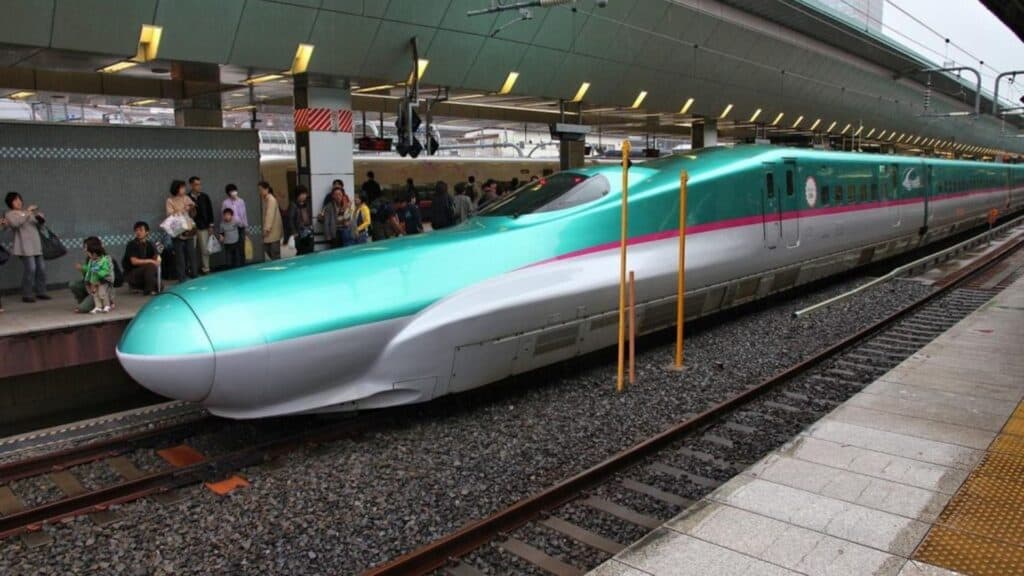
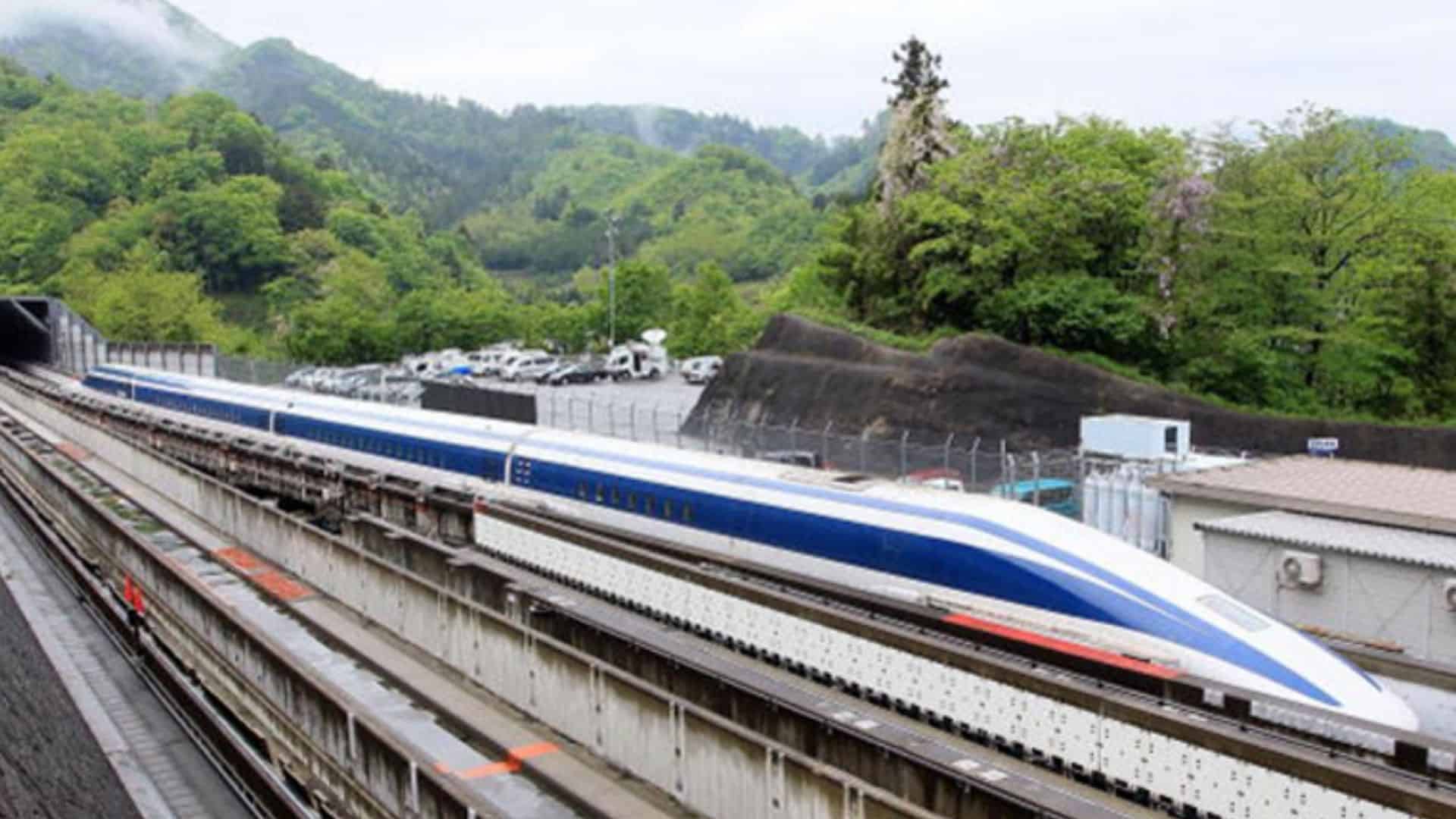
The Shinkansen or bullet train is probably Japan’s most famous mode of transport and a must-do experience for many of our clients. The super high-speed trains travel at lightning speed to deliver travellers hundreds of kilometres in a matter of hours. Seats can be reserved in advance or bought directly at the train station.
The lines are run and managed by JR, although this does get a little complicated, as there are different JR companies that run different Shinkansen lines (that’s right, JR East and JR West are not the same company). If you’re travelling from a station with many lines, like Tokyo, just make sure you know which JR gate to look for and enter through to avoid confusion.
Limited Express Trains
Limited Express trains in Japan are faster and more comfortable than local or rapid trains, making fewer stops and often connecting major cities with popular tourist destinations. They usually require a limited express surcharge in addition to the base fare but offer reserved seating, extra legroom, and amenities like restrooms.
For journeys where the Shinkansen doesn’t run, these trains are often the fastest and most convenient option. Famous examples include the Haruka Express (Kansai Airport–Kyoto/Osaka), Narita Express (N’EX) (Narita Airport–Tokyo), and scenic trains like the Wide View Hida to Takayama.
Highway Buses
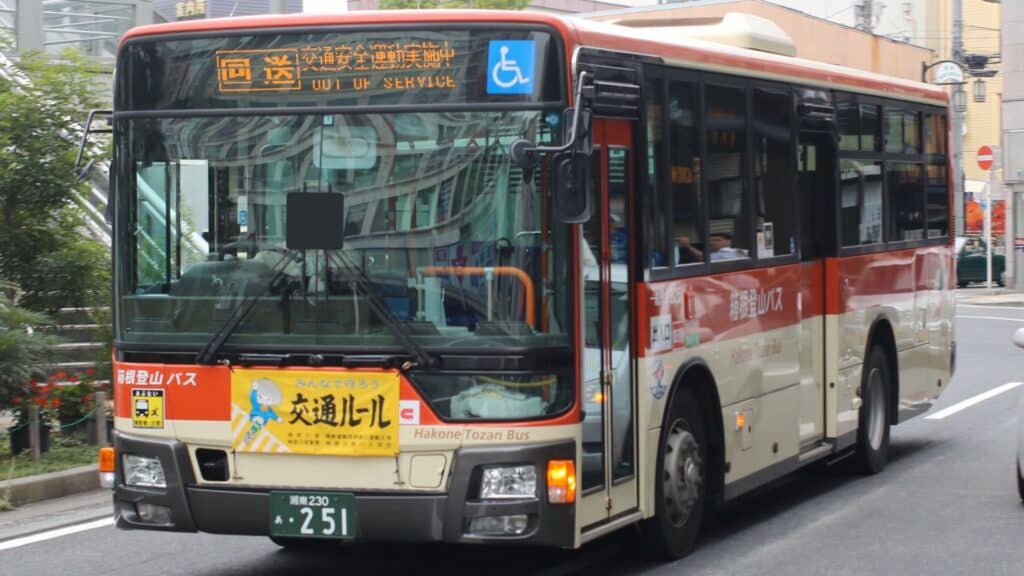
If you want to travel for a much cheaper cost, you can always opt to take a highway bus. These long-distance coaches connect cities and regions and feature comfortable seats, Wi-Fi, restrooms, and sometimes overnight services with reclining or even sleeper seats.
Popular routes include Tokyo to Kyoto/Osaka or Tokyo to Nagano, which both cost around ¥5,000 (~$30) one way. In some cases, the highway bus can even get you to places directly and be quicker and more convenient than taking trains. Tickets can be purchased online, at bus terminals, or through convenience stores.
Domestic Flights

Domestic flights in Japan are a fast option for covering long distances, especially between major hubs like Tokyo to Osaka or Hokkaido. Airlines such as ANA, JAL, Peach Aviation, and Jetstar Japan operate frequent flights from major airports, with budget airline seats from around ¥5,000 to ¥10,000 (~$30 to $60) if booked in advance. Flight times are super short, for instance, Tokyo to Osaka is about 1 hour and 15 minutes, just remember to factor in extra time for airport transfers and security checks.
Ferries

Don’t overlook using the ferry to get around Japan. As an island nation, you can travel between islands, such as Honshu to Hokkaido, Shikoku, Kyushu, or smaller islands like Miyajima and the Izu Islands, all by boat. Major operators like JR Ferry, Ferry Sunflower, and Ocean Tokyu run regular routes, with travel times ranging from a couple of hours to overnight journeys depending on distance.
Ferries can accommodate cars, bikes, and passengers on foot, making them versatile for different types of holidaymakers. Ticket prices vary widely, with short routes starting around ¥2,000 to ¥3,000 (~$13 to $20), while longer overnight trips can cost ¥10,000 to ¥20,000 (~$65 to $130) or more, with options for economy or private cabins.
Regional and City Rail
Even within just one city in Japan, the transportation options can get a little confusing. Below you’ll find the major ways to get around cities, and how to figure each one out…
JR Local and Rapid Trains
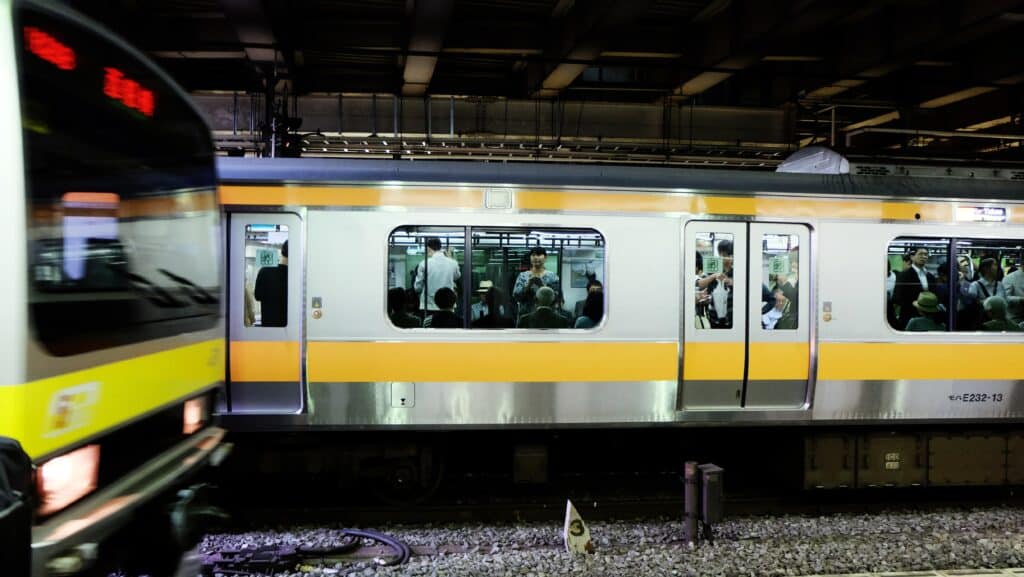
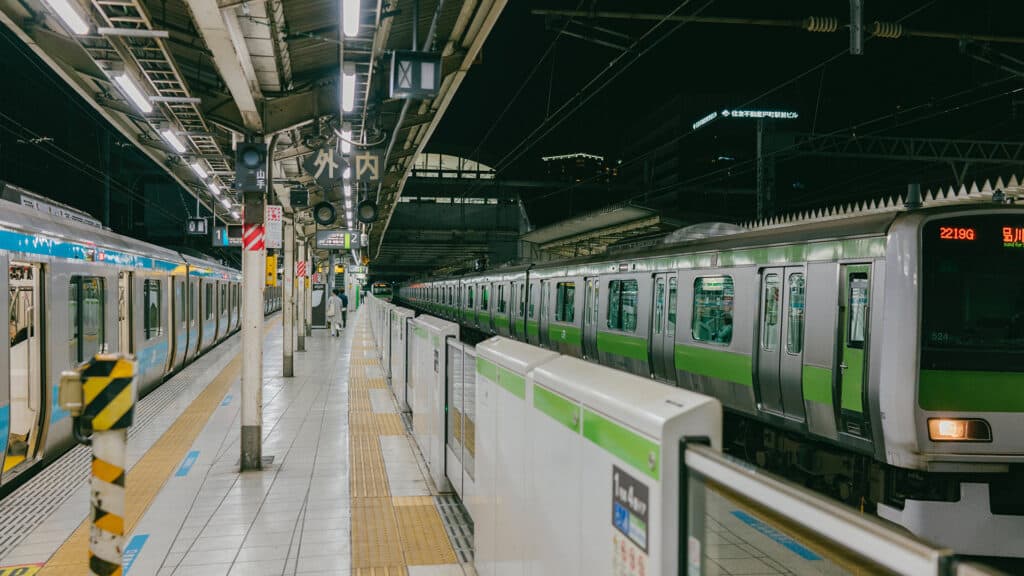
JR Local and Rapid trains are how most people get around within Japanese cities and the surrounding towns/suburbs. Rapid trains skip smaller stations, making journeys much faster, so long as your station is actually en route.
These train lines are operated by the JR Group and are covered by regional passes, with fares generally based on distance but averaging around ¥150 to ¥300 (~$1.30) per journey. You can buy tickets at the station, use your JR Rail Pass, or simply tap your IC card at the ticket gate before boarding the train.
Private Railway Companies
One thing you’ll quickly need to learn when travelling across Tokyo and other major cities in Japan is that the JR gate won’t get you to every train line. There are many other private railway companies that operate inner-city trains, such as Keio, Odakyu, Hankyu, and Kintetsu, each with its own separate ticket gate and platforms.
JR Rail Passes don’t cover these non-JR trains, but you can still use your IC card or purchase a ticket at the gate. Like the JR metro trains, these private railway companies offer Local, Rapid, and Express services to help you get around the city.
Buses
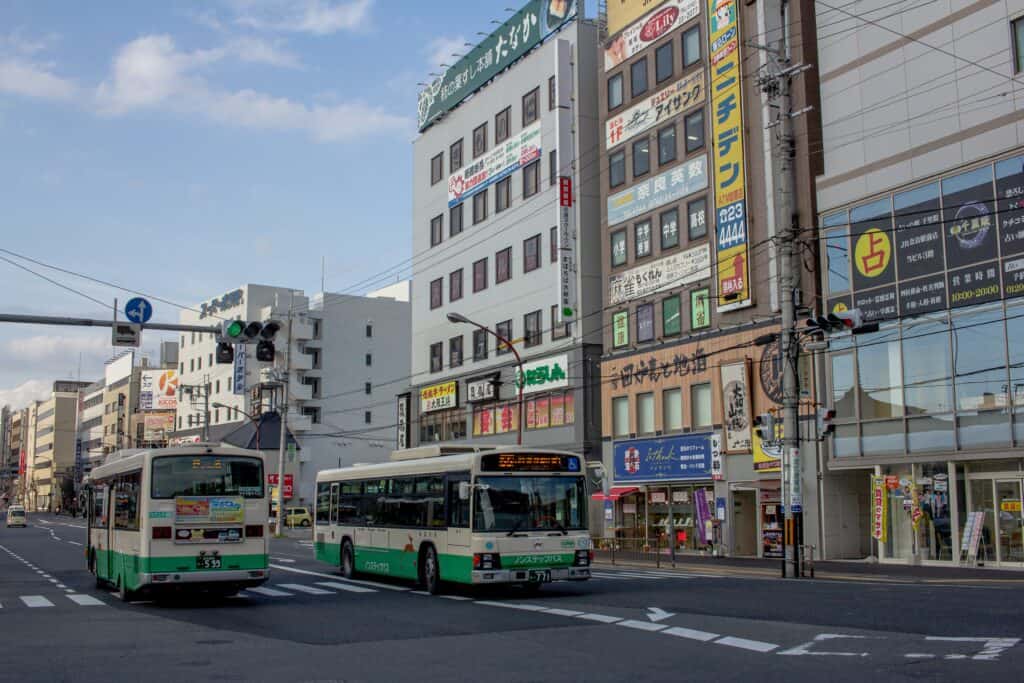
Trust us, taking inner-city buses is easy, convenient, and super safe. They cover areas that trains often don’t reach, including residential neighbourhoods, local attractions, and business districts. Like the trains, fares are usually fixed or distance-based, and payment is made with cash or IC cards. You can also buy day passes in certain areas, like Kyoto, to make riding the bus even more cost-effective.
Travelling From the Airport to the City
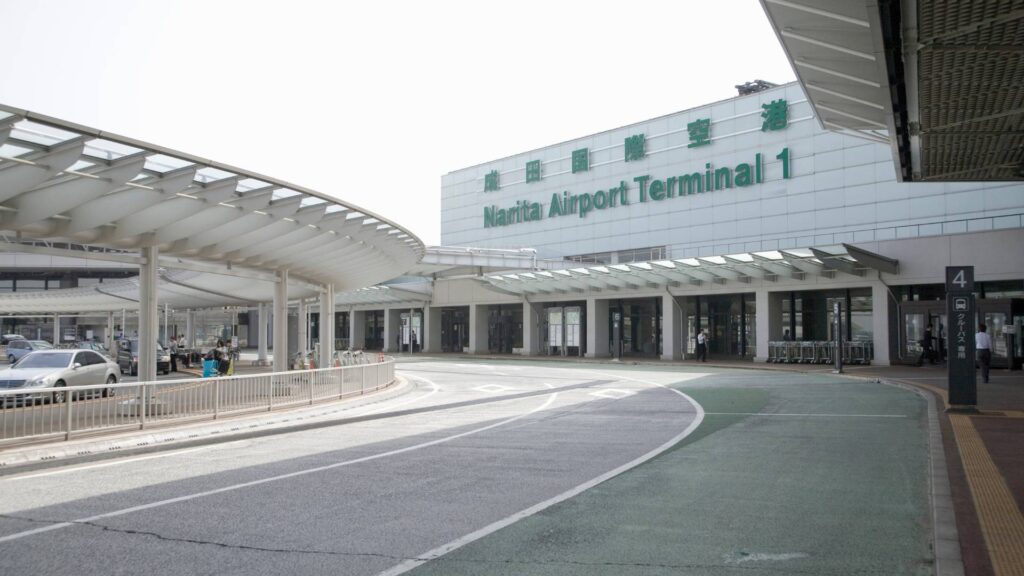
One of our biggest tips when planning a trip to Japan is to know in advance exactly how to get from the airport to your first night’s accommodation. Believe us, you’re going to want to save yourself from having to figure it out when jetlagged and exhausted from a long-haul flight.
How to Get From Narita (NRT) to Tokyo?
The fastest route from Narita to Tokyo is to take the Narita Express (N’EX), a comfortable train that reaches major stations like Tokyo, Shinjuku, and Shibuya in about an hour for around ¥3,000 (~$20). The Keisei Skyliner is another quick train option, connecting Narita to Ueno and Nippori in roughly 40–50 minutes for ¥2,470 (~$17).
There are also slower but cheaper alternatives, including local trains or highway buses, which go to multiple Tokyo districts. Taxis and airport shuttles are also available, though they are significantly more expensive than trains or buses.
How to Get From Haneda (HND) to Tokyo?
The Tokyo Monorail connects Haneda to Hamamatsucho Station on the JR Yamanote Line in about 15–20 minutes. From there, you can take Tokyo inner-city trains towards your hotel. You can also take Keikyu trains directly to Shinagawa and other major stations.
Alternatively, the Haneda Airport Limousine Bus provides direct service to popular districts like Shinjuku, with fares around ¥1,400 (~$10) depending on the destination. Taxis are, of course, available for door-to-door service, typically starting around ¥5,000 (~$34) to central Tokyo.
How to Get From Kansai International Airport (KIX) to Osaka?
To get from KIX to Osaka, you can ride the JR Kansai Airport Rapid Service straight to Osaka Station in about 65 minutes, with tickets costing around ¥1,200 (~$8). The Nankai Electric Railway is another option, with the Rapid Limited Express getting you to Namba Station in 34–45 minutes for about ¥1,430 (~$10).
Airport buses run to major districts like Umeda, Namba, and Tennoji, with fares from ¥1,600 (~$11) depending on the stop. Taxis are a lot more expensive, from ¥15,000 (~$100) to central Osaka.
How to Get From Osaka International Airport (Itami) to Osaka?
Itami Airport is much closer to Osaka, meaning you can easily take an Airport Limousine Bus directly to central stops like Umeda, Namba, and Tennoji in under an hour. Monorail and train connections are also available via the Osaka Monorail to Hotarugaike Station, then transferring to Hankyu or JR lines. Or you can take a 30-40 minute taxi for ¥5,000 (~$34).
How to Get from New Chitose Airport (CTS) to Sapporo?
CTS is relatively far from Sapporo, with taxis into the city costing upwards of ¥11,000 (~$75). For a faster and cheaper option, there’s the JR Rapid Airport train, which takes around 40 minutes with fares from ¥1,230 (~$8).
How to Get Around Japan: FAQs

How much is transport in Japan?
Transport costs vary, with city buses and trains starting around ¥200–¥400, while Shinkansen and long-distance buses are more expensive.
Is public transport in Japan expensive?
It can be affordable for short trips, but high-speed trains like the Shinkansen can quickly get expensive.
Can you eat on public transport in Japan?
Eating is generally discouraged on local trains and buses, but allowed on Shinkansen and long-distance buses. The rule of thumb is that if you have a designated seat, then you’re allowed to eat.
Get to know the rules of Japanese trains
What is the cheapest way to travel between cities in Japan?
Highway buses are usually the most budget-friendly option, just be prepared to spend a lot more time on the road than with more expensive alternatives.
Can you use Uber in Japan?
Uber operates in limited areas, mostly in major cities like Tokyo and Osaka, but taxis and public transport are more common and convenient.