
If you have spent even five minutes scrolling through Japan travel hashtags, you have seen teamLab. The digital art collective has taken over the internet, and honestly, the hype is justified. But here is the problem we see our clients run into constantly: there are just too many of them.
While teamLab has projects all over the world, Japan is the mothership. As of late 2025, there are over 10 permanent exhibitions running across the country. Trying to figure out which one is “the famous one” is enough to give anyone a headache.
We are going to make this simple for you. We have narrowed this list down to the “Big Five”: Planets, Borderless, BioVortex, Botanical Garden, and Forest.
Why only these five? Because in our experience, these are the only ones worth building a half-day itinerary around. The others are often smaller galleries, temporary pop-ups, or single installations attached to hotels or spas. They are nice, but they aren’t the main event.
Our goal here is simple: to stop you from turning up at the wrong venue. We want to make sure you know the difference between the “water one” (Planets), the “maze one” (Borderless), and the “new Kyoto one” (BioVortex) so you don’t end up booking a ticket for an experience that doesn’t fit your travel style.
Stop Planning, Start Adventuring
Tired of spending hours trying to piece together the perfect Japan trip? Our custom travel planning service is for you. We handle all the research and logistics to create a unique itinerary that lets you travel with confidence and experience Japan your way.
→ Build My Personalised Japan Itinerary
What Actually Is teamLab?
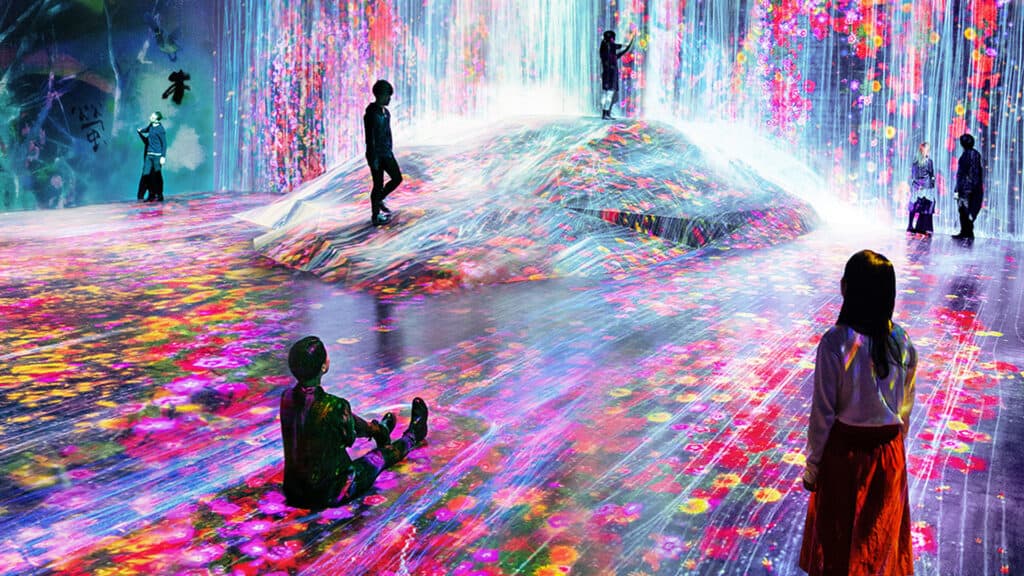
Before we talk about the locations, it would be good to know exactly what you would be walking into. teamLab is not one artist with a paintbrush. Instead, it is an art collective founded in Tokyo in 2001, calling themselves “ultra-technologists”.
Think of them as a group of hundreds of specialists (programmers, engineers, mathematicians, architects, and CG animators) all working together.
This is why teamLab museums feel different from anything else in the world. The mesmerising art you see on Instagram isn’t just a looped video file. It is generated in real-time by massive computer servers. If you touch a wall, flowers bloom. If you stand still, water flows around you. The art ‘knows’ you are there.
The Big Question: Is teamLab Worth It?
We get asked this constantly. Because teamLab is so dominant on social media, many travellers worry it is just a tourist trap designed for Instagram rather than a serious art experience.
Our honest answer? Yes, it is worth it, but with a caveat.
It is popular for a reason. Unlike many ‘pop-up museums’ that feel cheap and hollow, teamLab exhibitions are technically incredible. The interactivity is genuine, and the sheer scale of the projection mapping is unlike anything else in the world. It is fantastic for families who need to keep kids entertained and, yes, if you enjoy photography, it is a great location.
However, you might want to skip it if you have seen it at home. teamLab has permanent exhibitions in cities like Singapore, Macau, Miami and Beijing. While the Tokyo locations are generally larger, the ‘vibe’ is similar.
teamLab Planets (Toyosu)
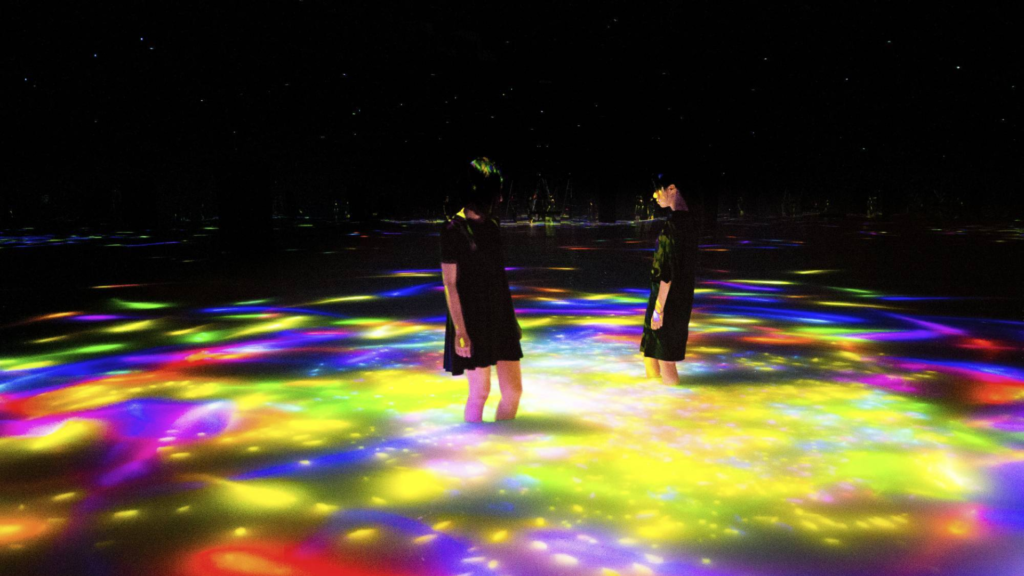
If you choose Planets, you are choosing water. The official concept is “Body Immersive,” but practically speaking, it means you are going to be barefoot and knee-deep in water for parts of the exhibition. It is a very physical experience. You take your shoes and socks off at the lockers and leave them there for the entire visit.
As a critical note on accessibility & comfort, because of the water elements and uneven floor surfaces (like the Soft Black Hole room where you sink into beanbags), this location is highly not recommended for anyone with mobility issues. If you struggle with balance or walking, this will be a difficult and potentially dangerous experience.
Also consider your own comfort levels. You are walking in lukewarm chlorinated water shared with hundreds of other tourists. If you have open wounds on your feet or just feel icky about shared water, you should absolutely skip Planets and choose Borderless instead.
The experience builds up perfectly. You start in the quiet darkness of the locker area, wade through water in a dark corridor, and then suddenly you are standing inside the “Infinite Crystal Universe” (that famous room with the hanging LED lights that you have definitely seen on Instagram). It ends with the Floating Flower Garden, where real orchids descend from the ceiling to surround you. It feels much more tactile and sensory than just looking at screens.
- Location: Toyosu, Tokyo (near the Toyosu Fish Market).
- Price: Adults from approx. ¥3,800 – ¥4,800 (Dynamic pricing applies).
- Time Needed: 1.5 – 2 hours.
- Key Restriction: You must be barefoot. Wear trousers that can roll up above your knees easily.
Check out our detailed guide to teamLab Planets:
teamLab Borderless (Azabudai Hills)
If Planets is about following a path, Borderless is about getting lost. The concept here is “Wander, Explore, Discover,” and they take that literally. There is no map. There are no signs telling you where to go. The art here has a mind of its own; we have watched digital crows fly out of one room and down the hallway into another.
This location is a digital labyrinth designed to confuse you. You have to hunt for the rooms, and you will probably walk in circles a few times. That is the point. The reward here is for those who take their time; if you stand in one spot for twenty minutes, the room will likely change completely around you.
The scale feels massive here. The “Bubble Universe” room is the new icon of the Azabudai Hills location, full of strange glowing spheres that blink when you approach them. It feels less like a structured art gallery and more like a futuristic playground.
- Location: Azabudai Hills, Tokyo (near Tokyo Tower).
- Price: Adults from approx. ¥3,600 – ¥5,600 (Dynamic pricing applies).
- Time Needed: 3+ hours (it is very easy to lose track of time here).
- Key Restriction: No large bags (lockers are provided). High heels are not recommended as you will do a lot of walking.
teamLab BioVortex (Kyoto)
Opened in late 2025, this is currently the most talked-about location in Japan. It is not just another copy of the Tokyo museums. It is a completely different beast.
The first thing you notice is the shift in tone. While Tokyo focuses on bright pop-art flowers and crystal lights, BioVortex is darker, moodier, and centres on “Environmental Phenomena.” The art here feels more alive and abstract. You will see complex mirrors, “dark suns,” and time-based behaviours that evolve slowly. It feels less like a photo op and more like a meditative experience, which fits Kyoto perfectly.
It is also currently the largest teamLab museum in the country. Because of that massive scale, they have brought back the “Athletics Forest.” This is a physical activity space that encourages you to jump, climb, and move through the art.
It is a brilliant way to burn off energy, but it also offers a spiritual counterpoint to the chaotic energy of the Tokyo locations. If you want something that feels deep rather than just “fun,” this is the one to book.
- Location: South of Kyoto Station (an easy 8-minute walk).
- Price: Adults from approx. ¥3,600 – ¥5,200 (Dynamic pricing applies).
- Time Needed: 2 – 3 hours.
- Key Tip: This is the perfect evening activity to fill your schedule after the traditional temples close around 5 PM.
Read our complete guide to teamLab BioVortex:
teamLab Botanical Garden (Osaka)
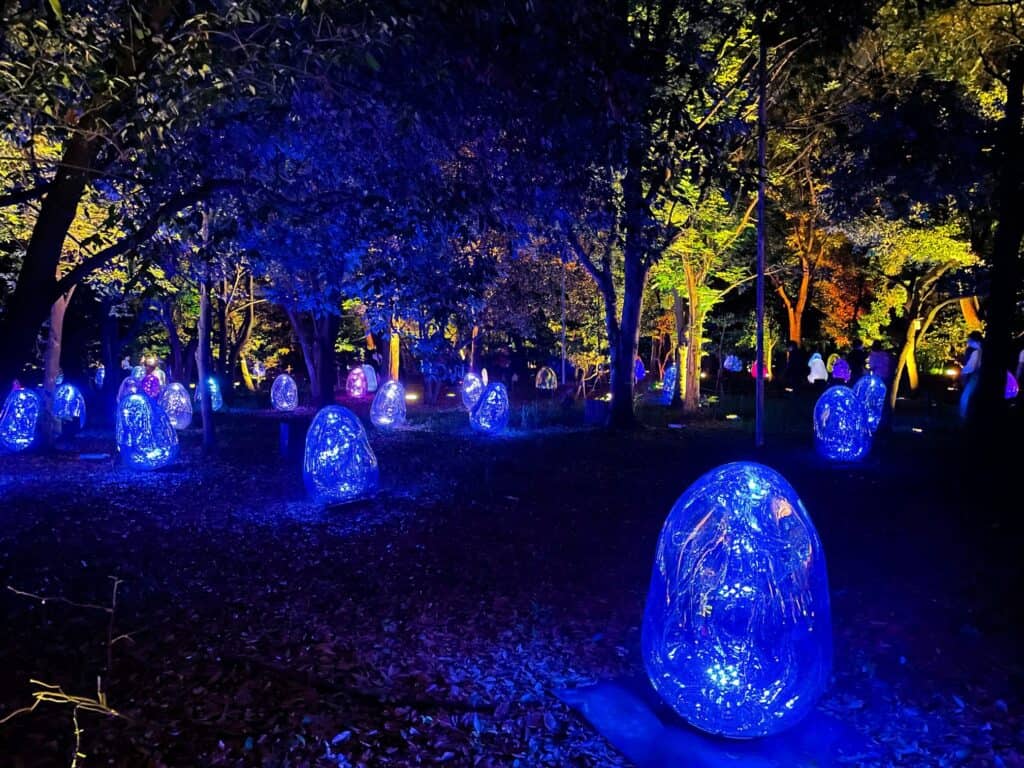
This location stands out because it is not inside a building at all. teamLab Botanical Garden is a permanent night-time exhibition that takes over the real Nagai Botanical Garden. The concept here is “Digitised Nature.” They do not try to replace the real world with screens or mirrored walls. Instead, they use digital lights and projections to highlight the actual ancient trees and plants that live there.
The art interacts with the environment in real time, which makes it feel incredibly organic. If the wind blows the branches, the lights shift rhythmically. If birds fly past, the projections react to their movement. It feels like the park itself is breathing. We find this location much more relaxing than the others because it is open-air. You are not trapped in a dark room; you are just taking a walk through the woods.
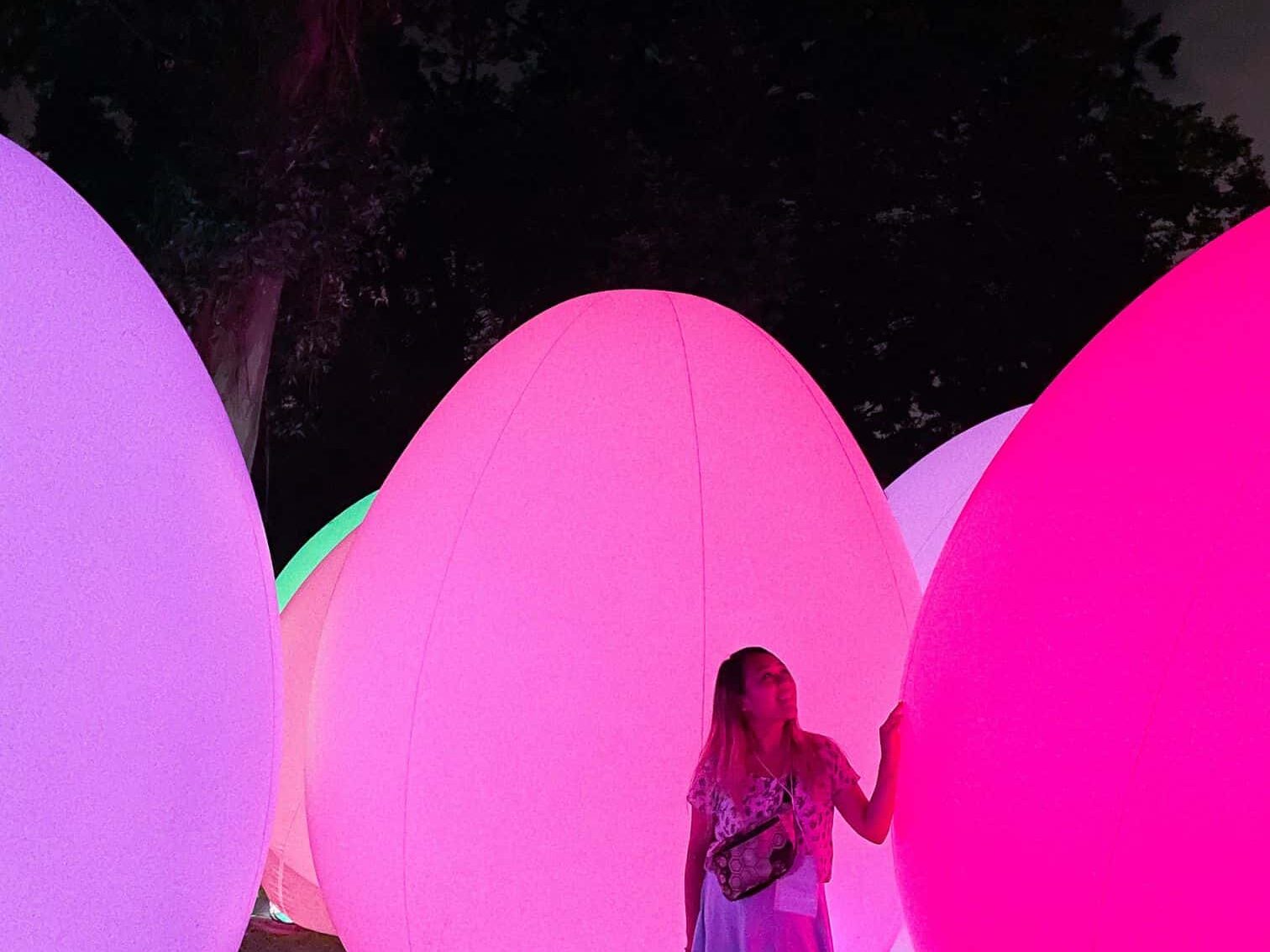
Because this is real nature, real nature rules apply. If you visit in summer (June-September), bring strong insect repellent. When we visited in August, we were practically eaten alive by mosquitoes. Do not let the pretty lights fool you; dress for the outdoors.
That said, we really appreciate this spot as a counter-balance to the intensity of Osaka. After a day of fighting crowds and neon lights in Dotonbori, walking through these dark, illuminated paths feels incredibly relaxing. It is significantly less crowded than the Tokyo or Kyoto museums.
- Location: Nagai Park, Osaka (easily accessible by subway).
- Price: Adults approx. ¥1,800 – ¥2,400 (Dynamic pricing applies).
- Time Needed: 1 – 1.5 hours.
- Key Restriction: It is only open at night after sunset. Since it is outdoors, the experience is weather dependent, so check the forecast before booking.
teamLab Forest (Fukuoka)
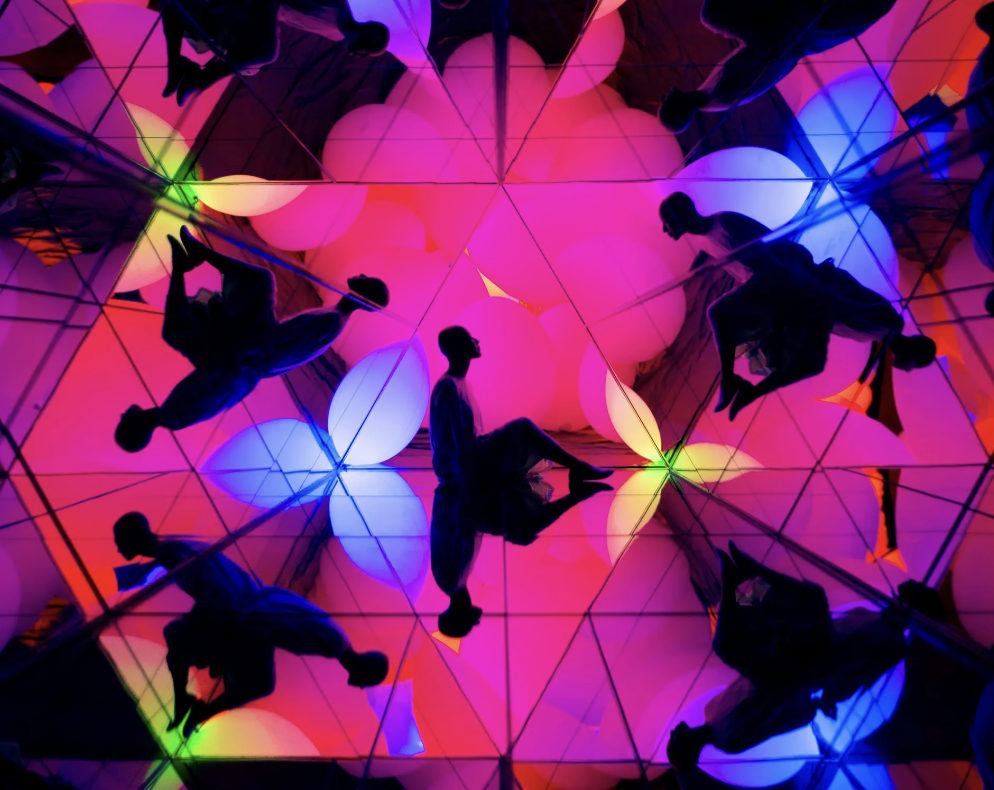
While the other museums are about immersion, this one is about interaction. The central theme here is “Catch and Collect,” which makes it the most gamified location on this list. You do not just passively watch the art here. Instead, you use a special smartphone app to hunt and capture various digital animals roaming the walls.
But it is not just about staring at your phone. The museum is actually split into two parts, the second being the “Athletics Forest.” This area requires you to move your body. You balance on shaky glowing platforms and jump across digital stepping stones. It is designed to train spatial awareness. Because of this, the energy is completely different from the meditative Kyoto or Osaka locations. It attracts a younger crowd and families who want to run around and make noise.
This teamLab is inside the BOSS E ZO complex right next to the baseball dome, which is a massive entertainment hub. If you are already in the area for a baseball game or shopping, it is a fun addition to the day, but it is definitely the most casual experience of the five teamLab locations we mentioned.
- Location: BOSS E ZO Fukuoka (next to PayPay Dome).
- Price: Adults approx. ¥2,200 – ¥2,700 (Dynamic pricing applies).
- Time Needed: 1 – 1.5 hours.
- Key Tip: Download the “Catching and Collecting Forest” app on your phone before you enter. It saves you from trying to download it on shaky Wi-Fi at the entrance.
Step Into Japanese Traditions
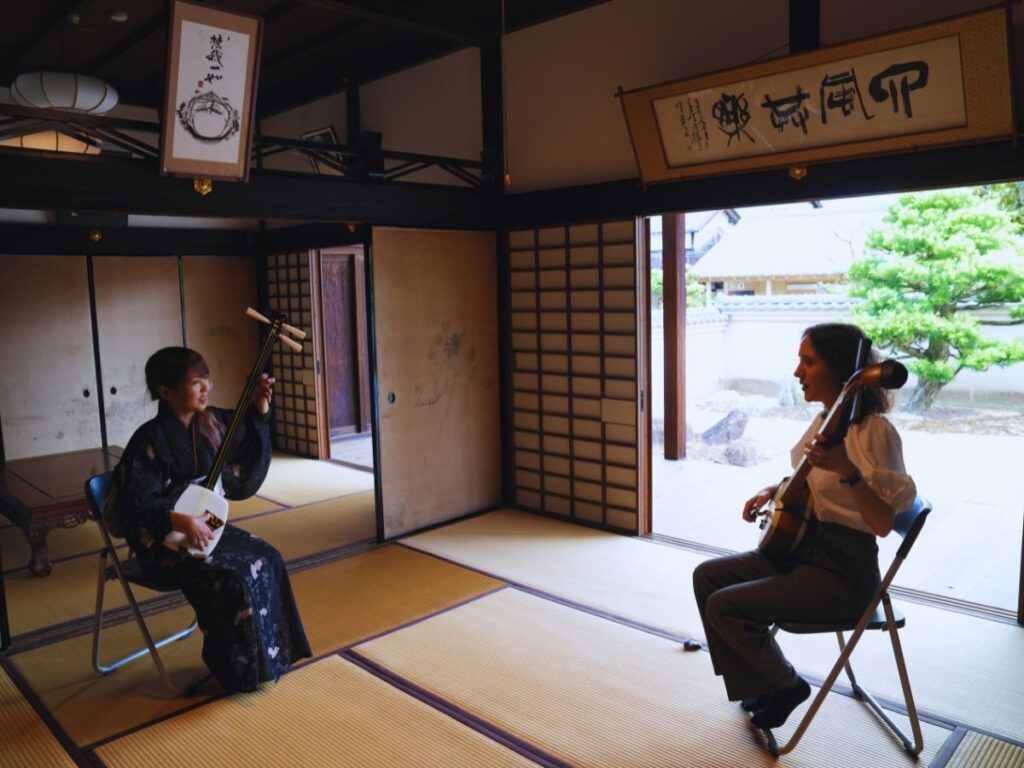
There’s more to Japan than sightseeing. Imagine whisking matcha at a tea ceremony, learning the secrets of Japanese cooking, or trying your hand at a traditional craft. These are the moments that bring your journey to life — and we can help you book them with ease.
→ Find Cultural Experiences for Your Japan Trip
teamLab FAQs
Which teamLab is best for toddlers?
Borderless (Tokyo) or Forest (Fukuoka). Planets is tricky because the water levels can be too deep for small children, and you cannot bring strollers inside the exhibit.
What should I wear to teamLab Planets?
Wear trousers that can easily roll up above your knees (for the water area). Avoid skirts or dresses because many floors are mirrors—though free rental shorts are available if you forget.
Is the new teamLab BioVortex in Kyoto better than Tokyo?
It is different, not necessarily “better.” It is larger, darker, and more abstract. If you want bright, colourful “Instagram” photos, stick to Tokyo. If you want a moody, immersive art experience, go to Kyoto.
Do I really need to book in advance?
Yes. Tokyo tickets often sell out 4 – 6 weeks in advance. Kyoto usually requires booking 2 – 3 weeks ahead. Same-day tickets are almost never available.
Are there lockers for my luggage?
Yes, all major locations (Planets, Borderless, BioVortex) have locker areas at the entrance for small suitcases and backpacks.
Is teamLab Botanical Garden in Osaka worth it if it rains?
It stays open in light rain, but it can be slippery and less enjoyable. We recommend checking the forecast and visiting on a dry evening if possible.