We’re not going to lie: waking up at 5:30 AM, in the dark, in a room that’s freezing cold, is not our idea of a holiday. But when the sound you wake up to is a deep temple gong? Well, that’s a different story.
That’s a shukubo, or a Koyasan temple stay. And it’s not just a ‘place to sleep.’ It’s an entire experience where you’re basically living like a monk for a night.
To be honest, we were a little intimidated before we went. We had a million questions. Would it be super awkward? Were there a ton of rules we were going to break? Would we freeze? (Spoiler: yes, it’s cold.) And the food, shojin ryori (Buddhist vegetarian food), what even is that? We were picturing cold rice and weird jelly.
We figured if we were worrying about all this, you probably are too.
So, we’re giving you the full rundown. No fluff. We’ll tell you exactly what happened, what was awesome, what was tough, and all the stuff we wish someone had told us before we went. This is our real-talk guide to doing a Koyasan temple stay.
First Off: What is Koyasan, Anyway?

You’re probably hearing “Koyasan” and “shukubo” and wondering what they even mean. Here’s the rundown.
Koyasan (or Mount Koya) isn’t just a single mountain peak. It’s a remote, high-altitude valley town. It’s famous for being the historic centre of Shingon Buddhism, a major sect founded by the monk Kobo Daishi over 1,200 years ago. The entire town and its pilgrimage routes are a UNESCO World Heritage site.
The whole area is packed with over 100 temples. It’s also home to Okunoin, Japan’s largest cemetery, which is a 2-kilometre-long path through an ancient cedar forest, lined with moss-covered tombs.
So, what’s a “shukubo”? It’s just the Japanese word for “temple lodging.” About 50 of the temples on the mountain let you stay overnight as a guest. But let’s be clear: it is not a hotel. You’re staying in a working, active temple. You sleep on a futon on the floor, you eat the monks’ shojin ryori, and you wake up at dawn to watch them do their morning prayers. That’s the whole point.
This is just the quick version. If you want the full breakdown of all the sights, the main temples, and the history, check out our full Koyasan Area Guide:
Koyasan Temple Stay: What Actually Happens
Every temple runs on its own schedule, so don’t expect a set-in-stone itinerary. But here’s the general flow of our stay, from start to finish.
Afternoon: Getting There & Checking In
When we stepped off the bus in the town, the first thing that hit us was the quiet. It was dead quiet. And the air? Since it was April, the daytime was actually fine: cool, crisp, but a light jacket was all we needed. The “cold” everyone warns you about? We weren’t feeling it yet. It just felt like a nice spring day on a mountain.
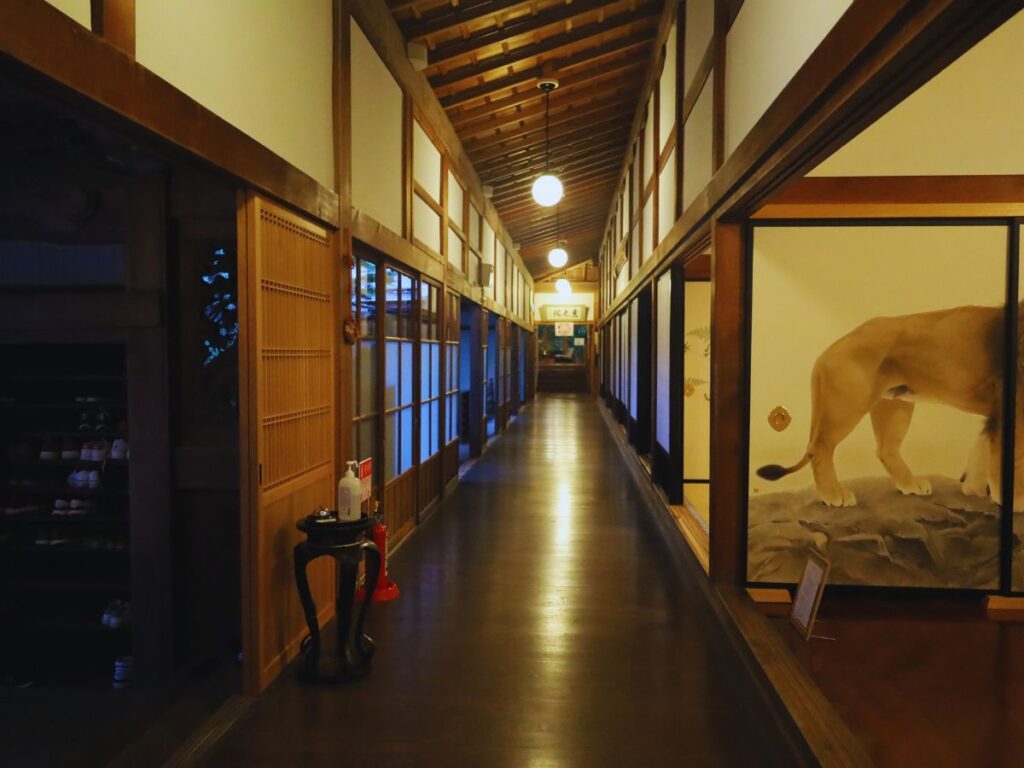
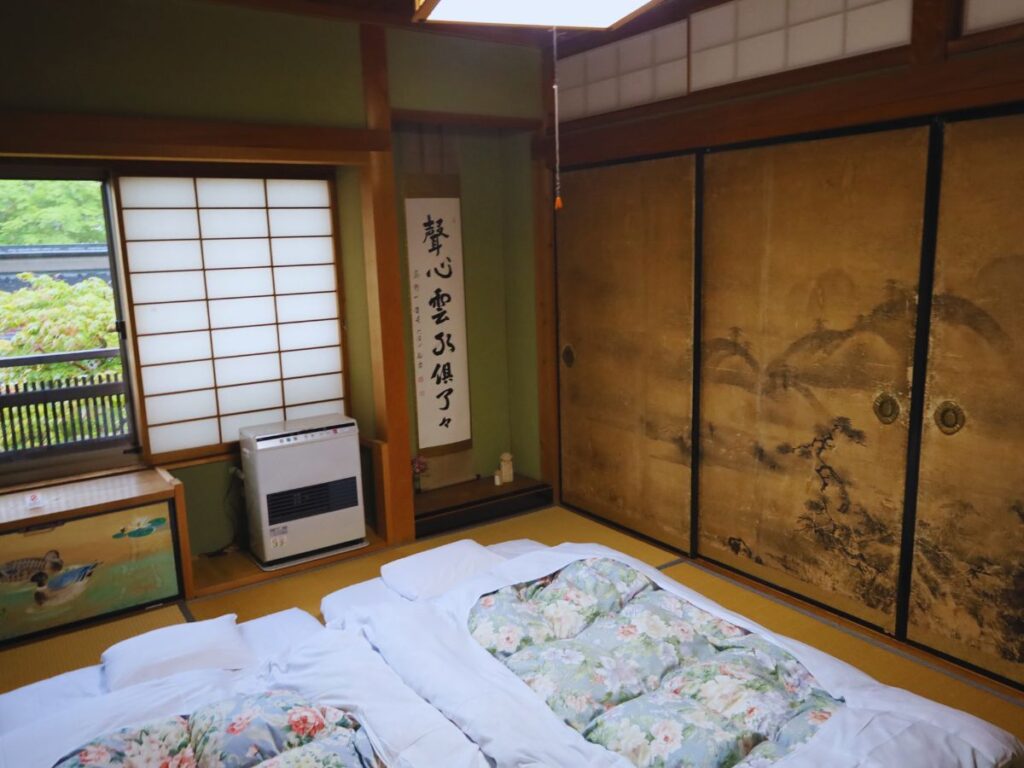
A monk met us at the entrance and had us ditch our shoes. He led us down these long, dark, wooden hallways that were so polished they looked wet. Our room was a classic washitsu (tatami room). It was basic, but spotless. It had a low table, a tea set, and our yukata (cotton robes) folded up. Our monk slid open the shoji (paper screens), and we were looking right at the garden. Just moss, rocks, nature and silence.
The Evening: The Food and the Night Tour
We had some time before dinner, so we went for a quick walk around the temple grounds. The air was getting colder as the sun went down, and it was cool to see the stone paths and old buildings in the late afternoon light.
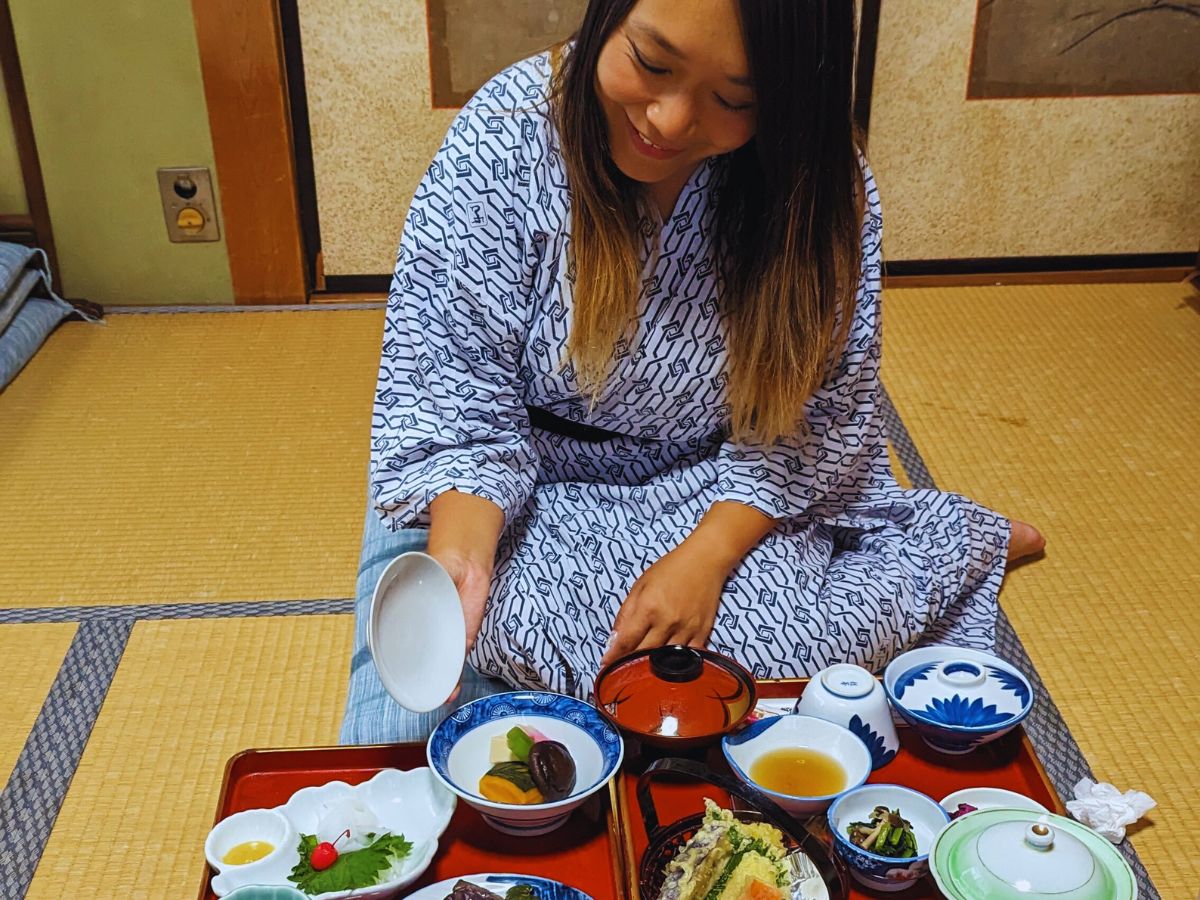
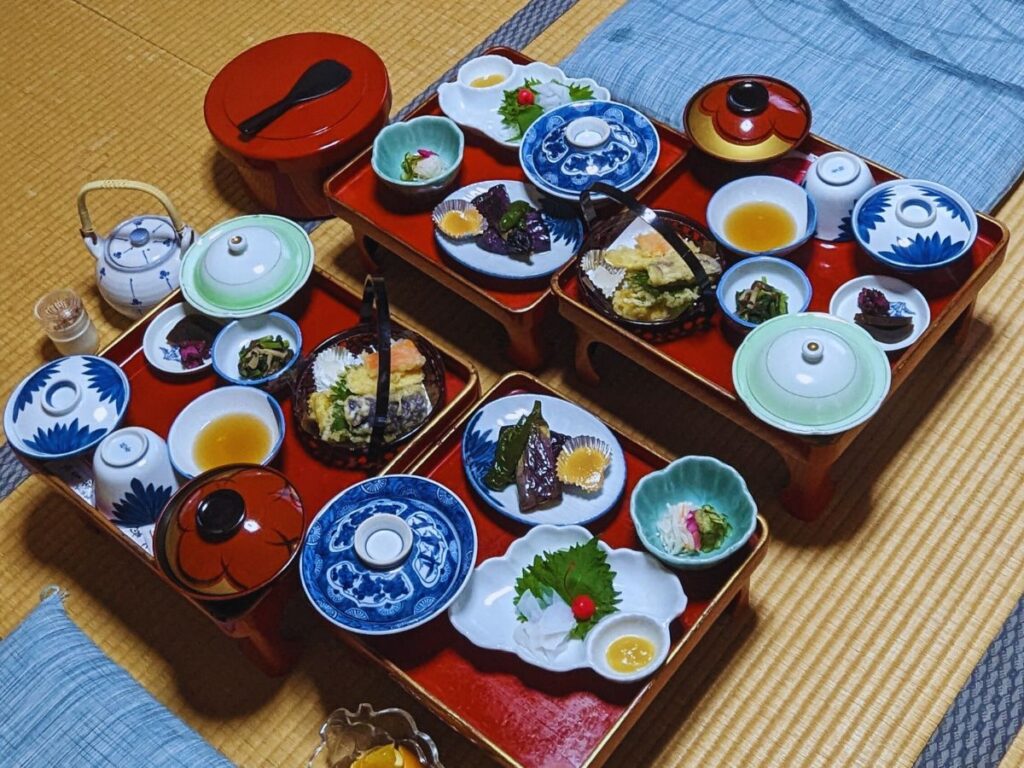
Back in our room, the monks brought in dinner. This is the famous shojin ryori. We were braced for it, worried it would be bland, or just a bunch of weird, cold vegetables.
Honestly? It was an event. As you can see in our photos, they bring in these big, red lacquer trays, one for each of us, and they are just covered in tiny, beautiful bowls. There was a basket of light tempura, a dish of grilled eggplant, a clear soup, several small bowls with different pickled and simmered vegetables, and even a plate of what looked exactly like sashimi (but it’s all vegetarian, so it was probably konnyaku jelly). It was a feast for the eyes first, and then we got to eat. We were shocked at how full and satisfied we felt.
After dinner, we went out and joined an Okunoin Night Tour. (Just a heads-up: our temple didn’t run this, it was a separate thing we booked in town). You have to do this. A monk guides you through this massive 2-kilometre-long cemetery lit only by stone lanterns. It’s not scary; it’s just incredibly cool. Our guide told us all these stories and pointed out details we would have walked right past.
We got back just in time for the temple’s curfew. The main gates lock, and you are in for the night. It’s actually a relief. No noise, no TV, nothing to do but sit in the quiet.
The Morning
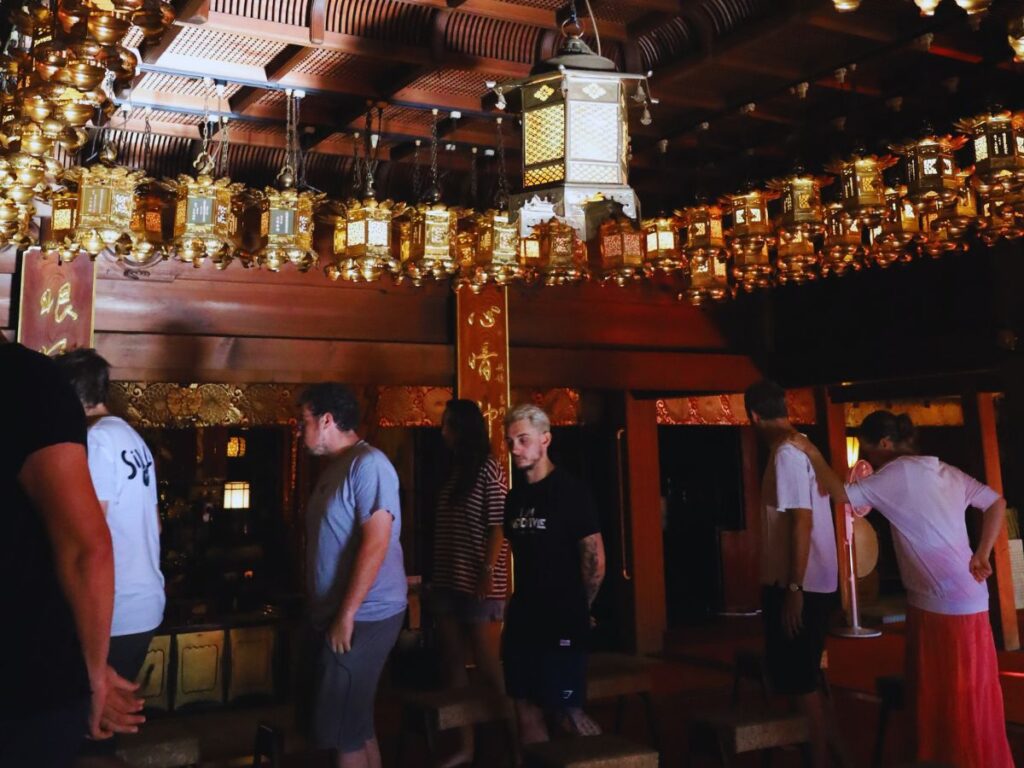
We had to wake up super early, around 5:30 AM. It was still pitch black. And this is when the cold hits you.
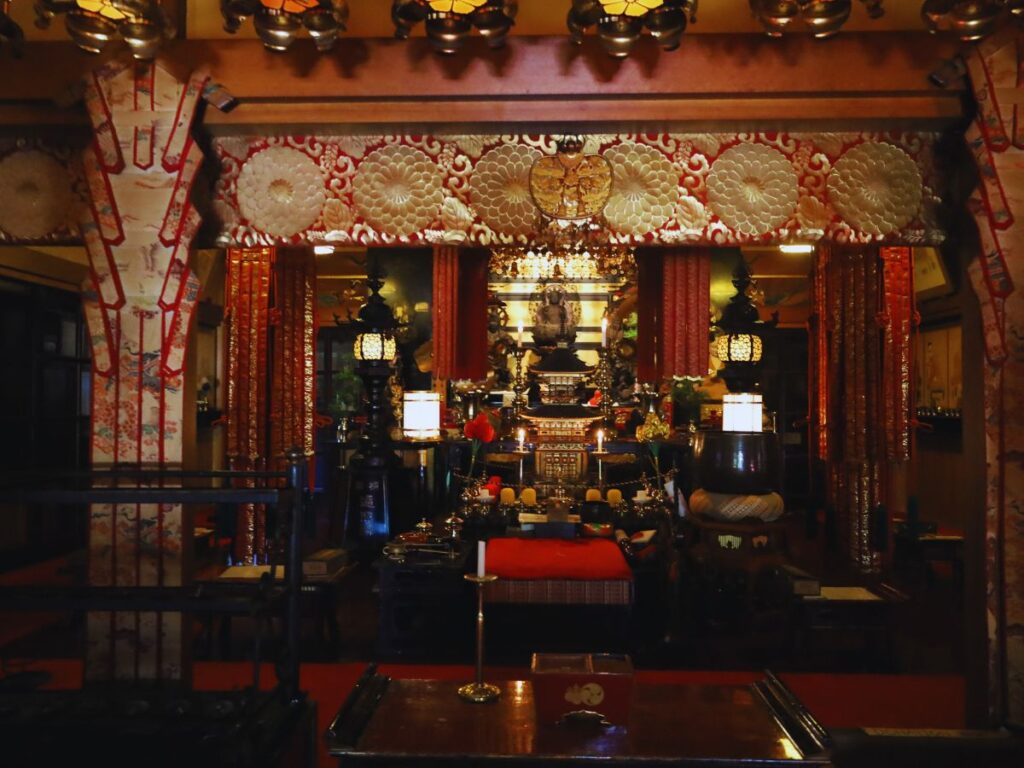
These old temples have no central heating. The hallways are basically outside. We threw on our warm clothes and followed the other guests to the temple’s Hondo (Main Hall). The hall itself is huge and unheated. You kneel on the tatami floor while the monks start their Otsutome (morning prayer service).
After the service, we went back for breakfast. It was another shojin ryori meal—warm rice porridge, miso soup, and tofu. It’s simple, but that hot porridge was the best thing we’d ever tasted after sitting in the cold.
We checked out right after that. We left feeling something we don’t normally feel: just calm. Like our brains had been scrubbed clean.
The “Hard Part” of a DIY Stay (And Our Solution)
Okay, let’s be real for a second. We loved our stay, but the planning was a headache.
First, booking. You have to find the right temple (there are over 50) and book it like six months out.
Then, the transport. It’s a whole chain: a train, a steep cable car ride, and a local bus. Getting all the schedules to line up is a nightmare.
And the worst part: luggage. What do you do with your giant suitcase for just one night? We had to figure out luggage forwarding, which is a whole other thing to organise.
Honestly, after all that work, one night felt way too rushed. We spent half a day just getting there and had to leave right after breakfast. We left wishing we had a guide to just handle all the hassle so we could actually enjoy the place instead of worrying about our next train.
That’s exactly why we designed our Zen & Wellness Group Trip. We basically built the trip we wished we’d had.
We handle all the annoying parts. We book the temple and sort out all the complex transport. You just show up. We even planned for a stay of two nights, not one. This is key. One night is a mad dash where you’re constantly checking your watch. Two nights means you can actually settle in, explore the town, and breathe.
But the shukubo is just one part of a 10-day journey we designed to find that calm feeling all across Japan. Instead of just one experience, you also get to join a private tea ceremony in Tokyo, try shinrin-yoku (forest bathing) in the quiet woods near Mt. Fuji, make your own Hoto noodles in a local’s home, ride the Sagano ‘Romantic’ Train through the Arashiyama gorge in Kyoto, and see the sacred shrines of Nikko… we handle everything.
The guides, the private buses, the artisan experiences. The Koyasan stay isn’t the whole trip; it’s one amazing part of a complete wellness journey.
Koyasan Temple Stay FAQs
Can I have private bathrooms in a temple stay?
Yes, you can get them, but it’s not easy. We learned they’re rare, in high demand, and you have to book months early. A few of the more popular temples for foreigners, like Eko-in or Fukuchi-in, are known to have them, but don’t expect it as standard.
Is one night in Koyasan enough?
Honestly, we felt it was way too rushed. It’s the minimum to get the experience (dinner, prayers, breakfast), but you spend so much of the first day just getting there. We strongly believe two nights is the ideal amount of time to actually settle in and explore.
What do you do with your large luggage?
Our biggest piece of advice: don’t bring it. The cable car is small and there’s no room. We used Japan’s takuhaibin (luggage forwarding) service at our previous hotel. We just packed a small overnight bag and sent our big suitcases straight to our next hotel. It was a lifesaver.
What do you actually wear to the morning prayers?
We were worried about this too. The answer: not the yukata robe. That’s just for your room or the bath, like pyjamas. For the prayers, you wear your normal, modest street clothes. We wore trousers, jumpers, and (because it was a cold morning) our warm jackets. That was perfect.