
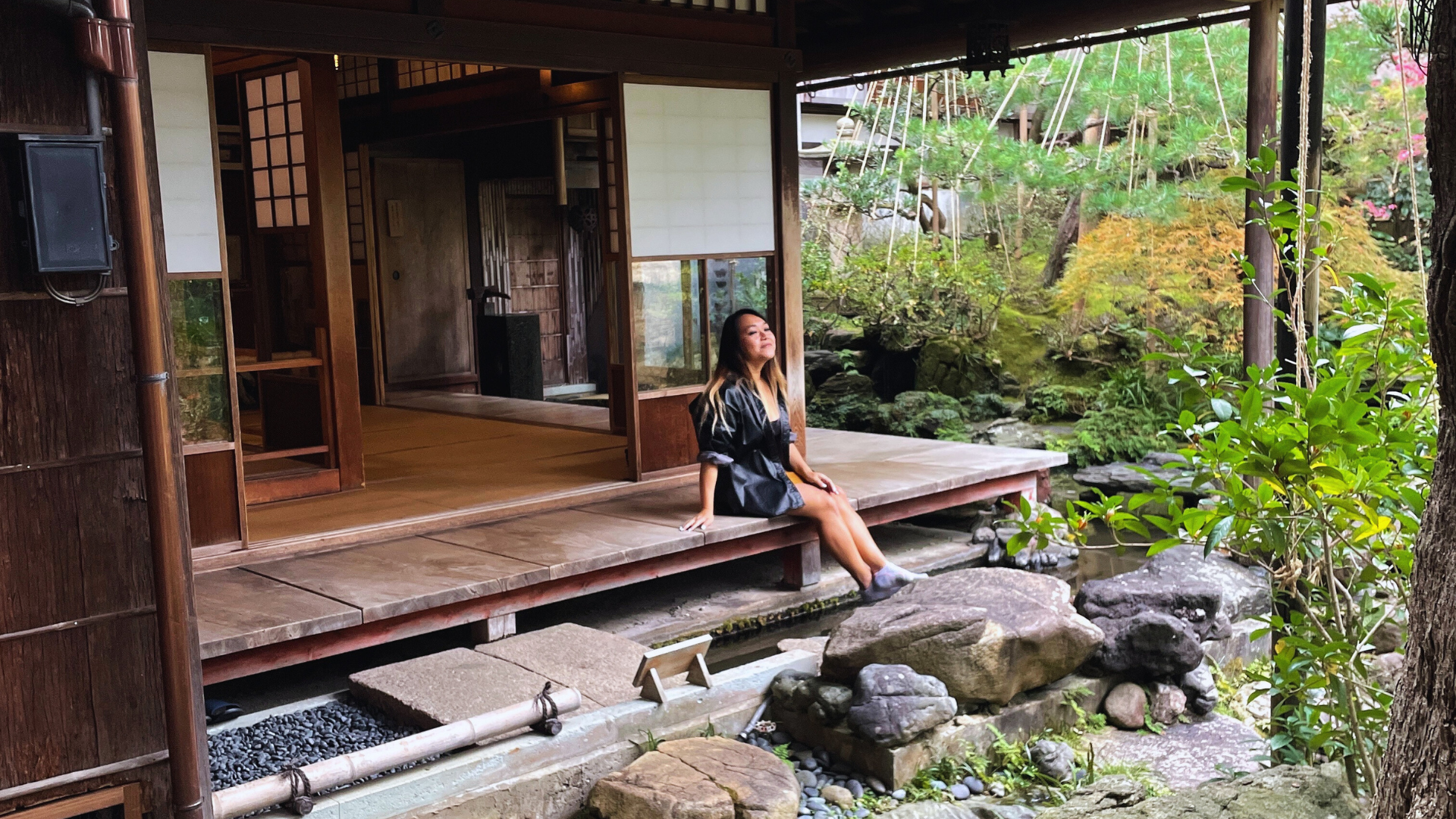
Ever wanted to walk the streets of Japan as the samurai did centuries ago? Well, I have good news for you. In Kanazawa, you can. Specifically, in the Nagamachi Samurai District, an area famous for its ancient samurai residences that have been preserved and restored to an almost unbelievable degree.
Kanazawa is known as a historic castle town, so where better to explore the lives of samurai? Nagamachi in particular is filled with museums depicting the lives of the bushi, award-winning Japanese gardens, and authentically maintained historic architecture that is hard to find elsewhere in Japan. Keep reading to learn everything you need to know about the area and why exactly you need to add it to your Kanazawa itinerary.
Planning a trip to Japan?
We would love to help you! Flip Japan is a bespoke travel agency based in Tokyo that has helped thousands of travellers live out their dream Japan trip. If you want to get off the usual tourist route and see a more authentic side of Japan, then check out our expert travel planning services and get in touch!
What is Kanazawa’s Nagamachi Samurai District?

As you’ve probably guessed by the name, Nagamachi (meaning “long town”) Samurai District is a historic area in Kanazawa where the samurai and their families once lived. It’s found in the centre of the city, just west of Kanazawa Castle. Nagamachi is made up of houses, cobbled streets, and a picturesque canal, much of which are preserved original structures from the Edo period.
Within the Nagamachi Samurai District, you’ll find museums that take you inside the bukeyashiki (traditional samurai residences) to see what daily life was like for the samurai and their families. The area itself is free to explore, and honestly, just beautiful all year round. Even in the colder months, seeing the tile-roofed houses coated in sparkly snow is a very cool experience.
Although I absolutely recommend stopping at a few of the museums (with some of our recommendations listed below), Nagamachi is worth visiting even if just for a quiet 20-minute wander in the evening. The area is widely considered to be one of the best-preserved samurai districts in all of Japan, and in my opinion, the experience of seeing it in person is hard to replicate anywhere else.
The History of Kanazawa’s Nagamachi Samurai District

Today, Kanazawa is one of Japan’s smaller cities, but believe it or not, it was once one of the largest and most important cities in all of Japan. It was the centre of the Kaga Domain during the Edo Era, and had a population equivalent to Rome at the time.
As the castle town grew in importance, more and more samurai moved to live within its vicinity. In case you don’t know much about the samurai, these were members of the warrior ruling class who held aristocratic places in society whilst living their lives according to a strict code known as Bushido. They were hugely important to Kanazawa’s defensive, economic, and social strategy, and were often given residences/land in close proximity to the castle. Nagamachi was one of the major districts where these samurai lived.
For over a century, middle and high-ranking samurai had bukeyashiki in this area. Today, many of the buildings have been miraculously preserved or meticulously restored. Unlike many other samurai districts in Japan, Nagamachi has avoided damage from fires or destruction during WWII, making it one of the best (and only) examples of streets filled with preserved bukeyashiki and Edo architecture. To me, a stroll through the streets felt a lot more like stepping back in time than it did walking through a 21st-century cityscape.
How to Get to the Nagamachi Samurai District

The Nagamachi Samurai District is quite conveniently located within central Kanazawa, and very easy to reach either on foot or by using public transport. From Kanazawa Station, it’s a little under 30 minutes to walk there, or you can catch one of many buses with routes that pass the samurai district. The most direct is probably the Kanazawa Station Loop Bus bound for Hashibacho. Ride it for about 10 minutes and get off at Korinbo (香林坊).
How to Get to Kanazawa
Not sure how to actually get to Kanazawa city? Don’t worry, travelling around Japan by train is quite easy. I recommend the following routes, depending on which city you’re coming from:
- From Toyama Station: Take the Hokuriku Shinkansen (about 20 minutes) or local Ainokaze Toyama Line/IR Ishikawa Railway (1 hour)
- From Tokyo Station: Take the Hokuriku Shinkansen (2.5 to 3 hours) or highway bus (about 8 hours)
- From Shin-Osaka Station: Take the Limited Express “Thunderbird” to Tsuruga, then transfer to the Hokuriku Shinkansen (3 hours), or take the express bus (6 hours).
Thinking of buying a JR West Pass?
Nagamachi Samurai District Guide: 5 Must-Visit Stops
The Nagamachi Samurai District itself is only a few streets big, and without stops, you could probably walk through the whole area in about 20 minutes. However, that doesn’t mean you should. If you have the time, the best thing to do in Nagamachi is to take your time venturing into the various preserved buildings that are now open to the public.
Along with museums, you can also find traditional gardens, lots of perfect photo spots, and even a few places to stop and eat a meal. These are my personal top 5 must-visit spots in Nagamachi Samurai District:
Nomura Samurai Residence


This is the preserved bukeyashiki of the Nomura family, who served as samurai for an astonishing eleven generations. The residence, also called Nomuraki, is simply spectacular. The home is made with Japanese cypress wood, contains sliding doors decorated with beautifully preserved paintings and its own private tea ceremony room, and best of all, is home to a simply magical Japanese garden.
The inside has been turned into a museum and is filled with incredible historical materials and artefacts of samurai life. I highly recommend making sure to look for the tea room, which is tucked away on the 2nd floor. It is a very peaceful space, and I learnt that the floor was made of a single plank of wood from a 1,000 year-old Japanese maple tree. There, you can enjoy traditional matcha and Japanese sweets whilst overlooking the garden, which is an entire experience in itself.
Walking through the attentively curated trees, over the stone pathways, and across the babbling streams was probably the highlight of my time in Nagamachi. The garden has received two stars in the Michelin Green Guide, as well as being officially recognised as the third best Japanese garden by the Journal of Japanese Gardening. If you only have time for one stop there, I think it should be this.
Address: 1-3-32, Nagamachi, Kanazawa, Ishikawa 920-0865
Opening Times: Daily from 8:30am to 5:30pm (4:30pm between October and March)
Entrance Fee: ¥550 for adults, ¥400 for high school students, ¥250 yen for children
Shinise Kinenkan Museum

Shinise Kinenkan Museum (or Kanazawa Shinise Memorial Hall) is on the site of what was once a merchant pharmacy serving the samurai in the district. The building was carefully restored and transformed into a museum dedicated to showcasing the life of merchants in the area, as well as Kanazawa’s traditional crafts.
Aside from just the lovely exhibitions, within Shinise Kinenkan Museum is also a traditional tea room, and outside is a very beautiful Japanese garden. Entry is very affordable at only ¥100 for adults, plus the museum is completely free for children. There’s plenty to enjoy visually, as well as lots of English signage and descriptions.
Address: 2-2-45 Nagamachi, Kanazawa, Ishikawa
Opening Times: Daily from 9:30am to 5pm (last entrance by 4:30pm)
Entrance Fee: ¥100 for adults, free for students and children
Kaburaki Kutani Porcelain Shop


If you’re interested in artisan crafts, looking for Nagamachi souvenirs, or hoping to enjoy a traditional meal, then Kaburaki Kutani is where you need to go. It specialises in kutani-yaki, a style of Japanese porcelain developed in the Ishikawa prefecture (where Kanazawa is located). It is known for the intense colour hues and intricate designs, which you can appreciate at the Kaburaki Kutani Museum or purchase at the shop.
Better yet, there is also a restaurant within the shop called Oishii Ippuku Kaburaki. They serve comforting Japanese meals, as well as matcha, coffee, and desserts, all using kaburaki-style dishware. It’s my favourite refreshment spot in the samurai district.
Address: 1-3-16 Nagamachi, Kanazawa, Ishikawa 920-0865
Opening Times: Daily from 9:00am to 6pm (the Kanazawa Kutani Museum and Kutani ware shop open from 9:00. Dinner time is available until 21:00 by reservation only.)
Entrance Fee: Free
Maeda Tosanokami-ke Shiryokan Museum

You’ll find this museum right at the entrance of the Nagamachi Samurai District, and it really does make for the perfect first stop. It is dedicated to the samurai families who once lived in the area, with artefacts passed down through the Maeda Tosanokami family, who ruled over Kanazawa as feudal lords for almost 300 years.
A large number of the samurai in Nagamachi specifically served the Maeda Clan, and within the museum, you’ll find examples of their armour, calligraphy, and writing. The museum contains 9,000 historical artefacts, and there are even free audio guides in English available to lead you through the exhibitions.
Address: 2-10-17 Katamachi, Kanazawa, Ishikawa 920-0981
Opening Times: Tues to Sun, from 9:30am to 5pm (last entrance by 4:30pm)
Entrance Fee: ¥310 for adults, ¥210 for over 65-year-olds, free for students and children
Takada Family Samurai House

Takada was another multi-generational samurai family that served during the Edo Period. The remains of their home sit along the canal and next to the pretty Yon-no-hashi (Fourth Bridge). Inside are some very interesting exhibits on not just the Takada family, but also the servants who worked in the home.
Outside is another stunning example of Japanese garden architecture, with a peaceful pond at its centre surrounded by pine trees. Wandering through the residence and its garden is free and makes for a wonderfully tranquil break during your exploration of Nagamachi.
Address: 2-6-1 Nagamachi, Kanazawa, Ishikawa
Opening Times: Daily from 9:30am to 5pm
Entrance Fee: Free
Whilst in Kanazawa…
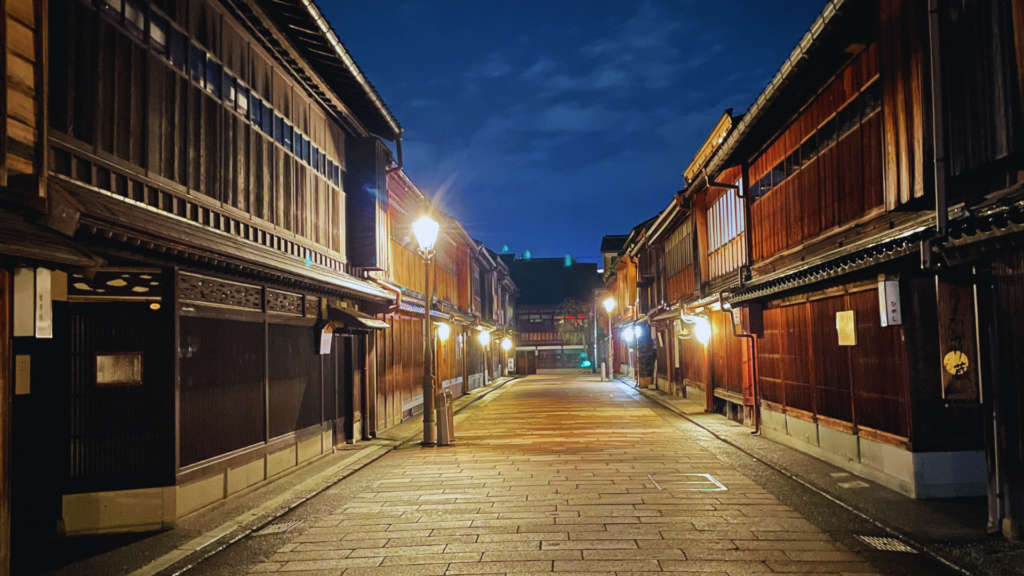
There is so much more to Kanazawa than just the Nagamachi Samurai District. If preserved ancient streets, historic crafts, and traditional food are your thing, then there is plenty more that I know you’ll love to do and see. Here are a few ideas to round out your Kanazawa plans:
- Kanazawa Castle Park: The park’s entrance is only about 15 minutes on foot from Nagamachi, and inside is an amazing reconstruction of the 16th century castle that the samurai were defending.
- Higashi Chaya District: Kanazawa’s most famous geisha area, filled with preserved teahouses (chaya). You can explore, take photos, learn more about the geisha, and even stop by a working teahouse to try matcha and a dessert.
- Kenrokuen Garden: Another one of Japan’s most revered traditional gardens that’s just a 10-minute walk away
- Omicho Market: A 300-year-old lively seafood market that has been around since the Edo period and is packed with fresh sushi, sashimi bowls, local produce, street snacks, and small restaurants tucked between the stalls.
Other Former Samurai Districts in Japan

Nagamachi might be the best-preserved samurai district in Japan, but it is not the only one. If you’re in the north of Honshu, then I would suggest checking out Kakunodate in Akita, where 80 samurai families once lived. Their residences are wonderfully preserved, but what really makes the area special is the weeping cherry blossom trees that line the streets, making the area extra special to visit during late-April/early-May.
Elsewhere, there are quite a few smaller preserved samurai districts to be found in Oita Prefecture. The most well-known is probably Usuki due to the famous Nioza Historical Road, a perfectly preserved paved street of bukeyashiki. Then the small town of Kitsuki is sandwiched on eitherside by two samurai areas in the north and south. These might be little, but they have gone almost completely unchanged for centuries, without even power lines.
Nagamachi Samurai District FAQs
Is the Nagamachi Samurai District worth visiting?
Absolutely! It’s one of Japan’s best preserved samurai districts where you can wander through and inside of real Edo-period samurai homes.
What is Nagamachi famous for?
Nagamachi is famous for the incredibly well-preserved bukeyashiki (traditional samurai residences) lined streets, which are considered to be some of the best in Japan.
Are there traditional gardens in Nagamachi?
Yes, there are several. The most famous is at Nomuraki, the Nomura family residence, whose garden has received two stars from the Michelin Green Guide and was awarded as the third best traditional garden by the Journal of Japanese Gardening.
What to do in Nagamachi Samurai District?
There is lots to do in the district. Besides simply wandering the streets and taking photos, you can visit one of the many museums depicting samurai life during the Edo Period, visit the stunning traditional Japanese gardens, and learn about Kanazawa’s porcelain history at the Kaburaki Kutani shop.
Is it free to visit Nagamachi?
Yes. Exploring the district itself is completely free, and several of the buildings, like the Takada Family Samurai House, are also free to visit. Some museums, like the Shinise Kinenkan Museum and Maeda Tosanokami-ke Shiryokan Museum, are also free for children.