Osaka is the rebellious younger sibling to Kyoto’s traditional elder. If Kyoto is where you go to reflect and breathe, Osaka is where you go to let loose and eat. It is loud, friendly, and unapologetically bold.
Most travellers following the “Golden Route” (Tokyo to Kyoto to Hiroshima) stop here, and for good reason. It is famous for its street food, its comedy, and its people, who are known for being much more chatty than their Tokyo neighbours.
But because it is such a huge city, knowing where to start can be tough.
That’s the whole point of this Osaka area guide. We have picked out the absolute must-visits and the food you simply cannot miss to help you plan your time here without the stress.
Planning a bigger trip across the country? Make sure to check out our Ultimate Japan Trip Planning Guide to see how Osaka fits into your wider itinerary.
How to Get to Osaka
Osaka is right in the middle of Japan’s main travel route, so getting here is very easy.
From Tokyo
The Shinkansen is the easiest way to travel. The fastest train, the Nozomi, connects Tokyo to Shin-Osaka Station in about 2.5 hours and costs around ¥14,720 for a reserved seat. Just keep in mind that the bullet train drops you at Shin-Osaka, which is slightly north of the city centre. You will need to take a quick local train or the subway (Midosuji Line) to get to downtown hubs like Umeda or Namba.
From Kansai International Airport (KIX)
If you are flying straight into the region, you have two great train options depending on where you stay.
If you are staying in Namba (Minami), take the Nankai Rapi:t. It is a distinct, retro-futuristic blue train that gets you to Namba Station in about 35-40 minutes. Tickets cost around ¥1,490, though you can often find them cheaper if you book online.
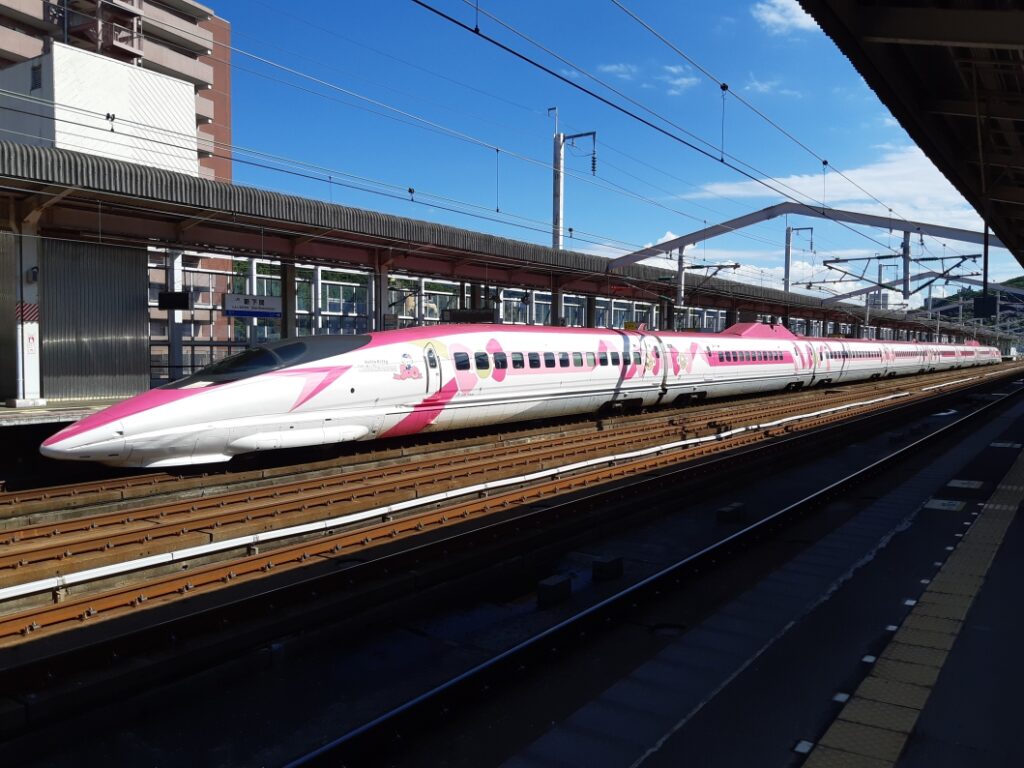
If you are staying in Shin-Osaka or Tennoji, the JR Haruka Limited Express is your best bet. It takes about 35 minutes to reach Tennoji and 50 minutes to reach Shin-Osaka. It usually costs between ¥2,000–¥3,000, but foreign tourists can often buy a special discount ticket for around ¥1,300–¥1,800. As a bonus, the train usually features a Hello Kitty design.
Now, here’s a pro tip: If you are planning to travel beyond Osaka and on to other must-visit areas of Western Japan (such as Himeji, Hiroshima, or Kyoto), buying a regional rail pass is often cheaper than paying for individual tickets. In fact, many of these passes actually include the airport Haruka train for free. It can be confusing to know which one to pick, so we’ve broken down the best options to help you decide:
Osaka’s Key Districts & Must-Visit Spots
Osaka is generally split into two main city centres: Kita (North) and Minami (South). However, there are also popular sites (like the castle, the bay, and the retro tower) outside these two hubs. Here are five key areas you need to know.
Minami Area (Namba, Shinsaibashi & Dotonbori)
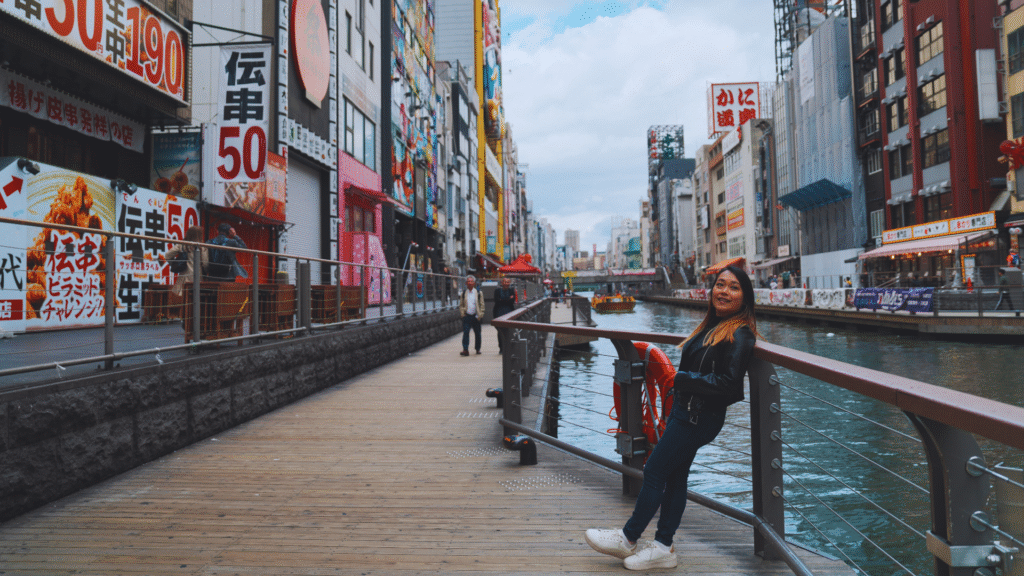
This is the chaotic, loud, and energetic Osaka that you see on Instagram. It is the entertainment heart of the city. If you only have time to visit one area, you have to make it this one.
Dotonbori
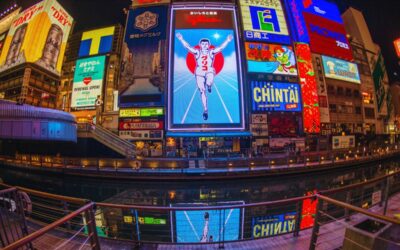
You cannot talk about Osaka without starting here. It is a sensory overload of sound and light. The street running parallel to the canal is lined with massive, animatronic billboards like giant crabs, takoyaki, and dragons (yes, dragons!) that actually move. It feels like a theme park built entirely for foodies.
Though it is still super fun during the day, I absolutely recommend visiting this place at night. Once the sun goes down, the neon lights reflect off the water and the whole area feels almost unreal. Most people stick to the main bridge, but try ducking into the side streets to find a small izakaya (pub) for a more authentic vibe.
The Glico Running Man
Located right on the Ebisu Bridge in Dotonbori, this is arguably the most famous photo spot in Western Japan. The sign shows an athlete crossing a finish line and has been watching over the canal since 1935.
The bridge itself is usually a stampede of tourists. If you want a better photo without 500 people in the background, walk down the stairs to the river level below the bridge. The angle is actually better looking up at the sign, and you will have enough space to actually strike a pose.
Shinsaibashi-suji
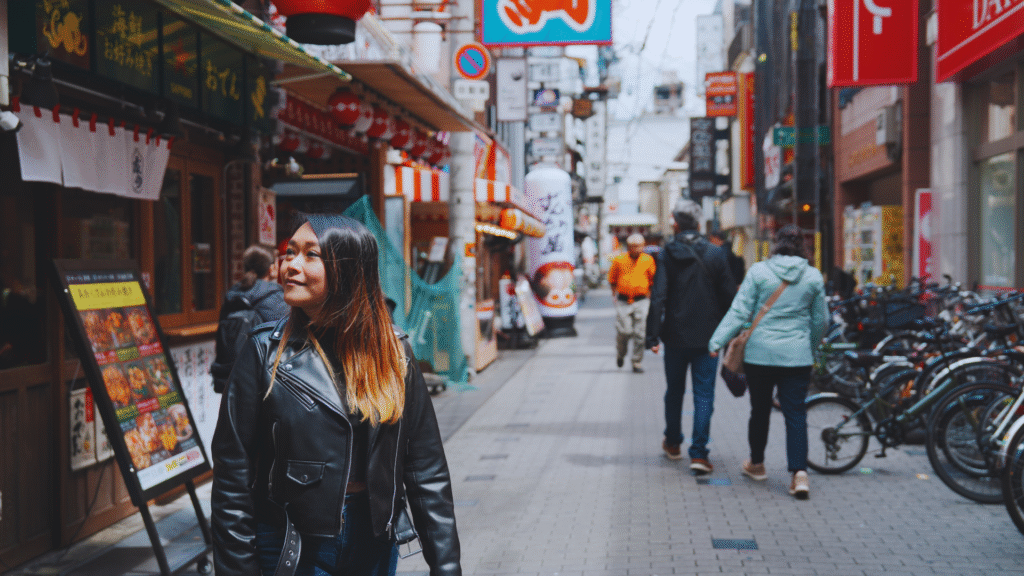
Just across the bridge from Dotonbori is this massive shopping arcade. It is a covered street that seems to stretch on forever, lined with everything from big department stores to drugstores selling matcha snacks. It is a great place to buy souvenirs, second-hand luxury items, or just people-watch, but be warned that it gets incredibly crowded on weekends. Most shops open from 10 AM to about 8 PM.
Amerikamura
A short walk west of Shinsaibashi is the centre of Osaka’s youth culture. It is often compared to Harajuku in Tokyo because of its vintage clothing stores and trendy street food. You will know you are there when you see the streetlamps shaped like robots.
The heart of the area is “Triangle Park” (Sankaku Koen), a seemingly very small concrete plaza in the middle of all the chaos that tends to gather everyone. It is the perfect spot to grab some takoyaki or an ice cream and just sit. You can watch the hordes of tourists passing by while young locals jam out, showing off some of the wildest street fashion in Japan.
Namba Yasaka Shrine

If you walk about 10 minutes away from the crowded shopping malls, you will find one of the most unique shrines in Japan. It is famous for its massive stage shaped like a giant lion’s head, standing 12 metres tall with its mouth wide open. The lion is said to swallow evil spirits and bring you victory.
The shrine is usually open from 6 AM to 5 PM, and is a popular spot for students wanting to pass exams or business owners hoping for a profitable year. It is surprisingly quiet compared to the rest of Namba and makes for an incredible photo.
Hozenji Yokocho
Just a stone’s throw from the neon madness of Dotonbori lies this narrow, stone-paved alley that feels like you have stepped back into the Edo period. It smells of incense and grilled food. The main attraction here is the Mizukake Fudo statue. It is completely covered in bright green moss because visitors splash water on it for good luck. Make sure to respectfully splash him with the ladle provided.
Kita Area (Umeda & Osaka Station)
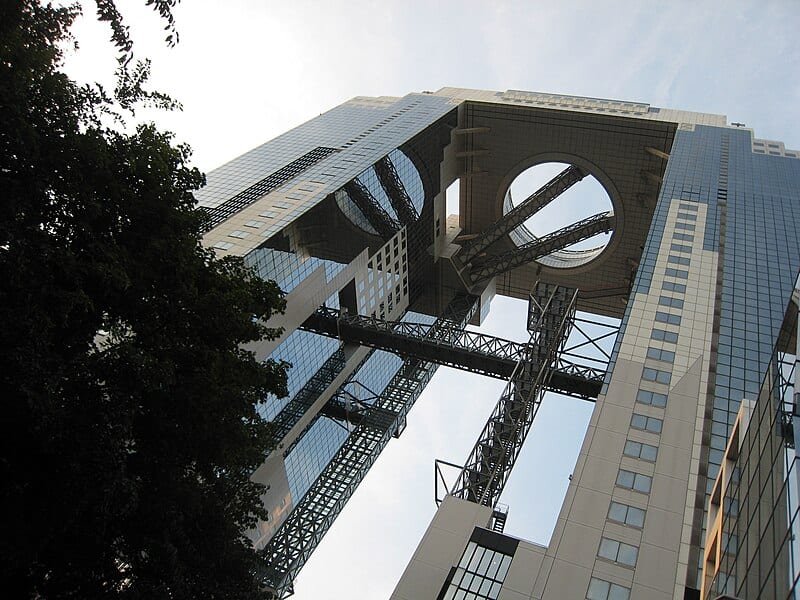
If Minami is the “party” district, Kita is the “business” district. It is cleaner, more polished, and dominated by towering glass skyscrapers and high-end department stores. This is where you go for shopping and the best city views.
Umeda Sky Building
This is widely considered one of the coolest buildings in the world. It consists of two separate towers connected at the very top by a “Floating Garden” observatory. The best part isn’t just the view from the deck. It is the ride up. You take a glass escalator that is completely suspended in mid-air between the two towers. It feels like you are floating in the sky. If you can, go just before sunset to watch the city transition from day to night.
- Price: Adults ~¥2,000.
- Hours: 9:30 AM to 10:30 PM (Last entry 10:00 PM)
Wondering if this popular spot is worth the hype? Read our honest review:
HEP FIVE
You really can’t miss this mall because it has a giant bright red Ferris wheel sticking out of its roof. It is a major landmark for the area. Inside the main atrium, there is a massive red whale hanging from the ceiling which is very cool to see. It is a great spot for younger fashion, and the Ferris wheel offers a surprisingly good view of the harbour and the city trains below.
- Price: Ferris Wheel ~¥600.
- Hours: Mall 11:00 AM to 9:00 PM (Ferris Wheel usually until 10:45 PM).^
Grand Front Osaka & LUCUA
If you want to see modern Osaka, come here. These are massive complexes of shops and restaurants directly connected to Osaka Station. It is less about specific “tourist sights” and more about the lifestyle. LUCUA is fantastic for trendy fashion and gifts, while Grand Front is a bit more upscale. The roof garden on the North Building of the Grand Front is a nice lesser-known spot where you can sit on the grass and take a break from the concrete.
- Price: Free to walk.
- Hours: Shops typically 10:30 AM to 8:30 PM.
Osaka Castle Area
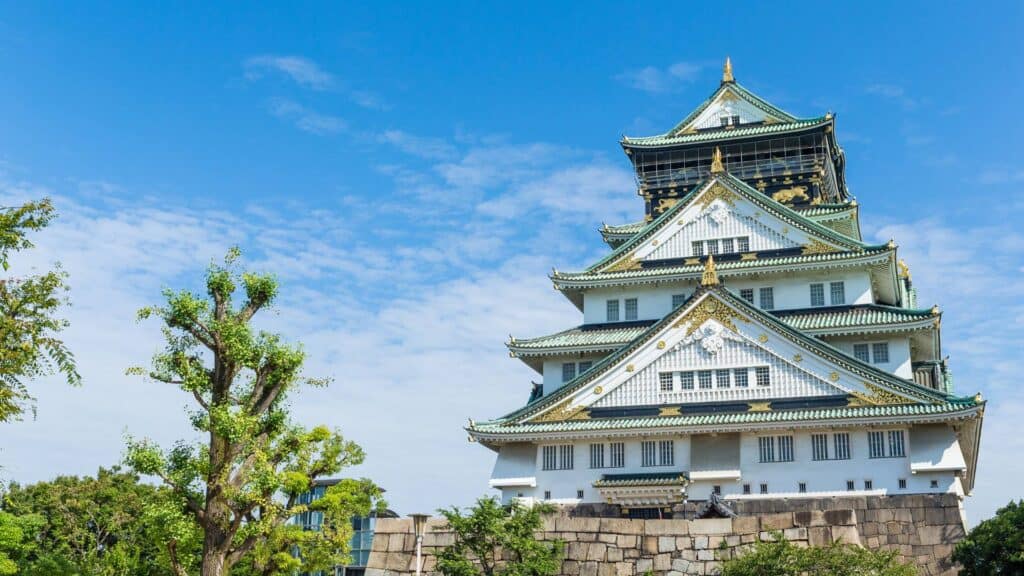
This is your dose of history in the middle of Osaka’s concrete jungle. It is a massive park with a grand castle in the centre that gives you a much-needed break from the neon lights of the downtown areas.
Osaka Castle
The castle you see today is actually a reproduction because the original burned down long ago. But don’t let that stop you; it is still magnificent to look at, sitting on top of massive stone walls that are original and older than the city itself. Be warned that the inside is a modern museum with elevators, not an old wooden interior (much to locals’ annoyance, but let’s not get into that right now).
If you watched the TV series Shogun, this place will give you goosebumps. This is the real-life setting where that story took place! Standing at the base of the moat, you can easily picture how intimidating it would have been to approach it back then. If you are short on time or just hate crowds, you can actually skip the inside. For me, the best experience is simply walking along the massive walls outside, which are completely free and look incredible against the sky.
- Price: Castle Tower approx. ¥600.
- Hours: 9:00 AM to 5:00 PM (Last entry 4:30 PM).
Nishinomaru Garden
Most tourists rush straight to the castle and miss this spot entirely, which is a mistake. It is a gated lawn garden located just west of the main castle tower. Because it requires a small extra fee, it is usually much quieter than the main grounds. It offers the single best angle for photographing the castle because you can get the moat, the walls, and the tower all in one shot without people blocking your view. If you are visiting in spring, this is the premium spot for cherry blossom viewing (hanami) with over 600 trees.
- Price: Adults approx. ¥200 (extra charge).
- Hours: 9:00 AM to 5:00 PM (Closed Mondays)
Tennoji & Shinsekai Area

This area has a retro, nostalgic vibe that feels like stepping back into the 1960s or 70s. It is gritty, charming, and full of character. If you want to see the “old” Osaka before it got modernized, come here.
Shinsekai & Tsutenkaku Tower
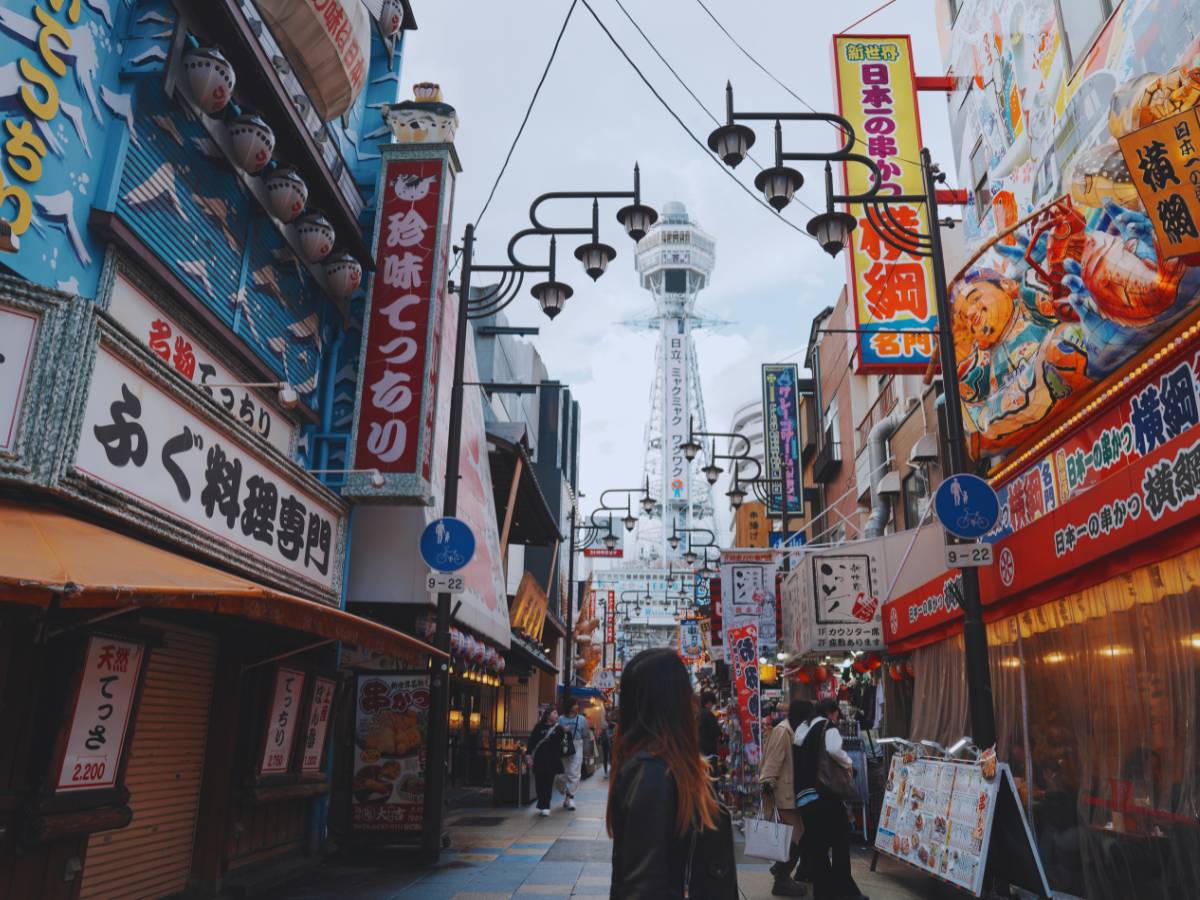
“Shinsekai” literally means “New World.” It was built in 1912 to look like Paris and New York, but today it looks more like a retro movie set. It is famous for its colourful, clashing signage and the Tsutenkaku Tower. The tower was originally modelled after the Eiffel Tower and the Arc de Triomphe, and while it isn’t as tall as modern skyscrapers, it oozes retro charm.
This area is arguably the best place in the city for kushikatsu or deep-fried skewers (more on this yummy Osaka must-eat later). Go to a restaurant like Daruma and order a set. Afterwards, play some retro pinball at one of the old arcades nearby.
- Price: Tower entry ~¥1,000.
- Hours: Tower 10:00 AM to 8:00 PM.
Abeno Harukas (Harukas 300)
Towering over the retro streets is the tallest skyscraper in Japan (outside of Tokyo). It is a complete contrast to the gritty streets below. The observation deck, Harukas 300, is on the top three floors and it is stunning. The floor-to-ceiling glass windows give you a view that is much higher and wider than the Umeda Sky Building. On a clear day, you can see all the way to Kyoto and the Akashi Kaikyo Bridge. Even the restrooms here have glass walls, offering arguably the best view from a toilet in Japan.
- Price: Adults ~¥1,800.
- Hours: 9:00 AM to 10:00 PM.
Osaka Bay Area
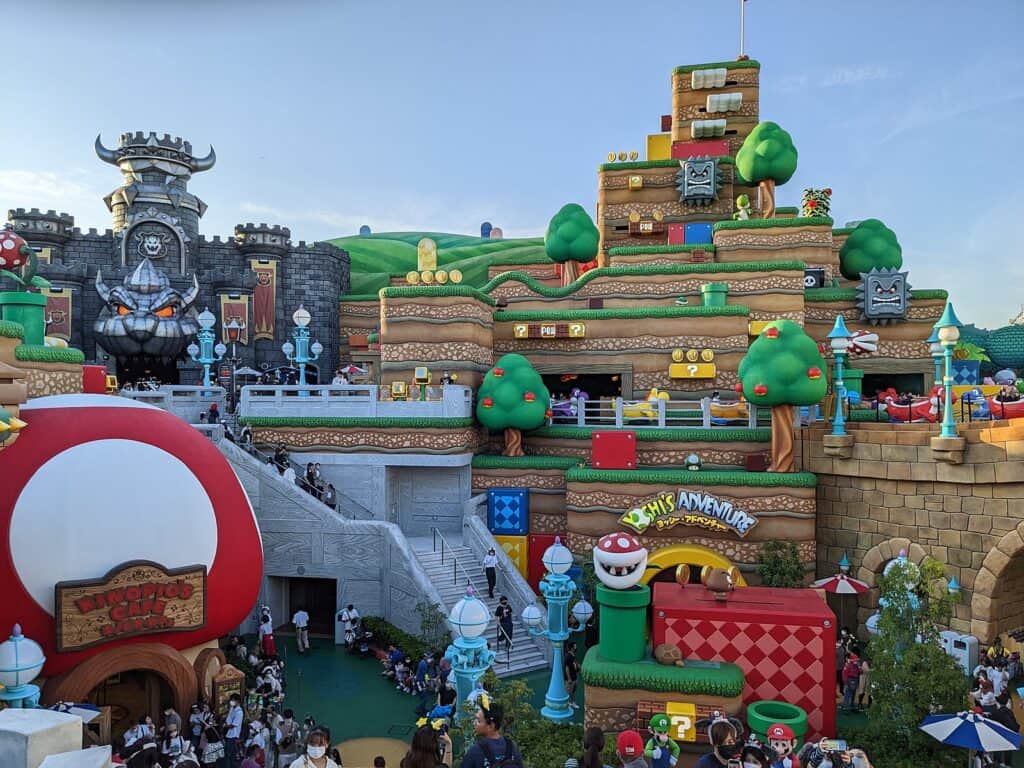
This is a reclaimed land by the sea, home to massive entertainment complexes. It is a bit far from the city centre, but absolutely worth the trip for the following two world-class spots.
Universal Studios Japan (USJ)
USJ is a massive draw for tourists. It is home to Super Nintendo World, which now includes the Donkey Kong Country expansion where you can experience the Mine Cart Madness coaster. Fans of The Wizarding World of Harry Potter also flock here for the Forbidden Journey ride, which many consider a world-class experience.
But be warned, the reality of visiting is that it requires serious planning because of its sheer popularity. You cannot simply walk into the Nintendo area. You almost certainly need an Express Pass or you need to arrive at the gates extremely early to grab a free timed-entry slot on the official app. To make sure you actually get in, we recommend checking our Japan Travel Reservations Guide to see exactly when and how to book your tickets in advance.
- Price: 1-Day Studio Pass varies by date, about ¥8,600 – ¥10,400.
- Hours: Varies, typically 9:00 AM – 9:00 PM.
Osaka Aquarium Kaiyukan
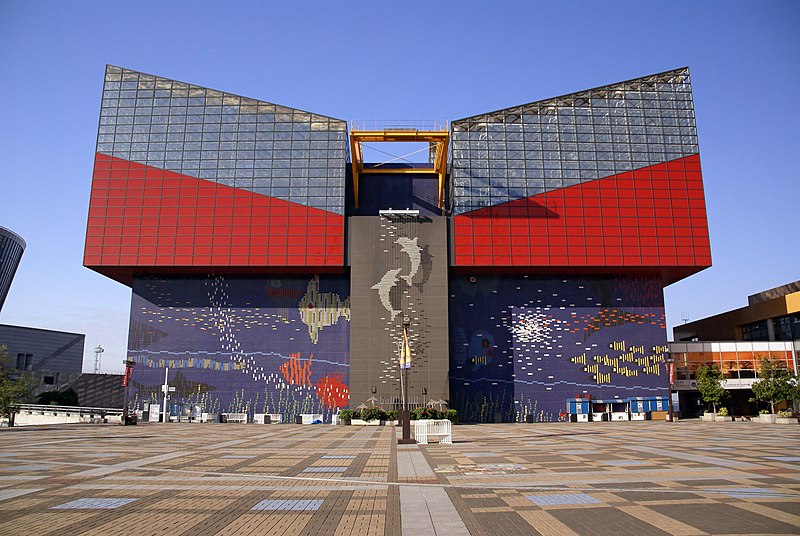
This is one of the biggest aquariums in the world and it is laid out in a really clever way. Instead of just walking from room to room, you take a long escalator right to the top floor and then slowly walk down a spiralling path. As you go down, you are circling a massive central tank, so you get to see the animals from the surface all the way down to the bottom.
The absolute star of the show is the Whale Shark. Seeing this giant fish glide right past the glass is honestly amazing and it is the main reason everyone comes here. If you can, try to go on a weekday morning. In the afternoons, it usually gets packed with loud school groups, which can make it hard to actually enjoy the view in peace.
- Price: Adults ~¥2,700 to ¥3,000, depending on the day.
- Hours: Usually 10:00 AM to 8:00 PM, but it changes by season
Osaka Must-Eats
They call Osaka “Japan’s Kitchen” for a reason. In most Japanese cities, you might visit an attraction and then find somewhere to eat. In Osaka, the food is usually THE main event and the sightseeing comes second.
There is even a local word, kuidaore, which basically means to eat until you drop. The people here are obsessed with good food that is fast, cheap, and filling. You will notice that the flavours here are a bit bolder and the portions are often bigger than what you find in Tokyo. You literally cannot leave the city without trying these local specialities.
Takoyaki (Octopus Balls)
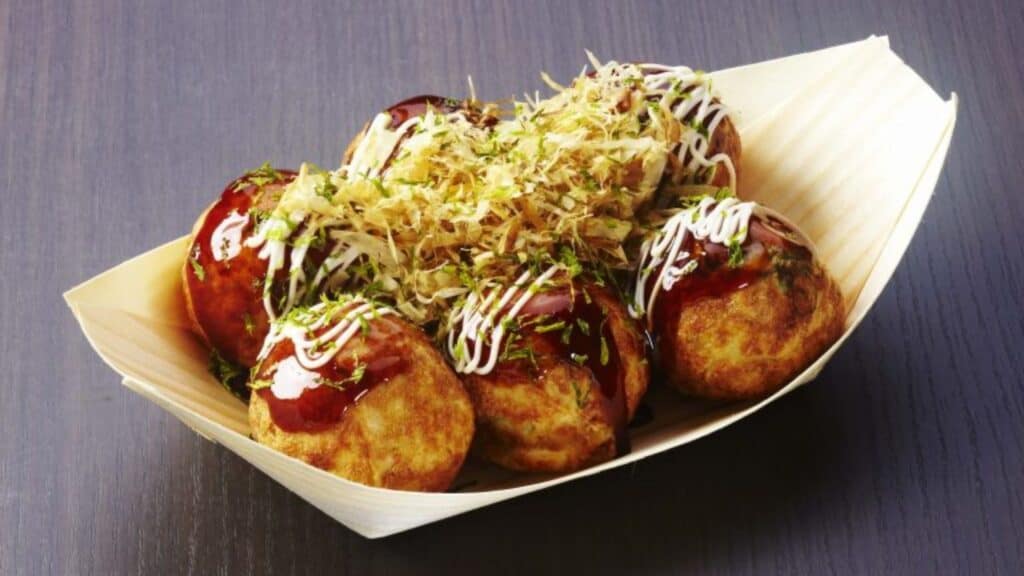
These little batter balls filled with a piece of octopus, pickled ginger, and green onion are the most famous snacks in Osaka. They are cooked in a special grilled pan with round holes, and watching the chefs flip them at high speed with what looks like knitting needles is a show in itself. The best ones are crispy on the outside but still gooey and creamy on the inside. They are topped with a thick savoury sauce, mayo, seaweed powder, and bonito flakes that ‘dance’ from the heat.
Honestly, almost any stall with a line of locals will be delicious, but the most famous spots are Wanaka near the Namba Grand Kagetsu theatre or Kogaryu in Amerikamura if you want to eat them like a local in Triangle Park. A box of 6 to 8 balls usually costs between ¥500 and ¥800.
Okonomiyaki (Savoury Pancakes)
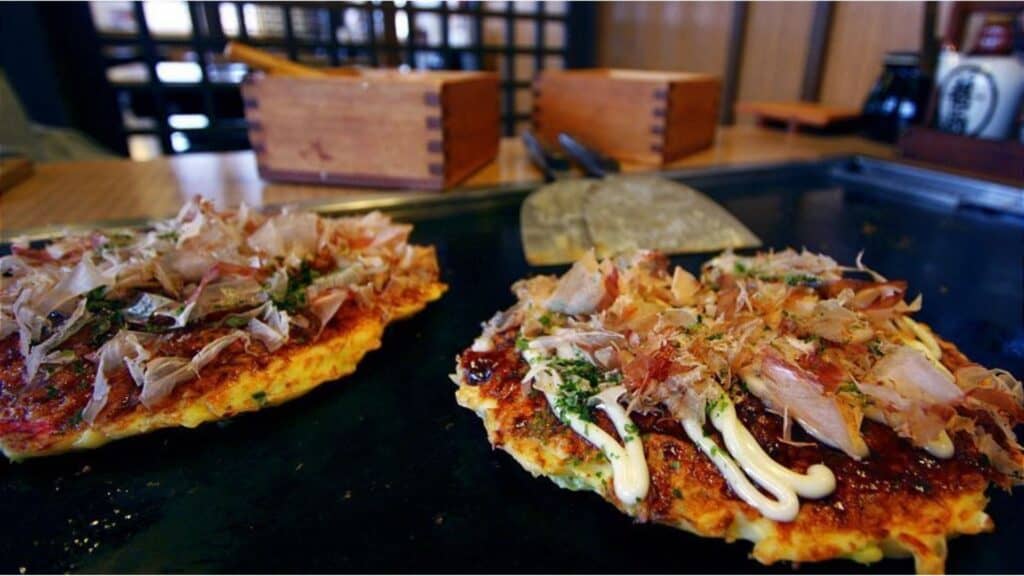
These thick, savoury pancakes are made from flour, eggs, and shredded cabbage, mixed with whatever toppings you want like pork, shrimp, or squid. They are cooked on a flat griddle and then smothered in the same sweet and salty sauce as takoyaki.
For me, they are the ultimate comfort food because they are so filling. You can basically have one as a complete dinner for a very affordable price, which is a win in a city as busy as this. Mizuno in Dotonbori is incredibly famous for their mountain yam version, but expect a long wait. Depending on your toppings, a pancake usually costs between ¥1,000 and ¥2,000.
Kushikatsu (Deep-Fried Skewers)
Kushikatsu is the perfect dinner if you are hanging out in the retro area of Shinsekai. These are skewers of meat, vegetables, or even cheese that are dipped in batter and breadcrumbs and then deep-fried until they are golden and crunchy.
The most important thing to remember is the no double dipping rule. You get a communal pot of thin dipping sauce on your table, and because other people will use it after you, you can only dip your skewer once before you take a bite. If you need more sauce, use a piece of raw cabbage to scoop some out onto your plate.
Daruma is easily the most famous kushikatsu chain restaurant. You can spot their branches by the giant, angry-looking (but shockingly charming) chef statue outside. If you’re trying to eat until you drop in Dotonbori, know that Daruma conveniently has a massive branch right on the main strip! Each skewer typically costs between ¥100 and ¥300.
551 Horai Butaman (Pork Buns)
You will see the red and white bags for 551 Horai everywhere in the city. These are steamed pork buns that are handmade every day, and they are a massive point of local pride. They famously refuse to open shops in Tokyo or anywhere else far away because they want to keep the dough fresh, making them a true Osaka-exclusive icon.
They have a slightly sweet, chewy dough and are filled with a juicy mixture of pork and onions. They are so popular that you will often see long queues at train stations and department stores with locals buying boxes to take home. They have a very strong, delicious smell, so be warned that if you carry them on a train, everyone will know exactly what you have for lunch. A pack of two buns costs about ¥420.
Rikuro’s Cheesecake
This is not like the heavy, dense cheesecake you might find in the West. This is a souffle style cheesecake that is incredibly light, wobbly, and fluffy. I’m willing to bet you’ve seen this cheesecake even if you haven’t even been to Japan, because it is insta-famous for its jiggle. Videos of the staff ringing a bell and stamping a fresh cartoon face onto the warm, shaking cake go viral constantly.
You will often see a long line of people waiting for a fresh cake just to get that perfect video, but there is usually a shorter line for cakes that were made a few minutes earlier if you just want to eat. A whole cake costs about ¥900.
2-Day Osaka Itinerary
If you are planning to spend two days in Osaka, this is the itinerary we would recommend to see the best of the city.
Day 1
Start your first day at Osaka Castle Park. We recommend arriving around 9 AM to beat the biggest crowds. Spend your time walking around the massive stone walls and moats, which are some of the most impressive in Japan. You can enter the castle tower to see the museum and the view from the top, but be prepared for a wait at the elevator. Once you have finished at the castle, take a short walk to the Nishinomaru Garden for a quieter view of the tower across the lawn.
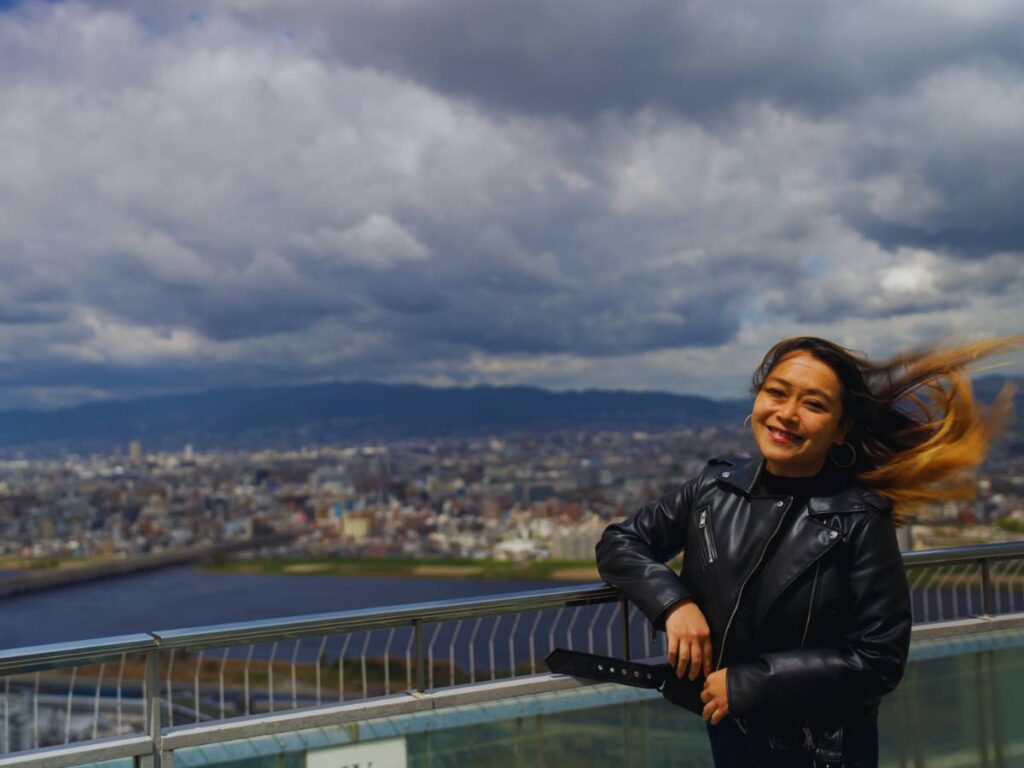
After lunch, head north to the Kita district. Your first stop should be the Umeda Sky Building to experience the floating escalator and the 360-degree views from the observatory. Afterwards, walk over to the HEP FIVE shopping mall to see the giant red whale in the atrium and take a ride on the red Ferris wheel for a different perspective of the city. If you have any energy left for shopping, the massive Grand Front Osaka complex is right next door and is a great place to see the modern side of the city.
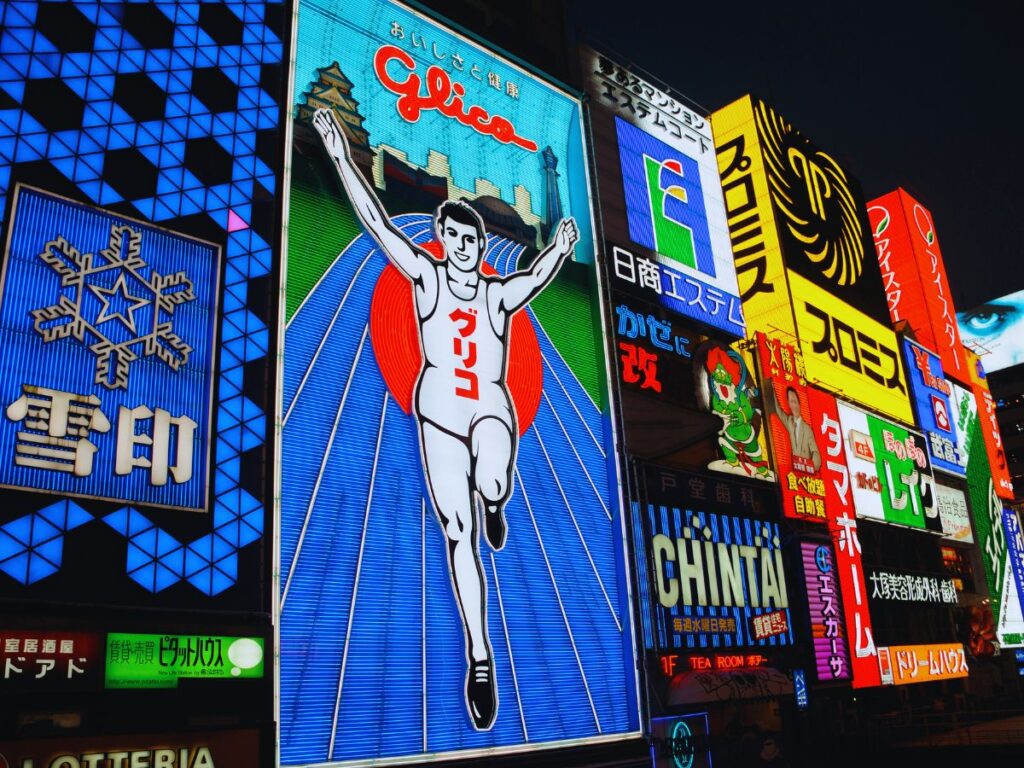
As the sun goes down, make your way to Minami for the classic Dotonbori experience. This is when the area truly comes to life with neon signs and moving billboards. Take your photo with the Glico Running Man on the Ebisu Bridge and then wander the side streets to find some dinner. You can try a bit of everything, from takoyaki at a street stall to a full okonomiyaki dinner at one of the famous restaurants along the canal.
Day 2
Begin your second day at the Namba Yasaka Shrine. It is only a 10 minute walk from the main Namba stations but feels like a different world. Spend some time taking photos of the massive lion head stage before walking over to Amerikamura. Grab a coffee or a long soft serve ice cream and head to Triangle Park to sit and people watch for a while.
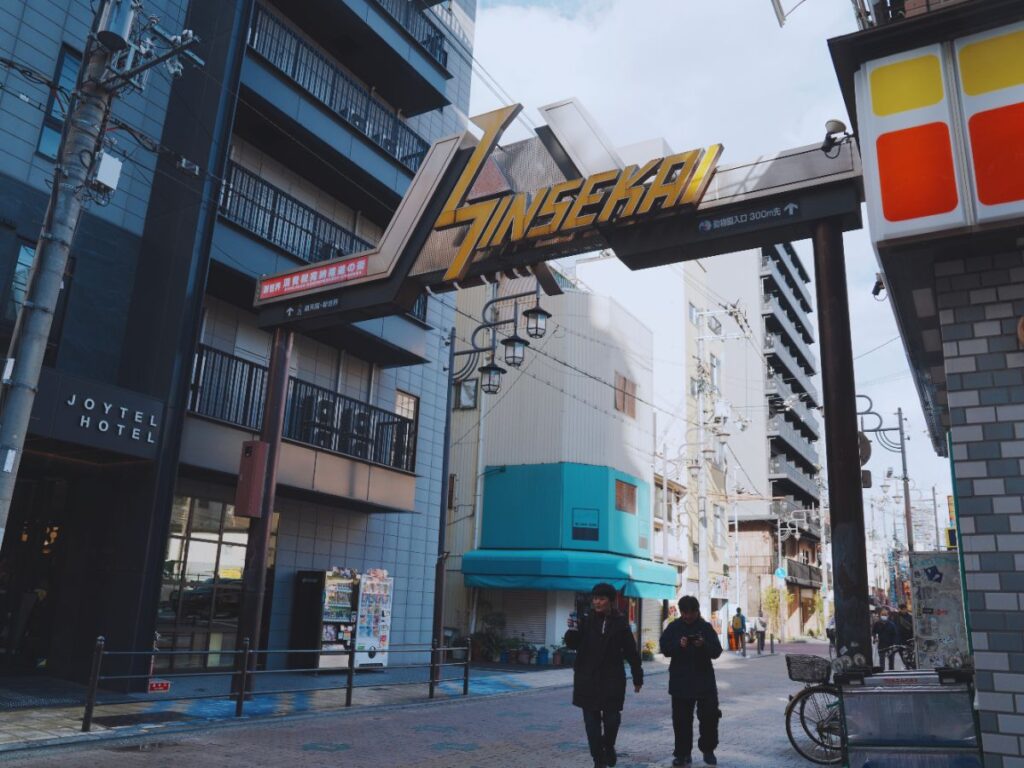
For the afternoon, head south to the Tennoji area to explore retro Shinsekai. Take a walk under the Tsutenkaku Tower and explore the colourful streets. This is the best time to try kushikatsu for a late lunch or early dinner.
End your trip at Abeno Harukas. We recommend heading up to the Harukas 300 observation deck just before sunset so you can see the sky change colour over the city. The view stretches all the way to the mountains and the sea. If you have time, take a look at the view from the glass-walled restrooms before heading back down to the Tennoji station area for one last local meal to finish your Osaka adventure.
Day Trips from Osaka
One of the best things about staying in Osaka is that it is the perfect base for exploring the rest of the Kansai region. Because the trains are so fast and frequent, you can leave after breakfast and be back in time for a late-night takoyaki snack.
Kyoto
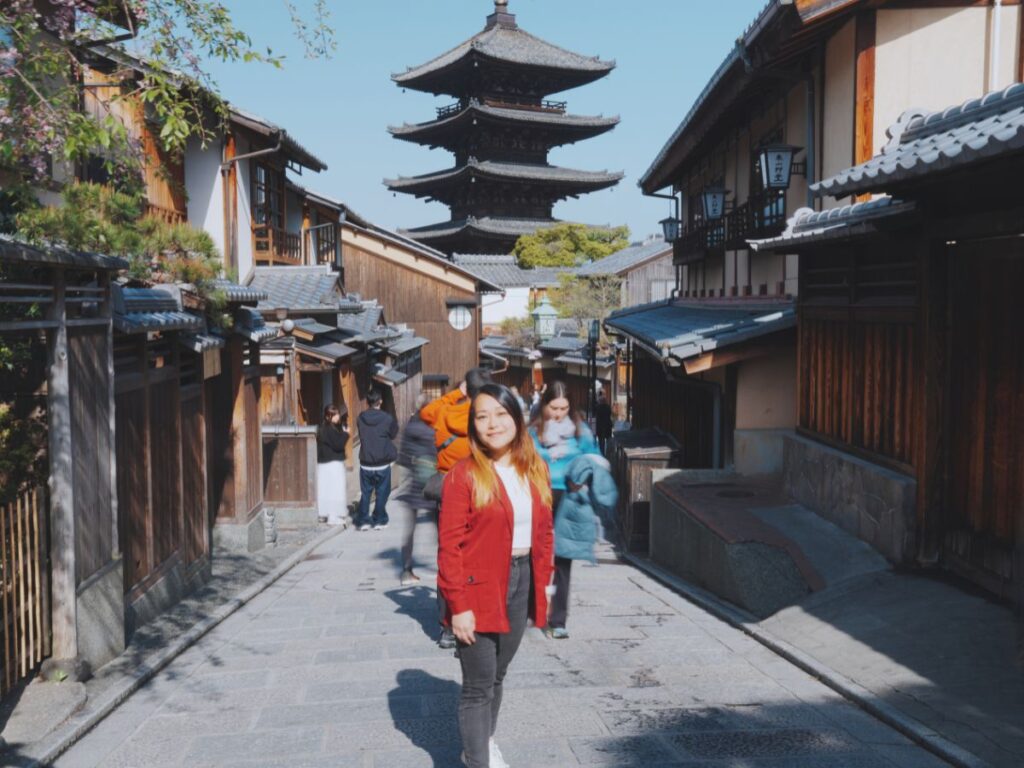
Only 30 minutes away by train, Kyoto is the complete opposite of Osaka. It is where you go for temples, traditional tea houses, and quiet bamboo forests. While you could spend a week there and not see everything, a day trip is perfect for hitting the “Big Three”: the orange gates of Fushimi Inari, the golden pavilion of Kinkaku-ji, and the views from Kiyomizu-dera.
- Travel Time: About 30 minutes via JR Special Rapid or 15 minutes via Shinkansen
Nara
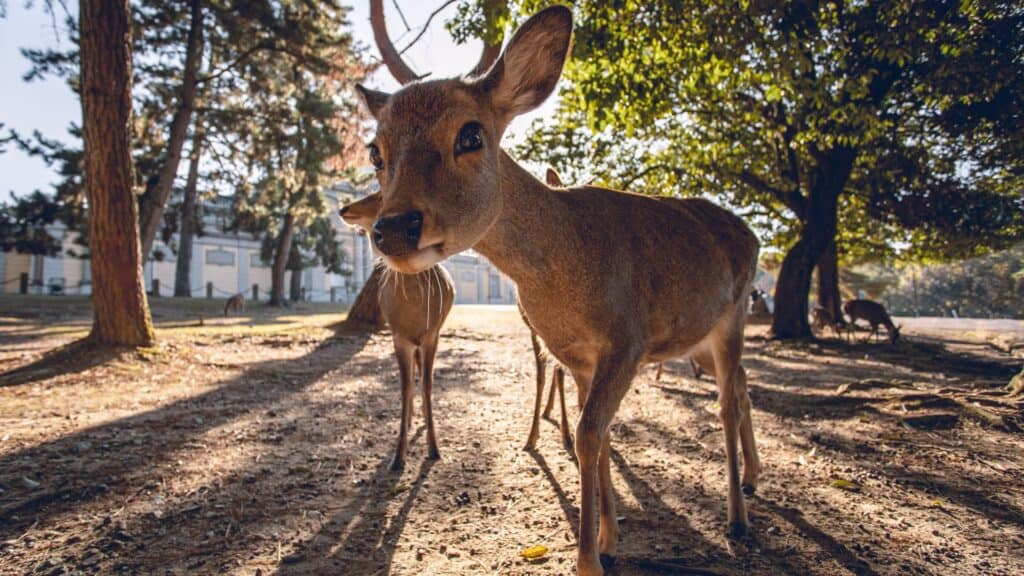
If you want a break from the city, head to Nara. It is famous for Nara Park, where hundreds of wild deer roam free. They are considered messengers of the gods and are surprisingly polite; they will actually bow to you if they think you have a deer cracker (shika senbei). The park is also home to Todai-ji, a massive wooden temple that houses one of the largest bronze Buddha statues in the world. It is a very peaceful, walkable day trip that is great for families.
- Travel Time: About 45 to 50 minutes via JR or Kintetsu lines
Kobe
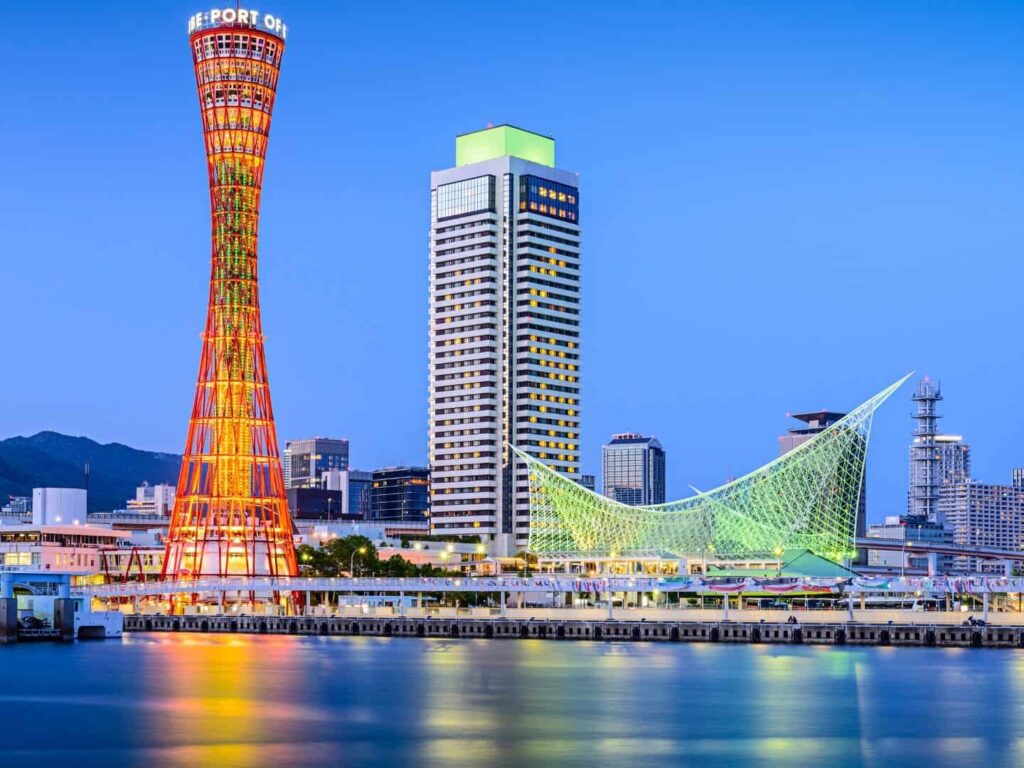
Kobe is a stylish port city squeezed between the sea and the mountains. It is a bit more relaxed and international than Osaka. Most people come here for the world-famous Kobe Beef, but the city also has a beautiful waterfront area (Meriken Park) and a charming “foreigners’ district” (Kitano) with European-style houses from the 19th century. If you have time, take the ropeway up Mount Rokko for a view of the bay that is especially beautiful at night.
- Travel Time: About 25 to 30 minutes via JR Special Rapid
Osaka Area FAQs

How many days do I need in Osaka?
Two days is perfect for the highlights. Spend one day on the history of the Castle and the skyscrapers in Umeda, and a second day for the neon lights of Namba and the retro streets of Shinsekai.
Which is better to stay in: Umeda or Namba?
Stay in Namba if you want to be steps away from street food and nightlife. Stay in Umeda if you prefer a modern, polished area with the best train links for day trips to Kyoto or Kobe.
When is the best time to visit?
Spring (late March to early April) is beautiful for the cherry blossoms at the Castle, while Autumn (November) offers stunning red leaves and perfect walking weather.
Can I use my JR Pass in Osaka?
You can use the JR Pass for the JR Loop Line and for getting to Universal Studios, but for most of the city center and the best food spots, you will need to use the local subway lines.
Is it easy to get to the airport?
Yes. The Nankai Rapi:t train from Namba or the Haruka Express from Tennoji and Osaka Station will get you to Kansai International Airport (KIX) in about 35 to 50 minutes.