We have all been there. You queue up outside a tiny shop in Tokyo, sit at a wooden counter, and slurp down a bowl of piping hot ramen in ten minutes flat. It almost feels like fast food. But it isn’t. When you actually step behind the counter, you realise that a good bowl of ramen is pure chemistry. We used to think we knew what good ramen was just by eating it. Then we put on an apron and tried ramen making ourselves. It completely changed how we look at the dish.
If you are a serious foodie who wants to understand the “how” and “why” of Japan’s most famous dish, this is the experience for you.
A Quick Crash Course in Ramen Science

Before we took this workshop, we were just happy to slurp our noodles and leave with full stomachs. We never stopped to consider the actual science happening in the bowl. But once we stood in that kitchen, the chef explained that every proper bowl is built from four distinct layers: the broth, the tare, the noodles, and the aroma oil.
Take the broth, for example. We always assumed that boiling pork bones for hours created that salty punch you get in a good tonkotsu. But when the instructor handed us a spoon of the plain white stock to taste, it was surprisingly bland. It turns out the real flavour comes from the tare. This is a concentrated sauce sitting at the bottom of the bowl that defines the taste. We learned that without this specific seasoning base, you are essentially just drinking fatty water.

We also had a bit of a realisation about the noodles: there isn’t a single egg in the recipe. That signature yellow colour actually comes from kansui, or alkaline water. It reacts with the wheat flour to make the noodles springy so they don’t turn into mush in the hot soup.
Finally, there is the aroma oil. We learned that the delicious smell that hits you when the bowl lands on the table isn’t just the soup. It is usually a separate layer of garlic or scallion oil floated right on top to trigger your appetite. It was fascinating to see how these invisible layers work together to build the final dish.
Other than the science behind it, there are so many more fascinating things about ramen, like how there are so many different types you can try. Here are more than 10 types (yes, more than 10!) we think you must taste at least once:
Types of Ramen Making Workshops
One thing we realised quickly is that a ‘Ramen Making’ experience can mean very different things depending on where you book. Some are quick tourist stops while others are serious culinary lessons. It helps to know what you are signing up for so you can pick the right one.
Fun Theme Park Workshops
Ramen making in theme parks and museums focus on the history and fun of the process rather than strict culinary technique. You often get to use traditional tools, like heavy bamboo poles, to knead the dough by riding on it. It is less about learning the ramen making craft and more about entertainment. This is a great option if you want a lighter, fun activity that is accessible for families or large groups who just want to have a laugh while making noodles.
Restaurant Workshops
This is perfect if you are short on time or just want a quick glimpse behind the curtain. These classes usually take place in an actual ramen shop during their prep hours. You skip the heavy lifting like boiling bones or kneading dough. Instead, you jump straight to the final step. You learn how to boil the noodles, shake the water out in the deep baskets, and assemble the toppings before the soup gets cold. It is fast and loud, and gives you a taste of the chef’s life in just an hour without the long commitment of brewing stock from scratch.
Making Ramen from Scratch

This is for the serious foodies. In these workshops, you do everything yourself! You spend hours brewing the broth from bones, kneading the noodles from flour, and mixing the tare to find the perfect balance. It is a longer commitment, usually taking half a day, but you leave understanding the exact chemistry and ratios behind the dish. If you want to know why ramen tastes the way it does, this is the one to book.
Home Cooking
These sessions feel less like a restaurant shift and more like visiting a Japanese friend (who just happens to be a mean ramen maker). They usually happen in a domestic kitchen or a smaller studio. The focus here is on replicability. You are learning a recipe that is actually possible to cook in your own kitchen when you get home. These classes almost always pair ramen with gyoza, so you get a full set meal.
Experiencing a Ramen Making Workshop
We love these workshops because of the energy in the room. It is hot and loud. You have an expert chef right beside you to keep things moving, but you are the one doing the heavy lifting.

To start, the instructor handed us a bowl of wheat flour and kansui (alkaline water), warning us that this wasn’t going to be like making pasta. They were right. We honestly underestimated the physical work involved here. As soon as we started mixing, the dough fought back. It was incredibly stiff and dense. We had to stop using just our hands and really lean our full body weight into the table to knead it properly.
Once the dough was ready, we moved to the noodle machine. This was the most satisfying part of the process. We fed the rough, heavy block of dough into the rollers, cranking the handle hard. Watching it stretch out into a smooth, yellow sheet felt like magic. We ran it through the cutters and caught the fresh strands as they fell, dusting them with flour so they wouldn’t stick. It was like a yummy version of Play Doh.

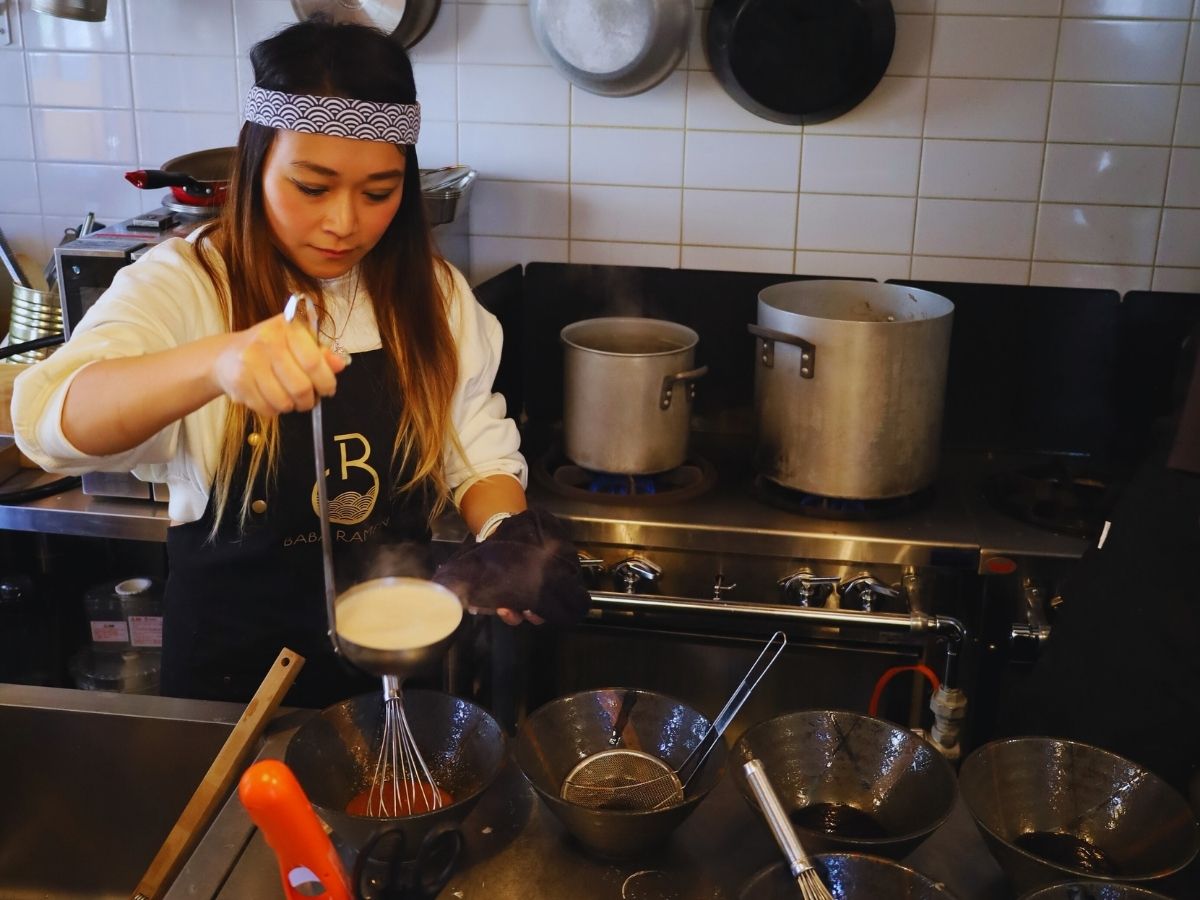
With the noodles resting, the chef lifted the lids on the stock pots. The smell was thick and savoury. This is where the lesson got technical. The instructor explained that the flavour relies on the tare and had us taste the components separately. The stock on its own was rich but bland. The tare was intensely salty and concentrated.
The chef guided us through mixing them in the ladle, adjusting the ratios until it hit that perfect point of “umami.” It was a lightbulb moment for us. We realised that the depth of flavour in ramen is ‘built’ very carefully and precisely before serving. When we finally tasted the finished blend, the flavour filled our mouths, and we suddenly understood why good ramen takes hours to prepare.
After all that chemistry and cardio comes the most stressful part of the workshop because you have to move fast. As the instructor constantly warned us, ramen waits for no one. We mixed the tare and hot stock in our serving bowls so it was ready and waiting. Then, we dropped our fresh noodles into a separate giant pot of boiling water. Because they were fresh, they only needed about forty seconds to cook.

On the chef’s signal, we lifted the noodles out using deep mesh baskets to drain them. We had to shake the basket vigorously to get all the cooking water off. Otherwise, that excess water goes into your bowl and dilutes the rich soup you just spent hours making. Once satisfied, we slid the dry, hot noodles into our broth.
Next came the artistic part. The chef showed us how to use long chopsticks to lift and fold the noodles over so they formed a neat little island. We quickly added the slice of chashu pork, the bamboo shoots, and the soft-boiled egg. We had to do all of this in under a minute so the noodles didn’t get soggy.
Finally, it was time to eat! Sitting down to dine on something you built from scratch feels different. The first thing we noticed was the texture. The noodles had a snap and bounce that you just do not get from the dried stuff. Because we had balanced the tare ourselves, the soup tasted exactly how we wanted it to.
The focused silence of the kitchen also turned into the sound of slurping and chatting. We ended up swapping travel stories with the other people in the class and sharing tips on where to go next. It felt less like a classroom and more like a casual dinner party with friends.
Book an Authentic Ramen Making Experience in Japan

Want to try this experience for yourself? We have curated a selection of the best ramen workshops across various locations in Japan. We handle the reservation and details, ensuring you get a spot in an expert’s kitchen. If you are ready to put on an apron and learn a skill you can take home, book the experience now.
Ramen Making Experience FAQs

Do I need cooking experience?
Not at all. The instructors are experts at guiding beginners. Whether you are a master chef or you usually burn toast, you will be able to make a delicious bowl.
Can I do it alone?
Absolutely. Our booking data shows this is a popular choice for solo travellers. It is a communal environment where you naturally chat with the instructor and other guests.
Is it safe for children?
While kids usually love using the noodle machine and playing with the dough, because there are hot pots and boiling water, we recommend it for older children or teenagers.
How long does it take?
You should set aside about 3 hours for the full experience. This covers the cooking lesson and plenty of time to sit down and enjoy the meal you made at the end.
What should I wear?
The studio provides aprons to protect your clothes. However, we recommend wearing comfortable shoes because you will be standing and moving around the kitchen for most of the workshop.