
Sanno Matsuri is one of Tokyo’s three great festivals, yet a lot of visitors end up watching it from the wrong street, at the wrong hour, with no idea what they’re actually witnessing. Held every other year at Hie Shrine in Akasaka, this procession once paraded before the Shogun himself!
Though Tokyo’s tourism machine somehow tends to put it as a footnote beneath Asakusa’s Sanja Matsuri or Kanda Matsuri, Sanno Matsuri held the designation of tenka matsuri, which was not a ceremonial title handed out generously. It meant the procession had formal permission to enter the gates of Edo Castle and parade directly before the Shogun.
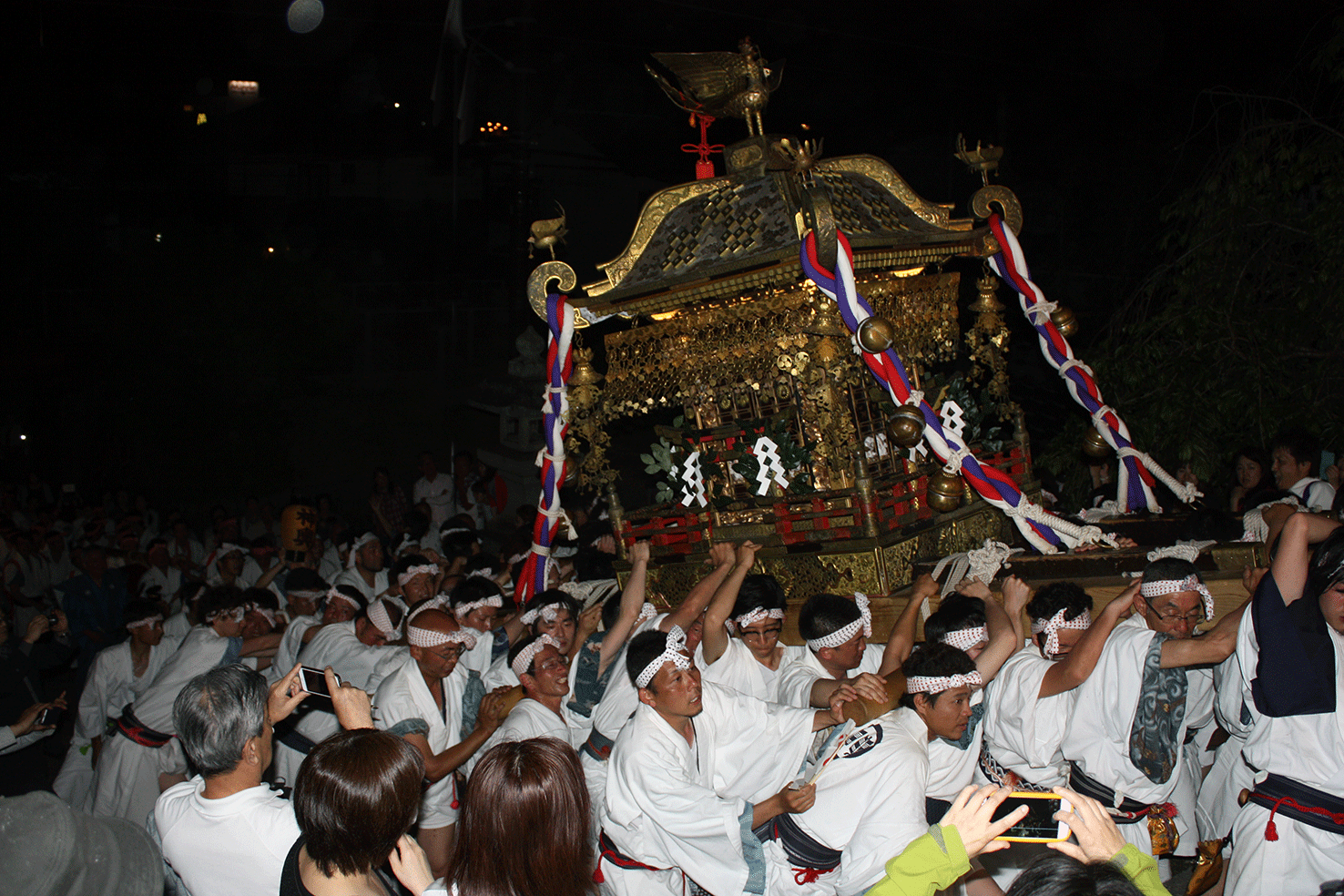
So, if you’ve been to any other Japanese festival, you’ll notice right away how Sanno Matsuri differs in the formality of the costumes, the pace of the mikoshi, the strict hierarchical ordering of participants, and the scale of the route (it cuts through the heart of central Tokyo!).
Most travel content about Sanno Matsuri skips this entirely and jumps straight to crowd logistics. But if you walk into the festival without this context, you’ll end up feeling like you are just watching a very long, very elaborate parade. If you understand it, on the other hand, you will realise that you are watching the Edo period briefly reassemble itself in the middle of a modern city.
Sanno Matsuri takes place at Hie Shrine in Akasaka every even-numbered year across eleven days in mid-June. The official Sanno Matsuri programme has the full schedule for 2026. It runs June 7 to June 17, with the grand Shinkosai procession on June 12.
If you are building a longer trip around the festival, our Japan Summer Itinerary is a great place to start.
The Full Sanno Matsuri 2026 Schedule
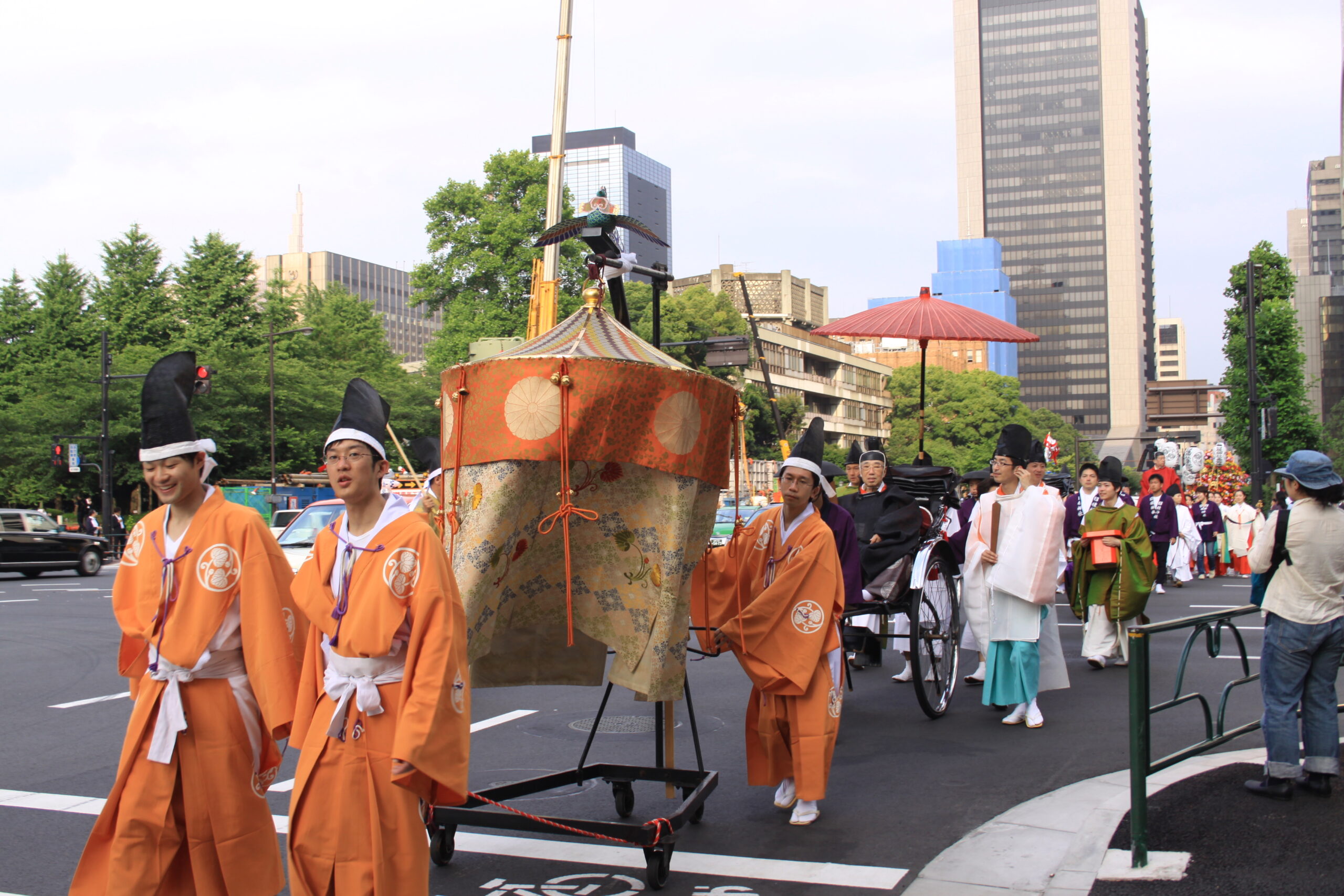
Most visitors plan around one day: June 12, the grand procession, but the festival runs for eleven, with the schedule split broadly into three phases: the opening days of ritual and performance, the procession itself, and the closing days of ceremony.
June 7: Opening Day
The festival opens on Sunday June 7 with the Yasaka Jinja subsidiary shrine festival at 11 am, followed by traditional Edo kagura hayashi music performed live in front of the mikoshi storehouse throughout the day. The music is spare and percussive, built around taiko, flute, and hand cymbals, and it carries further through the shrine precinct than you would expect.
This is also the first day of the free tea and wagashi service on the shrine grounds, which runs through June 16, so it would be a great place to sit down, and enjoy the tea. The wagashi served are even seasonal and change across the festival days. On a warm June morning with incense drifting from the main hall, it is a really good way to start.
June 8: The Concert Nobody Knows About
On Monday June 8, the Akasaka Hikawa Choral Group performs a short Japanese song concert in the lower worship hall from 12:15 to 1pm. It costs nothing and lasts forty-five minutes, so it could be a great addition to your plan if you’re already in the area, especially since the lower worship hall is cool and shaded.
June 10: Omotesenke Tea Ceremony
On Wednesday June 10, the Omotesenke grand master performs a formal kencha tea offering at 11 am. The ceremony involves the preparation and dedication of matcha before the shrine deity, something that not a lot of visitors get to experience.
June 12: The Shinkosai Grand Procession
This is likely what you see when you search for Sanno Matsuri. It’s quite a spectacle. Five hundred participants in Heian-period court dress cover about 23 kilometres through central Tokyo from 8am to 6pm. The route moves from Hie Shrine through Nagatacho, past the Imperial Palace, through Marunouchi, past Tokyo Station, through Nihonbashi, through Ginza, past Shimbashi, and back. The kagura hayashi music plays at the subsidiary shrine from 10am to 4pm simultaneously, even as the main procession is kilometres away.
The Nihonbashi Otabisho ceremony takes place at 2:05pm at the Nihonbashi stopover point, where the procession formally rests. If you’re looking to take shots of the event but can’t follow the procession the whole day, this is your chance. The contrast between the lacquered mikoshi and the surrounding Nihonbashi streetscape is unlike anything you will see on the Nagatacho or Akasaka stretches.
The thing that catches people off guard is the sound. The chanting starts before you can see where it is coming from, low and rhythmic and completely at odds with the fact that you are standing in the middle of a city with a convenience store visible from where you are standing. The soft percussion of wooden geta on stone comes second, then the procession itself appears around a corner and you have about thirty seconds before it has passed and Akasaka is just Akasaka again.
Download the official Sanno Matsuri app before you come. It tracks the procession position in real time and shows estimated arrival times at key points along the route, which is the difference between positioning yourself correctly and chasing a procession that has already gone.
June 13: The Festival Shifts Register
Just when you think the festival is over after the spectacle of June 12, Saturday June 13 brings more cultural entertainment. In the morning, you can watch the Edo Satokagura Folk Theatre performance and a koto concert by Hibiya High School’s music club, both at the mikoshi storehouse.
At 5:30 pm the Kento-sai lantern dedication ceremony takes place at the main shrine, which fills the area with the warm orange light of paper lanterns just as the afternoon heat begins to lift.
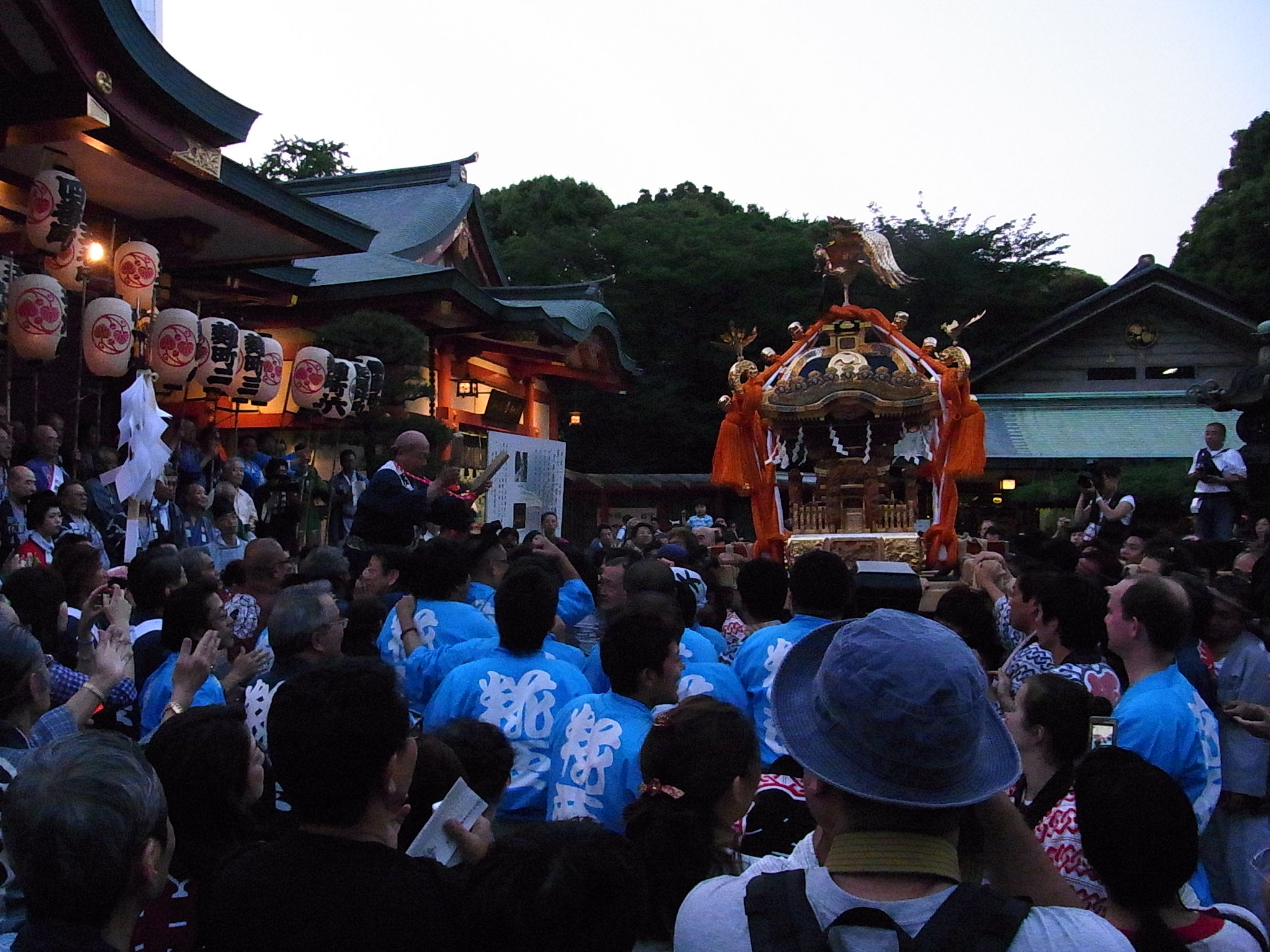
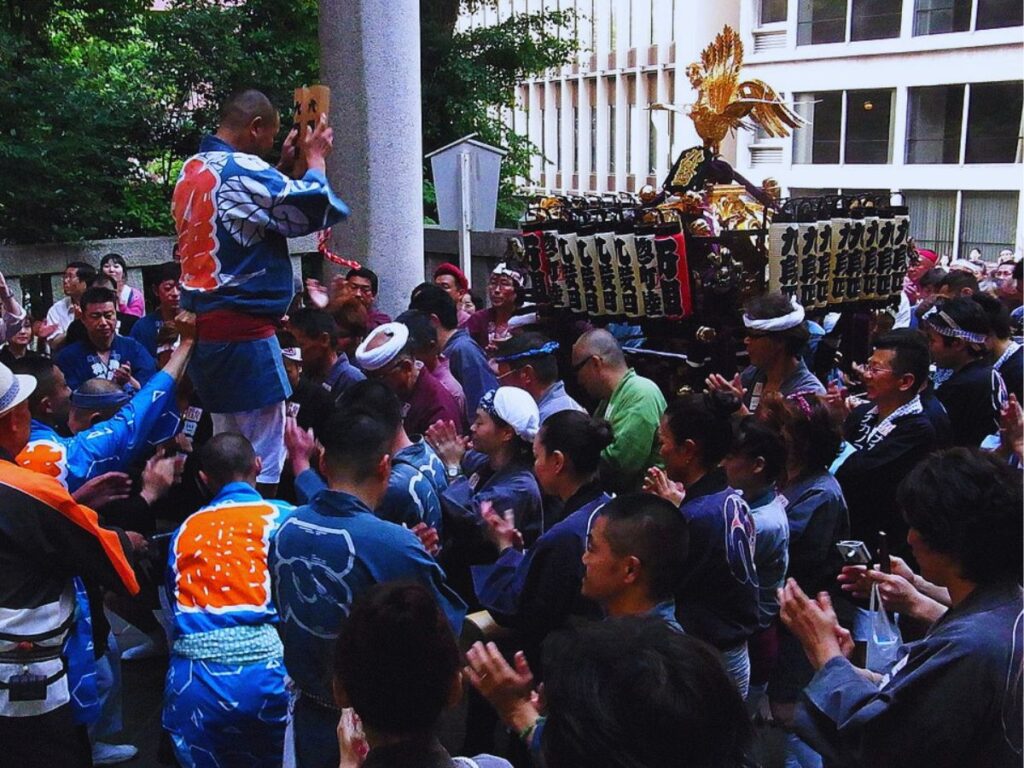
Then, in the evening, the mikoshi from the surrounding neighbourhoods make their formal entry into the shrine grounds. This is one of the more charged moments of the entire eleven days. The neighbourhood groups arrive one by one, happi coats dark with sweat, the wooden mikoshi frames creaking under the weight of dozens of carriers who have been doing this exact thing together for years. Shockingly enough, it draws almost no international visitors.
From 6pm, the Sanno Ondo to Minyo Taikai Folk Dance and Summer Evening Festival begins at the open plaza of the Sanno Park Tower Building, running nightly through June 15. If you want the quintessential neighbourhood matsuri experience, this is the perfect opportunity. Locals arrive in yukata, and the air is filled with the smell of grilled food from nearby stalls. The taiko is loud, and the bon dancing circles are open to anyone.
June 14: Children’s Procession and Downtown Mikoshi
Sunday June 14 opens with a free outdoor tea ceremony in the shrine precinct from 11 am to 3 pm. At noon and again at 2:30pm, the Chigo Gyoretsu takes place, where you’ll see young children in full traditional court costumes and faces powdered white, moving through the shrine grounds in careful procession. The costumes are extraordinary in their detail (but completely impractical in the June heat, if we’re being honest), and the children handle it with a composure that puts most adults to shame.
Also at noon, the Shitamachi Rengo Mikoshi Togo neighbourhood mikoshi relay moves through the Kyobashi to Nihonbashi area. If you take the Ginza Line to Kyobashi Station and walk, you can catch both the downtown mikoshi in the early afternoon and be back at the shrine grounds for the Chigo Gyoretsu second performance at 2:30pm. The kagura hayashi music continues at the mikoshi storehouse from 6pm.
June 15: The Reisai
June 15 is the formal reisai, the main Shinto festival day, dedicated to prayers for the protection of the imperial seat and the peace of the city’s residents. It begins at 11 am at the main shrine. At noon, taiko drum performance fills the precinct, hosted by the Hie Shrine Young Patrons Association. The Edo satokagura folk theatre also runs through the afternoon. The Noryokai Evening Festival runs for its final night from 6 pm, so if you’re planning to catch it on this day, be prepared for it to be noticeably fuller than the previous two evenings as locals arrive for the closing session.
June 16: Tea, Wagashi, and the Last Day of Free Seating
Tuesday June 16 opens at 10 am with the new tea offering ceremony. At 1pm, the Sanno Kasho-sai takes place, with traditional wagashi confectionery offered in a ritual with roots in the Heian period. The sweets used are specifically the kasho style, historically associated with auspicious occasions and good health, and the ceremony is attended almost entirely by people who have been coming to this shrine their whole lives. It is unhurried in a way that nothing on June 12 can be. June 16 is also the last day of the free tea and wagashi service on the grounds. If you have not taken advantage of it yet, today is the day!
June 17: Closing Day
The festival closes on Wednesday June 17 with a formal kencha tea ceremony offering by the Urasenke grand master at 10am. After that, the shrine returns to its ordinary rhythm. If you are staying in Tokyo through July, the Tokyo Summer Festivals calendar picks up more or less where this one leaves off. That said, we think Hie Shrine is still worth a visit even beyond the festival.
Hie Shrine Beyond the Sanno Matsuri
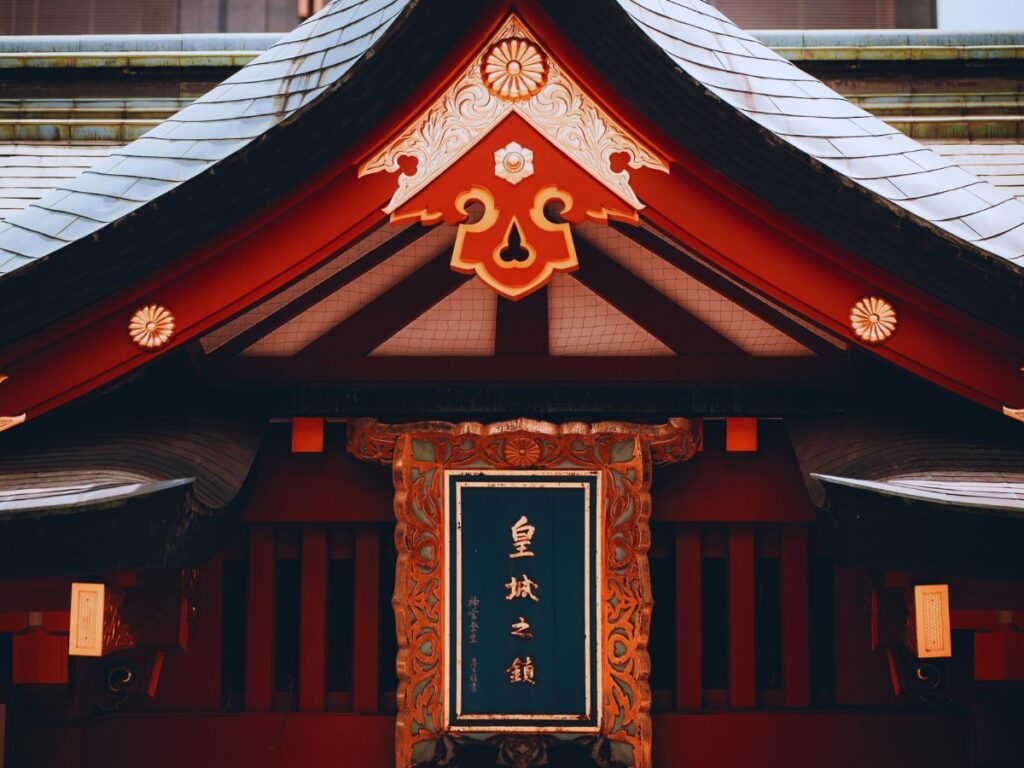
Hie Shrine rewards a visit on an ordinary Tuesday in May as much as it does during the festival fortnight. Possibly more.
The shrine sits above Akasaka’s main streets, accessible from two directions. Most visitors come up via the main escalator entrance from Tameike-Sanno Station, which is efficient but removes all sense of arrival. The better approach is from the rear, through the senbon torii, a tunnel of vermillion torii gates stepping down the hillside towards the Akasaka side of the grounds. It draws a fraction of the visitors that Fushimi Inari receives, and on a weekday morning you can walk the full length with nobody else in it.
Once inside, the monkey (masaru) motif appears everywhere. They are considered the divine messengers of Hie’s deity, associated with driving away evil and with good fortune. Stone monkey figures flank the main approaches, small carved versions are seen in the architecture, and ema votive plaques decorated with monkey imagery hang in clusters near the prayer hall.
The azalea gardens, best in late April, occupy a terrace below the main hall. From there, on a clear morning, you can see across the Chiyoda district towards the Imperial Palace grounds. The Chiyoda City tourism guide to Sanno Matsuri covers the shrine’s broader neighbourhood in detail if you are planning a full day in the area.
Seeing the Sanno Matsuri Procession Route
During the Shinkosai, visitors concentrate near the shrine’s main approach and along the road sections closest to major station exits. By the time the procession reaches these points, the thickness of the crowd makes it difficult to see anything below the tops of the mikoshi poles, and June in Tokyo is hot in a way that turns standing still in a dense crowd into a genuine endurance test. The humidity sits in the high seventies or eighties. There is rarely a breeze in the narrower urban corridors.
So, we highly recommend getting the official app that tracks the procession’s real-time position via GPS and shows estimated arrival times at key points along the route. In fact, we strongly urge you to download it before the day if you’re planning on participating. Though they’re quite popular, the stretches near the Imperial Palace are worth seeking out, as the moment when the lacquered wood and ceremonial lanterns move past the palace stonework is when the historical relationship between this festival and the seat of Japanese power is most evident.
Frequently Asked Questions About Sanno Matsuri
When exactly does Sanno Matsuri 2026 take place?
The festival runs June 7 to June 17, 2026, with the main Shinkosai grand procession on June 12, from 8 am to 6 pm.
Do I need to book anything in advance to attend Sanno Matsuri?
The procession and the shrine grounds are free to attend and require no booking. What requires advance planning is everything around the festival. Accommodation in Akasaka, Yotsuya, and the Chiyoda ward fills quickly for the procession weekend.
Is Sanno Matsuri suitable for visitors who don’t speak Japanese?
Entirely. The visual and ceremonial dimensions of the festival communicate without language. Download the official shrine app before you arrive as it tracks the procession in real time and shows estimated arrival times at key points along the route, which removes the main source of stress on the day.
How is Sanno Matsuri different from Kanda Matsuri or Sanja Matsuri?
Sanja Matsuri in Asakusa is the most physical and crowd-driven of the three, rooted in the merchant and artisan culture of the old shitamachi neighbourhoods. Kanda Matsuri has a strong guild and trades tradition with a more festive street energy. Sanno Matsuri is the most formally ceremonial, shaped by its historical status as a festival permitted to enter Edo Castle. If you are trying to decide which festivals are worth building a trip around, the Japan Summer Festivals guide lays out the full picture.