
Wherever you wander, there’s a good chance you’ll stumble upon some eerie spots, unexplained phenomena, and deserted ruins. Japan boasts its fair share of dark and spooky places, making it a haven for enthusiasts of the macabre. Many of these sites are haikyo (廃墟), the Japanese word for ruins or abandoned places, adding an extra layer of thrill to any adventure.
Want to see these places for yourself?
We can help you. We’re a travel agency in Japan specialising in bespoke travel itineraries, including themed trips. We’ve collaborated on media productions around haunted Japan in the past, as well as creating custom itineraries for horror enthusiasts wanting access to some of the country’s spookiest destinations.
1. Toyama Park, Tokyo
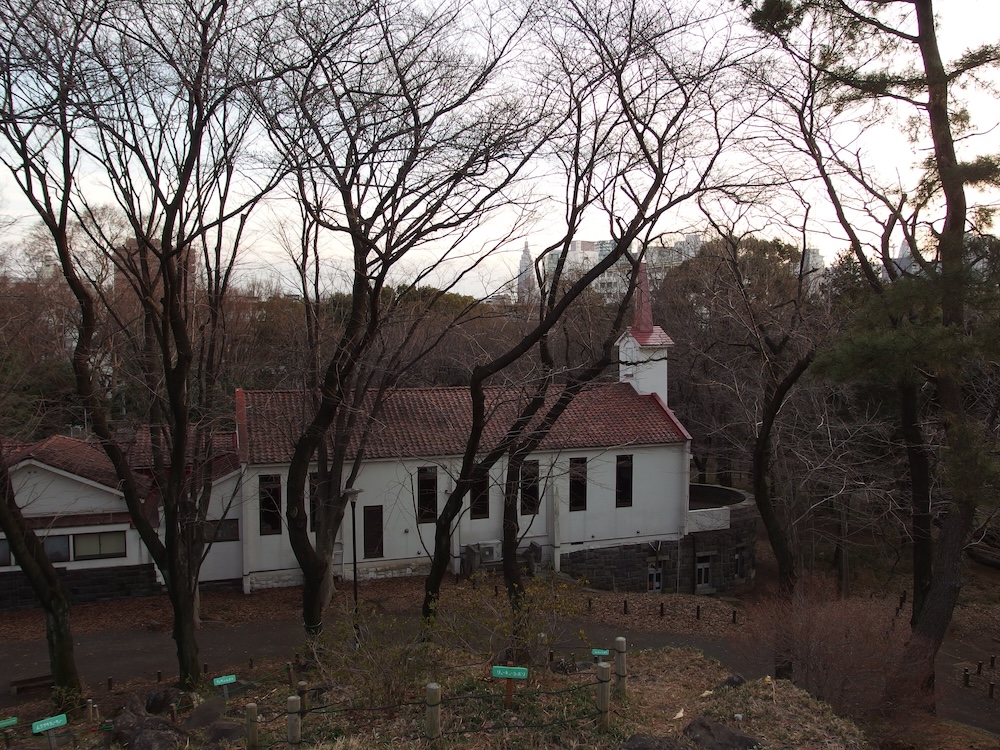
Even amidst the bustling crowds of Tokyo, one of the city’s most haunted spots lurks at Hakoneyama, an artificial hill in Toyama Park. By day, the park is full of joggers and families, but by night, it is said to transform into a realm of ghostly sightings and unsettling sounds. The area was once home to the Imperial Japanese Army Medical School, which is widely linked to Unit 731, the army unit notorious for its horrifying human experiments. In 1989, human remains were discovered during construction work on the former school grounds, deepening the site’s dark reputation.
Visitors recount hearing cries and screams amidst the darkness, reminding us to tread carefully through this eerie terrain of haunted places in Japan.
Google Maps: Toyama Park on Google Maps
Overall Scary Rank: #2 of 17
Type of Scary: Wartime Horror
2. Sunshine 60, Tokyo

Despite its innocuous name and unassuming appearance, this towering skyscraper harbours a dark past beneath its gleaming facade. Once Japan’s tallest building until 1991, Sunshine 60 in Ikebukuro carries the weight of its history, built upon the former site of Sugamo Prison.
Before and during the war, the prison held political prisoners, and after Japan’s defeat, the Allied occupation used it to hold suspected war criminals. Several were executed there, including wartime Prime Minister Hideki Tojo in 1948. Visitors have reported eerie encounters and unexplained phenomena throughout the building, hinting at its haunted past.
Google Maps: Sunshine 60 on Google Maps
Overall Scary Rank: #3 of 17
Type of Scary: Historical Execution Site
3. Komine Tunnel, Tokyo

This desolate tunnel is tied to one of the darkest chapters in modern Japanese crime. In 1988, serial killer Tsutomu Miyazaki murdered two young girls in the hills near Komine Pass, including a seven-year-old whose remains were later found there. Miyazaki killed four girls in total between 1988 and 1989 and was executed in 2008.
Reports of a ghostly young girl, along with screams and phantom touches, have made the old Komine Tunnel one of Tokyo’s best-known ghost spots. No longer used by traffic since a newer tunnel opened, it now sits on a quiet walking route near Komine Park, on the border between Akiruno and Hachioji.
Google Maps: Komine Tunnel on Google Maps
Overall Scary Rank: #1 of 17
Type of Scary: Violent Crime
4. Hachioji Castle, Tokyo

Hachioji Castle was a stronghold of the Hojo clan until 1590, when Toyotomi Hideyoshi’s armies stormed it in a brutal siege. According to legend, the women and children of the castle threw themselves into a nearby waterfall rather than be captured, and the river ran red for three days. The castle was abandoned soon after, when Tokugawa Ieyasu took control of the Kanto region.
There have been numerous reports of warrior spirits, phantom screams and hoofbeats, and misfortune befalling those who disturb the land. Today, the ruins are a National Historic Site in the hills of Hachioji, open to the public for hiking and quiet reflection.
Google Maps: Hachioji Castle on Google Maps
Overall Scary Rank: #5 of 17
Type of Scary: Vengeful War Spirits
5. Matsue Castle, Matsue
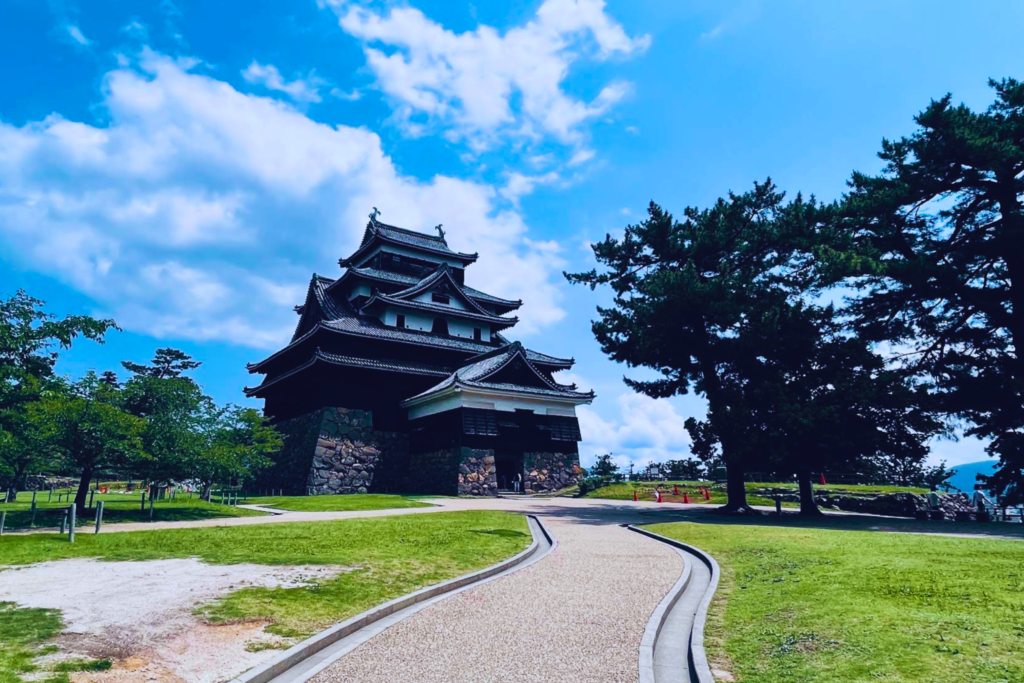
Matsue Castle is often described as one of Japan’s most haunted castles, with its spooky reputation coming from centuries of ghost stories and folklore. The most tragic is the legend of a young maiden who was allegedly buried alive beneath the castle’s stone walls as a hitobashira (human pillar). Her name was never recorded, but she is said to have loved dancing. After the castle was completed, dancing was reportedly banned in the streets of Matsue, as it was believed to make the castle shake.
Matsue as a whole is sometimes nicknamed the “City of Ghost Stories”. Beyond Matsue Castle, the city is home to several other eerie locations, including Gessho-ji Temple with its legendary giant stone turtle, Azukitogi Bridge, where an angry ghost is said to roam, and Yomotsu Hirasaka, the mythical entrance to the underworld in Japanese folklore.
Google Maps: Matsue Castle on Google Maps
Overall Scary Rank: #7 of 17
Type of Scary: Tragic Sacrifice
6. Kejonuma Leisure Land, Miyagi
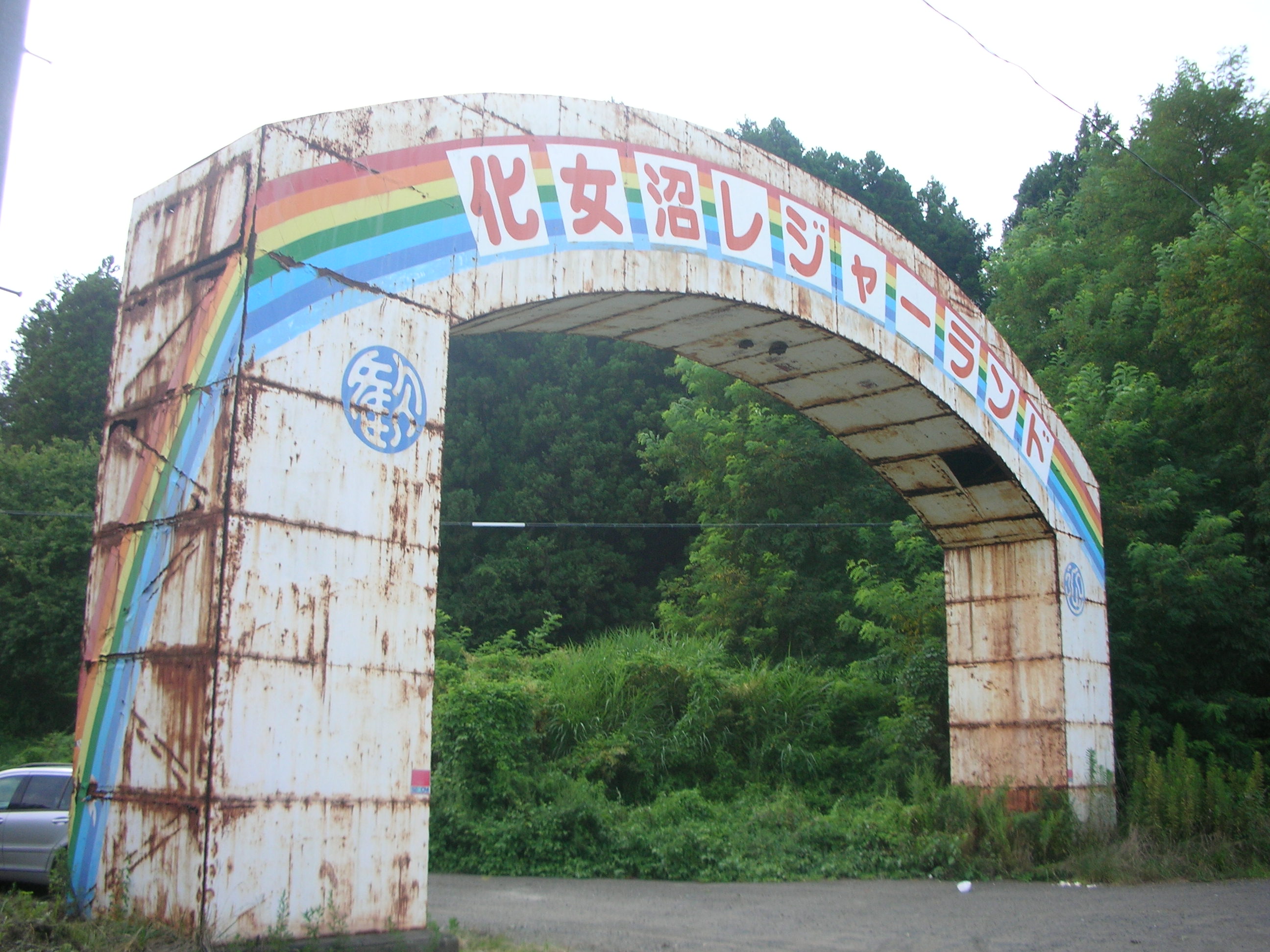
Kejonuma Leisure Land in Osaki, Miyagi, opened in 1979 beside the Kejonuma pond. Its founder, a local businessman who had seen Sendai reduced to ruins by wartime air raids as a boy, built the park to bring life back to his hometown. At its peak, it drew around 200,000 visitors a year, but numbers plummeted after the bubble economy burst, and the park closed in 2001.
What was once a land of life and fun is now an overgrown patch of land with rusting rides, including a Ferris wheel, spinning teacups and a carousel. It is also rumoured that the park was jinxed from the start because of its proximity to the pond where, according to legend, a woman drowned herself after giving birth to a snake-like child. Whether myth or curse sealed its fate, it remains one of the most atmospheric abandoned sites in Japan. The land is now private property and cannot be entered without permission.
Google Maps: Kejonuma Leisure Land on Google Maps
Overall Scary Rank: #6 of 17
Type of Scary: Cursed Site
7. Gunkanjima (Battleship Island), Nagasaki

About 15 km off the coast of Nagasaki lies Hashima, better known as Gunkanjima (Battleship Island). Coal mining on the island began in the late 1800s, and after Mitsubishi bought it in 1890, it quickly grew into a tiny island city.
With workers and families living there, it had schools, a hospital, shops and restaurants, and at its peak, it was one of the most densely populated places in the world. During the Second World War, Korean and Chinese labourers were also forced to work in its mines. As Japan shifted from coal to oil, the mine closed in 1974, and the island was abandoned soon after.
Left to typhoons and sea spray, the concrete buildings have slowly crumbled, and the island was off-limits for decades. It reopened to visitors in 2009 through guided tours only, and in 2015, it was inscribed as part of the UNESCO World Heritage Sites of Japan’s Meiji Industrial Revolution. A quick boat trip to see what this once-crowded city left behind is unforgettable.
Google Maps: Gunkanjima on Google Maps
Overall Scary Rank: #11 of 17
Type of Scary: Eerie Abandoned Ghost Town
8. Nichitsu Clinic, Saitama
Deep in the mountains of Chichibu, Saitama, lies the abandoned mining village of Nichitsu, named after the company that ran the local mine. It is a long drive from central Chichibu and only reachable by car.
At its peak, the village was home to around 3,000 people, with two schools, a clinic, a post office and even a cinema. As mining operations wound down in the late 1970s, residents gradually moved away, leaving many belongings behind. The clinic became infamous among urban explorers for its abandoned medical equipment, X-rays and specimens.
Several buildings have since been demolished, and the village sits on company-owned land, so the buildings cannot be entered without permission. Seeing it from the road is the respectful way to experience this eerie place.
Google Maps: Nichitsu Clinic on Google Maps
Overall Scary Rank: #8 of 17
Type of Scary: Eerie Mystery
9. Kappa (Kinugawa) Onsen Hotel, Tochigi

Kinugawa Onsen in Nikko, Tochigi, was once one of the Kanto region’s busiest hot spring resorts, with large hotels lining the Kinugawa River. Among the first to close was the hotel nicknamed the “Kappa Hotel” for its famous kappa-themed bath, which went bankrupt in 1999. The resort’s decline deepened after the collapse of Ashikaga Bank, its main lender, in 2003, leaving a string of abandoned hotels along the gorge.
Ravaged by time and nature, the ruins are an eerie sight from the riverside, but the buildings are private property and entry is prohibited, so they’re best admired from outside.
Google Maps: Kappa Onsen Hotel on Google Maps
Overall Scary Rank: #12 of 17
Type of Scary: Eerie Abandoned
10. Ashio Copper Mine, Tochigi

Found in Ashio, Nikko, Tochigi, the Ashio Copper Mine operated for around 400 years, from the discovery of copper in 1610 until its closure in 1973, and was once Japan’s largest copper producer. It was also the site of the Ashio Copper Mine pollution incident, widely regarded as Japan’s first major environmental disaster. As the mine declined, so did the town around it, leaving behind smelter ruins and old industrial buildings.
Today, part of the mine is open to visitors as Ashio Copper Mine Sightseeing, where a mine train takes you into the tunnels to see life-size figures recreating mining through the ages. It is open year-round, and admission is 830 yen for adults and 410 yen for elementary and junior high school students.
Google Maps: Ashio Copper Mine on Google Maps
Overall Scary Rank: #13 of 17
Type of Scary: Historical Tragedy (Industrial Disaster)
11. Sogi Power Plant, Kagoshima
In Isa City, Kagoshima Prefecture, the red-brick ruins of the Sogi Power Plant rise from Lake Otsuru like a European castle. Built in 1909 to supply electricity to a nearby gold mine, it harnessed the drop of Sogi Falls and was one of Japan’s largest hydroelectric plants at the time. When the Tsuruta Dam was completed in the mid-1960s, the plant was submerged beneath the new reservoir.
The best time to see the ruins is from May to September, when the water level drops and the whole building emerges. For the rest of the year, it is largely underwater, adding to its allure as one of the haunted places in Japan. The ruins are best viewed from the observation park on the opposite shore.
Google Maps: Sogi Power Plant on Google Maps
Overall Scary Rank: #15 of 17
Type of Scary: Atmospheric Ruin (Mild)
12. Sarushima (Monkey Island), Kanagawa

Located off the coast of Yokosuka in Kanagawa Prefecture, Sarushima is the only natural island in Tokyo Bay. It was fortified from the late Edo period onwards, and its brick tunnels, gun emplacements, and barracks remained in military use until the end of World War II. More family-friendly than some of the other ruin sites, it’s just a 10-minute boat ride from Mikasa Pier, and you can explore the whole island and even stop by the beach if you’re visiting in summer.
Google Maps: Sarushima on Google Maps
Overall Scary Rank: #16 of 17
Type of Scary: Historical, Not Really Scary
13. Okunoshima, Hiroshima

This island, now a national park and known as “Rabbit Island,” was once the site for the production of poison gas weapons during World War II. This island was once kept secret and erased from maps so the weapons would be confidential, but it’s now open to camp and visit while looking at all the ruins of the buildings that were used throughout the island to make these weapons.
You can’t go inside the buildings, but taking photos and walking around them is perfectly okay. You’ll also meet several hundred semi-wild rabbits roaming the island, often hopping in and out of the ruins.
It’s often said that these rabbits descend from animals used in the weapons tests, but the test rabbits were destroyed after the war. Today’s rabbits are believed to descend from a small number released on the island in 1971. Okunoshima is in Takehara City, Hiroshima Prefecture, and remains one of Japan’s most haunting places.
Google Maps: Okunoshima on Google Maps
Overall Scary Rank: #10 of 17
Type of Scary: Wartime Horror (Secret Weapons)
14. Kitazawa Flotation Plant, Niigata

The Kitazawa Flotation Plant in Sado City, Niigata Prefecture, was once hailed as the largest facility of its kind in Asia. Built in the late 1930s to process ore from the Sado gold and silver mines, it was the first plant in Japan to successfully use flotation to extract gold and silver, handling up to 50,000 tonnes of ore a month. Nearby stand the ruins of a thickener and a power plant that supported the operation.
The plant closed in 1952, and today its vast concrete terraces are overgrown with ivy, earning comparisons to Studio Ghibli’s Castle in the Sky. The ruins are lit up at night during the tourist season, making them even more spectacular. The Sado Island Gold Mines were inscribed as a UNESCO World Heritage Site in 2024, although the Kitazawa area itself was removed from the final nomination, which focuses on the Edo period.
Google Maps: Kitazawa Floating Mineral Processing Site on Google Maps
Overall Scary Rank: #14 of 17
Type of Scary: Eerie Abandoned
15. Kasagi Kanko Hotel, Kyoto
This abandoned hotel in Kasagi, Soraku District, Kyoto Prefecture, opened in 1962 as a base for visitors to nearby Mt Kasagi. Business dwindled after a new road tunnel bypassed it and direct trains from Osaka ended, and a renovation begun in 1988 was abandoned when funds ran out. A later demolition was also left unfinished, fuelling rumours of accidents and curses, and repeated fires led to an unfounded rumour that the owner died there.
Today, the concrete shell is covered in graffiti and slowly being reclaimed by the forest above the Kizu River. The site is off-limits, so it’s best seen from a distance.
Google Maps anchor text: Kasagi Kanko Hotel on Google Maps
Overall Scary Rank: #4 of 17
Type of Scary: Tragic Suicide
16. Bungomori Engine Bank, Oita

In Kusu, Oita Prefecture, there is an old roundhouse that served the purpose of housing and turning steam locomotives in the 1900s. Shut down in 1971 due to the expansive takeover of diesel, the roundhouse now sits looking like an old amphitheatre in Kusu. The locals love this ruin, keeping it as a sort of historical landmark, and with decades of history built into it, the Bungomori Engine Bank is a unique and fun ruin to explore.
Google Maps: Bungomori Engine Bank on Google Maps
Overall Scary Rank: #17 of 17
Type of Scary: Historical, Not Really Scary
17. Gulliver’s Kingdom, Yamanashi
Located near the base of Mt Fuji in Fujikawaguchiko, Yamanashi Prefecture, Gulliver’s Kingdom was a theme park based on Gulliver’s Travels, centred on a 45-metre statue of Gulliver tied to the ground. It opened in 1997 but struggled from the start: it was hard to reach, faced competition from Fuji-Q Highland, and sat close to Aokigahara forest and the former compound of the Aum Shinrikyo cult. When its main lender collapsed in 1999, the park’s fate was sealed, and it closed in 2001.
For a few years afterwards, the abandoned park, with its giant Gulliver lying in the weeds, became one of Japan’s most famous ruins. The statue and most of the structures have since been removed, and only foundations and cracked concrete remain today.
Google Maps: Gulliver’s Kingdom on Google Maps
Overall Scary Rank: #9 of 17
Type of Scary: Ominous Atmosphere
Unravelling Japan’s Haunted and Abandoned Wonders
Whether you relish the eerie atmosphere of these places, seek to challenge yourself, or simply possess a genuine curiosity about haunted and abandoned attractions, Japan beckons you to explore. Haikyo, ingrained in Japanese culture, offers a diverse array of experiences.
Some locations exude spine-chilling vibes, while others captivate with their haunting beauty – and sometimes, they embody both. Yet, each is a treasure trove waiting to be discovered and explored. No matter where you are in Japan, intriguing Haikyo sites await, offering glimpses into Japan’s history and perhaps testing your courage along the way.
Haunted Places in Japan FAQs
What is the most haunted place in Japan?
There is no official “most haunted” place in Japan, but Aokigahara Forest, Osorezan, and Matsue Castle are often considered among the country’s eeriest locations. Aokigahara is surrounded by dark folklore, Osorezan is believed to be a gateway to the afterlife, and Matsue Castle is famous for the legend of a young maiden said to have been buried alive beneath its walls during construction.
What is the most haunted village in Japan?
Inunaki Village is often described online as Japan’s most haunted village. Legends claim that the abandoned settlement is home to mysterious disappearances and ghostly encounters, although many stories are urban legends rather than verified events. The village became especially famous through Japanese horror culture and online folklore.
Why are Japanese ghosts so scary?
Japanese ghosts, known as yūrei (幽霊, yurei), are often considered frightening because they are closely tied to ideas of unfinished business, revenge and unresolved emotions. Traditional depictions usually show them as pale figures with long black hair and flowing white clothing, inspired by beliefs that spirits unable to pass on may remain in the human world.
Can you visit haunted places in Japan?
Yes, many of Japan’s famous “haunted” locations can be visited, including castles, temples, forests and historic sites. While some places have tragic histories or spooky legends, most are popular tourist attractions where visitors come to learn about local folklore rather than experience anything supernatural.
Why does Japan seem so scary?
Japan’s reputation as a scary destination comes largely from its rich folklore, ghost stories and horror media. Ancient beliefs about spirits, mysterious landscapes, abandoned places and centuries-old legends create an atmosphere that can feel eerie, but these stories are also an important part of Japanese culture and history.