
We have all been there. You queue up outside a tiny shop in Tokyo, sit at a wooden counter, and slurp down a bowl of piping hot ramen in ten minutes flat. It almost feels like fast food. But it isn’t. When you actually step behind the counter, you realise that a good bowl of ramen is pure chemistry. I used to think I knew what good ramen was just by eating it… Then I put on an apron and tried ramen making it by hand for myself. It completely changed how I look at the dish.
If you’re like me (a serious foodie), and want to understand the “how” and “why” of Japan’s most famous dish, then you have to add a ramen making experience to your Japan bucket list asap. Having tried it myself, I absolutely recommend taking one of these workshops, but it turns out there’s more to deciding what to book than just making noodles.
In this guide, I wanted to share with you the different styles of ramen making experiences, and what you can expect from each. Hopefully, that helps you decide which type of noodle workshop is right for you!
A Quick Tip for Ramen Making
There are so many options when it comes to ramen making workshops in Japan, many of which I’ll dive into below. But to make sure you get a spot on something truly authentic, fun, and (most importantly) delicious, let us help you! We can connect you with incredible ramen chefs, kid-friendly workshops, and home cooks across Japan. Check out our ramen making experience page to get started!
Your Crash Course in Ramen Science

Before I took this workshop, I was just happy to slurp my noodles and leave with a full stomach. I never stopped to consider the actual science happening in the bowl. But it turns out it’s a lot more impressive than I knew. During my workshop, the chef explained that every proper bowl is built from four distinct layers: the broth, the tare, the noodles, and the aroma oil.
Take the broth, for example. I always assumed that boiling pork bones for hours created that salty punch you get in a good tonkotsu. But when the instructor handed us a spoon of the plain white stock to taste, it was surprisingly bland. It turns out the real flavour comes from the tare (a concentrated sauce sitting at the bottom of the bowl). I also learnt that without this specific seasoning base, you are essentially just drinking fatty water.
This led to me having a bit of a realisation about the noodles: there isn’t a single egg in the recipe. That signature yellow colour actually comes from kansui, or alkaline water. It reacts with the wheat flour to make the noodles springy so they don’t turn into mush in the hot soup.
Finally, there is the aroma oil. I learnt that the delicious smell that hits you when the bowl lands on the table isn’t just the soup. It is usually a separate layer of garlic or scallion oil floated right on top to trigger your appetite. It was fascinating to see how these invisible layers work together to build the final dish.
Other than the science behind it, there are so many more fascinating things about ramen, like how there are so many different types you can try. I think there are at least 10 ramen varieties you have to try at least once in your life!
5 Amazing Ramen Making Workshops That I Recommend
Like with many things in Japan, there are people who take the art of ramen making extremely seriously, and those that do it for fun and the simple joy of cooking. The same is reflected in the types of ramen making workshops you can take: there’s everything from intense day-long cooking classes to kid-friendly and casual home cooking sessions.
Knowing which to book gets overwhelming quick, so these are the 5 that I personally recommend, from least to most intensive:
Ramen Factory Experience
If you’re looking for a ramen-making experience that’s fun, beginner-friendly, and that’s always a hit with kids, then I have to recommend the Ramen Factory in Kyoto. In around 90 minutes, you’ll make your own noodles, prepare simple toppings, mix the soup, and assemble a bowl of ramen before sitting down to enjoy it. The classes are taught in English and are designed for complete beginners, making them very accessible for international visitors.
Length: 60-90 minutes
Budget: ¥¥
Difficulty: Extremely beginner friendly
Pros:
- Hands-on experience without taking up half a day
- Suitable for complete beginners
- English-speaking instructors
- Family-friendly and great for kids
- Vegetarian, vegan, and halal options available
Cons:
- Less in-depth than a full ramen-from-scratch workshop
- Doesn’t cover long broth-making techniques
- More focused on fun and participation than culinary mastery
- Can feel a little tourist-oriented for serious foodies
Restaurant Workshops

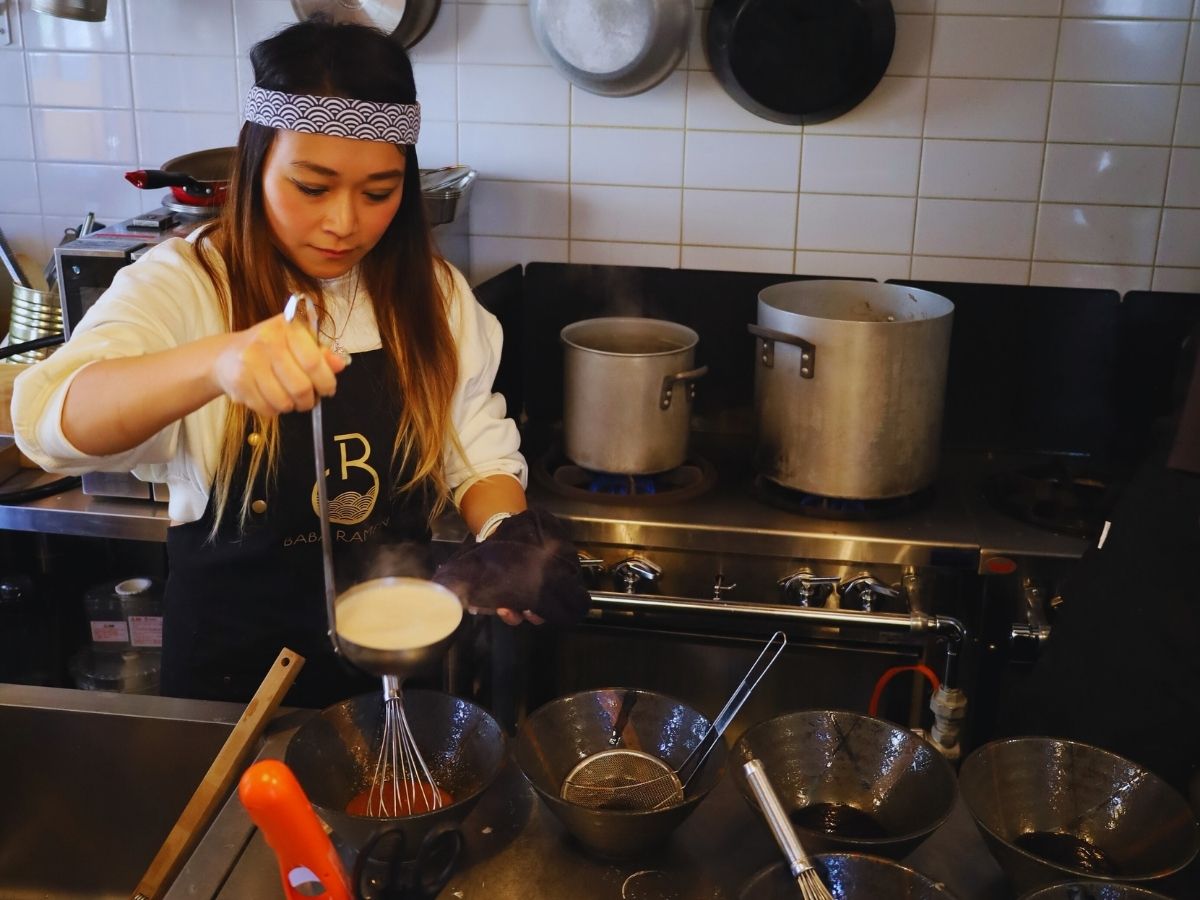
This is perfect if you are short on time or just want a quick glimpse behind the curtain. These classes usually take place in an actual ramen shop during their prep hours. You skip the heavy lifting like boiling bones or kneading dough. Instead, you jump straight to the final step. You learn how to boil the noodles, shake the water out in the deep baskets, and assemble the toppings before the soup gets cold. It is fast and loud, and gives you a taste of the chef’s life in just an hour without the long commitment of brewing stock from scratch.
Length: 60 minutes
Budget: ¥
Difficulty: Easy
Pros:
- Takes place in a real ramen restaurant for an authentic atmosphere
- Ideal for travellers with limited time
- Learn practical skills used by professional ramen chefs
- Is often family-friendly and great for groups
Cons:
- Doesn’t cover the full ramen-making process
- Shorter than other ramen making workshops
- Less suitable for those wanting an in-depth culinary experience
- Focuses more on assembly than understanding the ingredients and techniques
Home Cooking Classes

These sessions feel less like a restaurant shift and more like visiting a Japanese friend (who just happens to be a mean ramen maker). They usually happen in a domestic kitchen or a smaller studio. The focus here is on replicability. You are learning a recipe that is actually possible to cook in your own kitchen when you get home. These classes almost always pair ramen with gyoza, so you get a full set meal.
Length: Around 2 hours
Budget: ¥¥
Difficulty: Easy
Pros:
- Friendly, intimate atmosphere with smaller class sizes
- Usually more able to adapt recipes to dietary requirements than in a restaurant
- Often includes other dishes such as gyoza, creating a complete meal experience
- Great opportunity to learn about everyday Japanese home cooking
Cons:
- Less focused on traditional restaurant-style ramen techniques
- May not satisfy travellers looking for a professional kitchen experience
- Usually simpler recipes than full ramen-from-scratch workshops
- Can have more limited availability
Ramen Making from Scratch

This is for the serious foodies. In these workshops, you do everything yourself! You spend hours brewing the broth from bones, kneading the noodles from flour, and mixing the tare to find the perfect balance. It is a longer commitment, usually taking half a day, but you leave understanding the exact chemistry and ratios behind the dish. If you want to know why ramen tastes the way it does, this is the one to book.
Length: 3.5 to 4 hours
Budget: ¥¥¥
Difficulty: Medium
Pros:
- Learn every step of the process from start to finish
- Gain a deeper understanding of ramen ingredients, techniques, and flavour development
- Ideal for passionate home cooks and food enthusiasts
- Highly rewarding and educational
Cons:
- Requires a significant time commitment
- More physically demanding than other workshop styles
- Usually more expensive than shorter workshops
- Less suitable for young children due to the length and complexity
What to Expect During a Ramen Making Workshop

Before taking my own ramen making workshop, I was definitely a little intimidated. In a restaurant, the environment is hot and loud, and although you have an expert chef right beside you to keep things moving, you are the one doing the heavy lifting. However, there really is nothing to worry about! Here’s the kind of thing you can expect…
One of the biggest surprises was how physical it was. We started by mixing flour and kansui (alkaline water) to make the noodles, and the dough was far tougher to knead than I expected. Once it was ready, I fed it through a noodle machine, transforming it from a dense block of dough into fresh ramen noodles. It was easily one of the most satisfying parts of the experience.
I also learnt about the importance of broth and tare, which I talked about above. I got to taste each component separately before combining them to create that rich umami flavour ramen is known for. It gave me a whole new appreciation for the skill and precision behind a great bowl of ramen.
When it came time to cook, things moved quickly. Fresh noodles only take seconds to cook, so I had to work quite fast to drain them, assemble my bowl, and add the toppings before everything cooled down.

Finally, it was time to eat! Sitting down to dine on something you built from scratch feels different. The first thing I noticed was the texture. The noodles had a snap and bounce that you just do not get from the dried stuff. Because we had balanced the tare ourselves, the soup tasted exactly how we wanted it to.
The focused silence of the kitchen also turned into the sound of slurping and chatting. I even ended up swapping travel stories with the other people in the class and sharing tips on where to go next. It felt less like a classroom and more like a casual dinner party with friends.
The Most Authentic Ramen Making Experience in Japan

Want to experience the most authentic ramen making workshop and skip the tourist traps? Flip has curated a selection of the best ramen workshops across various locations in Japan. We handle the reservation and details, ensuring you get a spot in an expert’s kitchen. If you are ready to put on an apron and learn a skill you can take home, book the experience now.
Ramen Making Experience FAQs

Do I need cooking experience?
Not at all. The instructors are experts at guiding beginners. Whether you are a master chef or you usually burn toast, you will be able to make a delicious bowl.
Can I do it alone?
Absolutely. Our booking data shows this is a popular choice for solo travellers. It is a communal environment where you naturally chat with the instructor and other guests.
Is it safe for children?
While kids usually love using the noodle machine and playing with the dough, because there are hot pots and boiling water, we recommend it for older children or teenagers.
How long does it take?
You should set aside about 3 hours for the full experience. This covers the cooking lesson and plenty of time to sit down and enjoy the meal you made at the end.
What should I wear?
The studio provides aprons to protect your clothes. However, we recommend wearing comfortable shoes because you will be standing and moving around the kitchen for most of the workshop.