
As a Japan-based boutique travel agency, we spend a lot of time with guests who’ve done the five-star circuit elsewhere first. Luxury in places like Dubai or Paris tends to mean scale: bigger suites, longer wine lists, massive banquets, packed itineraries. It’s polish stacked on polish, and it’s easy to bring those same expectations into a luxury Kyoto trip.
So, we’ve watched plenty of guests arrive with exactly that mindset and get quietly recalibrated the moment they arrive at their machiya, with its entrance barely wide enough for a suitcase, tucked between a tofu shop and a shuttered kimono dealer on a street that smelled faintly of cedar and the neighbour’s dinner. No marble lobby, no luggage trolley waiting at the curb. Just a narrow wooden door and someone bowing slightly as they slid it open.
You see, Kyoto doesn’t do luxury through scale. What Kyoto offers instead is access, the kind that has to be arranged rather than bought off a rack: where you stay, what you eat, the experiences that don’t take walk-ins, and the planning that ties it all together without you having to think about a single bus timetable.
Where to Stay on a Luxury Kyoto Trip
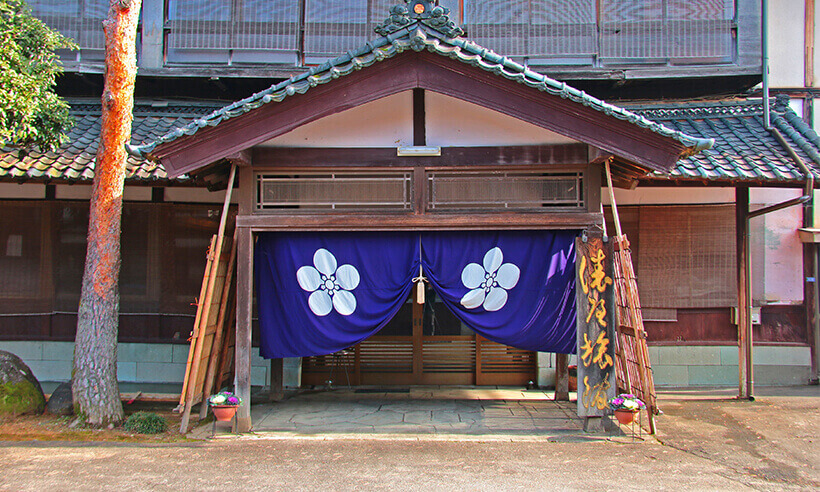
Ryokans are where most people’s minds go first, and for good reason. These are traditional inns, often generations old, run by families who’ve done nothing else for a very long time.
The luxury tier means private hinoki wood baths rather than shared ones, a kaiseki dinner adjusted around what you can’t eat rather than served on autopilot, and a property that only takes a handful of rooms a night, so the whole place feels calm rather than fully booked. Worth knowing honestly: central Kyoto has no natural hot springs, so even the grandest ryokan baths here run on heated water, not geothermal onsen. If a proper onsen is the priority, that’s a Hakone or Kinosaki trip, not a Kyoto one.
Another option, and one I think gets undersold, is a boutique hotel. It trades the ryokan’s fixed rhythm for flexibility, room service at midnight, no set dinner hour, a concierge who can pull strings a booking site never will.
Neither style is better, and I get properly annoyed when people frame it that way online, usually people who’ve stayed in exactly one ryokan and decided they’re now qualified to judge the entire format. A ryokan asks you to slow down to its rhythm. A hotel bends around yours. Pick whichever matches your actual personality, not the one that photographs better.
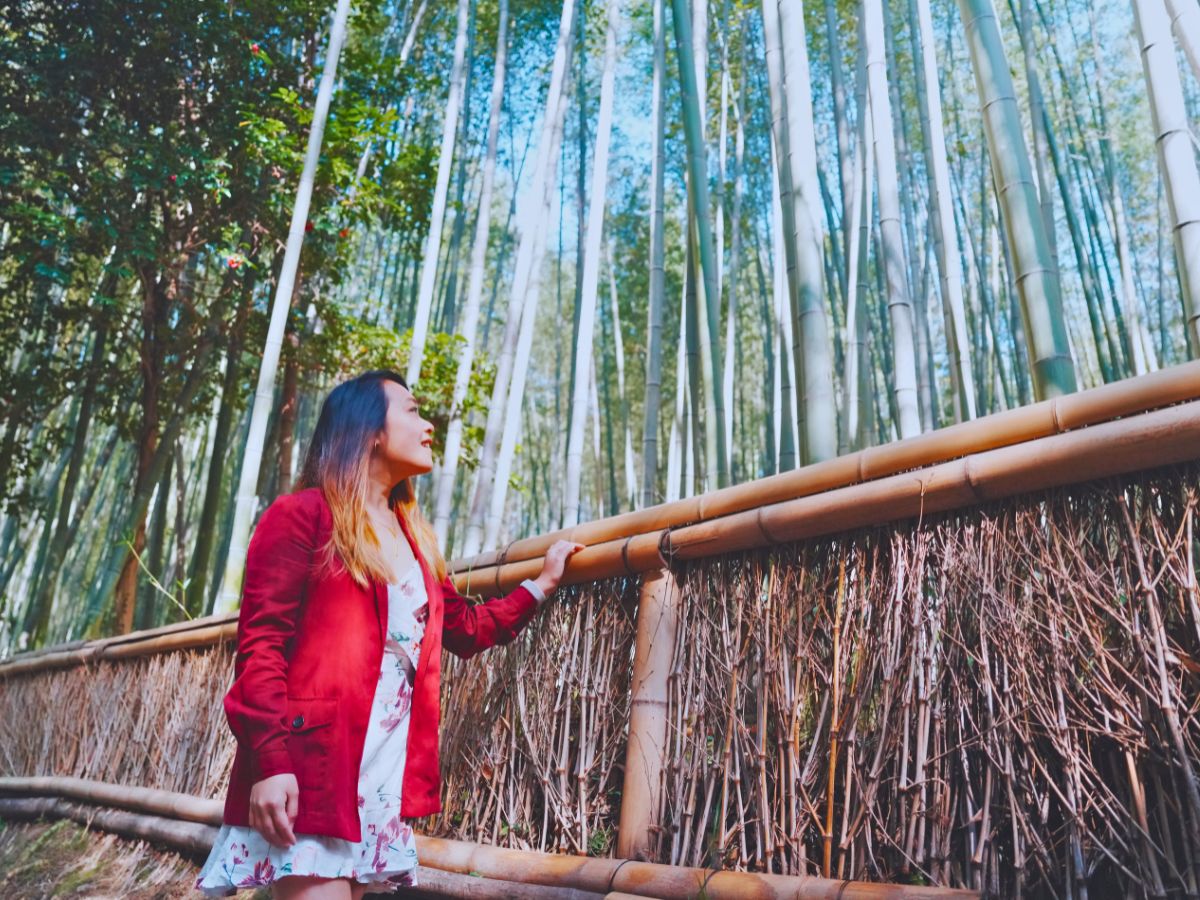
In terms of location, Gion still has the pull, especially at dusk, when the lanterns come on along Hanamikoji and the wooden facades catch the light in a way that photographs badly and looks better in person. Higashiyama offers boutique stays tucked into converted machiya that don’t show up easily on booking sites. Arashiyama gives genuine distance from the crowds, particularly if you stay overnight instead of doing the bamboo grove as a rushed afternoon visit and then fighting the tour buses back into town.
We usually place first-time guests in Higashiyama or Gion, partly for proximity to the experiences worth arranging, partly because it cuts down on daily transport.
What to Eat on a Luxury Kyoto Trip

Good food is everywhere in this city, so luxury cuisine has to mean something more specific than “the food is good.”
A lot of it comes down to ingredients you won’t find the same way elsewhere in Japan. Kyoto grows its own heirloom vegetables, kyo-yasai, thirty-odd officially recognised varieties including Kamo eggplant, Kujo spring onion and Shogoin turnip, cultivated for over a thousand years to suit the demands of the imperial court and the temple kitchens around it. A proper kaiseki course leans on these hard, and makes it worth every yen for a luxury Kyoto trip.
Kyoto’s tofu culture is another piece of this. The city sits on water which happens to be ideal for tofu-making, and centuries of Buddhist temple cooking, where meat was forbidden, built an entire cuisine around it. Yuba, the delicate skin that forms on top of simmering soymilk, is a Kyoto speciality you won’t find handled the same way anywhere else, silky enough to eat raw, sturdy enough to go into a hot pot. In summer, look out for hamo, a bony pike conger eel that Kyoto chefs bone by hand into paper-thin cuts, considered the definitive seasonal dish of the warmer months.
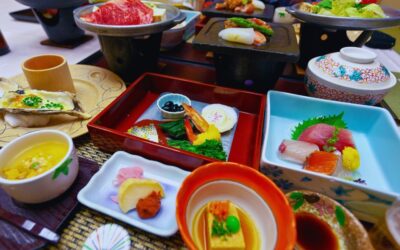
Kaiseki itself grew out of the tea ceremony, originally the modest food served to guests before tea was poured, before it evolved into the formal, multi-course dining style it is today. That history is why a good kaiseki meal still follows a fixed order built around cooking method rather than ingredient, and why the pacing matters as much as any single course.
A private kaiseki dinner takes this further still. Arranged rather than booked cold, it means a chef who already knows what you can’t eat before you sit down, adjusting the full course accordingly, at a pace that’s yours rather than the restaurant’s, with no next table waiting behind you.
What to Do on a Luxury Kyoto Trip
This is where the difference between a nice trip and a proper luxury one shows up most clearly. A geisha dinner is the classic example. These evenings happen inside an ochaya (a private teahouse in one of Kyoto’s five historic hanamachi districts) that traditionally doesn’t take first-time guests without a referral. That’s not a marketing line, it’s how the system has worked for centuries, and it’s exactly why access has to be arranged in advance rather than booked the week before.
Once you’re in, the evening runs on conversation, a dance performance with shamisen accompaniment, and traditional drinking games, with a skilled geiko keeping your cup topped up before you’ve even noticed it’s empty.
A private tea ceremony is another experience worth splurgin on in Kyoto. A group demonstration shows you the choreography. A private one with a licensed tea master lets you actually ask questions mid-ceremony and understand what a gesture means as it happens, rather than nodding along politely.
Kimono fittings follow the same logic, the tourist rental shops give you the outfit, while a proper fitting with antique silk and a full dressing process gives you the weight of the tradition behind it, even if you spend the rest of the day mildly terrified of sitting down wrong. We even found a partner that combines kimono wearing and an authentic tea ceremony in one experience:
An indigo dyeing session with a professional dyer, working with real aizome techniques rather than a tourist craft-stall version, ends with a piece of fabric you’ve dyed yourself, and it ties nicely to Kyoto’s textile history, since the city’s Nishijin district has produced woven and dyed textiles for over a thousand years.
Luxury Local Guidance in Kyoto
![Luxury Kyoto Trip: A Boutique Travel Agency’s Guide to Doing It Right [Flip Japan photo of an ancient Japanese street in Kyoto with Kiyomizudera temple in the background]](https://flipjapanguide.com/wp-content/uploads/2025/11/Untitled-design-5-2-1024x576.png)
Kyoto’s biggest temples and shrines don’t do private walk-ins. Fushimi Inari, Kinkaku-ji, Kiyomizu-dera, these are working religious sites with fixed public hours, and no amount of budget gets you a side door. What money can get you, however, are expert local guides who know precisely when to be there and where to stand once you are.
A guide who’s walked the same gravel paths hundreds of times knows when Fushimi Inari empties out, or which side path up Kiyomizu-dera avoids the worst of the crowd entirely, or that the best soba place near a given temple is two streets back from the one every guidebook lists.
This kind of expertise is earned, over years, by someone who lives here and pays attention. In a city where most visitors are shoulder to shoulder in droves at the same six spots on the same morning, that kind of knowledge is arguably the most genuine luxury on offer, more than any suite or tasting menu.
Want expert local guides to show you around Kyoto? We know just the men and women for the job.
Customised Itinerary and On-the-ground Support
Kyoto’s popularity has a cost. The bus routes fill up fast, the best ryokan and kaiseki restaurants book out months in advance, and a geisha dinner is only possible at all through connections established over years. Even the temples need the kind of timing and local knowledge covered above to actually be worth the visit rather than a wall of umbrellas and phone screens. Put simply, a proper luxury Kyoto trip needs an expert layer of planning sitting underneath it, and that’s exactly what our Travel Planner service is for.
We build a custom itinerary around your pace and interests rather than a generic must-see list. We arrange the ryokan, the restaurants and the private experiences in advance, flag mobility needs early so your route gets built around them rather than discovered the hard way on day two, and stay reachable through on-trip chat support for the moments a train gets cancelled and you’re standing at Kyoto Station mildly panicking.
We can also arrange friendly, experienced private drivers for the day, which matters more in Kyoto than most Japanese cities. This is because Kyoto is dense and low-rise, so taxis are harder to hail on the street than in Tokyo, and the bus network, while extensive, runs on a zone-based fare system, with the main tourist routes standing-room only by mid-morning. A driver who knows the city removes that entirely, and it means arriving at a private experience on time instead of racing between a bus stop and a temple gate.
Get in touch with us now to learn more about our travel planning service.
Luxury Kyoto Trip FAQs
How much does a luxury Kyoto trip cost per day?
It varies depending on accommodation and how much is privately arranged, but a genuinely high-end day, top-tier ryokan, private car, arranged experiences and one standout meal, typically runs from around $800 to $1,800 USD per person, per day.
Is Kyoto or Tokyo better for a luxury Japan trip?
They serve different purposes. Kyoto offers luxury through tradition and access to unique and authentic experiences.
What is the best luxury ryokan in Kyoto for first-timers?
This depends on your priorities, onsen access, central location, dining style, so it’s worth discussing specifics rather than picking blind from a ranking list.
How many days do you need for a luxury Kyoto itinerary?
Four to five days lets you slow down properly without feeling like you’re racing between temples, with room for at least one full rest morning.
Do you need to book kaiseki dining in advance in Kyoto?
Yes, particularly for well-known restaurants, where reservations often need to be made months ahead. Smaller kappo counters sometimes have more flexibility closer to your travel dates.
How do you arrange a geisha dinner in Kyoto?
Most ochaya in Gion don’t accept bookings from visitors directly, so these evenings are typically arranged through an agency or hotel concierge with existing connections to the teahouses.