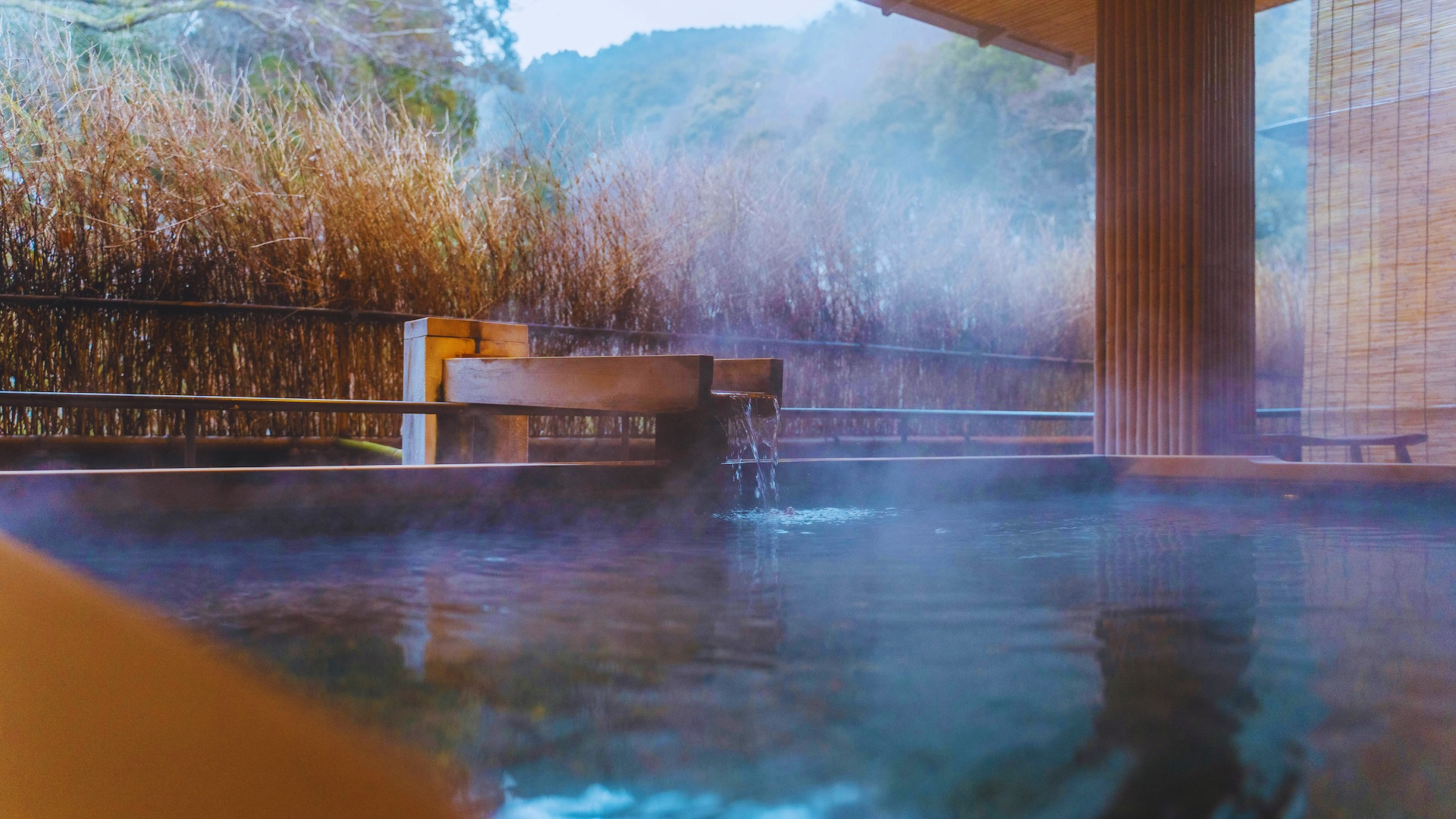

Yes, you can go to an onsen in Japan with tattoos. In fact, there are several amazing tattoo-friendly onsen towns across the country. I’ve lived in Japan for nearly 10 years with a full sleeve, and I go to my local sento every week and to onsen every winter. Bathing culture is one of my favourite things about living here, and probably the thing I’d miss most if I ever moved away. So when friends ask whether their tattoos will keep them out of Japan’s famous bathhouses, my answer comes from a lot of hours spent sitting in hot spring water all over Japan while fully tattooed.
The easiest picks are Kinosaki, Kusatsu, and Dogo, where every main public bathhouse accepts tattoos. Beppu has published its own map of 100 tattoo-friendly onsen, and Nozawa’s 13 free village bathhouses accept tattoos too. In Hakone and Arima, it comes down to picking the right facility, and the basics on how onsen, sento, and private baths work are further down.
Planning a trip to Tokyo? Skip the route maps and let a local show you around on a private Tokyo tour, built around what you want to see.
1. Kinosaki Onsen (Hyogo Prefecture)
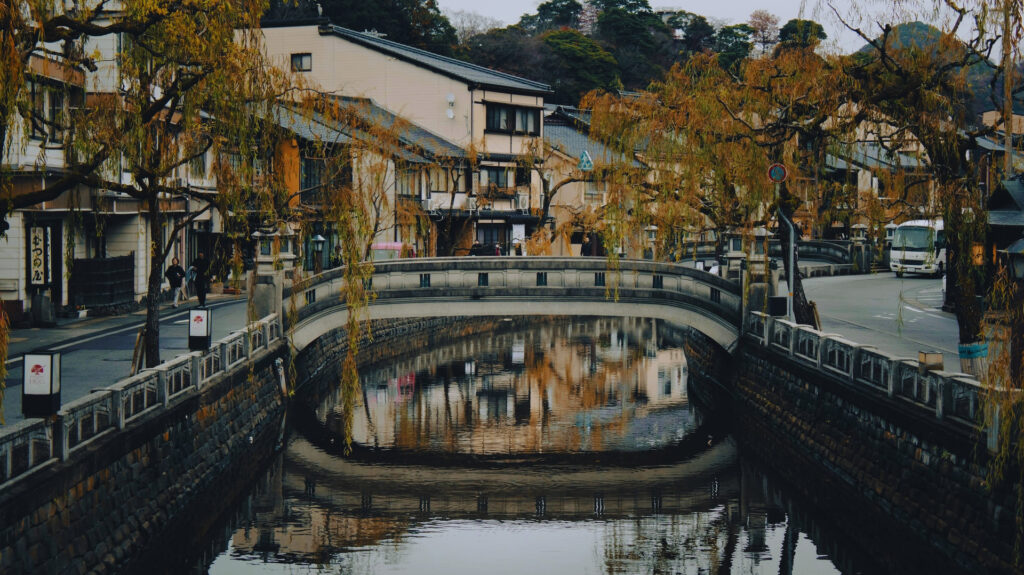
Kinosaki is a small, willow-lined canal town where people stroll between bathhouses in yukata and wooden geta. It’s super cute, but much more touristy than I expected, since its marketing as a fully tattoo-friendly onsen town has made it a serious hotspot. All seven public bathhouses allow tattoos of all shapes and sizes.
There’s a ropeway for views over the valley, and the crab is amazing if you go during winter. Getting there from Tokyo is a bit of a journey, so it works better if you’re based in Osaka or Kobe, and one or two nights is enough to see everything. The baths inside individual ryokan can have their own rules regarding tattoos, so check with your inn before using its bath.
Need more details on onsen etiquette? Check out our guide: Onsen 101.
Recommended onsen (six of the seven are currently open, as Satono-yu has been closed for renovation since April 2024):
Goshono-yu: Has a huge outdoor bath with a waterfall, and incredible scenery around it.
- Tattoo-friendly, no cover-up needed.
- Day-use ¥800
- Goshono-yu on Google Maps
Ichino-yu: Smaller facility with just two baths, but the outdoor cave-style bath is really unique.
- Tattoo-friendly, no cover-up needed.
- Day-use ¥800
- Ichino-yu on Google Maps
Mandara-yu: Another smaller facility with an outdoor bath, although the outdoor baths only fit one person per bath, so it can get busy in peak season.
- Tattoo-friendly, no cover-up needed.
- Day-use ¥800
- Mandara-yu on Google Maps
Day-trippers can buy a ¥1,500 pass covering all the bathhouses at any of them. Official site: visitkinosaki.com
Getting there: About 2.5 hours by JR limited express train from Kyoto or Osaka. All limited express seats to Kinosaki need to be reserved in advance.
2. Beppu Onsen (Oita Prefecture)
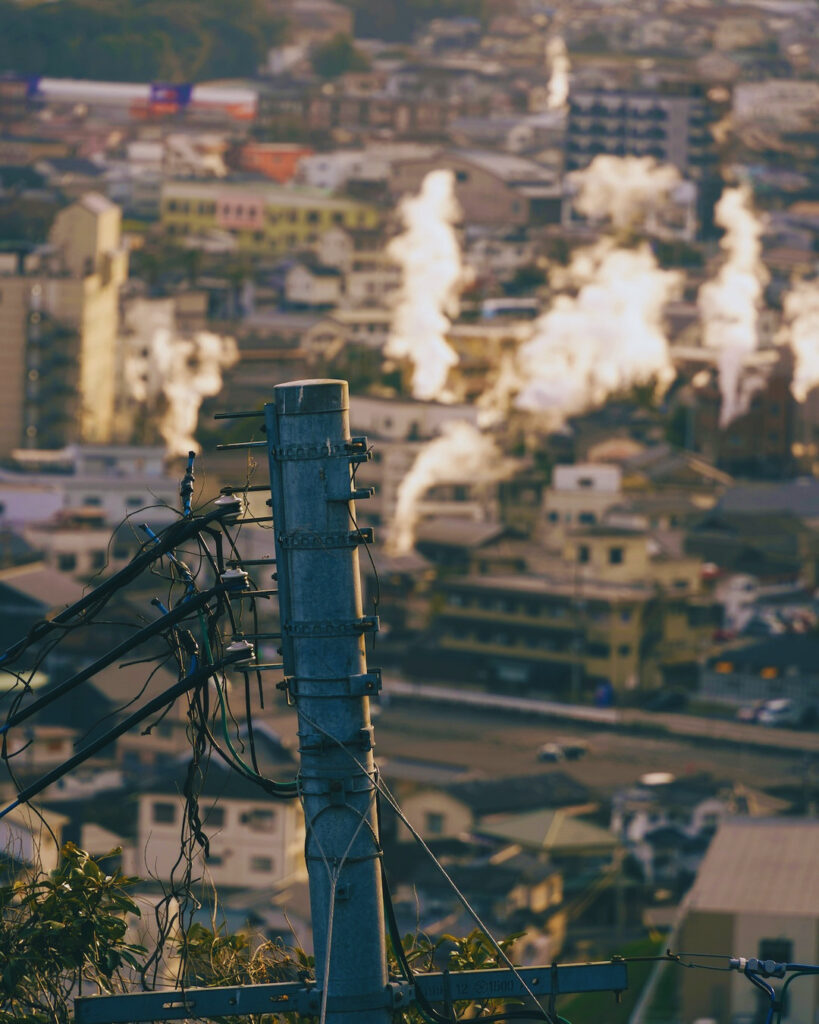
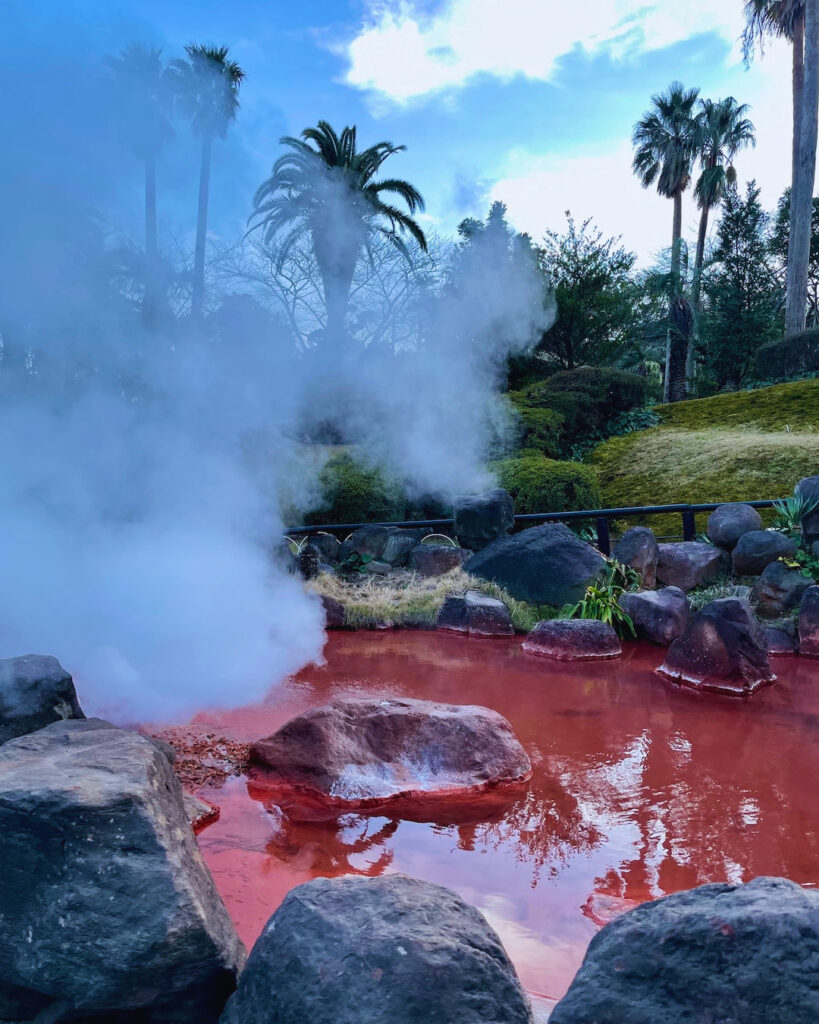
Beppu is a full-sized city rather than a small town, with steam rising out of vents across town and an onsen on practically every corner. When you’re not bathing, you can tour the Hells (jigoku), a string of colourful, boiling hot spring ponds, or get buried up to your neck in a hot sand bath. Beppu City is also one of the most open about tattoos in the country, and it published its own map of 100 tattoo-allowed hot springs ahead of the 2019 Rugby World Cup.
Recommended onsen:
Hyotan Onsen: This massive day-use onsen has indoor, outdoor, and bookable private baths, and a sauna. It’s also the only onsen in Japan to receive three stars from the Michelin Green Guide Japan seven times in a row.
- Tattoos accepted, no cover-up needed.
- Day use ¥1,160
- Private bath 90 minutes ¥3,600
- Hyotan Onsen on Google Maps
- Official site: hyotan-onsen.com
Takegawara Onsen: Along with hot spring baths, you can also try the sand bath here, where you spend 15-20 minutes covered in warm sand from the neck down.
- Tattoos accepted, no cover-up needed.
- Day use ¥300
- Sand bath ¥1,500
- Takegawara Onsen on Google Maps
- Official site: city.beppu.oita.jp
Ekimae Koto Onsen: More minimal than the others on this list, but has a nice local vibe.
- Tattoos accepted, no cover-up needed.
- Day use ¥250
- Ekimae Koto Onsen on Google Maps
Getting there: About two hours from Hakata Station in Fukuoka on the JR Sonic limited express.
3. Kusatsu Onsen (Gunma Prefecture)
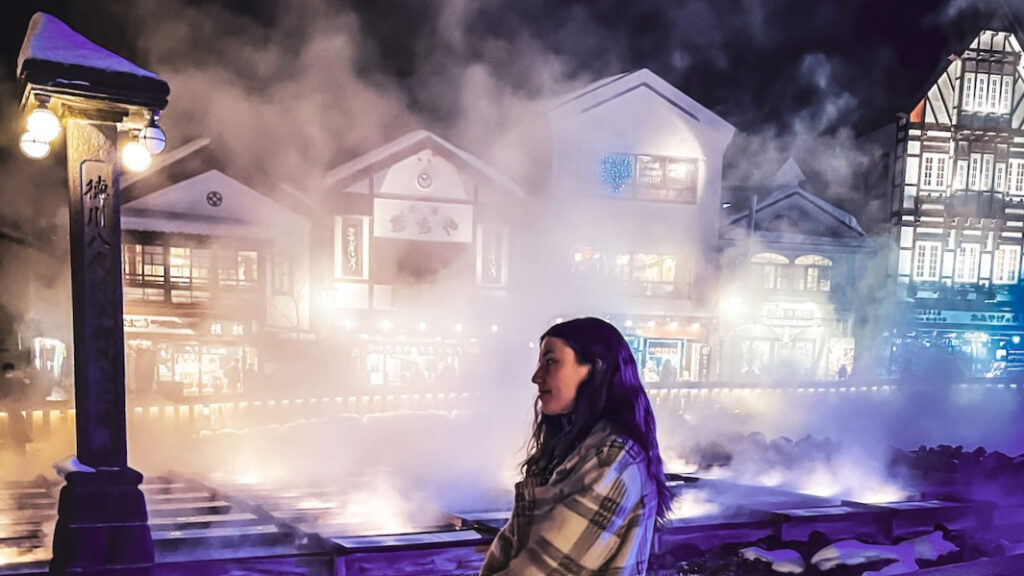
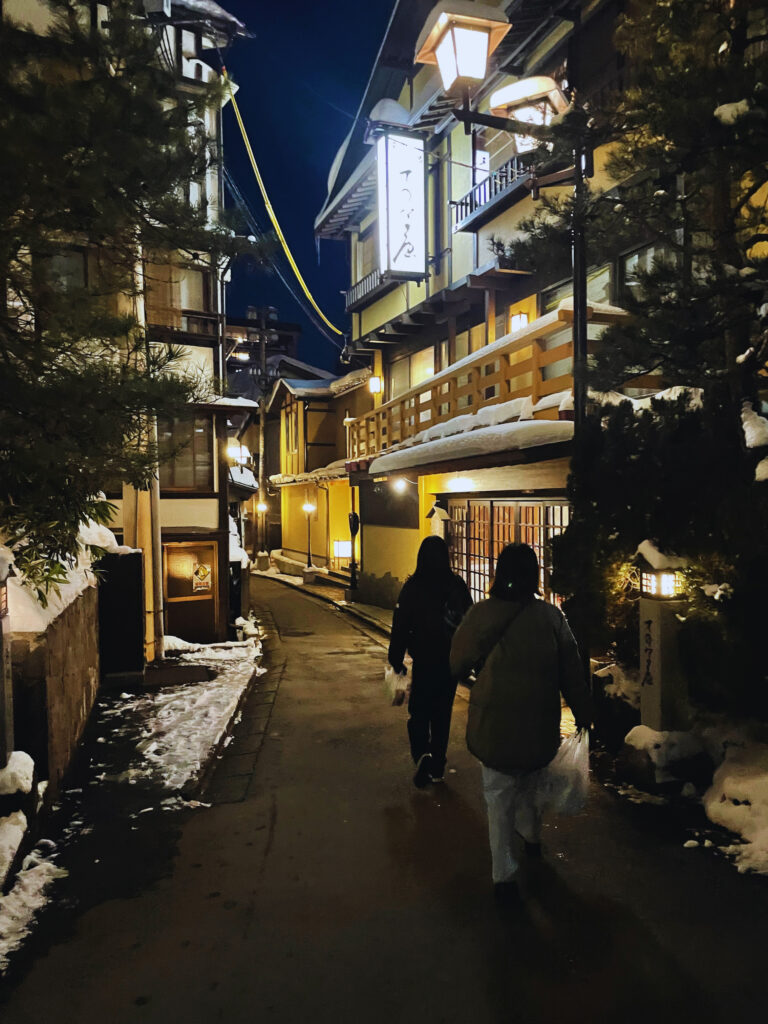
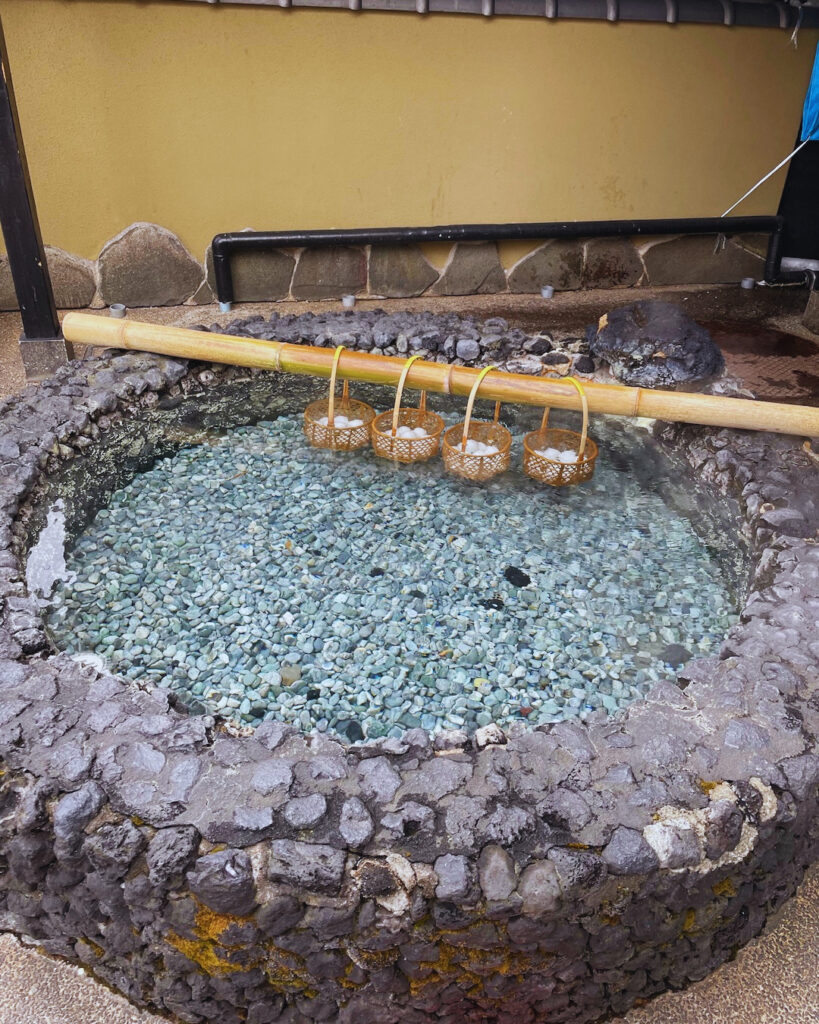
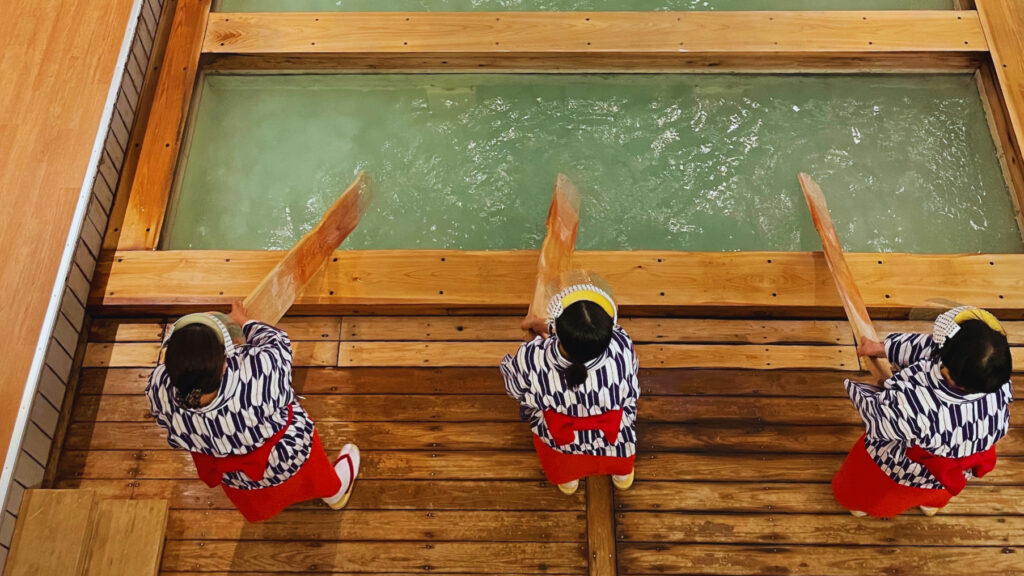
I absolutely loved Kusatsu, it was like stepping into a Ghibli fairy tale. The town has the highest natural hot spring flow in Japan, and its compact centre is built around the Yubatake, a steaming field of wooden channels. You can watch a yumomi show at Netsu-no-yu, where performers cool the water by stirring it with long wooden paddles, or walk up through Sainokawara Park, about 12 minutes from the Yubatake.
I went in February during the pandemic era, so there were hardly any tourists, and fresh snow was piled high everywhere (it’s more popular now, but still worth visiting). I had zero problems with my tattoos, both at the regular onsen hotel I stayed in (nothing fancy, just tatami rooms with futons) and at the main public baths, one of which was an amazing outdoor bath covered in snow.
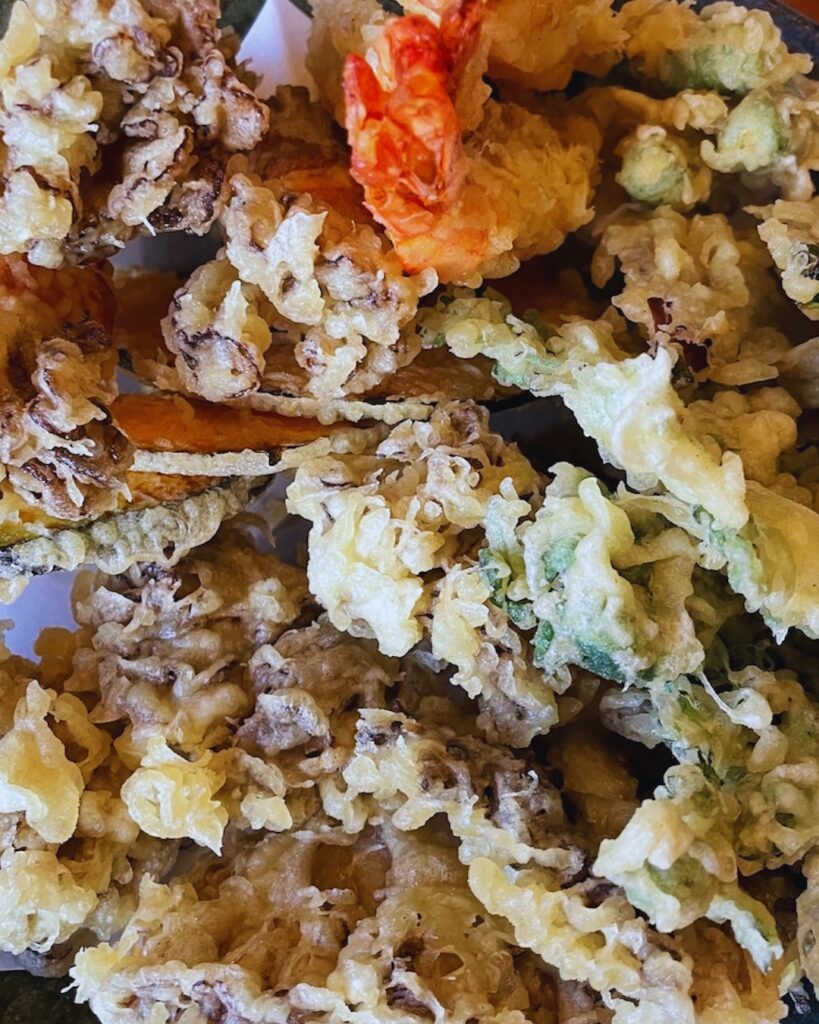
The town’s three big public baths state that they don’t turn away guests with tattoos, and none of them asks you to cover up. The best thing we ate was the udon, with thinner noodles than I’m used to but soft and chewy, and I’m still obsessed with the maitake tempura, a local speciality.
Recommended onsen:
Sainokawara Rotenburo: One of the largest outdoor baths I’ve ever been to, covering about 500 square metres in total, and the snow piled up around the baths is really a sight to behold. They also do mixed-gender bathing nights at specific hours where people can rent bathing wraps, a rarity in Japan.
- Tattoos accepted, no cover-up needed.
- Day use ¥800
- Sainokawara Rotenburo on Google Maps
Otaki-no-yu: This is a great place to try awase-yu, the local custom of moving through baths of increasing temperature.
- Tattoos accepted, no cover-up needed.
- Day use: ¥1,200
- Otaki-no-yu on Google Maps
Goza-no-yu: On the smaller side, this onsen is better for a quick dip as there are only two indoor baths and no outdoor bath, but the facilities are really clean and modern with a nice rest area upstairs.
- Tattoos accepted, no cover-up needed.
- Day use: ¥900
- Goza-no-yu on Google Maps
Kirishimaya Ryokan: tattoo-friendly, according to the owner, who describes it as one of the few tattoo-friendly ryokan in Kusatsu. Unlike the public bathhouses above, ryokan are privately run facilities that tend to be stricter about rules.
- Tattoos accepted, no cover-up needed.
- Day use: ¥1,000
- Overnight guests use it for free
- Kirishimaya Ryokan on Google Maps
- Official site: kirishimaya-ryokan.jimdosite.com
Getting there: Under three hours from Tokyo. Take the Kusatsu-Shima limited express from Ueno to Naganohara-Kusatsuguchi (about 2 hours 20 minutes), then a bus to Kusatsu Onsen Bus Terminal. Direct highway buses from Tokyo Station and Shinjuku take around four hours.
Official site: onsen-kusatsu.com
4. Dogo Onsen (Ehime Prefecture)
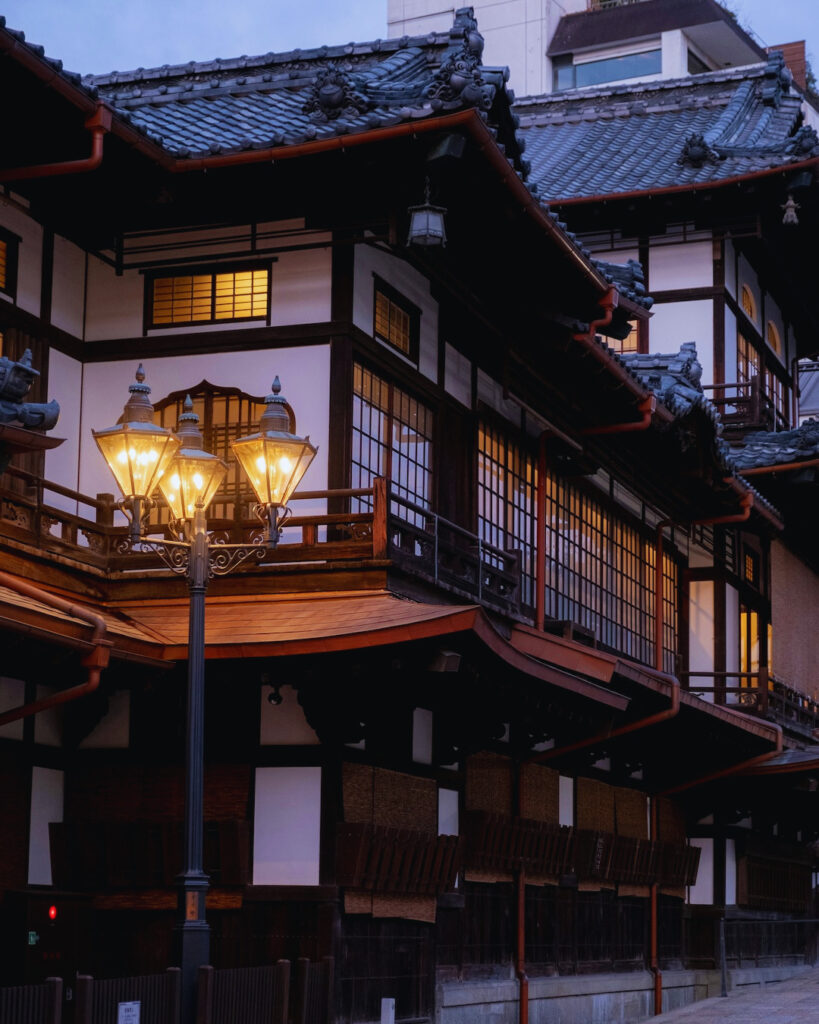
Dogo is one of Japan’s oldest hot springs, a compact bathing district on the edge of Matsuyama city that you can cover on foot. Its centrepiece, Dogo Onsen Honkan, was built in 1894, is widely cited as an inspiration for the bathhouse in Studio Ghibli’s Spirited Away, and finished around six years of preservation work in December 2024. All three of Dogo’s public bathhouses are tattoo-friendly, and between baths you can browse the 250-metre covered shopping arcade that runs from the tram station to the Honkan, or ride the tram to Matsuyama Castle.
Recommended onsen:
Dogo Onsen Honkan: The most iconic bathhouse in the area; the baths can get quite crowded, but the building alone is worth seeing.
- Tattoos accepted, no cover-up needed.
- Day use: starts at ¥700
- Dogo Onsen Honkan on Google Maps
Dogo Onsen Asuka-no-Yu: Definitely on the higher end of public bathhouses; you can even rent a private changing room and yukata. The building was designed in the architectural style of the Asuka period and has a nice outdoor bath.
- Tattoos accepted, no cover-up needed.
- Day use: starts at ¥610
- Private bath: ¥2,040
- Asuka-no-Yu on Google Maps
Dogo Onsen Tsubaki-no-Yu: More of a local crowd with more of an authentic neighbourhood bathhouse feel. Definitely less curated than the others, but great if you’re looking for a more local experience.
- Tattoos accepted, no cover-up needed.
- Day use: ¥500 (per hour)
- Tsubaki-no-Yu on Google Maps
Getting there: From Osaka, take the shinkansen to Okayama (about 45 minutes), then the JR Shiokaze Limited Express to Matsuyama (about 2 hours 50 minutes) and the tram to Dogo Onsen Station (about 25 minutes). Flights from Osaka to Matsuyama Airport take about 50 minutes.
Official site: dogo.jp
5. Nozawa Onsen (Nagano Prefecture)
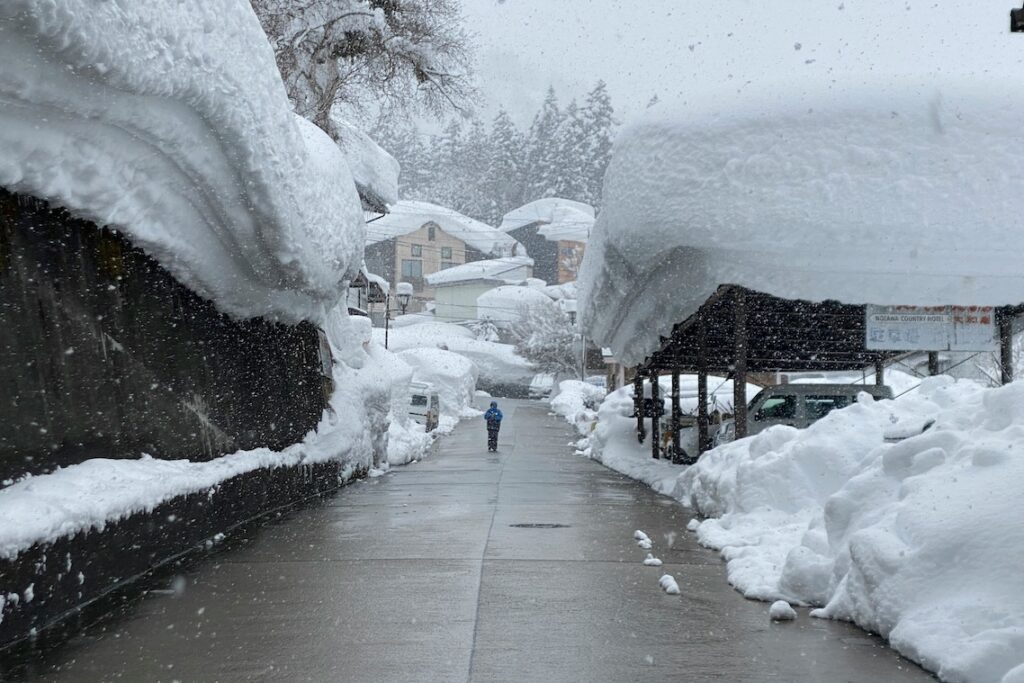
Nozawa is absolutely fantastic, especially if you ski or snowboard, since you get an onsen town and a ski trip in one place. It’s a village of around 3,300 people, and its 13 free public bathhouses (soto-yu) have been looked after by residents since the Edo period. Locals still cook in Ogama, a source that comes out of the ground at around 90°C, and you can collect a stamp at each soto-yu as you work your way around the village.
In winter there’s also the incredible Dosojin Fire Festival, held every year on 15 January, although access to the main fire ceremony that night is restricted, so stay in the village and check the rules before you book if you want to see it.
The baths are tattoo-friendly, but they’re community spaces rather than tourist facilities, so watch the village’s etiquette video first, leave a small donation for the yu-nakama (the residents’ bath association), and expect very hot water with no showers or hairdryers.
Recommended onsen:
Oyu: Public soto-yu in a grand Edo-style building in the centre of the village, and the largest of the 13. The water is extremely hot, so I couldn’t sit in it for long, but the facilities are free to use.
- Tattoos accepted, no cover-up needed.
- Day use: free
- Oyu on Google Maps
Any of the other 12 soto-yu: Most of the other public bathhouses run the same way, all within walking distance of each other.
Getting there: The Hokuriku Shinkansen from Tokyo to Iiyama takes 1 hour 39 minutes, then the Nozawa Onsen Liner bus takes about 25 minutes to the village.
Official site: nozawakanko.jp
6. Hakone Onsen (Kanagawa Prefecture)
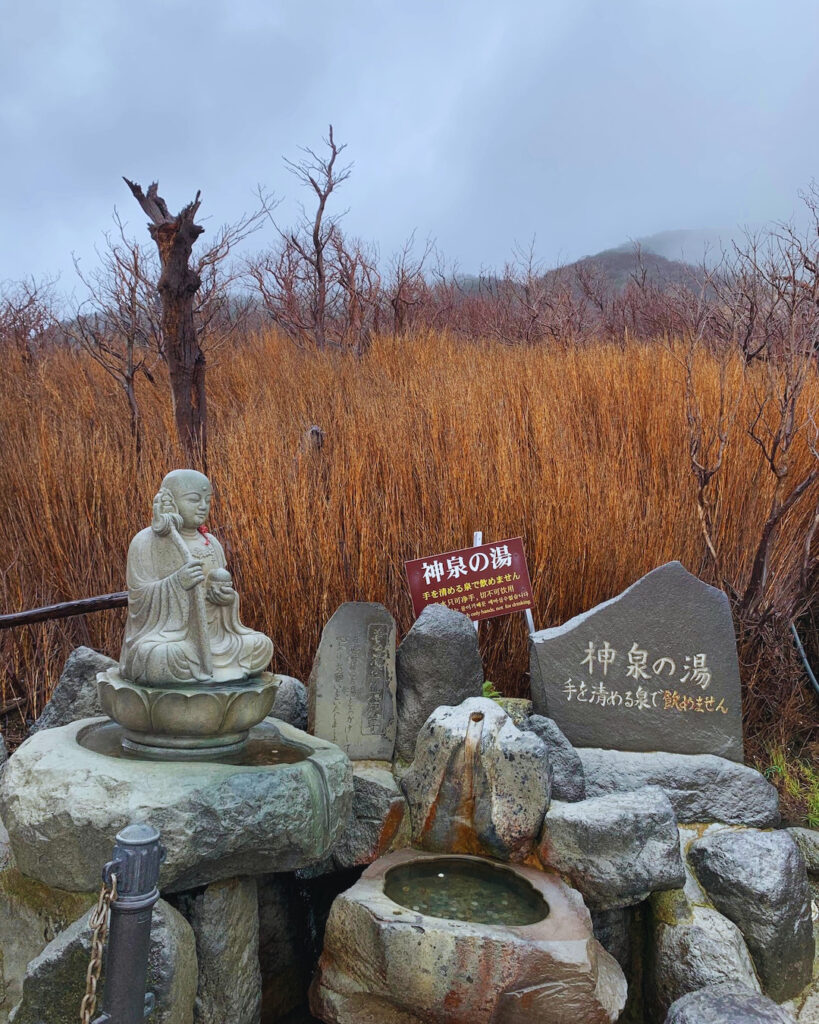
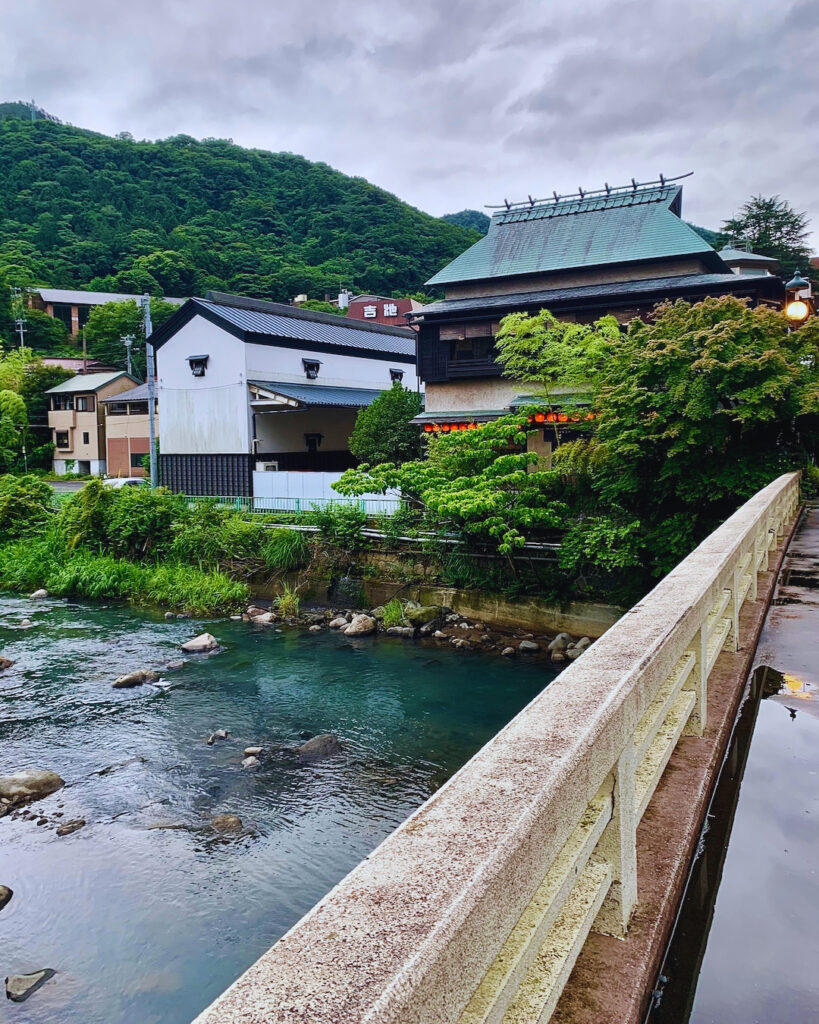
Hakone is the classic hot spring escape from Tokyo, a spread-out mountain resort with views of Mt Fuji on a clear day, and it’s easy to reach and very foreigner-friendly. The catch is that it’s just too crowded these days. Almost all our clients request it, then tell us afterwards that getting around without a car was a logistical nightmare, with buses full of tourists, so it’s something we always warn people about before they book.
It’s outrageously expensive too, and many locals have been priced out. Despite being the most popular onsen area near the capital, most of its communal baths still say no to tattoos, but Hakone-Yumoto, the gateway station, has two good tattoo-friendly onsen, plus plenty of hotels with private baths.
Recommended onsen:
Hakone Yuryo: Fully tattoo-friendly since 1 April 2025, when it lifted its tattoo restrictions in both the shared and private baths. It’s a public day-use facility with 19 private open-air bath rooms you can book up to a month ahead.
- Tattoos accepted, no cover-up needed.
- Day use: ¥1,700 (includes sauna access)
- Hakone Yuryo on Google Maps
- Official site: hakoneyuryo.jp
Tenzan Onsen: Tattoos are accepted with conditions: you need to be the only person with tattoos in your group, and the onsen asks tattooed guests to cover up while on the premises.
- Tattoos accepted with conditions
- Day use: ¥1,200
- Tenzan Onsen on Google Maps
- Official site: tenzan.jp
Getting there: About 85 minutes from Shinjuku to Hakone-Yumoto on the Odakyu Romancecar limited express. Hakone Yuryo runs a free shuttle bus from the station (about three minutes), and Tenzan is about 10 minutes from the station by bus.
7. Arima Onsen (Hyogo Prefecture)

Arima is a compact, hilly town on the northern side of Mt Rokko in Kobe, and one of Japan’s three most famous historic hot springs. It’s known for two kinds of water, the rust-brown kinsen (“gold spring”) and the clear ginsen (“silver spring”), and the town’s snacks of choice are crunchy tansan senbei crackers and Arima cider made with carbonated spring water.
Recommended onsen:
Kin no Yu: The iron-rich water is dark brown, so be careful with towels as it can stain. But the water itself is really soothing and a unique experience.
- Tattoos accepted, no cover-up needed.
- Day use: ¥800
- Kin no Yu on Google Maps
Gin no Yu: The “silver” water is clear, carbonated, and radium-rich, known for leaving skin feeling super smooth. The facility also has a sauna, which is a nice bonus!
- Tattoos accepted, no cover-up needed.
- Day use: ¥700
- Gin no Yu on Google Maps
Getting there: About 30 minutes by train from Sannomiya in Kobe, or about an hour on a direct bus from Osaka Station.
Official site: arimaspa-kingin.jp
Bonus: Shima Onsen (Gunma Prefecture)
Shima is a quiet, moody little hot spring village in the mountains of northern Gunma. Its name means 40,000, after the number of ailments the water is said to cure. The main sight is Sekizenkan, a long-established inn that still keeps its Edo-period wooden architecture.
The town doesn’t have a blanket tattoo policy, and it truthfully doesn’t have as many options as the others on this list, so I was hesitant to add it. The real benefit of going here, however, is that it’s significantly less touristy and crowded.
Recommended onsen:
Kashiwaya Ryokan: It’s a ryokan with three private open-air baths that guests can use without a reservation, plus two guest rooms with their own open-air bath.
- Tattoos accepted, no cover-up needed.
- Day use not available; overnight stays only
- Kashiwaya Ryokan on Google Maps
- Official site: kashiwaya.org
Getting there: About 2.5 hours from Tokyo. Take the Kusatsu-Shima limited express from Ueno to Nakanojo (about two hours), then a local bus to Shima Onsen.
Alternatives to finding an explicitly tattoo-friendly onsen
If you have tattoos, you can go pretty much anywhere that has private baths, even if the shared baths aren’t tattoo-friendly.
Book a private bath (kashikiri-buro)
A kashikiri-buro is a bath you reserve for your own group, usually for a 45- or 60-minute slot. Some inns include them free for overnight guests (Kashiwaya in Shima Onsen has three private open-air baths that guests can use at no charge), while day-use facilities charge by the room.
Book a room with an in-room onsen
Many high-end ryokan have private soaking tubs attached directly to your room, often an open-air bath on the balcony or terrace. You’ll pay more for the room, but you can soak whenever you like, and the only people who’ll see your tattoos are the ones you’re travelling with.
Use a tattoo-friendly directory
Tattoo Friendly Onsen is an amazing resource for searching onsen by area and checking each one’s policy before you go. Tattoo Friendly Japan listing map is another great one for gyms, pools, and other facilities beyond just onsen.
Check out our guide to tattoos in Japan for tattoo-friendly sento and onsen in Tokyo.
Tattoo-Friendly Onsen Towns in Japan FAQs
Can I use an onsen with tattoos?
Yes, you can! Just make sure you go to the right one. Tattoo rules in Japan are set bath by bath, and they range from a flat no to whole towns where they’re welcomed.
In a 2015 Japan Tourism Agency survey, about 56% of the facilities that responded refused guests with tattoos, 31% allowed them with no conditions, and 13% allowed them with conditions like cover-up stickers. A year later, the same agency told Japan’s hotel, ryokan, and onsen associations that refusing someone purely because they have a tattoo isn’t appropriate, and the list of tattoo-friendly onsen has been growing ever since.
What’s the difference between a sento, an onsen, and a ryokan?
A sento is a neighbourhood bathhouse. Japan’s health ministry classifies it as a general public bath that locals rely on for everyday hygiene, and its entry price is capped by law. The water doesn’t have to come from a hot spring, and in a lot of sento it’s simply heated tap water.
An onsen uses natural hot spring water. That covers anything from a huge day-use complex with a restaurant and nap room to a small wooden bathhouse run by the town.
A ryokan is a traditional Japanese inn. Most onsen ryokan have their own baths, and many also have private baths you can book or rooms with their own tub. Rules are set by each inn, so even in a tattoo-friendly town, the bath inside your ryokan can have a different policy from the bathhouse down the street.
What’s the difference between public and private onsen?
A public onsen is a standalone bathhouse that anyone can walk into and pay for, whether that’s a town-run bathhouse (called soto-yu in many onsen towns, and usually cheap or free), a big day-use complex, or a neighbourhood sento. A private onsen belongs to a hotel or ryokan, and its baths are mainly for guests, although many also let day visitors in for a fee.
In the towns in this guide, it’s the public bathhouses that are reliably tattoo-friendly, while hotel and ryokan baths set their own rules, so a tattoo-friendly town doesn’t guarantee a tattoo-friendly hotel. Private baths (kashikiri-buro) are something different again: baths you rent for just your own group.
Is it legal for an onsen to ban tattoos?
Japan’s Public Bathhouse Act doesn’t mention tattoos, but in 2017 the government stated in a formal answer to the Diet that having a tattoo doesn’t, on its own, count as grounds to restrict someone’s bathing under the act.
As price-controlled public health facilities, places like sento legally can only refuse customers for reasons like infectious disease, and technically a tattoo alone isn’t a valid reason to turn you away. A sento owner once told me exactly that, although some facilities will try to anyway.
Day-use onsen, super sento, and spas are classed as semi-private “other public baths”, and their tattoo rules are left to each operator, which is why the no-tattoo signs you’ll see at onsen are generally considered valid.
Can I use a hotel’s onsen if I’m not staying there?
Often, yes, many ryokan and onsen hotels open their baths to day visitors, which you’ll see written as higaeri nyuyoku (日帰り入浴, “day-trip bathing”) or tachiyori-yu (立ち寄り湯, “drop-in bath”).
You pay at the front desk and use the same baths as the guests, although usually with shorter hours.
Should you call ahead to check the tattoo policy?
Honestly, I don’t recommend it. A lot of the time you’ll get a new staff member, or someone who doesn’t know the policy, and they’ll tell you no even if the place is tattoo-friendly. When staff in Japan aren’t sure about something, they tend to go with the safer answer, and that answer is no.
When I first moved to Japan, I called ahead every single time and got rejected a lot, only to find out later that the company’s website literally said tattoos were accepted. These days I never call; I just check the website, read the reviews, and go.