
Sendai Japan probably isn’t the first city that comes to mind when planning a trip to Japan. When I first moved here, it wasn’t particularly high on my list either. But once you’ve been, Sendai has a way of making an impression. In fact, I’d say the city and its people have quite a knack for it.
Take its Tanabata Festival. While other parts of Japan are happy with a few decorations and paper streamers, Sendai goes all out. Its shopping arcades are practically swallowed by enormous, colourful handmade paper creations hanging from the ceilings. And in January, some of its citizens brave the freezing cold in barely more than white festival clothing to make their way to Osaki Hachimangū for the traditional Hadaka-mairi ceremony. In the middle of winter. In Sendai. Subtlety doesn’t seem to be its strong point, and that’s precisely why I love it.
Perhaps it runs in the city’s DNA. Date Masamune, the samurai lord who founded Sendai, was hardly a man who did things by halves. You can still see his remnants of his famously flamboyant ways in some of the city’s most popular sights. So, if Sendai wasn’t already on your Japan itinerary, perhaps it’s time to reconsider.
Where Is Sendai and How Do You Get There?
Sendai is in Miyagi Prefecture, in the Tohoku region of northeastern Honshu. It’s the largest city in the region, sitting roughly 350 kilometres north of Tokyo. Before you start thinking that visiting somewhere this far north must involve a complicated journey, here’s some good news: getting to Sendai is actually very easy.
The Tohoku Shinkansen runs directly from Tokyo Station to Sendai Station, with the fastest Hayabusa services taking just around 90 minutes. Even the slower Yamabiko services usually get you there in about two hours.
Flying is another option if you’re coming from further away. Sendai Airport has domestic connections with several major Japanese cities, including Osaka, Sapporo and Nagoya. Once you land, the Sendai Airport Access Line gets you into the city centre in roughly 17 to 25 minutes.
Best Things to Do in Sendai Japan
Visit Sendai Castle (Aoba Castle) and See the Date Masamune Statue
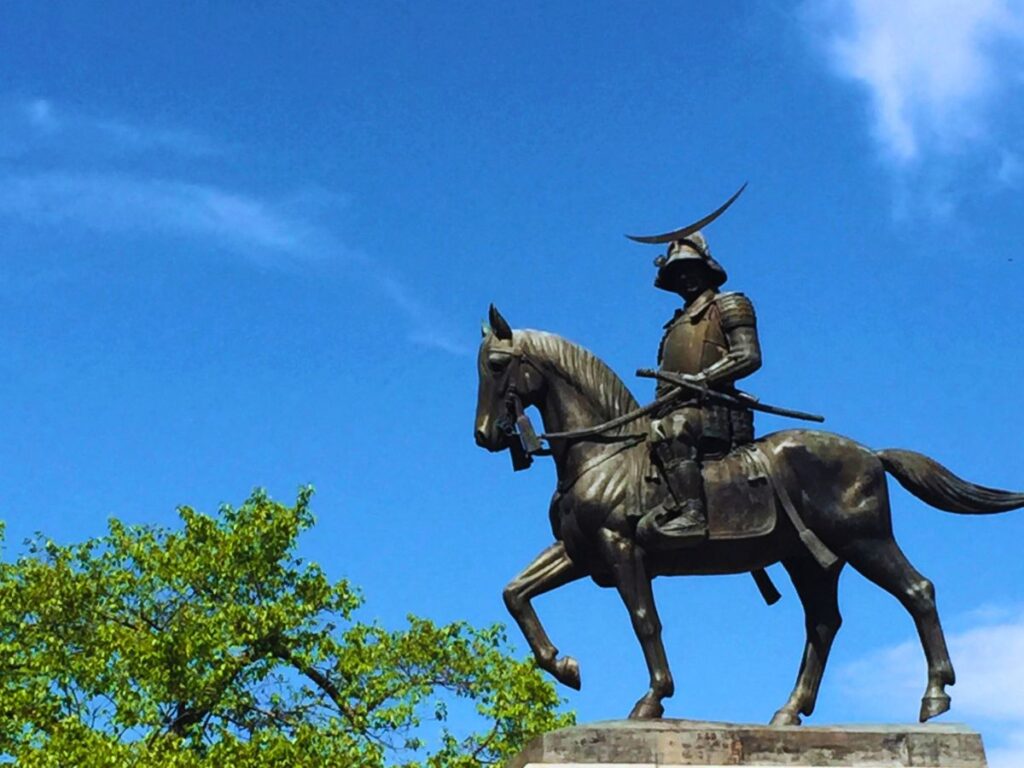
Sendai Castle, also known as Aoba Castle, was built in 1601 by Date Masamune, the feudal lord who established Sendai as the centre of his domain. Masamune is often remembered as much for his distinctive style as for his military achievements. He had a real eye for presentation, and his famous black samurai armour, decorated with gold details and a large crescent moon on the helmet, is one of the most recognisable designs in Japanese history. It’s easy to see why he earned a reputation as one of the most stylish warlords of his time.
His helmet is particularly distinctive, and once you’ve seen the equestrian statue of him here, you’ll probably start spotting that crescent moon motif on souvenirs and local merchandise around Sendai.
Sendai Castle isn’t a complete castle anymore. The original buildings were destroyed during the air raids of 1945. You’re visiting the former castle grounds instead. But going there is not a wasted trip. The surviving stone walls give you an idea of the scale of the old site, and the equestrian statue of Masamune has become one of Sendai’s most recognisable landmarks.
The view is another good reason to come. The castle stood on elevated ground on Mount Aoba, overlooking the city and the Hirose River. On a clear day, you get a lovely panorama across Sendai.
You can also visit the Aoba Castle Museum to learn more about the site’s history and see reconstructions of what the castle once looked like. Honestly, after reading about Masamune’s crescent moon helmet and general flair for the dramatic, you might want to put on some armour yourself. Book a samurai experience if you want to feel a little bit of that energy firsthand.
- Location: Aoba-ku, Sendai
- Admission: The castle grounds are free. The Aoba Castle Museum costs ¥700 for adults, ¥500 for junior and senior high school students, and ¥300 for elementary school students.
Visit Zuihoden Mausoleum
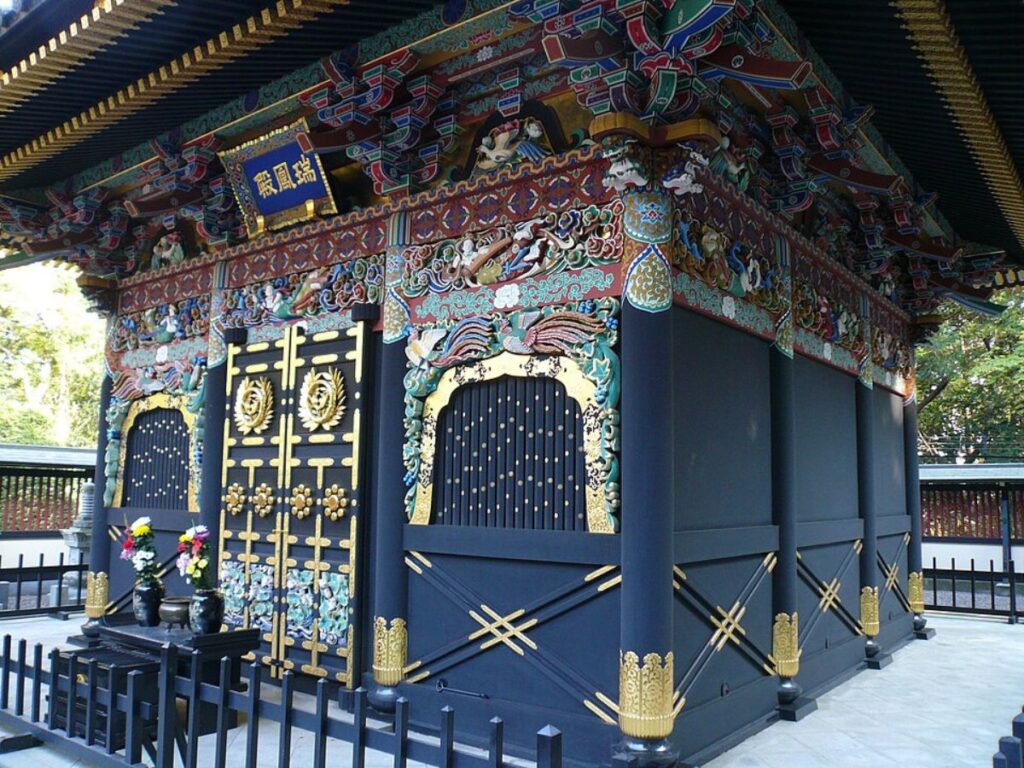
If you’re interested in Date Masamune, don’t stop at the castle ruins. Zuihoden is his final resting place, built a year after Masamune’s death. It is known for its elaborate architecture, and its vivid colours and intricate carvings are a far cry from the fairly understated image some people have of a samurai burial site.
The original structure was actually destroyed during the Second World War, but it was reconstructed using historical records and photographs. It still gives you a good sense of the craftsmanship and decoration that went into the original building. One of the nicest parts of the visit for me was the approach, with the path winding through a cedar forest.
Zuihoden is also close to Sendai Castle, making it easy to visit both sites on the same outing.
- Location: 23-2 Otamayashita, Aoba-ku, Sendai
- Admission: ¥570 for adults and university students, ¥410 for high school students, and ¥210 for elementary and junior high school students.
See the Enormous Sendai Daikannon
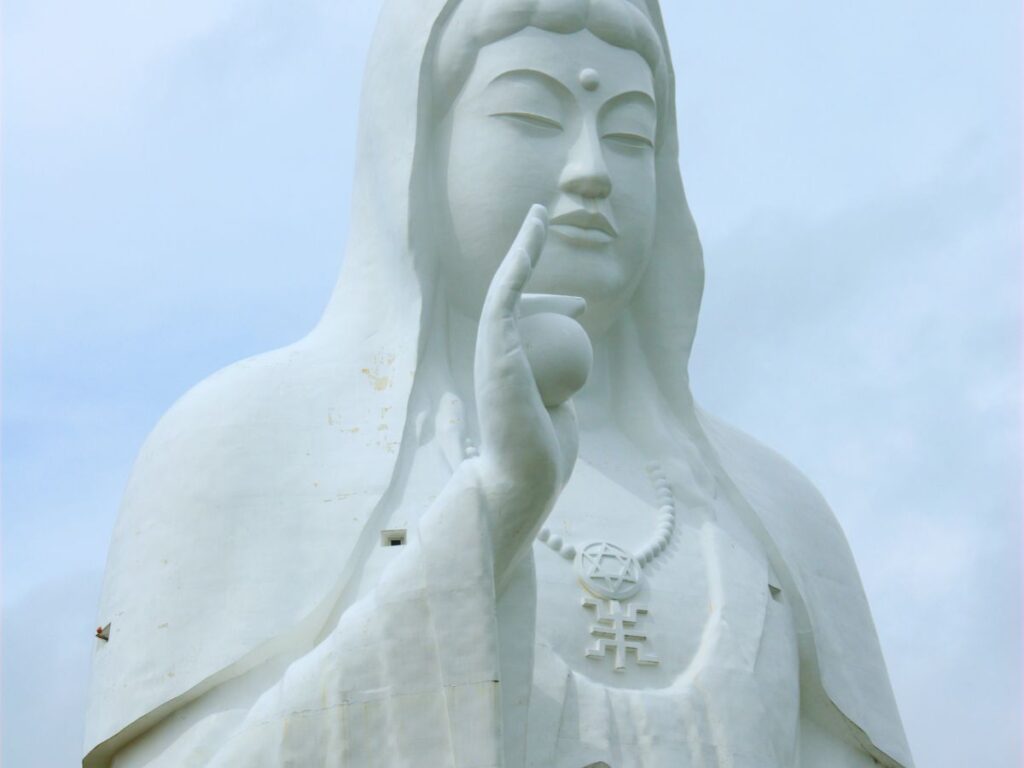
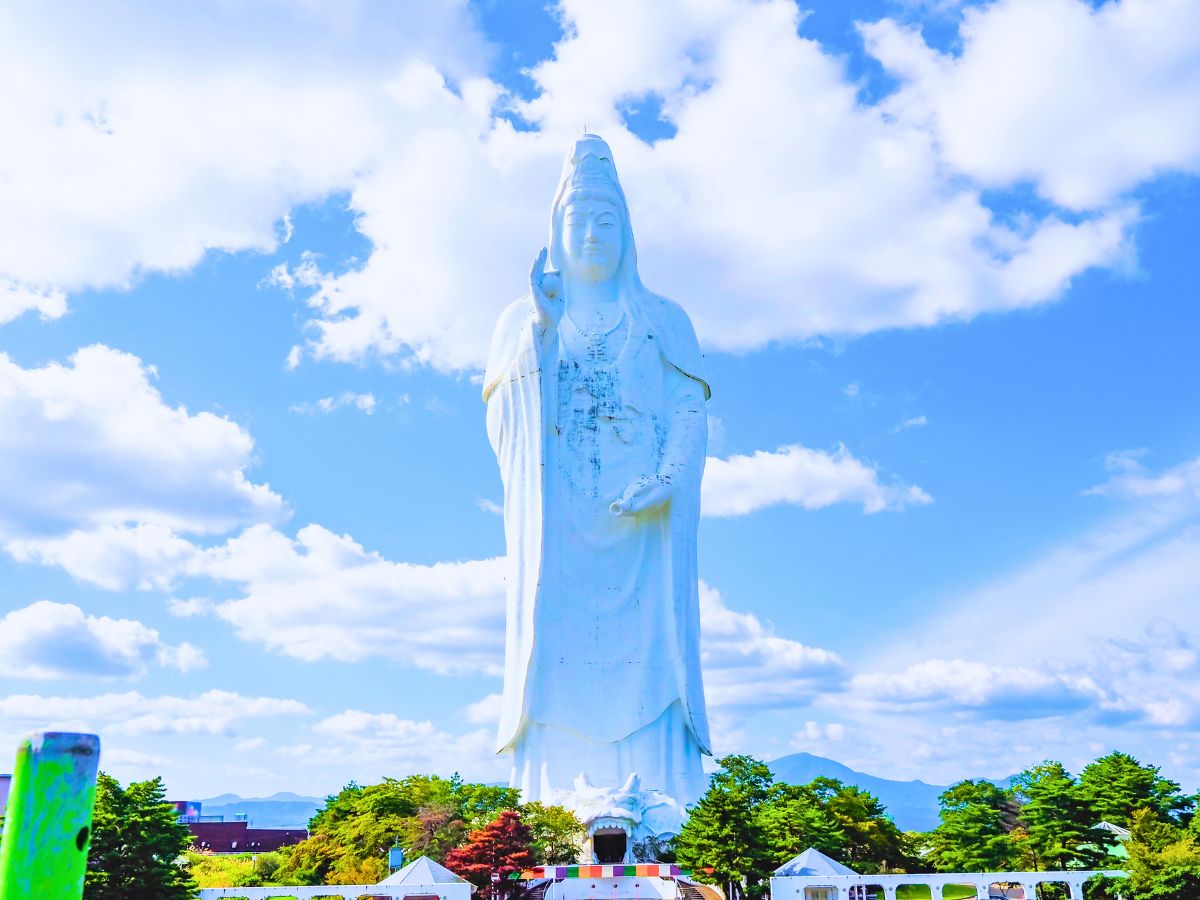
If there’s one Sendai attraction that’s difficult to ignore, it’s the Sendai Daikannon. Standing 100 metres tall, this white statue depicts Kannon and towers over a residential neighbourhood. There’s something quite surreal about seeing a giant Buddhist statue looming above ordinary houses and apartment buildings. And you can even go inside… through an entrance shaped like the mouth of a dragon.
Inside, you’ll find 108 Buddhist figures and twelve guardian deities displayed across several levels. An elevator takes visitors towards the upper floors for views of the surrounding area.
The Daikannon is quite far from the central sightseeing area, so you’ll need to set aside time specifically for it. Still, it’s one of the city’s more unusual sights, and I’d say it’s worth the detour.
- Location: Nakayama, Izumi Ward, Sendai
- Admission: ¥500 for junior high school students and above
Visit Osaki Hachimangu Shrine
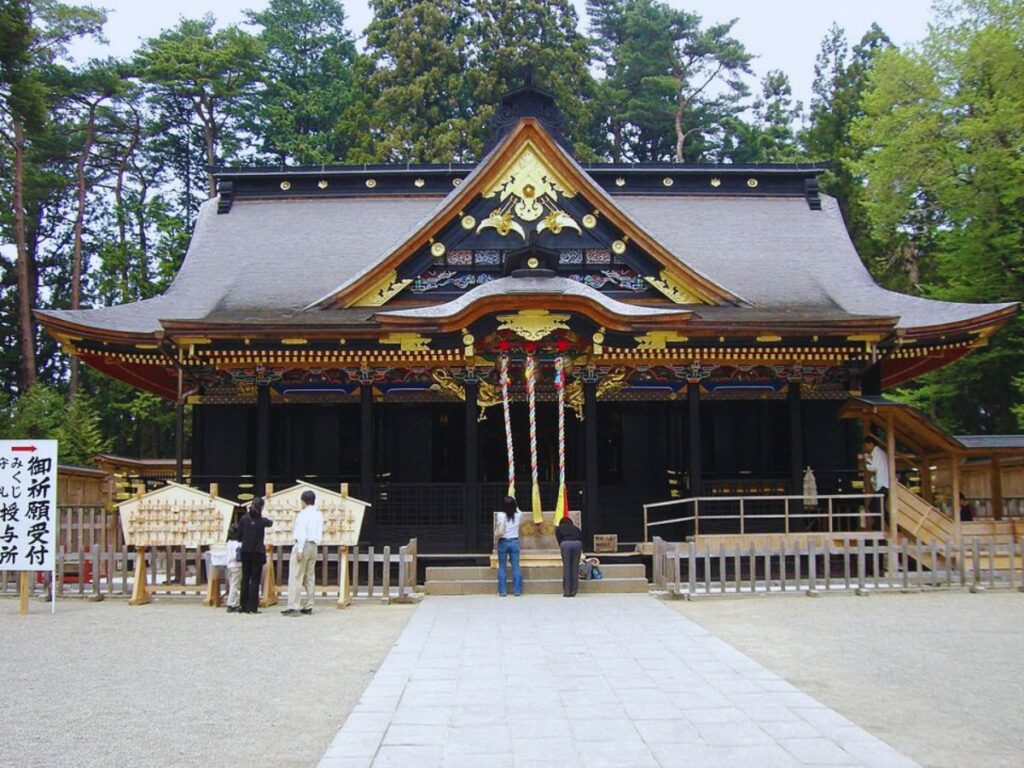
If Date Masamune has caught your interest, Osaki Hachimangu is another place to visit. He sponsored the shrine’s construction, and its main sanctuary is now designated a National Treasure of Japan. The building is covered in elaborate carvings and gold details. It was a lot more decorative than what I expected from a shrine tucked away in a residential part of the city.
The biggest reason to visit in January, though, is Donto-sai. New Year’s decorations are burned in a huge bonfire, and the festival is famous for its Hadaka-mairi procession, where participants make their way to the shrine in traditional white clothing, braving the Sendai winter. I think we can agree that a warm coat and a quiet prayer would be more my style, but it’s an incredible tradition to witness.
- Location: 4-6-1 Hachiman, Aoba-ku, Sendai
- Admission: Free
Walk Along Jozenji-dori Avenue
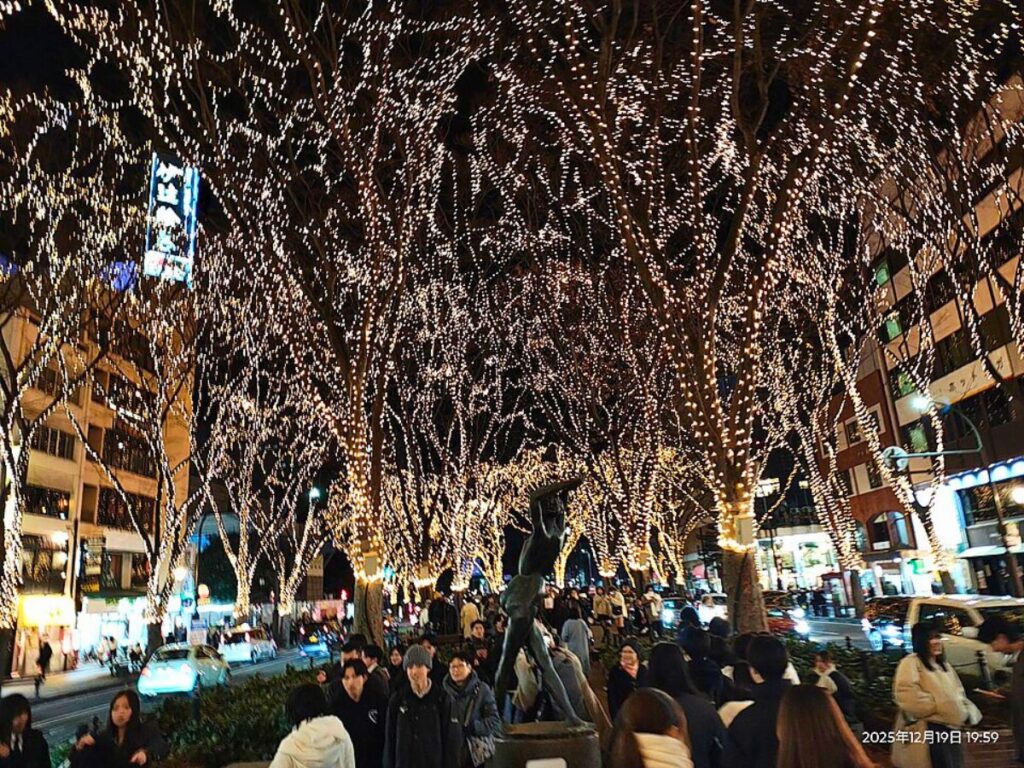
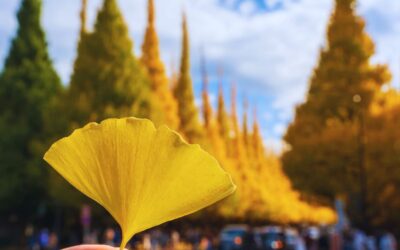
Jozenji-dori is one of those places that makes you understand why Sendai is called the City of Trees. It’s a wide avenue lined with enormous zelkova trees. There is so much greenery that you almost forget you’re in the middle of a fairly sizeable city.
It’s beautiful in any season, but autumn is particularly lovely. Winter is also great, because the avenue dons its famous illumination, the Sendai Pageant of Starlight. Personally, I’d leave a little time to walk along here without rushing off to the next attraction, especially since the surrounding streets have some lovely little cafés and traditional kissaten.
- Location: Jozenji-dori, Aoba-ku, Sendai
- Admission: Free
Experience Sendai’s Football Culture with Vegalta Sendai
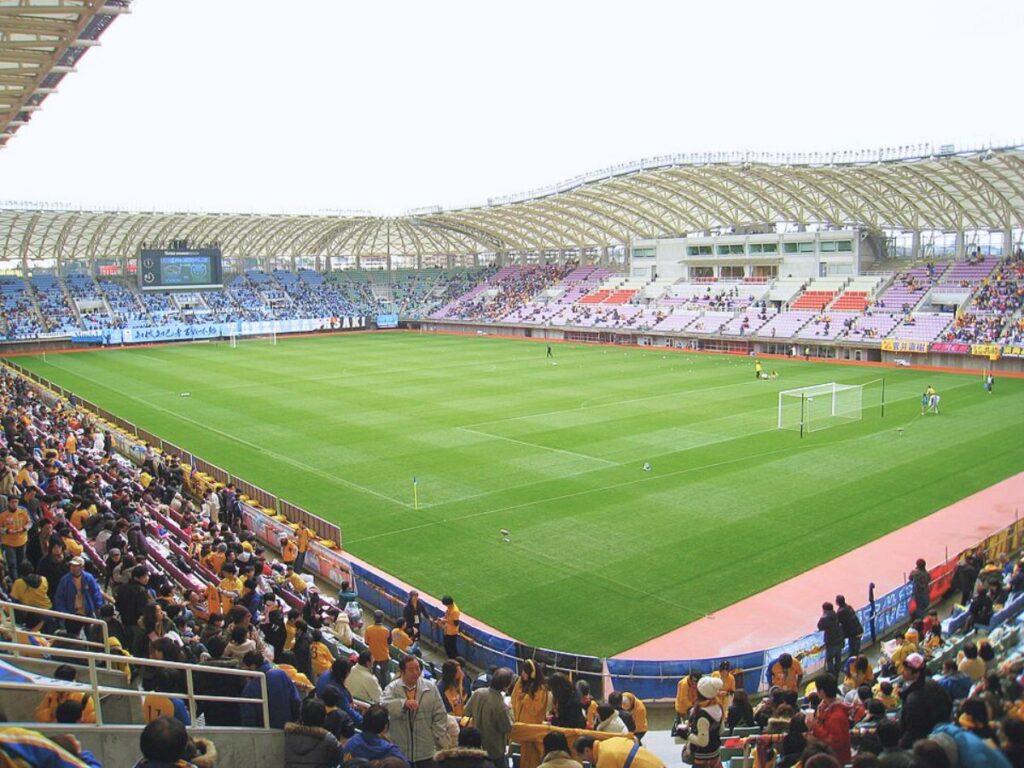
Here’s something you might not expect to find in a Sendai travel guide: football. The city has its own professional club, Vegalta Sendai, and it has a special connection to the region, particularly because of its role after the 2011 Great East Japan Earthquake.
Miyagi was one of the prefectures hit hardest by the disaster. Vegalta’s players and staff helped deliver supplies to evacuation centres in coastal Miyagi, and the club’s stadium became a collection point for relief donations.
Even the club’s name has a Sendai connection. Vegalta combines Vega and Altair, the two stars associated with the Tanabata legend. It’s a fitting name for a city famous for its summer Tanabata Festival.
Home matches take place at Yurtec Stadium Sendai in Izumi. The stands sit close to the pitch, so you get a good view of the action and can really hear the supporters. If you’re in town during the football season, I’d try to catch a home match.
- Location: Yurtec Stadium Sendai, 1-1-1 Nanakita, Izumi-ku, Sendai
- Tickets: Check the official Vegalta Sendai website for fixtures and ticket information before your visit. Don’t just turn up expecting a match to be on.
Take a Trip to Akiu Onsen
If you have an extra day in Sendai, consider heading out to Akiu Onsen. It is one of Miyagi’s best-known hot spring areas, so naturally, the main attraction is the onsen. Several ryokan have their own baths, and some also offer day-use bathing if you don’t fancy staying overnight. Personally, though, I’d try to make a night of it. A proper ryokan dinner followed by a soak in the hot springs is a pretty good way to spend an evening.
There’s also plenty to see outside the baths. Akiu Great Falls drops into a forested valley, while Rairaikyo Gorge has walking paths along the river and some interesting rock formations. You can easily spend a few hours exploring the area before heading back to your accommodation.
- Location: Akiu Onsen, Yumoto, Taihaku-ku, Sendai
- Admission: Varies by facility. Day-use bathing generally costs around ¥600–¥1,500 per adult
Explore Sendai’s Yokocho Alleys
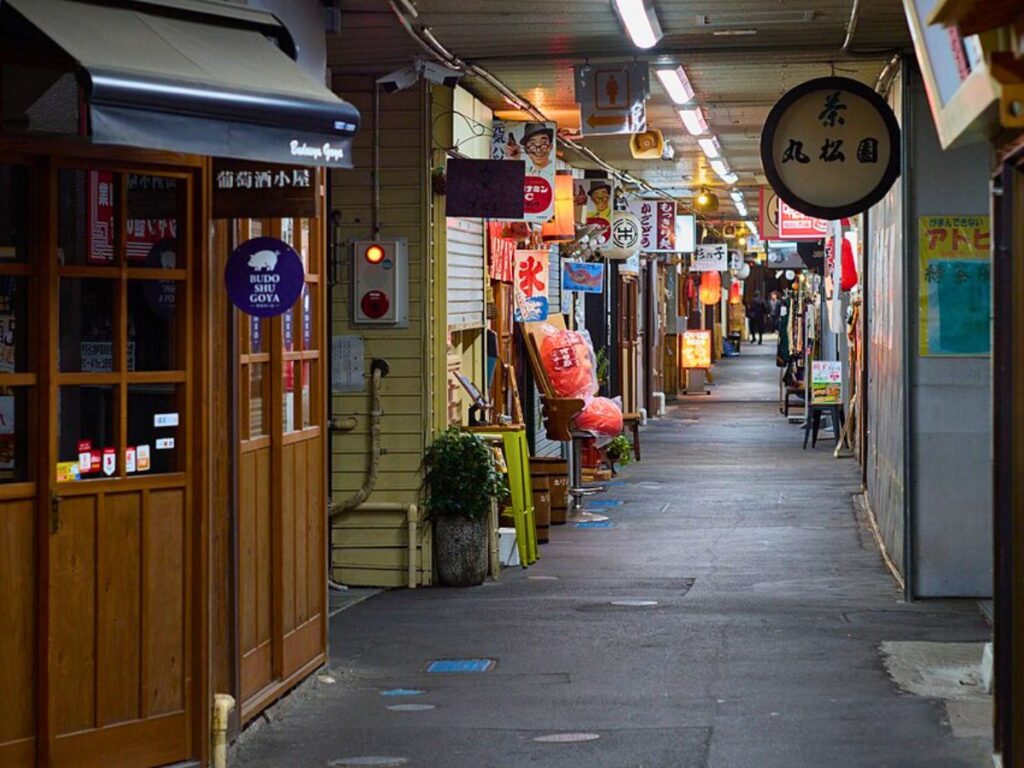
Almost every city in Japan has its own little drinking alleys, so you might think you’ve seen them all. And at first glance, Iroha Yokocho (いろは横丁) and Bunka Yokocho might look like more of the same. But if you’re spending an evening in Sendai, I’d really recommend exploring at least one of them.
Iroha Yokocho has the feel of an old neighbourhood market, with a mix of tiny shops, izakaya, bars and restaurants. Some have been around for years, while others bring a more modern feel to the narrow streets. Look around and you’ll spot plenty of little details that feel like stepping back into Showa-era Japan, from old-fashioned signs to weathered shopfronts.
Quick Day Trips from Sendai
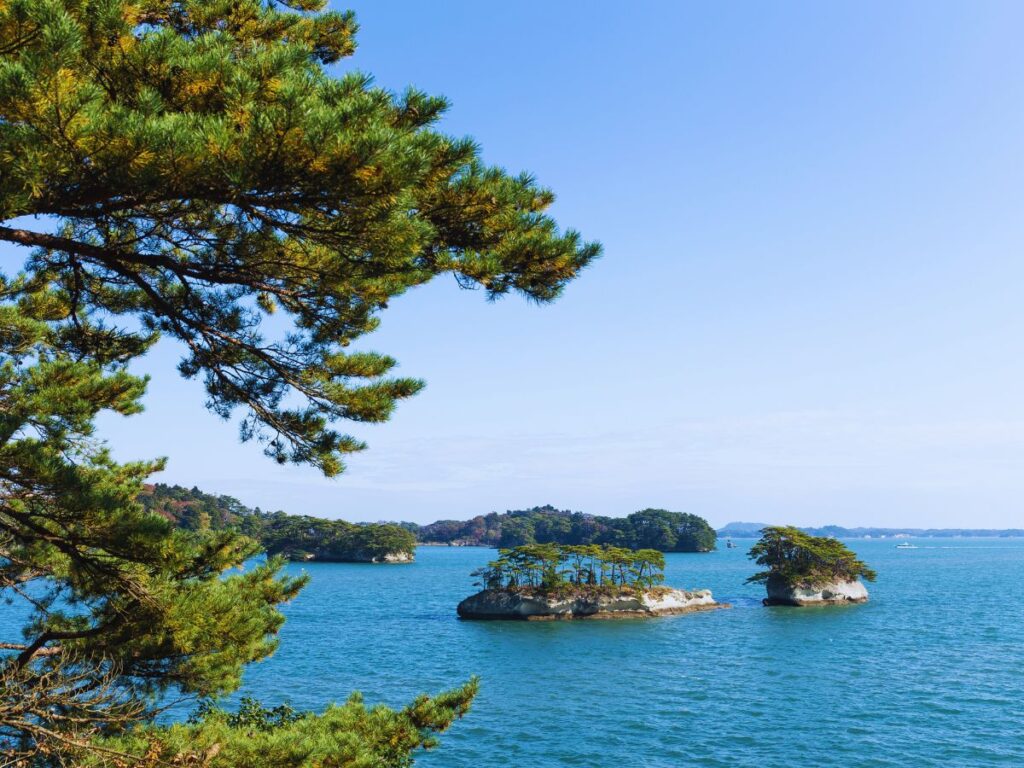
One of the advantages of using Sendai as your base is that you can easily explore more of Tohoku without changing hotels. If you have an extra day or two, here are destinations I would add:
Matsushima
Matsushima is probably the easiest choice. Its bay is dotted with more than 260 pine-covered islands and is traditionally considered one of Japan’s Three Great Views. Take a sightseeing cruise, visit Zuiganji Temple and Godaido Hall, and make time for some local oysters if you’re visiting in season.
Yamadera
Yamadera in Yamagata Prefecture is a temple complex that climbs up a mountainside, with more than 1,000 stone steps leading through cedar trees and past old temple buildings. The climb is a bit of a workout, but the views from the top is as beautiful as you would expect.
Shiogama
Shiogama is a coastal city particularly known for its tuna and sushi, and you can visit Shiogama Shrine before heading down to the port for something to eat. It’s also easy to combine with Matsushima.
Hiraizumi
Hiraizumi in Iwate Prefecture is a UNESCO World Heritage area and was once an important political and cultural centre in northern Japan. Its main sights include Chusonji Temple, known for its richly decorated Golden Hall, and Motsuji Temple, with its beautiful garden and pond.
Matsushima, Yamadera, Shiogama, Hiraizumi, that’s a lot of good options for someone with two days and one suitcase. Our Travel Planner service can build out the Tohoku side of your trip for you, so you’re not the one doing the math on what fits.
What to Eat in Sendai
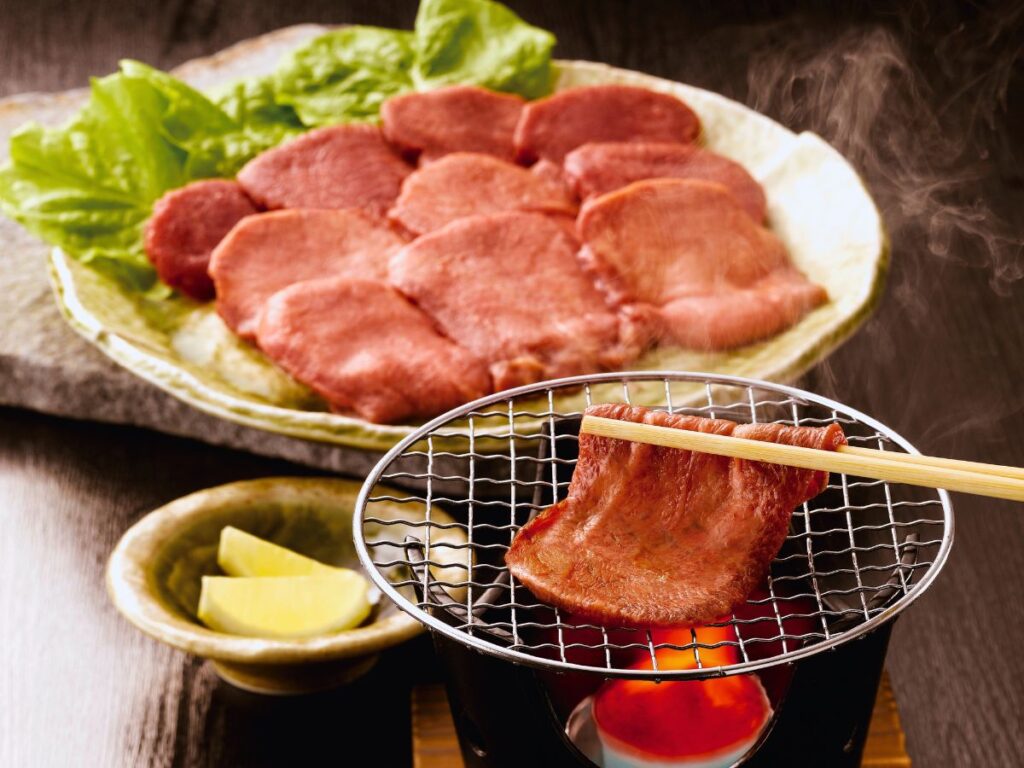
One thing I always recommend when travelling around Japan is to pay attention to regional specialities. You can find sushi and ramen almost anywhere, but trying something associated with the place you’re visiting makes a meal much more interesting. Sendai gives you plenty of opportunities to do exactly that.
Gyutan (Sendai’s Famous Grilled Beef Tongue)
You can’t really visit Sendai without trying gyutan. It’s the city’s best-known food speciality, and you’ll find specialist restaurants all over the centre. The dish dates back to the 1940s, when a local restaurant owner started serving grilled beef tongue at his restaurant, Aji Tasuke. The classic set meal comes with thick slices of charcoal-grilled tongue, barley rice, oxtail soup and pickles.
If you’ve only tried thinly sliced beef tongue at yakiniku restaurants, Sendai’s version is quite different. The slices are much thicker, with a satisfying chew. The city also makes it easy for you to try this specialty, because they literally have a Gyutan Street inside Sendai Station.
Zunda
Zunda is made from crushed edamame mixed with sugar. It’s particularly associated with Miyagi and is traditionally served with mochi, but you’ll now find it in all sorts of desserts and drinks around Sendai. I’d try zunda mochi for the traditional version and a zunda shake if you want something a little different.
Sasa Kamaboko
Sasa kamaboko is a fish cake made from white fish paste and shaped like a bamboo leaf. You can find it in shops throughout Sendai, often sold as a souvenir, but I’d recommend trying one freshly grilled if you get the chance.
Sendai Beef and Local Seafood
If you’re after something more indulgent, look out for Sendai beef. This premium Miyagi wagyu is known for its fine marbling and rich flavour, and you’ll find it served as steak, yakiniku and other dishes. And while Sendai isn’t directly on the coast, it’s close enough to Miyagi’s fishing ports to have access to plenty of fresh seafood. You’ll find good sushi and seafood restaurants around the city.
Seri-nabe
If you’re visiting Sendai in winter, look out for seri-nabe. This local hot pot features Japanese parsley, known as seri, cooked in a broth with chicken or duck. The roots are often included too, which might sound unusual if you’ve never eaten them, but they’re one of the best parts.
One-Day Sendai Itinerary
If you only have one day in Sendai, I’d start at Sendai Castle Ruins. Take the Loople Sendai sightseeing bus from Sendai Station and get off at the Sendai Castle Ruins stop. From there, take the bus back towards the city and get off at Zuihoden Mausoleum.
After visiting Zuihoden, continue to Osaki Hachimangu. You can take a local bus or a taxi from the area, as it’s a little out of the way to walk between the two. Once you’ve finished sightseeing, head back towards central Sendai for lunch. I’d use this opportunity to try gyutan at one of the specialist restaurants around Sendai Station.
Spend the afternoon around Jozenji-dori and the central shopping streets. You can explore the area on foot, stop for a coffee or try some zunda sweets along the way. If you still have energy, make your way to Iroha Yokocho or Bunka Yokocho for dinner and a drink to finish the day.
Have another day? I’d use it to visit Akiu Onsen. If you’re staying longer, Sendai also makes a convenient base for exploring more of Tohoku, with Matsushima, Yamadera and Hiraizumi all not far away.
Is Sendai Japan Worth Visiting?
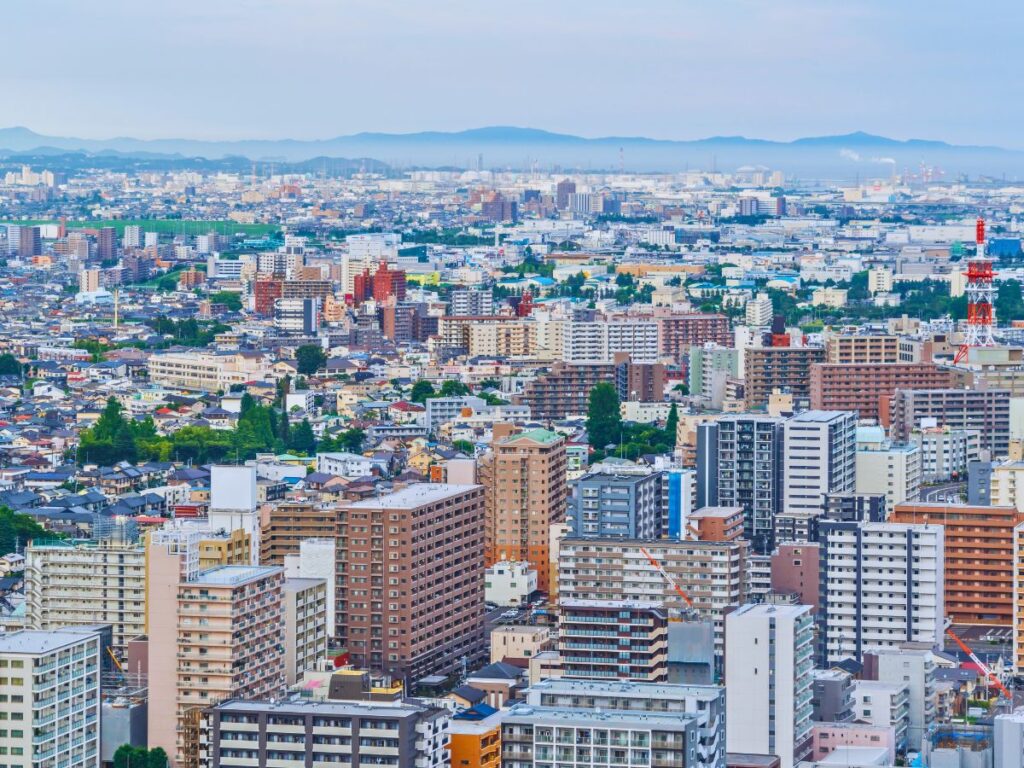
Yes, particularly if you’re interested in seeing a different side of Japan.
Sendai isn’t a city I’d recommend purely for ticking off famous attractions. It doesn’t have the concentration of internationally recognised landmarks you’ll find in Kyoto, and it isn’t going to compete with Tokyo for sheer variety of entertainment.
But I think that’s part of its appeal.
Sendai feels like a city people actually live in. You can explore its samurai history, eat excellent regional food, wander through green avenues and experience local sporting culture without constantly navigating enormous tourist crowds.
It’s also a particularly useful destination if you’re planning to explore Tōhoku. With Matsushima, Akiu Onsen and other regional destinations within reach, there’s plenty to keep you occupied beyond the city itself.
My advice? Give Sendai at least two days. Visit the castle ruins, eat the beef tongue, try the zunda shake and leave yourself enough time to explore the little shopping streets.
And if you have another day, take the train to Matsushima. Just don’t try to do everything before lunch.
Sendai Japan FAQs
How many days do you need in Sendai?
I’d recommend two days if you can spare them. One day is enough for the main city sights, but an extra day gives you time to visit Akiu Onsen or explore further afield.
How do you get to Sendai from Tokyo?
The easiest way is to take the Tohoku Shinkansen from Tokyo Station, which takes roughly 90 to 120 minutes, depending on the service.
What are the best day trips from Sendai?
Matsushima Bay is the classic choice for coastal scenery, temples and seafood. Yamadera and Hiraizumi are also worth considering if you’d rather explore mountain temples or Tohoku’s history.