
Fukushima. For many first-time visitors to Japan, the name probably brings one thing to mind before anything else: the earthquake, tsunami and nuclear disaster of March 2011. It is understandable. The disaster changed the prefecture forever, and the people who lived through it continue to deal with its consequences. But I have always felt a little sad that this is often where people’s knowledge of Fukushima begins and ends.
I want more people to visit Fukushima. I want them to wander around Aizuwakamatsu, perhaps stop at a local shop to taste some Kitakata ramen, or curse themselves for not being able to stand the scalding water in Iizaka’s onsen while the locals seem perfectly unbothered.
But then there is also something bittersweet about encouraging people to discover a place you care about when you know that learning more about it can make its history even harder to bear. The more you understand just how beautiful and bountiful Fukushima is and what was lost in 2011, the more heartbreaking that history can become.
Still, I think that is all the more reason to visit with an open mind. While its history cannot be neatly put behind it, Fukushima is not simply a disaster story. I hope this Fukushima travel guide gives you a reason to look beyond the headlines and consider visiting Fukushima for yourself.
Getting to Fukushima and Getting Around
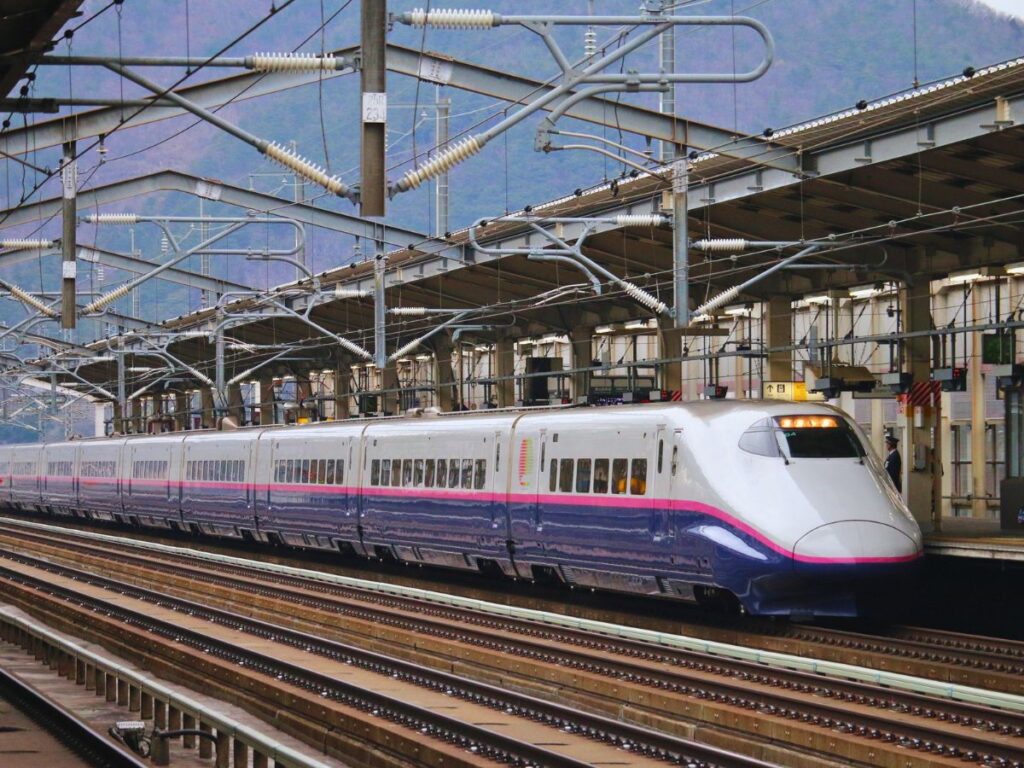
From Tokyo, the Tohoku Shinkansen reaches Fukushima’s Koriyama in roughly 80 minutes and Fukushima City in around 90 minutes, depending on the service. The prefecture is big. Like, the third biggest prefecture in Japan after Hokkaido and Iwate.
The easiest way to plan a Fukushima trip is to divide the prefecture into three broad regions. Aizu, in the west, is centred on Aizuwakamatsu and its samurai history. Nakadori runs through the centre, with Fukushima City and Koriyama serving as useful bases for exploring the surrounding area. Hamadori follows the Pacific coast and includes memorial sites related to the 2011 earthquake and tsunami. Since travelling between these regions can take time, it’s best to focus on one or two during a short trip.
Koriyama is convenient for central Fukushima, while Fukushima City works well for Iizaka Onsen and northern destinations. Aizuwakamatsu takes longer to reach from Tokyo and is accessible by rail via Koriyama or other connections, depending on your route. For the coast, the Limited Express Hitachi connects Tokyo with Iwaki in a little over two hours.
Public transport works for many of the major towns and attractions. Buses cover some of the gaps as long as you stay mindful about schedules (especially when the last bus leaves when you’re spending the day in a rural area). But I think that a rental car is particularly handy around Urabandai and the smaller towns in Aizu.
You can still have a good trip without driving, though. Aizuwakamatsu has local buses and walkable areas, while some popular rural sights have public transport connections. Ouchi-juku, for example, is usually reached via Yunokami-Onsen Station, followed by a local bus or taxi.
Aizu
Aizu is probably the best place to start if you are interested in Fukushima’s historical side. Its identity is closely tied to the Aizu domain, the samurai who served it and the conflicts that accompanied the end of Japan’s feudal era. The region also has a strong food culture and easy access to mountain scenery.
Tsuruga Castle
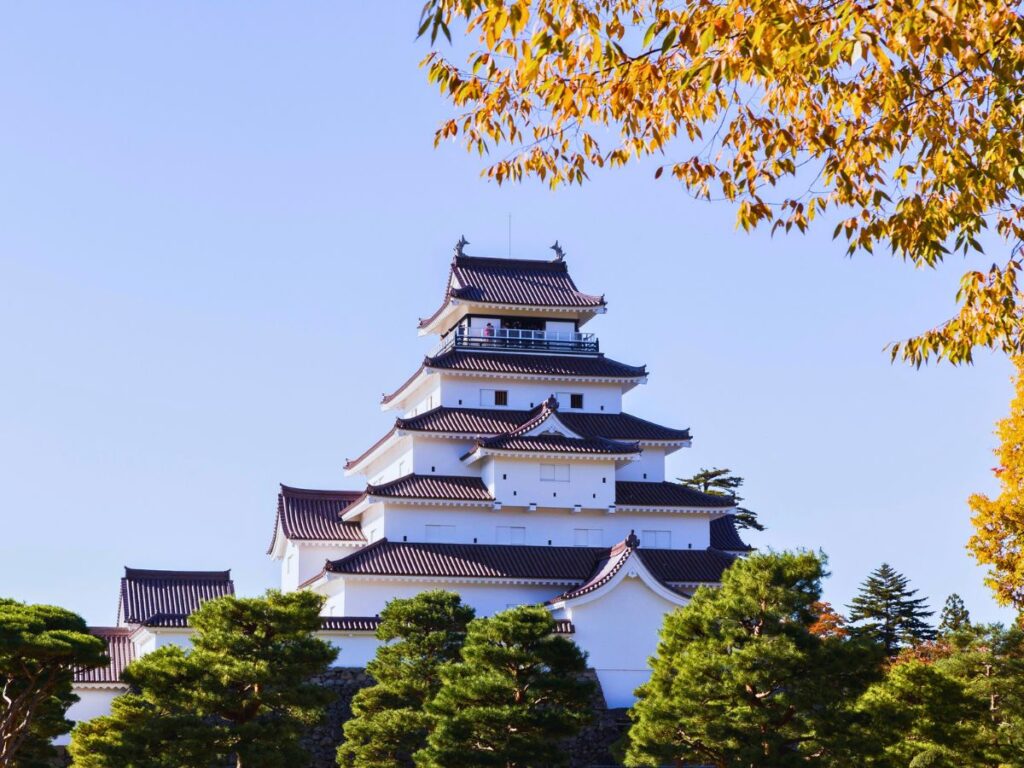
Tsuruga Castle is the obvious starting point in Aizuwakamatsu. It was damaged during the Boshin War, so I would not sell it as an untouched samurai castle. The current building is reconstructed, and visitors expecting original interiors throughout would be disappointed. But for me, knowing what the castle had been through during the conflict was precisely what made the visit memorable. I found it hard to believe I was standing on the grounds of a castle caught up in one of the defining conflicts of Japan’s transition from the samurai era to the modern age.
The grounds are worth exploring, even if you are not particularly interested in Japanese history. The castle looks especially lovely during cherry blossom season, when the grounds become a popular spot for hanami. Inside, you can learn more about the castle and Aizu’s past, while the upper floors offer views across Aizuwakamatsu towards the surrounding mountains.
Ouchi-juku
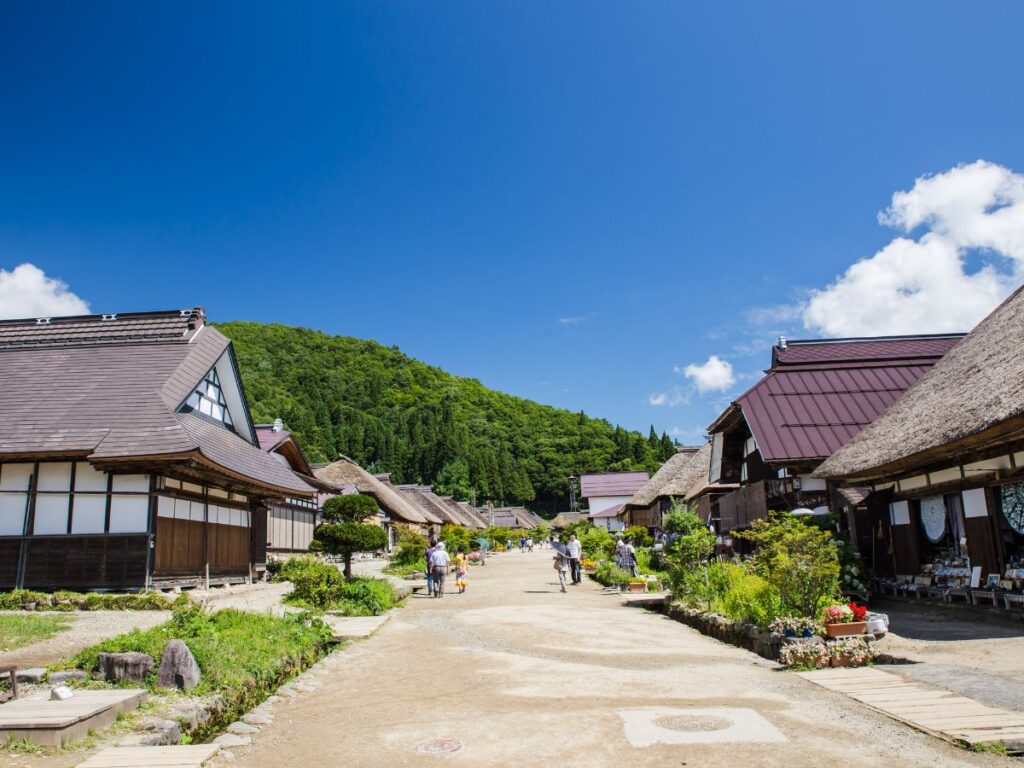
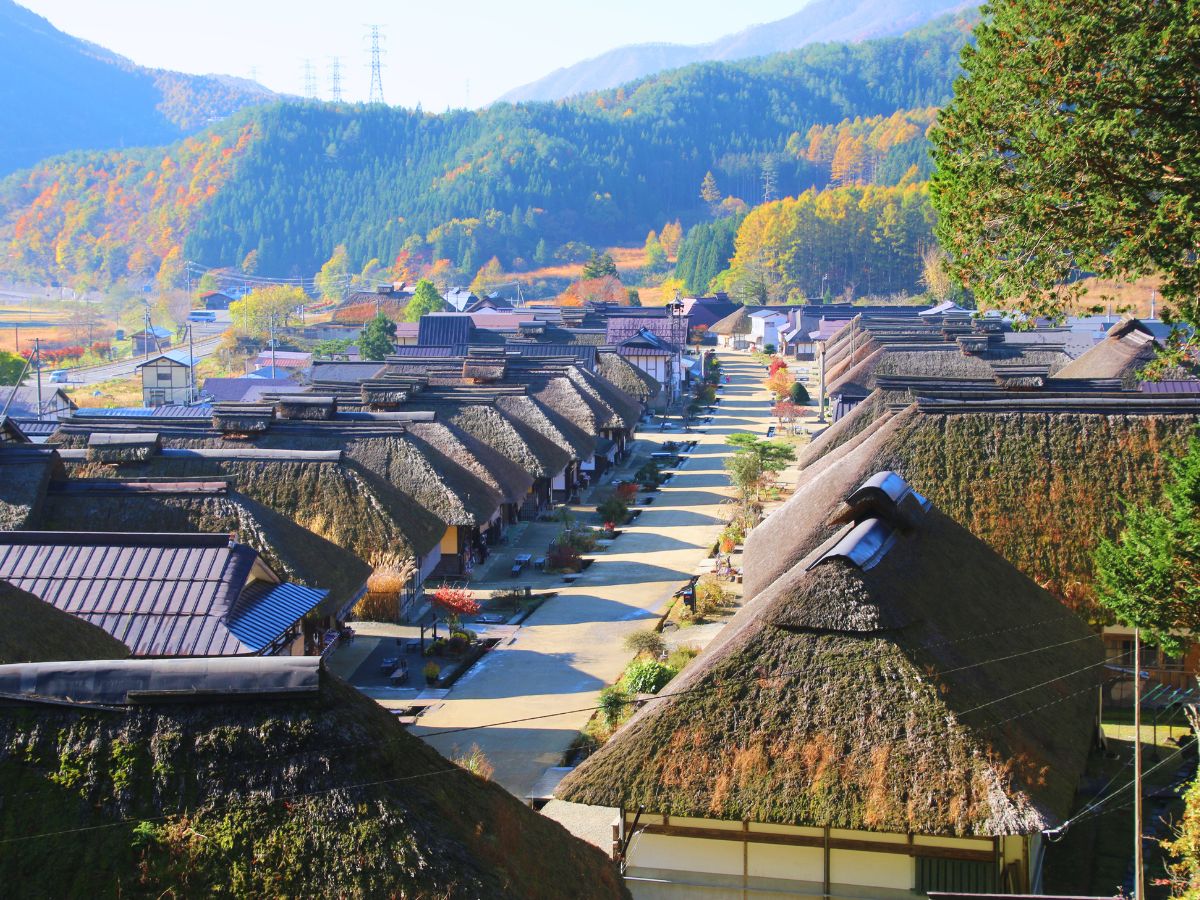
Ouchi-juku is probably the village you have seen in postcard photographs of Fukushima. Its main street is lined with traditional thatched-roof buildings, many of which now house restaurants and souvenir shops. It served as a post town during the Edo period, and the preserved streetscape is the main reason people make the trip.
I’ll be honest: it is a fairly small place. You can walk along the main street, browse the shops and stop for lunch without needing an entire day. Some visitors may find that a little underwhelming after a long journey, particularly if they arrive expecting a sprawling historical town. I would treat it as a half-day excursion and combine it with somewhere else in Aizu if you have a car.
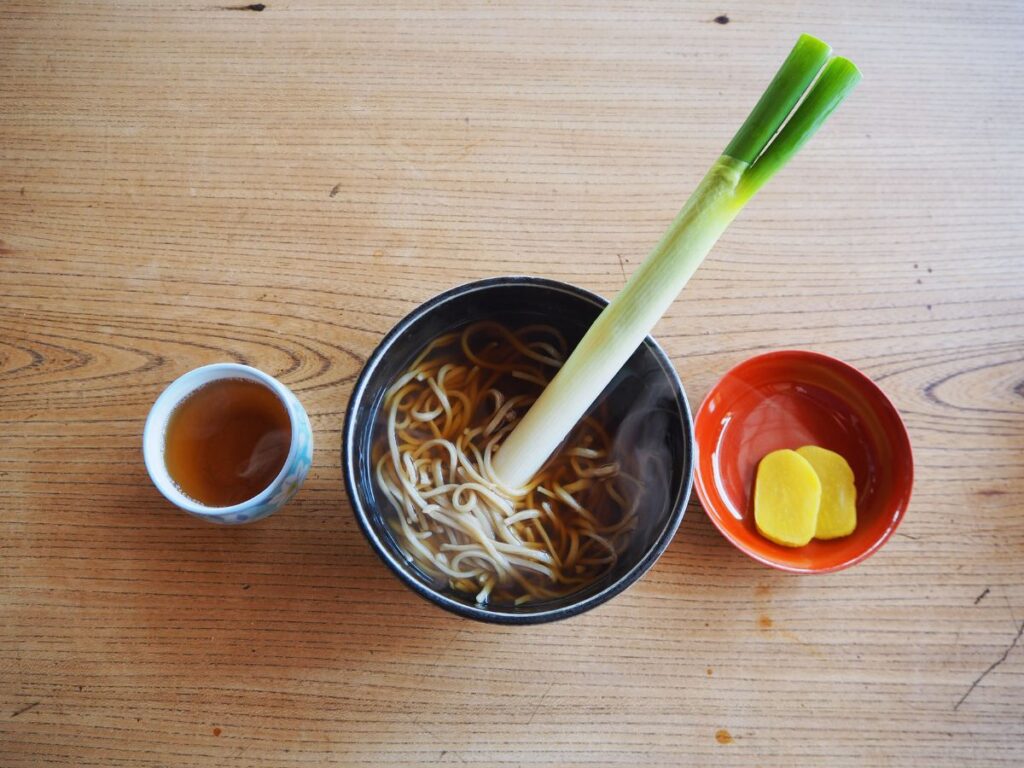
To be clear, that does not make it any less worth visiting. The traditional buildings are interesting to see, and the setting changes considerably with the seasons. The local speciality is negi soba, served with a long green onion that you can use to pick up the noodles. It is a fun thing to try, but there is no need to turn lunch into a test of your chopstick-free noodle-eating abilities. Nobody is going to judge you for reaching for your chopsticks before finishing the bowl. There.
Goshikinuma Ponds
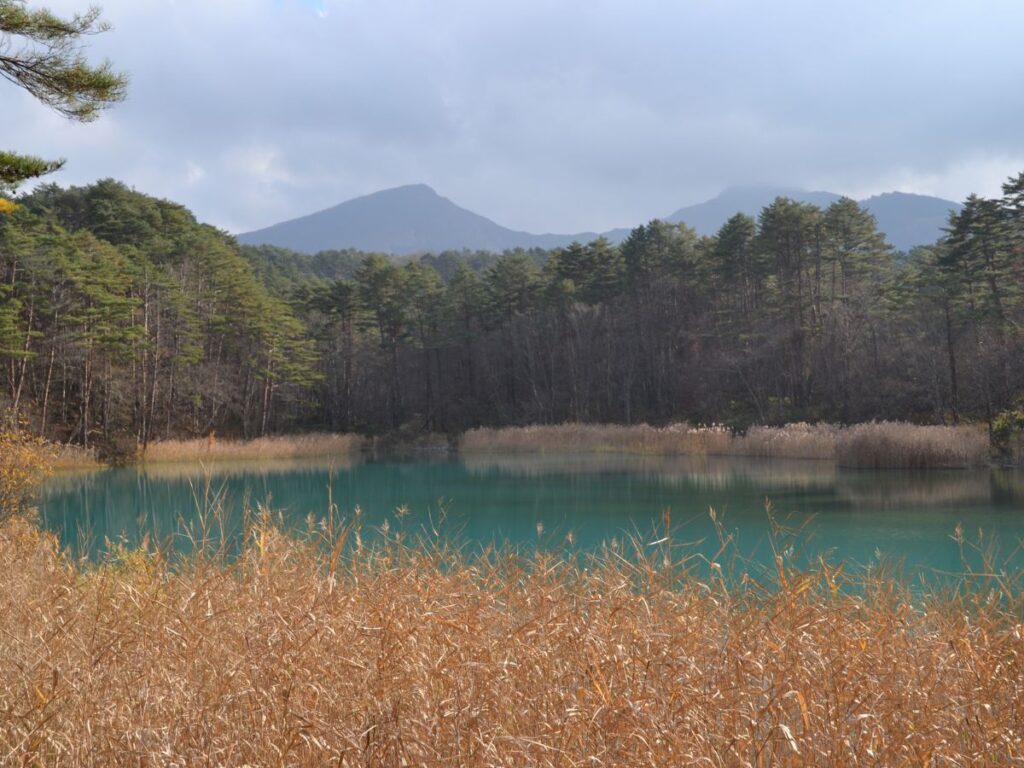
Mount Bandai and Urabandai are good choices for hiking and lake walks, and Goshikinuma Ponds are one of the area’s best-known attractions. The ponds are famous for their changing shades of blue and green.
The main nature trail connects several ponds over roughly four kilometres. Allow around 90 minutes for the walk, though you will probably want longer if you stop frequently to look at the water or take photographs. You can also simply visit the pond closest to the entrance if you are short on time.
Kitakata and Its Famous Ramen
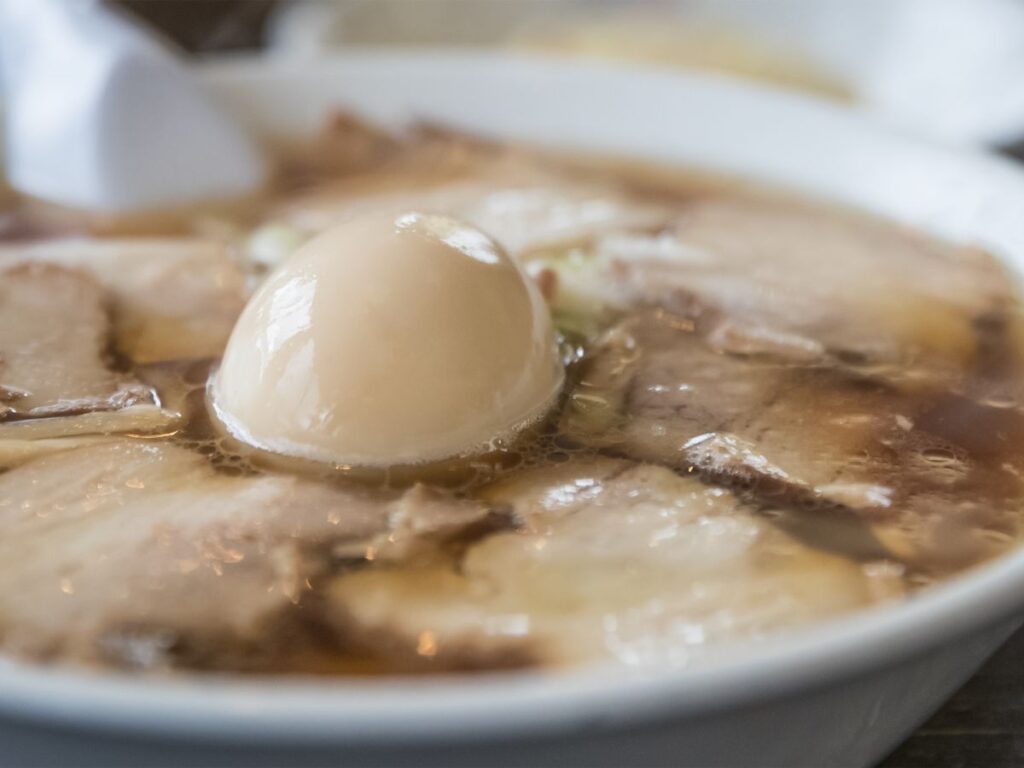
Kitakata is worth a stop for its ramen and old storehouses. The town’s kura buildings once served as warehouses and commercial premises, and some now house shops or museums. The ramen is also a big draw for many visitors, typically with broad, wavy noodles and a soy-based broth.
Nakadori
What I like about the Nakadori area is that you can combine town sightseeing with hot springs and seasonal attractions. It runs through the centre of Fukushima Prefecture and includes Fukushima City and Koriyama, which means many visitors pass through on their way elsewhere, but there are good reasons to stay here for a night or two.
Fukushima City and Its Surroundings
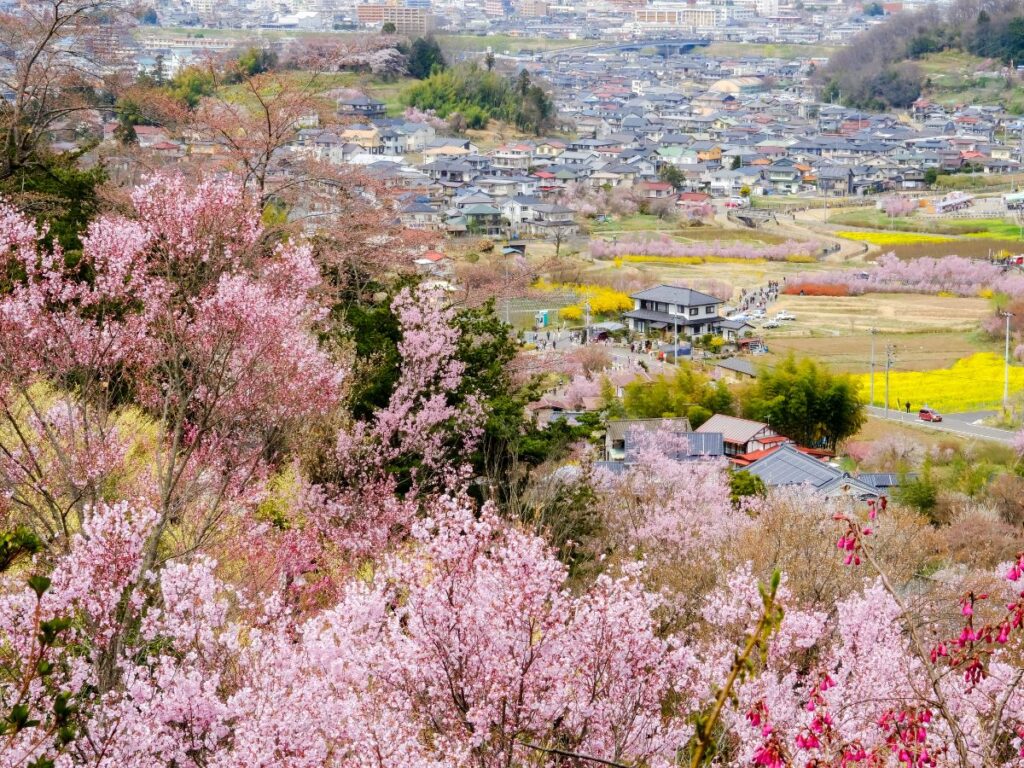
Fukushima City is worth more than a quick stop to change trains, particularly if you’re visiting in spring. The best-known attraction is Hanamiyama Park, a hillside covered in everything from cherry blossoms to flowering peaches, plum blossoms and forsythia. It is practically a changing patchwork of colour, with the snow-capped Azuma Mountains providing a lovely backdrop on clear days.
If you’re visiting outside the blossom season, one option is Iwaya Kannon, dozens of Buddhist figures carved into the rocky slopes of Mount Shinobu. You can also visit Haguro Shrine on the mountain, known for housing one of Japan’s largest straw sandals. It’s so tall that it reaches past the roof of the main shrine. Don’t believe me? See it here.
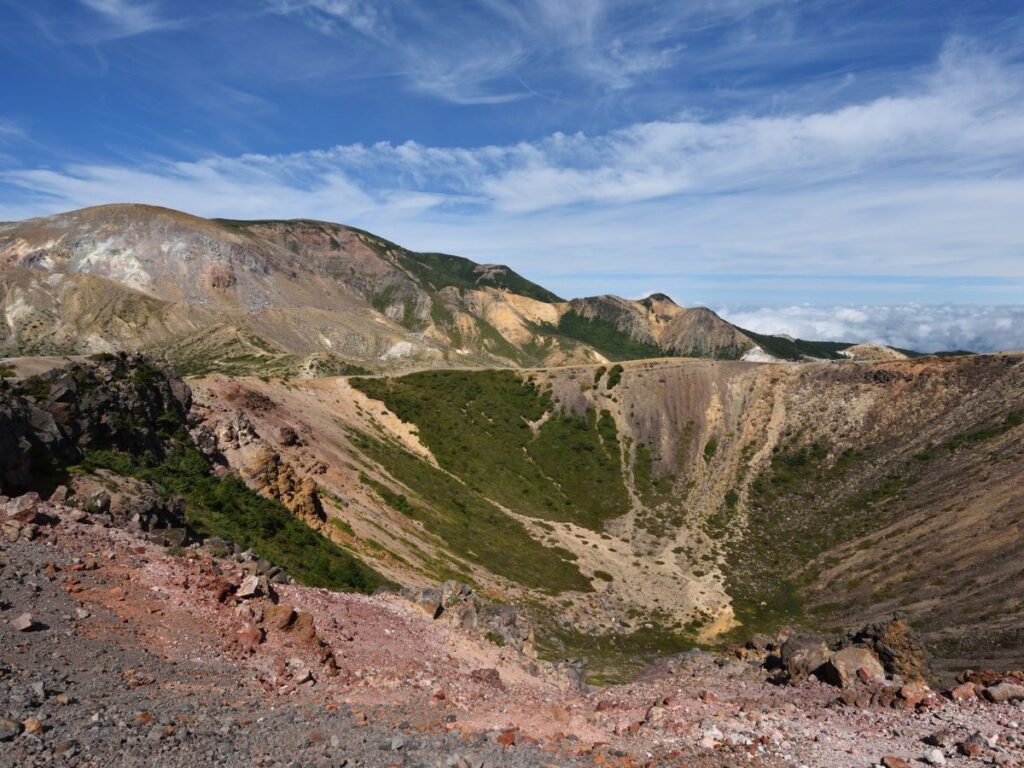
If you’re driving, the Bandai-Azuma Skyline is another highlight. Parts of this mountain road, particularly around Jododaira, looked almost otherworldly to me, with its volcanic rocks and rugged mountains. The Jododaira plateau is also where you can access Mount Azuma-Kofuji. This volcanic cone has a remarkably neat, almost symmetrical shape, and a 15-to-20-minute hike from the car park takes you up to the rim of its crater.
The road closes during winter because of heavy snowfall, and when it reopens in the spring, snow can still pile up along its edges, creating the aptly named Snow Corridor.
The Onsen Towns Around Fukushima City
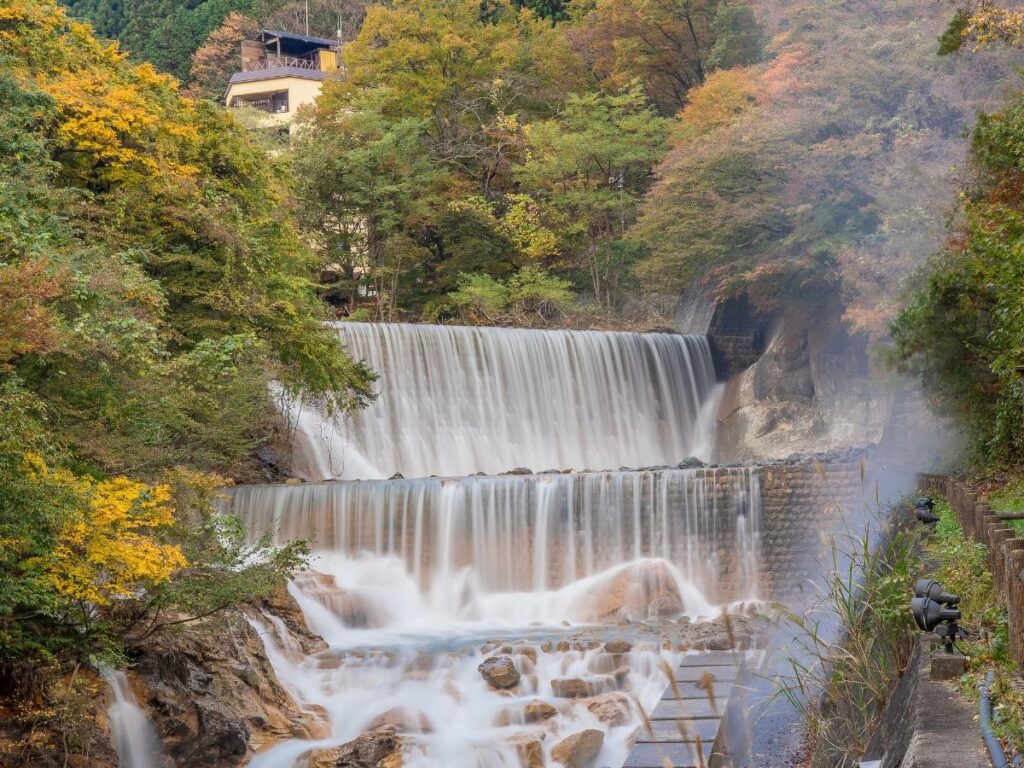
If you want to experience Fukushima’s hot springs, you have several options around the city, each with a slightly different atmosphere.
Iizaka Onsen is the most convenient if you’re staying in Fukushima City, with public bathhouses and streets you can explore on foot. A small warning for anyone planning to try the public baths: the water at some traditional bathhouses can be seriously hot. I mean the sort of hot that makes you question how calmly the person beside you managed to get in. Some of the onsen here are very simple, with limited washing space and few extras. Hakoyu is one option to look into if you would prefer a more modern facility with different bath temperatures.
If you’d rather venture into the mountains, Tsuchiyu Onsen is known for its hot springs and traditional kokeshi dolls, while Takayu Onsen is famous for its milky, sulphurous water. Both are good options if you want to get away from the city. I’d recommend an overnight stay if your schedule and budget allow
Nihonmatsu and Kasumigajo Castle Park
If you enjoy historical sites but want to explore somewhere quieter than Japan’s better-known castle destinations, Nihonmatsu is perfect. Well, if you don’t mind there being actually no complete original castle tower to explore. I’d approach it more as a historical park.
Kasumigajo Castle Park occupies the former grounds of Nihonmatsu Castle, with stone walls and elevated paths and views across the surrounding area. Spring is a particularly lovely time to visit, when cherry blossoms add another reason to wander around the grounds.
Nihonmatsu works well as a stop between Fukushima City and Koriyama, although you probably won’t need a full day for the castle park alone. If you’re interested in sake, Nihonmatsu is also a good place to explore the prefecture’s brewing traditions. You can visit Himonoya Brewery for a tour and tasting of Senkonari, a local sake that’s rarely found outside the area. Love sake? Read about the different sake experiences you can try in Japan.
Koriyama and Miharu Takizakura
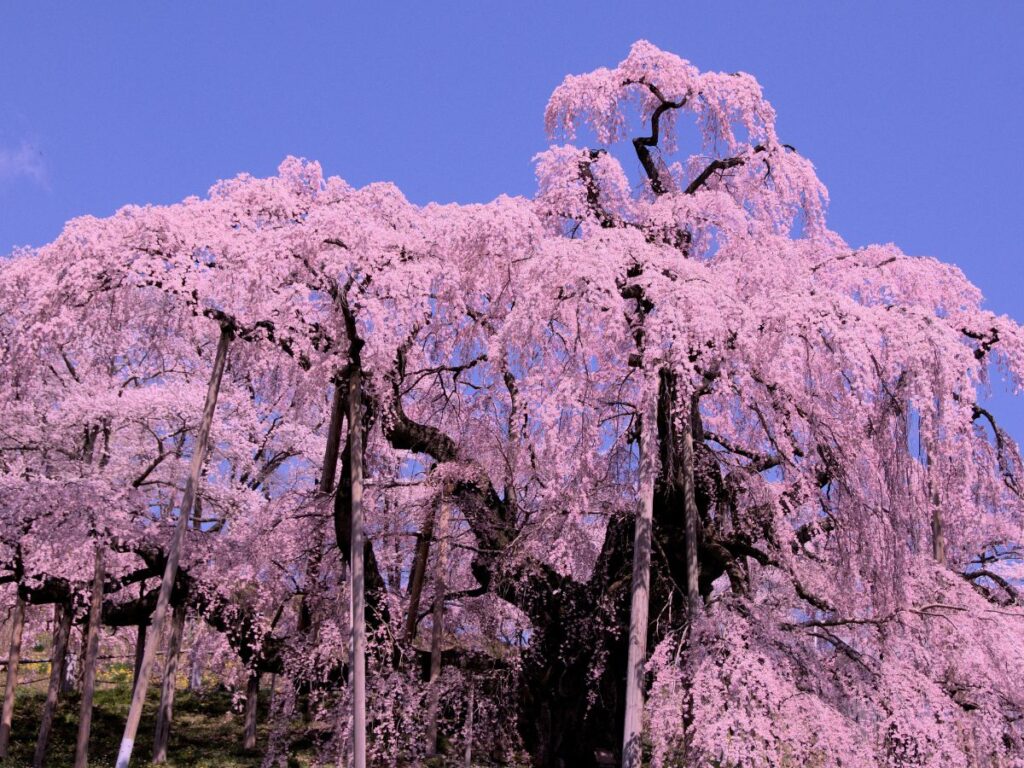
I would treat Koriyama as a practical base for day trips rather than a town packed with attractions. One of the best-known excursions from here is Miharu Takizakura, one of Fukushima’s most famous cherry blossom trees.
Okay, yes, it is one tree. And yes, going to see it means deliberately taking the trip from Koriyama. Oh, and the viewing window is short, and everyone wants to see it at roughly the same time, so traffic can build up significantly during peak bloom, even on the roads approaching the site.
But hear me out: the tree is estimated to be more than a thousand years old, and when it is in bloom, it’s an extraordinary sight, with its long branches hanging down like a waterfall of blossoms. There is a reason it attracts huge numbers of visitors.
Lake Inawashiro
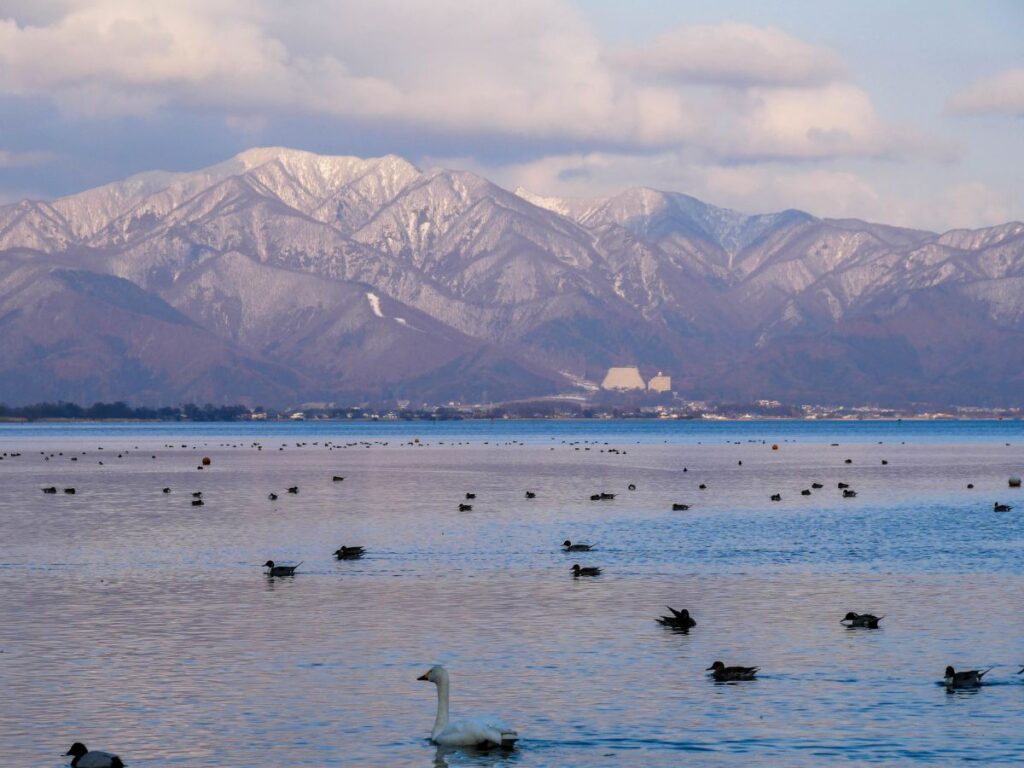
Lake Inawashiro is another must-visit in this region, especially if you fancy a quieter day. Despite how beautiful it is, it doesn’t seem to get quite the same attention as some of the prefecture’s better-known attractions, and I like that you can spend time here enjoying the scenery without feeling like you need to rush from one sight to the next. It sits at the foot of Mount Bandai, and on a clear day, you get lovely views of the mountain across the water.
Abukuma Cave
For something completely different, head to Abukuma Cave. This cave’s rock formations have developed over thousands of years, and the visitor route is illuminated, so you can really see the shapes and textures of the rock. The route includes stairs and uneven surfaces, and the ground can be damp, so be sure to wear appropriate footwear.
Hamadori and Fukushima’s Coast
Hamadori is the coastal part of Fukushima, and it feels quite different from the castle towns of Aizu and the mountain scenery inland. Here, you’ll find aquariums, historic temples, seaside towns and some of the places most deeply affected by the disaster of March 2011. There’s more to see than you might expect, but the attractions are spread out.
Iwaki and the Southern Coast
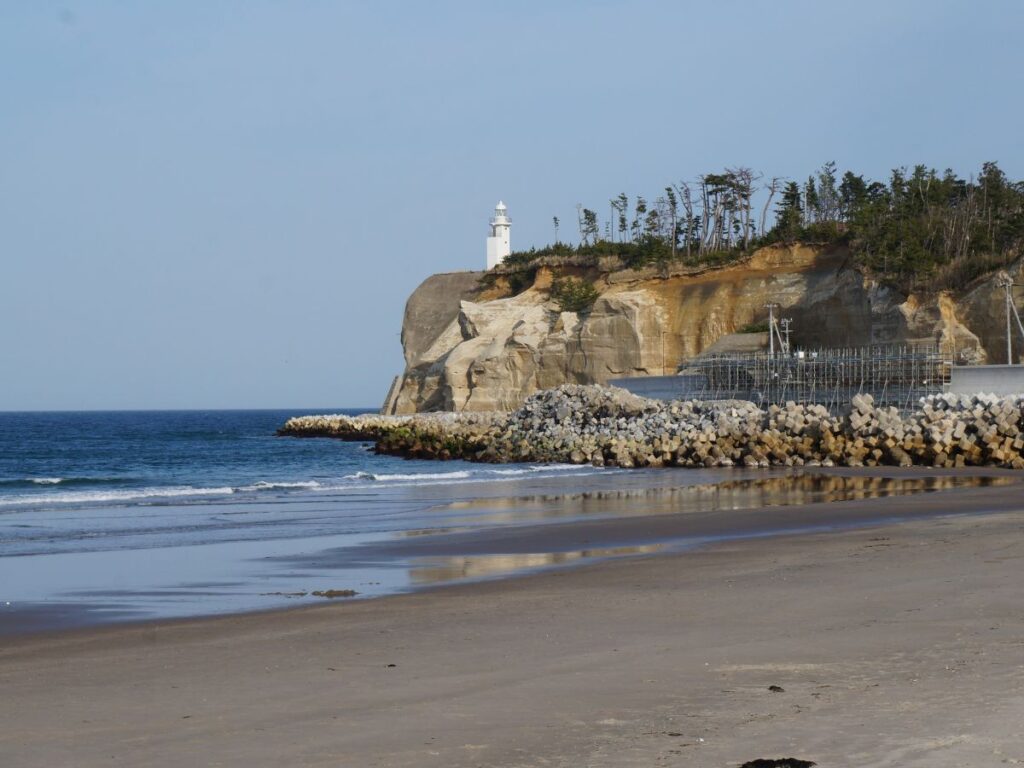
Iwaki is a good starting point if you’re exploring southern Hamadori. One of its main attractions is Aquamarine Fukushima, a large aquarium focusing on marine life and the ecosystems around Fukushima’s coast. One of the most interesting things to see here is this huge tank representing the meeting of the warm Kuroshio Current and the cold Oyashio Current. It’s an easy recommendation for families, but you don’t have to be travelling with children to enjoy it.
If you’re more interested in history and architecture, Shiramizu Amidado is another place to look into. This Buddhist temple is a National Treasure, known for its architecture and garden designed to represent the Buddhist Pure Land. For more hot spring soaking (because really, you can’t get enough of those), you could also consider a stop at Iwaki Yumoto Onsen.
Understanding the 2011 Disaster
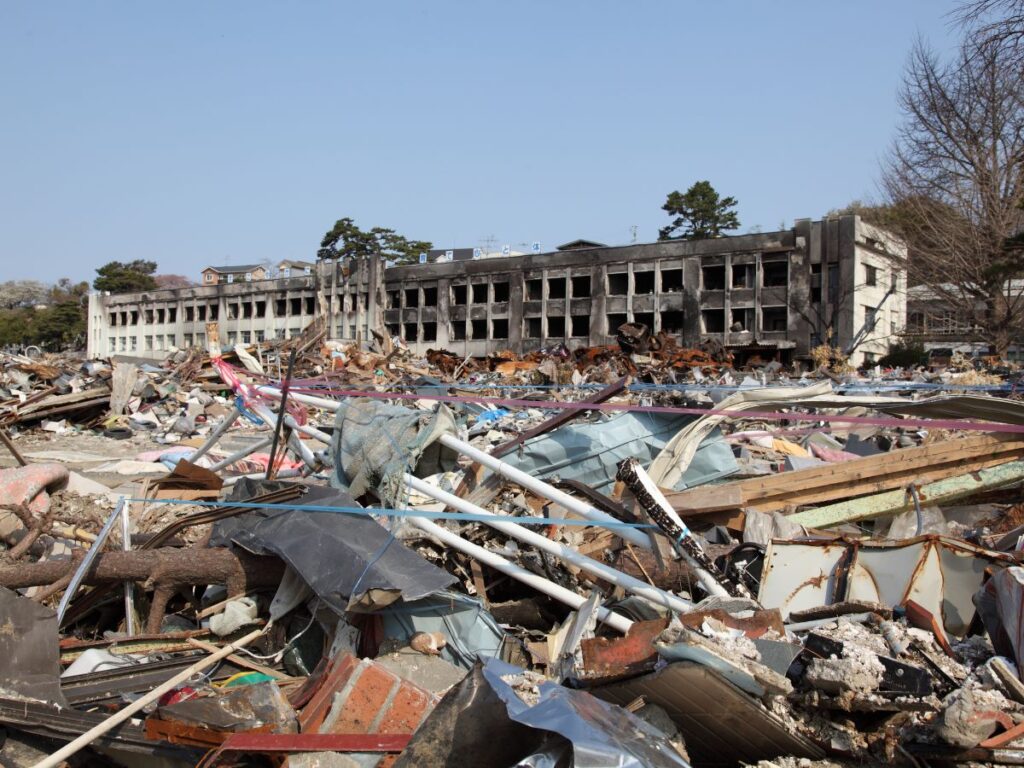
It’s difficult to discuss Hamadori without acknowledging the events of March 2011. If you want to understand what happened, the Great East Japan Earthquake and Nuclear Disaster Memorial Museum in Futaba is an important place to visit. Its exhibits document the earthquake, tsunami and nuclear accident, including the experiences of local residents and the challenges of rebuilding their lives.
One thing I particularly appreciate about the museum, though, is that it isn’t simply a place to look back on the tragedy. A big part of its mission is to pass on the lessons learned from the disaster and help prevent something similar from happening again. Through the experiences of those who lived through it, visitors can learn about the decisions people had to make. It’s a sobering visit, for sure.
Nearby, in Namie, you can find the remains of Ukedo Elementary School. The school was badly damaged, but its students and staff evacuated safely. Seeing the wreckage up close was a harsh reminder of the tsunami’s sheer force, but I can’t emphasise enough how poignant this place was in showing me just how important preparation and quick decisions can be.
You could combine these stops with a look around Futaba’s murals and public art, depicting everything from traditional daruma dolls to local residents and cultural traditions. Futaba was forced to evacuate following the nuclear accident, and the art project is one way of keeping the town’s identity and memories alive while the community continues to rebuild.
Although many coastal towns and attractions are open to visitors, some areas around the Fukushima Daiichi nuclear power plant remain restricted. You can’t simply drive wherever you like in the vicinity of the plant, and access to certain areas is limited to authorised visitors or organised tours.
The Northern Coast and Soma
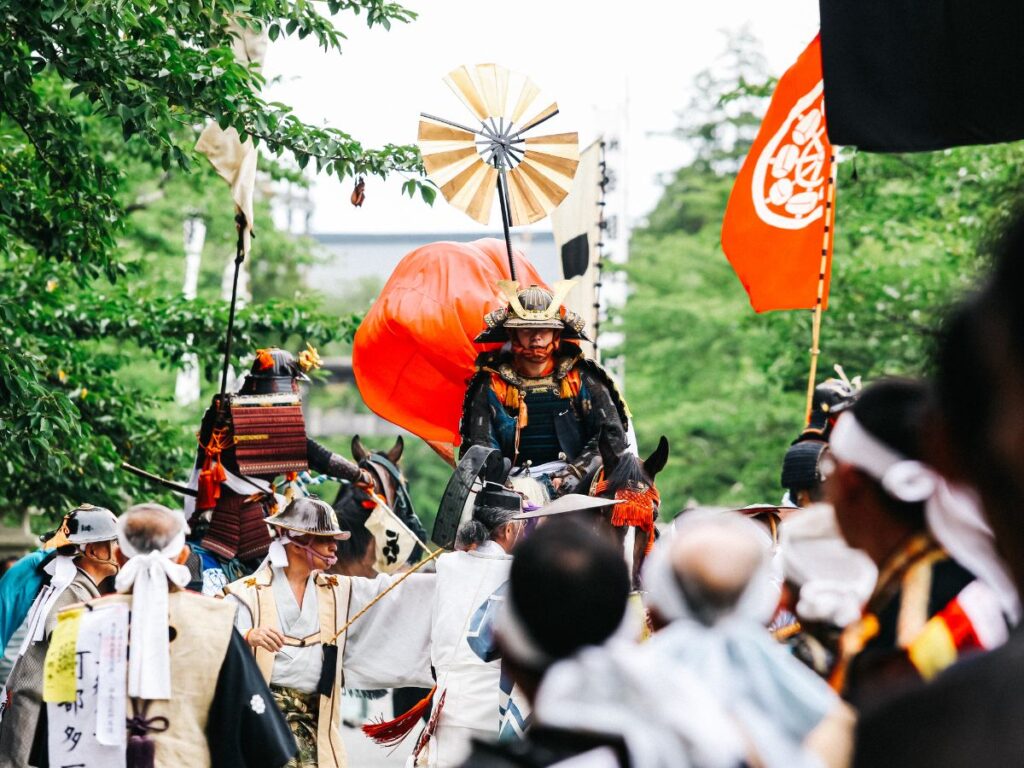
Further north, Soma is known for Soma Nomaoi, a festival with a history stretching back more than 1,000 years. Hundreds of horsemen dressed in samurai armour take part in processions and races, with one of the main highlights being a competition to catch sacred flags launched into the air. It’s quite a spectacle, and a good reason to visit if you’re interested in Japan’s samurai history. The festival takes place over the last Saturday, Sunday and Monday of May.
There’s also Matsukawa-ura, a lagoon near Soma known for its coastal scenery and seafood. It’s a quieter stop if you’re exploring this part of Fukushima, particularly since (and I can not stress this enough) Hamadori covers a fairly long stretch of coastline, and these attractions aren’t all next door to one another.
Three-Day Fukushima Itinerary
Since Fukushima is too large to cover properly in a short visit, this three-day itinerary focuses on a handful of highlights across Aizu and the area around Fukushima City. To make it easier to combine historic towns and the prefecture’s sceneries, it is designed for those travelling by car.
Day 1: Aizuwakamatsu and Ouchi-juku
Start at Tsuruga Castle in Aizuwakamatsu, allowing around 90 minutes to explore the grounds and museum. Then drive to Ouchi-juku,, taking the time to browse the village and try negi soba before returning to Aizuwakamatsu for the night. The drive takes around 50 minutes each way, so an early start will give you more time at both stops.
Day 2: Goshikinuma Ponds and the Bandai-Azuma Skyline
Head to Urabandai in the morning to walk the Goshikinuma Ponds trail, which takes around 90 minutes. Afterwards, drive towards Jododaira along the Bandai-Azuma Skyline and visit Mount Azuma-Kofuji if conditions permit. This is going to pretty much take a full day, and the Skyline closes seasonally during winter. Stay overnight in Fukushima City.
Day 3: Fukushima City and Iizaka Onsen
If you’re visiting in spring, start at Hanamiyama Park to see its seasonal flowers. Otherwise, visit Iwaya Kannon and Haguro Shrine. Finish the day at Iizaka Onsen, where you can enjoy a soak in one of its traditional public baths.
Fukushima Travel Guide and Itinerary FAQs
Is Fukushima worth visiting?
Absolutely, with its historic castle towns, traditional villages, mountain scenery, hot springs and excellent local food.
How many days do you need in Fukushima?
Three days is enough to explore a few highlights, but the prefecture is large. You will need longer if you want to visit Aizu, the central region and the Pacific coast.
Do you need a car to explore Fukushima?
No, but a rental car makes it much easier to visit rural attractions and mountain areas.
Is Fukushima safe to visit?
Yes, the areas commonly visited by tourists are generally safe to visit. Radiation levels in Fukushima Prefecture, outside designated evacuation zones, have fallen substantially since 2011 and are now broadly comparable to those in many other major cities. That said, some restricted areas remain near the Fukushima Daiichi nuclear power plant, so follow official access guidance.