
Living in Japan for a decade now, I would love to tell you that sumo is completely mundane to me already. I would love to say I attend tournaments every other weekend, and act as though bumping into massive professional athletes on the street is a completely normal Tuesday.
But because I am painfully honest, I cannot. Even though the sport is deeply ingrained in the local culture and seeing a match is at the absolute top of every traveller’s itinerary, witnessing this tradition in its purest form is a massive logistical headache even for us residents.
You can read our complete guide to sumo wrestling to fully understand its massive scale, but the point is that attending an official tournament involves battling domestic fan clubs for tickets that vanish in seconds.
A sumo dining experience is the ultimate loophole. It is a highly accessible cultural event that pairs a meal with up-close entertainment courtesy of former professional wrestlers. I still vividly remember a former wrestler walking between the tables, joking with the crowd while we dug into our food. Then, we all gasped excitedly as the athletes stepped onto the ring. It was a truly fun experience that I am so glad to have tried.
If you are wondering what you are actually signing up for when you book a ticket, let’s break down exactly how the event works.
What is a Sumo Dining Experience?
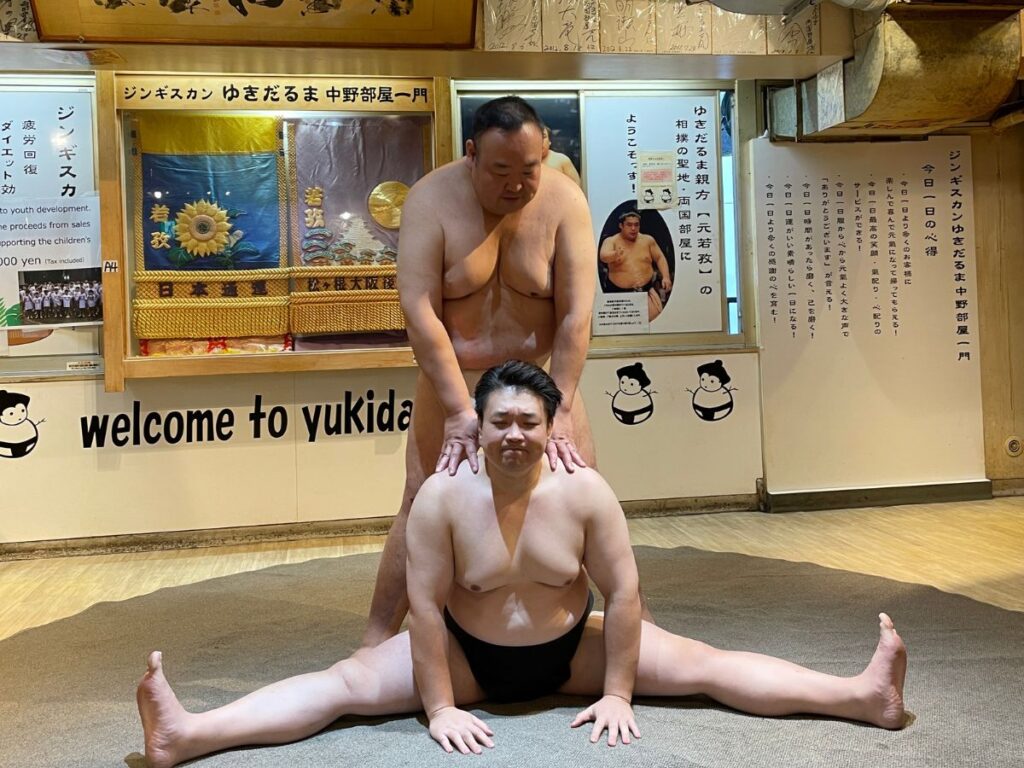
A sumo dining experience is a two-hour restaurant event where you eat a massive, traditional hot pot while watching retired professionals wrestle on a raised clay ring right in front of your table.
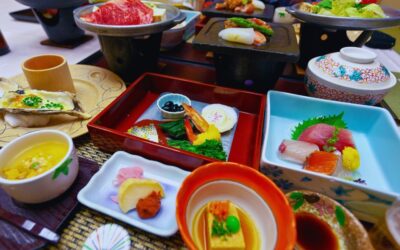
You might be picturing a plain, dated restaurant with a small wooden stage tucked away in the corner, but the reality is far more immersive and significantly louder. These venues are specially built to centre entirely around the ring, so don’t be surprised if you actually feel the floorboards shake. The meal almost always features chanko nabe, which is the exact protein-heavy stew eaten by the athletes to build their massive physiques over years of rigorous training.
If you are still weighing up the different ways to interact with sumo wrestlers, our guide to the various sumo experience options breaks down the pros and cons of each. You have choices ranging from the actual tournament days to the raw, behind-the-scenes world of a sumo morning practice.
Sumo Dining Experience Locations
The Tokyo venues for this experience are clustered around three main districts. First is Ryogoku in Sumida Ward, which is accessible via the local JR Sobu Line or the Toei Oedo Line. Since this neighbourhood is where you will find the Kokugikan Arena, it is also home to countless training stables.
Next is Asakusa, which I’m sure you’ve heard of if you’re planning a Tokyo itinerary. Choosing a venue here allows you to pair your afternoon of wrestling with a morning exploring Senso-ji and the surrounding Nakamise shopping street. Just be prepared for absolute shoulder-to-shoulder madness on the weekends, as this area gets intensely busy.
Finally, there is Shinjuku, which is ideal if you want to tie your cultural experience with an evening exploring the alleyways of Kabukicho or Omoide Yokocho. You can step right out of the venue and into a local izakaya to keep the night going.
Sumo Dining Experience Timing
One practical advantage of this experience over most other sumo experiences is that the venues run year-round, with no blackout periods during tournament season.
You generally have the choice between a lunch or a dinner slot. The lunchtime shows run for about two hours in the early afternoon and offer a filling meal centred around tonkatsu or a traditional hot pot. It’s the kind of noontime meal that will absolutely induce a food coma… which is either a feature or a bug depending on how ambitious your afternoon plans are.
The dinner options raise the culinary stakes slightly, with some venues using upgraded ingredients like wagyu beef for sukiyaki.
One thing to factor in if you are visiting during January, May, or September is that those are Tokyo’s three tournament months, and Ryogoku specifically gets noticeably busier. The neighbourhood fills up with domestic fans and the chanko restaurants near the Kokugikan run long queues.
Flow of a Sumo Dining Experience
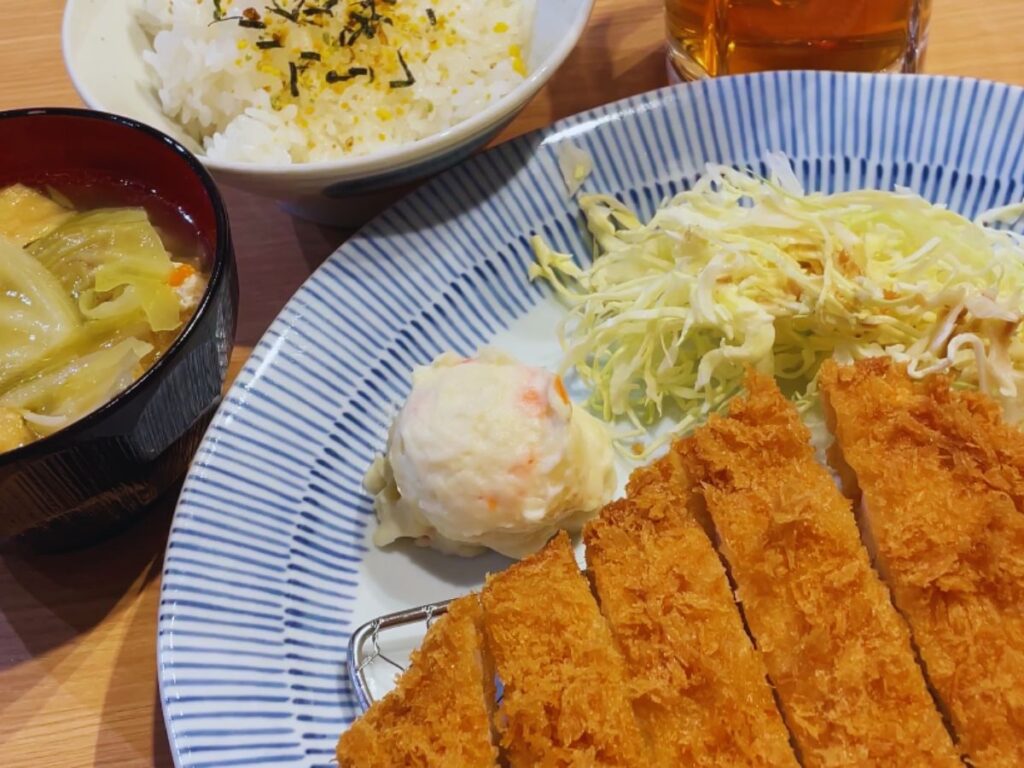
When you arrive at the venue, the staff will guide you to your designated seat, and the food portion of the event begins almost immediately. But don’t fret. You will have plenty of time to savour the flavours and settle into your seat before the main event begins.
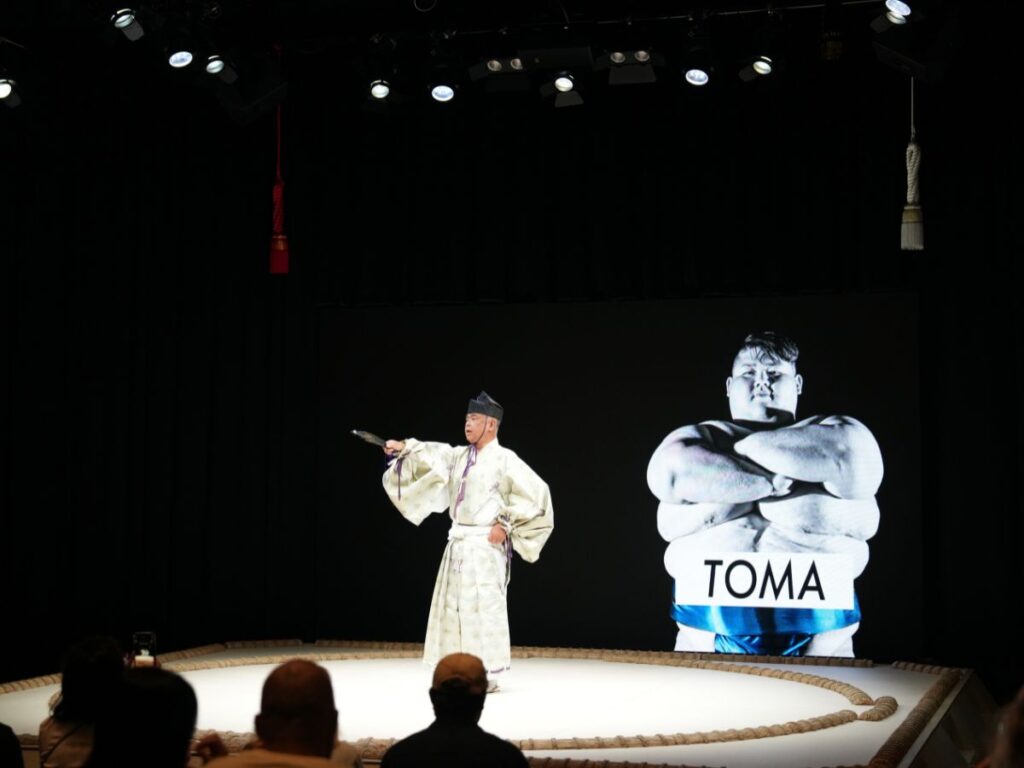
As you eat, a video covering the history and culture of sumo plays, so by the time your plates are cleared, you have a working understanding of the rules and the rituals. While the venue was playing I honestly felt like tuning out or checking my phone. But I’m so glad that I fought those urges, because the context the video gives makes the actual demonstration significantly more interesting. In some locations, instead of the video, you get a live demonstration of the moves, which make it more engaging.
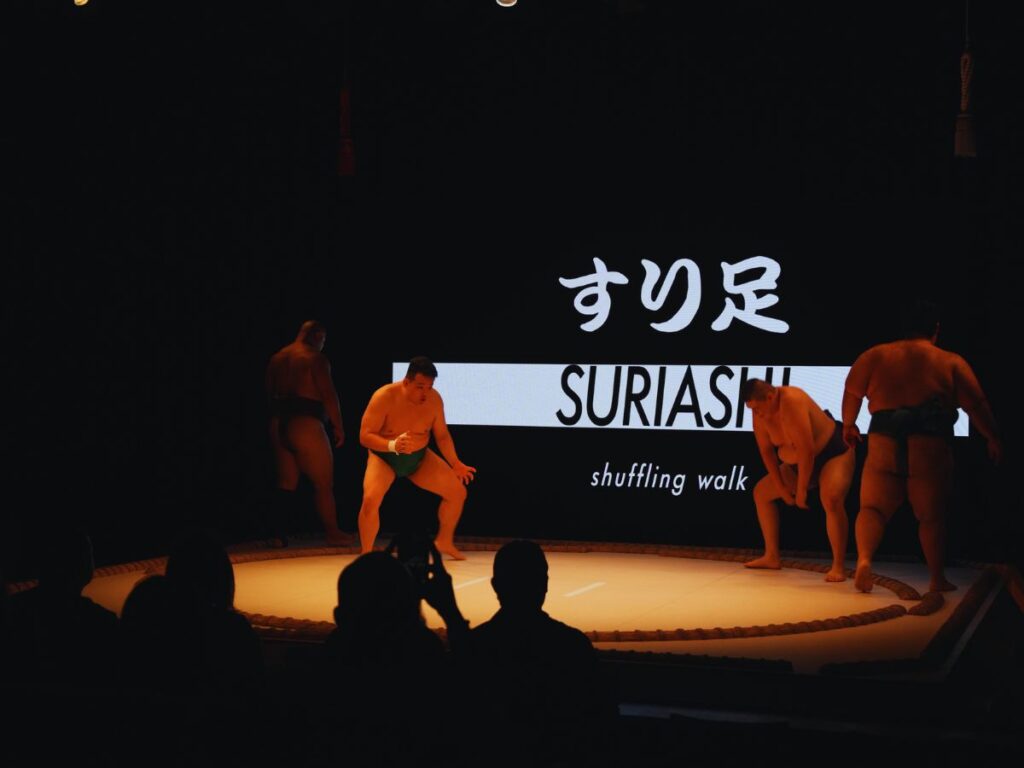
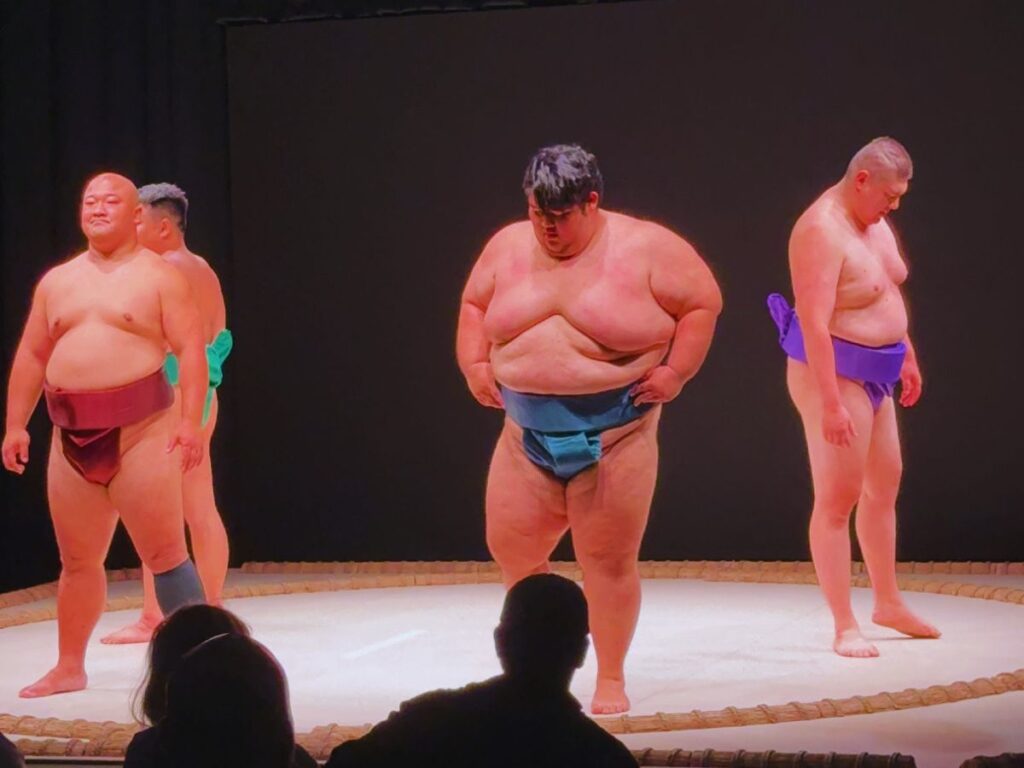
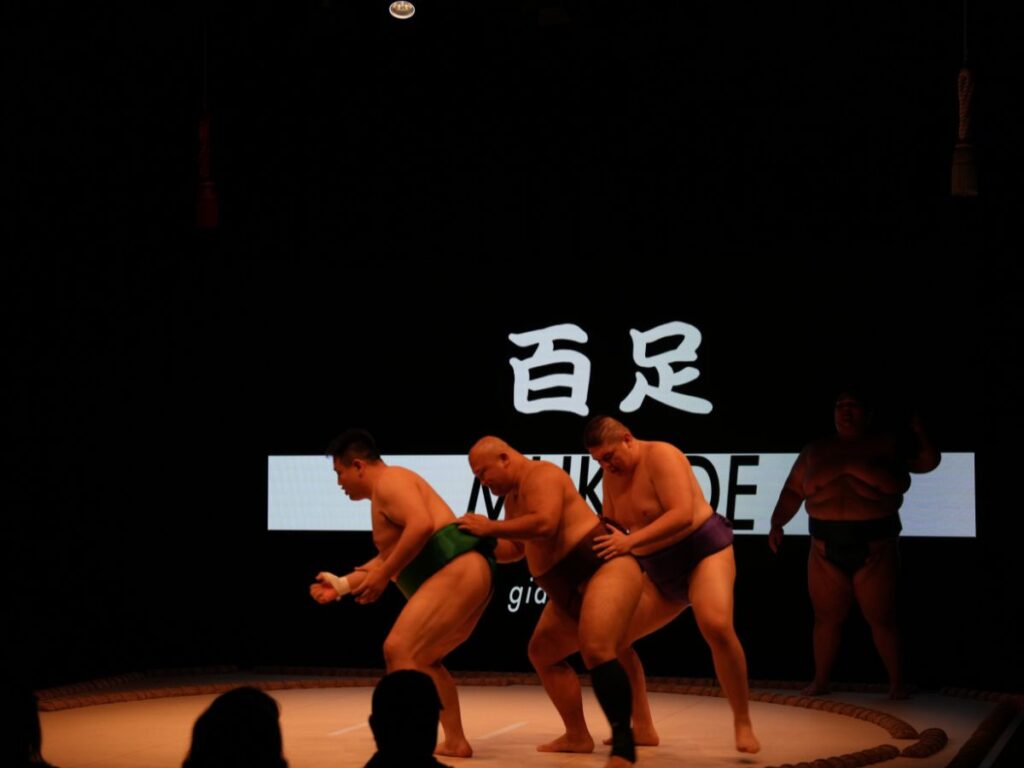
The wrestlers then take to the dohyo for the demonstration. They run through the ceremonial leg stomps known as shiko, meant to drive away evil spirits, and the salt throw, a Shinto purification ritual you will have seen in photographs but which lands completely differently when it happens a metre in front of your face.
Then come the live exhibition bouts. The power is genuinely startling at close range. You may have watched sumo on television, you may have even attended a tournament, but I can tell you that neither prepares you for the sheer physical reality of two large men colliding at full speed when you are close enough to feel the air move.
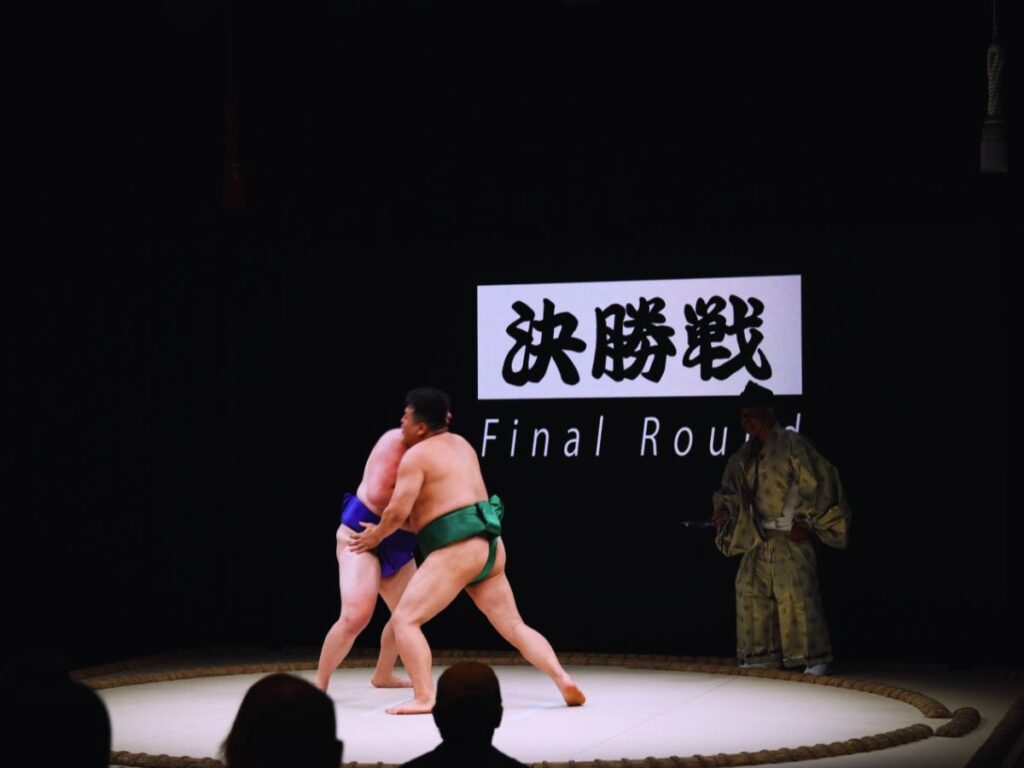
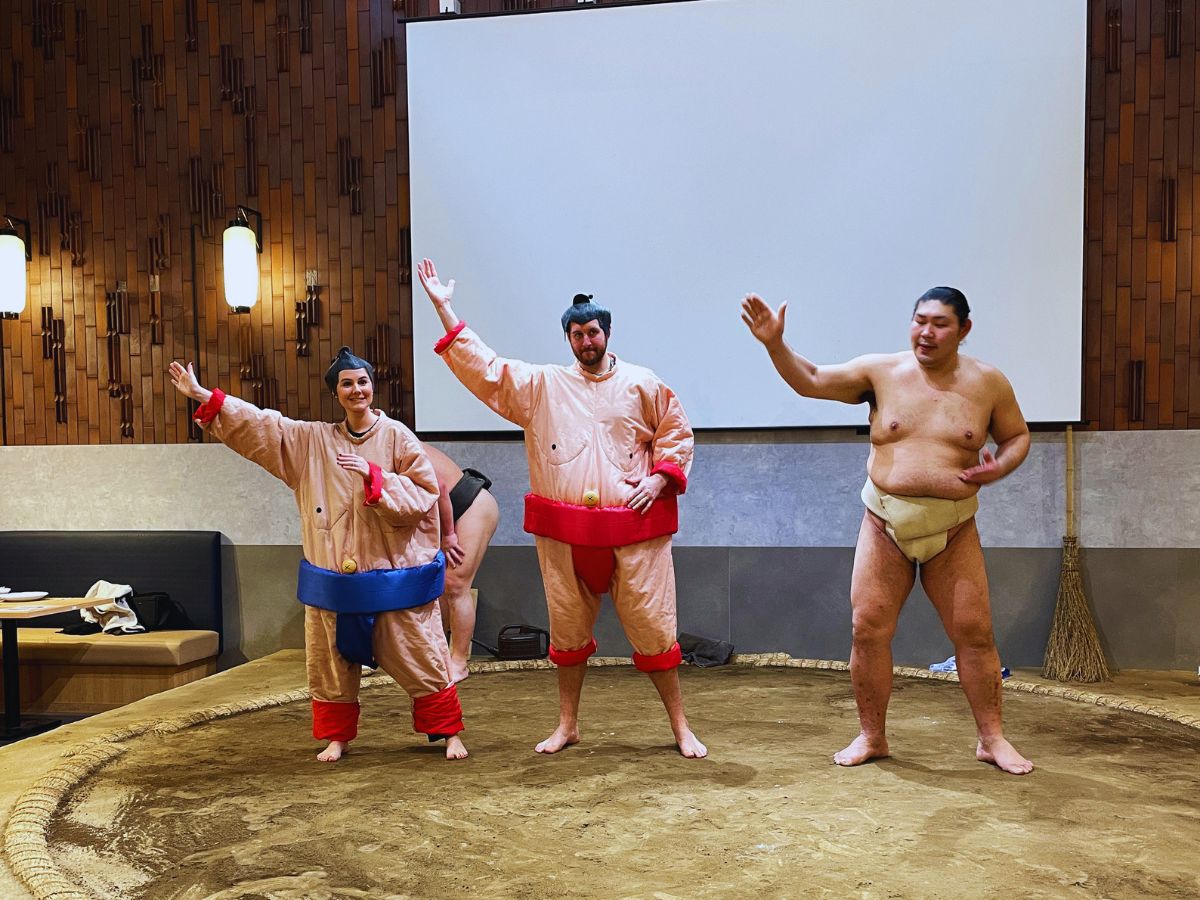
After the demonstration, guests are invited into the ring. You can pull on an oversized padded sumo suit or a traditional belt and try your luck pushing a retired professional out of the boundary. The wrestlers play along generously, letting challengers struggle before ending things efficiently and without mercy. It is consistently the loudest part of the afternoon.
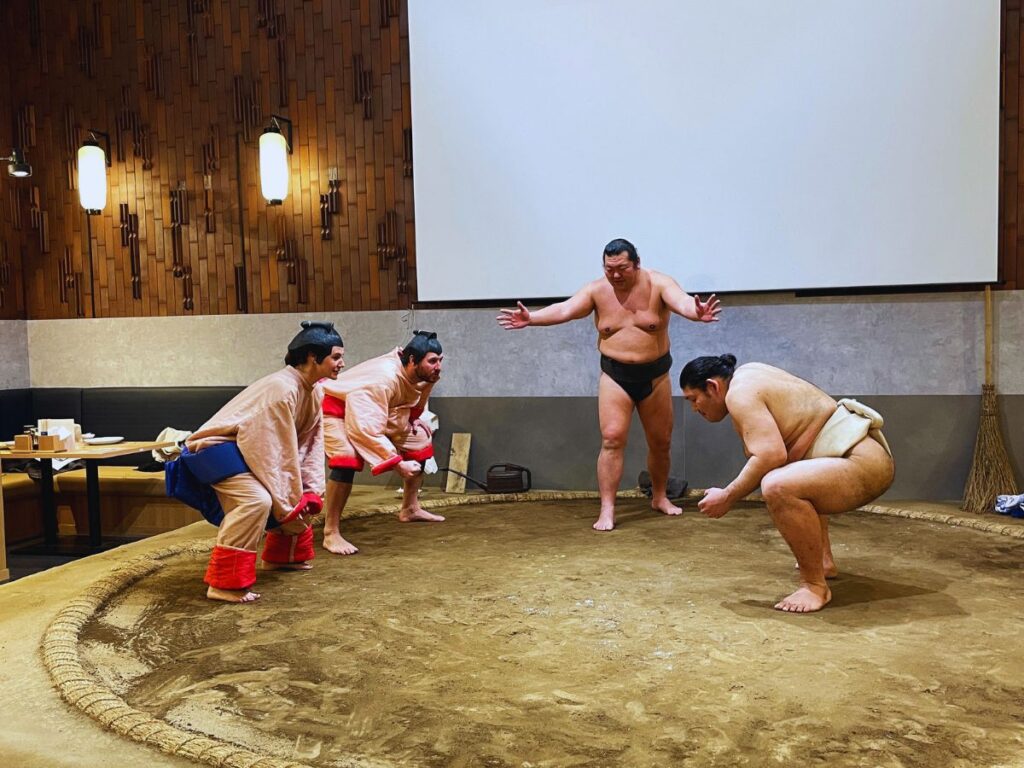
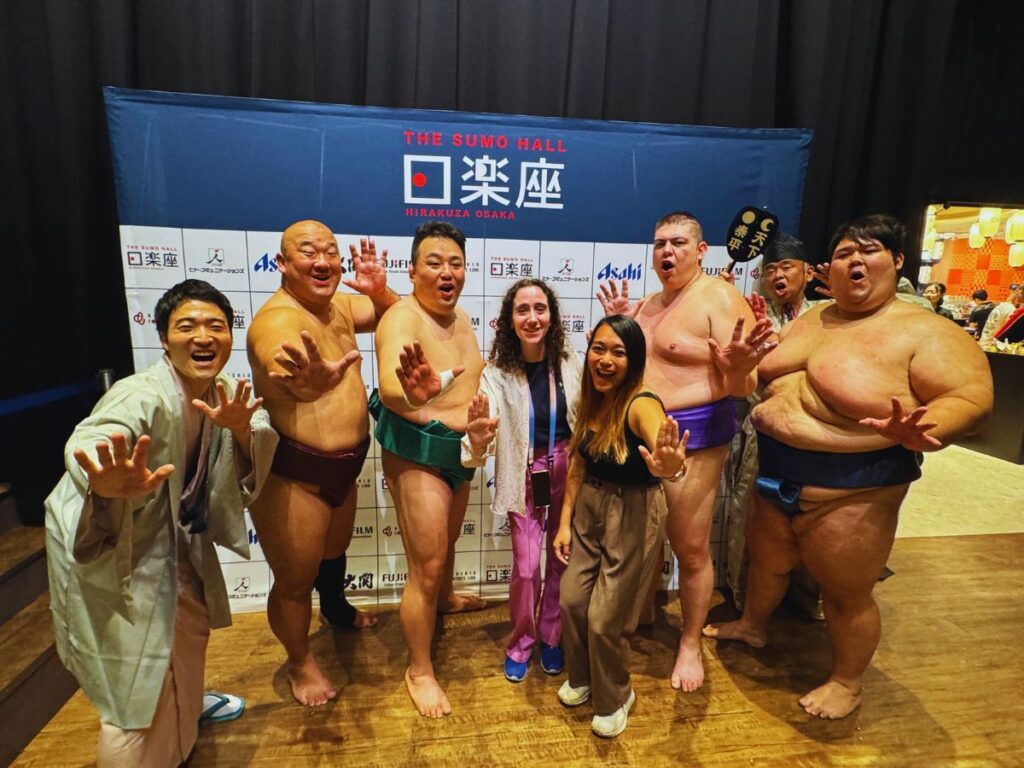
The experience wraps up with a Q&A session and photos with the wrestlers, and I strongly recommend having your questions ready because the insight these athletes offer into daily stable life is genuinely fascinating and goes well beyond what any guidebook will tell you.
Things to Keep in Mind Before a Sumo Dining Experience
If you have any intention of volunteering for the audience challenge, I highly recommend wearing loose-fitting trousers rather than tight skinnies or skirts and dresses. Opt for simple slip-on shoes as well, because you will need to remove your footwear quickly before stepping onto the ring. Also, double-check that you are wearing socks (and not ones with embarrassing holes on them!).
As for what to bring, a fully charged smartphone or a dedicated camera is absolutely essential. The photo opportunities are endless, especially during the comedic audience participation segment and the final meet-and-greet with the athletes.
Now, a sumo dining experience is fundamentally an entertainment showcase, but the performers are highly disciplined former professionals who have dedicated their lives to a sacred sport. So, etiquette remains an important factor. Always follow the venue staff’s instructions carefully when approaching the ring. Do not attempt to climb onto the dohyo uninvited, and listen carefully to the safety briefings provided by the host before participating in any physical activities.
Finally, take careful note of your personal dietary requirements well in advance. Japan is brilliant at many things, but spontaneous vegan cooking is definitely not one of them. Authentic Japanese broths like chanko nabe almost always rely heavily on bonito fish flakes or rich pork bones for their base flavour profile. If you require a vegan, halal, or pescatarian meal, you must state this explicitly at the time of booking. The venue kitchens are highly accommodating, but last-minute dietary substitutions on the day of the event are simply not possible.
How to Book a Sumo Dining Experience
Prices for a sumo dining experience start at around $110 USD per person, which covers your seat, the full meal, and the show. That is very reasonable for two hours of entertainment, a filling meal, and the kind of access that simply does not exist at an official tournament.
The slightly annoying reality is that booking these experiences independently as an international visitor is more complicated than it should be. Navigating unfamiliar Japanese booking platforms, communicating dietary restrictions clearly, and matching the right venue to your wider itinerary all take more time than most people want to spend mid-trip planning. We at Flip Japan work directly with the best venues in the city so you do not have to deal with any of that.
Our partners include a long-established Ryogoku venue built inside a converted traditional bathhouse, right in the heart of sumo country; an Asakusa option that slots perfectly into a day of temple-hopping and street food; and a high-energy Shinjuku venue that makes an ideal launchpad for an evening out. You can book directly through our experiences page, and we will take it from there.
If sumo is just one piece of a bigger Japan trip, our travel planning service is worth a look too. We can build an itinerary that fits your dining experience into everything else on your list, like a morning in Asakusa, an afternoon in Akihabara, or a full week across multiple cities. Japan rewards good planning enormously, and we are very good at it!
Personal Thoughts on the Sumo Dining Experience
I often hear travellers express a slight hesitation before committing to booking this activity. They worry that a dedicated sumo show might feel like a manufactured tourist trap, lacking the genuine grit and spirit of the real sport. I understand the hesitation. I tend to avoid anything marketed as a tourist show on instinct, and a sumo dining experience absolutely sounds like one on paper.
Having done it now though, I am very happy to eat my words. Is it designed for international visitors? Completely. Does that make it inauthentic? I don’t think so. The wrestlers are genuine former professionals, the food is what they actually ate, and the dohyo is a real dohyo. What you are getting is the sport made accessible, which is a different thing from the sport being faked.
The comparison points matter here. Tournament tickets require luck, months of advance planning, and still put you at a distance in a 10,000-seat arena. A morning stable visit is a genuinely special experience, but you are sitting motionless on a hard floor for up to two hours. A sumo dining experience sits neatly between those two options: more interactive than the tournament, far more comfortable than the stable, and honestly more fun than either for most people.
For me, the entire experience was worth it, but my favourite part was the audience challenge. There is something very entertaining about watching a fellow traveller discover exactly how immovable a retired professional wrestler is.
Sumo Dining Experience FAQs
Is the sumo dining experience suitable for children?
Absolutely. It is an incredibly family-friendly environment. Children are usually mesmerised by the sheer size of the wrestlers and the showmanship of the matches. The audience participation segment is particularly popular with younger guests, and the wrestlers are wonderfully gentle and playful when inviting kids into the ring.
Are there vegetarian or vegan food options available?
Most venues can accommodate vegetarian, vegan, and halal dietary requirements, but you need to flag this at the time of booking or, at minimum, several days in advance. Gluten-free requests may not be possible at all venues, so if this applies to you, check directly when booking.
Do I actually have to wrestle?
Not at all. The audience challenge is entirely voluntary. If you prefer to stay in your seat, enjoy a cold beer, and laugh at the brave volunteers attempting to move the wrestlers, you are more than welcome to do so.
How does this compare to other sumo experiences?
A real tournament puts you in a large arena at a distance, watching active professionals compete for their official rank. A morning stable visit gets you closer to the training reality of the sport, but requires sitting in silence on a hard floor for hours. The dining experience sits between the two: more interactive and accessible than either, with the added bonus of a good meal. For a more detailed breakdown of all your options, we have a full comparison guide.