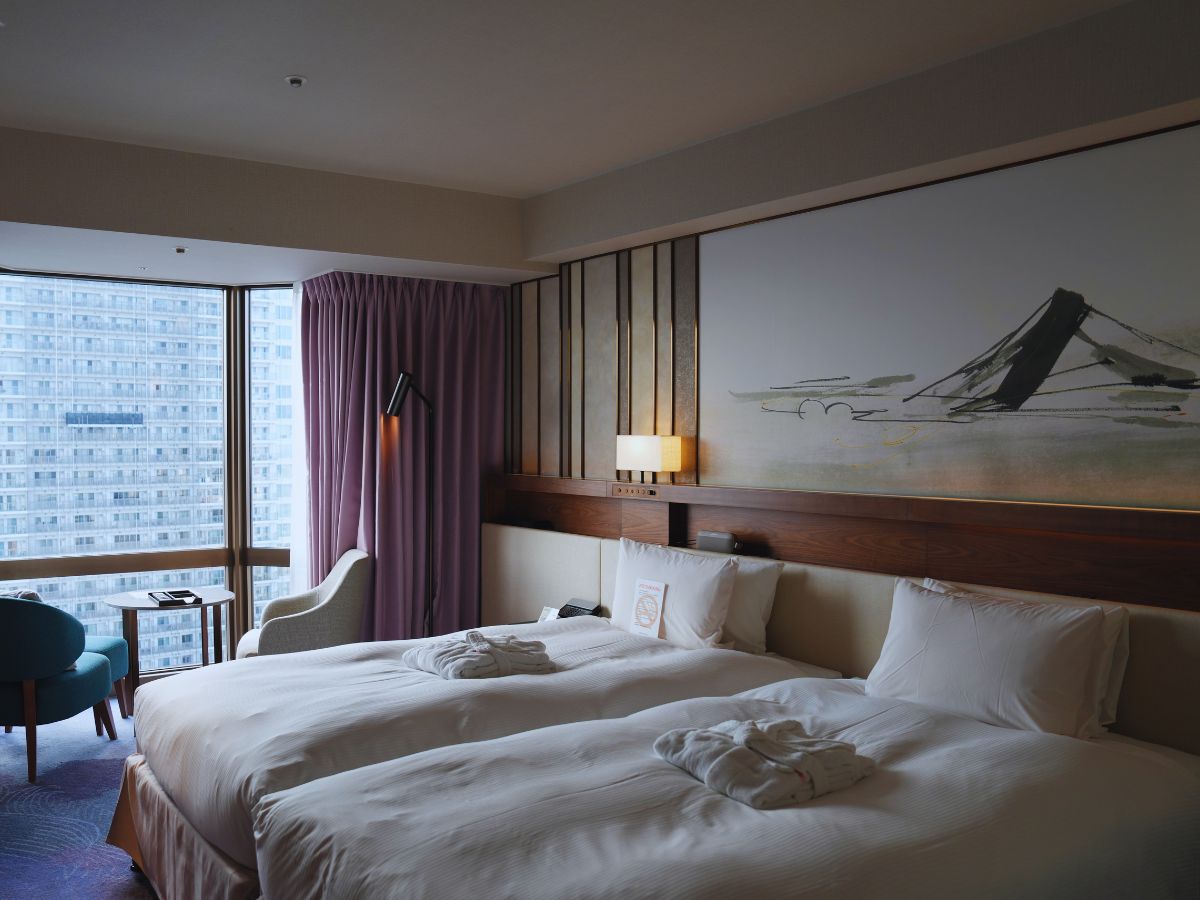

The Japan hotel vs Airbnb question comes up on nearly every trip we help plan, and like any good agency, we don’t steer clients toward one by default, because the right call depends entirely on who’s asking and what the trip actually looks like. A couple doing a fast ten day loop through Tokyo, Kyoto and Osaka needs something different from a family parked in one city for a fortnight, and a larger group splitting costs needs something different again.
This is an honest comparison of Japan hotels vs Airbnb, logistics included. It’s a breakdown of what actually changes depending on which one you pick, worked through properly with real numbers and the logistics nobody mentions until you’re standing in an arrivals hall trying to figure out what to do next.
Before we dive into though, I should clarify the scope of this guide. Japan has an incredibly rich variety of accommodations beyond standard hotels and Airbnbs (legally known in Japan as minpaku). You will also find choices like shukubo (Buddhist temple stays) and full-service traditional inns known as ryokans.
I firmly believe every traveller should experience a ryokan at least once during their trip. But because they are a unique cultural experience rather than just a standard daily lodging choice, we will not be comparing them here. If you want to know more about that specific experience, you can read our complete guide on what a ryokan is.
For your day-to-day basecamps, however, here is exactly how hotels and rentals stack up.
Japan Hotel vs Airbnb: Pricing and The Actual Numbers
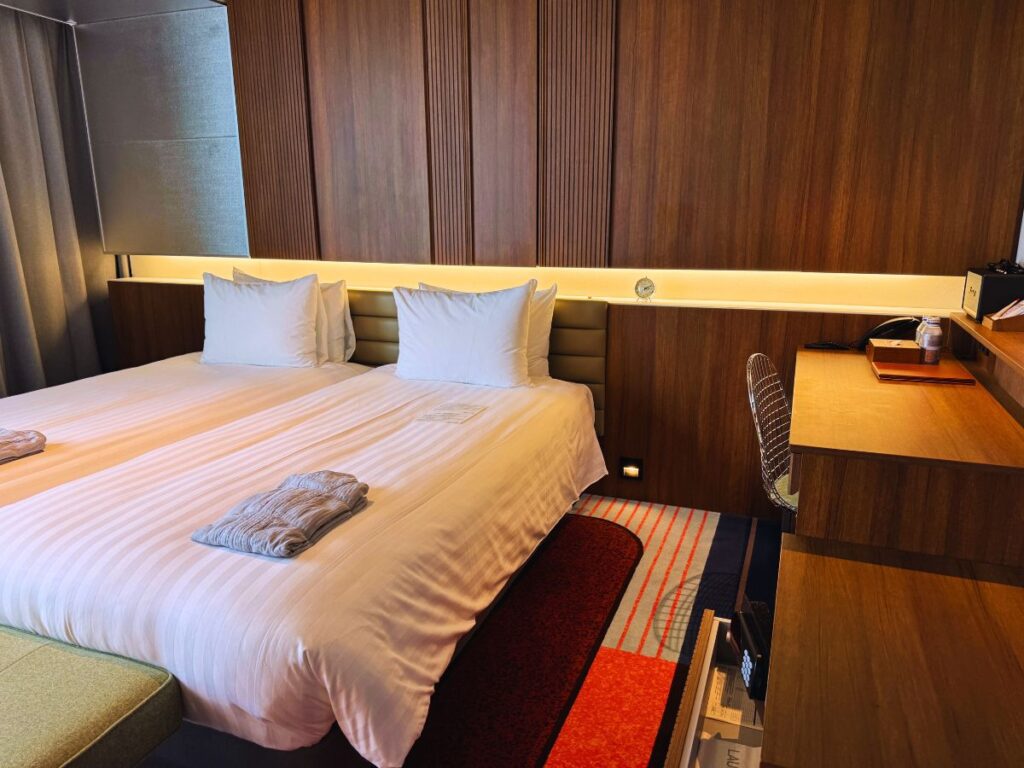
Japan hotel pricing splits into tiers that most first-time visitors don’t realise exist.
Capsule hotels sit at the bottom, at three to five thousand yen a night. That fee gets you a pod, a locker, basic toiletries, and shared bathrooms. Personally, I’d say that it’s a great deal and completely fine for one night, especially after a late flight. But for much longer than that? I just don’t think that it’s the kind of accommodation you want to remember going back to at the end of the day when you’re reminiscing about your Japan trip.
Standard business hotels, the APA and Toyoko Inn category, run eight to fifteen thousand yen a night. Their prices barely move with the seasons, which was a pleasant surprise for me as someone used to prices doubling around any public holiday back home. Midrange city hotels push toward twenty thousand.
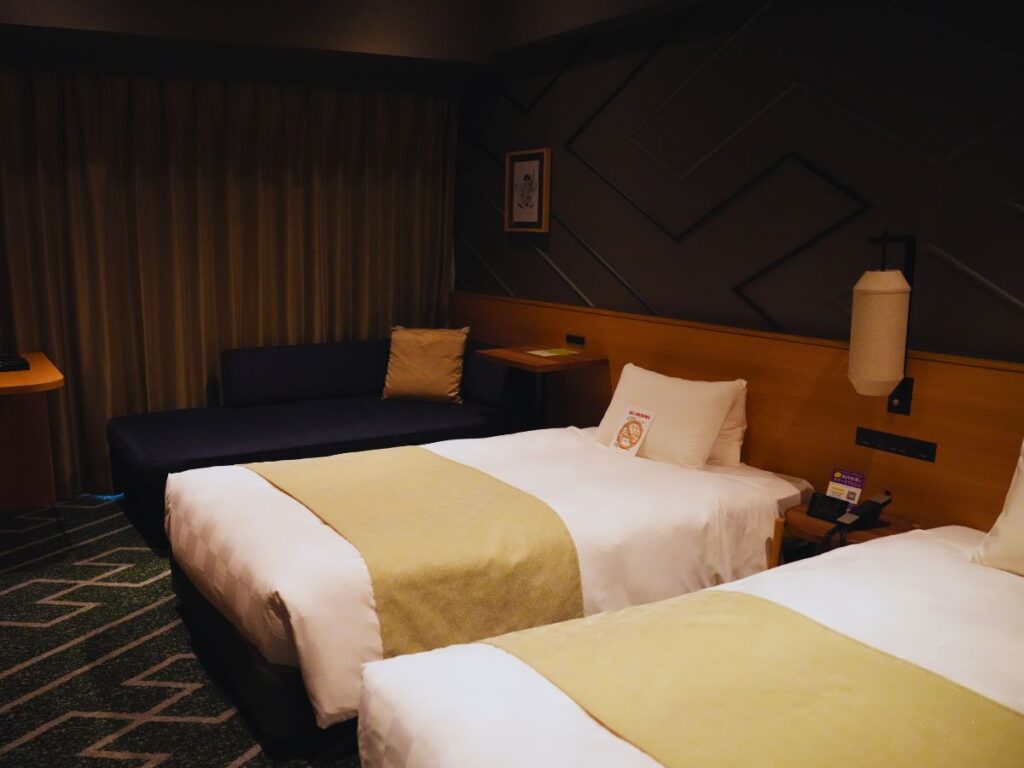
Now, looking at what that money actually buys in physical space, a standard business hotel double is often 11 to 15 square metres total. That means two people usually cannot open two large suitcases on the floor at the same time without putting one on the bed. You should also know that many of the cheapest hotel rates for couples are for a 120cm-wide semi-double bed, which is a tight squeeze for two adults used to Western mattresses.
We’ve had guests complain about how small their rooms are after we’ve deliberately communicated the size to them multiple times before the actual trip. So, before locking in a booking, we recommend taking out a tape measure and mapping out exactly what 11 to 15 square metres looks like on your floor at home. Visualise that footprint containing a bed, a desk, and a bathroom unit. Then, figure out where two open suitcases will go, and decide honestly if you are willing to navigate around them for the duration of your trip.
On the rental side, a Tokyo rental listed at ten thousand yen a night looks cheaper than a hotel until a cleaning fee of three or four thousand yen lands on top, plus a platform service charge that somehow never shows up until the last screen of checkout. For a solo traveller or a couple, that gap often eats the entire savings, sometimes leaving the rental more expensive than a comparable hotel room a few streets away.
However, if you’re bringing heavy luggage, the floor space to actually unpack without doing acrobatics, plus wider beds or separate futons, is often worth the cleaning fee on its own.
Beyond just the square footage, a rental changes the daily logistics of a trip because of two things: the washing machine and the kitchen. A lot of Japan Airbnbs come with an in-unit washer, which means you can pack half as many clothes and run a load mid-trip without wasting two hours (and coins) guarding your socks at a public coin laundry.
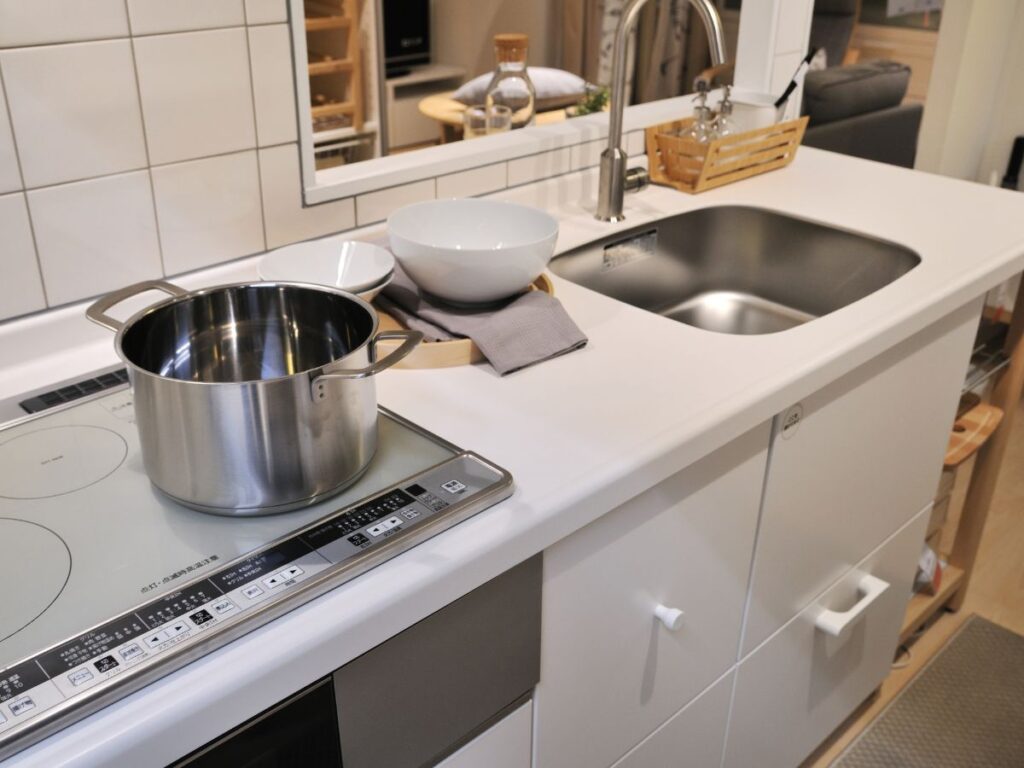
Then there is the kitchen. While you probably aren’t coming to Japan to cook full dinners from scratch, having one is a massive hidden cost-saver. Stocking the fridge with drinks from the supermarket, making your own morning coffee, and using the microwave to reheat incredible, heavily discounted meals from a depachika (department store food hall) at the end of the day can easily save a couple a few thousand yen daily.
Split an apartment like that four ways for a group basing themselves in a major hub like Asakusa or Ueno, and the per-person cost drops well below anything a hotel could offer, especially once that living room and kitchen enter the equation.
For two people, four nights in Tokyo, a business hotel room comes to roughly 40,000 to 60,000 yen total, all in, with no further charges at checkout. A one-bedroom rental at a similar nightly rate often lands close to the same total once a 12,000 yen cleaning fee and service charge are added on. So for a couple, the hotel usually isn’t just simpler, it’s frequently cheaper too, or close enough that the extra convenience tips the decision, unless you are staying long enough that the laundry and breakfast savings outweigh the upfront fees.
For four people, the same four nights, two hotel rooms run 80,000 to 120,000 yen combined. A two-bedroom apartment at 18,000 yen a night plus a 15,000 yen cleaning fee comes to roughly 87,000 yen total, split across one booking rather than two separate rooms and two separate check-ins. This is the point where a rental usually wins outright, both on cost and on not having to coordinate two hotel key cards and two adjoining rooms for one family.
Another thing to factor in when it comes to costs is that cities including Tokyo, Osaka, Kyoto, and Fukuoka charge an accommodation tax, usually a few hundred yen per person per night depending on the room rate. Hotels collect it at checkout, separate from the price you booked, sometimes in cash only. Rentals handle it inconsistently, sometimes folded into the total shown upfront, sometimes not.
Japan Hotel vs Airbnb: What the Experience is Actually Like
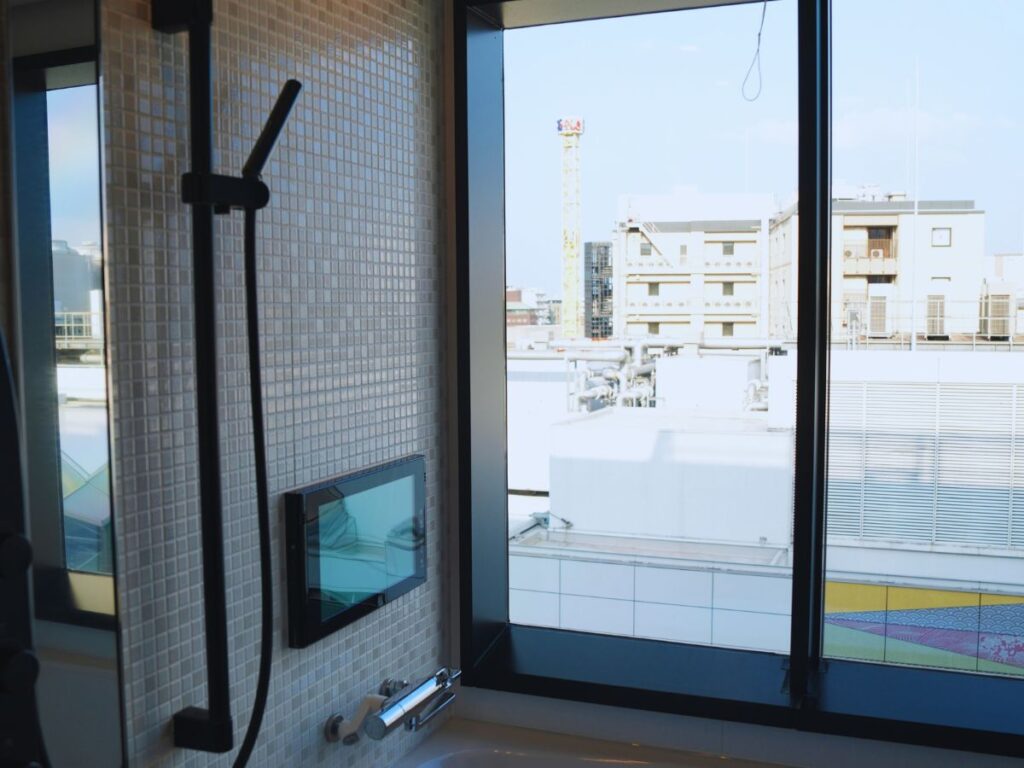
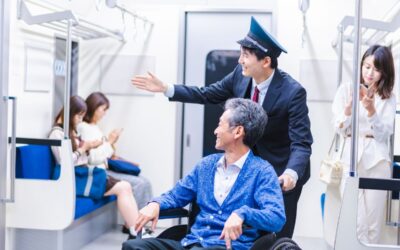
I’m sure you already know how a standard hotel works, but I do think Japanese business hotels run on a level of hyper-efficient function over ceremony that you likely haven’t encountered elsewhere. I’ve noticed that check-in, for example, is increasingly being handled by an automated passport scanner. But the human front desk remains as your bilingual safety net, which matters a lot when navigating a country with a steep language barrier.
Hotels also handle the uniquely Japanese luxury of takkyubin. The front desk will arrange for this courier service to ship your heavy suitcase ahead to your next city overnight for a couple of thousand yen, meaning you travel the shinkansen with just a day bag instead of wrestling a case up a station staircase with no lift in sight.
For me, the trade-off for this extreme efficiency is extreme uniformity. Unless you are specifically paying a premium for a boutique or designer hotel, four standard Japanese hotels in four cities will quickly blur together. You will get the exact same firm mattress, the same amenity kit by the sink, and the same modular plastic bathroom squeezed in by the door. You get a highly predictable, comfortable basecamp, but standard rooms themselves lack any unique personality or local charm.
With Airbnbs, it’s pretty much the same drill elsewhere with lockboxes and keypads. But in Japan, getting inside is usually followed by a laminated binder walking you through every appliance in painstaking, occasionally baffling detail, including photos of which of the twenty buttons on the Japanese air conditioning remote does what. I’m not even kidding. You’ll both be in awe and annoyed of how much one appliance can do.
Getting the door code itself is a process; most hosts only send it once you’ve messaged them directly to confirm your arrival window, so landing at 11pm with a dead phone and no local WiFi is a specific kind of bad evening we’ve watched happen to more than one traveller. Once you’re through the door, the language and logistical safety net disappears. There’s no bilingual concierge to call the local izakaya that doesn’t have an English booking site.
Rentals also heavily complicate luggage forwarding. If you want to use takkyubin to send a bag from an apartment, you have to drag it down the street to a 7-Eleven or a Yamato transport office yourself, hoping they have space and you can decipher the Japanese waybill. More importantly, you generally cannot ship luggage to an Airbnb, because there is no front desk staff to sign for the delivery.
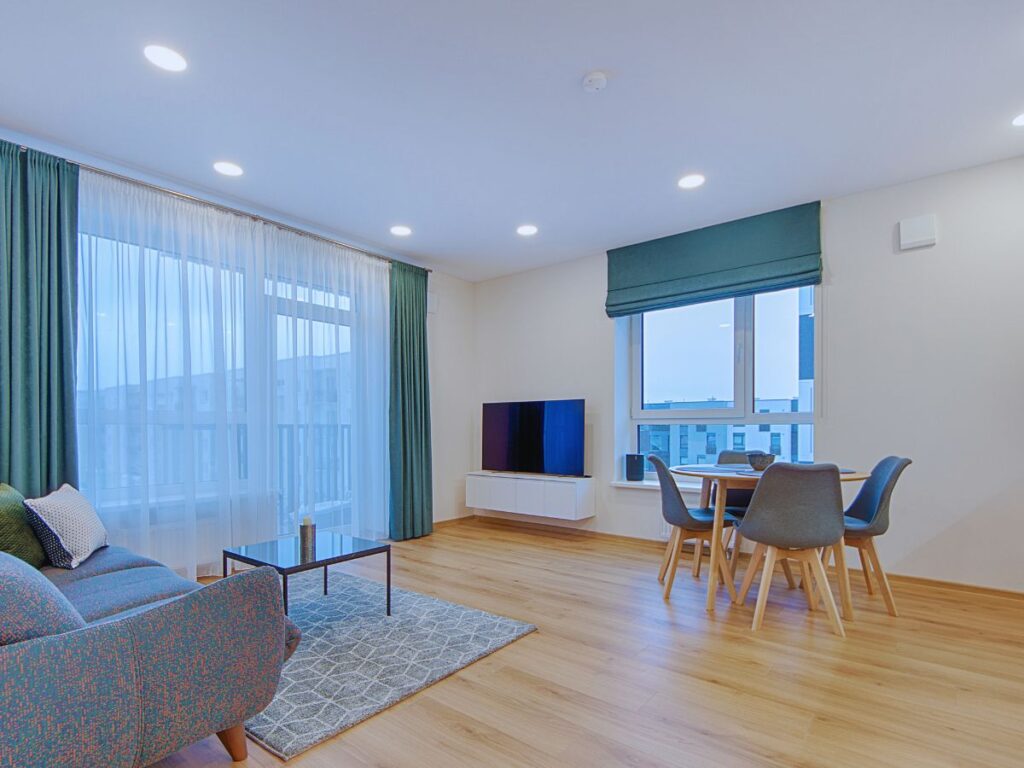
What replaces all of that support is pure, boring practicality. You trade the convenience of a front desk for a full-sized fridge, a kitchen, and actual square footage. Instead of crowding around a tiny hotel desk to eat convenience store food, you can go to a real residential supermarket, grab heavily discounted bento boxes at 8 PM, and eat them together at a proper dining table.
If you’re staying in an Airbnb, then you should also be careful of the uniquely Japanese house rules. Garbage sorting isn’t just basic recycling here, it is strictly split into burnables, plastics, PET bottles, and cans, each collected on a different fixed day. Missing the window can mean holding a bag of food waste in your kitchen for a week.
Depending on where you’re staying, using noisy appliances like washing machines can also be off-limits after nine at night out of consideration for the rest of the building or neighbourhood. Discovering all of this at midnight and jet-lagged can be a rough first hour in a new city, but it’s manageable once you know it’s coming.
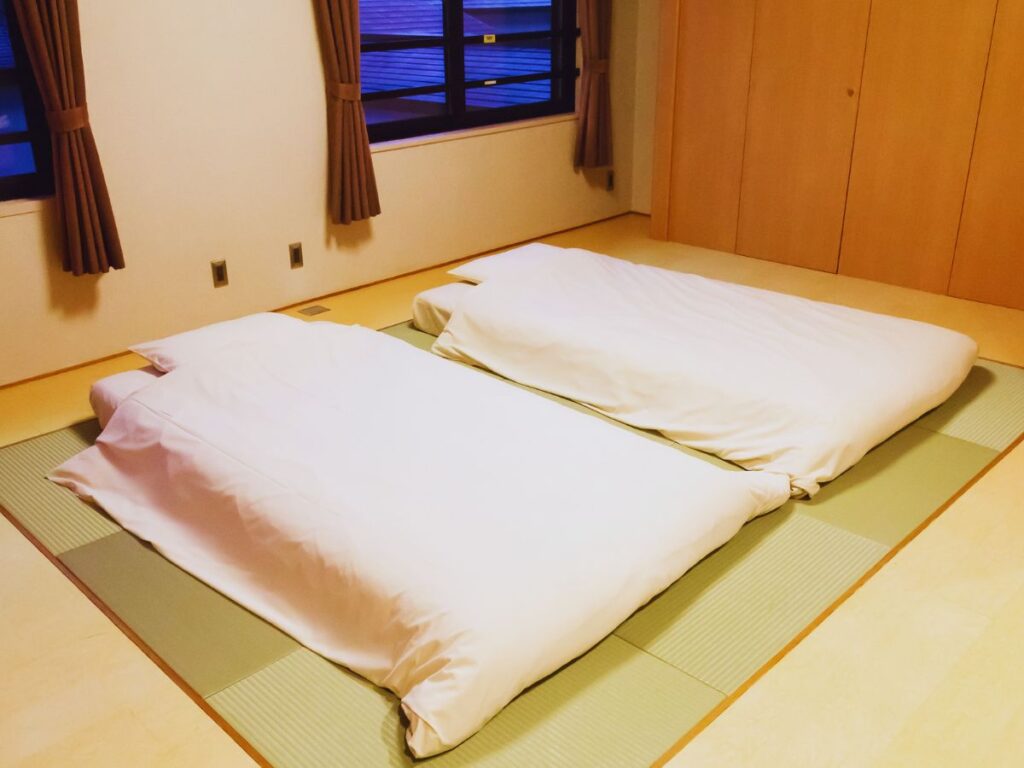
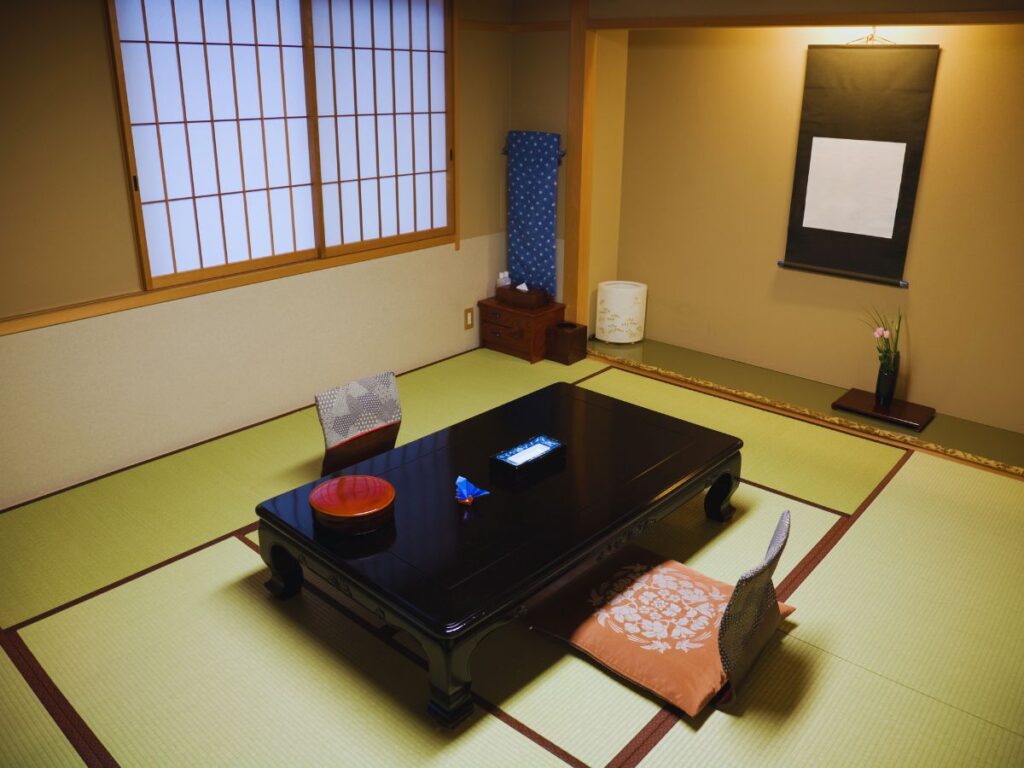
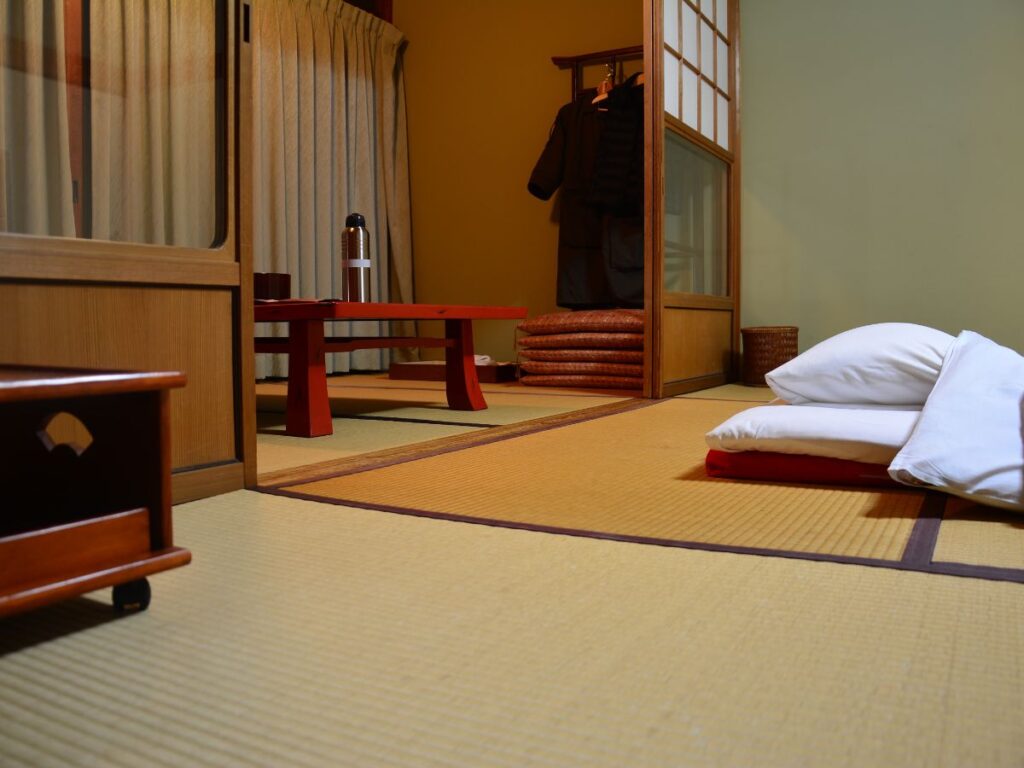
Older, traditional house rentals, the kind you frequently find in Kyoto, often still use futons laid out by hand on tatami mats each night. There is no Western bed frame, no lift in the building, and the doorways sit much lower than you might expect. This is definitely worth knowing if you are tall or if you are hauling a lot of heavy luggage up a narrow, steep wooden staircase.
They might also lack modern insulation. Traditional Japanese houses, and honestly a lot of the cheaper modern apartment blocks used for rentals, have paper-thin walls and single-pane windows. If you book an older rental in November, the hallways will be freezing, and in summer, the air conditioning is fighting a losing battle outside the main bedroom. Concrete hotels win heavily here on climate control and soundproofing. When you shut a hotel door in Tokyo, you could almost forget that you’re in one of the most populous cities in the world.
Japan Hotel vs Airbnb: Which One Fits Your Trip?
If you are a solo traveller or a couple moving every few days, I’d say a hotel makes more sense for being cheaper and logistically easier. If you are a family or a larger group, book a rental. Once you split the high upfront cleaning fees across multiple people, the extra space and kitchen make an apartment the obvious choice.
Location matters just as much as group size, and this is the bit we wish more people thought through before booking. Because of Japanese zoning laws, hotels dominate the prime commercial real estate directly next to major transit hubs. An Airbnb, by legal definition, is a residential property, which means it is almost always tucked away in a residential neighbourhood a further 10 to 15-minute walk from the main station.
A hotel near a shinkansen stop or the Yamanote line earns its price the moment you are hauling a suitcase and a pushchair through a narrow ticket gate at rush hour. You can drop everything and be lying down within ten minutes. A rental requires more patience. You book a rental when you plan to base yourself in one city for four or five days and actually need the physical space to run a load of laundry, decompress, and eat a casual breakfast before facing the crowds.
For all the other things you need to consider when planning your Japan trip, we have the perfect guide:
Japan Hotel vs Airbnb FAQs
Is it cheaper to stay in an Airbnb or a hotel in Japan?
For two people, a hotel is usually cheaper or roughly even once cleaning and service fees are factored in. For groups of four or more, a rental typically comes out cheaper per person.
What happens if my flight lands after check-in hours?
Hotels run 24-hour desks, so late arrival isn’t an issue. For a rental, confirm your arrival window with the host in advance and make sure your phone has signal or wifi on landing, since most door codes are only sent once you’ve messaged to confirm you’re on your way.
Do hotels in Japan include breakfast?
It varies by chain and price point, but many sell a paid buffet as an add-on.
Can I stay in a hotel or Airbnb without speaking Japanese?
Yes to both. City hotels have bilingual front desk staff as standard. In an Airbnb, the actual buttons on the appliances will be in Japanese, but hosts deal with tourists constantly and almost always provide a detailed English binder explaining exactly how to use them.
Do rentals in Japan provide wifi?
Most do, but router quality varies a lot more than at a hotel.
Is renting an apartment safe in Japan?
Yes, and this holds true almost everywhere in the country. The real consideration is comfort with self check-in and house rules around noise and rubbish sorting, not personal safety.
Are cleaning fees always charged on rentals in Japan?
Almost always, but it is worth checking that fee before booking rather than after, since it can add a meaningful amount to a short stay.
What is the accommodation tax in Japan and does it apply to Airbnb too?
Yes, it applies to both. Major cities charge a small per-night, per-person fee based on room rate, collected at hotel checkout or sometimes folded into a rental’s total price.