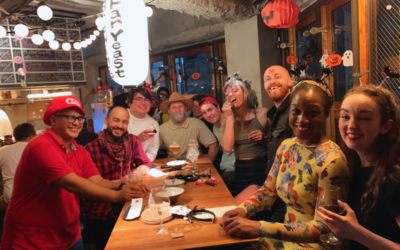


We at Flip have spent years building itineraries for people visiting Japan, and we keep watching the same pattern play out. Someone lands in Tokyo with a list of spots pulled from some old blog post, tries to cram all of it into a few days, then goes home having barely eaten a proper Japanese meal or spoken to anyone who actually lives here.
The thing is… most tourist traps in Japan aren’t scams. We see them more as genuine highlights that are simply suffering from their own popularity. Because they are so incredible or unique, they draw massive crowds, meaning that they are now crowded past comfort and often swapped for a version aimed at people who won’t be back.
As a travel agency, we build itineraries that include plenty of these places, because they earned their reputation fair and square. So, in this guide, we’ll give you the context you should know before adding these spots to your Japan travel plan, or tell you where we’d send you instead when you want the same feeling with room to actually breathe.
Nakamise-dori and Similar Streets

Nakamise-dori is the covered approach street leading up to Senso-ji in Asakusa, lined with stalls selling everything from folding fans, yukata fabric, keychains, and snacks like dorayaki. It’s a nice walk, I won’t pretend otherwise. The ningyo-yaki stalls near the temple gate turn out small castella cakes filled with sweet bean paste, still warm off the griddle, and that alone is worth queuing for.
What it isn’t is original. For a first-time visitor, it is easy to assume these stalls are selling traditional, artisan crafts. In reality, most of the keepsakes sold here have been mass-produced specifically for the tourist market, and you’ll pay a premium for the convenience of buying them right next to a major landmark.
Kyoto has its own version in Sannenzaka and Ninenzaka, the beautifully sloped stone lanes leading up to Kiyomizu-dera. These are lined with the same kind of souvenir shops, and stores selling traditional Japanese sweets. Both streets are absolutely worth the walk for the setting alone, all traditional wooden facades and uneven stone underfoot, but they get so crowded by midday that you’ll be shoulder-to-shoulder with tour groups. We’d treat the shopping here as a visual bonus rather than the main event.
If you just want fun, affordable gifts to hand out back home, skip shopping in these streets and find the nearest Don Quijote, where you can load up on every flavour of KitKat imaginable and quirky snacks without paying a tourist premium.
If you’re looking for higher-end gifts, head to the basement food halls in major department stores like Isetan. You’ll find regional sweets and teas from across the country sold under one roof, and the packaging is practically an art form.
But honestly, the best souvenirs are often the ones you don’t buy off a shelf at all. Booking a hands-on cultural experience (like a cord-braiding class or learning to make your own chopsticks) gives you a memorable afternoon and a unique keepsake to take home.
Tsukiji, Nishiki, and Other Local Markets
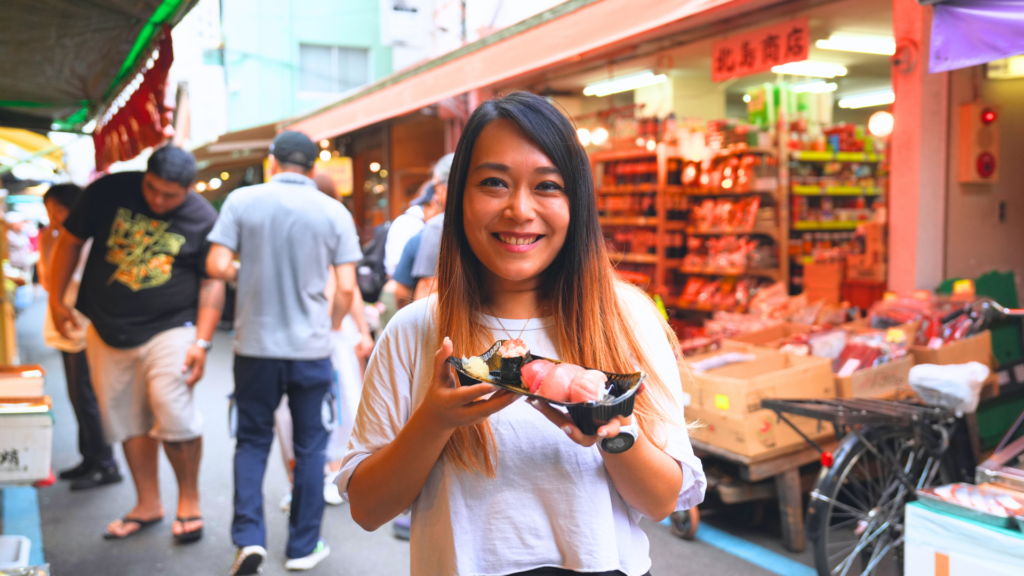
When most people hear the word Tsukiji, they picture waking up in the dark to watch the famous tuna auctions. That wholesale operation actually moved to the new Toyosu Market in 2018. If you want to see the auction today, you need to apply for an online lottery ticket weeks in advance to stand on an observation deck at Toyosu.
What remains at the original Tsukiji site is the Outer Market where, yes, you can still find high-quality Japanese seafood (and beyond, like beef and desserts). But many of the stalls, especially near the main entrances, have shifted to selling highly overpriced street food aimed entirely at visitors.
You will easily see vendors charging thousands for a single raw oyster, a tiny plastic cup of sea urchin, or one skewer of wagyu beef. You will even find stalls selling pricey candied fruit on sticks that have absolutely nothing to do with a traditional fish market.
Another reality of visiting Tsukiji today is the physical friction. Eating while walking is frowned upon in Japan. Visitors are forced to stand awkwardly in the street right next to the stall to finish their food. There are almost no public bins. You end up carrying sticky wooden skewers and greasy plastic containers in your day bag for the rest of the morning.

Kyoto’s Nishiki Market and Osaka’s Kuromon Ichiba are following the exact same pattern. They were historically vital markets for local chefs and households. Today they are narrow, shoulder to shoulder funnels of tourists paying inflated prices.
If you still want to visit Tsukiji or Nishiki, we suggest arriving right at opening around eight in the morning. Walk straight past the first wave of flashy stalls near the station and head into the back streets. The deeper you go, the more likely you are to find older, specialised vendors where you get better food for a reasonable price. By eleven in the morning, the crowds make it impossible to even read a menu.
If you want chaotic market energy without the massive markups, Ameyoko is also a good alternative in Tokyo. Running alongside the train tracks near Ueno Station, it is a rougher discount street market. You find dried fish, cheap trainers, and street food stalls sitting elbow to elbow with prices that actually reflect a market built for locals.
If your main goal is simply to eat high-quality Japanese seafood and you do not care about the street food photo opportunity, take that same budget and sit down at a proper sushi restaurant. You get much better quality for the exact amount you would have spent grazing on skewers in a crowd.
Kimono Rental and Second-Hand Kimono

Kimono rental counters near Senso-ji or Kyoto’s Higashiyama district charge a premium for convenience, and it’s worth understanding what that fee actually covers before you hand over your card. You’re paying for the styling, the obi tying, the hair accessories, and simply being able to walk straight from the counter into a photo by a temple without carrying anything. Honestly, that’s a reasonable trade if that’s what you want out of the experience, but it’s also why a single rental can run several times the cost of buying a used kimono outright.
If you’d rather own one, a proper second-hand shop gets you there for a fraction of the price. Miyoshiya, for example, has a local following for being a reliable shop in Tokyo selling used kimonos. It is also tucked into the basement of Nakano Broadway, which means you can easily combine the trip with browsing the vintage toy floors upstairs. The store prices garments by the colour of the hanger rather than by individual tag. The cheapest pieces go for a few hundred yen, though you will need patience to dig through the crowded racks.
In Kyoto, you also have places like Kimono Daiyasu. And if your dates line up with a monthly temple flea market at Toji or Kitano Tenmangu, that is usually where the best bargains turn up.
Oh, and before you buy a full kimono, consider how you will actually use it back home. Putting on a formal kimono requires specific undergarments, padding, and the trained skill to tie a complex knot. Many visitors buy a beautiful full set and never wear it again because they cannot put it on without help. For more about kimonos in Japan:
Tokyo and Kyoto Imperial Palaces
Most of the Tokyo Imperial Palace grounds stay completely closed to the public since it is an active royal residence. First-time visitors often arrive expecting a European castle tour filled with historic furniture and painted ceilings. That expectation leads to immediate disappointment. What you actually get is a highly regimented outdoor walk focused on exterior architecture and defensive walls.
You can access parts of the inner grounds, but only if you book a guided tour through the Imperial Household Agency website weeks in advance. We usually advise clients to skip the booking stress entirely. Simply enjoy the free East Gardens and appreciate the massive scale of the stone moats before moving on to the rest of the city.
Kyoto’s Imperial Palace used to require a strict permit arranged months in advance. Access has opened up considerably in recent years, making same-day entry very straightforward. Similar to Tokyo, you are not walking through furnished bedrooms. The grounds consist of large historical buildings viewed from the outside across expansive gravel paths.
Viral Restaurants With Hour-Long Queues
Somewhere along the way, a certain kind of restaurant stopped being judged on the food and started being judged on how long the line outside it was. You’ve probably seen the type on your feed already: a ramen shop with a queue snaking around the block, or an omurice place that needs a reservation slot booked weeks out through an app most tourists have never heard of before their trip.
What these places tend to have in common is that locals stopped going years ago, if they ever went at all, since nobody who actually lives here is spending their lunch break standing in a queue for something they could get just as good, and considerably cheaper, at the place two streets over with no line and no English sign.
None of this means the food is bad, exactly. It’s more that the standing you’re paying for with your time and your money is largely reputational at this point, built on a viral video or a strategically placed influencer post rather than anything a local food critic would put money on. Prices tend to creep up once a place gets discovered this way too, since the owners know a queue of visitors will pay more than a queue of regulars would tolerate.
If you’ve got your heart set on one of these, book ahead and go in with reasonable expectations rather than assuming a wait automatically means a meal worth remembering. And if you’d rather skip the queue altogether, ask anyone working in your hotel or a nearby shop where they’d actually go for the same dish. You’ll usually eat better for less, and without the two-hour wait.
Activities Worth a Second Thought

Street karting through Tokyo, still marketed to visitors as “real-life Mario Kart” even though the operators lost their branding fight with Nintendo years ago and now run under names like Street Kart, is one I get asked about constantly, and I’ll be honest with you: I’m not convinced it’s actually a Japan experience so much as a for-the-gram one you could technically do anywhere with the right permits and a costume rental.
You’re driving a go-kart through ordinary traffic in fancy dress, which is fun in the way theme parks are fun, but it isn’t tied to Japanese culture in any meaningful way, and plenty of the routes just take you past the same landmarks you could photograph on foot. If you do book it, you’ll need a valid international driving permit or a certified Japanese translation of your home licence, plus your passport, checked before anyone lets you near a kart.
The massive, neon-lit theatrical spectacles in Shinjuku also require some thinking about whether you are really willing to spend that much for what you’re getting. Replacing the famous Robot Restaurant that closed years ago, you would see heavily advertised equivalents like the Samurai Restaurant show in Kabukicho. These are more like high-energy cabaret shows rather than actual dining experiences or historical representations. The performances are chaotic and designed entirely for foreign tourists.
If you simply want a loud, over-the-top neon performance, the Kabukicho shows deliver exactly that, though you might want to eat at a proper restaurant in the neighbourhood beforehand instead of paying for the expensive bento boxes offered at the venue. But if you want to actually learn about Japanese history (with a side of entertainment like throwing ninja stars), we recommend legitimate samurai and ninja workshops:
I’d also gently flag animal cafes, particularly the owl and hedgehog ones that have popped up around Harajuku and Akihabara. They photograph beautifully, and plenty of visitors love them, but welfare standards vary a lot between venues, with some keeping animals in conditions that wouldn’t be acceptable in other countries, so it’s worth a bit of research before you book one rather than walking into the first one you see off the street. Regular cat cafes tend to be a safer bet on that front, and most now post their care standards somewhere visible if you ask.
Neighbourhood Alternatives to the Big Names
Akihabara
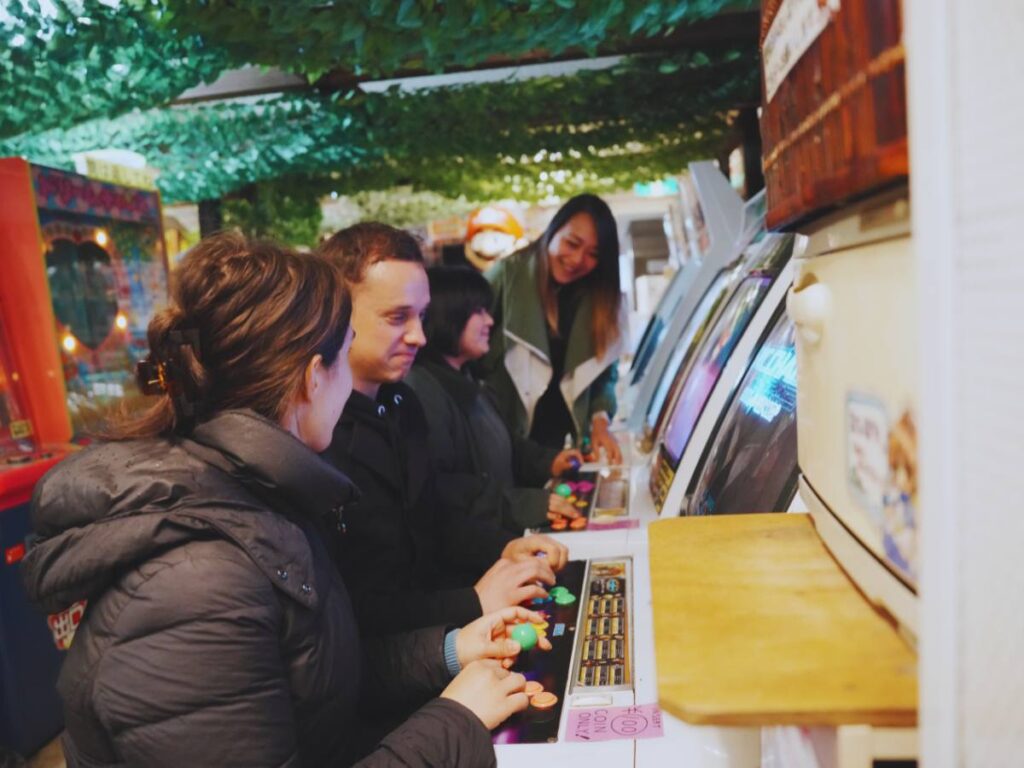
For anyone who watched Steins;Gate or grew up gaming, stepping out of Akihabara station for the first time is a massive thrill. I remember feeling that exact same excitement seeing the flagship electronics stores and the sheer concentration of anime shops. The district earned its reputation honestly, but it has also become a neighbourhood that almost every visitor goes to just for the sake of ticking that travel box off, complete with staff in maid cafe uniforms handing out flyers on practically every corner.
If you want the same hobbyist culture with far fewer people photographing themselves in the street, we suggest looking toward Ikebukuro or Nakano. Ikebukuro’s Otome Road leans towards shops aimed at female otaku culture, which is a side of the scene Akihabara covers less well, and Nakano Broadway packs several floors of vintage toys and manga into one building run largely by small independent dealers rather than chain stores.
Ginza
Ginza stands as the centre for high-end dining in Japan, but it is worth noting that a significant portion of the premium price here is driven by astronomical commercial rent rather than just the quality on the plate. While it is a reasonable place to book a proper Edomae sushi meal if you are prepared to pay for it, you will find plenty of spots that are expensive primarily for the sake of being expensive. You can head just a station or two over to find comparable quality without the Ginza markup.
It is also important to know that Ginza is not a geisha district the way Gion in Kyoto is, despite what some tour descriptions imply. What sometimes gets called geisha fashion in Tokyo relates more to a legacy of traditional elegance and high-end kimono retailers than to any real chance of spotting a working geiko on the street. Gion and Miyagawa-cho are the areas with an actual geisha community, though residents there have asked visitors repeatedly to stop treating them as photo subjects.
Takeshita Street
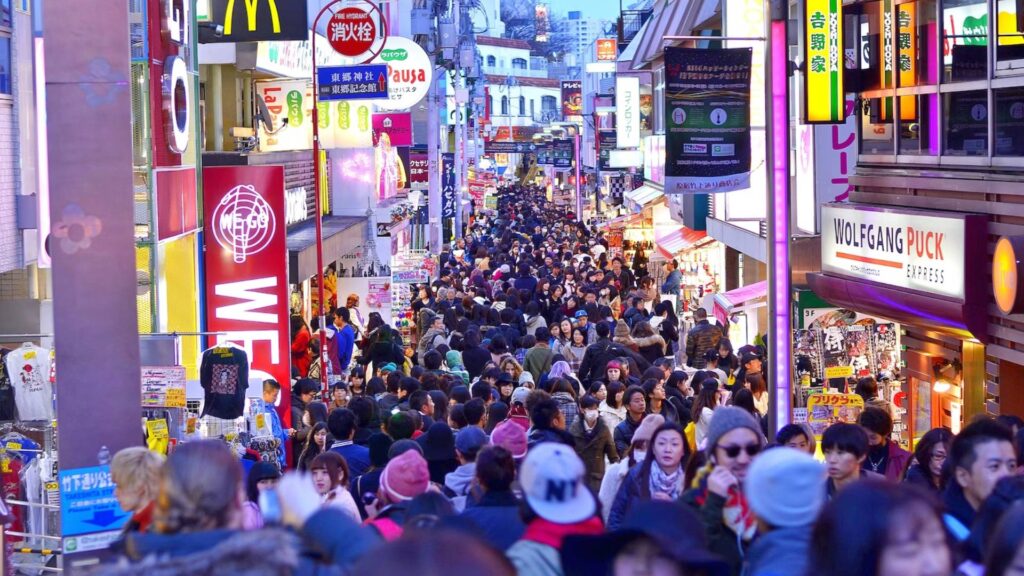
Takeshita Street in Harajuku remains the most famous window into Japan’s youth fashion subcultures, concentrated into a few hundred metres of crepe stands and colourful storefronts. It is the home of the Harajuku style movement, and it draws the crowds you would expect on a weekend, often moving at barely a shuffle during peak hours.
If you are interested in the history of Japanese fashion, or if you are specifically looking for Lolita, Decora, or highly specific vintage pieces, there is nowhere else like it. However, if you are not hunting for these subculture-specific items, treat the street primarily as a sightseeing and window-shopping experience. The prices here are often at a premium to cover the massive overhead of this specific tourist strip, and you can find a better selection and more reasonable pricing elsewhere if you are just looking for general clothing.
You can instead take a short ride out on the Chuo line to Kichijoji. It regularly tops liveability surveys among Tokyo residents themselves and has its own independent fashion scene around Inokashira Park, offering a slower pace and secondhand shops that reward actually browsing rather than rushing through a crowd.
Dotonbori
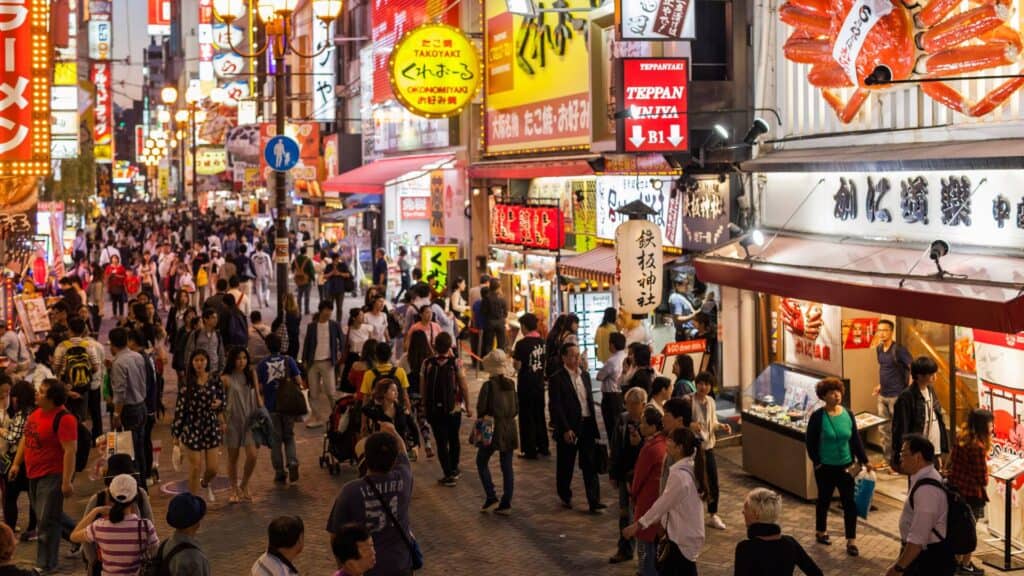
The crowding issue extends well beyond Tokyo. Down in Osaka, for example, Dotonbori provides the famous neon signs, but the surrounding streets cater almost entirely to short-term visitors. Head to Nakazakicho for its converted Showa-era houses and independent cafes, or explore the narrow alleys of Ura-Namba for evening drinks that easily beat the main strip for food and atmosphere.
Setting Your Expectations at Famous Highlights
Shibuya Crossing

Shibuya Crossing is, honestly, just an intersection. What you get is a wave of pedestrians crossing from every direction at once when the lights change, dense enough that you lose sight of the pavement on the other side, and that’s the entire show. Watch it once from above, ideally from the Starbucks on the second floor of the Tsutaya building, which is free, or from the Shibuya Sky deck if you’re happy to pay for the height and the open-air platform.
Then, walk across it once at ground level so you’ve actually felt the size of the crowd moving around you, headphones off, because the sound of it is half the point. That’s the whole experience accounted for, and it doesn’t get more interesting on a second or third pass, no matter what time of day you try it.
Observatories
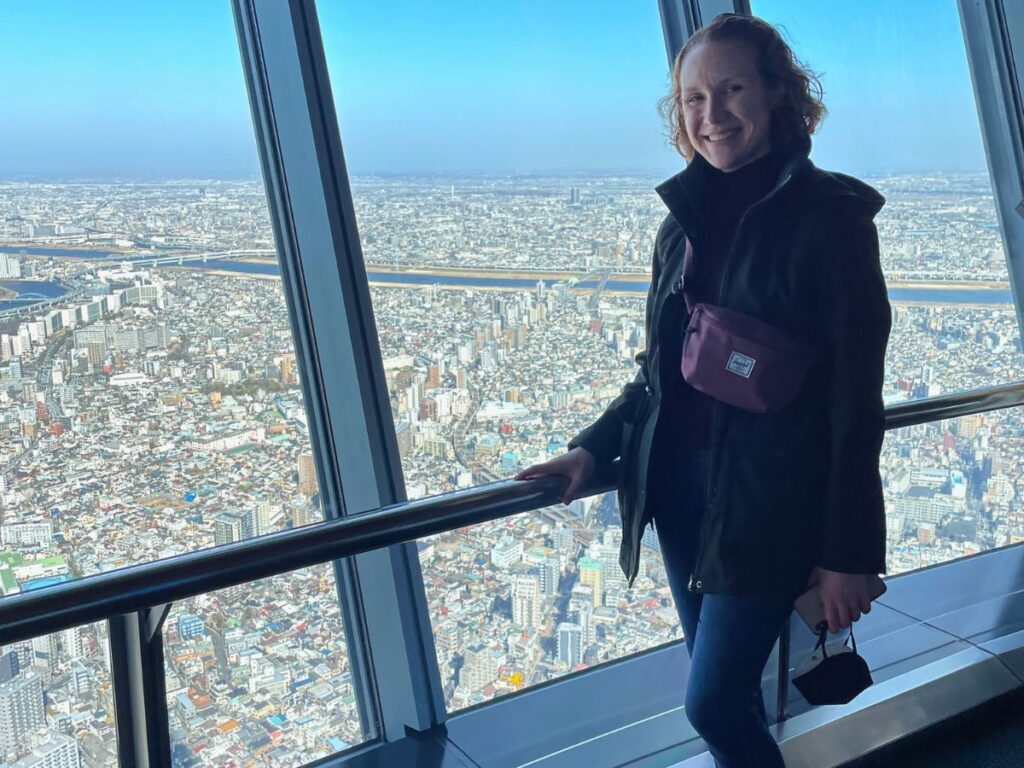
Everyone pictures the same thing before they book an observation deck ticket: a quiet, uninterrupted view stretching out in every direction, maybe Mount Fuji on a clear day. The reality is usually a crowded room, a pane of thick glass between you and the skyline, and a queue that started before you even reached the elevator.
Tokyo Tower has the classic red-and-white silhouette everyone recognises from postcards, but at 250 metres for the main deck, it doesn’t get you high enough to actually take in the full scale of the city the way the taller decks do. I personally like photographing it better from the outside with the city as a backdrop.
Skytree can get you much higher at 350 metres, but you’ll pay considerably more for the privilege, and the extra height ends up making the view feel oddly distant, almost like looking down at a scale model rather than the actual streets you’ve been walking through.
The Tokyo Metropolitan Government Building in Shinjuku is free, which is its entire selling point and the reason why it’s perfect for the budget-conscious. But you should know that what you would mostly be looking at from its two observation floors is a dense grid of office towers rather than anything particularly postcard-worthy.
Shibuya Sky is the one people rave about most these days, and deservedly so, because it’s open-air with no glass between you and the skyline, just mesh barriers at a sensible height. The catch is that it gets properly windy up there, enough that staff hand out warnings about loose items, and a sunset time slot needs booking two to three weeks out if you want any real chance of getting one, since they cap numbers per slot and sell out fast in good weather.
Kyoto Temples and Shrines
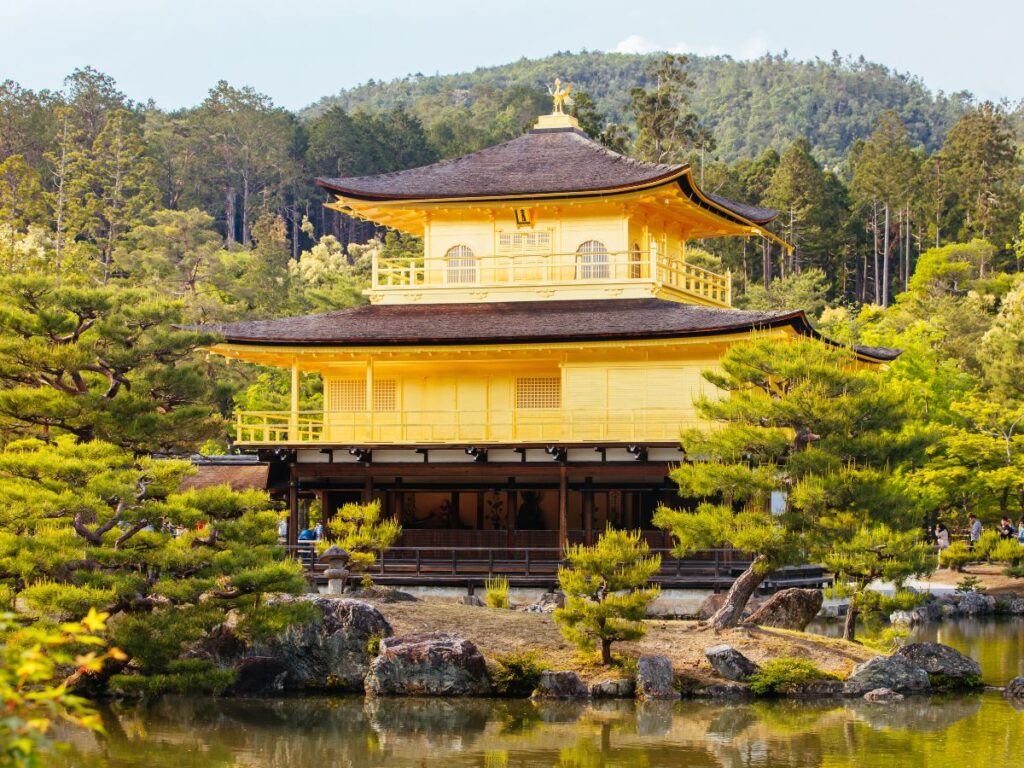
Kinkaku-ji is just one building…there, we said it. In all fairness, that one building is literally a golden pavilion, but it is viewed from a fixed vantage point across a reflecting pond, on a one-way path. You can’t go inside, so the entire visit is built around that single reflection shot, gold leaf and pond and pine trees framing the water.
Go in expecting exactly that and you won’t be disappointed. Go in expecting a sprawling temple complex to spend an afternoon exploring, and you’ll be back at the exit within thirty minutes wondering what you missed, when the honest answer is nothing, that’s genuinely all there is to see.

Kiyomizu-dera earns its crowds honestly, since the wooden stage jutting out over the hillside really does offer one of the best views over Kyoto, held together without a single nail in the original construction technique. Turn up at midday, though, particularly during cherry blossom or autumn foliage season, and you’ll be shuffling along that stage in a slow-moving line with everyone else who had the same idea, unable to actually stop and look at anything for more than a few seconds before the crowd behind pushes you forward.
Fushimi Inari, for most people who visit, amounts to a single photo at the base of the mountain, in the tunnel of the first few dozen torii gates right by the entrance, and nothing else. Skip the climb and you’re standing in a crush of people at the main gate, all trying to get the same shot without anyone else’s head in it. Walk at least twenty minutes uphill, past the point where most tour groups turn back, and the gates thin out considerably, giving way to smaller shrines, fox statues, and quiet stretches of forest that almost nobody photographs for Instagram, which is exactly why they’re worth reaching.
Cherry Blossom Season
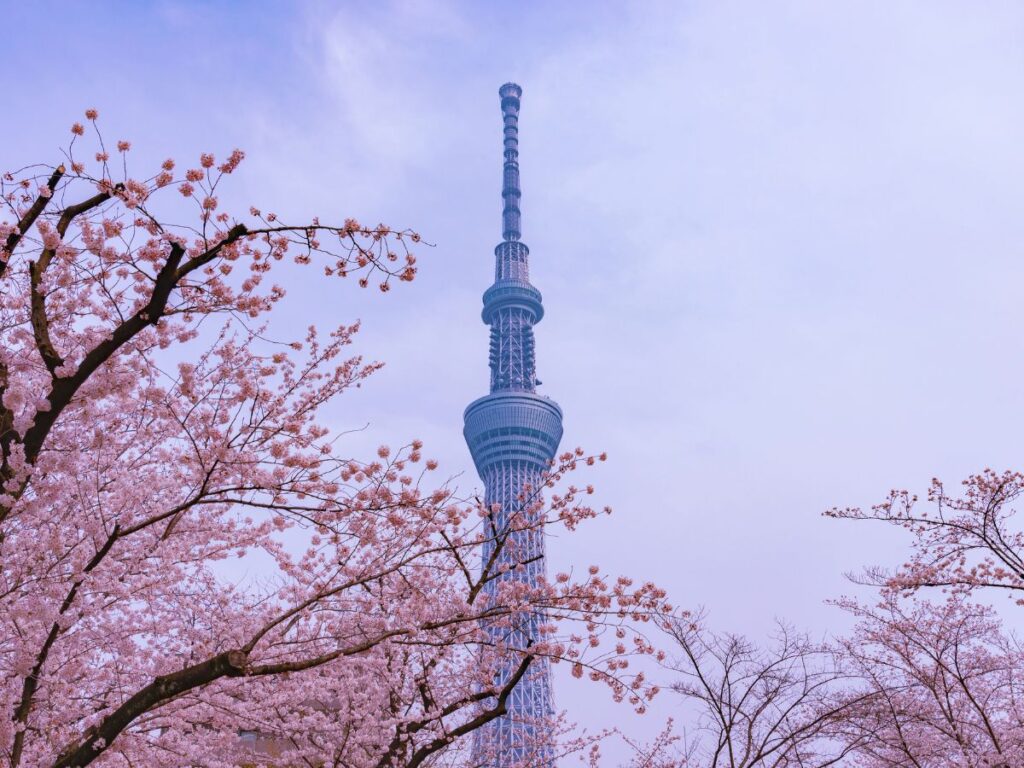
Cherry blossom season turns Ueno Park and Shinjuku Gyoen into something closer to a packed train carriage than a park, particularly across the two or three weekends when the blossoms actually peak, a window that shifts slightly every year depending on the weather. Go on a Saturday at peak bloom and you’ll spend more time navigating shoulders and picnic blankets than actually looking at trees, with vendors selling beer and yakitori to crowds who’ve claimed their spot since early morning.
These parks are still worth seeing on a first trip during cherry blossom season, no argument there, since the sight itself really is worth the trip. Just be sure to expect the crowds.
Where the Locals Actually Are: Shotengai and Yokocho
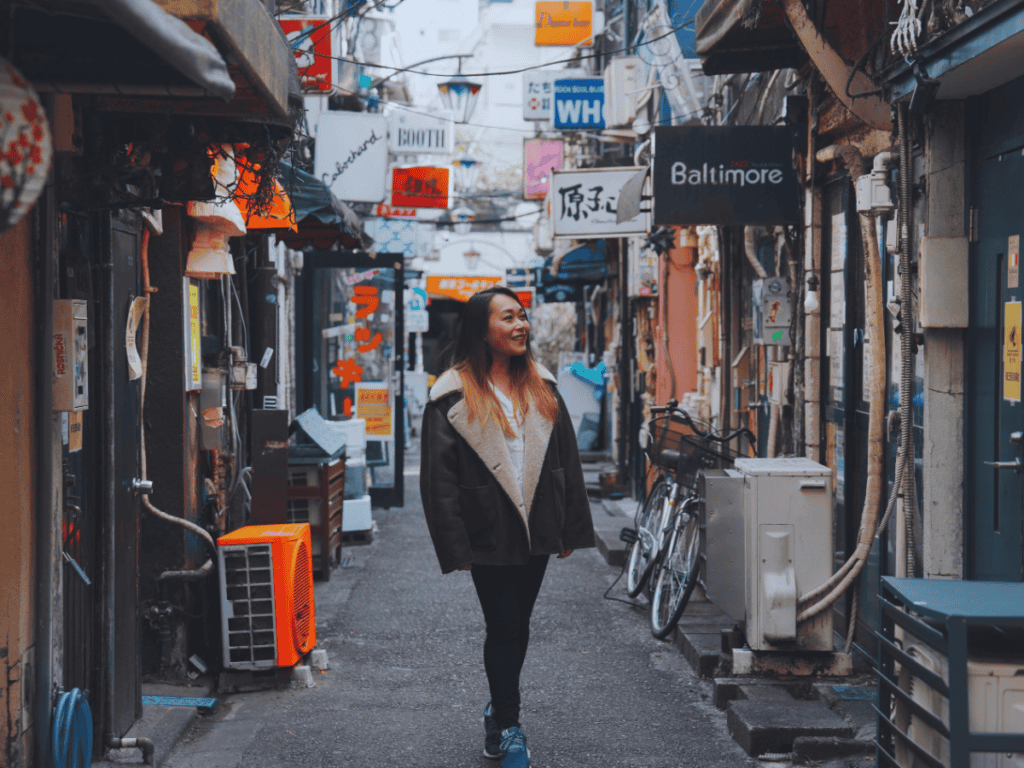
Shinjuku Golden Gai is usually the first name people hear when they ask about drinking somewhere local, a cluster of tiny bars, some seating no more than five or six people, packed into a few narrow alleys near Kabukicho.
It’s a real part of Tokyo’s nightlife history, dating back to the black market era after the war, but it’s no longer a secret, and you’ll find working locals at the bar alongside a healthy mix of domestic and foreign tourists these days, particularly on weekends. What most guides skip is that nearly every neighbourhood in Tokyo has its own version of this in miniature, minus the reputation and the queue. The same “shotengai” and “yokocho” you’ve probably come across scrolling through some thread promising the real, local Tokyo nightlife, minus the crowd.
Yours might turn out to be a covered shopping street with a butcher, a stationery shop, and a decades-old tofu maker all within a hundred metres of each other, or a narrow alley of standing bars and counter restaurants tucked behind a station, built for salarymen grabbing a drink on the way home rather than for anyone passing through.
Golden Gai is worth an hour of anyone’s trip. The one near wherever you’re staying, whether that’s Yanaka, Kagurazaka, or somewhere further out entirely, is where you’ll actually end up having a chance talking to the people who live there. But don’t expect much English on the menu boards, and bring cash. Plenty of these places still don’t take cards, and the ATM situation at ten at night in a residential neighbourhood is exactly as frustrating as you’d imagine.
Japan Tourist Traps FAQs
What is considered a tourist trap in Japan?
Most so-called tourist traps aren’t scams. They’re well-known sites that have become crowded and expensive relative to nearby alternatives.
Is Shibuya Crossing worth visiting?
Yes, briefly, for the scale and atmosphere, ideally with a view from above, rather than as somewhere to linger for hours.
Is Nakamise-dori worth it?
It’s a good, easy walk towards Senso-ji with decent snacks along the way. For souvenirs with more variety and better prices, a local shotengai, a discount store like Don Quijote, or a department store food hall all do better.
Where can I buy affordable kimono in Japan?
Second-hand kimono shops in places like Nakano Broadway in Tokyo or Kimono Daiyasu in Kyoto sell real kimono for a fraction of rental prices, and temple flea markets can turn up a bargain if your dates line up.
Is Tsukiji Fish Market still open?
The wholesale market and its famous tuna auction moved to Toyosu in 2018. The outer market is still open, but it’s drifted into tourist-trap territory, with stalls charging a premium for the same food you’d get cheaper a few streets back.
Are Tokyo observation decks worth the ticket price?
Yes, particularly with kids or in bad weather. Book a timed slot in advance and go near opening or sunset to avoid the worst queues.
Is real-life Mario Kart worth doing in Tokyo?
It’s a fun photo opportunity if that’s what you’re after, though it’s closer to a theme park activity than anything tied to Japanese culture. Worth knowing before you book is that you’ll need a valid international driving permit or a certified translation of your licence.
Is Akihabara touristy?
Yes, especially on weekends, though still worth visiting for its scale. Ikebukuro and Nakano offer a similar hobbyist culture with noticeably fewer crowds.
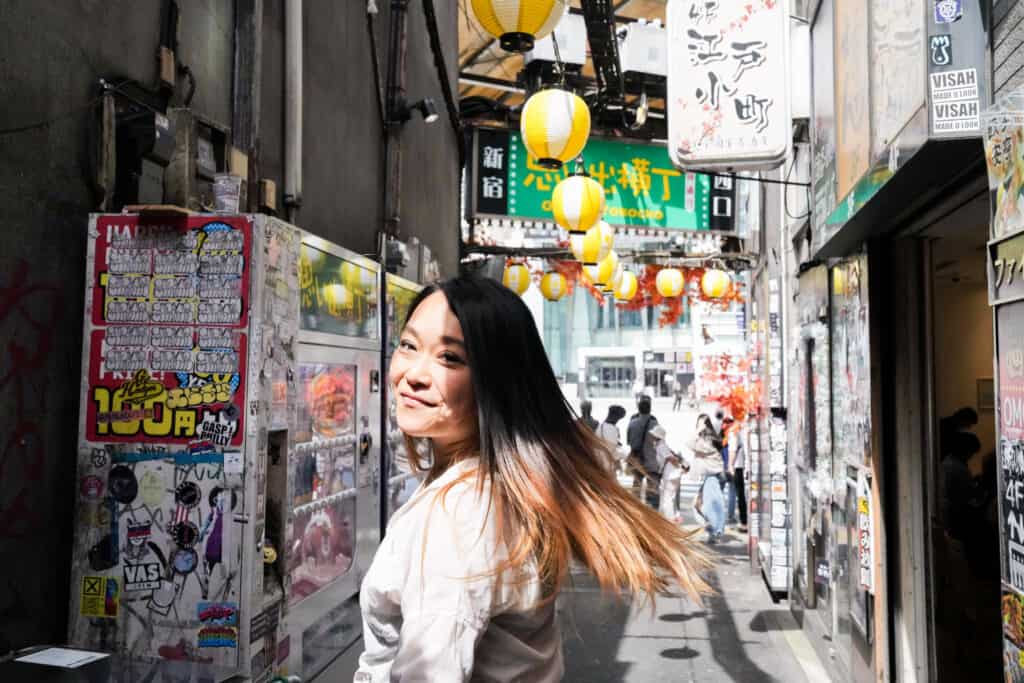
What’s the difference between Golden Gai and a shotengai?
Golden Gai is a specific, well-known cluster of nightlife bars in Shinjuku that now sees heavy tourist traffic. A shotengai is an everyday covered shopping street found in most neighbourhoods, generally a better bet for an unfiltered local atmosphere.