
Kyoto tends to get filed under “serious” travel, the place you go for history and culture rather than fun, and I think that reputation puts a lot of parents off before they have even looked properly. Almost every year we visit family in Osaka over the summer break, and Kyoto is close enough that we end up dropping by most trips. What surprised me the first few times was how well it actually worked with a kid in tow.
If you and your other half are keen to see the temples and everything else Kyoto has to offer, but hesitant because you assume it will bore your kids stiff, I would push back on that a little. Travelling Kyoto with kids is not the compromise people expect it to be, provided you plan around a child’s rhythm rather than a full sightseeing checklist.
The city actually moves slowly by Japanese standards, and distances between sights are not that long. Besides, I’ve found that rituals like tossing coins at a shrine or ringing a bell become fun missions for kids. If you are weighing up a broader family trip to Japan, Kyoto is worth building your route around rather than squeezing in as a rushed day trip.
When to Visit When Travelling Kyoto with Kids
Late March into early April is when Kyoto becomes almost unbearably beautiful but almost unbearably busy at the same time, and I mean both of those in equal measure. While the Philosopher’s Path looks spectacular, reaching Kiyomizu-dera’s main gate requires shuffling shoulder-to-shoulder through a forty-minute human gridlock up Ninenzaka and Sannenzaka. A kid does not handle that kind of slow-motion crowd crush well, and honestly, neither do I.
If you are set on seeing sakura, limit your itinerary to one major sight per morning, aiming to arrive by 07:30 before the tour buses drop off crowds. Plan for a three-hour afternoon block at open spaces like the Kyoto Imperial Palace park where children can run freely without hitting human walls, and cap your daily walking targets at half of your usual volume.
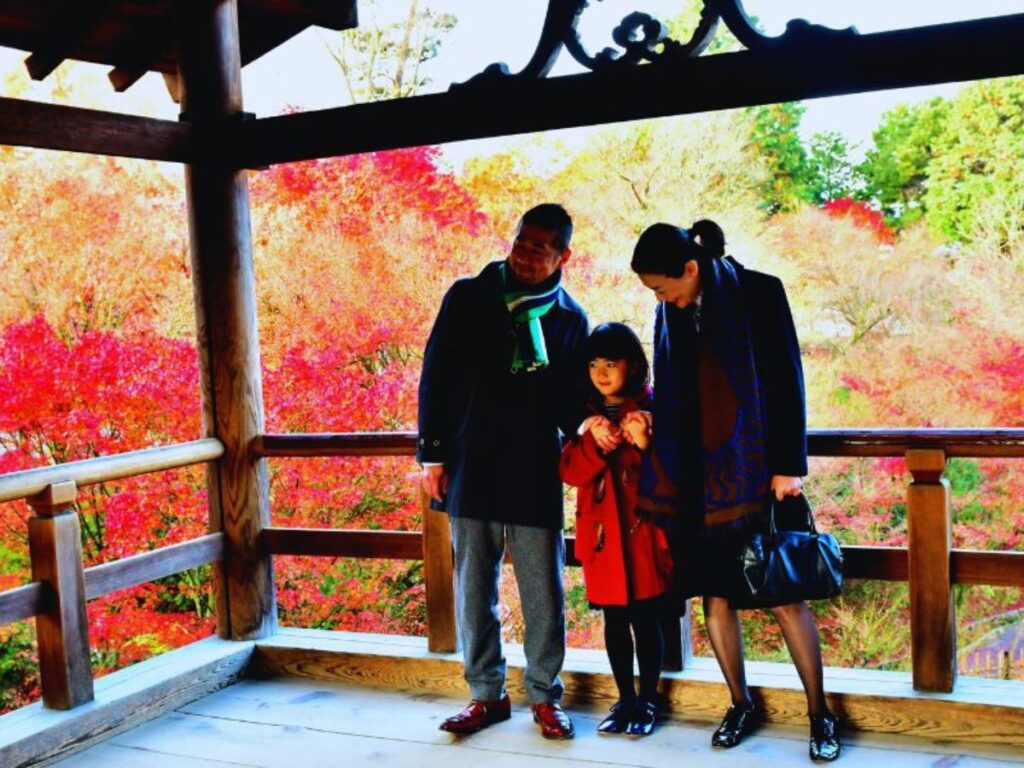
Late November through the first week of December is a window I recommend to most friends visiting with children. The autumn colour often lingers into this period, especially around Tofuku-ji and the Arashiyama hillsides, and the crowds thin out considerably once the main momiji rush has passed.
Late June and early July are worth avoiding if your dates allow any flexibility. Tsuyu, the rainy season, brings humidity that sits on you all day like a wet towel and makes outdoor temple visits draining for a small child. If your dates are fixed and you land in the middle of it, we suggest weighting the days towards indoor attractions.
If your trip lands in the middle of summer proper, once tsuyu has cleared, Kyoto gets hot, often well into the mid-thirties with humidity that makes it feel worse. A child overheats faster than an adult does, and it is worth pacing the day around it rather than pushing through.
Getting Around Kyoto with Kids
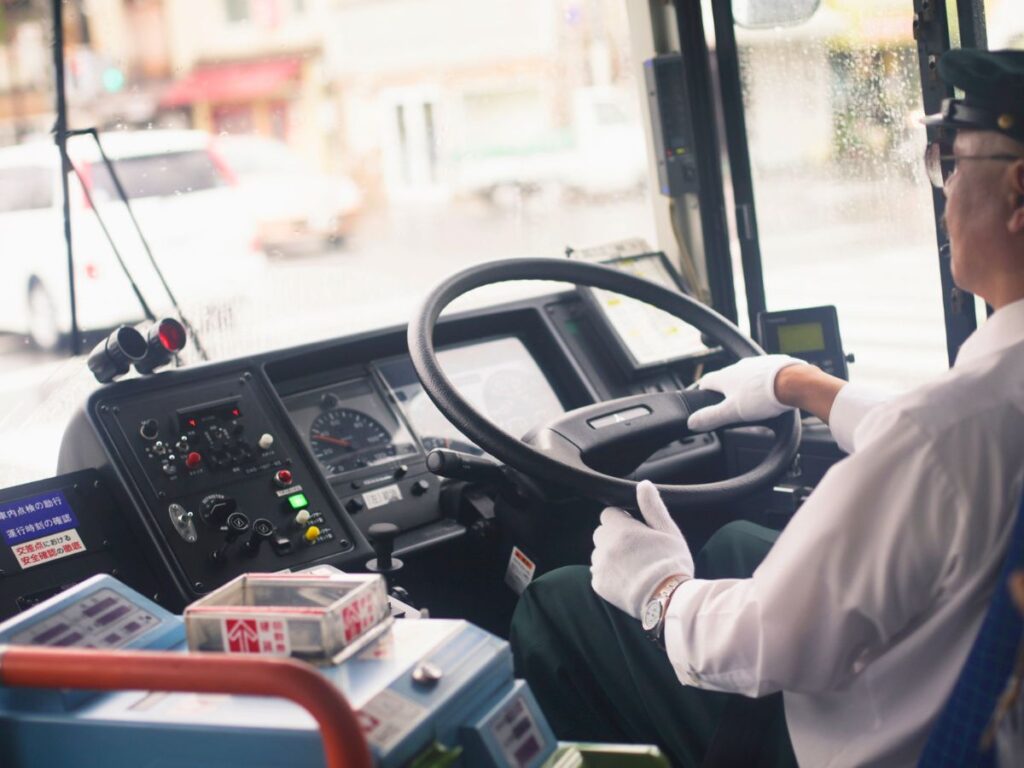
Kyoto’s bus network technically gets you everywhere the temples are, but know that it is not always the easiest option with a stroller. The central city buses that most tourists rely on get packed solid between roughly 10am and 3pm, and folding a stroller one-handed while holding a child on a crowded bus is a common enough struggle that it is worth avoiding during that window if you can help it.
Having an IC card (ICOCA, SUICA, etc.) makes the fare side simple, since Kyoto’s buses mix flat-rate and distance-based pricing depending on the route, and tapping in and out means you never have to work out which applies while juggling a child and a map.
If you are travelling as a family of four or five, we at Flip always recommend standard Japanese street taxis as a logical alternative to fighting for space on those gridlocked buses. A standard sedan taxi legally limits capacity to four passengers, so a family of four can pile into one car. There are even larger minivan taxis available, though these are less common.
Taking a cab directly from the nearest train station rather than pushing your kids to walk the entire way, or using one to hop between close attractions, saves massive amounts of energy. Because Kyoto bus fares are 230 yen per adult, a single journey for a family of four or five scales up to nearly 1,000 yen. A short taxi ride over the same distance usually meters out between 800 and 1,500 yen, making the cost almost identical while completely bypassing the crowd stress.
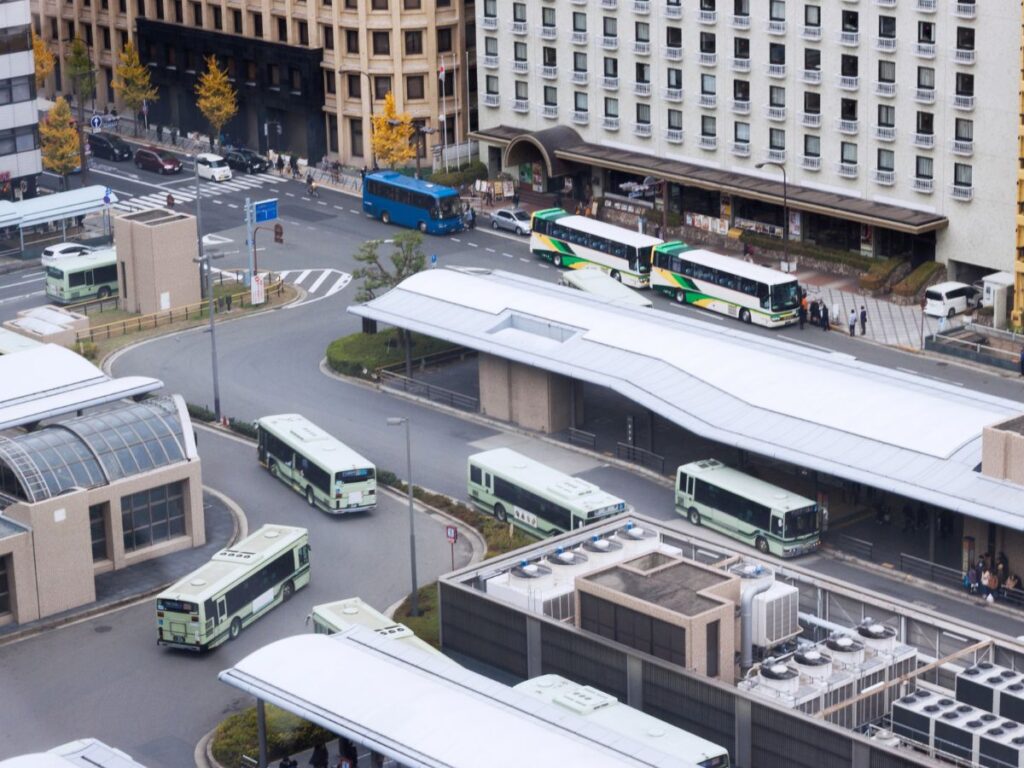
You can also consider the subway, especially if your kids need to be in a stroller. The Karasuma and Tozai lines have step-free access at most central stations, including Kyoto Station, Karasuma Oike, and Higashiyama, and trains run every four to six minutes at peak times, so there is rarely a long wait.
The Keihan line, which runs along the eastern side of the city, is another good option for reaching Gion and Fushimi Inari without dealing with buses at all, and it tends to be quieter than the bus network even in high season.
On foot, distances that look short on a map are often not (specifically when kids are involved!). Kiyomizu-dera, for example, sits at the top of Higashiyama, and the walk up from the main road along Sannenzaka and Ninenzaka covers roughly a kilometre of steady incline over uneven stone steps, which takes considerably longer with a young child than the twenty minutes Google Maps will estimate.
Coin lockers near Kiyomizu-dera’s base and at most subway stations are worth using if you are carrying anything beyond a day bag, since there is no shortage of stairs on that particular route. Building in roughly double the time a map suggests for any walk through Higashiyama is a reasonable rule of thumb, particularly if nap schedules or tired legs are a factor.
Finding a Base When Travelling Kyoto with Kids

Higashiyama is the easiest first-time base, since major sights like Sannenzaka and Ninenzaka sit right on your doorstep. But you should know that while the northern edge of the district is served by Higashiyama Station on the Tozai subway line, the southern temple area near Kiyomizu-dera has no direct rail access.
So, most families connect via a short taxi ride from Kyoto Station, use the Keihan line to Kiyomizu-Gojo, or simply use cabs to hop between sights. Mornings before around 9am are noticeably calmer, with shops along Sannenzaka still setting up rather than packed with tour groups, and staying in this pocket means an early temple visit does not require a long journey beforehand.
The area around Kyoto Station has less of the historic temple atmosphere but solves practical problems well. It suits families landing late, catching an early shinkansen, or wanting a reliable food option without much effort, since the station building has a department store with a basement food hall covering everything from bento boxes to sit-down ramen until fairly late in the evening. It also sits on the Karasuma subway line, which gives step-free access north into central Kyoto without needing to fight the bus crowds.
Arashiyama only makes sense if you are staying in Kyoto for four nights or longer and want a slower, nature-focused trip. Because it sits on the far western edge of the city, using it as a base to see the famous eastern sights like Kiyomizu-dera or Gion means forcing your family into a 40-to-50-minute commute across town twice a day. With kids in tow, that daily transit drag quickly becomes exhausting.
However, if you have a longer stay, basing yourself here allows you to dedicate a few full, unhurried days purely to the western side of the city. The massive upside is that you get the bamboo grove and the Togetsukyo Bridge completely to yourselves before 08:30, long before the heavy waves of day-trippers arrive from central Kyoto and Osaka.
Kyoto Temples and Shrines Kids Enjoy
Fushimi Inari Shrine
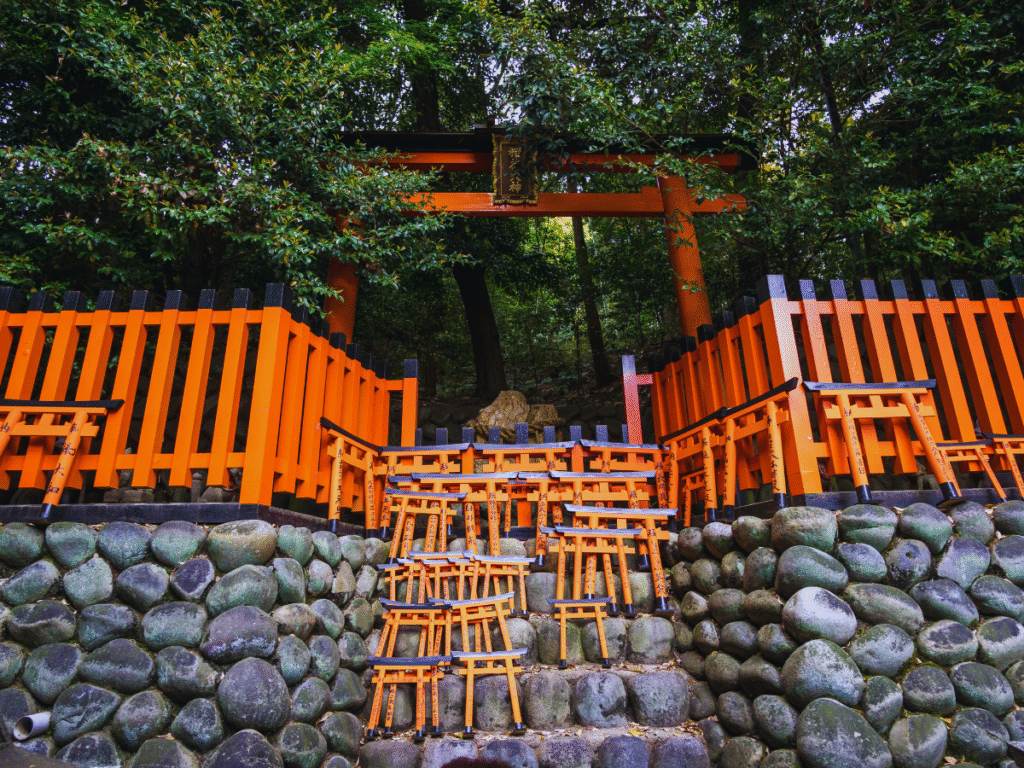
Despite the long trek, I’ve seen kids, my own son included, absolutely love Fushimi Inari. But here’s the thing: it works far better as a counting game than a history lesson. Instead of explaining the cultural significance of the ten thousand torii gates, turning the walk into a treasure hunt to count them keeps energy levels high.
If you are coming with a stroller, you can actually explore most of the main lower area and the primary shrines without much trouble. While the central entrance route features stairs, you can easily bypass them by using the flat, paved side paths that lead directly up to the main gate corridor. The stone fox statues scattered along the path at regular intervals also serve as excellent markers for a spotting game to keep small legs moving.
The full loop to the summit takes two to three hours of climbing. For younger children, the Yotsutsuji Intersection, roughly 30 to 40 minutes in, is the definitive turnaround point. You can easily turn back even earlier if the complaints start.
If the kids are still up for the hike, Yotsutsuji is a great milestone. It sits at the halfway mark elevation-wise, has sweeping views over the city, and features a rest stop selling drinks and snacks. This allows the visit to feel complete without pushing anyone to exhaustion. Arriving before 08:00 avoids both the midday heat and the tour groups.
Kinkaku-ji
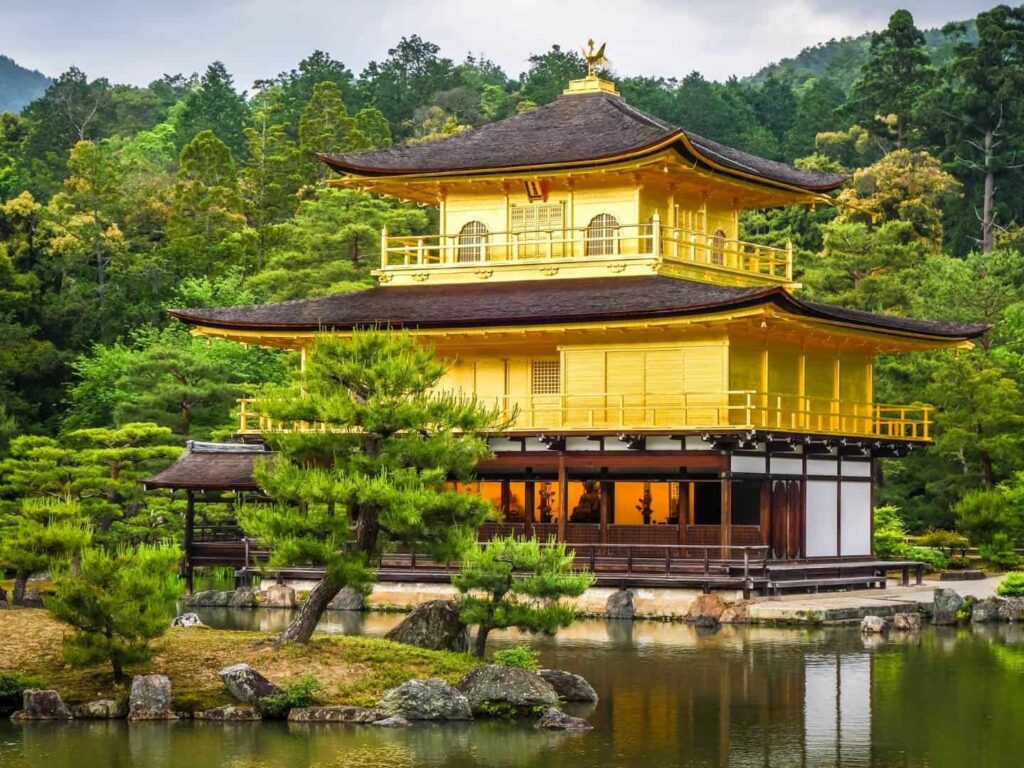
Kinkaku-ji is worth seeing, but you must be realistic about the setup. The entire route through the grounds to view the Golden Pavilion is a fixed, one-way pedestrian path that takes only 15 to 20 minutes to complete. It offers no options to linger, sit down, or double back.
You should also know that the path is covered in coarse gravel and features small flights of stone stairs, making it highly unfriendly for strollers. It is much easier to leave the buggy behind and use a baby carrier for this quick loop. While it is very photogenic, it will not hold a child’s attention for long because they are constantly kept moving by the flow of the crowd.
Pairing it with Ryoan-ji’s rock garden nearby, about a five-minute taxi ride away, gives kids a much-needed physical reset. That temple features wide open veranda steps where they can sit and count the rocks, alongside broader garden paths to wander through.
Keep in mind that quiet contemplation is the standard etiquette here. If you can tell your children are in a high-energy, noisy mood, it is best to skip the main viewing veranda. Head straight to the large pond area out back where they can watch the ducks and turtles without disturbing the zen atmosphere.
Nijo Castle
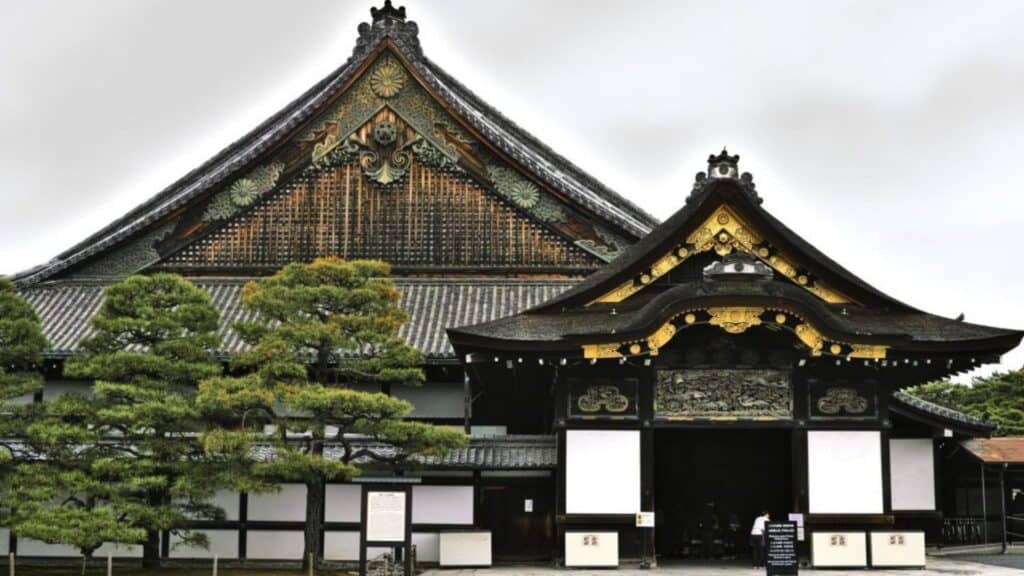
For my son, Nijo Castle was the surprise hit of our Kyoto itinerary. The floorboards throughout the Ninomaru Palace feature historic “nightingale flooring” designed to chirp underfoot as an ancient alarm system against ninjas. The constant bird-like squeaking keeps kids highly entertained.
The palace interior takes about 45 minutes to walk through, and the surrounding moat and gardens take another 30 minutes.
The most important thing to know beforehand is that strollers are strictly banned inside the palace building to protect the fragile 400-year-old wood. The outdoor paths are covered in deep, heavy gravel that makes pushing wheels incredibly difficult.
The best approach is to pay 300 yen to check your stroller at the main gate storage desk. Use a baby carrier for the interior, and let older kids burn off energy walking across the expansive castle grounds.
Kyoto’s Family-Friendly Attractions Beyond Temples and Shrines
Kyoto Railway Museum
My son, like many Japanese kids, loves trains and I’ve found that Kyoto Railway Museum deserves a half day rather than the quick hour most guidebooks suggest. The steam locomotive roundhouse, a working turntable surrounded by around twenty preserved engines, runs short steam train rides most days for an additional fee, and the rooftop terrace called SkyTerrace looks directly onto the JR Kyoto Line, so real shinkansen and limited express trains pass every few minutes.
The museum is well suited to a wide age range, too. They have a play area for toddlers on the first floor, and detailed engineering displays for older children upstairs. Entry runs around 1500 yen for adults and 500 yen for elementary school children, with younger kids free. Be sure to check the official website before visiting since hours and pricing shift seasonally and the museum closes on Wednesdays.
Kyoto Aquarium
Kyoto Aquarium, located right next door to the Railway Museum inside Umekoji Park is also great, especially as a rainy-day backup or air-conditioned summer escape. The highlight for kids here is the giant salamander exhibit, which showcases the bizarre, massive amphibians native to local Kyoto rivers, alongside an indoor jellyfish tunnel and an outdoor penguin zone.
Because it shares a park with the train museum, you can easily combine the two for a full, stress-free day of kid-centric activities without changing locations. Admission is 2,600 yen for adults, 1,400 yen for elementary students, and 900 yen for children over three.
Kyoto City Zoo
Kyoto City Zoo is located not far from Nanzen-ji and Heian Shrine. It is smaller and less overwhelming than most zoos, which makes it manageable in around two hours rather than a full day. It has a dedicated small children’s area with goats and rabbits that can be petted, plus red pandas, elephants, and a good reptile house, and it is far less crowded than the temple circuit, even in peak season. Combining it with a stop at nearby Heian Shrine, which has flat, wide gravel courtyards that are easy going with a stroller, makes for a manageable half day.
Kyoto International Manga Museum
The Kyoto International Manga Museum is also a great choice for older kids who are fans of manga and anime. But you should set their expectations about actually reading the manga available, since most of the roughly 300,000 volumes are not translated. There is, however, a “Manga Expo” section, which is a dedicated zone that holds thousands of popular Japanese titles fully translated into English and other languages.
They can grab these books and head out to the wide, open schoolyard lawn to read casually in the sun. There is also a small, hands-on manga-drawing corner aimed at children.
Arashiyama Bamboo Grove
Arashiyama’s bamboo grove is only a ten-minute walk end to end (I know, I was also shocked the first time I realised that), so it is better visited as a quick stop than a destination in itself, ideally before 8:30am when it is close to empty.
Iwatayama Monkey Park, reached via a bridge crossing near Togetsukyo, involves a climb that could be challenging for younger kids (about 20 minutes uphill on a dirt path with some steps). Strollers also cannot make the climb, so a carrier or a child able to walk it themselves is necessary. But I would still recommend this as a destination for families because the summit has around 120 Japanese macaques living wild in the surrounding forest, and kids love hand-feeding them through the mesh. Plus, you get a clear view back over the city that makes the climb worth the complaints along the way.
Entry is around 550 yen for adults and 250 yen for children, and the park closes earlier than most attractions, usually by 4:30pm in winter and 5pm in summer, so it is worth timing it earlier in the day rather than as a last stop.
Kamo River Stepping Stones
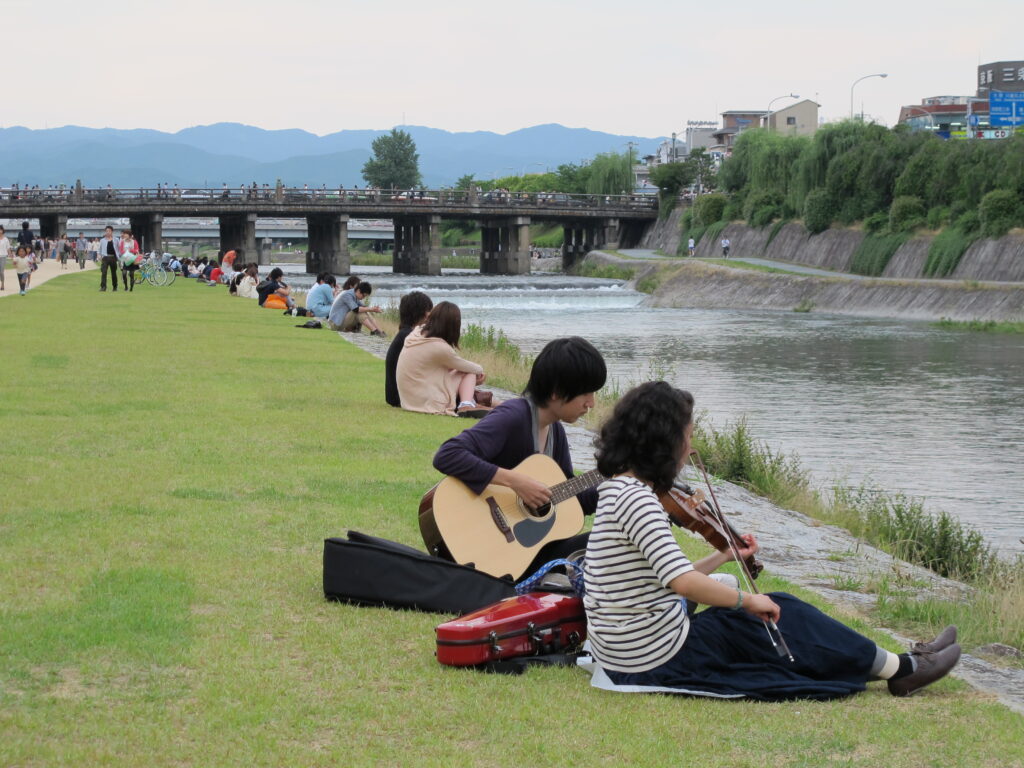
If your kids are exhausted by historical sites and just need to burn off raw energy, head to the Kamo River Stepping Stones. They are located at the delta where the Kamo and Takano rivers meet, right outside Demachiyanagi Station.
The city installed large, concrete stepping stones across the shallow riverbed shaped like giant turtles and birds. Local kids spend hours jumping across them, splashing in the shallow water, and hunting for small fish.
It is completely free and a massive hit for younger children. It pairs perfectly with a casual picnic lunch grabbed from a nearby convenience store, giving parents a chance to sit on the grassy banks while the kids play.
Eating in Kyoto as a Family

Kyoto is famous for formal kaiseki dining, with its many small courses served over two to three hours, rarely suits young children, both because of the length and because most kaiseki restaurants expect a level of quiet that is hard to guarantee with kids in tow. Some do welcome children with advance notice, but it is worth calling ahead to check rather than assuming.
If you are really eager to try it out, a lunchtime kaiseki set is usually the easier option, since these run to a fixed shorter format, typically five to seven courses over ninety minutes rather than the full evening version, and cost considerably less, often 5000 to 8000 yen against 15,000 yen or more for dinner.
Nishiki Market works well treated as the main location for the meal rather than a browsing stop before lunch elsewhere. Skewered tako tamago, a whole baby octopus stuffed with a quail egg, is easy for small hands to hold and is really interesting to a child. Fresh tamagoyaki cut into bite-sized pieces at the counter is also a safe bet for fussier eaters.
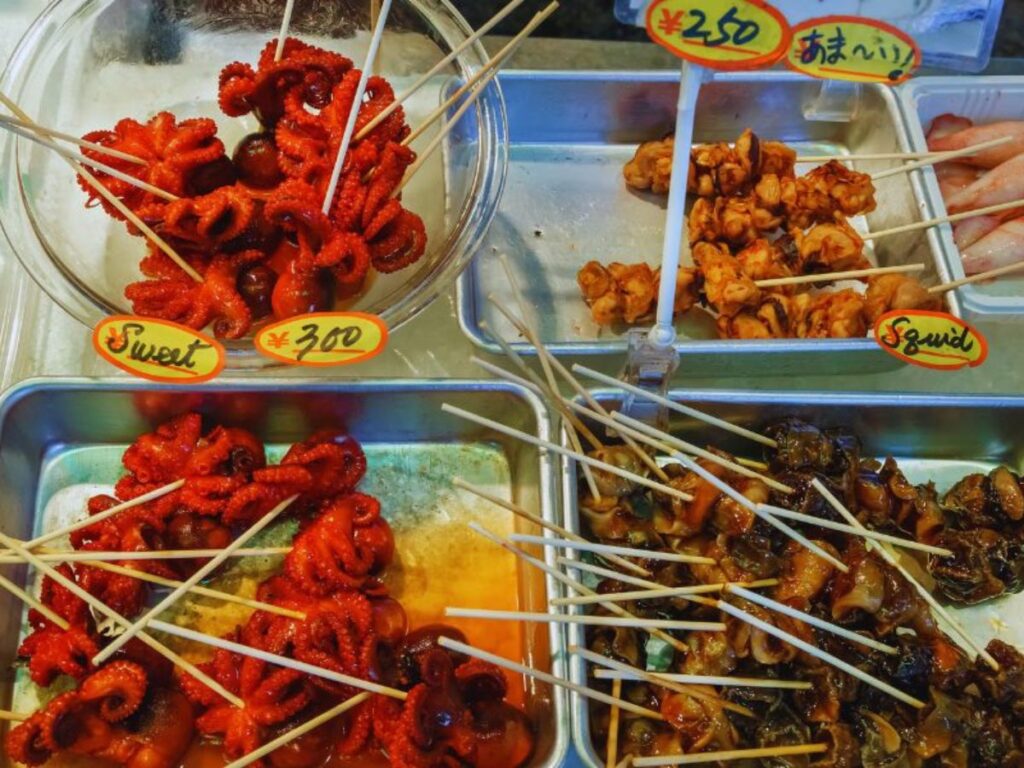
The market runs about 400 metres end to end and gets crowded from late morning, so arriving close to opening, around 9am for most stalls, gives more room to move and shorter queues at the popular spots. Letting a child pick a few things to try as you walk through generally works better than sitting down for a full meal, and it means the adults get to eat something too rather than only cutting up someone else’s food.
For the days that do not go to plan, conveyor belt sushi is a reliable fallback, with chains like Musashi and Kappa Sushi widely available near Kyoto Station and Shijo Kawaramachi, usually with picture menus and plates under 200 yen each, which keeps things simple with children who eat unpredictably.

Many family restaurants and department store restaurant floors offer an okosama lunch, a fixed kids’ set meal that usually comes with rice, a small piece of fried chicken or hamburger steak, a side of fruit, and often a small toy or sticker, typically for 700 to 1000 yen. It’s a lifesaver when travelling to Japan with kids, because it is such an easy fallback on a day when nobody has the patience to negotiate a menu, and most kitchens will happily bring it out first if you ask.
Department store basement food halls, known as depachika, are worth knowing about for the same reason. The one beneath Kyoto Station’s Isetan department store runs until around 8pm, so it works well as a low-effort dinner option when nobody has the energy to sit through a table-service meal.
Travelling Kyoto with Kids FAQs
Is Kyoto walkable with a stroller?
Much of central Kyoto is manageable, but areas like Higashiyama involve steep, sloped lanes and sudden staircases, where a stroller becomes a major burden.
How many days do you need in Kyoto with kids?
Three full days gives a family enough time to see the major sights without rushing, with room left over for rest afternoons, which you will need more than you expect.
Is Kyoto or Osaka better as a base for families?
Kyoto suits families wanting a calmer pace and easy access to temples, while Osaka offers a livelier, more food-focused base. Many families, ourselves included, prefer splitting time between the two rather than picking a side.
Are Kyoto’s temples suitable for toddlers?
Some are, particularly Nijo Castle and Fushimi Inari, though steps and gravel paths at some sites mean a carrier is often more practical than a stroller, which I learned the hard way.
Do you need to book Fushimi Inari or Kinkaku-ji in advance for families?
Fushimi Inari requires no booking and is free to enter at any hour. Kinkaku-ji does not require advance booking either, though arriving early in the day helps avoid the worst of the crowds and the worst of the queuing.