
Summer in Japan means two things: hot weather and festivals! And as the country’s biggest summer festival, Gion Matsuri is worth suffering all the heat and humidity just to experience it.
The month-long Kyoto festival is incredibly famous across Japan (and beyond) as one of the largest Shinto celebrations in the world…but for first-timers, it can also be a bit intimidating. There are multiple different events, each with its own schedule and significance, and once you add the weather and the crowds, Gion Matsuri can go from amazing to overwhelming in a matter of minutes.
We’re a travel agency specialising in designing unique Japan itineraries, and after helping hundreds experience Gion Matsuri (and attending ourselves), we’ve put together this guide so you know what to expect from Japan’s event of the season.
What is Gion Matsuri?
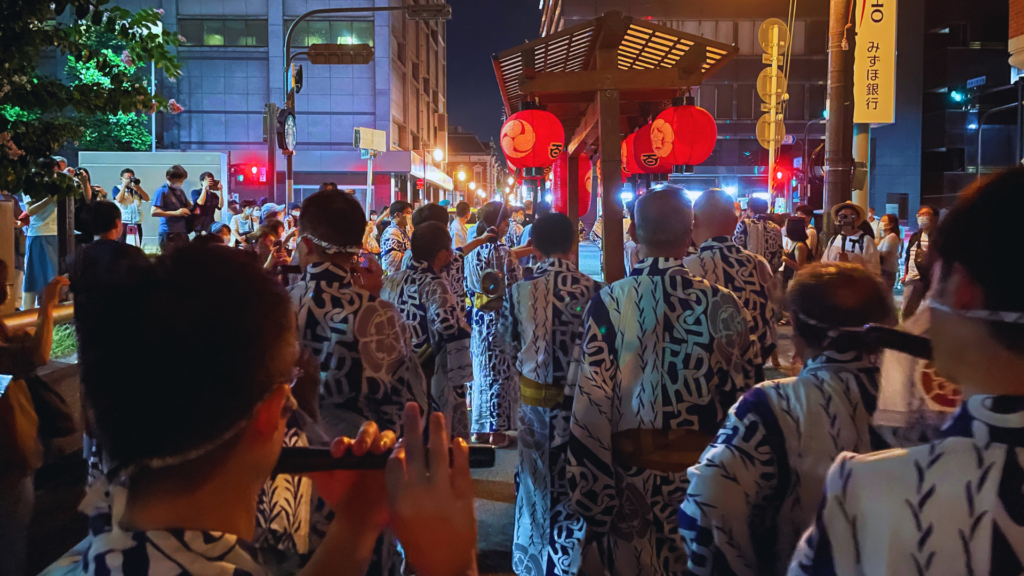
Gion Matsuri (or Gion Festival) is one of Japan’s largest and longest-running summer festivals. It lasts for the entire month of July as part of the Yasaka Shrine’s calendar, although the majority of the festivities actually happen just across the Kama River along Karasuma and Shijo Street… so a lot of the festival doesn’t technically take place in Gion.
The main events are on parade days, but Kyoto is celebrating throughout the whole month. The city is covered in lanterns and colourful decorations, lots of (local and overseas) visitors come into town to visit, and there’s just a brilliant feel of revelry that Gion Matsuri brings out.
For the main events, there is the Yamahoko-Junko (The Grand Parade of Floats) and the Mikoshi-Togyo (The Procession of Portable Shrines), which happen in the second half of the month. Also, if you’re going to Kyoto for Gion Matsuri, then (trust us), you’ll definitely want to come into town a day or two early. That’s because during the three evenings before a parade, the streets around Yasaka Shrine turn into street parties called Yoiyama.
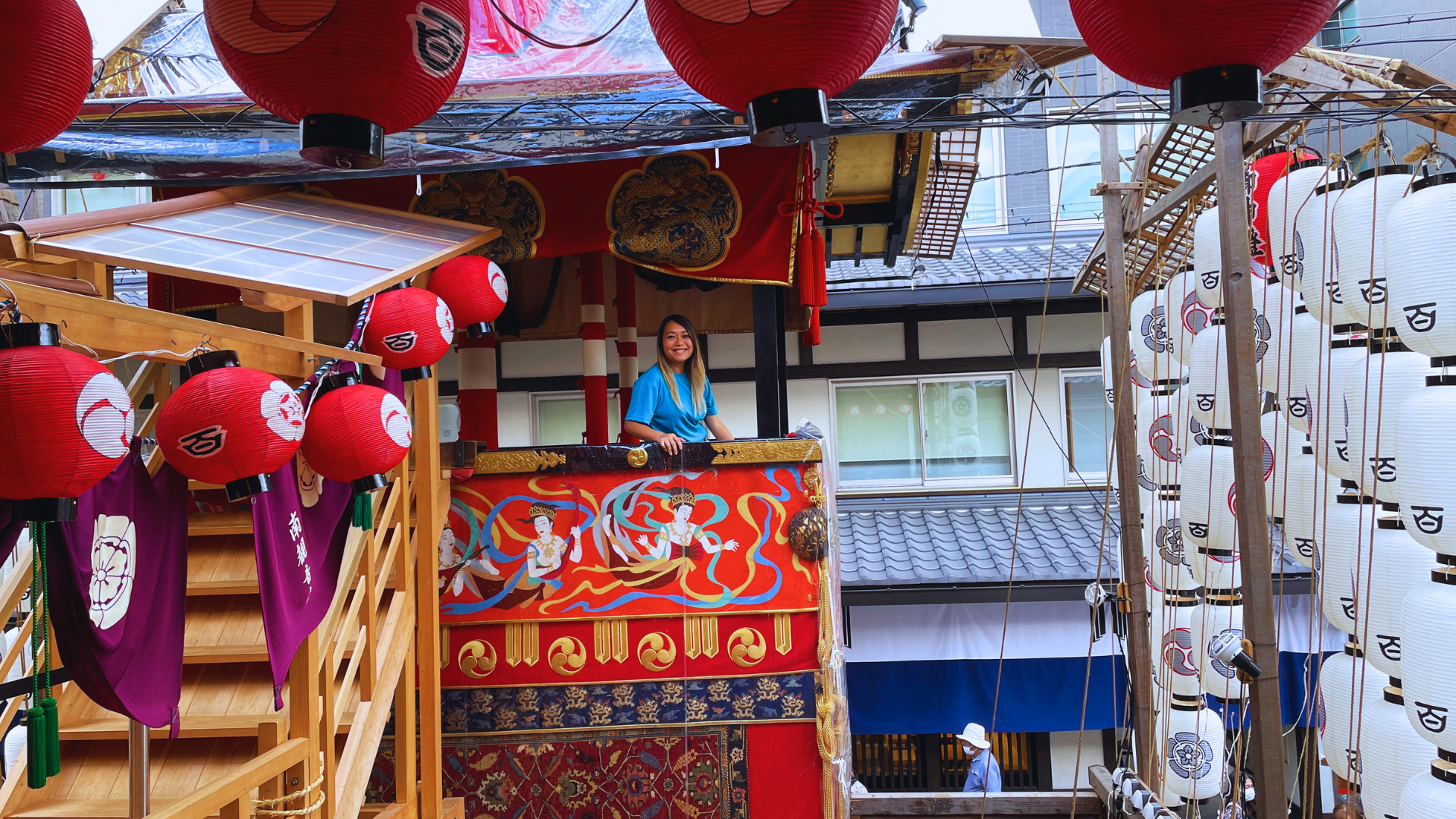
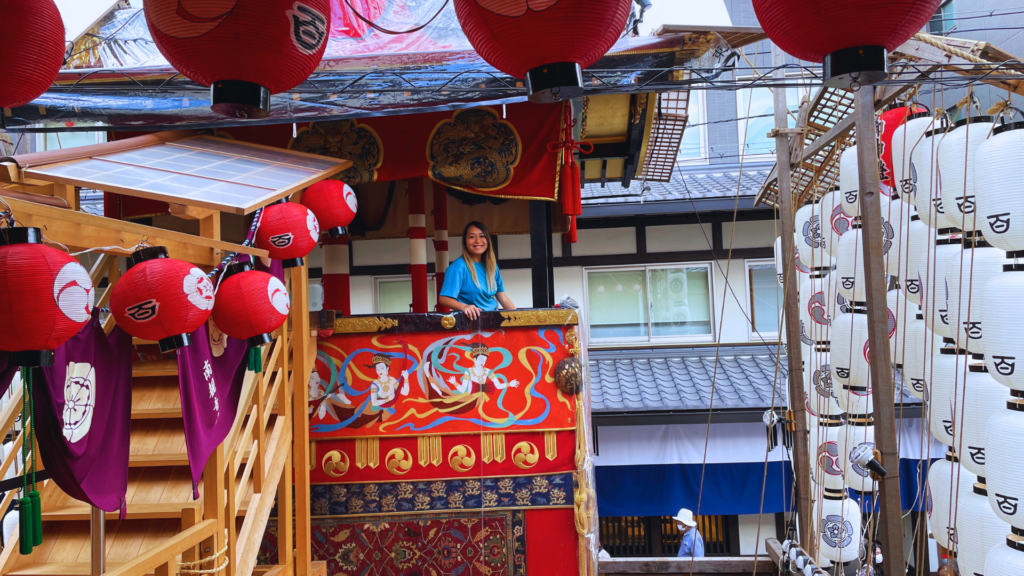
The roads are closed to traffic, and everyone heads out to celebrate. You’ll see lots of food and drink vendors, plus the parade shrines are placed outside for people to appreciate up close. You’ll see lots of people in yukata (summer kimono), sharing food and drinks, and just enjoying summer in Japan.
A Quick History of Gion Matsuri
The festival has an amazing history, having been a tradition for over a millennium. It all started in the late 800s, when Kyoto was struck down by a terrible disease, which locals believed was caused by angry spirits called Goryo-e.
To appease them, the Emperor of the time decided to build 66 hoko in Shinsen-en, a sacred garden. These hoko were long spears of flags that were carried upright, with each representing one of the Japanese provinces. Then, processions were held between the Yasaka Shrine and Shinsen-en, with people carrying portable shrines known as mikoshi.
Since then, these traditions have become the festival of Gion Matsuri. It’s seen as a way for Kyoto to protect itself from other disasters, with the parades acting as prayers and offerings to appease the Goryo-e.
Gion Matsuri 2026 Schedule
Gion Matsuri runs from June 30th to July 31st every year, but most people aim to visit around one of the parade dates. Here’s the schedule for 2026:
July 14th
6pm – 11pm: Yoi-yoi-yoi-yama street party at Shijo-dori
July 15th
6pm – 11pm: Yoi-yoi-yama street party at Shijo-dori
July 16th
6pm – 11pm: Yoi-yama street party at Shijo-dori
July 17th
9am – 11:50am: Yamahoko-Junko (The Grand Parade of Floats) Saki Matsuri
4pm: Mikoshi-Togyo (The Procession of Portable Shrines)
July 21st
6pm – 11pm: Yoi-yoi-yoi-yama street party at Shijo-dori
July 22nd
6pm – 11pm: Yoi-yoi-yama street party at Shijo-dori
July 23rd
6pm – 11pm: Yoi-yama street party at Shijo-dori
July 24th
9:30am – 1pm: Yamahoko-Junko (The Grand Parade of Floats) Ato Matsuri
6pm: Mikoshi-Togyo (The Procession of Portable Shrines)
Looking for other things to do in Kyoto?
Gion Matsuri 2026: What to Expect
Let’s start by getting this out of the way: Kyoto in July is very busy and very hot. That means big crowds, extremely sticky weather, and some challenges when it comes to trip planning.
The earlier you can book accommodation, the better. Especially over the parade days, as this is when people from across Japan are flocking to the city. Expect prices to be higher than average, especially with the new Kyoto hotel tax added earlier in 2026.
When you’re planning your Kyoto itinerary, it’s worth noting that although popular attractions like Fushimi Inari and Arashiyama Bamboo Forest are always busy, during Gion Matsuri, they can get even busier. To avoid the worst of the crowds, we recommend planning to get there early in the morning…or choosing something a little more off-the-beaten-path instead.
The weather is also something that you’ll need to plan for. The heat and humidity are no joke, so it’s important to stay super hydrated and plan for lots of breaks during your day. You’ll want to pack lots of light, breathable clothes, and we promise, a portable fan and sun umbrella will make the experience 1,000x better.
Now, let’s dive into what to expect from Gion Matsuri’s highlights…
Yamahoko-Junko (The Grand Parade of Floats)
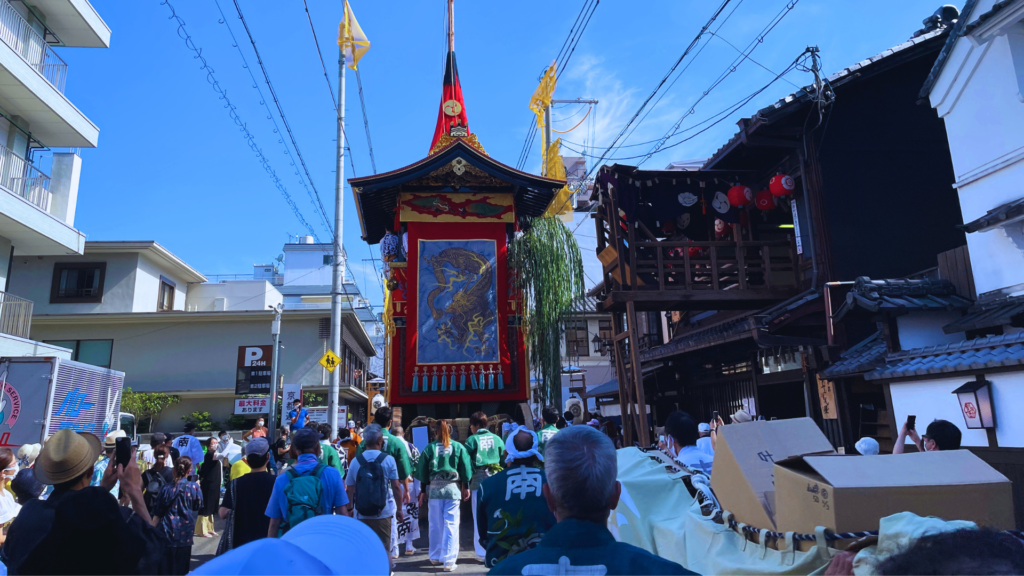
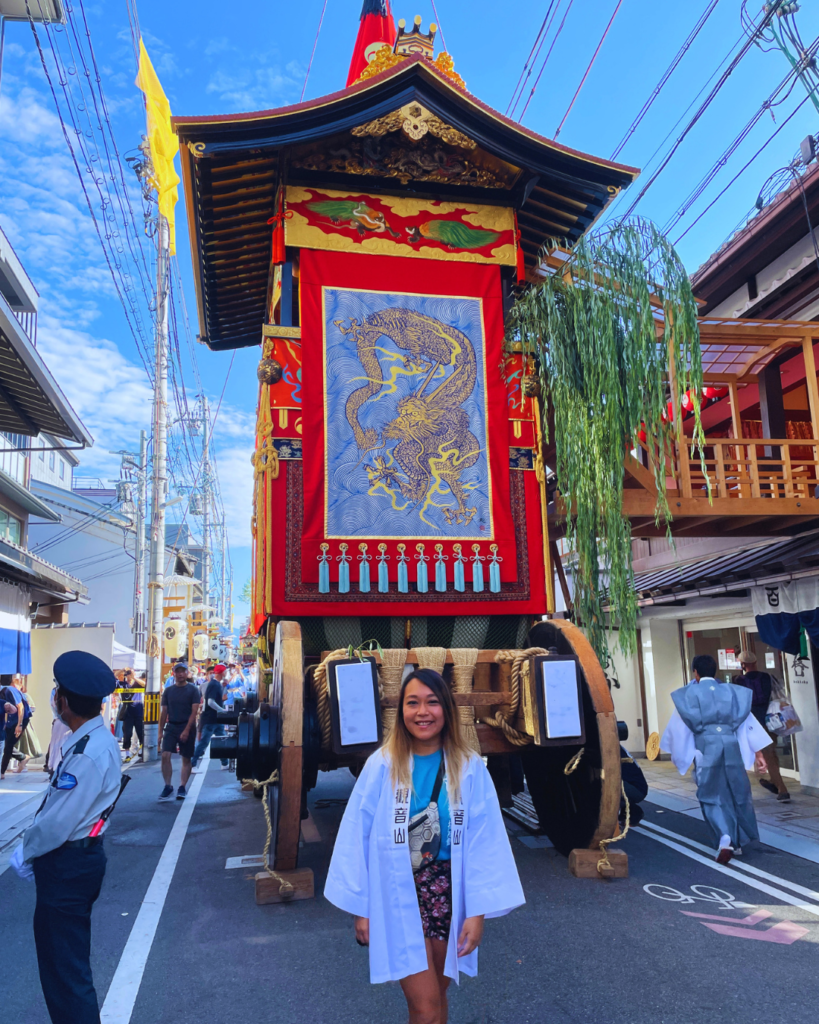
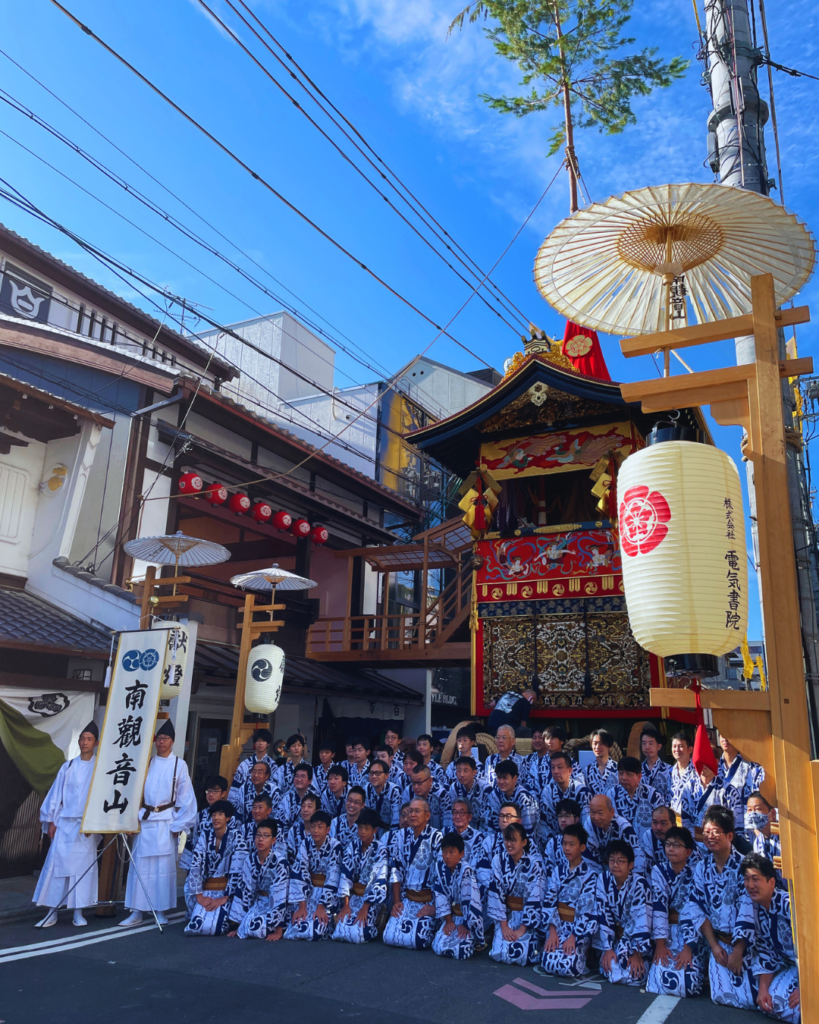
The Yamahoko-Junko is easily the most famous event of Gion Matsuri, and if you’ve seen photos of the festival, it was probably of this parade. It features enormous wooden floats, known as Yamahoko, that are pulled through Kyoto’s streets by teams of local residents. They are symbolic of the 66 hoko erected over 1,000 years before, with some of them standing more than 25 metres tall.
Many of the floats are beautifully decorated with centuries-old tapestries, carvings, and metalwork that have been passed down through generations. They’re so elaborate that the floats are often described as “moving museums”. You can also see them in more detail during the previous evenings for Yoiyama.
The Yamahoko-Junko takes place twice during the festival, with the larger Saki Matsuri parade on July 17th and the smaller Ato Matsuri parade on July 24th. If you want a good viewing spot, arrive early. The streets become packed well before the parade begins, especially around Shijo-Karasuma and Kawaramachi. Ato Matsuri tends to be less crowded, but it is the smaller of the parades, with lots of people preferring to experience the more famous Saki Matsuri despite the crowds.
The Saki Matsuri parade begins at 9:00 am on July 17th, while the Ato Matsuri starts at 9:30 am on July 24th. Both parades travel through central Kyoto, beginning near Karasuma-Oike, continuing south along Karasuma-dori before turning east onto Shijo-dori and finishing near Kawaramachi.
If you’re hoping to watch the famous tsuji-mawashi (where the floats are turned at 90-degree intersections), head to the Karasuma-Oike or Shijo-Karasuma intersections. These are the busiest viewing spots, so we recommend arriving by 7:30 to 8:00 am to secure a good place. If you don’t mind missing the turns, watching further along the route is usually much less crowded.
Paid reserved seating is also available if you’d prefer a guaranteed view without having to arrive so early. Otherwise, all viewing areas along the parade route are free.
Mikoshi-Togyo (The Procession of Portable Shrines)
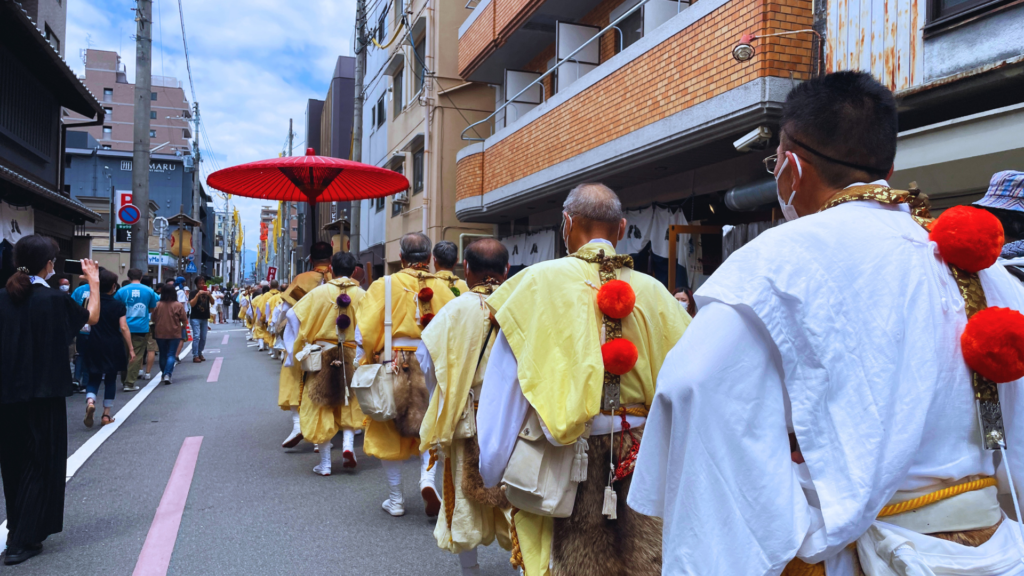
Whilst the Yamahoko-Junko floats are probably the coolest part of Gion Matsuri, the Mikoshi-Togyo procession is actually the festival’s most important religious ceremony. It happens on the same days as the Yamahoko-Junko (the 17th and 24th), with the procession starting in the late afternoon/early evening.
During it, three portable shrines (mikoshi) carrying the deities of Yasaka Shrine are carried through Kyoto by hundreds of participants dressed in traditional clothing. The deities are believed to leave the shrine and travel through the city, blessing local neighbourhoods and protecting them from disease and misfortune. This is the same ceremony that happened in the late 800s and is believed to have been protecting Kyoto ever since.
Watching the procession is a very different experience from the float parade. Instead of slow-moving wooden floats, you’ll hear chants, drums, whistles, and see the mikoshi being energetically lifted and rocked as they’re carried through the streets.
The Mikoshi-Togyo procession begins at Yasaka Shrine in the late afternoon. On the 17th, the procession leaves from Yasaka Shrine and travels through central Kyoto, then on the 24th it returns.
One of the best places to watch is around Yasaka Shrine and Shijo-dori, where the mikoshi start and finish. The atmosphere is particularly lively here, with large crowds gathering to cheer on the participants as they carry the shrines through the streets. Unlike the Yamahoko parade, the route moves at a less predictable pace, so it’s worth arriving at least 30 to 60 minutes early if you want a good viewing spot.
Where to Stay in Kyoto for Gion Matsuri
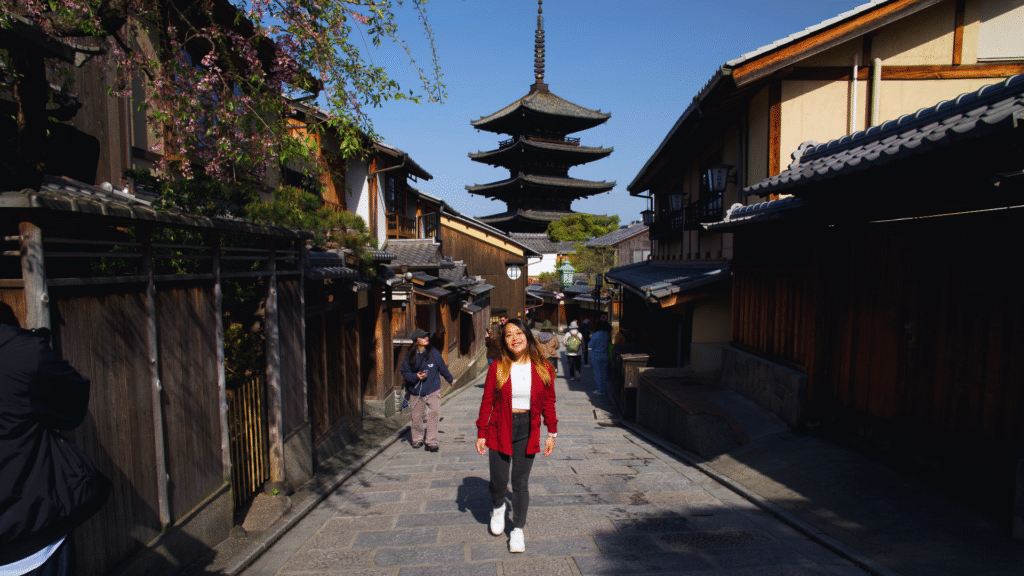
Where you stay can make a huge difference during Gion Matsuri, especially if you want to experience the evening festivities.
The most convenient area is around Shijo, Karasuma, and Kawaramachi. You’ll be within walking distance of the Yoiyama celebrations and many of the parade routes, meaning you won’t need to battle crowded trains late at night.
If accommodation here is fully booked or outside your budget, Kyoto Station is another excellent option. You’ll have easy access to trains, buses, and the subway, making it simple to reach the festival while also taking day trips to places like Nara or Osaka.
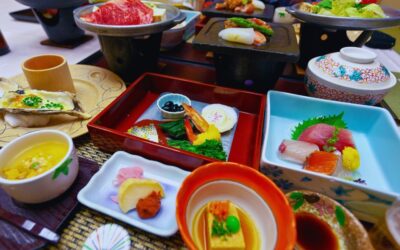
For a more cultural stay, we honestly think nothing beats staying in a ryokan in Kyoto. These are traditional inns where you’ll get to wear yukata, sleep on a futon on tatami floors, and usually be served an amazing kaiseki course meal. They often have private or on-site onsen too…although it might be too hot in July to fully appreciate a hot bath.
Get more details below:
Gion Matsuri FAQs
What is special about Gion Matsuri?
When is the best time to visit Gion Matsuri?
Most visitors come for the Yoiyama evenings on July 14th to 16th, followed by the main float parade on July 17th. This is when the festival atmosphere is at its liveliest.
What time is the Gion Matsuri parade?
The main Yamahoko-Junko parade begins at 9:00am on July 17th and 9:30am on July 24th. Arriving at least an hour early is recommended if you want a good viewing spot.
What is the best time to see Gion Matsuri?
For first-time visitors, the Yoiyama evenings (July 14-16) and the main Saki Matsuri Yamahoko-Junko parade are the quintessential Gion Matsuri experiences. However, if you prefer smaller crowds, the second parade and Yoiyama celebrations on July 21-24 are a great alternative.
Is Gion Matsuri free to attend?
Yes. All of the main parades and street celebrations are free to attend. Paid reserved seating is available for the Yamahoko-Junko parade if you’d prefer a guaranteed viewing spot.
What do people eat during Gion Matsuri?
During Yoiyama, the streets are lined with food stalls selling classic Japanese festival favourites like takoyaki (octopus balls), yakisoba (fried noodles), grilled skewers, shaved ice, and candied fruit.
How long does Gion Matsuri last?
Gion Matsuri officially runs for the entire month of July, with rituals and events taking place almost every day. The biggest celebrations are concentrated around the Yoiyama evenings and the two Yamahoko-Junko parades on July 17th and 24th.