
When most travellers think of Japanese performing arts, they picture a silent, dimly lit theater in Kyoto watching a Noh play they barely understand, or a ticket to a high-speed Kabuki show in Ginza. And those things do exist, but the reality of experiencing performances in Japan is usually far more physical, and much closer up, than people expect.
After these cultural experiences, people usually talk less about what they saw and more about what they were handed: a fan, a bow, a teacup, a drumstick. Watching usually means sitting quietly in the dark back home. Here, you’re just as likely to be pulled a step closer than you expected, and the line between spectator and participant blurs constantly.
What are Performances in Japan?
The word ‘performance’ here spans staged experiences built specifically for visitors, like ninja shows and samurai dojos, living professional art forms you watch as a genuine spectator, like kabuki, noh and sumo, and ritual practices like a tea ceremony or a horseback archery ritual at a Shinto shrine.
None of these are lesser than the others, and I get a bit prickly when people act like the ninja show is somehow a fake version of “real” Japan. A tourist-facing ninja experience and a UNESCO-recognised noh performance are both legitimate parts of how Japan presents its culture, just aimed at different appetites.
Kabuki, noh and kyogen all carry UNESCO Intangible Cultural Heritage status, meaning that each one of them is a genuinely preserved craft. That doesn’t mean the more commercial end of the spectrum isn’t worth your time. It just helps to know which bucket you’re choosing from before you commit an afternoon or evening to it.
Types of Performances in Japan
Sumo Dining Experience
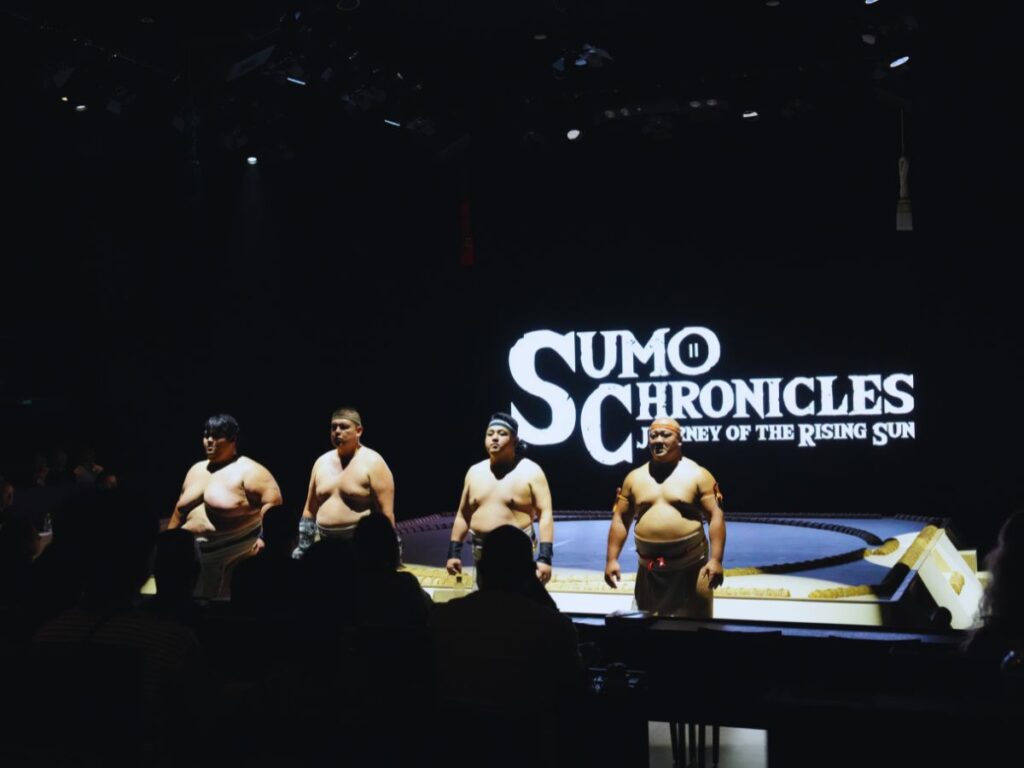
This is surprising for a lot of visitors, but there are actually various sumo experiences that you can try in Japan. But if you were to pick one format that’s genuinely a show, in the theatrical sense, and still gets you physically involved, this is it. It’s a two-hour restaurant event built entirely around a raised clay dohyo, chanko nabe on the table, and retired professional wrestlers performing live exhibition bouts a few feet from your seat.
Before the bouts, the wrestlers run through shiko, the ceremonial leg stomps meant to drive away evil spirits, and a salt-throwing purification ritual you’ve probably seen in photos but which lands completely differently a metre from your face.
Then comes the part I’d actually book this for. Guests get invited into the ring to pull on a padded sumo suit and try to push a retired wrestler out of the boundary. They let you struggle for a bit before ending it, gently but firmly. The experience closes with a Q&A and photos. Pricing starts around $110 USD per person, and venues run year-round with none of the tournament blackout dates that complicate a stable visit.
This works brilliantly for families, especially since kids tend to be completely won over by the wrestlers’ size and the audience challenge. Solo travellers and couples enjoy it just as much.
Yabusame
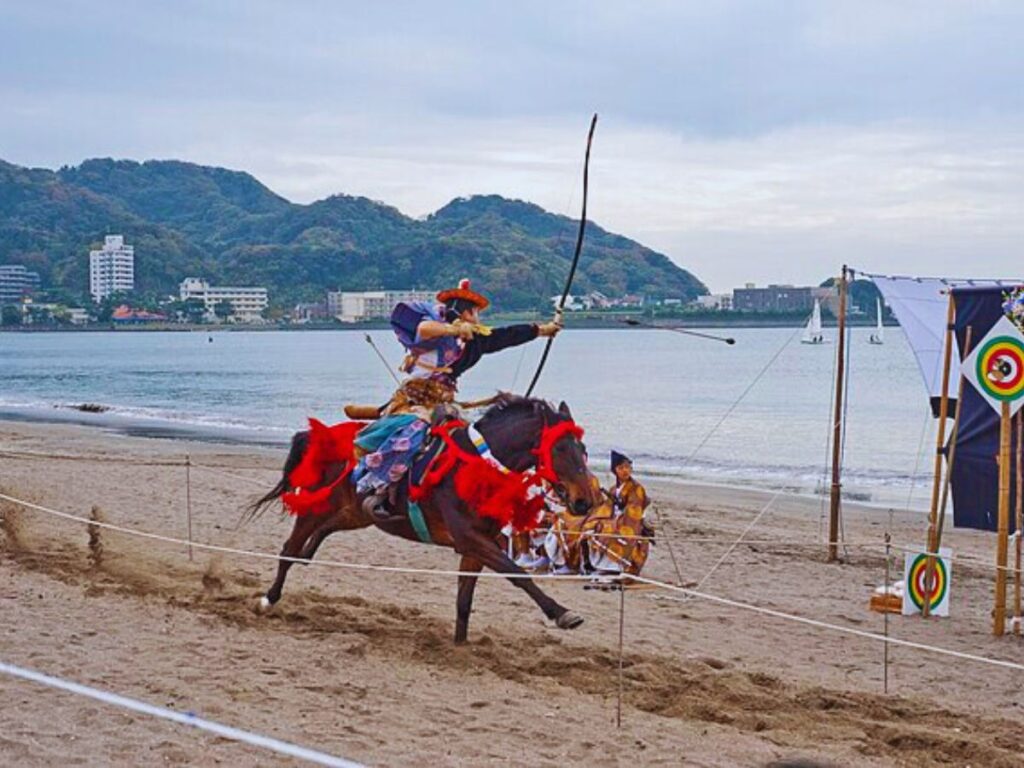
Yabusame is the most purely spectacular performance on this list. It is mounted archery tied to Shinto ritual, and involves riders in full Kamakura-period hunting dress galloping down a track and firing at wooden targets without holding the reins, steering with their knees alone.
As a spectator event, it’s tied to specific shrine festival dates, like Kyoto’s Aoi Matsuri in May, and the Tsuwano festival in Shimane, which claims the oldest yabusame ground in the country. Dates shift year to year and events can get moved at short notice, so check official sources close to your travel dates rather than locking it into an itinerary six months out.
Watching at a festival is usually free or very cheap compared with Japan’s other major cultural performances, with some venues offering paid reserved seating.
Trying it yourself, on a calm, walking horse rather than a full gallop, is a rarer thing entirely, and it still comes with the performance built in, sessions are generally led by practitioners who ride for you first, so you get the show and the go.
Before you go anywhere near a horse, an instructor has you master the bow itself, the yumi, which stands over two metres tall and feels genuinely unwieldy the first time you pick it up. You practise on a wooden horse or a barrel, working through the same sequence again and again. Only once an instructor is satisfied you won’t drop the bow do you move onto a real horse, and for beginners that horse is calm and walking.
That combination of instruction and live demonstration is priced as a premium experience, and it suits travellers with a genuine pull towards samurai-era ritual. Our yabusame horseback archery experience guide covers the beginner riding lessons available outside festival season, demonstration included.
Taiko Drumming Ensemble Performance & Workshop
Taiko sits at the most physically involved end of this list. Watching a professional ensemble is thrilling on its own, the sound hits you in the chest before you’ve consciously registered it, but most tourist-facing sessions have you learning and playing a short piece yourself rather than just sitting and observing. No musical background needed, and most studios end with a photo in a happi coat once you’ve got the group piece down.
Pricing typically runs ¥5,000 to ¥9,000 per person for an hour, with spectator-only rates usually a little lower. It’s a strong choice for families and anyone who wants a break from a temple-heavy itinerary. It’s a less comfortable fit for anyone sensitive to loud noise, drumming at close range is properly loud, or with mobility concerns given how much standing is involved.
Tea Ceremony
A tea ceremony counts as a performance in a quieter sense. The host’s otemae, the choreographed movements of preparing and serving matcha, is the thing you’re watching. Then, in most formats built for visitors, you get handed the whisk and prepare a bowl yourself. It’s usually served with a seasonal wagashi sweet in a tatami room or a garden teahouse.
These experiences are widely available all over Japan, though I’d say that Kyoto is the most atmospheric setting, particularly Uji if you’d rather skip the main circuit. You can book one with our curated providers here. Pricing starts from around 60 USD for a beginner-friendly class and climbs from there depending on formality and setting. It suits solo travellers, couples, families with older children, and even elderly guests (just make sure to let the location know if you need chairs in advance, as most places expect you to kneel in a seiza position throughout the experience)
Geisha & Maiko Experience
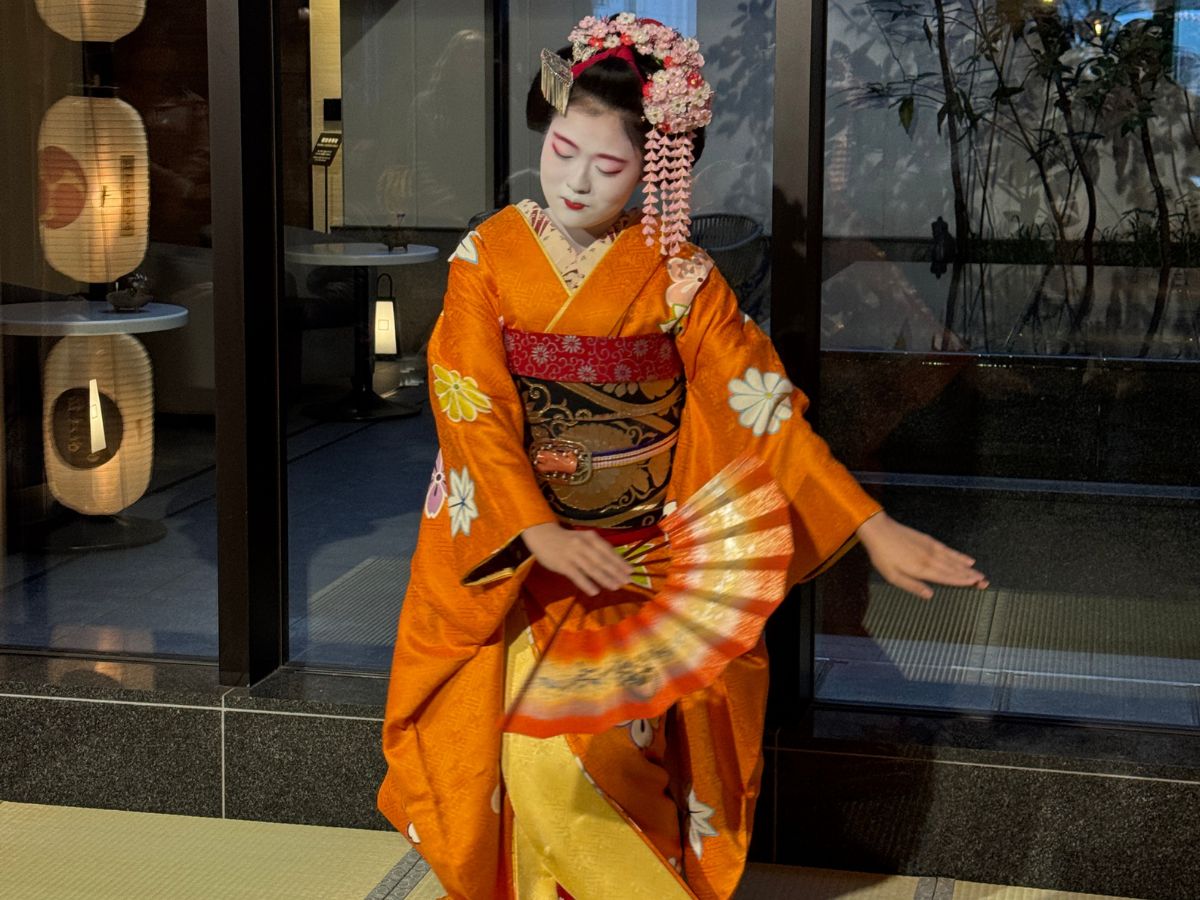
A maiko is an apprentice, younger, in flashier kimono and the white face most people picture when they think of geisha. A geiko, the Kyoto term for a fully qualified geisha, dresses more modestly and carries herself with a lot more restraint.
As a performance, a geisha and maiko expereince means watching a maiko or geiko dance movement that took years to get right, with live shamisen playing behind her. Most shows also include ozashiki asobi, games played between guests and the maiko, which is where the hands-on element comes in, and many open or close with a short tea ceremony demonstration.
Prices generally start around 15,000 yen per person for a shared performance with tea. Private evenings, where the dance happens just for your table, cost considerably more. Elderly guests are catered for well since almost all of it happens seated, and chairs are usually available if tatami is a problem for someone’s knees. This experience is particularly popular in Kyoto’s Gion district, and we can help book it for your trip.
Kabuki Theatre Private Viewing & Backstage Tour
Kabuki reads as strange on paper. All-male casts, men playing female roles known as onnagata, an exaggerated vocal style, elaborate makeup. Then you sit down in front of it and somehow it just works, I still can’t fully explain why.
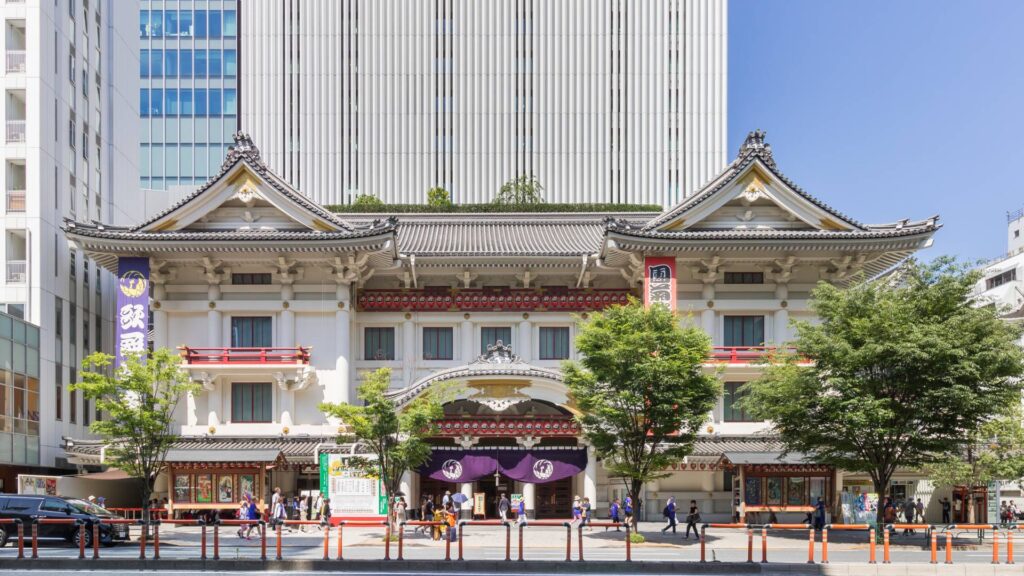
The easiest way in is a single-act ticket at Kabuki-za in Ginza, generally priced between ¥600 and ¥3,000 depending on the length of the act. These can be bought online the day before from noon, or in person on the day itself through the theatre’s same-day queue, though the online allocation tends to go first for popular programmes. It’s a low-commitment way to sample the form without signing up for a full four-hour programme.
Private and guided formats sit at the other end, mostly with backstage access, English commentary and reserved seating, at a noticeably higher price. Full performances run long, so single-act tickets suit families or anyone without the patience for the whole thing, while the fuller formats suit committed theatre lovers who want context alongside the spectacle.
Noh and Kyogen Theatre Workshop
Noh and kyogen are usually performed together. Noh, by masked performers, is slow and built around ghosts and the supernatural, told through minimal movement and language that leans poetic. Kyogen, largely unmasked, sits between the noh acts as comic relief, built on ordinary misunderstandings between neighbours or servants and their masters.
Regular monthly performances at Kyoto Kanze Kaikan with English subtitle tablets run from around ¥6,000 per adult, with cheaper unreserved student seats available. For something more curated, Kyoto also runs special English-guided programmes with introductory talks, priced from roughly ¥10,000 for a standard seat up to around ¥25,000 for the top tier that includes a pre-show backstage tour.
Ninja & Samurai Shows
![All the Ninja and Samurai Experiences You Can Enjoy in Japan [Performances in Japan]](https://flipjapanguide.com/wp-content/uploads/2026/06/For-blogs-1024x768.jpg)
These theatrical stage productions found in Tokyo’s bigger entertainment districts, Shinjuku especially, bring acrobatic sword fighting and neon-lit demon floats for the samurai-cabaret versions, all choreographed to music rather than dialogue, so there’s no language barrier to worry about.
Nobody hands you a sword to practise with. You’re watching a loud, over-the-top production unfold, and that’s the whole point. Ninja-themed shows run around 80 minutes and lean into stunts and drumming. The samurai cabaret versions go further still, dancers, combat choreography, the works. Tickets start from around $60 USD per person.
Groups of friends and couples looking for a high-energy night out get the most out of this format, more than anyone hoping for a quiet cultural deep dive. It’s technically fine for kids, but the late showtimes and the sheer volume can be a lot for very young ones, so it suits older children and teenagers better than toddlers. If what you actually want is to get hands-on rather than just watch, our ninja and samurai experience listing covers the full range.
Performances in Japan: Private vs Group Experiences
By now you’ve probably noticed there’s a lot to choose from, and that’s before you factor in private versus group formats for each one, so if you’re feeling a bit dizzy, that’s a normal reaction.
Group formats, like the shared tea ceremonies and taiko workshops, tend to be cheaper and easier to book on short notice. You’re paying less because you’re sharing the instructor, the room and often the equipment with strangers, which is fine for most of what’s on this list and honestly adds to the fun in a taiko session. What you lose is flexibility on timing and depth, and in something like a geisha show, a shared format usually means less direct interaction with the performer.
A private ochaya evening, a guided noh backstage tour, or arranged riding access to yabusame outside festival dates all cost significantly more, but you’re buying control over timing, language depth and photography rules, plus a more personal exchange with whoever’s performing. For some travellers that’s worth every extra yen.
For others, particularly first-time visitors still working out what they actually like about Japanese culture, a group format is the smarter starting point, and I’d rather tell you that honestly than upsell you into something you won’t actually enjoy more.
Authenticity Level of Performances in Japan

I want to be upfront that touristy isn’t an insult in this context, and I get a bit tired of travel content that implies otherwise. A Kyoto ninja show or a Kabuki-za single-act ticket is a reasonably priced, enjoyable way into Japanese culture. There’s no shame in choosing the accessible version of something, especially on a first trip when you’re trying to cover a lot of ground without overcommitting to any single experience.
What actually separates the more touristy end from the more authentic end isn’t quality, it’s whether the thing in front of you would exist in the same form without visitors there at all. A kabuki performance at Kabuki-za, for example, is the same repertoire and the same actors a Japanese audience walks in to see, with an English subtitle option added on top rather than the show itself being changed for tourists. Yabusame at an actual shrine festival is a religious ritual first, performed for the shrine, and visitors happen to be able to watch it.
The more visitor-facing end isn’t lesser, it’s just built with a different purpose from the start. A ninja or samurai stage show in Shinjuku was designed as entertainment for people who want spectacle related to (but not a demonstration of) a preserved martial tradition. A sumo dining show uses genuine retired professionals, but the format itself, the meal, the audience challenge, exists because visitors wanted it, not because it’s how sumo has always been shared.
My honest suggestion, and it’s how I’d plan it myself, start touristy on a first trip. Save the harder-to-reach, more intimate experiences for a second or third visit, or for a trip where you’ve got more time and a bit more budget to spend chasing something specific.
The touristy option isn’t a waste of time, it’s a different door into the same culture. If you’re already feeling a bit overwhelmed by the options above, that’s normal, this is genuinely a lot to sort through on your own, and it’s exactly the kind of thing we help with at Flip rather than something you need to solve alone at 1am with forty browser tabs open.
Performances in Japan FAQs
Do I need to speak Japanese to book a performance experience in Japan?
No. Most experiences aimed at visitors, from ninja shows to tea ceremonies to Kabuki-za’s single-act tickets, run in English or with English-language materials.
What is the difference between a geisha and a maiko?
A maiko is an apprentice, usually younger, identifiable by flashier kimono and elaborate hairstyling. A geiko, Kyoto’s term for a fully trained geisha, dresses more modestly and carries a calmer presence, having completed her training.
Can children take part in ninja, samurai or taiko experiences?
Generally, yes. Most ninja and samurai dojos welcome children from around age five with an accompanying adult, and taiko workshops are beginner-friendly for kids old enough to follow simple instruction.
How far in advance should I book a private geisha or noh experience?
As early as you can, ideally several weeks out. Private evenings and specialist theatre programmes are limited by nature, and popular dates around spring sell out quickly.
Are these experiences available outside Tokyo and Kyoto?
Some are. Taiko and tea ceremony are widely available. Yabusame is tied to very specific locations and festival dates, worth checking before you build a route around one.