
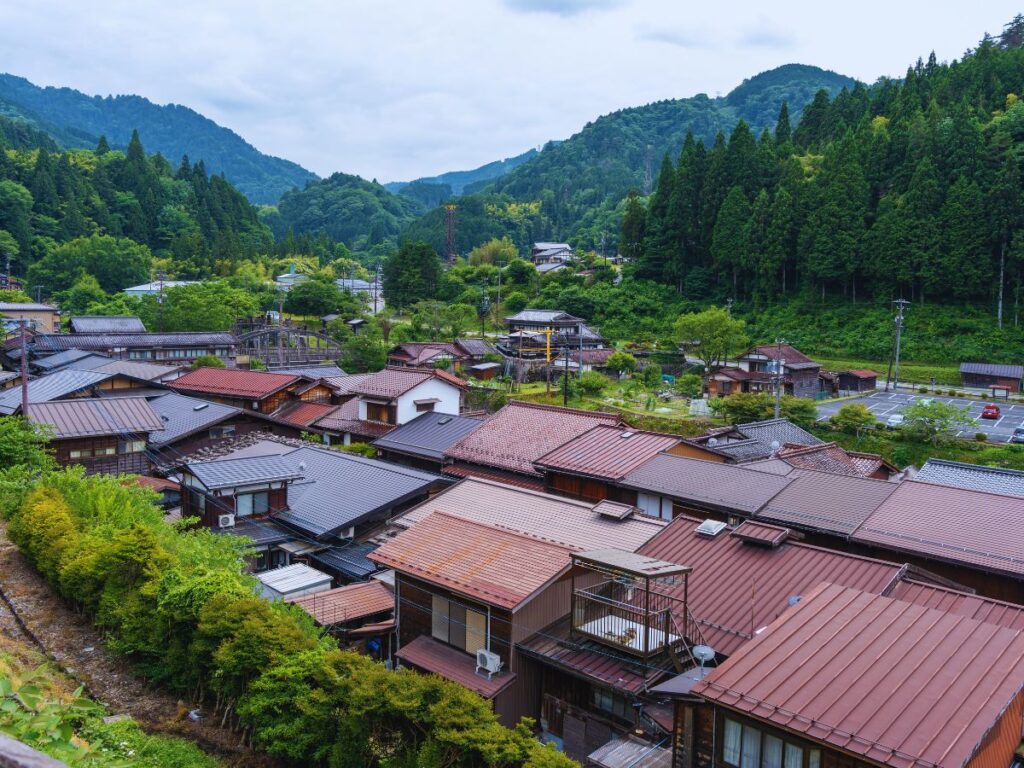
The Nakasendo Trail cuts through the Kiso Valley in central Japan, following sections of an old highway once used by travellers moving between Edo (now known as Tokyo) and Kyoto.
The best-known stretch connects Magome and Tsumago, understandably so. Its stone paths and timber-fronted post towns give an immediate sense of how travel felt before railways. I’d start there on a first visit, but I wouldn’t stop there. Narai-juku has a long historic main street and a strong craft tradition, while Kiso-Fukushima offers a look at a working town that grew around one of the route’s major checkpoints.
Whichever stops you choose, don’t rush the trip. The towns have different characters, and the Kiso Valley is easier to enjoy when you stop trying to cram the whole thing into one heroic day.
Why the Nakasendo Trail Mattered
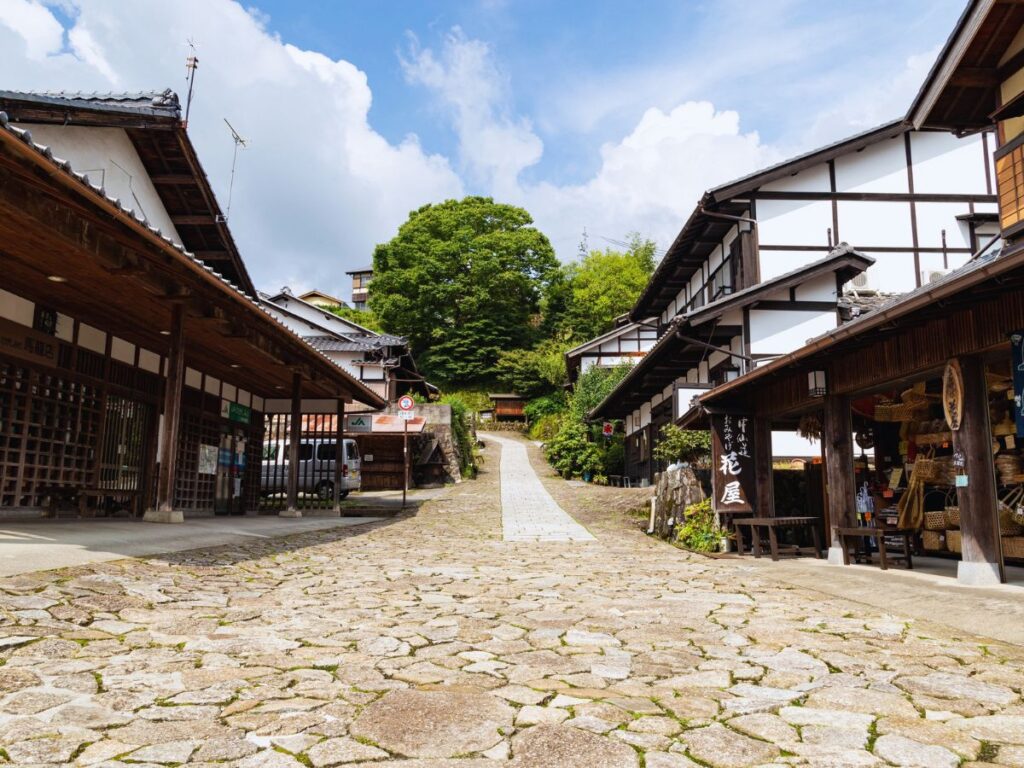
During the Edo period (1603–1868), the Nakasendo was one of five major highways connecting Edo with other parts of Japan.
The highway had 69 post towns, known as shukuba, with eleven through the Kiso Valley. But the road wasn’t just about getting from A to B. Checkpoints controlled who could pass through certain parts of the country, and officials had two particular obsessions: guns coming into Edo and women leaving it. That time in Japan’s history even gave birth to the expression iri-deppō ni de-onna, roughly “guns in, women out”.
The ‘gun’ part was about preventing weapons from reaching the capital and being used in a rebellion. The ‘women’ part was even more political. The shogunate required the wives and heirs of powerful feudal lords to remain in Edo while their husbands returned to rule their domains. Keeping their families in the capital helped keep the lords in line.
Magome-juku
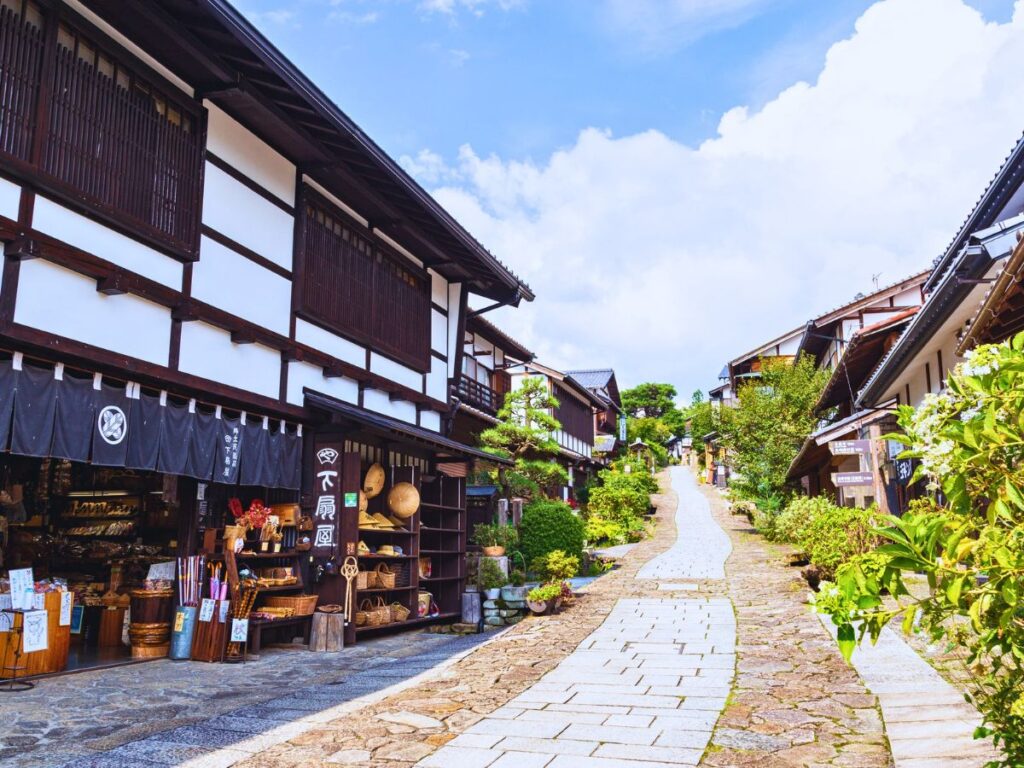
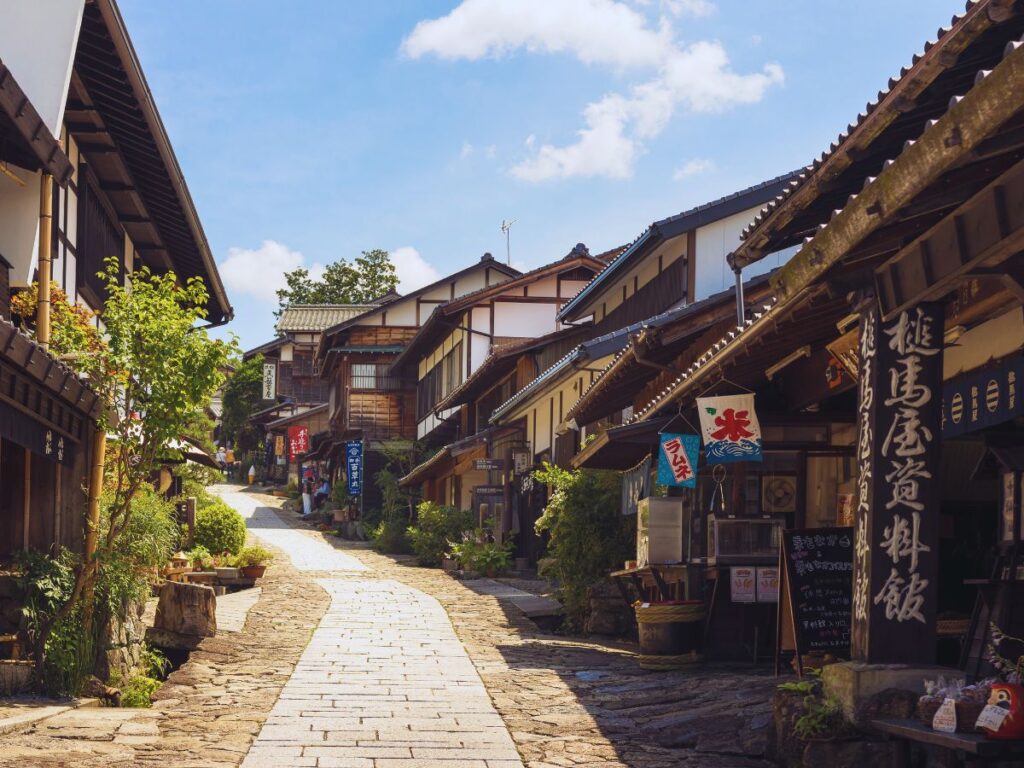
Magome is the obvious starting point for a first visit to the Nakasendo. Its steep, stone-paved main street climbs through a cluster of wooden buildings, with shops and places to eat along the way.
The slope is part of the experience, although it can feel rather less charming if you’ve arrived after a long train journey and skipped breakfast. So, give yourself time to wander before starting the hike. Shops sell snacks, and my personal recommendation is gohei mochi, rice shaped around a skewer, coated in a savoury-sweet sauce and toasted over heat.
The Magome to Tsumago Hike
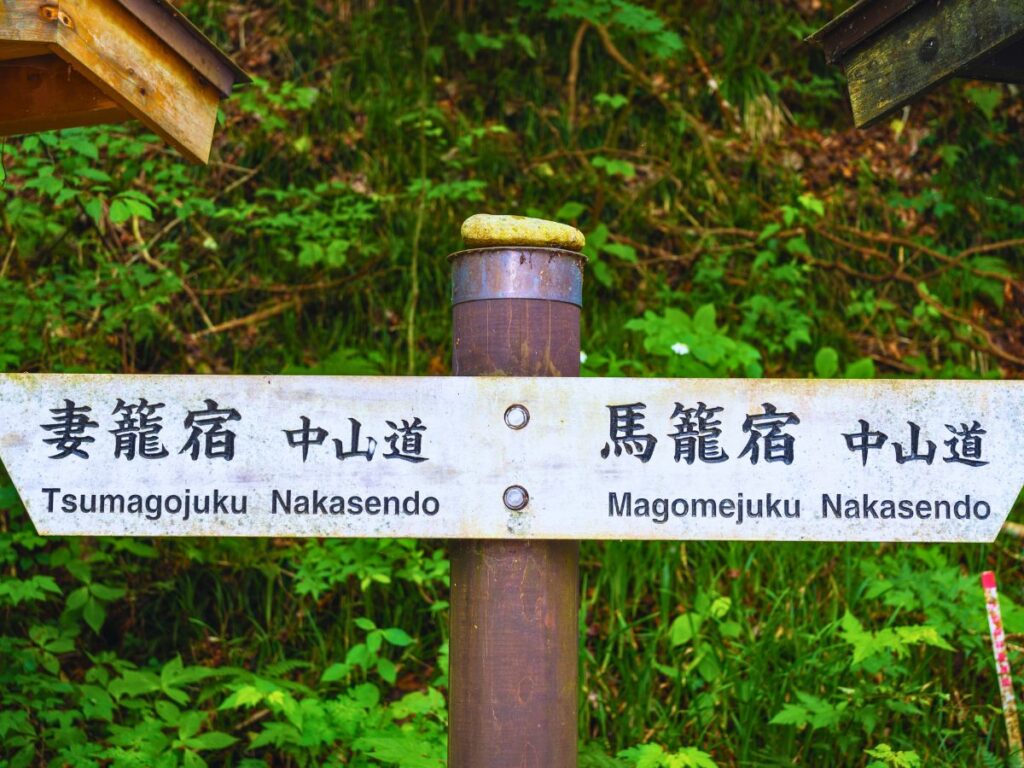
The Magome to Tsumago hike covers around 8 to 9 kilometres and usually takes 2.5 to 3 hours of walking, not including long snack stops or a leisurely look around either town, of course.
Hikers start from Magome because it generally means more downhill walking overall, although you’ll still climb in places. The route crosses forested sections and passes small settlements, with some stretches following local roads. You don’t need technical hiking gear, but shoes with a decent grip are a good idea.
The trail has a few worthwhile detours, including Odaki and Medaki, two waterfalls in the forest. They’re not enormous, thunderous falls that’ll leave you reconsidering your entire life. But for me, they were a welcome excuse to get off my feet for a moment and enjoy the sound of running water before another stretch of uphill path.
Notice that I said “for a moment”, because no matter how pretty the hike is, you have to remember that you still have to get yourself to Tsumago afterwards. Buses in this part of the valley don’t run like trains on Tokyo’s Yamanote Line, so you have to check your return bus in advance and make sure you’re in time to catch it.
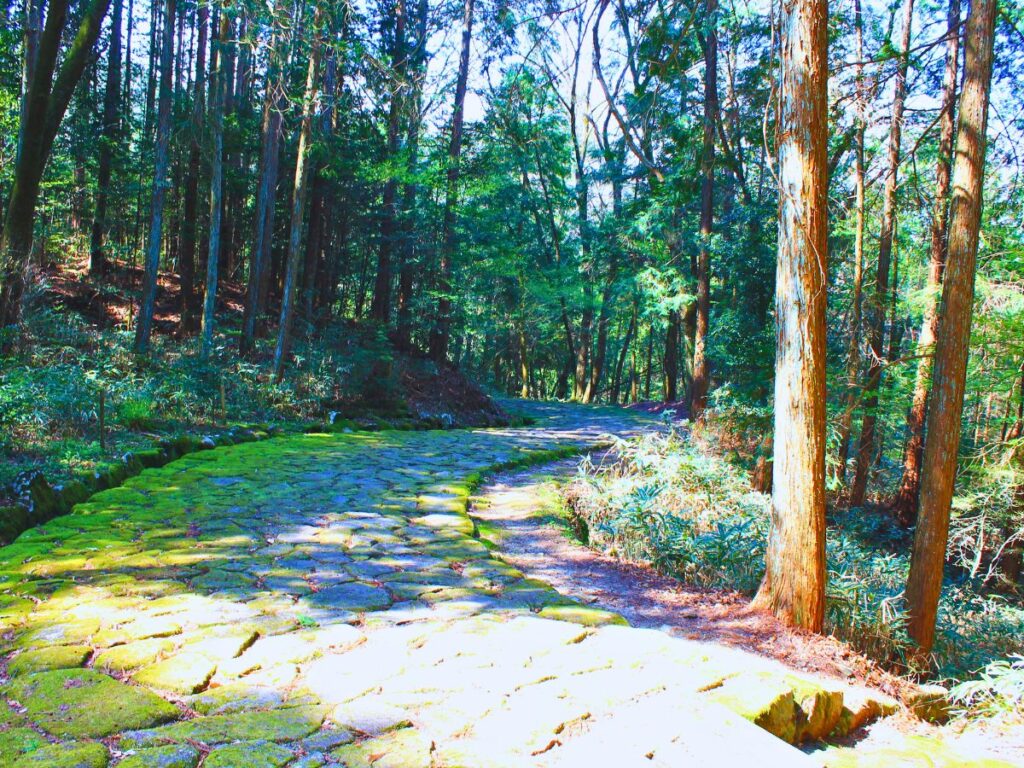
You’ll also pass Ichikokutochi Tateba Chaya, which sounds like something you’d need three attempts to pronounce after a long hike. A tateba was a roadside stopping place where travellers could rest, and chaya means teahouse. This one preserves that old tradition, with a historic building where walkers can take a break and, when it’s open, enjoy some tea. It is a lovely bit of context for the route: centuries ago, people needed a breather here too. Some things never change.
But don’t set off assuming you’ll find a café every time you fancy a sit-down and a snack. There are stretches with very few places to buy anything, so bring water and something to eat.
Along the trail, you’ll also spot bear bells, and walkers are encouraged to ring them to alert bears to their presence. You’re walking through actual mountain habitat, after all. Bear sightings aren’t something you should expect on every walk, but take the signs seriously, make sensible noise as advised and follow local guidance. There’s no need to spend the entire hike imagining a bear lurking behind every tree, either. Although to be honest, I almost did.
Tsumago-juku
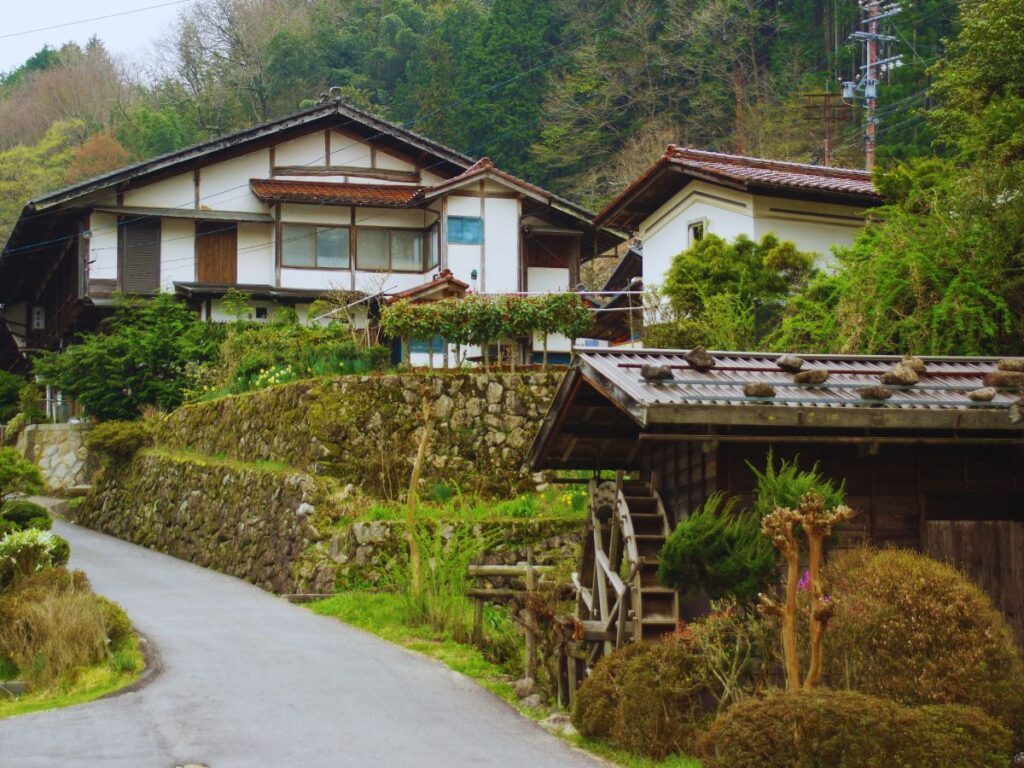
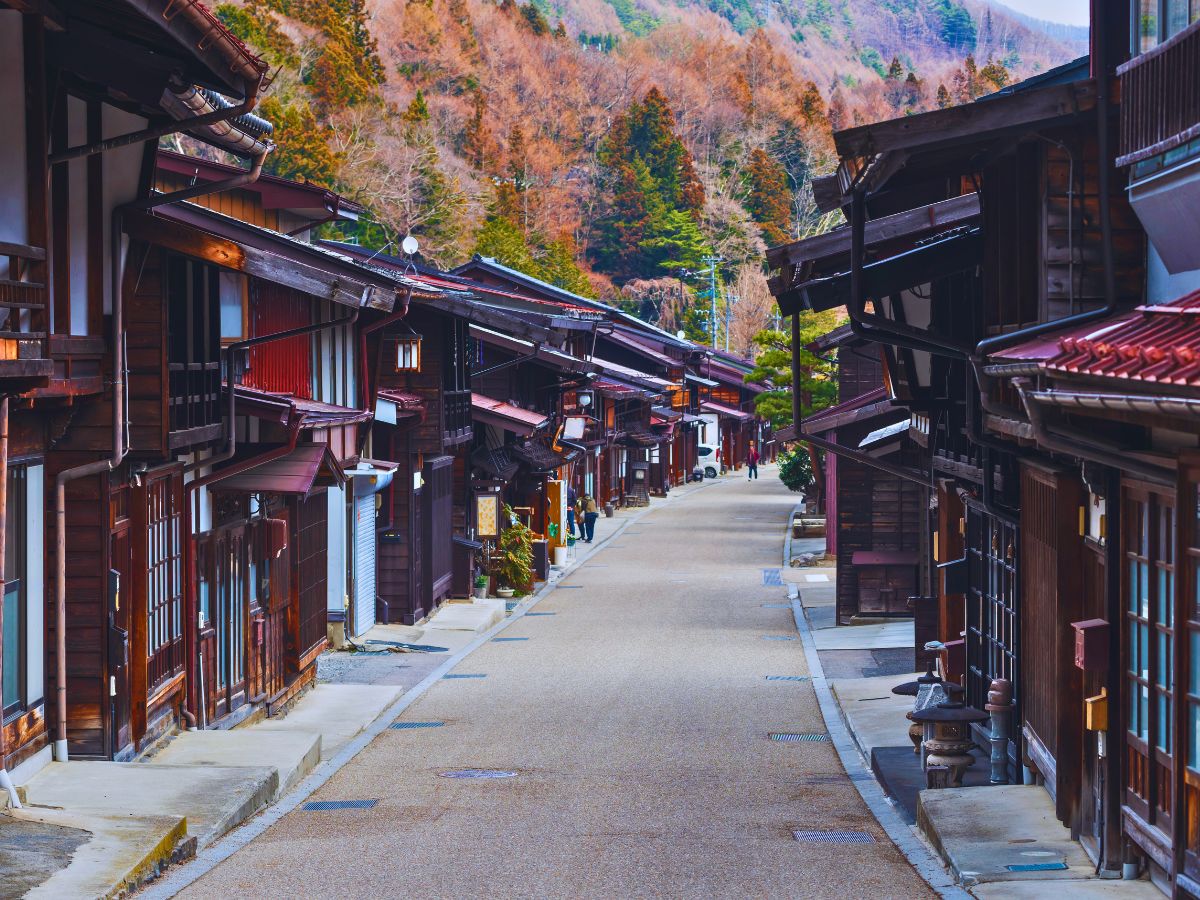
Tsumago has a more level main street than Magome. You don’t get the same steep, postcard-ready approach, but the main street is truly a sight. Wooden inns and old shopfronts sit close together, with modern clutter kept largely out of sight. The preservation is deliberate, too. Local residents began protecting the town decades ago, and Tsumago became a Preservation District for Groups of Traditional Buildings in 1976.
Take your time walking through and appreciate the timberwork. Amazingly, Tsumago still has residents, so it helps to remember that you’re walking through someone’s neighbourhood, not a film set. Some shops also close surprisingly early.
Narai-juku
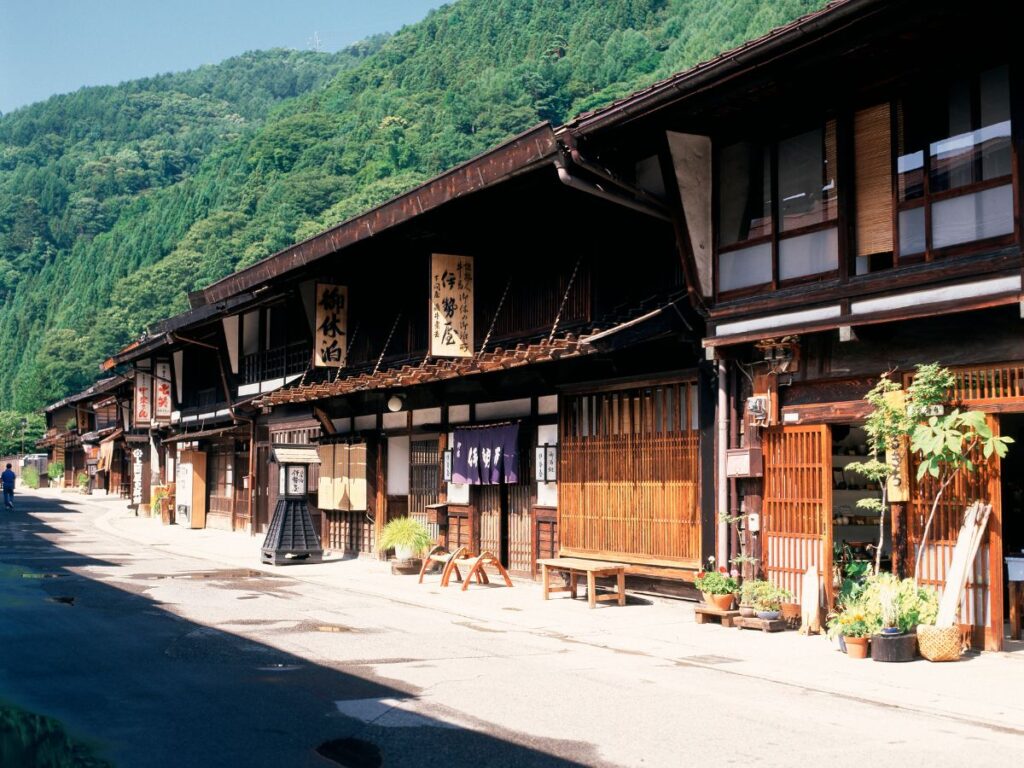
Narai-juku stretches for roughly a kilometre along the old Nakasendo, making it one of the longest surviving post-town streets on the route. Rather than a compact cluster of historic buildings, Narai unfolds gradually.
It was known as “Narai of a Thousand Houses”, and its location below Torii Pass was a big reason for that success. The pass was one of the toughest sections of the Nakasendo, climbing to around 1,200 metres through the mountains between Narai and Yabuhara. Travellers often needed to rest before or after the crossing, and Narai grew to accommodate them. If you’re up for it, you can actually still hike the demanding Torii Pass to this day.
Narai is also associated with Kiso lacquerware. The nearby town of Kiso-Hirasawa is the main production centre, but Narai has shops where you can see and buy pieces from this regional craft tradition. The price of the well-made pieces may look steep at first, but you should know that these lacquered household items are designed to be used, not just admired.
If seeing Kiso lacquerware has you wanting to try working with wood yourself, a woodcraft experience would be a great addition to your itinerary.
Kiso-Fukushima
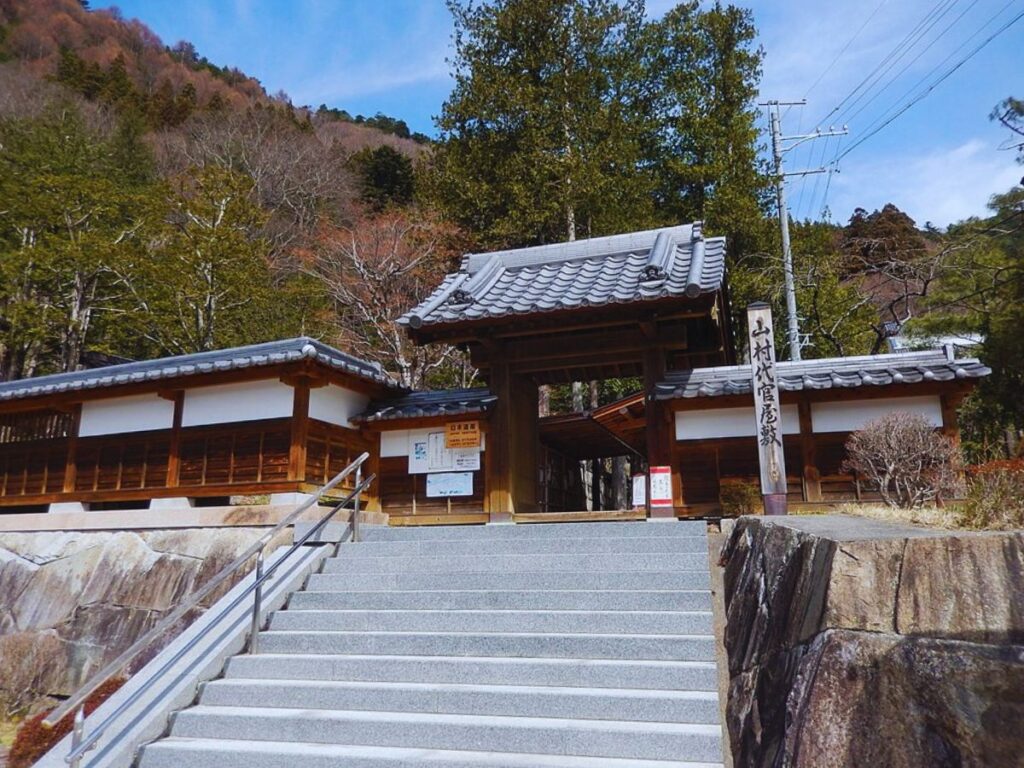
Kiso-Fukushima is a working town with a different feel from the better-known preserved streets of Magome, Tsumago and Narai. It was home to one of the four major checkpoints guarding the highways into Edo, where officials monitored travellers and enforced the shogunate’s restrictions on movement. The restored Fukushima Sekisho lets you see what that control looked like in practice, with historical documents, maps and weapons on display.
I’d also make time for Kōzenji Temple, particularly for its dry rock garden, and the checkpoint governor’s former residence, Yamamura Residence, for its Edo-period weapons and clothing display. And if your legs have had enough of walking, there’s a public footbath beside the river.
Other Stops I Love in the Kiso Valley
Otsumago sits between Magome and Tsumago, around 2 kilometres from Tsumago. During the Edo period, settlements like this were known as ai-no-shuku, places between official post towns where travellers could find accommodation and services.
Otsumago is small, but look for three traditional houses standing together near the upper end of the street. Their walls, gables and overhanging upper floors offer a closer look at old post-town architecture. The buildings now operate as guesthouses, and the settlement has a quieter feel than the better-known stops.
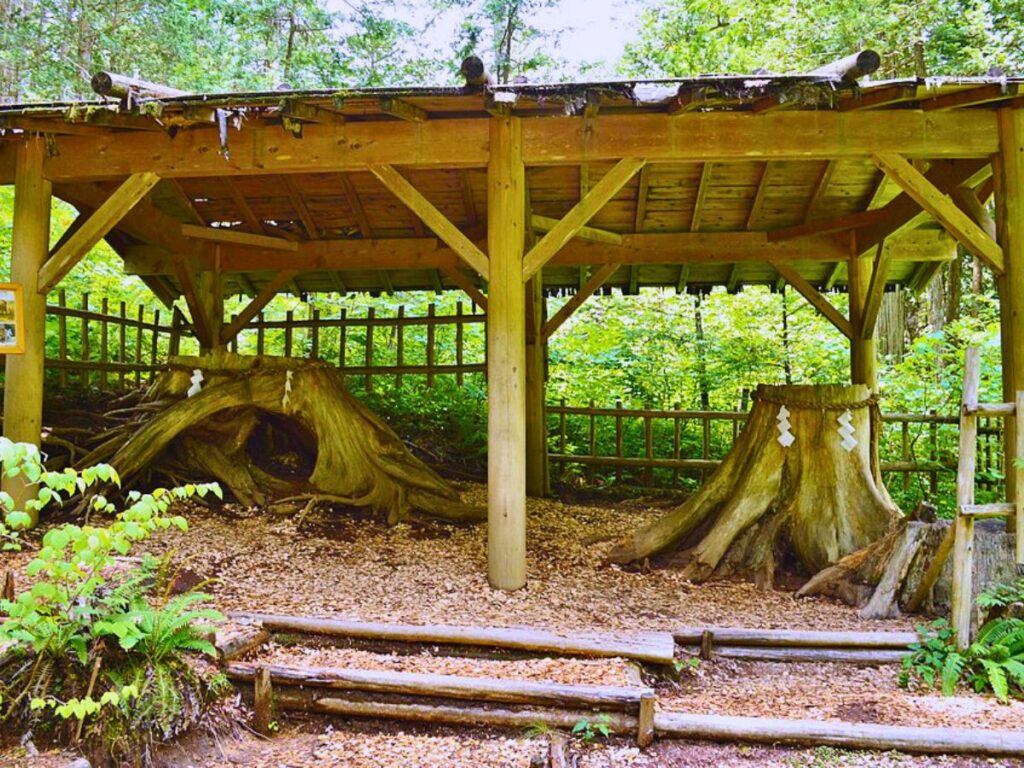
Akasawa Natural Recreation Forest is a separate excursion near Agematsu. It is not a quick detour from the Magome–Tsumago walk, but I highly recommend it for fellow tree huggers. It is known for its Kiso hinoki cypress, including trees that are hundreds of years old. The woods were protected from the Edo period onwards because the timber was so valuable, and Kiso cypress was later used in the reconstruction of Ise Jingu.
Akasawa is also closely associated with shinrin-yoku, or forest bathing, which was promoted here in the 1980s. Walking trails run through the forest, and an old logging railway now carries visitors on a short ride beneath the cypress trees. If the idea of forest bathing appeals to you, our guide to wellness experiences in Japan explores shinrin-yoku and other ways to experience Japan’s quieter, more mindful side.
Planning Your Nakasendo Trail Visit
Getting To and Around the Kiso Valley
Nagoya is the easiest starting point for Magome and Tsumago. Take the JR Shinano limited express to Nakatsugawa, around 50 minutes away. Coming from Tokyo, you take the Tokaido Shinkansen to Nagoya first.
Once in the area, the JR Chuo Main Line is the main rail route through the Kiso Valley, with stations in Nakatsugawa, Nagiso, Kiso-Fukushima and Narai. Magome is reached by bus from Nakatsugawa, while buses from Nagiso connect with Tsumago. Narai-juku sits close to Narai Station, so it’s one of the easier post towns to visit by train.
If you’re planning to explore more of the region, our Nagano guide and itinerary covers other destinations worth adding to your trip, including Matsumoto, the Japanese Alps and more of the Kiso Valley.
How Many Days Do You Need?
One day is enough for the popular Magome–Tsumago walk and a look around both towns, provided you can make the transport connections work. Stay overnight for a less rushed visit, or allow three days if you also want to explore Narai-juku and Kiso-Fukushima.
When to Visit
Spring and autumn are popular for walking, with autumn foliage drawing extra visitors to Magome and Tsumago. So though it is pretty, it can also get very packed. I’d personally avoid summer, but mainly because I have a personal vendetta against Japan’s humidity. The thick greenery during those months are pretty, sure, but I will not be made to hike uphill under the summer heat. Winter is quieter, though snow and ice can affect trail conditions.
Nakasendo Trail and Kiso Valley FAQs
How long does the Magome to Tsumago hike take?
The walk is around 8 to 9 kilometres and usually takes 2.5 to 3 hours, excluding stops.
Is the Nakasendo Trail suitable for beginners?
The Magome to Tsumago section suits many walkers with a reasonable level of fitness. You can expect hills and uneven surfaces, with slippery patches after rain, so good shoes matter even if you’re not planning to shop for some fancy hiking gear.
What food should I try in the Kiso Valley?
Try soba and gohei mochi, and look for seasonal mountain vegetables on local menus.
Can I visit the Nakasendo Trail on a day trip from Tokyo?
Yes, but it makes for a long day once you account for the train journey and local bus connections. Staying overnight near the route gives you more time to explore without racing the timetable.
Is Narai-juku worth visiting?
Yes, especially if you enjoy historic streets and traditional crafts. Narai has a long preserved main street and shops selling Kiso lacquerware. The Torii Pass route towards Yabuhara is an option if you want a longer walk.