
One of the reasons Japan is such a popular tourist destination is the sheer number of unique and memorable experiences you can have in the country. But what we have seen as a boutique travel agency here is that this existence of so many choices seems to paralyse many travellers.
Once you grow tired from decision fatigue, it is far too easy to just let the most popular district’s bright neon lights dictate your entire itinerary. So many tourists end up spending two weeks eating convenience store sandwiches (which I admit are addictive) and fighting crowds at popular shrines, completely missing the traditional culture they actually came to see.
That is exactly why we decided to curate a roundup of the best Japan cultural experiences for first-timers. We specifically selected activities that offer the best combination of being highly accessible while remaining genuinely Japanese. These are uniquely local encounters that truly scream Japan. More importantly, they are not just shallow setups for social media photo opportunities, but immersive traditions that will actually bring you closer to the real culture of this beautiful country.
Top Japan Cultural Experiences for First-Timers
Sushi-Making Experience
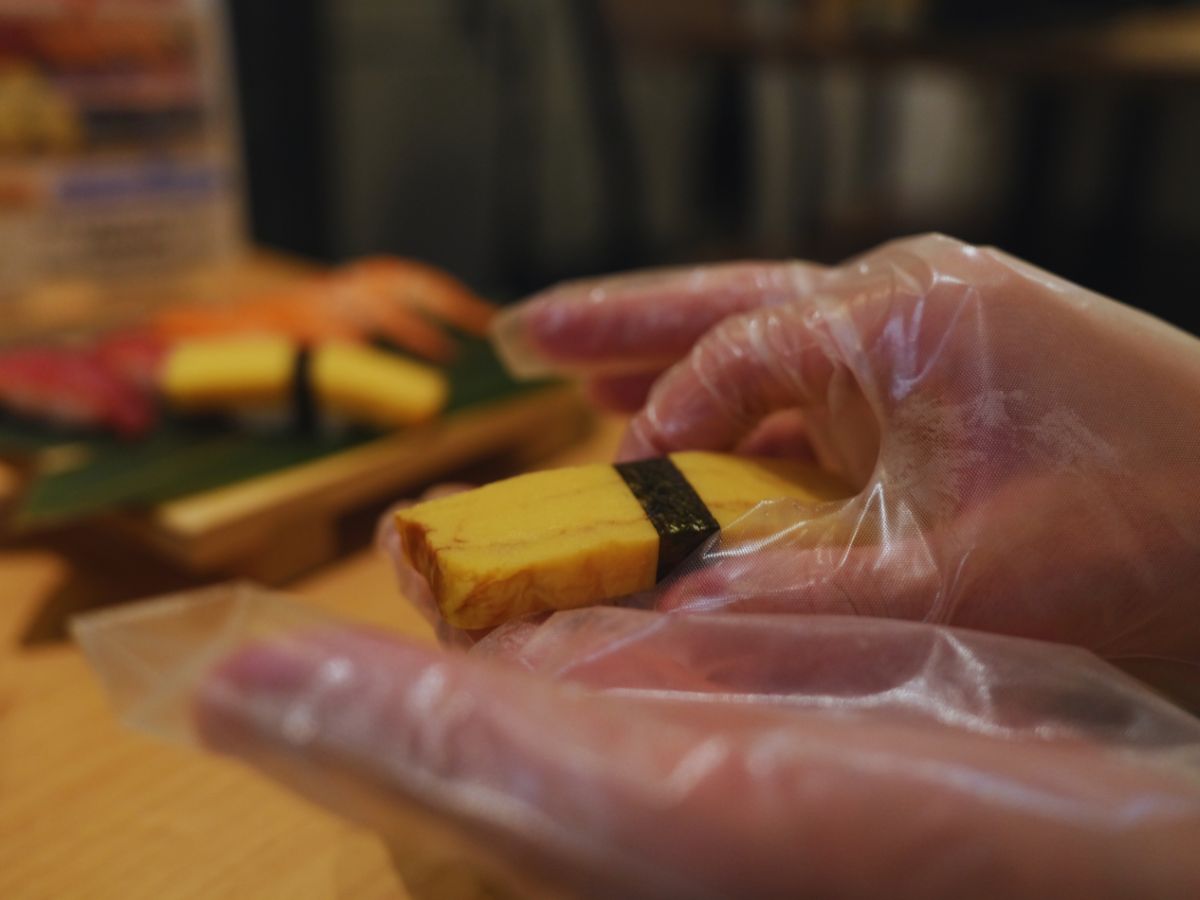
Most people assume sushi making is intuitive. It is not. The moment you put warm shari rice in your hands for the first time and attempt to shape it without squeezing out all of the air inside, you very quickly understand why a professional chef spends years doing almost nothing else.
A sushi-making experience in Japan will walk you through the whole process: seasoning the rice, handling a yanagiba knife, slicing fish cleanly without sawing, and assembling the final piece. You will almost certainly produce something lopsided on your first attempt (like I did), but that is the point. By the time you eat your own work, you will look at every piece of sushi you encounter for the rest of your life with a very different level of respect.
There are several formats to choose from, ranging from casual home-cooking style classes taught in someone’s actual apartment to more formal sessions in working restaurants led by professional chefs. The right one depends on what you are after: practical skills you can replicate at home, or a deeper look at the craft itself.
Book a sushi making experience now.
Kintsugi (Golden Repair)
Kintsugi is the Japanese art of repairing broken pottery with lacquer mixed with gold powder, turning the crack into the centrepiece rather than hiding it. The philosophy behind it is that the break is part of the object’s history and should be celebrated rather than concealed.
The workshop itself is slower and more meditative than most people expect. You sand down the broken edges, fit the pieces together, apply adhesive, and then paint a thin line of lacquer over each crack before dusting it with gold powder. That last step is the one nobody forgets: watching an ugly grey fracture suddenly reveal itself as a gleaming gold vein.
Ready to do your own golden repair? Book the experience here.
Omakase Sushi
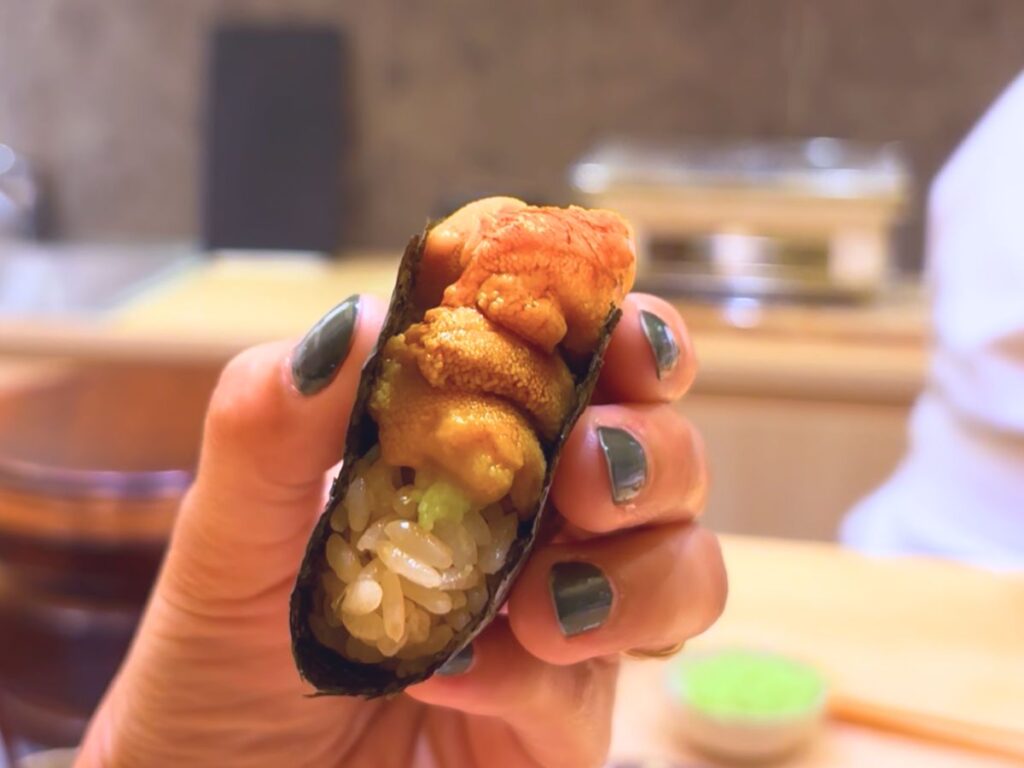
If a sushi-making class shows you how hard it is to build a single piece, omakase shows you what happens when someone has spent decades doing exactly that. Omakase literally means “I leave it to you.” You sit at a counter, usually with no more than ten or twelve seats, and the chef serves you whatever they have decided is best that day.
Now, we’re going to be honest: It is not cheap. A serious omakase lunch might cost anywhere from ¥15,000 upwards, and dinner significantly more. But remember that the value is not just in the food itself but in spending an hour or two in the presence of someone who has devoted their professional life entirely to this one craft.
Willing to invest in some delicious omakase sushi? We’ll help you find the perfect place.
Sumo Experiences
Sumo experiences in Japan range considerably in terms of what they actually involve. At one end, you can attend a day of tournament viewing at the Kokugikan in Tokyo. At the other end, there is morning practice viewing at a sumo stable, where you sit on the tatami floor of a working training hall at around six in the morning, and watch professional wrestlers prepare for competition.
There is also the sumo interactive experience, which is quite different from either of those. You watch wrestlers demonstrate techniques and bouts up close while eating a filling meal, and most sessions invite participants to get on the ring themselves and try their hand at the basic moves under the instruction of a real rikishi.
Reserve your spot to a sumo experience here.
Shamisen
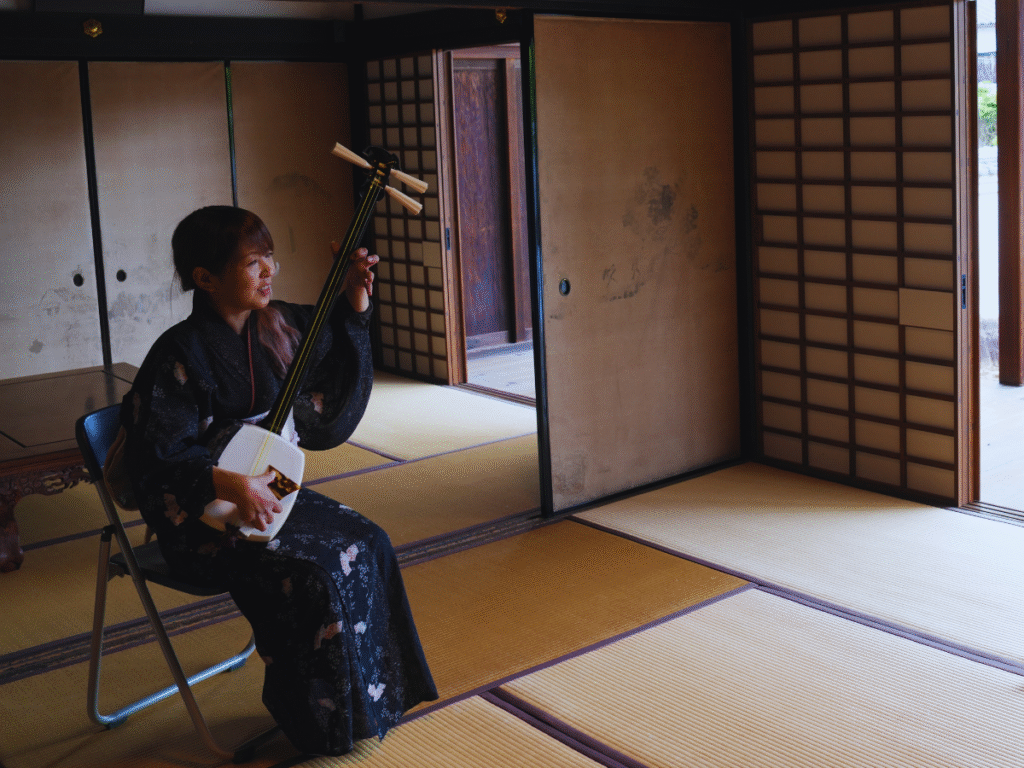
The shamisen is a three-stringed instrument with a sharp, punchy sound that does not remotely resemble anything most Western listeners have heard before. Now, a workshop will not turn you into a musician. But what it will do is give you a real sense of how the instrument works and how counterintuitive the technique feels in your hands. Most sessions are around ninety minutes and taught through simple folk songs rather than anything technically demanding.
Learn how to play the shamisen on your trip.
The setting matters more than you might expect. Learning in a tatami room that opens onto a Zen garden, or sitting across from a master who has spent decades treating the instrument as something closer to a living thing than a piece of wood and string, changes the quality of the experience considerably. We had exactly that, in a registered cultural asset of a Buddhist temple in Nara, and it is the kind of afternoon that stays with you. Read more about our experience:
Ninja and Samurai Experiences
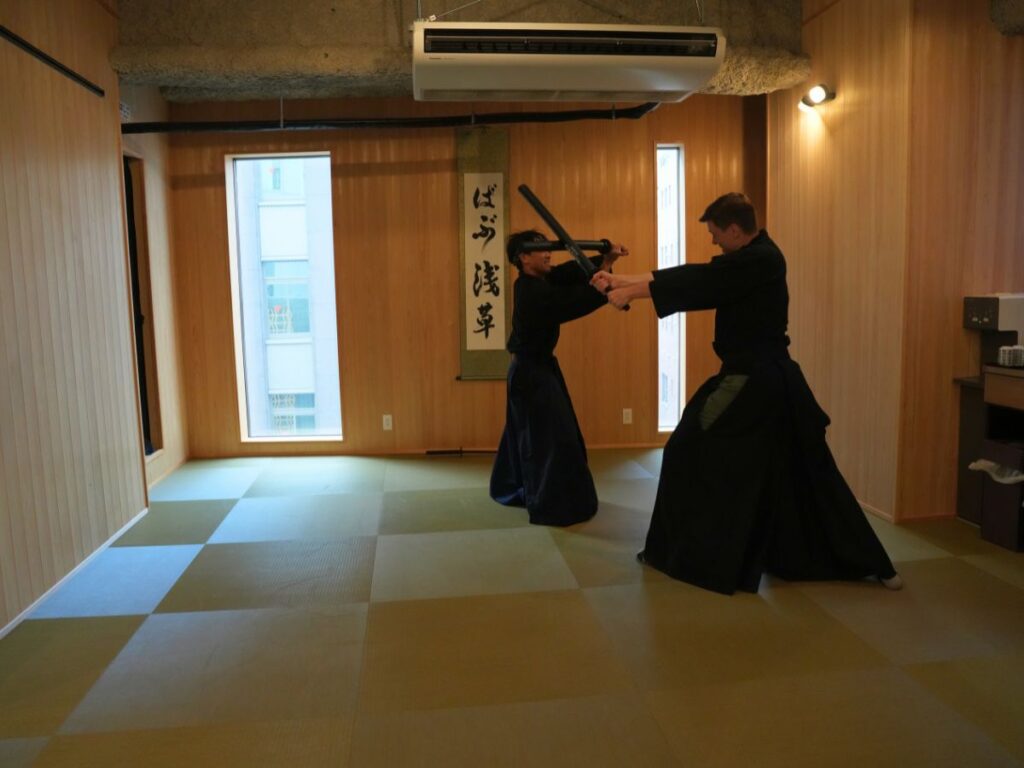
Most people arrive in Japan with a mental image built from decades of Hollywood films, and probably a fair amount of Naruto. The real history is even more interesting and would make any Japan bucket list without a second thought.. Samurai were a ruling warrior class who operated under Bushido, a strict code of loyalty and discipline, and treated the handling of a katana with a seriousness that still carries weight in training dojos today. Ninja, meanwhile, were not a formal class at all. Many were ordinary farmers by day, hired as spies and covert operatives by night, which is exactly why so little reliable documentation about them survived.
The experiences built around both are very varied, and the right one depends entirely on what you are after.
You have museum-style sessions in central Tokyo or Kyoto where you throw real metal shuriken at wooden targets and try on replica armour for photos, basically having a loud, high-energy afternoon with the family. Then, you also have private dojo immersions with master instructors, ninja covert training sessions, martial arts and matcha combos for tighter itineraries, and even live theatrical shows in Shinjuku that lean hard into spectacle and make no apologies for it.
We can match you to the right format for your group. Make a booking now.
Geisha and Maiko Experiences
The geisha is probably the image that comes to mind faster than anything else when people think of Japan. And yet, most visitors end up photographing one from across a street in Gion and calling it done, which is roughly equivalent to going to Japan and watching sumo on the hotel TV.
The actual range of experiences available is much wider than most people realise, and the right one depends almost entirely on your group and what you are actually after:
At the more casual end, some hotels in Tokyo and Kyoto now host short maiko performances in their lobby spaces. A step up from that, tea ceremony sessions with a maiko allow you to sit across from her, ask questions through an interpreter, and watch a short dance up close. Lively group dinners with kimono dressing exist too.
Then there is the ozashiki: a private dinner inside a teahouse, a multi-course kaiseki meal, traditional dances performed a few feet from your table, sake poured by the geiko herself, and drinking games that make the evening considerably less formal than it sounds. An interpreter sits with you the whole time. The price reflects all of that, and during peak seasons it reflects it quite steeply.
None of these options is more “authentic” than another. A maiko performing in a hotel lobby is still a fully trained professional. What changes is how close you get, and how deep the encounter goes. And the best thing? We can book each and every one of them for you.
Mochi Pounding (Mochitsuki)
Mochitsuki is what mochi actually looks like before it reaches you wrapped in plastic in a convenience store. A large wooden mortar is filled with steamed glutinous rice, and two people work in rhythm: one swings a heavy wooden mallet to pound the rice, and the other reaches in between each strike to fold and turn the dough. The timing has to be precise. If your hands are slow, the mallet comes down on them.
It sounds alarming, but it is actually one of the most fun Japan cultural experiences for first-timers. The best part is that you eat what you make at the end, usually dusted in kinako (roasted soybean flour) or wrapped around red bean paste.
Book a mochi-pounding experience through us.
Wagasa (Japanese Umbrella Making)
A wagasa is a traditional Japanese umbrella made from bamboo ribs and hand-stretched washi paper, lacquered and oiled to be waterproof. A full-sized Kyo-wagasa takes weeks to complete, because the bamboo ribs have to be connected by thread one by one, then spaced with absolute evenness across the frame in a stage called makuwari.
Lucky for you, in the workshop, you make just a miniature version, but using the same materials: thin bamboo ribs, hand-stretched washi paper, natural glue, lacquer, linseed oil. But don’t be fooled, gluing delicate washi paper to bamboo without tearing it or misaligning it is still very challenging.
Tea Ceremony
If you arrived in Japan absolutely excited to finally be in matcha heaven, we do not blame you. You could easily spend an entire afternoon bingeing on bright green soft serve ice creams and sugary lattes while fighting through the crowds in Asakusa. If you want to take your appreciation further than a quick sugar high, you need to book a proper sado session.
But if I’m being honest, what I’ve learned from trying out one is that a tea ceremony is not about the tea. Or rather, the tea is almost incidental to the philosophy being practised. Every movement in the ceremony, from the angle at which the host holds the cloth to the order in which guests drink, is deliberate and has been refined over several centuries of practice.
For a first-timer, the experience is often slightly uncomfortable at the start. You are sitting on tatami, your legs may not cooperate, you are not sure when to speak or bow, and the matcha is more bitter than you might expect. But a good host (like the ones you can book through us!) will guide you through the etiquette without making you feel foolish.
Japanese Knife Experience
Japan has been making blades for over a thousand years, and cities like Sakai in Osaka and Seki in Gifu have built entire identities around it.
Forging workshops put you at a working forge: you heat the steel, hammer and shape the blade yourself, grind it down, and hand it back to the artisan for professional finishing and handle fitting. The knife then gets shipped to your home once it is complete.
You can also do sharpening and handle-fitting sessions that start with a pre-made blade and focus on the finishing process, like choosing your handle, sharpening on a whetstone, and leaving the same day with something usable in your kitchen.
There are even blacksmith tours focused on observation rather than making, and private artisan access sessions for those who want to go deep into the craft with a master and are willing to budget accordingly. You can book all these types of knife experiences through our platform.
You can read about how a knife experience we tried out recently went here.
Kumihimo (Braided Cord Making)
Kumihimo is the Japanese art of braiding silk or cotton threads into decorative cords. Historically, these cords were used to bind samurai armour and to tie kimono. If you have seen the film Your Name, the red cord that appears throughout the story as a symbol of fate and connection is a kumihimo braid!
A kumihimo workshop uses a round foam disc with weighted bobbins hanging off the edges. You rotate and cross the threads according to a pattern, and the braid builds up slowly in the centre. It requires concentration rather than physical skill. From our experience, the movements are repetitive enough that most people find it genuinely calming, and the ninety minutes pass faster than expected.
The finished piece fits in your pocket, and is arguably a more considered souvenir than anything you will find shrink-wrapped near a ticket gate, partly because the craft behind it has a long and specific history, and partly because you made it yourself. For travellers who are already carrying a full suitcase, that also matters: it weighs almost nothing.
Secure your spot for a kumihimo workshop.
Japan Cultural Experiences For First-Timers FAQs
What are the best cultural experiences in Japan for first-timers?
It depends on how you travel, but tea ceremony, kimono wearing, and a sushi-making class are the three most accessible entry points. They are widely available and require almost no prior knowledge, but also give you a genuine feel for Japanese craft.
Do I need to speak Japanese to participate in cultural experiences?
No. The vast majority of visitor-facing workshops and experiences in Japan’s major cities offer English guidance, either through a bilingual instructor or an interpreter. Of course, it is worth confirming when you book, particularly for more intimate experiences like ozashiki dinners or private dojo sessions.
How far in advance should I book cultural experiences in Japan?
For popular experiences in peak seasons (late March to early May, October to November), book as early as possible. For craft workshops and cooking classes, a week or two in advance is usually enough outside of peak periods.
Are Japan cultural experiences suitable for children?
Many of them, yes. Mochizuki, sushi making, and the samurai and ninja museum experiences all work well with kids. Experiences like tea ceremony and omakase tend to suit older children and adults. If you are travelling with a family, it is worth flagging ages when you enquire so we can match you to the right format.
What should I wear to cultural experiences in Japan?
Comfortable, modest clothing is a safe default for most experiences. For any experience that takes place in a traditional space, you will almost certainly need to remove your shoes, so wear ones that come off quickly, and be sure you have socks on.
Is Japan expensive for cultural experiences?
The range is really wide. AA private ozashiki dinner with a geiko can run to ¥50,000 per person or more while most craft workshops and cooking classes sit comfortably in the ¥5,000 to ¥15,000 range.