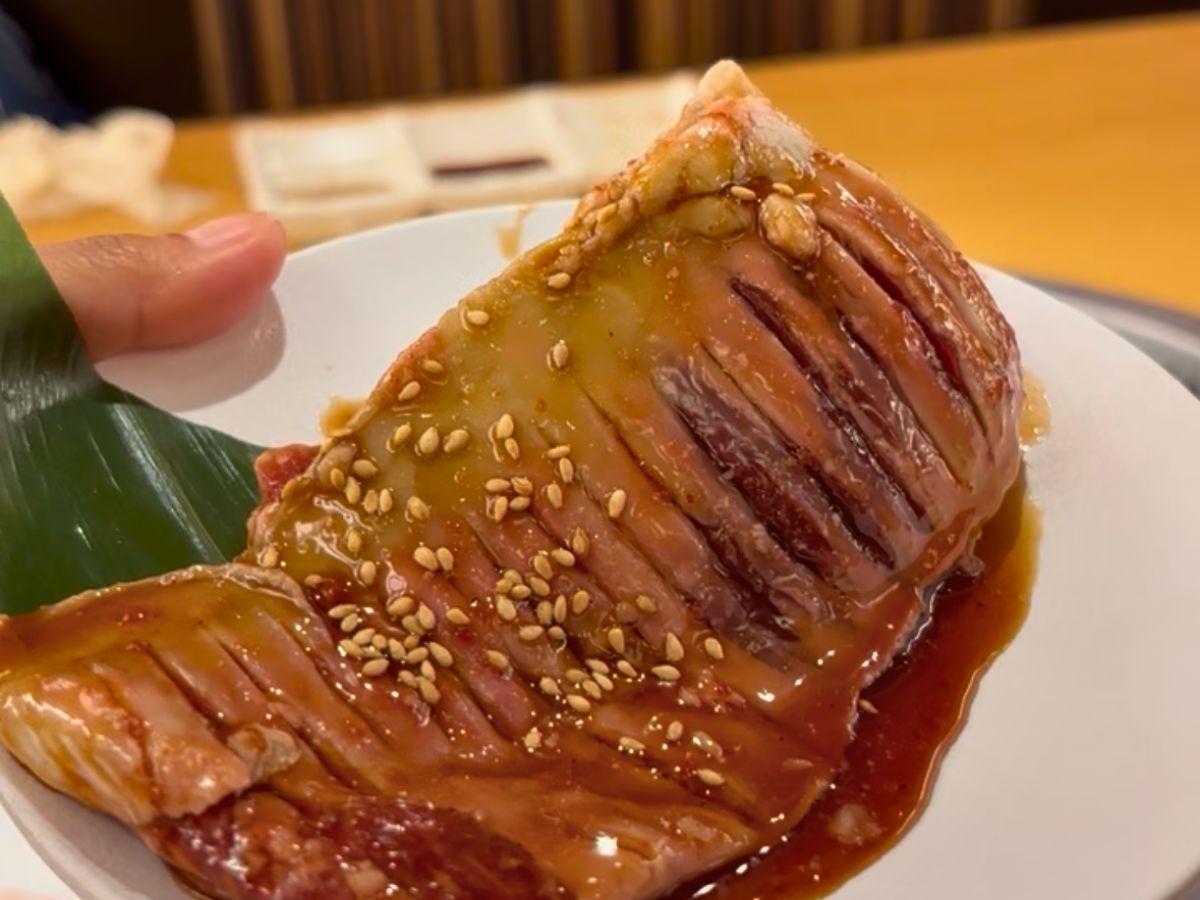

Call me dramatic, but sitting in front of a charcoal grill, with smoke curling towards the extractor and the smell of meat just beginning to char, is one of my favourite food rituals in Japan.
And yes, I mean that in a country with hundreds of Michelin-starred restaurants and enough culinary history to fill several lifetimes. There is something wonderfully unpretentious about yakiniku. No delicate plating to admire before you eat. No waiting for somebody in a toque to finish preparing your food. Just good meat, and the very real danger of burning a batch on a hot grill because you’re too distracted browsing the menu for what to order next.
It is one of those rare meals that seems to work for almost everyone. Tired salarymen pile into restaurants on Friday nights, while groups of friends order another round of kalbi and argue over who has the best grilling technique. Even solo diners can slip in for a filling, no-fuss meal. And families? Well, as a mom, I have a particular appreciation for any restaurant where even the pickiest children can suddenly forget their objections to food and start devouring grilled meat like they have not eaten in days. Miracles do happen.
That is part of yakiniku’s appeal. It can be a cheap, quick lunch for one or a long, noisy dinner with the whole family. You can spend a modest amount at a casual chain or turn dinner into a premium wagyu affair. But the experience can vary quite a bit between chains. Some are built around all-you-can-eat feasts, others make solo dining a breeze, and a few are worth saving for a special occasion. Knowing where to go can make all the difference, especially when you are as serious about your meat as I am.
So, if you are looking for the best yakiniku chains in Japan, here are the ones worth knowing.
How Yakiniku Chains Work in Japan
Before we get to the best yakiniku chains in Japan, let’s get a few things straight.
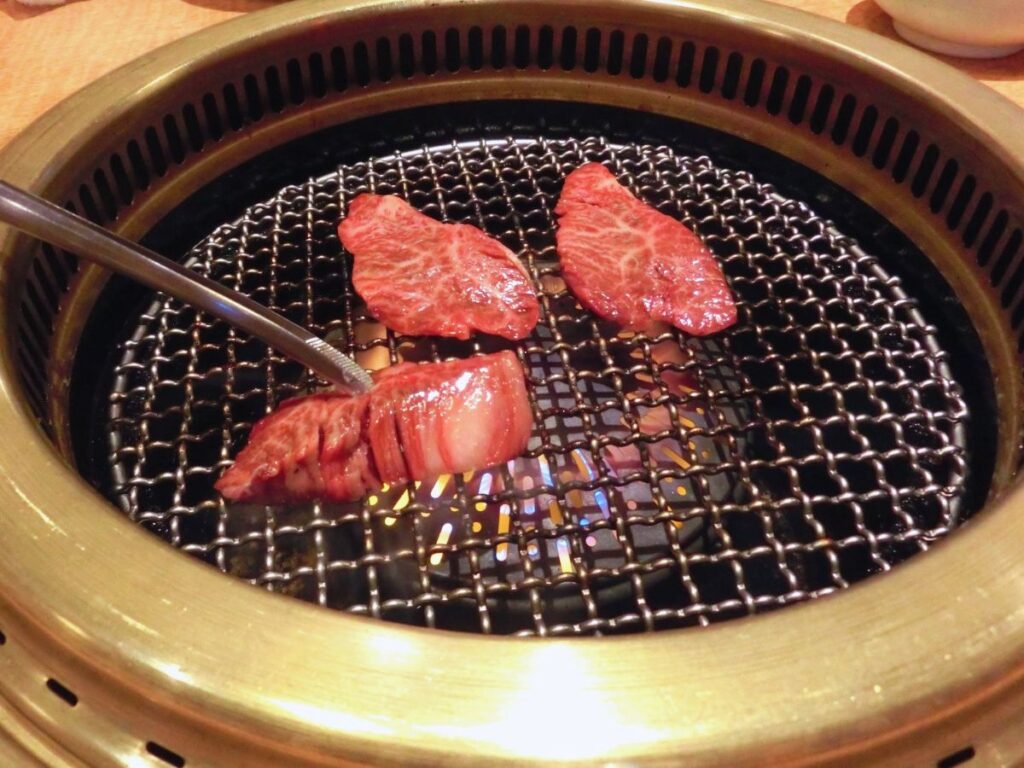
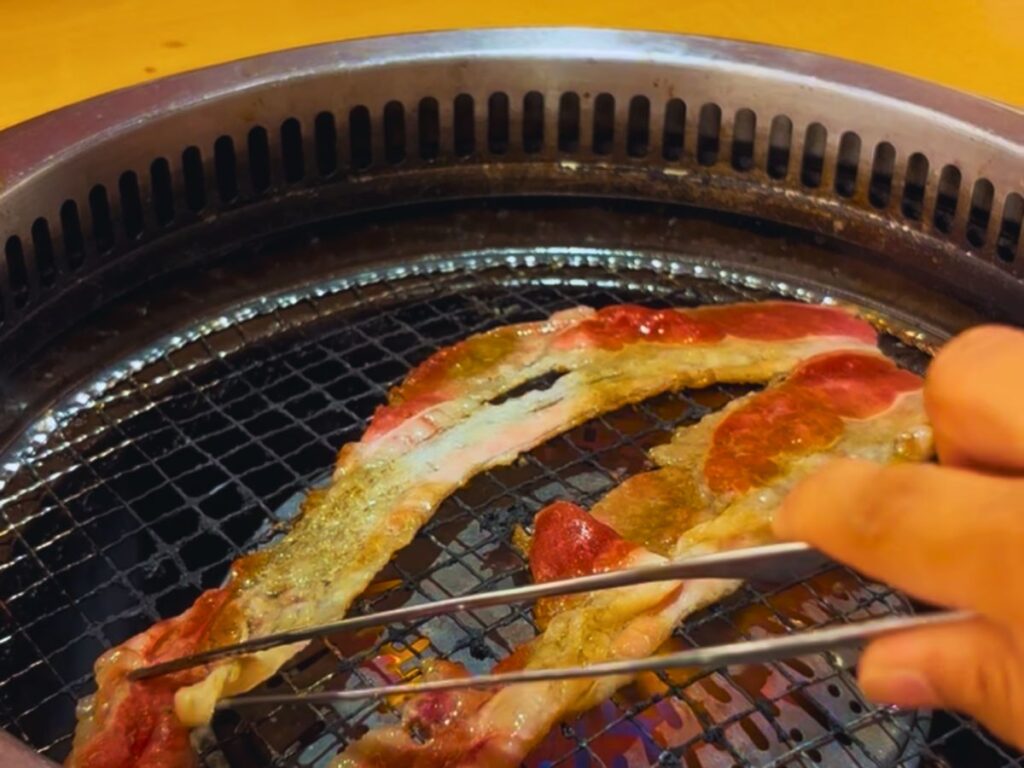
Yakiniku is Japanese-style barbecue. You order raw, seasoned meat, cook it on a grill at your table, then eat it with dipping sauces, rice and whatever sides catch your eye. The grill might use gas or charcoal, depending on the restaurant. Most yakiniku restaurants also have an extractor above the grill to draw away smoke as you cook. It helps keep the smoke under control, although you might still leave smelling faintly of grilled meat.
Ordering is straightforward, too. At most casual chains, you tap your order into a touchscreen tablet. Many offer multilingual menus, while others rely on Japanese text and photos. Even without Japanese, the pictures guide you, though unless you are a butcher, raw red meat on a screen can start looking identical. Consider that part of the adventure.
If you arrive at peak dinner hours, do not expect to walk straight to a table. Busy chains use an automated ticketing machine at the entrance where you register your party size and grab a numbered slip. Watch the digital display above the door and listen for your number. Popular spots like Yakiniku King and Gyu-Kaku also let you join digital queues or book in advance through their apps or portals.
Yakiniku Meal Formats: All-You-Can-Eat, À la Carte, or Sets?
Tabehoudai Yakiniku
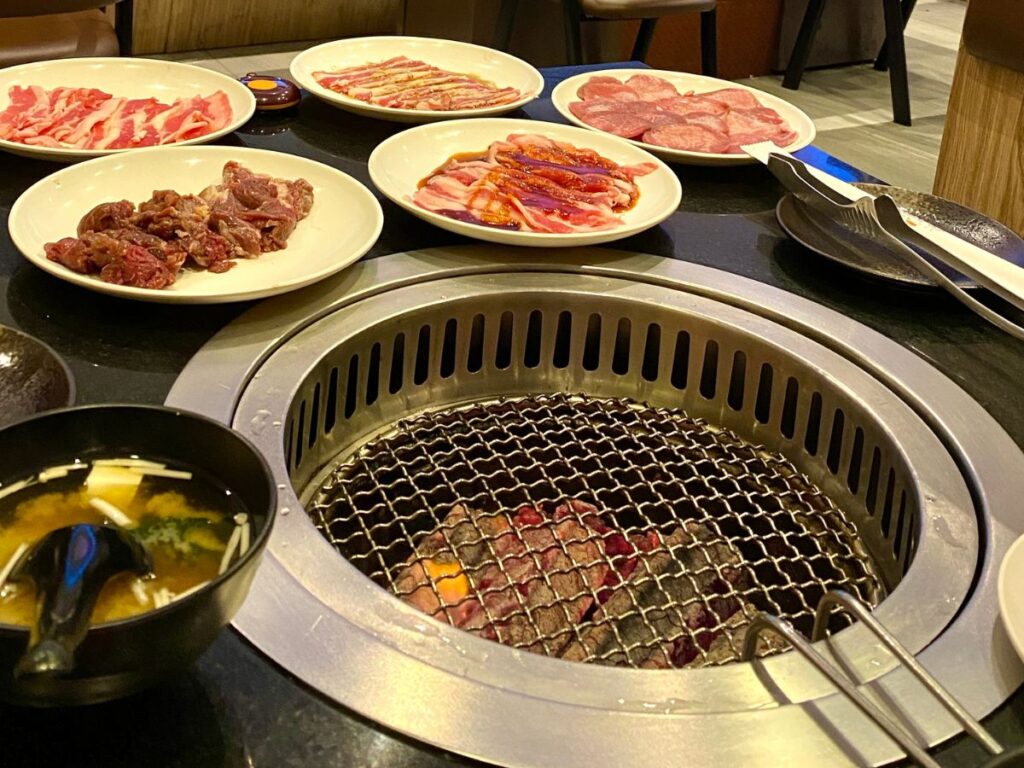
Tabehoudai (食べ放題) means all-you-can-eat. You pay a fixed price for a course and can order as much as you like from the dishes included in that course during the allotted time.
Most chains offer several courses at different prices. The cheapest option usually covers a broad selection of standard meat cuts. More expensive courses may add special cuts, premium beef, signature dishes or limited-time menu items. As a rough guide, expect many mainstream chains to charge around ¥3,000 to ¥4,000 per adult for a standard or mid-range dinner course, with premium options costing ¥5,000 or more.
And no, that price is not usually limited to meat. Depending on the course, you might also find seafood, grilled vegetables, kimchi, salads, rice dishes, soups, noodles and desserts. Some chains have surprisingly extensive dessert menus, which can be a problem when you have spent the last hour convincing yourself you have room for one more plate of kalbi.
Drinks are another thing to check. Most courses include soft drinks, but alcoholic drinks and unlimited-drink packages often cost extra. Nomihoudai (飲み放題) means all-you-can-drink and is a separate option at many restaurants.
There is one catch: the clock. A common course length is around 90 to 100 minutes, and the last order must be sent 15 to 20 minutes before the end. Some restaurants display a countdown or remaining time on the ordering screen.
À la Carte Yakiniku
With à la carte yakiniku, you order individual dishes and pay for each one. I will admit that I am very much an all-you-can-eat person. Once I am sitting at a grill with a menu full of meat in front of me, convincing myself to order only two or three dishes becomes a rather ambitious exercise. Still, à la carte has its place.
À la carte menus can also be the better choice if you want to try higher-end cuts of Japanese Wagyu, which are less commonly included in all-you-can-eat courses. You can choose specific cuts and focus on the quality of the meat rather than the quantity of dishes. It also makes sense if you fancy yakiniku but aren’t hungry enough for a full course. Just keep an eye on the prices: several rounds of premium meat, sides and drinks can quickly add up to as much as an all-you-can-eat meal, sometimes more.
Lunch Sets and Teishoku
A teishoku (定食) is a set meal, usually built around a main dish. At a yakiniku restaurant, a set might include a portion of meat to grill yourself, rice, soup, and kimchi. You get the fun of cooking your own meat without having to order every component separately. Lunch can be a good way to try a chain that might feel expensive at dinner, because restaurants offer smaller set meals at lower prices during the day. You may also find the restaurant quieter than during the evening rush, although that depends on the location.
5 of the Best Nationwide Yakiniku Chains in Japan
1. Yakiniku King (焼肉きんぐ)
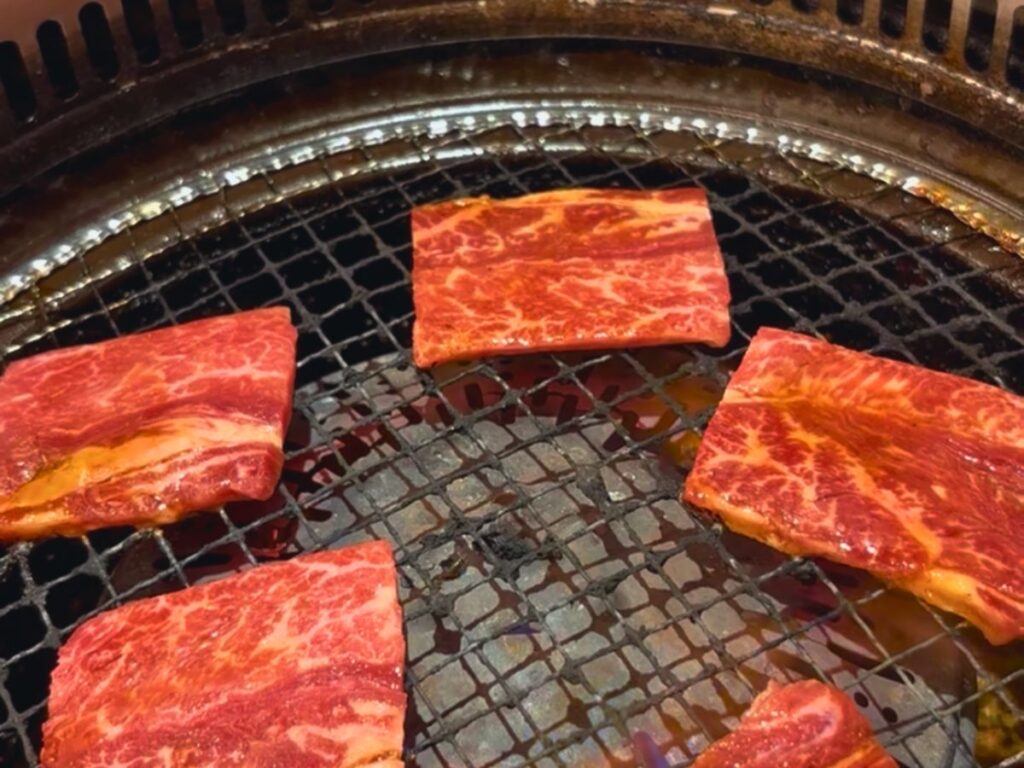
Yakiniku King is the undisputed heavyweight champion of Japanese yakiniku. It is packed with families, and unapologetically frantic. They have delivery robots that deliver trays of marinated short ribs to tables, and everyone looks slightly rushed trying to beat the ordering clock.
Listen to me: skip the entry-level 58-item course (around ¥3,278 including tax). It leans heavily on cheaper pork cuts and processed fillers. Pay the extra few hundred yen for the King Course (roughly ¥3,828) to unlock their Five Great Specialities (Go-dai Meibutsu), which are the entire reason locals flock here.
The King Kalbi is an absurdly long slab carved from rare rib cuts, and the garlic-butter harami (Cho-gokuatsu Harami) punches well above its weight class for an all-you-can-eat joint. Locals also know not to sleep on the hot stone bowls. Order the classic Ishiyaki Bibimbap, which arrives hissing hot and never fails to give me that crunchy scorched rice crust at the bottom.
Once he’s had his fill of grilled meat, my son usually fixates on their tabletop mini pancakes and soft-serve sundaes, which reliably buys me another twenty minutes of peaceful grilling.
- Average Budget: ¥3,800 to ¥4,500 per person (Children under elementary age eat free; elementary schoolers are half price; seniors over 60 get a ¥500 discount)
- Ordering Style: Primarily Tabehoudai table buffet on a 100-minute timer (à la carte is available, but rarely worth the maths)
2. Gyu-Kaku (牛角)
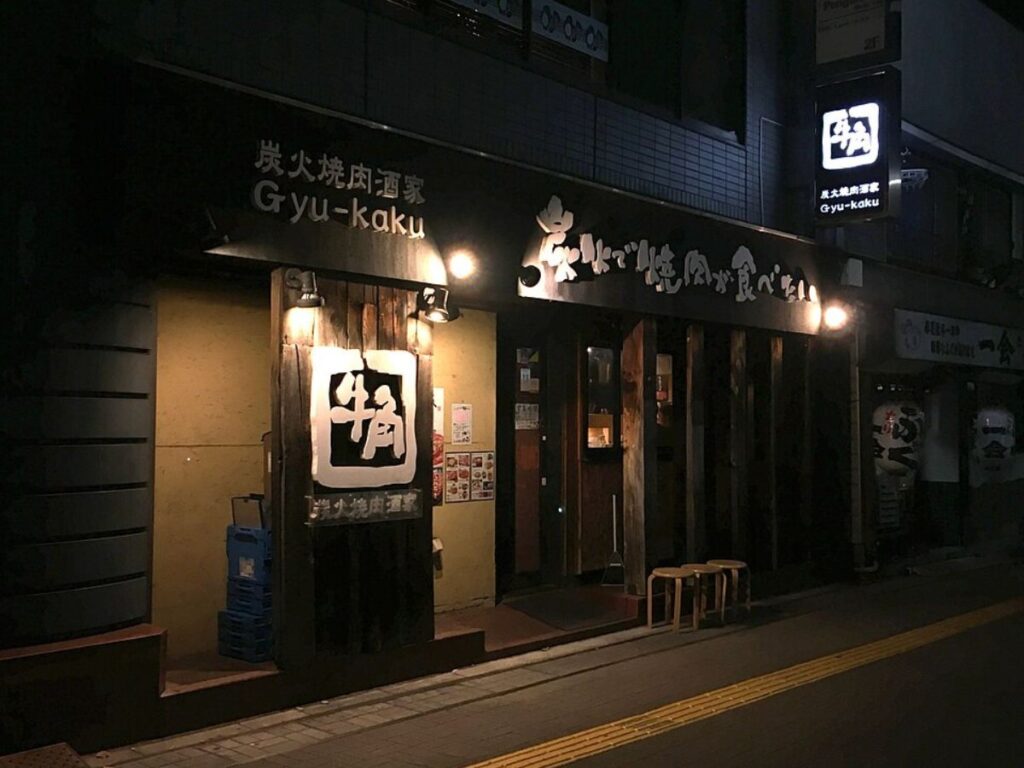
While Yakiniku King branches are mostly found as sprawling locations in suburbs, a typical Gyu-Kaku branch feels more like an urban drinking den. You will find them shoehorned into narrow commercial towers right outside major train station exits, and sometimes down in basements or up steep stairwells.
Gyu-Kaku splits its menu between individual plates and three tiered 90-minute tabehoudai courses (with a 70-minute cutoff for your last order): an entry-level 70-item tier (¥3,498), the popular 90-item flagship tier unlocking aged beef and garlic-butter harami (¥4,158), and a premium 100-item course with thick-cut steaks and tongue (¥5,368).
And though I’m a professed tabehoudai lover, unless you have a truly bottomless appetite, I’d say that ordering à la carte is often the smarter move here. Signature cuts like the thick-cut King Kalbi (Ousama Karubi) are locked behind that expensive ¥5,368 Premier tier. If you order à la carte instead, you can get the King Kalbi, a plate of garlic-butter harami, and your favourite sides for roughly ¥3,500 to ¥4,000, without racing against a 70-minute kitchen timer.
For carbs, I recommend the Karubi Senyo Gohan. If you lay your charred, sizzling short rib directly onto its crushed seaweed layer, the way the rendered fat soaks down into the grains is just perfect. Before asking for the bill, finish with the Gyu-Kaku Ice. It is a simple scoop of vanilla ice cream with kinako and sugar syrup, but it is somehow the perfect finish to an evening of grilling.
- Average Budget: ¥3,000 to ¥4,500 per person
- Ordering Style: Both À La Carte and Tabehoudai options (90-minute limit, last order at 70 minutes)
3. Yakiniku Like (焼肉ライク)
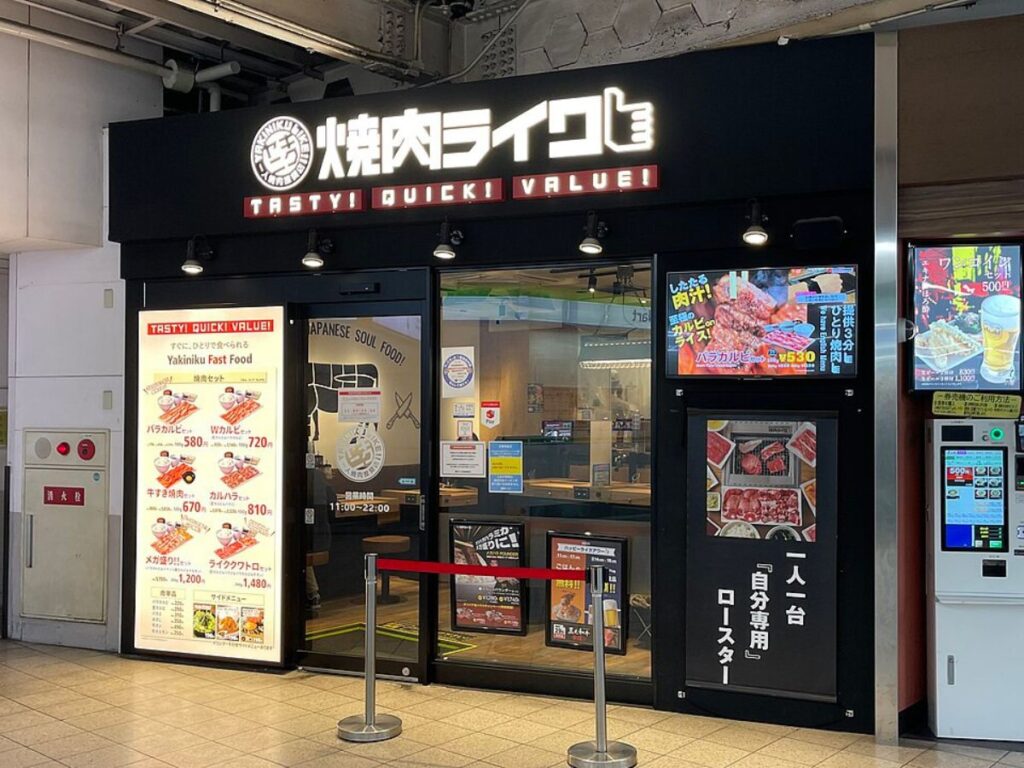
For years, walking into a yakiniku joint alone in Japan felt like going to karaoke solo: doable, but slightly awkward. Yakiniku Like killed that stigma dead.
The shops run like ramen bars with narrow counter stools separated by partitions. In your little booth, you get a smokeless grill, a water tap, a tablet, and house sauces. You order, and within three minutes a wooden tray slides into the slot on your counter with your order.
You are not getting melt-in-the-mouth A5 Wagyu here, but grilling fresh, chilled beef over an open flame beats a cold convenience store sandwich every single time. Their top seller is the Kalbi & Harami Set, starting at ¥1,850 for 120g. But if you just want a fast, dirt-cheap lunch, stick to the volume sets like the Mix Set (beef, pork, and chicken) or the standard Kalbi sets, which comfortably sit between ¥800 and ¥1,300. Rice refills are free until 5:00 pm at most branches, which explains why this is so popular among busy and stressed city workers.
- Average Budget: ¥1,000 to ¥2,000 per person
- Ordering Style: Teishoku set meals with single-plate add-ons
4. Jojoen (叙々苑)
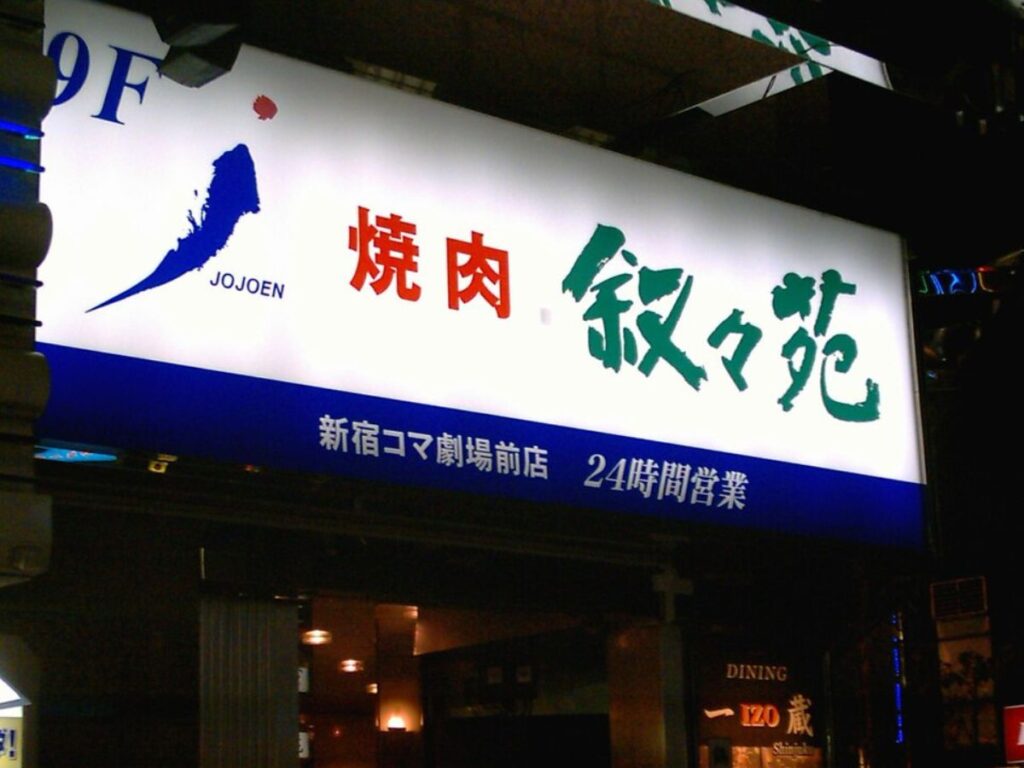
Founded in Roppongi back in 1976, this is where locals book a table when they want an unapologetically upscale yakiniku night out. The atmosphere feels like a Showa retro luxury lounge, with its private booths and servers in smart waistcoats.
Dinner prices easily climb past ¥15,000 per person, but their lunchtime sets are a clever way to experience the brand without breaking your budget. The standard weekday Yakiniku Lunch Set starts around ¥3,200 to ¥3,700 depending on the branch tier. For that price, you get a set tray loaded with tender marinated beef, grilled prawns, rice, soup, namul, and dessert.
Many central city locations of Jojoen sit in basements, but if you want that really luxe Jojoen experience, head to the 38th floor of the Yebisu Garden Place tower or the 53rd floor of Tokyo Opera City in Shinjuku.
- Average Budget: ¥3,200 to ¥6,000 for lunch sets; ¥12,000 to ¥20,000 upwards for dinner
- Ordering Style: Premium À La Carte and curated banquet courses
5. 0-Byou Lemon Sour Sendai Horumon Yakiniku Sakaba Tokiwatei (ときわ亭)
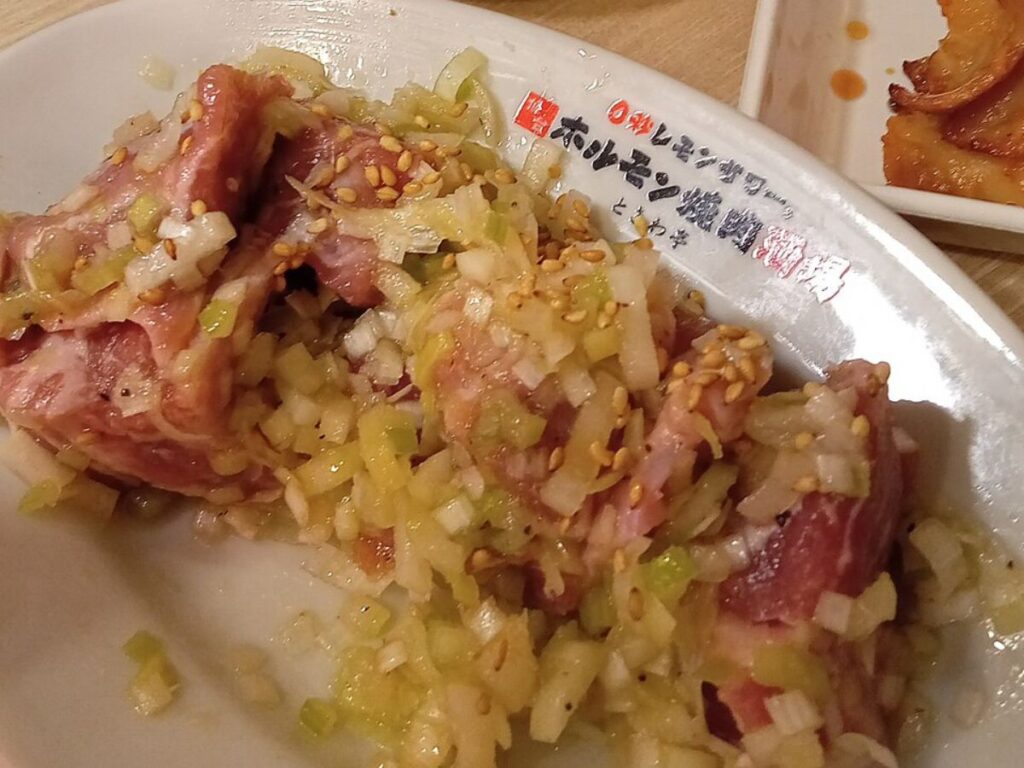
Originating in Sendai, this chain pairs cheap barbecue with an irresistible tavern gimmick: a yellow draught tower mounted directly into the centre of your table.
For ¥550 per person, you get sixty minutes of unlimited lemon sour straight from your table tap! The server hands your table two flavour syrups (choose the salt lemon and bitter lemon to keep it from getting syrupy), which you squirt into your glass before pulling the tap. There is zero waiting for drinks, which we all know is such a bummer on nights when you just want to have fun with friends and family over food and drinks.
The kitchen focuses heavily on pork offal (horumon), with the signature dish being Sendai Shio Horumon. Grilling it takes a bit of care. What I’ve learned over the years is that you should drop the pieces along the outer edge of the grill mesh rather than right in the middle over the hottest coals.
If offal is not your thing, the menu still offers standard barbecue, with the standout being Niku-kai Lemon Gyu-tan, a thick slab of beef tongue sliced open and packed with fresh lemon slices that grill together over the fire.
- Average Budget: ¥2,500 to ¥4,000 per person
- Ordering Style: À La Carte or casual all-you-can-eat courses paired with 60-minute table-tap drinks
Yakiniku Chains in Japan FAQs
Do I need a reservation for yakiniku chains in Japan?
Not usually, but showing up as a walk-in between 6:30 pm and 8:30 pm on a weekend means facing brutal lines. Arrive before 5:30 pm, take a numbered ticket at the door terminal, or use the EPARK site to join the queue online.
Can I eat at Japanese yakiniku chains without speaking Japanese?
Easily. Almost every modern chain uses a tabletop tablet with an English toggle and photos of each cut.
How much should I expect to spend at yakiniku chains in Japan?
Budget around ¥1,000 to ¥2,000 for a quick lunch tray at Yakiniku Like, and ¥3,500 to ¥4,500 for a solid dinner buffet or à la carte spread at family chains.