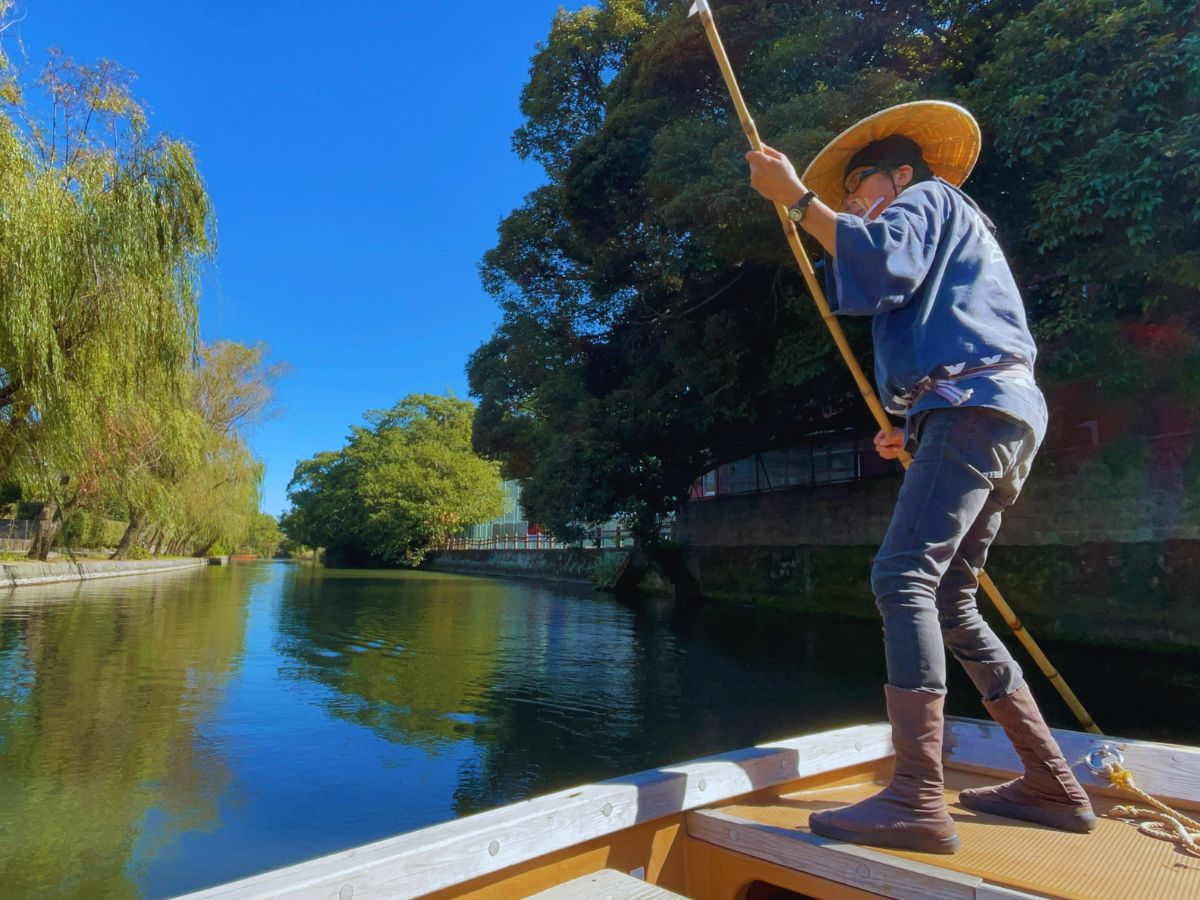

Yanagawa is a historic canal town in Fukuoka Prefecture, best known for its network of waterways and traditional boat rides. Often called the “Venice of Japan”, it offers a slower side of Kyushu that many international visitors never get to see.
Now, let me be very clear: I’ve developed a healthy suspicion of any town that markets itself as “the Venice of X”. That is especially true in Japan, where I count at least four different places that have claimed the title. This is Japan, after all… suffering-from-hordes-of-tourists-because-of-its-beauty Japan. Why would a city here feel the need to borrow the name of a (granted, also very dreamy) foreign city to market itself?
But that’s something I’ll have to take up with the city’s tourism board another time. Safe to say that visiting Yanagawa is, in my book, one of the best things you can do on a trip to Japan.
It sits less than an hour from Fukuoka, but most visitors to Kyushu never make it here. That’s a shame. The canals were dug centuries ago, but the town still runs on them to this day. Boats still move produce through the same channels tourists now punt along for fun. Restaurants back onto the water instead of facing away from it. Kids still fish off the same low bridges their grandparents did. The canals aren’t scenery here. They’re infrastructure that happens to be beautiful.
So, to make the case properly, we at Flip put together this Yanagawa guide. It covers how to get here, what’s worth your time once you arrive, when to come, what to eat, and how to piece it all into an itinerary that actually works.
Getting to Yanagawa from Fukuoka
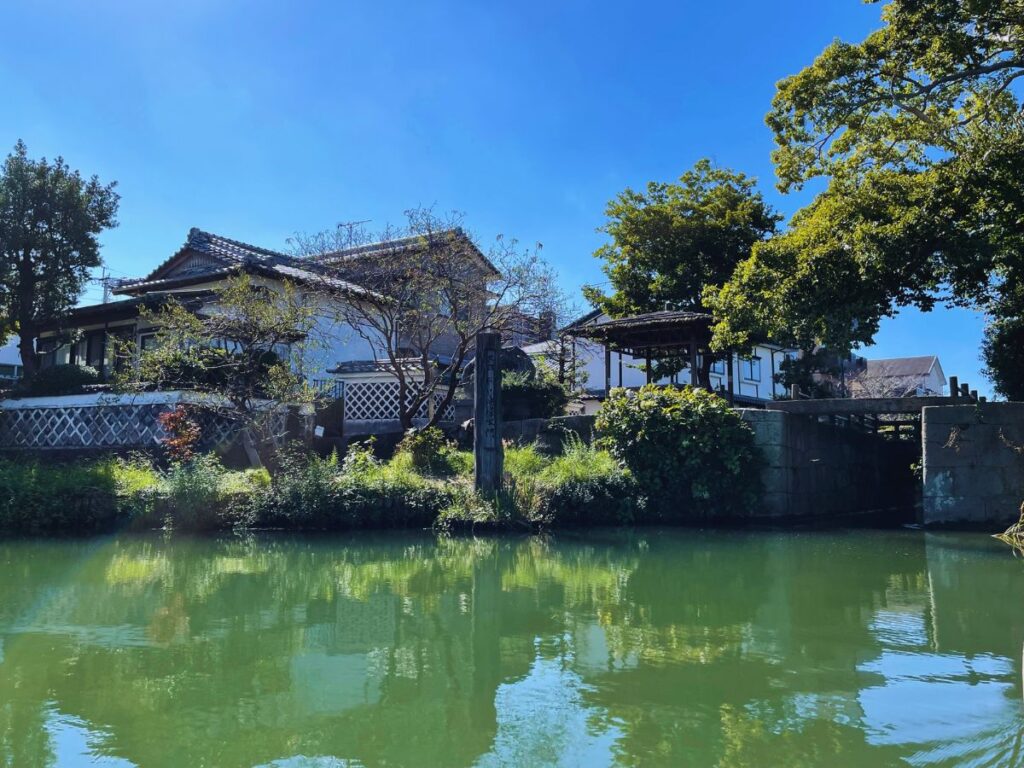
To get to Yanagawa from Nishitetsu Fukuoka Station in Tenjin, you can take the Nishitetsu Omuta Line towards Nishitetsu Yanagawa Station. The limited express takes about fifty minutes.
Once you get to Nishetsu Yanagawa, most canal boat piers sit five to ten minutes away by foot. Several operators also run free shuttle buses to their piers, which are a lifesaver if you’re carrying luggage or have kids with you.
Nishitetsu also sells bundled tickets covering train fare, the boat cruise, and a discount on the local eel dish. These deals aren’t heavily advertised (another thing I’ll have to discuss with the city’s tourism board, I guess), so do take a look before your trip and see if you can take advantage of it.
Want other ideas for day trips from Fukuoka? We have five lovely suggestions.
Stop Planning, Start Adventuring

Tired of spending hours trying to piece together the perfect Japan trip? Our custom travel planning service is for you. We handle all the research and logistics to create a unique itinerary that lets you travel with confidence and experience Japan your way.
Build My Personalised Japan Itinerary.
Top Things to Do in Yanagawa
Donkobune Canal Punting Tour
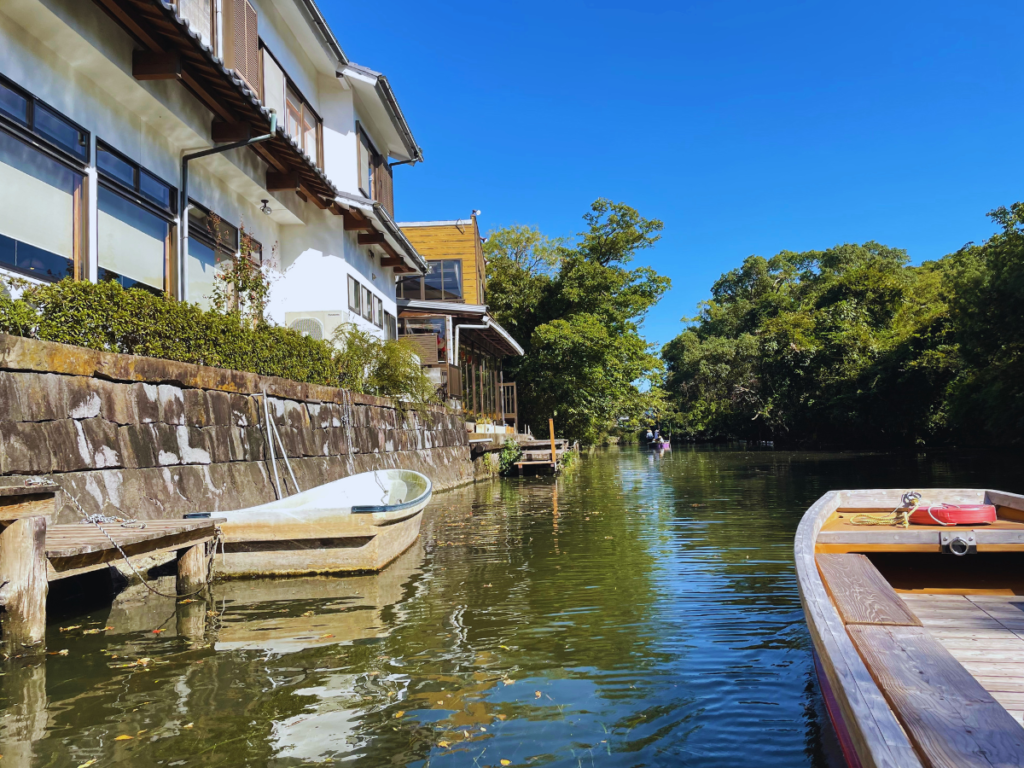
This is the reason people come to Yanagawa, and it earns the reputation. A boatman poles a narrow, flat-bottomed boat along roughly four kilometres of canal, ducking under stone bridges low enough that you, as a passenger, will need to lower your head too. The ride takes about seventy minutes, and along the way, the boatman tells local history and sings folk songs written by Hakushu Kitahara, Yanagawa’s most famous poet.
Book on a clear day if you can, since a sudden downpour cuts the singing short and everyone huddles under the boat’s low canopy instead.
- Location: Multiple boarding points around town, including Shogetsu Punting Station near Nishitetsu Yanagawa Station
- Hours: Roughly 9:00 to 15:00 (but runs later in the summer), with the last boat departing earlier depending on operator and season
- Fees: Around ¥2,200 for adults and ¥1,100 for children
Ohana (Tachibana Residence)
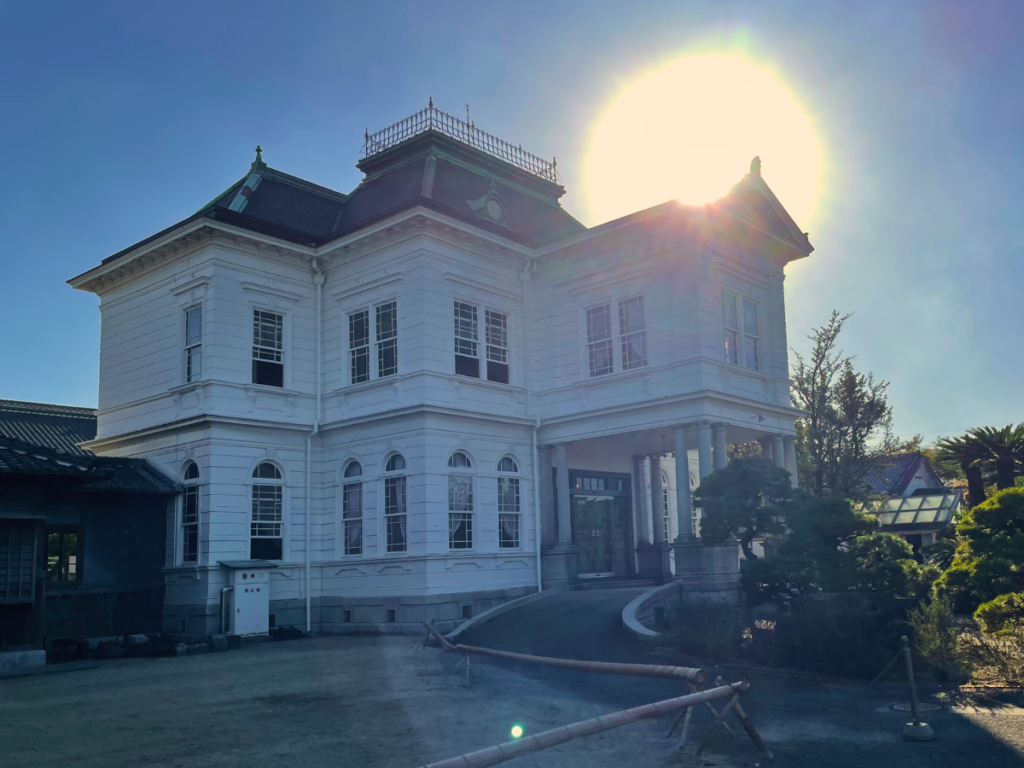
This was the residence of the Tachibana clan, the feudal lords who once ran Yanagawa. Parts of the grounds have stood since the 1700s, and the family is technically still thriving, just without the fiefdom these days. Think of them as Japan’s answer to the British royals: still very much present with a lot of the good real estate, but not running the country anymore.
Part of the estate now operates as a working inn, Ryokan Ohana so, for upwards of 50,000 to 100,000 yen per night for two people, you can actually spend the night in the same grounds the clan called home for three centuries.
I liked wandering Shotoen Garden here far more than I expected to. The black pines and still ponds add up to a properly relaxing walk, and the Western-style annexe gives you an interesting look at how the family absorbed foreign influence without losing the Japanese bones of the house. Entry to the museum is also included in the same ticket.
- Location: 1 Shinhokamachi, Yanagawa, Fukuoka
- Hours: 10:00 to 16:00 daily
- Fees: ¥1,200 for adults, ¥500 for high school students, ¥400 for elementary and junior high students
Hakushu Kitahara Birthplace and Memorial Museum
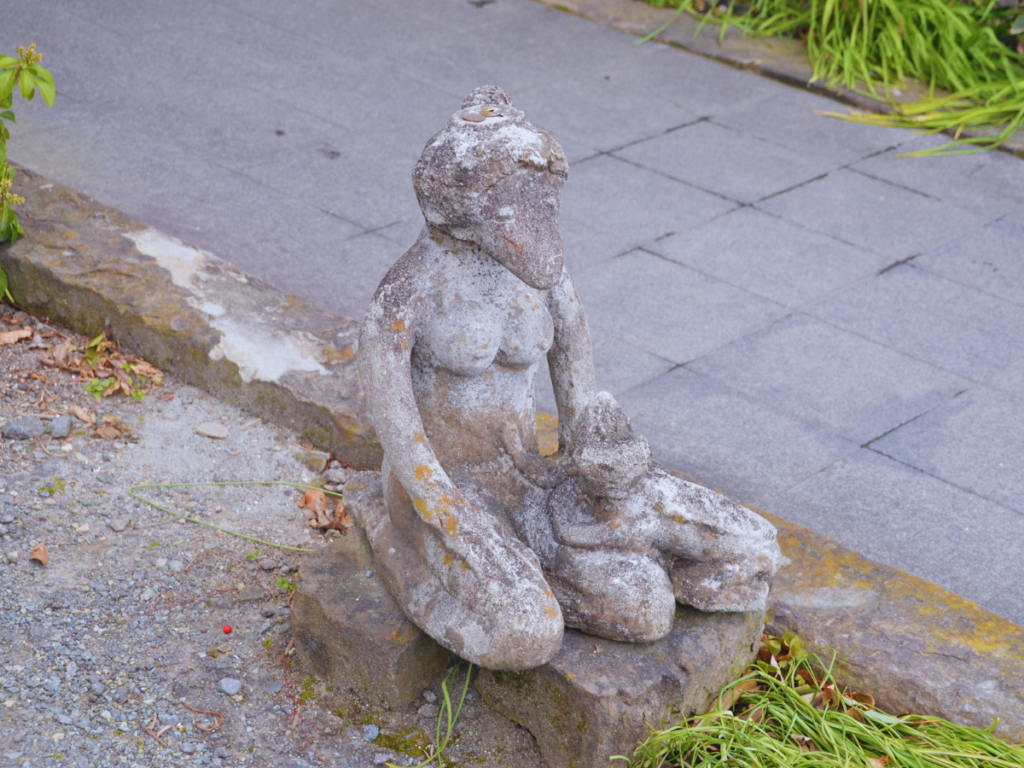
Lessons in foreign countries mostly just mention the likes of Basho in that brief portion of the curriculum that covers haikus. So, I wouldn’t be surprised if you’ve never heard of Hakushu Kitahara before (I know I didn’t). But let that not fool you, the poet is a genuinely big deal. He is regarded as one of the most important poets in modern Japanese literature, active through the Taisho and early Showa periods, and he published hundreds of books in his lifetime.
He wrote the lyrics for Karatachi no Hana and Kono Michi, tunes still taught in schools today, and he spent years shaping how Japan thought about children’s songs as a genre, arguing kids deserved poetry that respected their imagination rather than talking down to them. As a foreign mom raising my son in Japan, I thank him for that.
Kitahara grew up here, in a house connected to his family’s sake brewery. Most of the original building burned down in 1901, but it was rebuilt by 1969. Inside sit his manuscripts, his personal items, and a video theatre cycling through short films on his life. There’s also a death mask on display, which sounds morbid written down but is oddly moving in person.
I’d recommend visiting this one after the boat ride because hearing his songs on the water first changes how the exhibits land, since you already know the tune before you learn the man behind it.
- Location: 55-1 Okinohatamachi, Yanagawa City, Fukuoka
- Hours: 9:00 to 17:00, last entry 16:30
- Fees: ¥1,000 for adults, ¥600 for high school and university students, ¥400 for elementary and junior high students
Former Residence of the Toshima Family
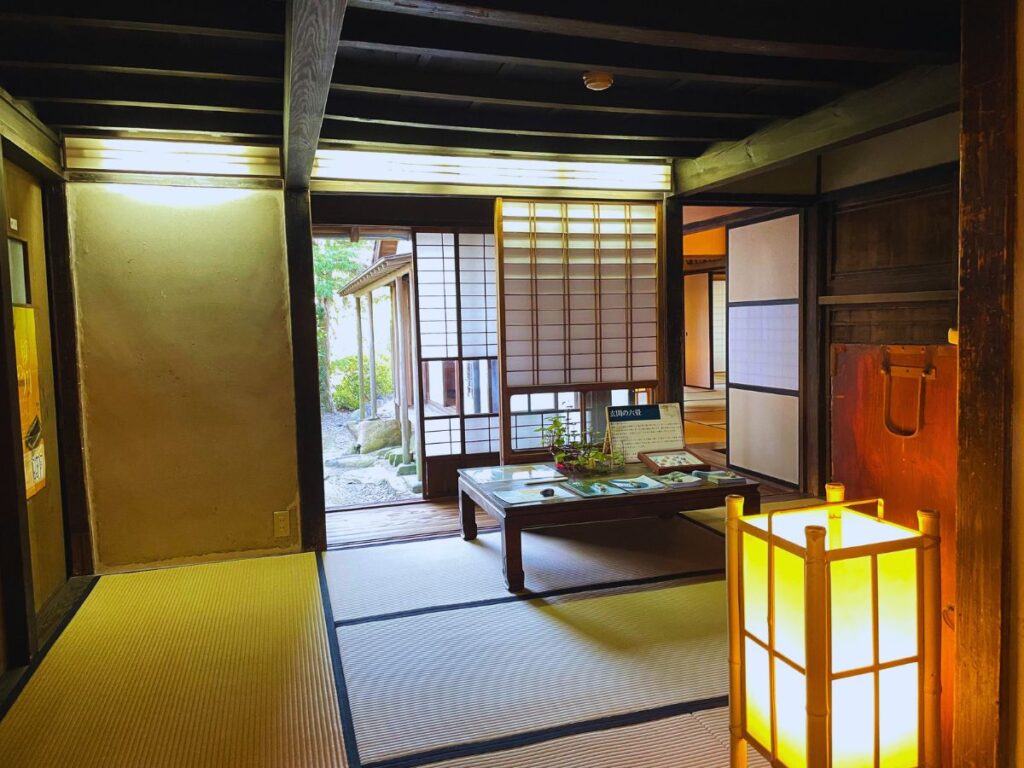
This site was built sometime in the early 1800s as a retirement retreat for a domain retainer named Yoshida Kanetomo, then repurposed as the Yanagawa domain’s official teahouse, the kind of place where lords would receive guests away from the formality of court. The Toshima family took ownership at some later point in its history, which is where the current name comes from. The city received it as a donation in 2001 and it was opened to the public a few years later.
What I remember most about it is this single corner of a tatami room which the architect left without a supporting pillar, so the garden opens up in front of you with nothing in the way. Compared to Ohana, this place is quiet almost to the point of being empty, which after the crowds at the Tachibana estate is exactly what I needed.
- Location: 49-3 Onodomachi, Yanagawa, Fukuoka, a short walk from Ohana
- Hours: 9:00 to 17:00, last entry 16:30, closed Tuesdays and over New Year
- Fees: ¥100, free if you show a same-day ticket from the Kitahara museum
Mihashira Shrine
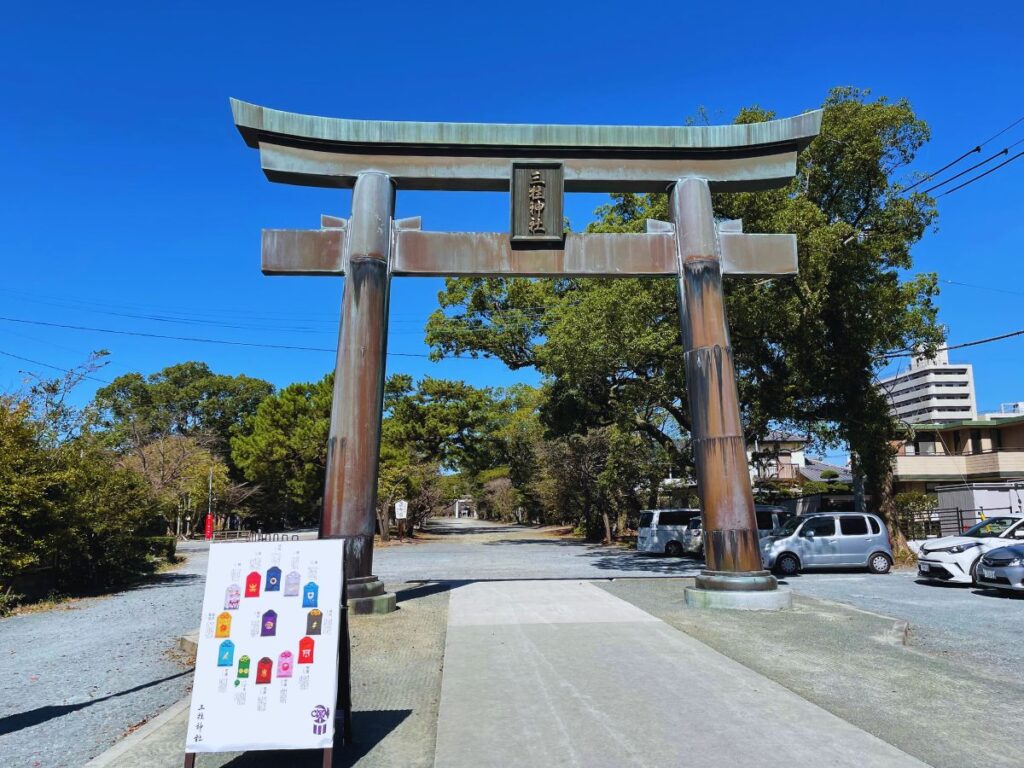
This shrine honours three people, which is where the name comes from, mihashira meaning three pillars. The main figure is Tachibana Muneshige, the first lord of the Yanagawa Domain and reportedly one of the more formidable military commanders of his era, sometimes described as the strongest warrior in western Japan at the time (yes, at a time of legendary samurais and sneaky ninjas).
He lost his domain after backing the losing side at Sekigahara, a battle so legendary that it still inspires movie and TV series adaptations. Muneshige then spent years working his way back into favour, and eventually became the only daimyo in Japanese history to be restored to the exact same domain he’d lost. Locals still treat him as a patron of second chances because of it.
The shrine also honours his wife, Ginchiyo, who inherited command of Yanagawa Castle from her own father at a young age and led troops in its defence before her marriage, and her father Bekki Dosetsu, the clan’s founder. So, when you think about it, it’s not just a shrine to a warlord, it’s a shrine to a family that fought, lost, and rebuilt, more or less as a team, and I like that.
I’ll admit I almost skipped this one, since it sits a bit apart from the canal cluster and my feet were already done for the day, but I was glad I didn’t. The approach through the torii gates is longer than you’d expect from the outside, and the further in you walk, the more the noise from the station drops away, until it’s just gravel underfoot and the sound of your own footsteps. It’s one of the few spots in Yanagawa where you can actually stand still for a minute without a boat group or a tour bus catching up to you.
- Location: near Nishitetsu Yanagawa Station, about a ten minute walk
- Hours: Grounds open daily, no fixed closing time outdoors
- Fees: Free to enter
Kabashima Iris Garden
The garden is best for planning a visit around if you’re here in June. During peak bloom, thousands of irises line the water’s edge, so the paths get properly crowded on weekend afternoons as a result. Outside that window, though, don’t write it off entirely. The rest of the year it settles into a quiet green park along the canal, and it’s a decent spot to sit for ten minutes if you’re walking between Ohana and the station
- Location: Eastern edge of Yanagawa, a short taxi ride from the station
- Hours: Open during bloom season, typically June
- Fees: Free
Best Time to Visit Yanagawa
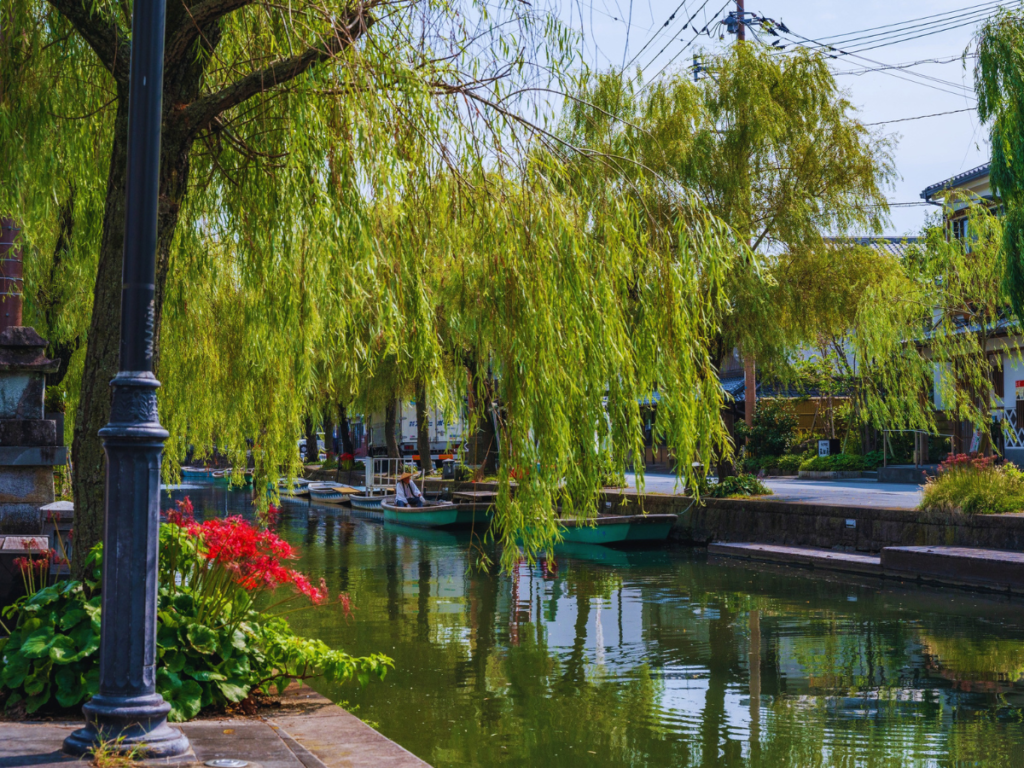
In spring, cherry blossoms line the canal banks, and the town leans hard into it with the Hinamatsuri Sagemon Doll Festival, which runs from 11 February through early April. Homes and shops hang red and white decorations along the main streets. This is peak season by a wide margin, so expect the boats to fill up fast and same-day tickets to disappear by mid-morning if you haven’t booked ahead.
The Kabashima Iris Garden takes over as the main reason to come in the summer, and the willow trees along the canals are about as green as they get. What nobody warns you about enough though is the heat. Booking a midday cruise guarantees soaking through a shirt well before 10am.
My own pick for visiting Yanagawa is autumn, but that’s honestly my favorite time of the year for anywhere in the country as well. Still, something about hearing the boatman sing while being herded through canals surrounded by autumn foliage just warms my heart.
From December through February, boats get fitted with kotatsu tables under blankets, which I think completely changes the experience and is something I would love to try out someday.
What to Eat in Yanagawa
Unagi No Seiro-Mushi
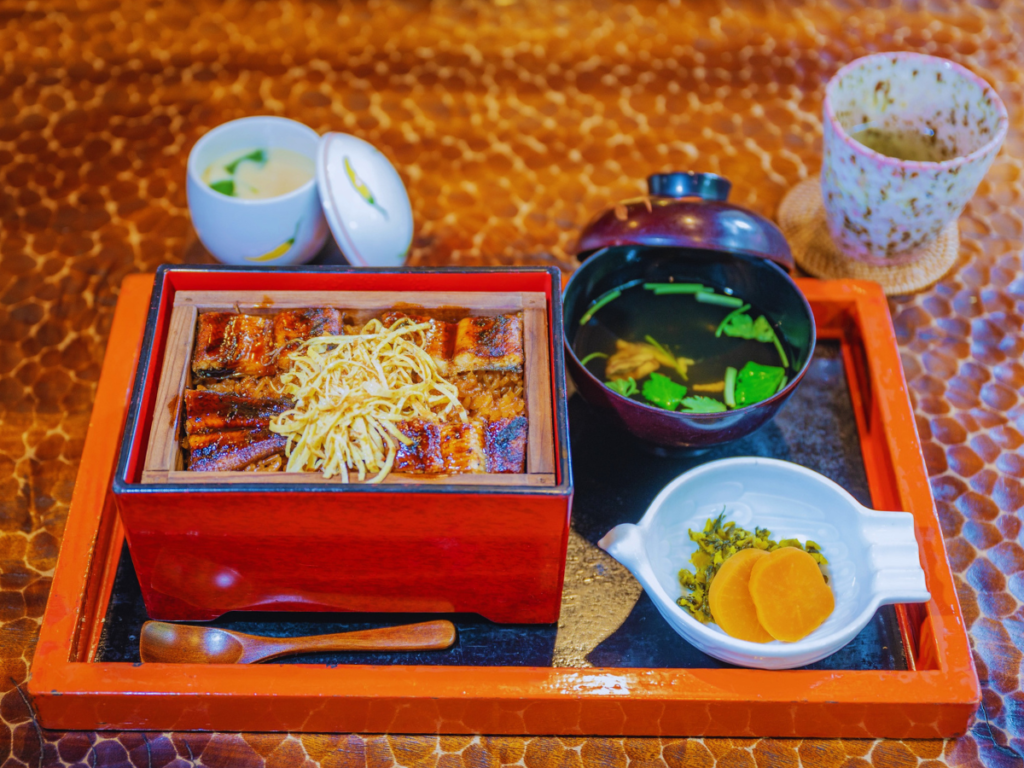
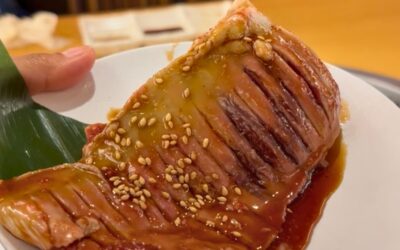
You definitely have to try this if you’re in Yanagawa already! Grilled eel gets layered over rice with shredded egg, then steamed together in a lacquered box, a method locals credit to a Yanagawa restaurant roughly three hundred years ago. You might have had unagi before, but the steaming step makes all the difference. It lets the sauce soak into the rice instead of sitting on top of it.
Walk near the canal at lunchtime and you’ll catch the smell drifting from doorways, but be ready to stand in line because restaurants near the boat piers fill up fast around midday.
Mutsugoro, Warasubo, and Kutsuzoko
The Ariake Sea next door has the largest tidal range in Japan, which produces a stretch of seafood you won’t find much anywhere else in the country. Mutsugoro, a mudskipper locals affectionately call the tidal flats dancer, gets grilled with salt or simmered, and I’d honestly put it up there with the eel once you get past how it looks on the plate.
Warasubo is an eel-like fish with a face that startles first-timers, myself included (and I’m a huge fan of the Alien movie franchise). You’ll notice I intentionally left out adding a photo to give you an opportunity to Google it yourself and get a free jumpscare. Kutsuzoko, named for its resemblance to the sole of a shoe, gets boiled and served plain, but is surprisingly tasty.
Yanagawa Nabe
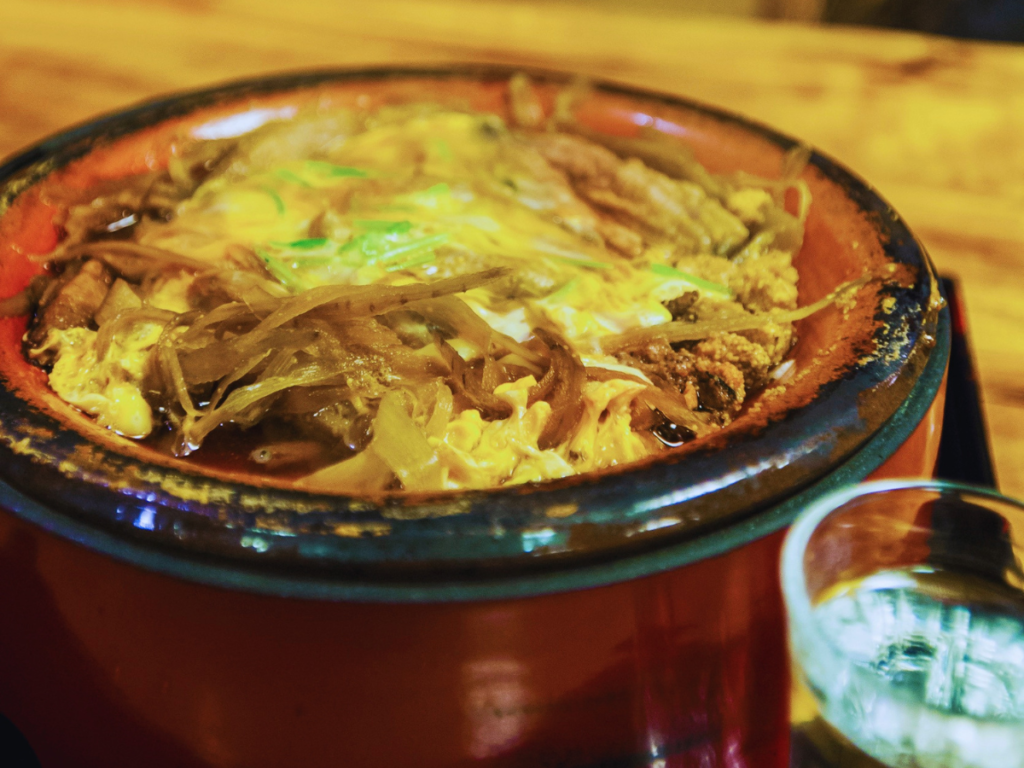
This is a hotpot built around a small freshwater fish, simmered in broth with sliced burdock root and topped with egg. It carries roughly the same nutrition as eel for a fraction of the price, which is exactly why it became something locals actually eat rather than a dish invented for visitors.
Sample Yanagawa Itineraries
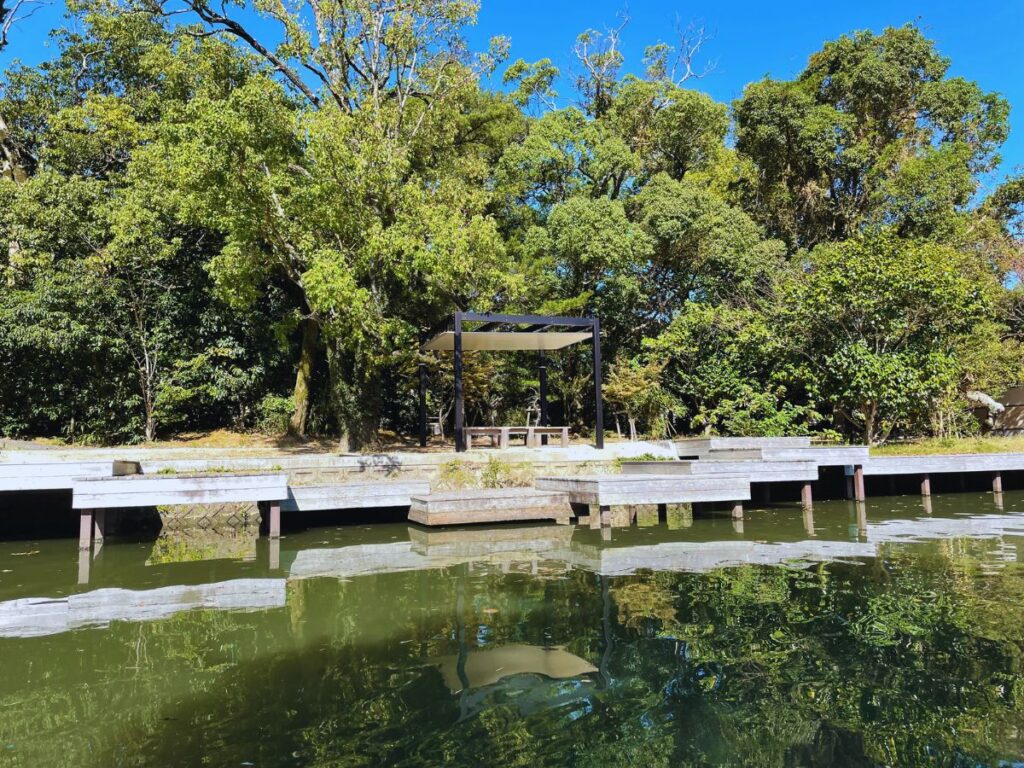
Half-Day Yanagawa Plan
Get to Yanagawa for the morning, since the earlier boats tend to be quieter and the light on the water is better for it. The donkobune cruise takes 60 to 70 minutes, so you’re looking at late morning by the time you’re back on solid ground and properly hungry. That timing works out well, because it means you’ll hit lunch right as the eel restaurants near the piers start filling up, and unagi no seiro-mushi tastes even better when you’ve earned it after an hour on the water.
After lunch, walk over to Ohana. Give yourself a proper hour here, slowing down in Shotoen Garden. If you time it right, you’ll be back at the station by mid-afternoon.
Full-Day Yanagawa Itinerary
Everything from the half-day plan still applies if you’re spending a full day, but once you’re done at Ohana, you can head to the Kitahara museum. It’s a short walk, and going in the afternoon means you’ve already got his songs from the boat ride fresh in your head.
From there, let the day slow down properly. Walk the backstreets around the old canal-side district, preferably with no real agenda beyond wandering. If your legs have anything left, Mihashira Shrine is worth the detour, particularly late in the day once the crowds elsewhere in town have thinned.
Yanagawa Guide FAQs
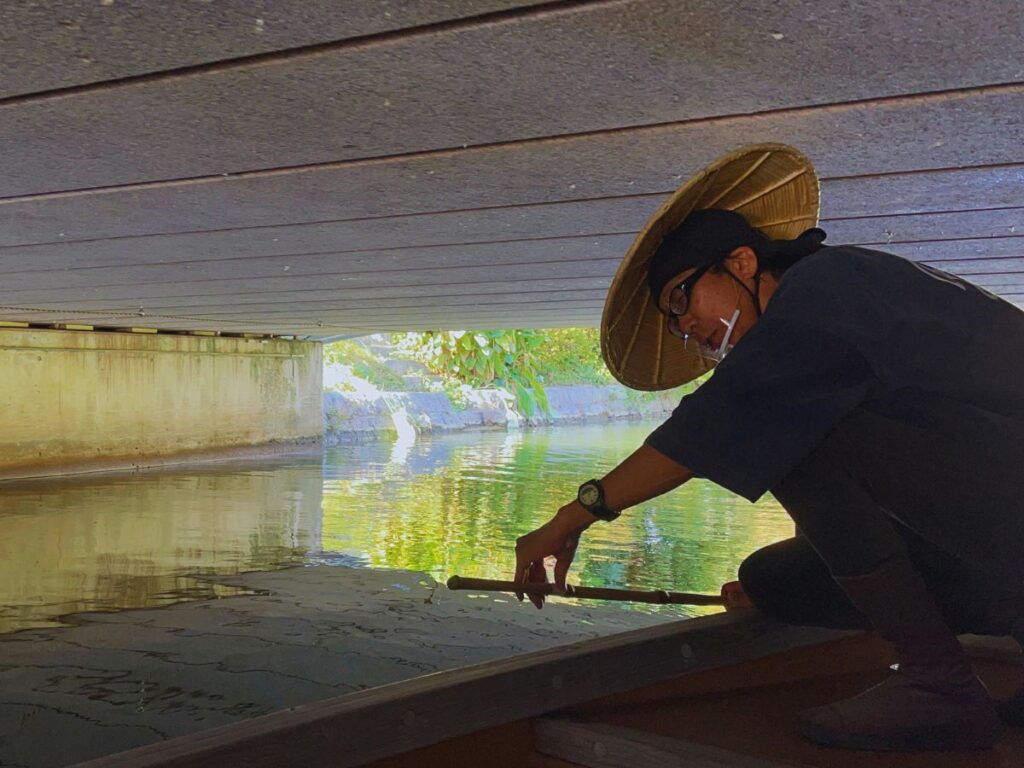
How long does the Yanagawa boat tour take?
The standard donkobune cruise runs 60 to 70 minutes and covers around four kilometres. Shorter 30 to 40 minute routes exist for those pressed for time.
Is Yanagawa worth visiting as a day trip from Fukuoka?
Definitely. The train from Nishitetsu Fukuoka Station takes under an hour, and a half-day plan covers the highlights comfortably.
What is the best time of year to visit Yanagawa?
I’m partial to autumn, but spring is also very beautiful, in a ‘very Japan’ way, with cherry blossoms and the Sagemon festival.
Can you combine Yanagawa with a Dazaifu day trip?
Yes, since Dazaifu Tenmangu is about forty-five minutes away. I think pairing both into one day leaves little room to actually slow down in Yanagawa though.