

I wouldn’t say I was much of a football follower before this year. I was more than happy to let my TikTok algorithm serve me an endless stream of Ronaldinho edits, watching the same legendary shots of the GOAT over and over, just with slightly different music and transitions each time.
Then came Japan’s equaliser against the Netherlands at the World Cup. Koki Ogawa went up for a header, the ball bounced off Daichi Kamada’s head and flew into the net. Kamada looked almost as surprised as everyone watching, while his teammates initially rushed over to celebrate Ogawa. He even had to point at his own head to make sure everyone knew he’d got a touch. I found the whole thing hilarious. And, apparently, entertaining enough to convince myself that I might as well splash out on DAZN’s discounted World Cup special and watch a few more matches.
And before I knew it, I was setting alarms to catch Japan’s matches live on DAZN and buying the Japan football collaboration goods at 3COINS. What started as casually cheering for Japan had turned into something considerably more involved. And, let’s be honest, having a few rather good-looking players in the mix hasn’t exactly put me off.
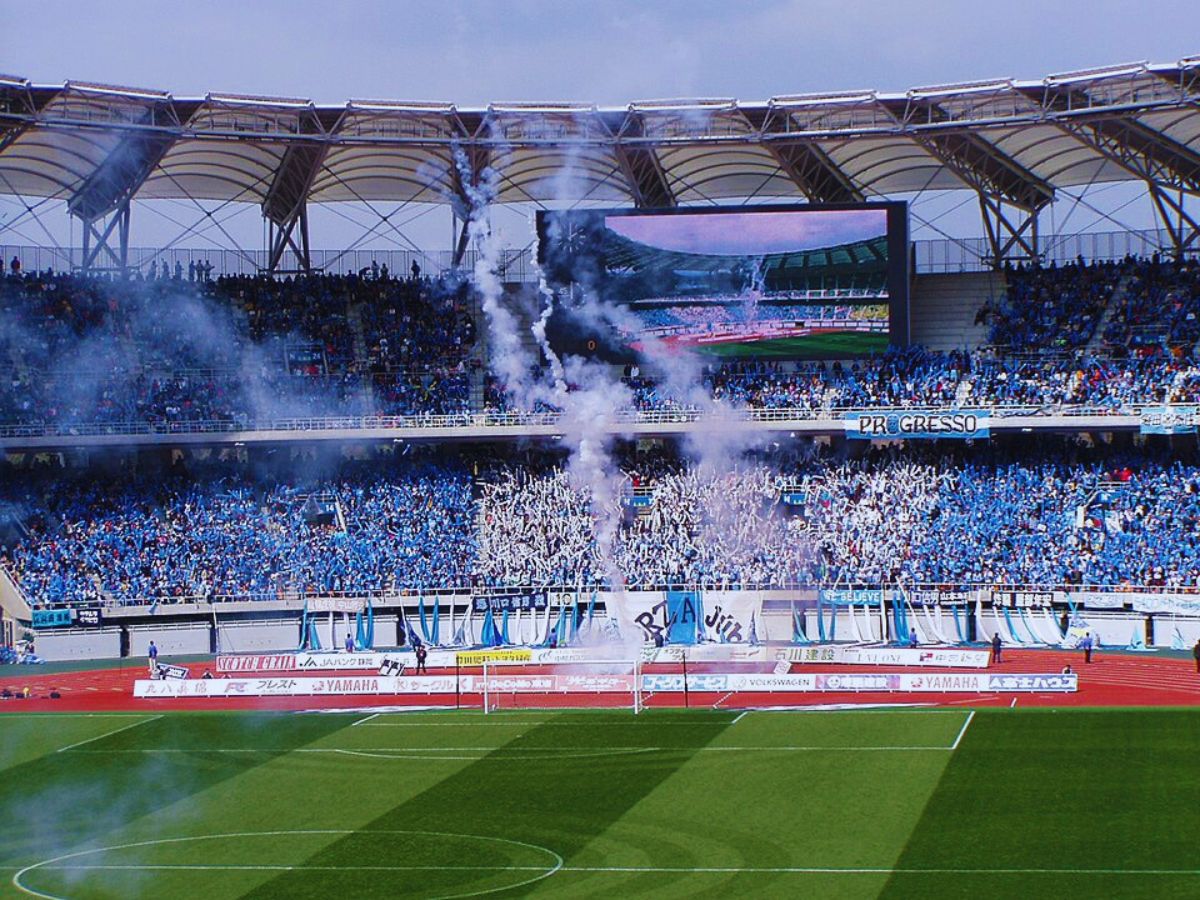
If you’ve also found yourself getting curious about Japanese football, watching a J.League match is a good place to start. You don’t need to know all the clubs or even arrive with a favourite team. You just need to find a match, get a ticket and see what the atmosphere is like. But here are a few practical things worth knowing first.
What is the J.League?
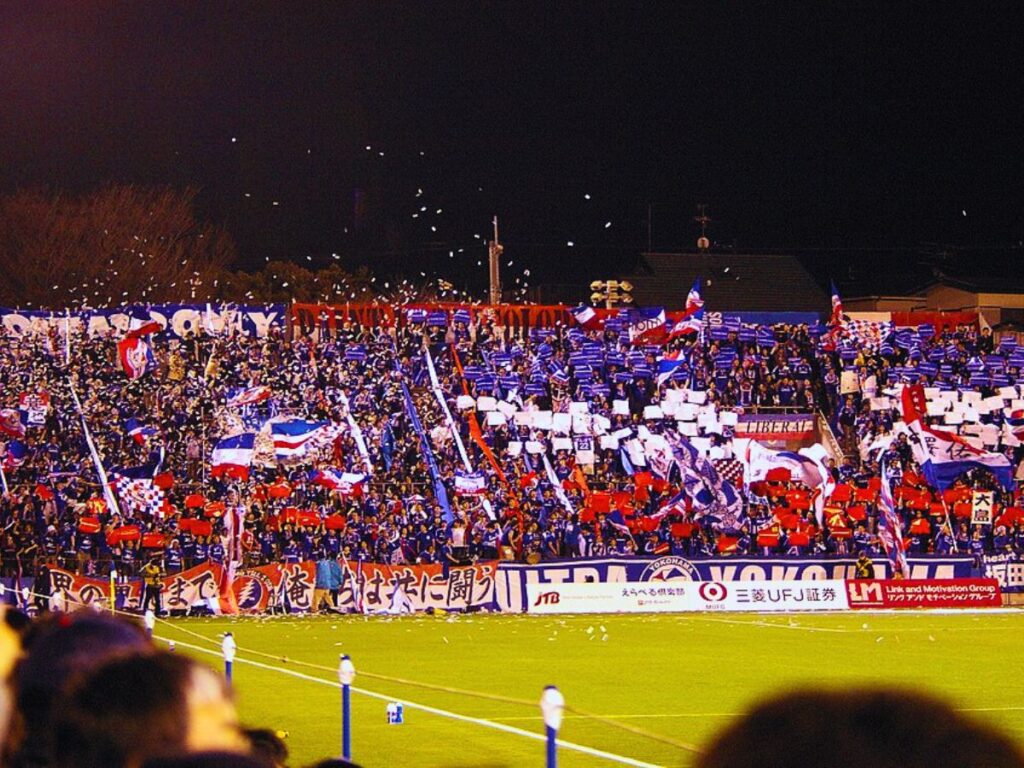
The J.League is Japan’s professional football league. It has three divisions: J1, J2 and J3, with 20 clubs in each division for the 2026/27 season.
J1 is the top division, so it’s where you’ll find many of the country’s best-known clubs and players. But don’t write off J2 or J3 if you find a match that fits your plans. They’re professional competitions too, and you don’t need to be watching the biggest names in Japanese football to have a good time in the stands.
Each division runs its own league competition, with clubs playing home and away fixtures. In J1, that means 38 matches per club across the season. The league also has cup competitions, including the J.League Cup, so you’ll sometimes see teams playing outside their regular league schedule.
One important change for visitors planning a trip is the league calendar. The J.League has moved to a European-style season, running from August to June (it used to follow a February-to-December schedule).
When is the J.League season?
The 2026/27 season started on August 7, 2026 and is scheduled to finish on June 6, 2027. This is the first full season under the J.League’s new August-to-June calendar.
Here are the scheduled dates for each division:
| Competition | Start | End |
| J1 League 2026/27 | August 7, 2026 | June 6, 2027 |
| J2 League 2026/27 | August 8, 2026 | May 23, 2027 |
| J3 League 2026/27 | August 8, 2026 | May 23, 2027 |
There’s also a winter break, with league matches pausing during January before the season resumes in February. Most fixtures take place at weekends, although you’ll also find weekday evening matches.
Which J.League team should you watch?
You might be wondering which team you’re supposed to support. Honestly, I wouldn’t overthink it. Any die-hard sports team fan would probably slap me when I say this, but I’ll take the risk: You don’t need a lifelong allegiance to enjoy a match.
When it comes to catching a J.League match, I’d start with the city you’re visiting, check which clubs play nearby and see who’s at home during your stay. You might end up liking the supporters or a particular player.
If you’re staying in Tokyo, you have several clubs to choose from.
| Club | Home stadium | Location |
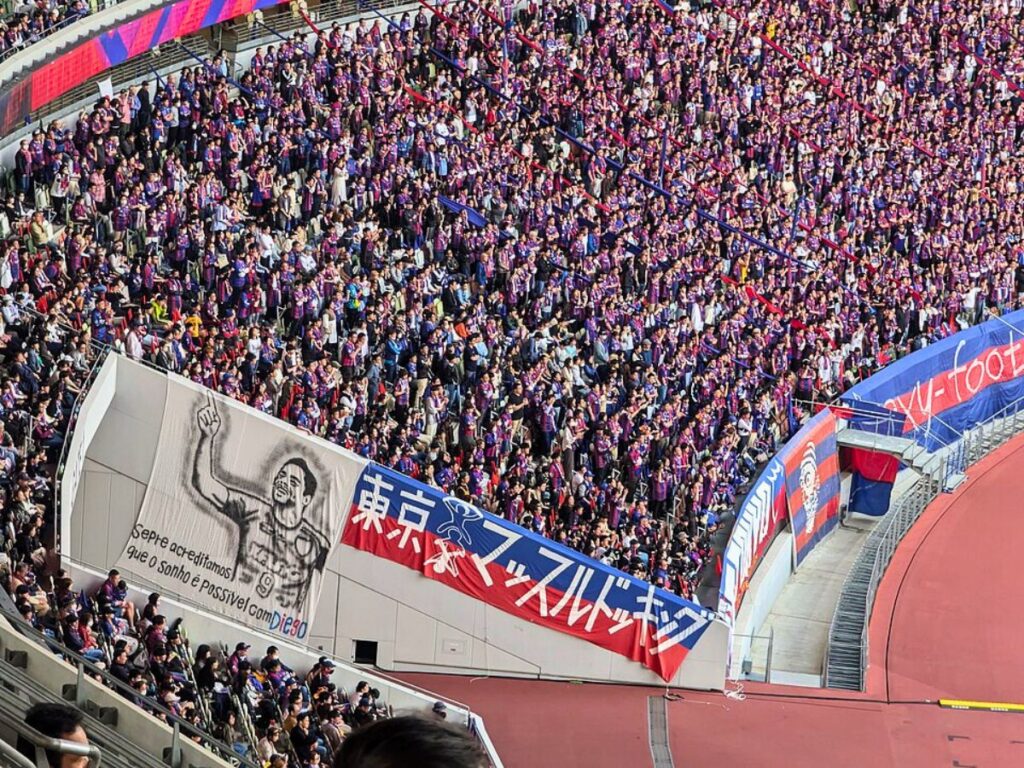
| FC Tokyo | Ajinomoto Stadium | Chofu, Tokyo |
| Tokyo Verdy | Ajinomoto Stadium | Chofu, Tokyo |
| FC Machida Zelvia | Machida GION Stadium | Machida, Tokyo |
| Kawasaki Frontale | Uvance Todoroki Stadium by Fujitsu | Kawasaki, Kanagawa |
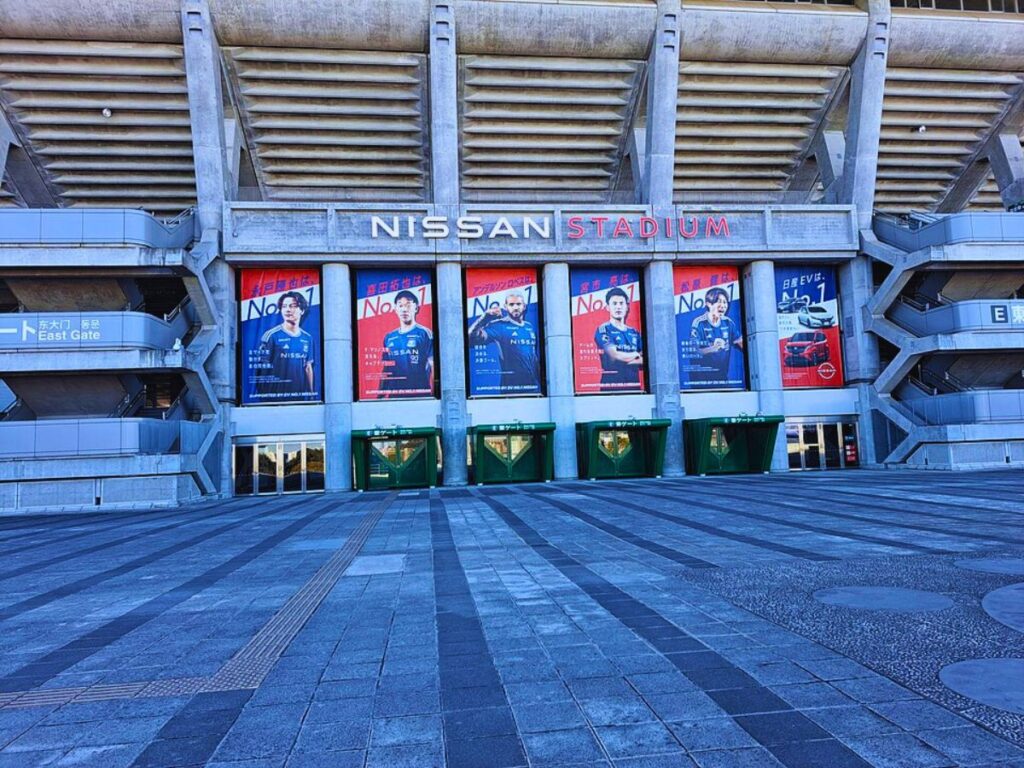
| Yokohama F. Marinos | Nissan Stadium | Yokohama, Kanagawa |
| Kashiwa Reysol | Sankyo Frontier Kashiwa Stadium | Kashiwa, Chiba |
FC Tokyo and Tokyo Verdy share Ajinomoto Stadium, but there’s a bit of local rivalry between them. When they meet, it’s even known as the Tokyo Derby, so that’s one match I’d look out for if you happen to be visiting at the right time.
Tokyo Verdy also has some serious football history behind it. Its former players include Kazuyoshi Miura, one of Japan’s most famous footballers, and Brazilian-born Ruy Ramos. Ajinomoto Stadium is in Chofu, which is around 20 minutes from Shinjuku on the Keio Line’s limited express, followed by a short walk from Tobitakyū Station.
FC Machida is one of the more exciting recent stories in Japanese football. The club won J2 in 2023, reached the top division for the first time in 2024 and finished third in its debut J1 season. It then won the Emperor’s Cup in 2025. Kawasaki Frontale, meanwhile, had a remarkable run of success, winning four J1 titles between 2017 and 2021.
If you’re spending time in Yokohama, Marinos are an obvious choice. They’re one of the J.League’s most successful clubs, with five league titles, and have had some recognisable Japanese players over the years. Shunsuke Nakamura, famous for his free kicks, is probably one of the best-known names associated with the club.
If you’re happy to travel a little further, Urawa Reds in Saitama are known for their huge, passionate following. Kashima Antlers are another major name, with a long record of domestic success. And Vissel Kobe might ring a bell if you follow international football: Andrés Iniesta played for the club from 2018 to 2023 after leaving Barcelona.
But again, don’t get too caught up in choosing the most successful team. Check which stadium is easiest to reach and pick a match that catches your eye. You might arrive as a neutral and leave with a new favourite.
Figuring out which club is playing near you, on which date, and whether it fits the rest of your trip is its own kind of puzzle. If you want it mapped out alongside everything else you’re doing in Japan, we can build that into your itinerary for you.
How to buy J.League tickets
Buying football tickets in Japan can be a little confusing at first, particularly if you don’t speak Japanese. Different clubs use different ticketing websites, and you might come across names like QUICK Pia without having the faintest idea what they are.
I’d start with the J.League’s official ticket directory. It has links to ticket pages for clubs across J1, J2 and J3, so you can find your chosen team and see where its tickets are sold.
QUICK Pia: The Easiest Option for Overseas Visitors
One name you’ll come across is QUICK Pia. It’s an English-language ticket booking service run by Pia, a major Japanese ticket company. Through it, you can browse matches and choose your tickets, and pay in English without creating an account. It also accepts credit cards and digital wallet payments, which makes the whole process much less intimidating if you’re visiting from overseas.
As of November 2026, QUICK Pia covers all 20 J1 clubs, as well as 16 clubs in J2 and J3. That’s 36 of the J.League’s 60 clubs, so there’s a good chance your chosen team will be listed.
You don’t need to hunt down the QUICK Pia website yourself. Go to the J.League ticket directory, select your club and follow the ticket link. If the club uses QUICK Pia, you’ll be taken to its English booking page.
But not all clubs are on QUICK Pia. Some clubs have their own English ticket pages, while others use Japanese booking services. The J.League directory links to the relevant ticket pages, so check there first. You can also visit the club’s official website and look for its ticket section.
Do I need to book a J.League ticket in advance?
Not necessarily months ahead. For an ordinary league match, you may be able to buy tickets much closer to the day. However, I’d be more organised if you’re hoping to see a local derby, a popular club or an important match towards the end of the season.
Keep an eye on the general sale date, too. Some clubs offer tickets to their members first, which means you might see a match listed before tickets are actually available to everyone. I’d also advise checking where the stadium is before getting too excited about a cheap ticket, as some grounds are quite a distance from central Tokyo.
Things to Know Before Going to a J.League match
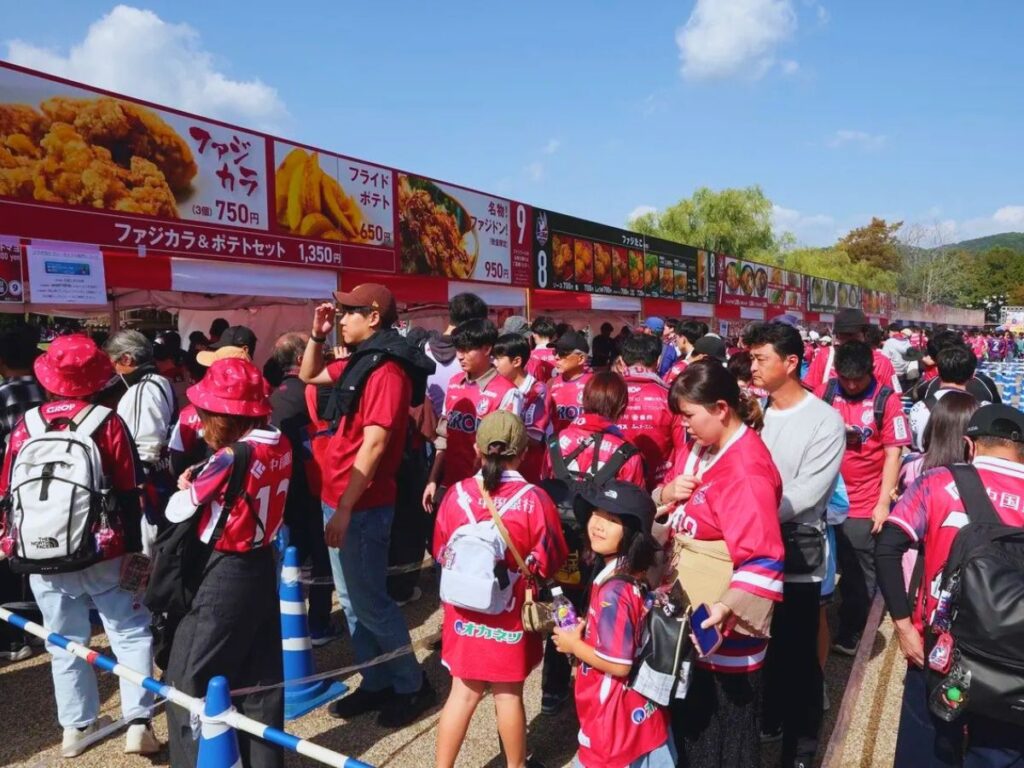
Japanese football stadiums have a few quirks worth knowing about before you turn up. For starters, don’t expect to wander in with a bottle of Pocari Sweat or a can of beer in your bag. Many stadiums don’t allow bottles and cans through the gates, so you’ll usually be asked to pour your drink into a paper cup at the entrance.
The food is another thing I’d make time for. Forget the sad stadium hot dog stereotype. J.League grounds often have proper food stalls selling everything from yakisoba and karaage to regional specialities. Some clubs even publish a stadium gourmet guide showing what’s available.
One thing to pay attention to when booking is the supporter section. Japanese football fans are organised, and the most enthusiastic supporters tend to gather in designated ‘supporter sections’ where they’ll spend much of the match chanting and waving flags. It’s great fun to watch, but if you’d rather sit down and follow the game without getting swept up in all that, choose a reserved seat elsewhere.
FAQs: J.League and Watching Football in Japan
Do I need to understand Japanese to watch a J.League match?
You can enjoy the match without understanding Japanese. The atmosphere and crowd reactions are easy enough to follow. Ticketing can be more complicated, but QUICK Pia now offers English-language ticket sales for all 20 J1 clubs and some J2 and J3 clubs.
Can tourists buy J.League tickets?
Of course! International visitors can buy tickets through QUICK Pia for clubs that use the service. It offers English-language booking without requiring an account, and supports credit cards and digital wallets.
How much do J.League tickets cost?
As a rough guide, budget around ¥3,000 to ¥5,500 per adult for a standard J.League ticket. Seats along the main stand or closer to the halfway line can cost around ¥5,500 to ¥8,000, while premium seats may set you back ¥10,000 or more. Prices aren’t fixed across the league, though. Some clubs use dynamic pricing, meaning the cost can change depending on the opponent and demand.
Can I buy J.League tickets on the day?
Some clubs sell tickets on matchday if seats are still available, but this isn’t guaranteed.