
Autumn is one of the most popular times to visit Tokyo, and honestly, it’s no wonder why. It’s right up there with the cherry blossom season. One good reason is that the awful summer humidity is gone, and it’s just incredibly pleasant to be outside exploring.
But the real show is the autumn leaves.
What we love about autumn in Tokyo is the way the foliage mixes right into the city. You’ll be in an old, quiet garden looking at beautiful red maple leaves, and then you’ll look up and see the huge Shinjuku office buildings right behind them. Or, you’ll be walking down a major street that’s just a bright yellow tunnel because it’s lined with ginkgo trees.
It’s that mix of city and nature that we think makes it special.
We want you to have the best Tokyo autumn trip, so we’ve packed this guide with local tips. We’ll cover the best time to visit, what you actually need to pack, which festivals to go to, and our personal favourite spots for Tokyo autumn foliage in 2026.
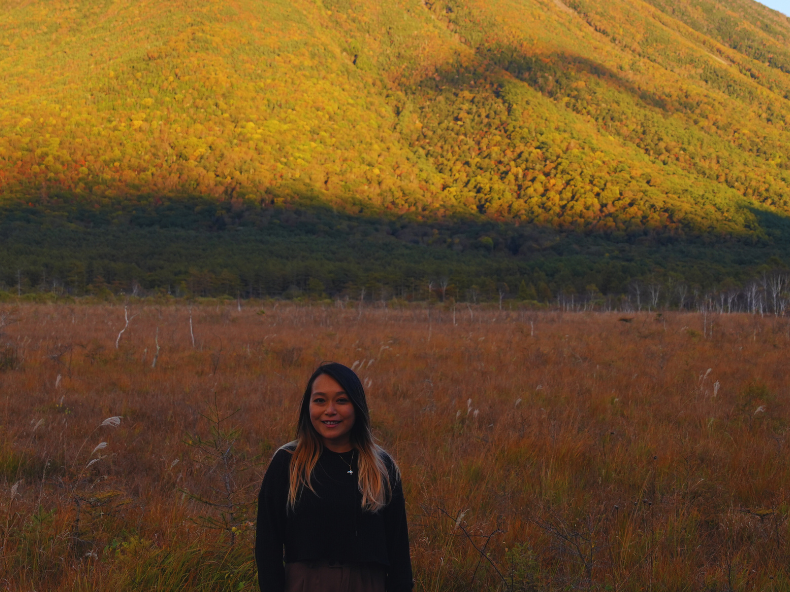
Want to see autumn colours away from the crowds? Book a customised private Tokyo tour with a local guide who builds the day around what you actually want to see, from quiet temple backstreets to hidden neighbourhood spots.
When is the Best Time to See Autumn Leaves in Tokyo in 2026?
This is probably the most important question we get every year, and timing really matters. The honest answer is that Tokyo’s autumn colours come late, and with rising summer temperatures, every year is later than the one before. We’ve had guests visit in early October expecting bright red leaves and be disappointed, while others who came in early December caught the most incredible colours.
If you’re planning a trip to Tokyo in October, think of it as ‘early autumn’. The weather is absolutely gorgeous: crisp, sunny, and perfect for sightseeing without the summer humidity. You’ll see some beautiful autumn flowers, like the cosmos at Showa Kinen Park. But, and this is a big but, most of the maple and ginkgo trees will still be very green. It’s a fantastic month to be in Tokyo, just not for peak Tokyo autumn foliage.
Late November and early December are when the city really puts on its autumn show. This is the prime month. The key thing to know, and something we always say, is that the two main types of leaves peak at different times, so you can’t always see everything at once.
Peak Foliage Times in Tokyo
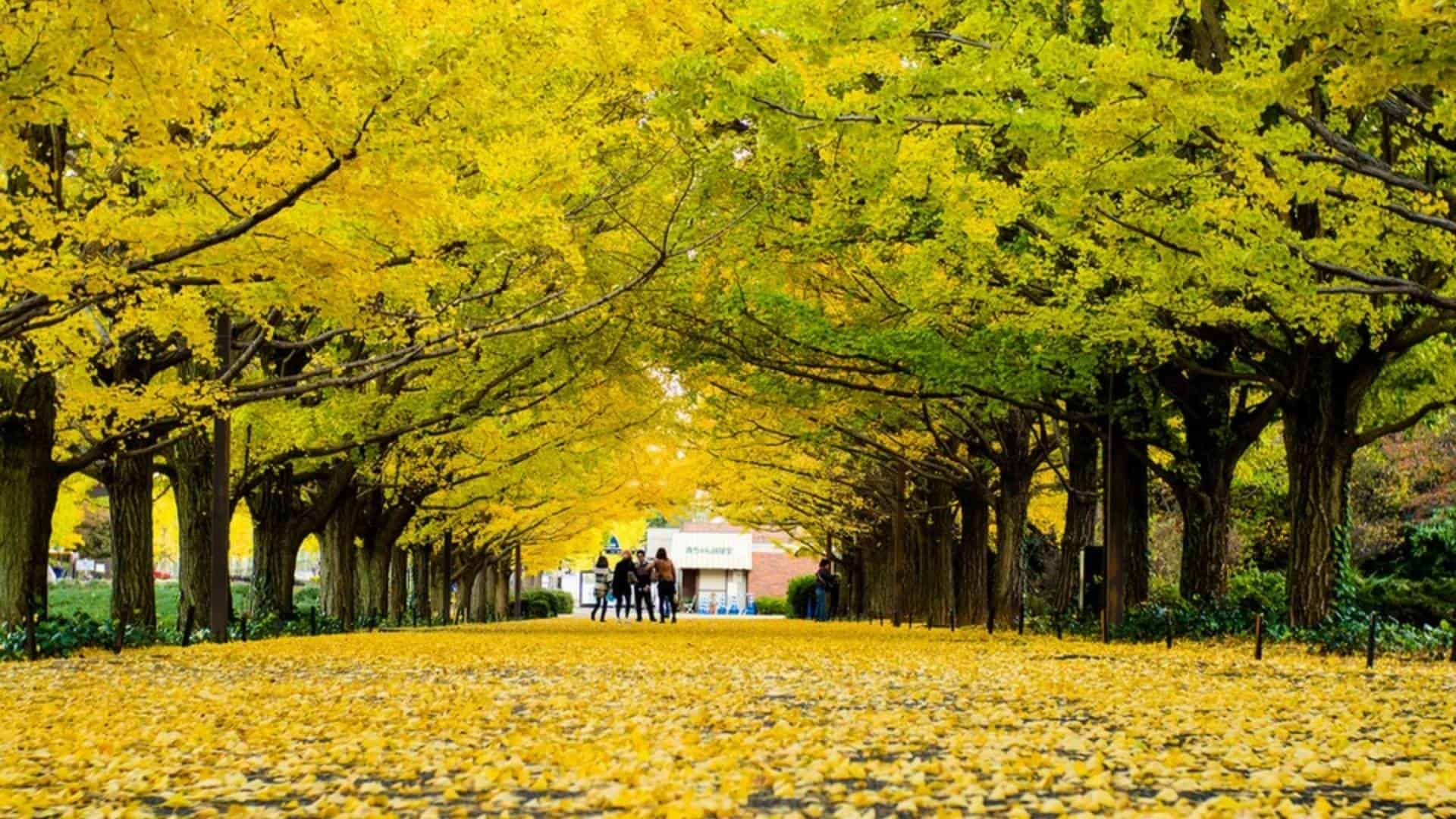
You basically have to plan for two different “peaks” for the full experience. The first is the Ginkgo peak, which gives you those famous, vibrant, golden-yellow trees. We find they usually look their best around mid-November to early December. When the leaves fall, they create this amazing golden carpet on the ground that’s perfect for photos.
The second peak is the Momiji, or red maple, peak. This is the classic, fiery red koyo you see in all the pictures from traditional Japanese gardens. The maples often turn a bit later than the ginkgoes, usually from late November to early December. That first week of December is often the sweet spot where you can catch both.
And here’s our most important local tip: If you’re planning any day trips from Tokyo for autumn leaves, like hiking up Mount Takao, remember that it’s higher up and cooler. The leaves there will always change about one to two weeks earlier than in central Tokyo. So, if you’re here in early November, a day trip is a brilliant idea!
Tokyo Autumn Weather & What to Pack
Knowing what to expect from the weather can make or break your trip. We’ve seen so many travellers caught out, shivering at an illumination spot or sweating on a sunny afternoon. Here’s our simple breakdown of what it actually feels like.
What’s the Weather Like in Tokyo in Autumn?
In September and early October, it often still feels like a hangover from summer. It can be quite warm and humid, and this is when we get the tail end of the typhoon season, so you should definitely expect some rainy days.
Things really change in late October. This, in our opinion, is some of the best weather all year. The humidity vanishes, and you get mild, pleasant, and wonderfully sunny days. It’s perfect for just walking around and exploring. Read more about October in Japan here:
When November rolls around, you feel the proper shift to autumn. The air is crisp and cool, and we get a lot of beautiful days with clear blue skies. But don’t be fooled by the sunshine! The mornings and evenings get properly chilly. If you’re out all day, you’ll definitely feel the temperature drop as soon as the sun goes down. Read more about November in Japan here:
What to Pack for Tokyo in Autumn
If we can give you one single piece of advice, it’s this: master the art of layering clothes. This is the key to being comfortable in Tokyo. You’ll be peeling layers off in a warm, sunny park at 2 PM and putting them right back on when you head out for dinner.
First, and we cannot stress this enough, bring comfortable walking shoes. This is non-negotiable. You’ll be walking a lot more than you think, and Tokyo’s train stations are huge.
For clothes, think in layers. Start with T-shirts or some long-sleeved shirts as your base. If you’re coming in October, you’ll likely be fine with just a light jacket or cardigan to throw on when it gets cooler.
For a November trip, you need to bring something warmer. We’d strongly recommend a warmer, wind-resistant jacket or one of those thin, packable down coats. A UNIQLO Heattech top as your base layer is a classic local move for a reason: they work. We also always have a scarf and maybe some light gloves stuffed in our bag for those late November evenings, especially if we’re going to see any outdoor illuminations.
Experience Japan, Not Just See It
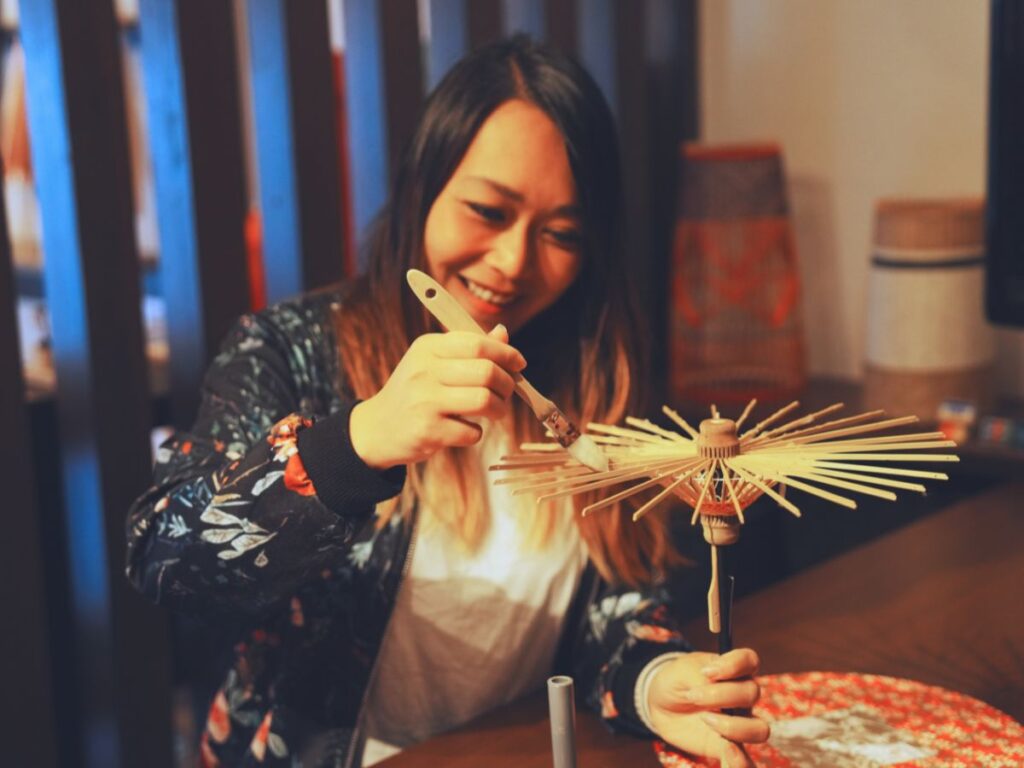
Seeing the autumn leaves is incredible, but to really connect with Japan, nothing beats trying it first-hand. After a day in the park, why not share tea in a traditional ceremony or join a local craft workshop? We’ll help you find and book experiences that make your trip truly unforgettable.
→ Explore Authentic Cultural Experiences in Japan
Can’t-Miss Autumn Festivals and Events in Tokyo
Autumn in Tokyo isn’t just about walking around parks; there’s a real buzz in the air with so many cool events happening. From massive food festivals to incredibly local traditions, you can really get a feel for the culture. Here are a few of our favourites that we think are worth planning your day around.
Meiji Jingu Gaien Ginkgo Festival (Icho Matsuri)
This is the most famous Tokyo autumn festival, and for good reason. It celebrates the iconic Ginkgo Avenue (Icho Namiki), a long street lined with perfectly trimmed, bright golden ginkgo trees. The main draw (besides the trees) is the massive line of food stalls.
You can get all kinds of festival food and crafts. We have to be honest, though: it gets unbelievably crowded, especially on a sunny weekend. We’d suggest trying to go on a weekday if you can, but it’s a must-see at least once.
Dates: 15 November–1 December
Location: Meiji Jingu Gaien Ginkgo Avenue on Google Maps
Tori no Ichi (Rooster Market)
If you want a truly local experience, we can’t recommend this enough. The Tori no Ichi is a traditional festival held at shrines (our favourite is the one in Asakusa) on specific “Rooster Days” in November. It’s all about praying for good luck and business prosperity.
The whole area is lit up with lanterns, and you’ll see people buying these huge, wildly decorated bamboo rakes called kumade, which are meant to “rake in” good fortune. It’s loud, exciting, and feels a million miles away from a typical tourist spot.
Asakusa Tori no Ichi
Dates:
First day (Ichi no Tori): 7 November, 2026
Second day (Ni no Tori): 19 November, 2026
Location: The festival takes place at two nearby locations
Chokokuji Temple on Google Maps
Otori Shrine on Google Maps
Seasonal Flower Displays

The colours aren’t just in the trees. If you’re here in early autumn (mainly October), the Showa Kinen Park Cosmos Festival is just lovely. The fields are completely covered in blankets of pink, white, and purple cosmos flowers.
Later, in November, you have to pop into Shinjuku Gyoen for its Chrysanthemum Exhibition. This isn’t just a few flowers in a pot; it’s a stunning, formal display of perfectly cultivated, giant chrysanthemums. It’s a very traditional and impressive art form.
Showa Kinen Park Cosmos Festival
Dates: 5 September – 25 October, 2026
Location: Showa Kinen Park on Google Maps
Chrysanthemum Exhibition
Dates: 1 November – 15 November, 2026
Location: Shinjuku Gyoen National Garden on Google Maps
The First Winter Illuminations
Here’s a top tip from us: many of Tokyo’s famous winter illuminations actually kick off in mid-to-late November. While they’re technically “winter” events, a late-November trip means you get the double whammy of gorgeous autumn leaves by day and dazzling light-ups by night. Areas like Marunouchi, Roppongi Hills, and Shinjuku often start their displays, so you can easily go from a koyo spot to an illumination spot.
Here’s our roundup of what illuminations to see in and around Tokyo:
Other Notable Events
A few other things to keep on your radar: if you’re hiking Mount Takao, they have their own Autumn Leaves Festival on weekends with taiko drum performances and food stalls, which adds to the fun.
For foodies, the Tokyo Ramen Festa takes over Komazawa Olympic Park every autumn and is a fantastic (and delicious) way to try ramen from all over Japan in one place.
Tokyo Ramen Festa 2026
Dates: 30 October–3 November, 2026, 10:30–20:30
Location: Komazawa Olympic Park on Google Maps
Finally, a little cultural tip. If you’re visiting a major shrine like Meiji Jingu on a weekend in November, you will almost certainly see Shichi-Go-San (which means 7-5-3). This isn’t a festival you “attend,” but something you’ll see happening. It’s a tradition where families dress up their children of those ages in beautiful kimonos to pray for good health. It’s absolutely adorable and makes for some wonderful, candid travel memories.
The Best Spots in Tokyo to See Fall Leaves
Alright, this is the most important part! We get asked all the time where to actually go to see the leaves. The best way to think about it is to decide if you’re looking for the golden ginkgoes or the red maples, because the best spots are often different.
We’ve discussed this a lot in the office, and here are our team’s personal favourite spots.
Best Spots for Golden Ginkgo Trees

Meiji Jingu Gaien: You simply have to start with Meiji Jingu Gaien, known to everyone as ‘Ginkgo Avenue’. This is the most iconic ginkgo spot in all of Tokyo, hands down. It’s a long street lined with these massive, perfectly cone-shaped trees that all turn this brilliant, almost neon yellow. It’s spectacular. We’ve found the best photos are from the Aoyama-itchome end, looking down the avenue. Just be prepared: this is where the Ginkgo Festival happens, so it gets packed.
Meiji Jingu Gaien Ginkgo Avenue on Google Maps
Showa Kinen Park: If you want something just as impressive but with a bit more space to breathe, we absolutely love Showa Kinen Park (Showa Memorial Park). It’s a huge park, and it has an amazing 300-metre-long canal lined on both sides with ginkgoes. It creates this stunning ‘golden tunnel’ you can walk through. It’s a bit further out (in Tachikawa), but we think it’s 100% worth the train ride.
Showa Kinen Park on Google Maps
Yoyogi Park: For a more chilled-out vibe, you can’t beat Yoyogi Park. It’s not as formally lined up as the other spots, but that’s its charm. The park has a huge ginkgo tree area, and when the leaves fall, they create a massive ‘golden carpet’ on the ground. This is our top pick for grabbing some food from a konbini and having a relaxed autumn picnic.
Yoyogi Park (Ginkgo tree area) on Google Maps
Imperial Palace: A spot we feel is a bit of a hidden gem is the Imperial Palace East Garden. While the whole garden is beautiful, there are some truly massive, ancient ginkgo trees inside that look incredible against the old, dark stone of the original castle foundations. It’s a really beautiful contrast and a lot quieter than the other spots.
Imperial Palace East Garden on Google Maps
Komazawa Park: This is my go-to for ginkgo season. There’s a running and biking course that loops the whole park and takes you right through the trees, and it stays refreshingly uncrowded, mostly just neighbourhood parents letting their kids run around while the leaves come down.
Hikarigaoka Park: One of the biggest parks in Nerima Ward, and it doesn’t mess around with ginkgo; there are around 2,000 ginkgo and zelkova trees here, including a 200-meter avenue of 40 trees that are over 130 years old (they were actually transplanted from in front of the old Tokyo Metropolitan Government building back in 1985). Wide open lawns and playgrounds make it a real family spot too.
Hikarigaoka Park on Google Maps
Mizumoto Park: The most local of the bunch. The real draw is a forest of nearly 1,800 metasequoia trees that turn a deep red-brown by late November, plus a poplar-lined promenade that goes gold alongside them. Make it a full day out with Shibamata Taishakuten and Suikeien Garden nearby.
Best Spots for Red Maple (Momiji) Leaves
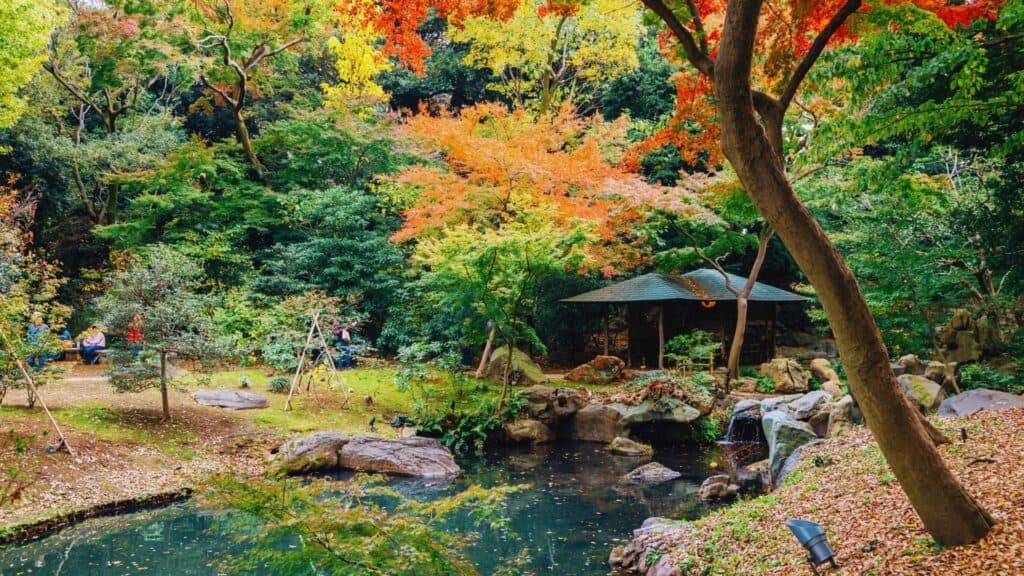
As much as we love the ginkgoes, nothing feels quite as classic as the deep crimson momiji, or maple leaves. For these, you’ll want to head to Tokyo’s traditional Japanese gardens.
Rikugien Gardens: Our number one pick for maples is Rikugien Gardens. By day, it’s a perfect example of a classic Japanese ‘strolling garden’, with a central pond, hills, and little bridges. We love walking over to the Tsutsuji-no-chaya teahouse for a view. But the real magic, and you must do this, is the Rikugien Gardens autumn illumination. They light up the maples at night, and the reflection of the fiery red trees in the pond is just breathtaking. It’s one of our favourite things to do in all of autumn.
Rikugien Gardens on Google Maps
Shinjuku Gyoen National Garden: We take all our visiting friends to Shinjuku Gyoen National Garden because it’s so easy and offers so much variety. It’s actually three gardens in one: an English Landscape Garden, a formal French Garden, and, the star of the show, the Japanese Garden.
The Japanese Garden has a traditional teahouse and pond, and it’s the place to see the maples. The rest of the park has huge lawns and other beautiful trees, so you can easily spend a whole afternoon here.
Shinjuku Gyoen National Garden on Google Maps
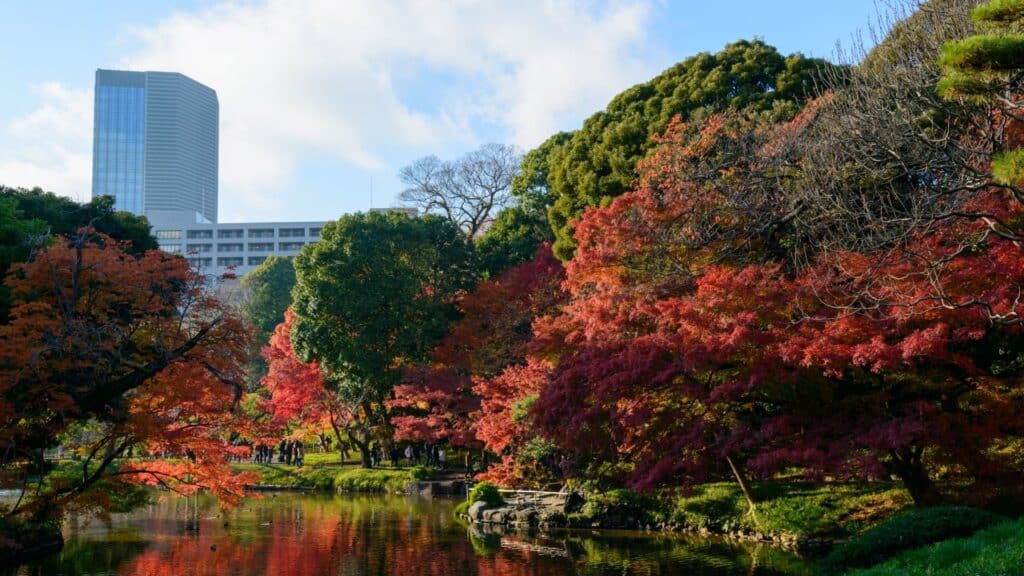
Koishikawa Korakuen Gardens: Right next to the Tokyo Dome is Koishikawa Korakuen Gardens, one of Tokyo’s oldest and most beautiful gardens. The best views are around the central pond, where the red maples hang over the water. Be sure to get a photo of the Engetsu-kyo bridge, also known as the Full Moon Bridge. It’s a very traditional and elegant spot that we always find surprisingly peaceful.
Koishikawa Korakuen Gardens on Google Maps
Hamarikyu Gardens: If you want a photo that just screams ‘Tokyo’, you have to go to Hamarikyu Gardens. What makes this place so unique is the view. You’ll be standing in a beautiful, traditional garden with maple trees and a tidal pond, but you’ll be looking directly up at the futuristic skyscrapers of the Shiodome district. That contrast of old momiji and new glass towers is just incredible. We also love stopping at the teahouse that sits on an island in the middle of the pond.
Hamarikyu Gardens on Google Maps
Mount Takao: Finally, while it’s not in central Tokyo, we have to include the most popular day trip from Tokyo for autumn leaves: Mount Takao. It’s only about an hour by train from Shinjuku and gives you a completely different experience. You can see whole mountainsides covered in red and yellow.
You can hike up, or take the cable car (we recommend the cable car up and hiking down). One serious piece of advice: try not to go on a weekend in November. We’ve made that mistake, and the crowds are overwhelming. Go on a weekday, and you’ll have an amazing time. Here are our top 10 autumn leaves hiking spots around Tokyo.
Gotokuji Temple: Yes, it’s the temple with a thousand lucky cats and yes, it gets its share of tourists. But it’s right in the middle of a genuinely local part of Setagaya, and once the momiji turn, none of that matters. The colour here is some of the best in the city.
Gotokuji Temple on Google Maps
Read more about:
- 7 Exciting Ways to Enjoy Autumn in Japan: Autumn Leaves, Food, and Festivals
- Top 12 Places to Enjoy Autumn Leaves in Tokyo
- Top 10 Breathtaking Autumn Leaves Day Trips to Enjoy from Tokyo
- 4 Incredible Autumn Festivals in Japan You Can’t Miss
- 9 Delicious Japanese Food and Drinks to Enjoy in Autumn
Autumn in Tokyo FAQs
Is October or November better to visit Tokyo?
This is a classic question. Honestly, it depends on what you’re after. If your main goal is seeing the fiery red maples and golden ginkgoes, then Tokyo in November is definitely better. But we have a real soft spot for Tokyo in October. The weather is just perfect for sightseeing, and it feels less crowded. Think of October for early autumn vibes, like seeing cosmos flowers, while November is for that peak koyo and ginkgo show.
Is Tokyo crowded in autumn?
We’re not going to sugarcoat this: yes, it’s crowded. Autumn is a peak tourist season, right up there with cherry blossoms. The most famous spots, especially the Rikugien Gardens autumn illumination at night or the Meiji Jingu Gaien Ginkgo Festival on a weekend, will be packed with people. Our best local tip is to visit popular parks on a weekday morning. It’s the only way to get some peace (and a photo without a thousand other people in it).
Do I need to book hotels far in advance for autumn in Tokyo?
Yes, absolutely. We can’t stress this enough. Autumn in Tokyo is peak season, just as popular as the cherry blossoms in spring. If you want to stay in a great hotel in a popular area (like Shinjuku, Shibuya, or near Tokyo Station), we strongly recommend booking at least 3 to 6 months in advance. They fill up incredibly fast.
Are the autumn leaf illuminations free to enter?
It depends on the spot. For gardens like Rikugien Gardens, you’ll need to pay the standard garden entry fee to see the illumination (it’s worth every yen, in our opinion). But many of the city illuminations, like the ones that start in November along the streets of Marunouchi, are completely free to walk around and enjoy.
Are the leaves in Tokyo’s parks better than a day trip?
Honestly, they’re just different. We love them both for different reasons. The Tokyo parks, like Shinjuku Gyoen or Hamarikyu, give you that amazing contrast of perfect nature against the city skyscrapers. A day trip from Tokyo for autumn leaves, like Mount Takao, gives you that vast, wild, sprawling mountain scenery. If you have the time, we really recommend doing both to get the full experience.