
When autumn arrives in the Tokai region, the hillsides turn into a sweep of red and orange. Well-known spots like Inuyama Castle and Ise Jingu Shrine draw crowds every year for the autumn leaves, and for good reason. But if you’d rather take in the colour without the crowds, Tokai has plenty of quieter alternatives that deliver the same with a fraction of the foot traffic.
A note on timing for 2026: Japan’s first national autumn colour forecast, released in early September, points to a later-than-average season this year because of a warm autumn nationwide. If you normally plan around mid-to-late November for Tokai, it’s worth pushing your dates back by roughly a week and checking a live foliage tracker closer to the time, rather than relying on the “usual” windows below. Read more on Autumn in Japan for 2026.
Below are seven hidden gems for autumn leaves in Tokai, from a lakeside train station to a temple perched 1,400 steps up a mountain, each suited to travellers who want to slow down and actually enjoy the season.
Stop Planning, Start Adventuring
Tired of spending hours trying to piece together the perfect Japan trip? Our custom travel planning service is for you. We handle all the research and logistics to create a unique itinerary that lets you travel with confidence and experience Japan your way.
Inuyama Jakko-in Temple (犬山寂光院)
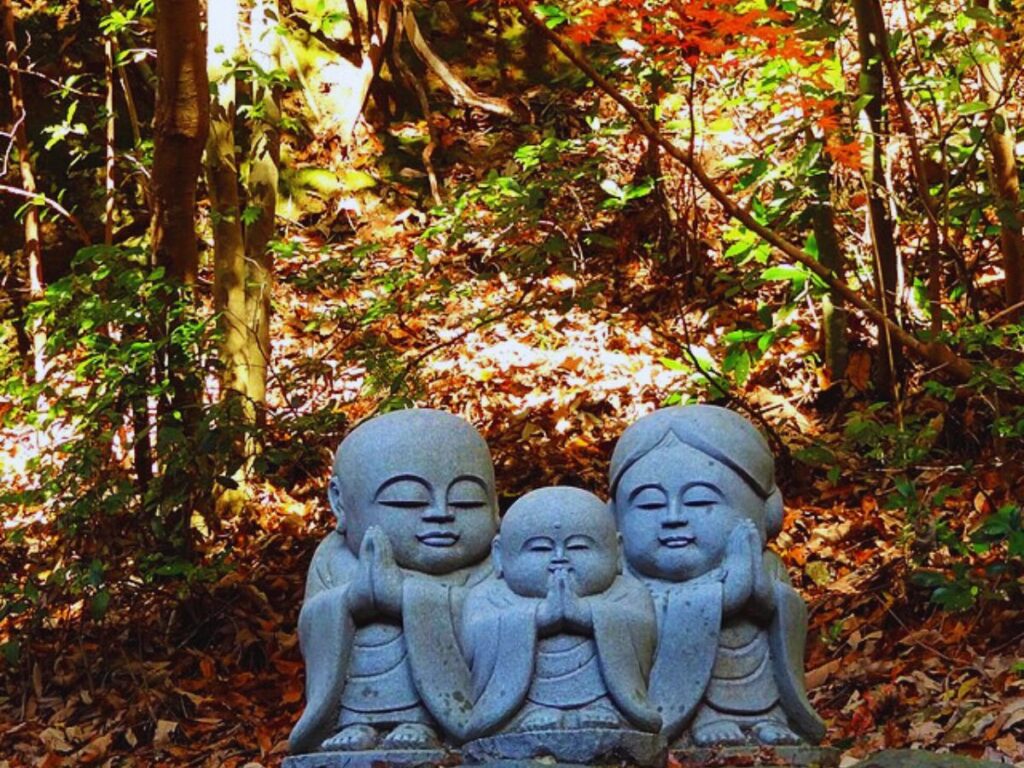
Inuyama Jakko-in Temple is just a short trip from the well-known Inuyama Castle, but it feels like a peaceful getaway, especially once the maples turn in autumn. Locally, the temple is nicknamed “Owari’s Maple Temple.” The grounds run an annual Momiji Matsuri (maple festival), usually from early November into early December, with a limited-edition ayu-zushi (sweetfish sushi) sold only during the festival as something of a local speciality.
The temple is easy to reach from Inuyama Station by a short bus ride or taxi, and the walk up through the maple-lined approach is part of the appeal, with the trees framing the temple buildings in deep red. There are few shops nearby, so pack a snack or pick one up in town before you head over. Once you’re there, you’ll likely have long stretches of the grounds to yourself, even during peak colour.
One thing worth building into your plans: the 20th Asian Games Aichi-Nagoya 2026 run from 19 September to 4 October, right in this prefecture. If you’re visiting Inuyama in the weeks immediately before autumn colour season, book accommodation early, as the Games may put extra pressure on rooms around Nagoya.
Want more lesser-known fall foliage spots in Japan? Check out these stops not too far from Tokyo:
Okuoikojo Station (奥大井湖上駅)

Okuoikojo Station is a true hidden treasure for autumn leaves in Tokai, and a favourite for travellers who enjoy a bit of adventure along the way. The best time to catch the autumn colours here is from early to mid-November. The best window for autumn colour here usually falls from early to mid-November.
You’ll reach it via the scenic Oigawa Railway, which even runs a steam locomotive service from Kanaya Station on select dates. The station itself sits on a bridge high above Lake Sesso, so the autumn colours reflect in the water below for one of the most photographed views in the region.
Entry is free, but facilities are minimal, so bring your own food and drinks and check the timetable in advance, as trains run infrequently. One thing worth noting for 2026: the Oigawa Railway’s Ikawa Line (which serves this station) has faced weather-related suspensions in recent years, including after typhoons earlier this year, so check the railway’s official service updates before you travel, particularly if a typhoon has passed through the region recently.
Shinhotaka Ropeway (新穂高ロープウェイ)

The Shinhotaka Ropeway is perfect for a mix of adventure and breathtaking autumn views. Autumn colour here starts earlier than most spots on this list, typically running from late September to early November as the season moves down the mountainside.
Buses from Takayama Station take around ninety minutes to reach the base station. A round-trip ticket covering both the No. 1 and No. 2 ropeway sections costs around ¥3,800 for adults (prices are subject to change, so confirm the current fare on the official site before you go). The ride itself is a highlight: a two-storey cable car climbs to roughly 2,000 metres, and the views from the top take in the surrounding peaks in full autumn colour.
Grab a hot drink or a meal at the summit café while you take it all in, and if you want the full experience, consider staying overnight at one of the nearby hot spring resorts. Clear days offer by far the best views, so keep an eye on the forecast.
Horai-ji Temple Mountain (鳳来寺山)

If you want history alongside your autumn leaves, Horai-ji Temple Mountain delivers both. The best time to visit for autumn foliage is late November. Peak colour usually arrives in late November, and the temple runs its own Momiji Matsuri; for 2026 this is scheduled for 9 November to 6 December. It’s roughly a 90-minute train ride from Toyohashi Station to Honnagashino Station, followed by a bus or a fairly long walk.
Climbing the 1,425 stone steps to the temple is a bit of a workout, so make sure to wear comfortable shoes and bring some water. There’s no fee to explore the temple grounds, and the higher you go, the more vibrant the colours of the trees.
Reaching the top feels rewarding, with the peaceful temple and incredible views waiting for you. There are also a few snack stalls near the base where you can recharge after your climb.
Oguni Shrine (小國神社)

Oguni Shrine offers a genuinely quiet setting for autumn leaves, with colour typically peaking from late November to early December. While it’s a bit out of the way, with the closest train station about an hour away by car or bus, the quiet, remote setting is worth the trip.
Entry is free. Since the area is quite remote, it’s a good idea to pack some snacks or a picnic, as there aren’t many food options nearby. Check the shrine’s own site for any festival dates before you go, as these can shift each year slightly.
Thinking about hiking this fall? We’ve got just the guide for you:
Sumatakyo Gorge (寸又峡)
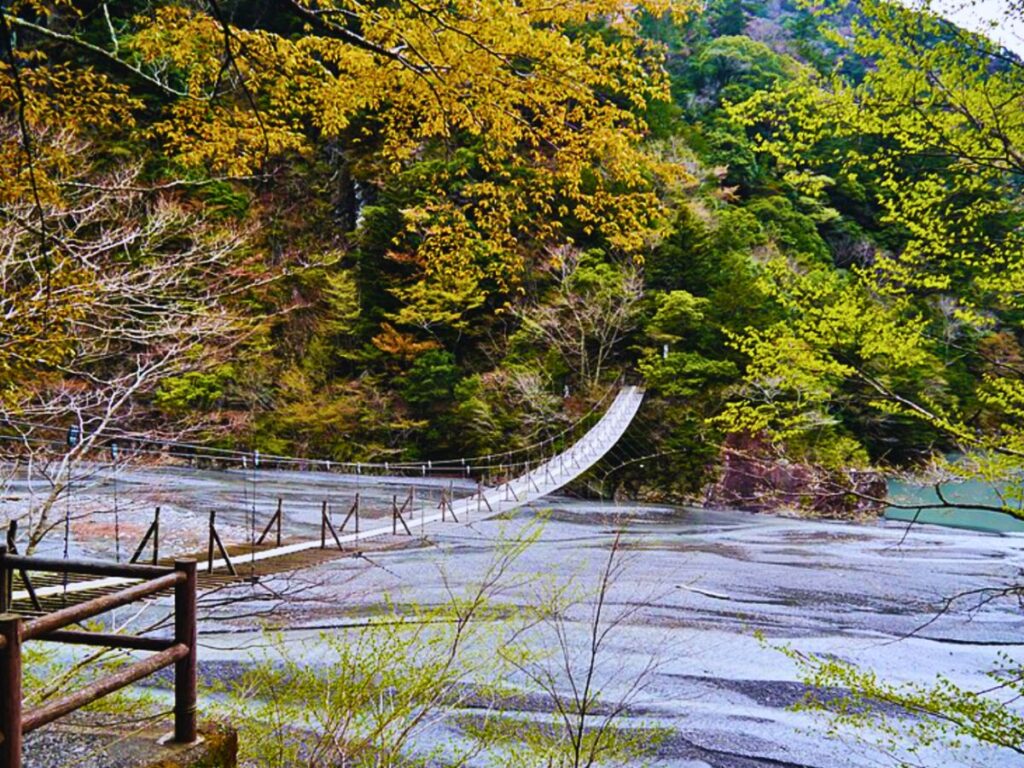
Sumatakyo Gorge is a dream for nature lovers and one of the more atmospheric hidden gems for autumn leaves in Tokai. You’ll reach it via the Oigawa Railway to Senzu Station, then roughly a 40-minute local bus to Sumatakyo Onsen, followed by a 30-minute walk along the promenade trail to the bridge itself.
The main draw is the Yume no Tsuribashi (Dream Suspension Bridge), strung across the turquoise reservoir below. There’s a ¥500-per-person gorge conservation cooperation fee, paid at the gate as you enter the promenade. Crossing is one-way, with only around ten people allowed on the bridge at a time, so queues build quickly once the leaves turn, particularly on weekends. Budget extra time, or aim for a weekday.
The full loop takes about 90 minutes, and a couple of small cafés sit near the trailhead if you get hungry. Several local inns with hot springs make a good overnight base if you’d rather turn the visit into a proper getaway.
Yusan-ji Temple (油山寺)

For a truly quiet autumn escape, Yusan-ji Temple is one of the least-visited spots on this list. The best time to visit for fall foliage is from mid to late November.
Located in the hills near Fukuroi, it’s a bit tricky to reach without a car. Entry to the temple is free, and since it’s not a well-known spot, you’ll likely have the place to yourself. There are also a few small shops nearby where you can pick up souvenirs or snacks to enjoy during your visit.
Add an Unforgettable Experience to Your Trip
Looking for a unique activity to make your Japan adventure even more special? We offer a curated selection of hands-on cultural experiences in cities like Tokyo, Kyoto, Osaka, and many more.
FAQs About Planning an Autumn Trip to Tokai
What is the best time to see autumn leaves in the Tokai region?
The peak viewing season for autumn colours in the Tokai region generally falls between early November and early December. However, the exact timing can vary based on the location and altitude. For mountainous spots like the Shinhotaka Ropeway, the colours can appear as early as late September, while places at lower elevations like Oguni Shrine are often at their best in late November. Always check a local foliage forecast if you want to catch the absolute peak.
Can I visit these lesser-known Tokai autumn spots without a car?
Yes, it’s possible, but it requires careful planning. Many of these spots are accessible via a combination of trains and local buses. For example, you can get to Inuyama Jakko-in Temple by taking a bus from Inuyama Station. However, some of the more remote locations, like Oguni Shrine or Yusan-ji Temple, are significantly easier to reach by car. If you rely on public transport, be sure to check bus schedules in advance, as services can be infrequent in rural areas.
How crowded are these “lesser-known” fall foliage spots?
While they are significantly less crowded than famous spots in Kyoto or Tokyo, you shouldn’t expect to have them all to yourself, especially on weekends. Locations like Sumatakyo Gorge and the Shinhotaka Ropeway are popular with domestic tourists. To avoid the biggest crowds, try to visit on a weekday and arrive early in the morning. The main advantage of these spots is the more relaxed and serene atmosphere compared to the major tourist hubs.
Are there any entrance fees for these autumn viewing spots in Tokai?
Many of the locations on this list are free to enter, including Oguni Shrine, Horai-ji Temple Mountain (the climb), and Sumatakyo Gorge. However, you will need to pay for transportation, such as the fare for the Shinhotaka Ropeway or the Okuoikojo Station railway. Always carry some cash, as smaller temples or attractions may ask for a small donation or have specific areas that require an entrance fee.
Are these Tokai autumn spots suitable for a family trip with children?
Several of these locations are great for families. The Shinhotaka Ropeway is often a highlight for children, offering an exciting ride and incredible views. A walk around Sumatakyo Gorge can also be a fun family adventure. However, be mindful of locations that require extensive walking or climbing, like the 1,400 steps at Horai-ji Temple, which might be challenging for very young visitors.
Going for a Quiet Autumn Escape in Tokai

Exploring these hidden gems for autumn leaves in Tokai is a great way to enjoy the beauty of the season without the hustle and bustle of more famous locations. Whether you’re in the mood for a peaceful temple, a scenic hike, or a thrilling cable car ride, these hidden gems offer the perfect setting for a calm autumn adventure.
Visiting quieter locations also changes how you experience the season. Without the crowds pressing in, there’s room to actually take in the colour, the quiet, and the small details that make each place distinct. Next time you’re planning an autumn trip to Tokai, consider trading the well-known sights for one of these hidden gems instead, and given this year’s later season, give yourself a little extra room in your dates.