
Ask ten people what to eat in Kyoto and nine will probably say kaiseki. That is great advice if you have deep pockets and can book a table months in advance. But some of my favourite meals here happen standing at a tiny counter for a bowl of nishin soba topped with a simmered herring, or grabbing a paper-thin pickled turnip on a cocktail stick.
Kaiseki certainly deserves its place in any Kyoto food guide as the pinnacle of Kyoto dining. You should experience it at least once if your budget allows. You just do not need to eat that way for every single meal to understand what makes this city’s food culture so distinct.
In fact, I’d argue that if you want to understand why Kyoto food tastes the way it does, you have to start with something very simple: water. The city sits on a massive underground basin of soft water, and that lack of heavy minerals is the exact reason why local dashi broth tastes so remarkably clean, and why handmade tofu and yuba come out silky instead of chalky. Combine that soft water with centuries of Buddhist temple kitchens perfecting plant-based cooking, and you get a culinary tradition built on restraint rather than heavy fats and strong spices.
Strolling and Grazing Through Nishiki Market

Nishiki Market is where that food culture spills right out into a narrow, covered lane that has fed the city for centuries. Earning its nickname as Kyoto’s Kitchen, this four-hundred-metre shopping street actually traces its roots back to a humble wholesale fish gathering spot.
Generations of family-run stalls have operated right here, supplying local chefs and home cooks with specialized ingredients before it evolved into the packed food lane you see today. For a deeper look at the surrounding alleys and stalls, take a look at our Nishiki Market Guide.
Instead of treating the market like a sit-down food court, I treat it as a grazing walk. When possible, I like to go on a weekday morning before the tourist crush turns the lane into an obstacle course. That way, I can wander past the open fronts when the shopkeepers are setting out their fresh displays and actually have time to chat.
You will spot plenty of social media favourites as you walk down the lane, like the famous tako tamago, which is a baby octopus with a quail egg tucked inside its head. I honestly thought that this was only popular because of the quirky look that makes for great photos, but the sweet soy glaze really does go perfectly with the tender octopus. Alongside those, sizzling skewers of wagyu beef draw steady queues of hungry visitors looking for a quick bite.
Also, you want to keep an eye out for the quieter, traditional counters that locals rely on. Track down historic shops like Tanaka Keiran for a thick wedge of dashimaki tamago, where local eggs are folded into an unbelievable amount of dashi. Right nearby, specialist spots like Fufusa Roho serve fresh namafu, chewy wheat gluten cakes grilled with sweet miso paste. You should also pause at the old-school pickle counters to sample everything from pickled eggplant and cucumber to paper-thin turnip slices.
Don’t feel like planning every meal yourself? We’ll put together a Kyoto itinerary for you, kaiseki and all.
Shojin Ryori and Temple Cuisine
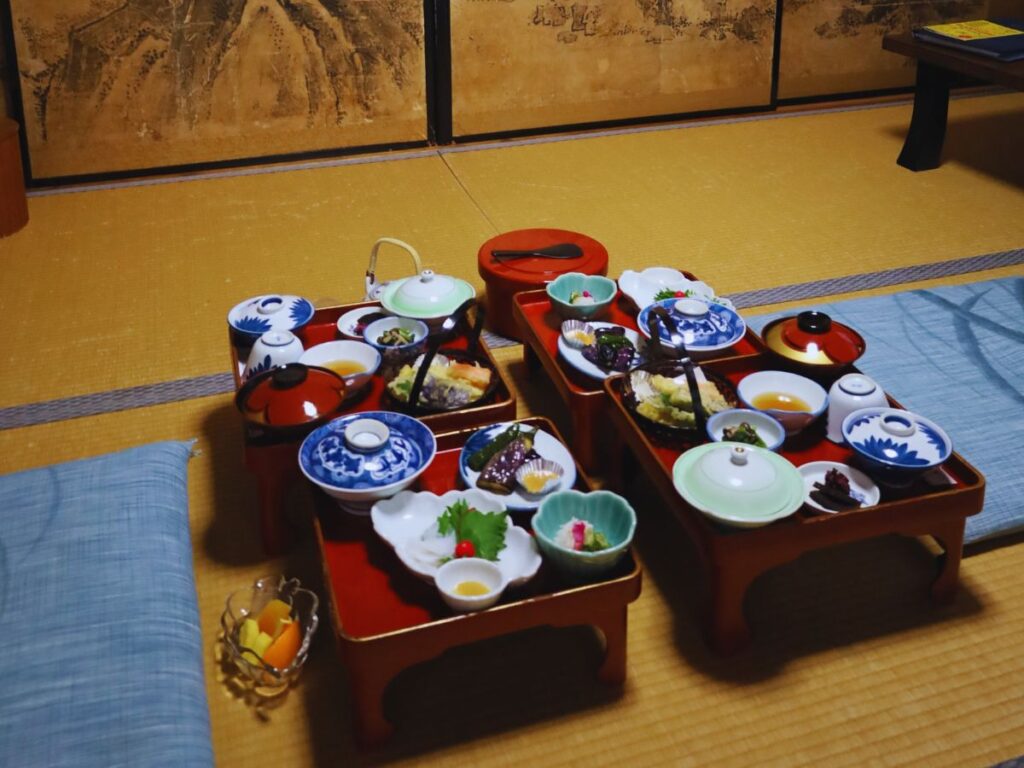
Shojin ryori is a must-eat in Kyoto, fitting the city’s food culture better than almost anything else. Rooted in Buddhist principles, this traditional plant-based cooking strictly avoids meat, fish, and even strong-smelling vegetables like onion and garlic.
I was appalled when I first heard that, but turns out I was dead wrong in thinking temple cuisine would just be bland food. Relying on seasonal vegetables, tofu, sesame, and wild mountain plants actually creates some impressive flavours. And really, where else are you going to try it? With Kyoto being the epicenter of historic temples, experiencing authentic monk food right where it was perfected just feels like a rite of passage.
You will typically find courses like creamy sesame tofu made from scratch, and simmered seasonal greens. For a closer look at the history and philosophy of this dining style, take a look at our Shojin Ryori Guide.
To experience this in Kyoto, head out toward the temple complexes clustered in western Arashiyama or the northern hills around Daitoku-ji. Several historic temples and surrounding sub-temples in these areas open their dining halls to visitors. If you want something a bit closer to the centre, you can also find traditional specialist restaurants operating near the Kyoto Imperial Palace that focus entirely on refined temple-style dining.
Kaiseki
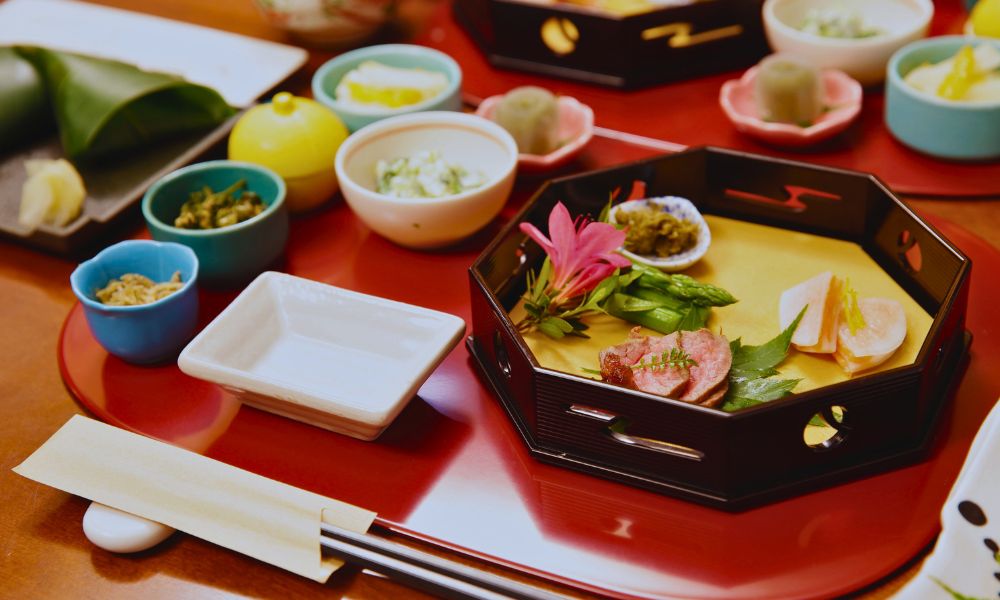
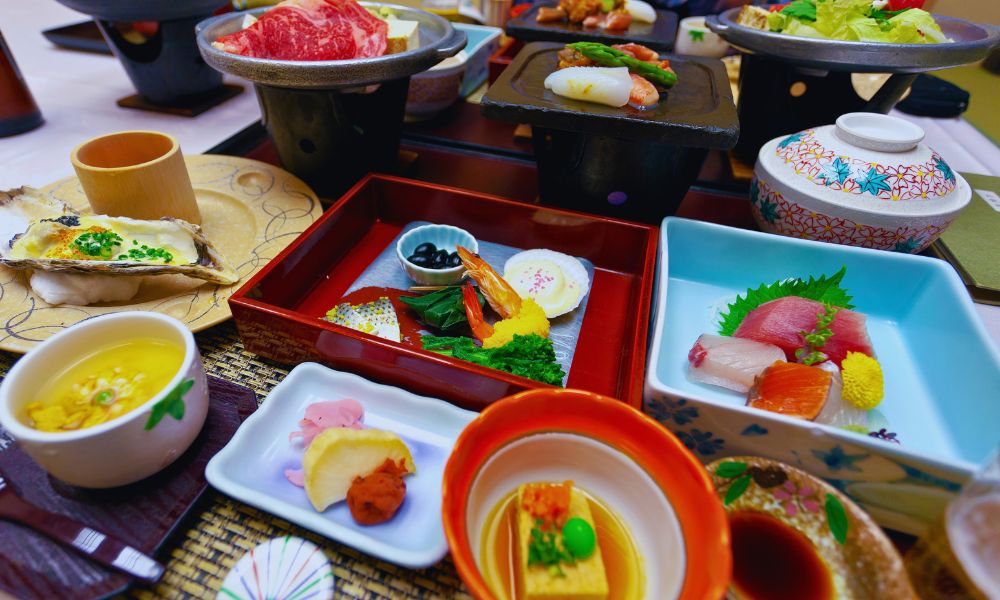
If you are a foodie heading to Japan (and if you’re reading this blog, I assume you are), chances are you have already heard of kaiseki. But did you know that Kyoto is widely considered as its birthplace? It grew straight out of the city’s ancient tea ceremonies and Zen temples, starting centuries ago as a simple, warming meal meant to steady the stomach before drinking bitter green tea.
Over time, that temple tradition evolved into the multi-course dining experience. While other cities lean into casual street food or modern cooking, kaiseki demands complete respect for the season. Every dish arrives featuring local vegetables and fresh river fish, mindfully arranged in gorgeous ceramics, of course.
Aside from its deep history in the region, another reason I recommend eating kaiseki here is simply because it is Kyoto. Is there a more perfect luxury Japan experience than kicking back on tatami mats while wearing a yukata, looking out at a peaceful moss garden, while having course after exquisite course served right to your room in a historic ryokan in Higashiyama or Gion? A girl can dream … and should. It is a splurge that requires planning months ahead, but experiencing kaiseki where it all started gives you a completely different perspective on why Kyoto’s food culture is so special. Convinced yet? We can arrange a kaiseki course for you.
A luxury Kyoto trip sounding good to you now? I have everything you need here:
Obanzai
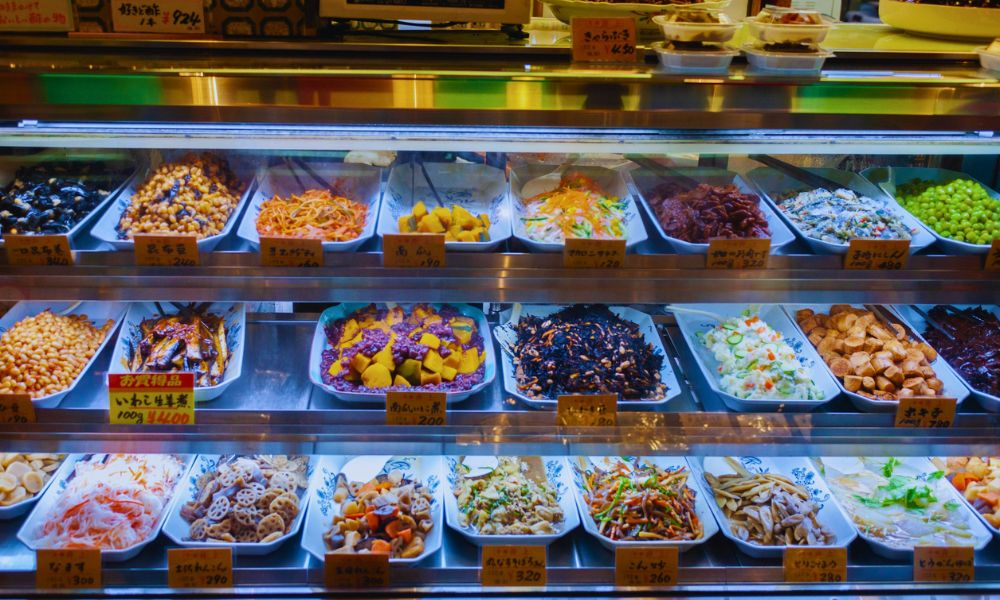
After experiencing the high-end artistry of kaiseki, it is easy to assume that Kyoto dining is exclusively white tablecloth territory. But that’s not necessarily true. When I want to dive into the everyday food culture of the city, I look for obanzai.
While every region in Japan has its own home-style cooking, the term obanzai belongs exclusively to Kyoto. It is a culinary tradition born out of old merchant households and a strict philosophy of minimizing waste called shimatsu, meaning each local ingredient is used down to the very last scrap. To be a true obanzai dish, it has to rely on traditional home-style preparation and feature local heirloom ingredients.
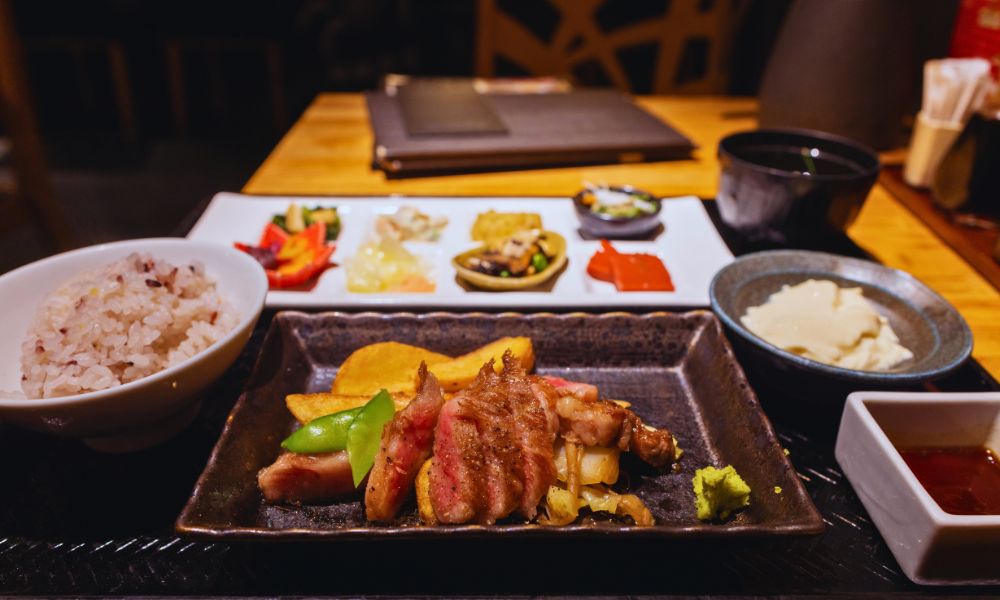
It might look humble compared to a multi-course kaiseki feast, but it is Kyoto comfort food at its best, featuring a rotating lineup of small plates built around seasonal vegetables, fresh tofu, and gently simmered fish.
The best places I have experienced somehow always feature big ceramic dishes lined up right behind the counter, and a handwritten menu you can point at when you order. Oh, and if you go for the lunchtime set, you usually get the exact same meticulous cooking for a fraction of the dinner price.
One of our Kyoto-based guides recommends Kajiya near Karasuma-Oike. It is inside a 120-year-old Kyoto townhouse, and their lunch sets pair that traditional, vegetable-heavy obanzai spread with top-tier wagyu beef.
If you are hunting for other great spots, try looking for tiny, unassuming neighborhood eateries tucked down side streets in Gion or near Pontocho. A great example is Pontocho Masuda, which is featured in the Michelin Guide as a local recommendation where a father and son run a Showa-era counter serving comforting obanzai.
Kyo-Zushi
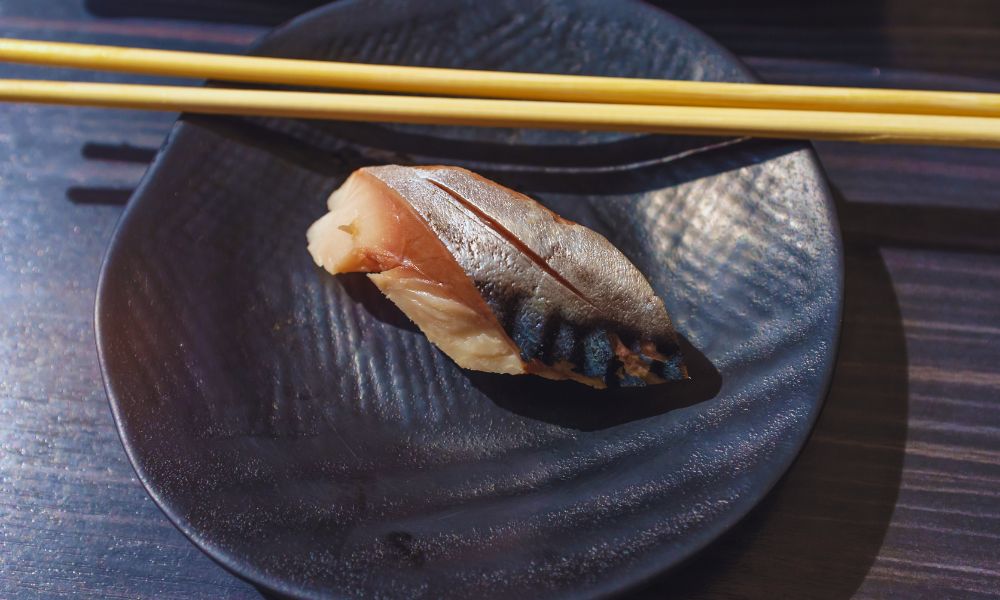
You have likely eaten your weight in salmon nigiri and tuna rolls even before you landed in Japan, so you definitely know what raw fish on rice tastes like. But that standard version you mostly get is what we refer to as Edomae-style sushi, which started in Tokyo and took over the globe.
When you get to Kyoto, you will hear about Kyo-zushi, which is different. You see, Kyoto City is completely landlocked. In ancient times, before bullet trains and refrigerated trucks, that was a bummer, because fresh fish spoiled during the trek inland. Instead of giving up on sushi entirely, the city invented a completely different culinary survival tactic: pressing, curing, and fermenting everything.
So, traders used to pack fish like mackerel in heavy salt and haul it on foot over the mountains from the coast. By the time the fish finally arrived in Kyoto, the salt had cured it to perfection. Local cooks then pressed it tightly onto vinegar-seasoned rice inside wooden molds. You end up with pressed fish and rice that tastes nothing like the sushi you may be used to.
Yuba
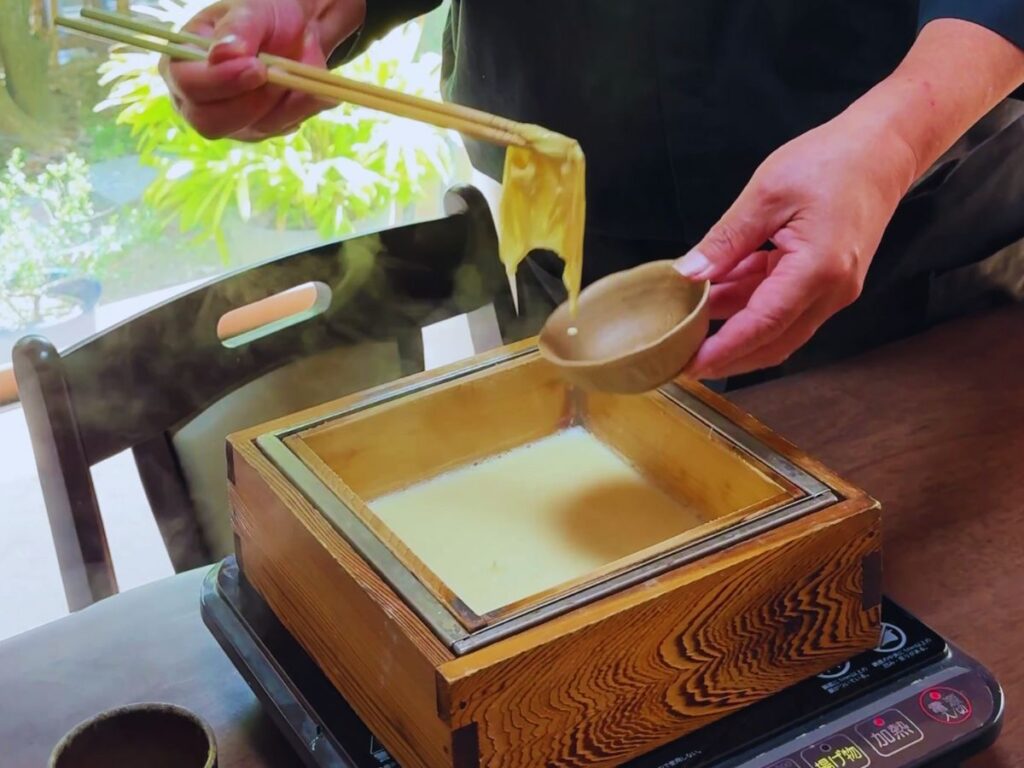
When soy milk is heated up, a thin, delicate, protein-rich film forms right across the surface. Cooks skim that layer off, and that is your yuba. It has a mild, slightly nutty soy flavour, but I think the best thing about it is texture, because depending on how it is prepped, it can be silky and soft, folded into pouches, or dried and fried into a crunchy bite.
In Kyoto, yuba is an absolute obsession, again because of the city’s history of perfecting Buddhist temple cooking, where plant-based proteins ruled the menu.
If you want an easy way to try it without committing to a formal, multi-course temple dinner, head out to Arashiyama. The main shopping street is packed with casual options, but one of our favourite spots is Matsugae right next to Tenryu-ji Temple. They serve set meals where yuba is paired with a mix of meat, fish, or noodles, making it completely approachable even if you have zero idea what to expect. If you’re looking for other things to do in the area, here’s our recommended 1-day Arashiyama itinerary.
Nishin Soba
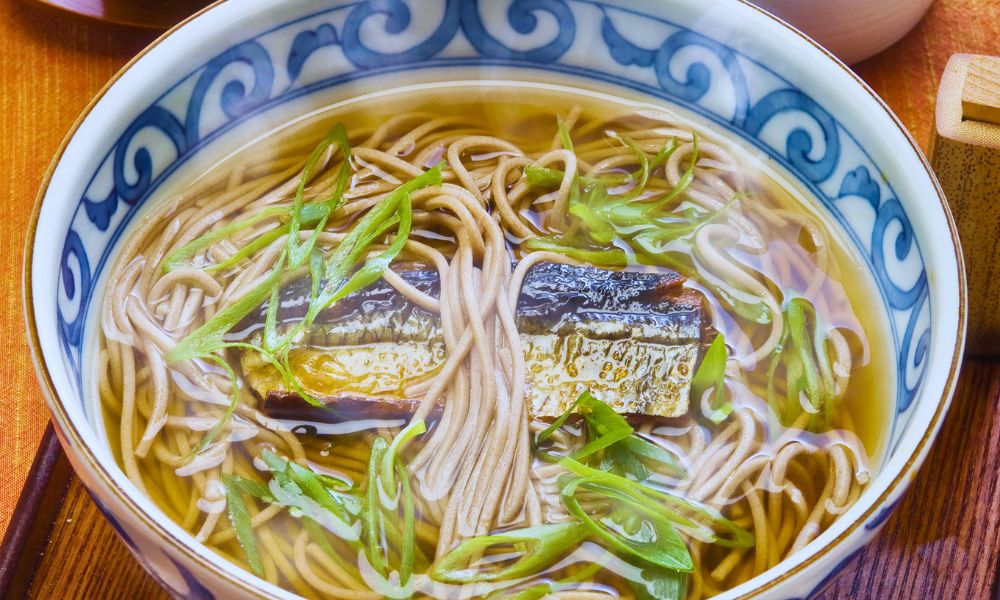
One thing I’ve learned over the years is that noodles are a great way to fuel up between temple runs when your feet are dead and you just need something fast, and deeply filling.
In Kyoto, you’re going to do a lot of those temple runs, and the noodle I would recommend is nishin soba. It is a steaming bowl of buckwheat noodles sitting in an umami-packed Kansai dashi and, my favourite part, topped with a piece of sweet-simmered dried herring draped right across the broth.
Matcha and Wagashi
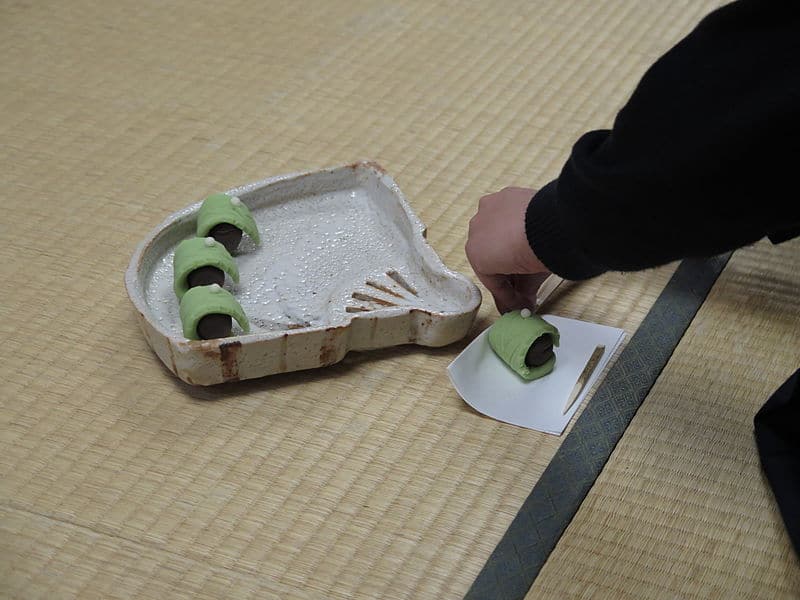
Uji sits less than half an hour south of Kyoto Station by train, and it happens to grow some of the most celebrated green tea on the planet. If you can spare a morning, take the short trip down there to walk through the tea fields and visit shops that have been grinding leaves for centuries.
If you cannot make the trek out, do not sweat it. You can still find incredible, quiet teahouses tucked away in Gion or Arashiyama. When in Kyoto, I mostly skip the heavy green tea parfaits loaded with soft serve and sweet red beans. Those are not bad, but I prefer to just order a bowl of freshly whisked matcha paired with a seasonal wagashi.
I especially get excited about the seasonality of wagashi. An October one may be shaped like a polished chestnut or autumn leaf, while an April one will look like a delicate pink cherry blossom. Ever wonder how those little seasonal wagashi are made? Come make a few yourself in our wagashi workshop.
Kyoto Food Guide FAQs
What is Kyoto known for food-wise?
Kyoto is known for kaiseki, tofu and yuba, pickles, wagashi and matcha. The cooking leans on seasonal ingredients and gentle flavours, which sets it apart from the bolder food of Tokyo and Osaka.
Is Nishiki Market worth visiting?
Yes, if you go on a weekday morning and treat it as a tasting walk. Afternoons and weekends get crowded, and the best stalls run low by then.
How much does a meal in Kyoto cost?
The range is pretty wide. A standing noodle bowl costs below 1,000 yen while formal kaiseki costs considerably more. Personally, I like mixing casual meals with one splurge to keep the budget under control. They all taste great anyway.
Is Kyoto good for vegetarians?
Yes. Buddhist temple cooking left the city with a deep tradition of tofu, yuba and vegetable dishes. Strict vegans need more planning, starting by reading our Guide to Being a Vegan in Kyoto, because dashi shows up in almost everything.